

April 1, 2025
How Much Does a Roof Replacement Cost in Columbus? 2026 Pricing Breakdown
How Much Does a Roof Replacement Cost in Columbus? 2026 Pricing Breakdown, practical local guidance from Cornerstone Roofing Columbus, Colum…
Read More




Shut off power to any equipment sitting under the leak. Move inventory, files, and electronics away from the drip line. Set a tarp or buckets to catch water and protect the floor. Photograph the ceiling stain or pooling before you touch anything. Call a commercial roofer once the space is safe.
A dark ring spreading across a drop ceiling tile means water already crossed the membrane and insulation below it. A sagging TPO seam near a rooftop unit usually means the fastening pattern failed under wind uplift, rather than simple aging. A musty, mildew smell near a rooftop drain often shows up before any visible stain appears inside, since water travels sideways under the membrane before it drips through the deck. Central Ohio's humid continental climate runs roughly 40 to 60 freeze-thaw cycles a winter, and that cycle works on split flashing and cracked pitch pans the same way it works on shingles, opening a hairline gap into a running leak. Flat roofs near Short North and German Village take this cracking hardest, because a membrane roof holds meltwater against a parapet wall instead of shedding it the way a pitched roof does.
Summer thunderstorms bring hail and straight-line wind that punch through single-ply membranes and rooftop penetrations, the same forces that crack asphalt shingles. A hailstone the size of a quarter can bruise a TPO field enough to open a pinhole leak days after the storm passes. Straight-line wind gusts lift a loose membrane edge and peel it back, exposing bare insulation board to the next rain. Commercial storm damage response has to happen inside hours, because standing water on a low-slope roof adds weight fast, and insulation board turns to mush once it saturates. That urgency is what separates urgent commercial roofing service from a maintenance call scheduled for next week.
Wait a few days and a pinhole leak becomes a soaked ceiling grid, ruined stock, and a shutdown you did not plan for. Wait a month and the deck below the membrane starts to rot, turning a patch job into a full tear-off. Every hour a low-slope roof stays open is an hour water tracks sideways under the insulation, showing up in a corner of the building far from the actual hole. A shutdown costs more than repair time once perishable stock, computer equipment, or a full sales day gets factored in. That is the gap emergency flat roof repair and 24/7 commercial roof leak repair close before those costs stack up.
Permit and inspection questions? Building & Zoning Services is the office we coordinate with on every permitted Columbus job.

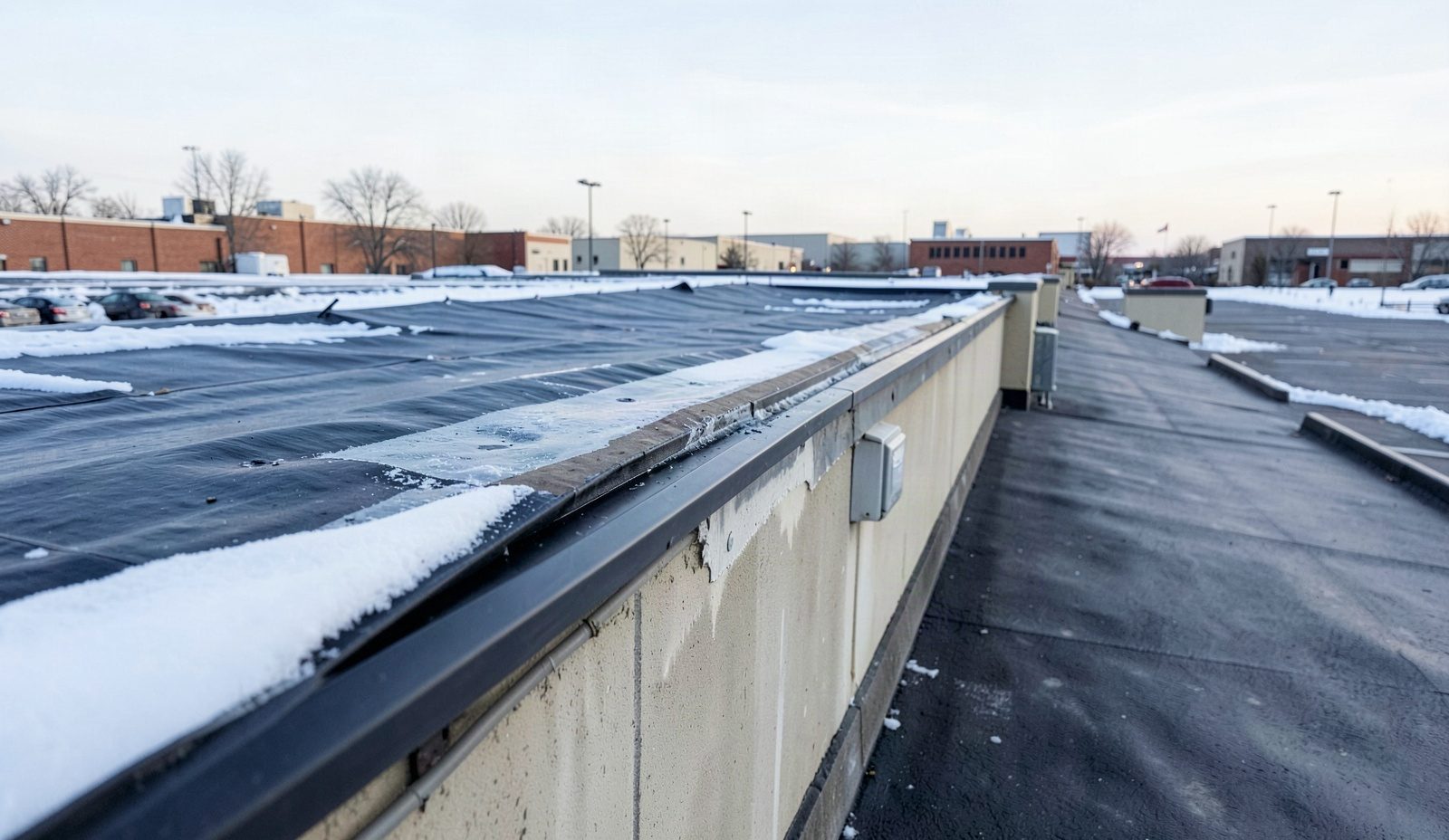
Every emergency commercial roof repair call starts with a documented leak trace. A technician walks the membrane with a Tramex or similar capacitance moisture meter, logging readings across the field in a grid pattern every ten feet along the lapped seams. A reading above 16 percent on a low-slope membrane marks saturated insulation that has to come out during the repair, and the crew marks that boundary directly on the membrane with a paint stick before cutting. On bigger sections we follow up with an infrared thermography scan at dusk, when the roof surface has cooled but trapped moisture is still holding heat, which shows up as a bright patch that maps in real time on the display.
A seam probe pick test checks every TPO or EPDM seam within ten feet of the reported leak. The probe should not lift the seam more than roughly a quarter inch before it pulls tight. Sealant alone on a single-ply seam fails within a season, so a seam opening past that threshold gets a hot-air weld pass instead. Where the flat field ties into a sloped cap, mansard, or entry canopy, the technician checks for an ice barrier extending at least 24 inches inside the exterior wall line, the threshold set in Ohio Residential Code section 905.1.2, since a number of Columbus commercial buildings mix a low-slope field with a shingled transition.
Material choice for a rush repair depends on what is already on the roof. TPO seams weld hot at around 900 degrees Fahrenheit and cure in minutes, which fits an emergency timeline. EPDM needs a seam tape or liquid adhesive that has to cure for hours before it can take foot traffic, which is why an emergency patch on EPDM often gets a mechanically fastened cover plate first and a full seam repair later. Modified bitumen membranes run heavier, roughly 90 mils compared to a 60 mil TPO sheet, and repairing them means a torch or cold-adhesive lap rather than a weld gun. A technician also checks the fastening pattern spacing against the wind uplift rating stamped on the original engineering letter, since a roof rated for a 60 pound per square foot uplift zone needs tighter spacing at the field and even tighter at the perimeter and corners. On a roof with mixed history, patching in the wrong material creates a fresh failure point at the seam between old and new within a year.
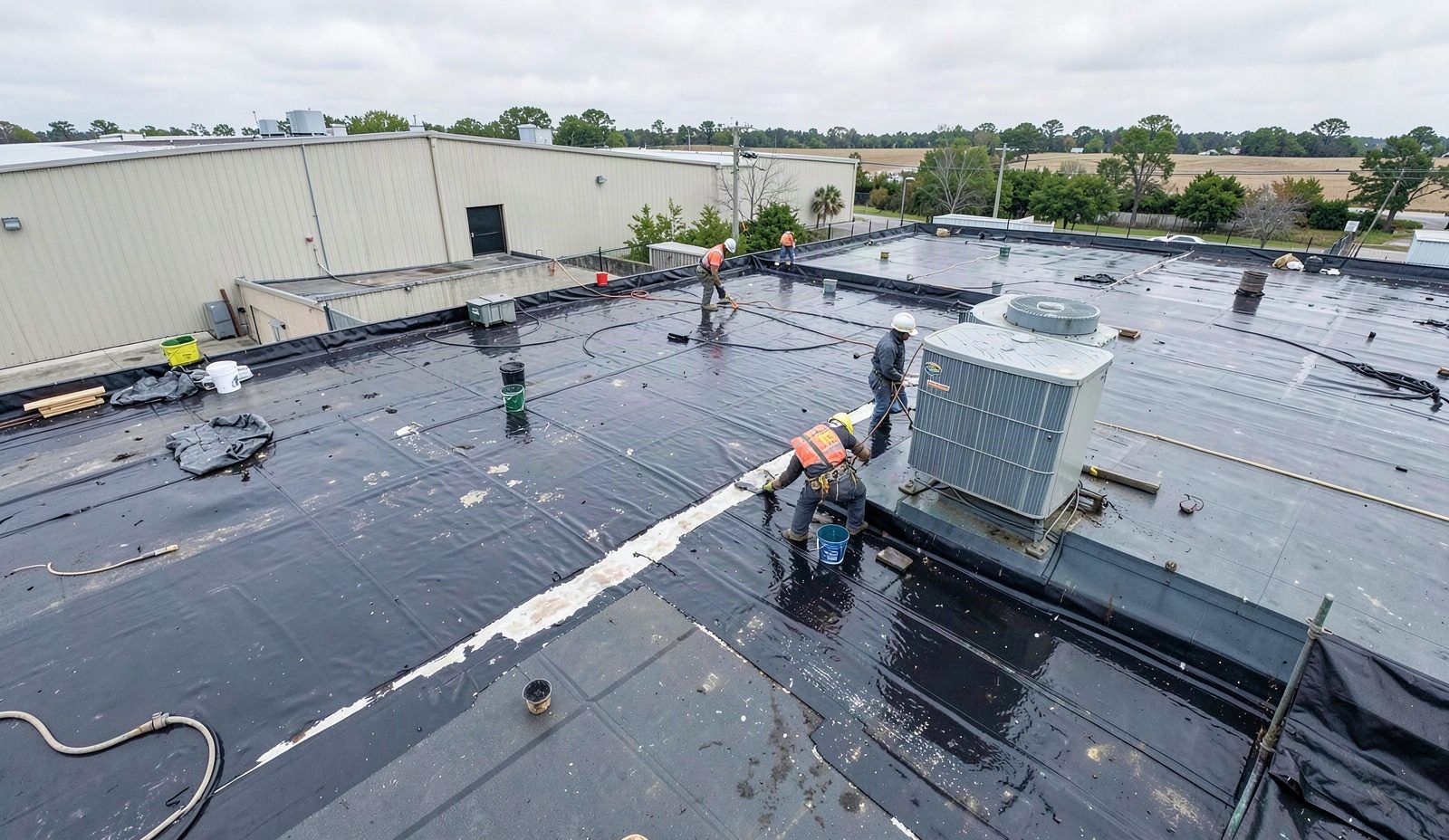
You call (614) 707-7333 and describe the leak location, roof type, and how the building is affected. A technician arrives within the confirmed window and walks the roof first, checking rooftop units, penetrations, and drain lines before touching the interior. Moisture readings get logged section by section, and any active drip gets a temporary catch and tarp inside within the first few minutes on site. You see the readings and the suspected source before any repair talk starts.
Once you approve the written scope, the crew stages material and sets containment tarps over the interior work path and any open ceiling grid below the roof. Tear-out removes only the saturated section the moisture readings identified, unless the deck itself has failed. New membrane gets welded or adhered to match the existing system, and flashing details at parapets and curbs get rebuilt to shed water instead of pond it. You approve any scope change, like added deck replacement, before the crew cuts further into the roof.
Before the crew leaves, a water test or seam probe check confirms the repair holds under load, and every weld or lap gets a visual and physical pull check. The technician walks the interior with you to confirm the leak source matches the ceiling stain you reported, and photographs the finished repair and readings for your records. You get a written summary of what was found, what got replaced, and what to watch for at the next heavy rain. Any follow-up scope, like interior ceiling repair, gets scheduled separately.
Roofing work in Columbus falls under Columbus building code jurisdiction and the Ohio Residential Code, and that oversight does not stop at single-family homes. A commercial roof tie-in, a new rooftop curb for HVAC, or a full membrane replacement gets reviewed against the same wind, drainage, and fire-rating provisions inspectors use citywide. Commercial roof drains and secondary scuppers fall under that same review, since undersized primary drainage is a common rejection reason on inspection. A crew that works Franklin County every week knows which inspectors want a mid-job walk before the membrane closes up and which ones sign off from photos alone. An out-of-area operator does not carry that relationship, and a rejected inspection on a commercial job means reopening a roof that was already weathertight.
Franklin County's commercial stock spans brick warehouses converted decades ago, strip retail built on slab in the 1970s, and glass-and-steel builds going up now, and each roof deck behaves differently under emergency load. A 1970s steel deck flexes more under a technician's weight than a modern deck rated for rooftop solar, which changes where a crew can safely stage material during a rush repair. Response logistics matter as much as material knowledge: a crew already staged with membrane rolls, cover board, and a generator-run weld gun can be on a roof fast, instead of ordering material after the call comes in.
Hiring a crew that skips a permit pull on structural repair work exposes a building owner to a stop-work order mid-repair, which stalls a tenant reopening far longer than the original leak did. That same standard applies whether the building sits downtown or along a suburban commercial corridor, since the code does not vary by neighborhood. Ask any contractor bidding an emergency commercial roof repair how they document the readings that justify tear-out versus patch. A team that answers with instrument readings and code sections, not a shrug, is the one that keeps the building compliant after the crew leaves. Call (614) 707-7333 to talk through the scope with a technician before deciding.
If this sounds close but not quite your situation, emergency roof repair may be the better starting point.
A call to (614) 707-7333 gets routed to a technician who asks for the building type, roof system, and what the leak is doing right now. Active leaks over occupied space get first priority, usually a same-day window. Storm damage response after a citywide event runs on a triage list, first tenant-occupied buildings, then vacant ones, with an updated arrival window texted as the schedule firms up. If weather or a bigger emergency ahead of yours pushes the window, you get a call updating the new time before the original slot passes. Scheduling for planned tie-ins runs on a standard booking calendar instead of the emergency queue.
Every rush repair starts with a walk-off protection plan. The crew lays rosin paper or plywood over interior floors along the access path from the loading door to the roof hatch or ladder. Rooftop debris, old membrane cuts, and wet insulation go straight into a lined trailer or dumpster staged on site. A magnetic sweep run over the work area after tear-out picks up stray screws and fasteners before foot traffic or drainage carries them into a scupper. When the crew leaves, the roof surface is swept clean and the interior path looks the way it did before the truck arrived.
The written estimate breaks scope into three drivers: how much membrane or deck has to come out, how the crew accesses the roof, and what material matches what is already installed. A ladder-access single-story building costs less labor time than a roof needing a crane-set lift for material. A technician measures the wet insulation footprint with a moisture meter before writing the scope, so the number reflects what is actually saturated instead of a rough guess. You get the written estimate before any tear-out starts, and nothing beyond that scope happens without a separate approval call.
Every technician runs supervised commercial roof calls for a set stretch before working a rooftop leak solo, and that includes a background check before they carry a company badge onto a client's property. Crews retrain each year on the current code cycle and manufacturer installation specs for TPO, EPDM, and modified bitumen systems, since a weld pattern that passed inspection years ago does not always meet today's wind uplift provisions. A senior technician spot-checks seam welds and fastening patterns on a percentage of jobs before closeout, checking pull strength on a sample seam with a probe before the crew leaves the site.
Self-repair is risky because wet single-ply membrane hides soft, saturated insulation that will not support a person's weight. Walking a rooftop without fall protection training and the right footwear turns a leak call into a fall hazard within minutes. A temporary fix is shutting off rooftop mechanical intakes near the leak and keeping foot traffic off the wet membrane until a technician arrives. Cornerstone Roofing Columbus handles the roof-level diagnosis and repair while you keep tenants and inventory clear of the drip line.
A good hire is judged by how the company diagnoses the leak before it quotes a fix. Ask whether the crew runs an on-site moisture scan rather than judging scope from a ground-level look at the ceiling stain. Confirm the crew follows OSHA's fall protection rule for unprotected low-slope roof edges, since that affects staging time and cost. Ask what brand and thickness of replacement membrane they plan to install, and whether a structural repair will need a permit pulled through the city.
Duration depends on roof size, access, and how much insulation has to be replaced. A single isolated leak on a low-slope membrane usually gets stabilized and repaired in one visit lasting three to six hours. A section with saturated insulation spanning multiple roof drains can take a full day, sometimes split across two visits if material has to be fabricated to match an unusual flashing detail. Columbus buildings with older built-up roofs sometimes need extra time locating the actual entry point, since water often travels under the membrane before it drips through the deck.
Estimates start with a verbal scope for temporary stabilization, like a tarp-down or emergency patch, quoted on the spot so water damage stops immediately. A written estimate for the permanent repair follows once the moisture scan is complete and the technician knows exactly how much membrane and insulation needs replacement. You approve that written scope before any tear-out begins. Columbus building owners managing an insurance claim can request the estimate broken into stabilization and permanent-repair line items for the adjuster.
Most active-leak calls get a technician on site the same day, often within a few hours for tenant-occupied buildings in the Columbus area. Storm events that hit multiple buildings at once shift the schedule to a triage list, with occupied and revenue-generating spaces moving up first. A call to (614) 707-7333 during business hours or overnight reaches a technician directly.
Coverage depends on the specific commercial property policy and what caused the damage, since businesses carry commercial property insurance rather than a homeowners policy. Sudden events like hail impact or wind uplift are typically covered perils, while gradual damage from long-term ponding or deferred maintenance usually gets denied. Adjusters want dated photos and moisture readings tied to the storm date, which is why documenting the damage immediately after discovery matters. Ask your agent whether your policy requires a professional roof inspection report before they approve a claim.
Low-slope commercial roofs across Franklin County do not shed heavy wet snow the way a pitched residential roof does. Snow sits on the field, melts from rooftop unit heat and interior warmth below, then refreezes at night along parapet walls and drains, and that pattern drives ice-dam and gutter-ice risk on commercial buildings the same way it does on houses. Older brick storefronts near Clintonville and mixed-use buildings around Victorian Village often carry roof drains that were undersized when the building went up decades ago, so meltwater backs up faster than the drain can clear it. Ponding water that sits for an extended stretch after a storm adds real weight to an aging deck and accelerates membrane wear at the low point, which is exactly where a rush repair crew finds the failure starting when they get the call.
Structural roof work and full membrane replacements on commercial buildings in Columbus go through the City of Columbus Department of Building and Zoning Services, while a straightforward like-for-like patch repair typically does not need a separate permit pull, though the final call on any given scope sits with that office. Older mixed-use buildings in Italian Village and the Brewery District often need that review for full replacements because of tight roof access and shared parapet walls between adjoining buildings, details the department checks case by case. A crew that pulls permits routinely knows which inspector reviews commercial roof scope and how to document a repair so the inspection closes on the first visit instead of needing a second.
Explore our service area and locate Cornerstone Roofing Columbus with ease. We're proudly local and serve the surrounding neighborhoods with fast response and honest pricing. Use the map to check our coverage area, or call us and we'll confirm in seconds.
Address:
Cornerstone Roofing Columbus, 1015 E Broad St, Columbus, OH 43205
How Much Does a Roof Replacement Cost in Columbus? 2026 Pricing Breakdown, practical local guidance from Cornerstone Roofing Columbus, Colum…
Read More
Commercial Roof Maintenance Tips for Columbus Property Managers, practical local guidance from Cornerstone Roofing Columbus, Columbus's trus…
Read More
Skylight Leaks in Victorian Village Homes, Repair or Replace?, practical local guidance from Cornerstone Roofing Columbus, Columbus's truste…
Read More
The Best Time of Year to Replace a Roof in Columbus, practical local guidance from Cornerstone Roofing Columbus, Columbus's trusted roofing …
Read More