

April 1, 2025
How Much Does a Roof Replacement Cost in Columbus? 2026 Pricing Breakdown
How Much Does a Roof Replacement Cost in Columbus? 2026 Pricing Breakdown, practical local guidance from Cornerstone Roofing Columbus, Colum…
Read More




A hail hit roof rarely announces itself the way a leak does. Walk your yard after a summer storm and you will spot the real evidence first: dented gutter aprons, cracked vinyl siding corners, bruised hosta leaves under the downspout, and a scatter of asphalt granules pooled where water drains off the eave. On the roof itself, look for shingles with soft, spongy spots you can press with a thumb, exposed fiberglass mat where the granule coating knocked loose, and cracked or curled tabs along the ridge. Inside, a musty smell in the attic after a storm often means water already found a fastener hole, even if the ceiling below still looks dry. A proper hail damage roof inspection checks all of that before anyone talks about hail damaged shingle replacement, because bruising without a visible crack still breaks down the shingle's waterproofing layer underneath.
Central Ohio's summer thunderstorms bring hail and straight-line wind that are a common cause of asphalt shingle and roof penetration damage across Franklin County. A single cell can drop marble to golf-ball sized stones over German Village and Short North in the same afternoon it clears Clintonville, and the impact angle from straight-line wind means damage often concentrates on one slope of the roof, not all four. That uneven pattern is why a full hail damage roof inspection walks every plane of the roof, not just the side visible from the street.
Central Ohio's humid continental climate adds a second layer of stress. The region logs roughly 40 to 60 freeze-thaw cycles each winter, and it is not a lake-effect snow zone, so the damage comes from repeated expansion and contraction rather than sustained heavy accumulation. A shingle already bruised by August hail has less flexibility left to survive that cycling, and cracks that started as hairline splits in October often telegraph into open gaps by February.
Delaying repair on a hail hit roof adds damage instead of saving money. Granule loss accelerates UV breakdown of the asphalt mat underneath, soft spots turn into punctures during the next wind event, and water finds the decking through fastener holes that were only hairline cracks the week before. Left alone through a second freeze-thaw season, a punctured shingle mat lets moisture reach the roof deck, and plywood or plank sheathing that stays wet begins to delaminate and lose its ability to hold a nail. Insurance carriers also expect prompt documentation. A roof hail damage insurance claim filed with photos taken in the days after the storm, before the next round of freeze-thaw cycling scrubs away the bruise pattern, moves through underwriting faster than one filed weeks later once the visible impact marks have weathered smooth.
See hurricane damage roof repair for how the related work is scoped and priced.
Communities like r/Roofing are a good reality check on pricing and practices before you sign anything.
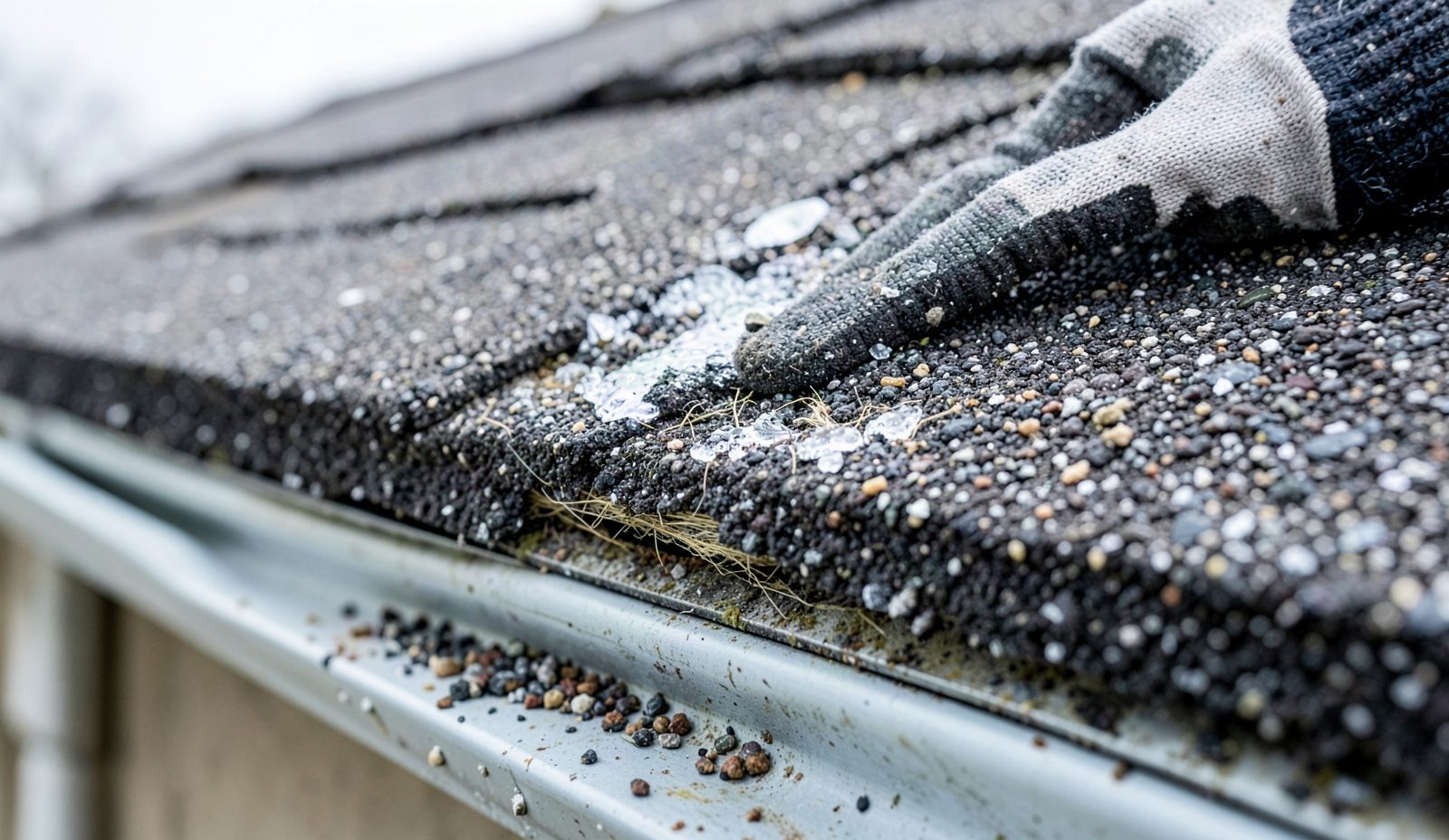
Every hail damage roof repair call starts with a systematic diagnostic performed on site, mapped slope by slope. We mark a test square, a 10 foot by 10 foot section, on each roof plane and count impact hits inside it, the same method insurance adjusters use to decide whether a slope needs full replacement or spot repair. We run a chalk test across suspect shingles, rubbing chalk over the surface to reveal the circular bruise pattern hail leaves in the mat even when the granule coating looks intact. Then we check the soft metals: pipe boots, gutter aprons, ridge vent louvers and AC condenser fins dent more easily than asphalt, so a uniform pattern of dings on those surfaces confirms hail size and direction even on a roof where the shingles themselves show no visible cracking yet.
Where hail damage forces a tear-off down to the decking, we probe exposed plywood or plank sheathing with a pin-type moisture meter, and a reading above 16 percent tells us the deck needs replacing rather than drying in place. That same tear-off is the moment we verify code compliance on the underlayment. Section 905.1.2 of the Ohio Residential Code requires an ice barrier extending at least 24 inches inside the exterior wall line, made of two cemented layers of underlayment or a self-adhering polymer-modified bitumen sheet, and any repair that opens the eave line gets that barrier reinstalled to spec, not patched with felt alone.
Material choice matters as much as the tear-off itself. A standard three-tab or a GAF Timberline HDZ architectural shingle carries a UL 2218 Class 3 impact rating, meaning it resists a 1.25 inch steel ball dropped from height without splitting the mat. Step up to an impact-resistant line like Owens Corning Duration FLEX or a Class 4 rated GAF product and the mat holds against a 2 inch steel ball, roughly double the kinetic energy, at a modest weight increase per bundle. For a Columbus roof that has already taken one hailstorm this decade, that jump in impact class is the difference between a spot repair next time and another full hail damaged shingle replacement.
Permit and inspection questions? Building & Zoning Services is the office we coordinate with on every permitted Columbus job.
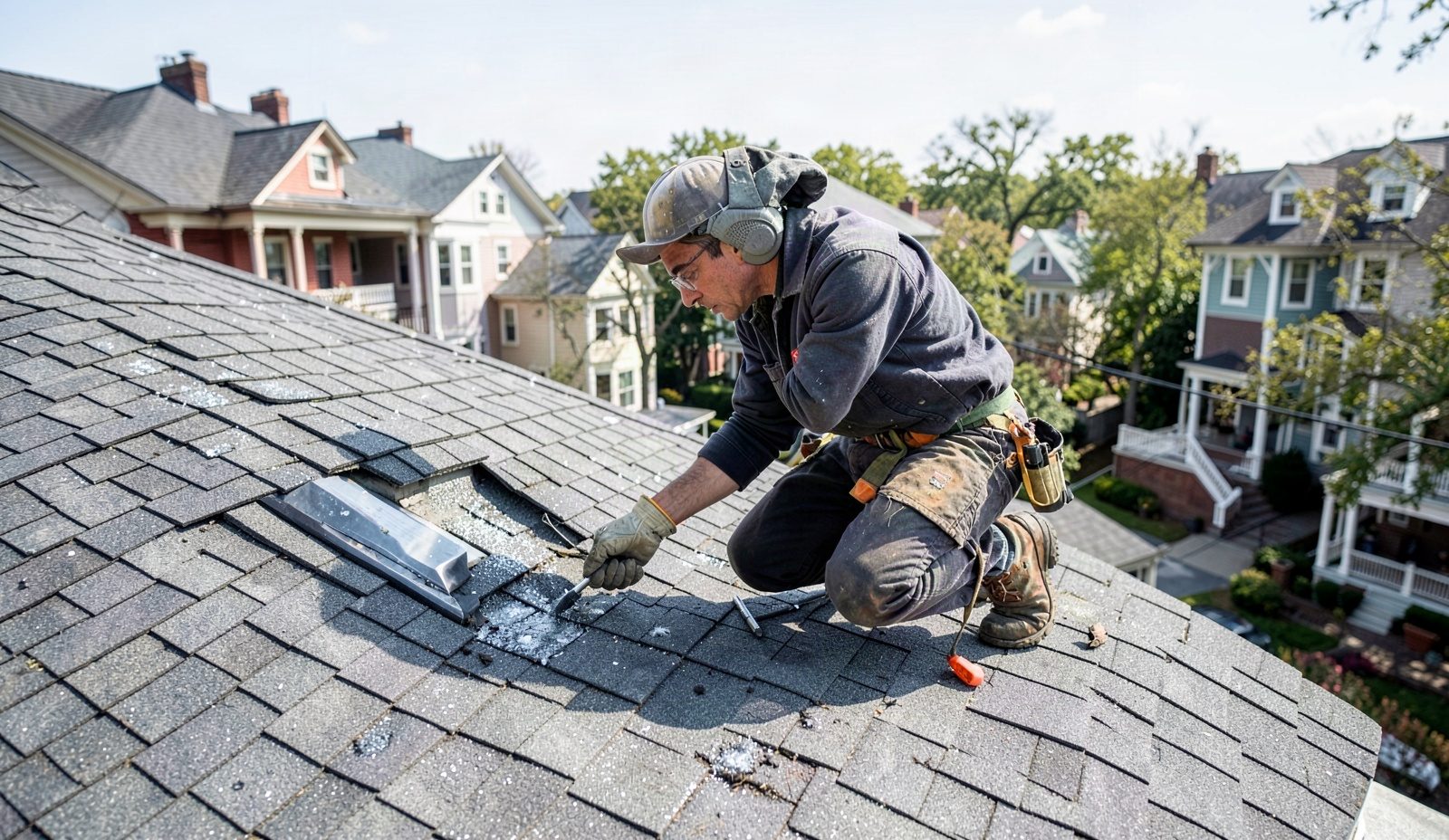
You describe the storm date and any leak signs on the phone, and we schedule a technician to walk the roof in person rather than quote from a photo. On site, the technician climbs every slope with a ladder rated for roof access, photographs impact patterns, and checks soft metals and shingle mat condition before forming an opinion. You get a plain explanation of what is hail bruising, what is existing wear, and what is unrelated to the storm at all, standing next to the technician on the ground or in the attic if decking access is needed.
Once you approve the written scope, the crew protects landscaping and driveway surfaces, sets up debris containment, and begins tear-off on only the slopes the inspection flagged, or the full roof if damage crossed multiple planes. You decide on shingle line and impact class before materials get ordered, and if the crew finds decking rot or additional flashing damage once shingles come off, they stop and call you rather than proceeding on assumption. Underlayment, ice barrier and flashing details get installed to current code before the new shingle course goes down.
Before the crew leaves, a lead installer walks every repaired slope checking nail lines, flashing laps and ridge alignment by sight and by hand. Gutters and downspouts get cleared and run with a hose to confirm water sheds correctly off the new shingle course. You get a walkthrough covering exactly what was replaced, what was repaired in place, and photos documenting the finished work for your records or your insurance file. Any leftover material or debris leaves with the crew the same day.
Roofing work in Columbus falls under Columbus building code jurisdiction and the Ohio Residential Code, and that code also governs how a repair handles heavy wet snow and ice loading, a real risk once Central Ohio moves from a hail-heavy summer into an ice-dam-prone winter. Full roof replacements and structural repairs typically need a permit, while minor like-for-like shingle repairs often do not, and the jurisdiction with authority over your address makes that determination. A technician who only works hail claims in warmer states will not think about the ice-dam transition, and a repair that ignores it can hold up fine through August only to back water under the shingles by January.
Every hailstorm that rolls through Franklin County draws door-knocking crews from out of state, and most of them are gone before the first freeze-thaw cycle of winter tests their work. They rarely pull permits for full tear-offs, rarely know which repairs qualify as minor work that skips the permit step, and rarely return calls once the adjuster's check clears. A crew that works this metro year-round has already filed permits for full replacements, knows which repairs qualify as minor, and has a reputation in the neighborhood that outlasts a single storm season.
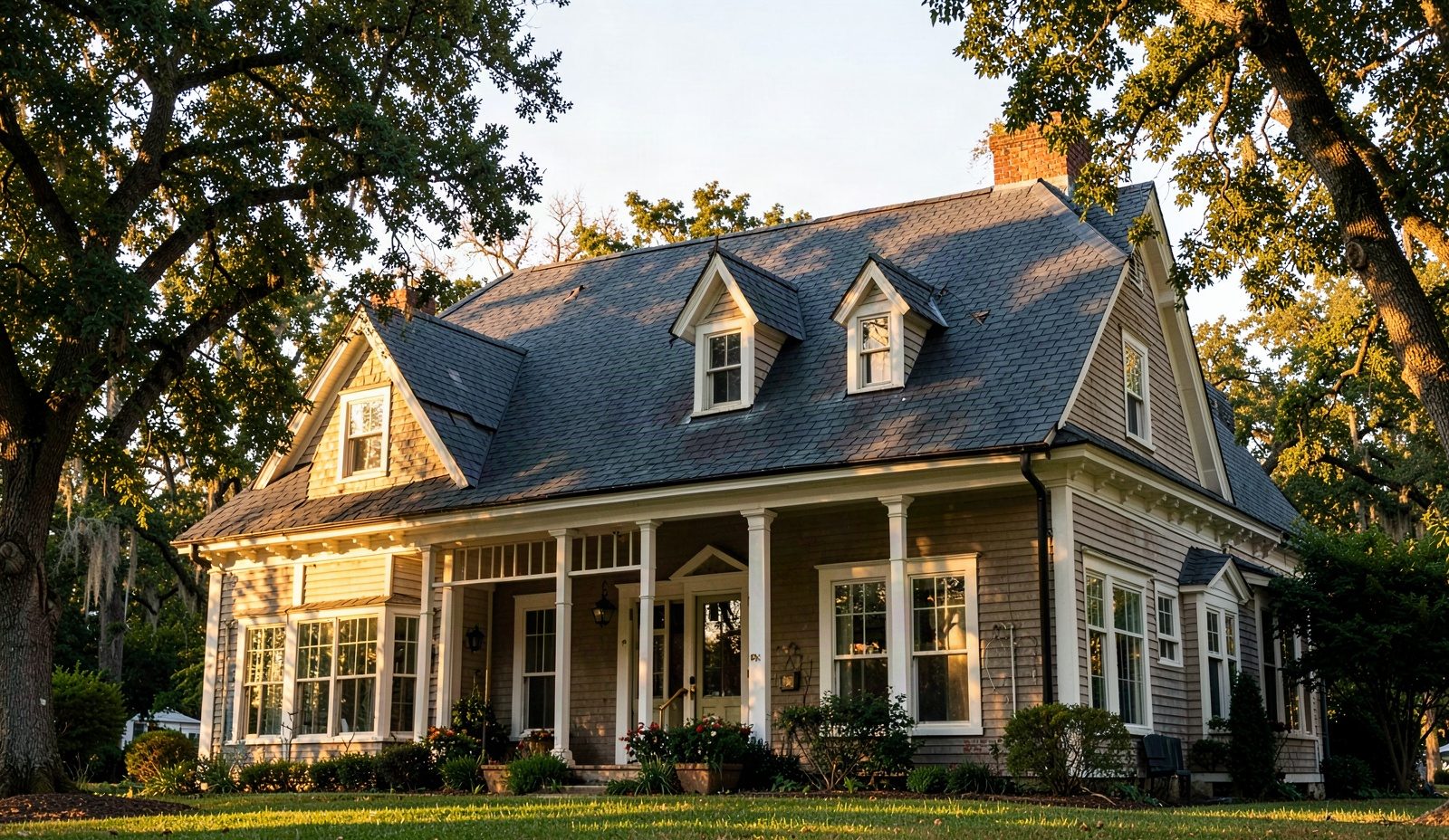
Columbus housing stock ranges from steep-pitched pre-war bungalows to low-slope additions bolted onto mid-century ranches, and each roofline reacts to hail differently. A steep original roof sheds hail-driven rain fast but catches wind-blown stones at a sharper angle on the windward slope. A low-slope addition holds standing water longer after a storm, which hides granule loss until the shingle mat is already soft. Original slate and wood-shake roofs, common on the oldest blocks near the urban core, change the hail conversation entirely, since a cracked slate tile needs full-piece replacement rather than a shingle patch, and matching that piece by hand takes longer than a standard asphalt repair.
If this sounds close but not quite your situation, fallen tree roof damage repair may be the better starting point.
For storm resilience, the IBHS FORTIFIED standard is the playbook, several of its upgrades cost little during a re-roof.
After a hail event, call volume across Columbus spikes fast, so we book by storm date and slope urgency rather than first-come order alone. Active leaks and exposed decking move to the front of the queue. Once you call, we confirm a specific arrival window rather than an all-day guess, and we call thirty minutes ahead so you are not waiting around. If weather delays the visit, a lingering storm cell or lightning risk on the roof, we call to reschedule the same day. Most inspections happen within days of your call, because a bruised shingle mat only gets more fragile the longer it sits exposed.
We lay tarps over landscaping and driveway surfaces before the first bundle of damaged shingles comes off the roof, and we set up a chute or trailer for debris instead of letting torn-off material pile in the yard. A magnetic roller sweep runs the lawn, driveway and flower beds at the end of the day to pick up stray roofing nails, the kind that puncture tires and bare feet for months if missed. Gutters get cleared of granules and torn shingle fragments before we leave, and the job site gets a final walk to confirm nothing metal, sharp or heavy got left behind.
Your estimate reflects four things: how many roofing squares show hail damage, how steep and how many stories your roof is, which shingle line you choose, from a standard architectural shingle to an impact-resistant Class 4 line, and what condition the decking is in once we open it up. We write every line item before any tear-off starts, so labor, material tier and disposal costs appear as separate figures you can review. Nothing gets torn off until you approve that written scope, and if the decking inspection turns up rot the crew did not expect, we call before extending the work.
Every technician who works a Columbus roof alone has passed a background check and spent a documented shadow period on live jobs under a lead installer before dispatching solo. We run yearly refreshers on the current Ohio Residential Code cycle, so field crews know underlayment and ice barrier requirements without having to look them up mid-job. A lead installer spot-checks finished slopes on a rotating basis, checking nail placement and flashing laps against the same standard used on the shadow-period jobs, so competence gets checked on an ongoing basis throughout the year.
Cost depends on how many roofing squares show damage, your roof's pitch and access, and whether the decking underneath needs replacing. A spot repair on one slope costs far less than a full tear-off across multiple planes. Older Columbus homes with plank decking or steep dormers typically need more labor time than a simple ranch roof. Cornerstone Roofing Columbus provides an itemized written quote after the on-site inspection, broken into material, labor and disposal, so you see what drives the number before approving any work.
Yes, most hail-damaged roofs can be repaired rather than fully replaced when the bruising is confined to one or two slopes and the decking underneath is still dry. Repair works best when replacement shingles from the same product line are still available to match color and profile. Once damage spreads across most of the roof's surface or the decking has taken on moisture, replacement usually makes more sense than patching slope by slope.
Coverage depends on your policy's wind and hail provisions and how old your roof was on the date of the storm. Most Ohio homeowner policies cover sudden hail impact but may apply a separate wind and hail deductible or an actual cash value schedule tied to roof age. Filing promptly matters, since adjusters weigh photo documentation taken within days of the storm more heavily than photos taken weeks later.
Repair is worth it for most older Columbus homes as long as the roof deck is still sound and matching shingles remain available. Homes with original plank decking near the urban core often hold up well to a targeted slope repair rather than a full replacement, provided the decking passes a moisture check first. If the roof has already been patched across multiple storm seasons, a full replacement usually makes more sense than another round of spot repairs.
A single-slope spot repair usually finishes in one day. A full tear-off and reroofing across every plane typically takes two to four days depending on roof size, pitch and how much decking needs replacing. Rain or another storm cell moving through Central Ohio mid-job can add a day, since shingles cannot go down safely over wet decking. Your technician gives a specific day count after seeing the actual scope.
Compare quotes line by line, not by the bottom number alone. Check whether each quote specifies the shingle product line and impact class, whether tear-off to bare decking is included or just an overlay, and whether disposal and cleanup are itemized separately. A quote that skips the decking inspection or bundles labor and material into one vague figure usually hides scope gaps that surface once work starts.
Cost varies with shingle tier, roof access and the size of the damaged area together. Choosing a standard architectural shingle instead of an impact-resistant Class 4 line changes the material cost more than labor does, and a steep, multi-story roof adds rigging and safety equipment time that a single-story ranch does not need. Cornerstone Roofing Columbus prices each job after seeing the actual roof, since two roofs with the same square footage rarely cost the same to repair.
Columbus's older urban blocks, including Victorian Village, Italian Village and the Brewery District, carry steep original rooflines with dormers, cross-gables and narrow valleys built long before asphalt shingles were the standard material. Those complex shapes catch hail at more angles than a simple gable roof, and the valleys trap wind-driven stones that a flatter roof would shed straight to the gutter line. Many of these homes still have solid plank decking rather than plywood sheathing, and plank reacts to moisture differently, it swells and gaps along the board seams rather than delaminating in sheets. A crew that has not worked plank decking before can misjudge how much of it to open up during a tear-off. Matching new shingle profiles to these older rooflines also takes more cutting and fitting around dormers and chimney flashing than a straightforward ranch roof, which changes both the labor sequence and the material waste factor on the job.
Full hail damage roof repair that requires structural work or a complete tear-off typically needs a permit, and for Columbus addresses that permit runs through the City of Columbus Department of Building and Zoning Services, with other jurisdictions in the metro handled by their own city building department or by Franklin County. Minor like-for-like shingle repairs often skip that step, but the office holding jurisdiction over your address makes the final call. Knowing which category a job falls into before work starts keeps a homeowner from paying for an unnecessary permit, or from having an inspector flag unpermitted structural work during a later home sale. Contractors who work this metro regularly already know which forms that office expects for a tear-off versus a repair, and that familiarity keeps a straightforward hail claim from turning into a paperwork delay months after the shingles are already on.
Explore our service area and locate Cornerstone Roofing Columbus with ease. We're proudly local and serve the surrounding neighborhoods with fast response and honest pricing. Use the map to check our coverage area, or call us and we'll confirm in seconds.
Address:
Cornerstone Roofing Columbus, 1015 E Broad St, Columbus, OH 43205
How Much Does a Roof Replacement Cost in Columbus? 2026 Pricing Breakdown, practical local guidance from Cornerstone Roofing Columbus, Colum…
Read More
Commercial Roof Maintenance Tips for Columbus Property Managers, practical local guidance from Cornerstone Roofing Columbus, Columbus's trus…
Read More
Skylight Leaks in Victorian Village Homes, Repair or Replace?, practical local guidance from Cornerstone Roofing Columbus, Columbus's truste…
Read More
The Best Time of Year to Replace a Roof in Columbus, practical local guidance from Cornerstone Roofing Columbus, Columbus's trusted roofing …
Read More