

April 1, 2025
How Much Does a Roof Replacement Cost in Columbus? 2026 Pricing Breakdown
How Much Does a Roof Replacement Cost in Columbus? 2026 Pricing Breakdown, practical local guidance from Cornerstone Roofing Columbus, Colum…
Read More




A hard line of storms crosses German Village or Short North, and by the next morning you spot a brown ring spreading across the bedroom ceiling. Or you walk the yard and find shingle grit, the protective granules that once sat on your roof, pooled at the base of the downspout. Neither sign is minor. A ceiling stain means water already crossed the underlayment and reached the decking. Granule loss exposes the asphalt mat underneath to ultraviolet light and the next round of rain, and that patch of roof fails faster than the rest of the field. A post storm roof inspection catches both problems while they are still isolated, before they spread across the whole slope.
Central Ohio runs through roughly 40 to 60 freeze-thaw cycles every winter, and each cycle works water into any crack in a shingle or a bent seam in flashing. Water that seeps into a hairline crack during a thaw expands when the temperature drops again overnight, and the crack grows wider with every cycle. By March, a flashing seam that looked tight in October can be pulled a quarter inch open at the chimney or a sidewall. Homeowners in older bungalows and newer builds alike see this same failure pattern, because freeze-thaw stress does not care how old the roof is, only how compromised it already was going into winter.
Summer adds a second stress. Thunderstorms move through with hail and straight-line wind, a common cause of asphalt shingle damage and torn or punctured roof penetrations around plumbing stacks and chimney flashing. A shingle mat bruised by hail does not always tear open right away. It softens first, the fiberglass mat cracking beneath the granule surface, and that softened spot fails during the next windstorm instead of the one that caused it. Straight-line wind gusts lift the tab edge, break the factory seal strip, and leave a shingle that looks fine from the ground but flaps loose in the next thirty mile an hour gust.
Waiting on a roof damage assessment after storm exposure lets small problems compound. A cracked mat left unsealed lets water track sideways under three or four courses of shingles before it ever drips through the ceiling. Wet decking swells, loses its nail-holding strength, and starts to sag between rafters. Insulation packed with moisture stops performing and starts growing mold within days. Insurance adjusters also look at timing: a claim filed weeks after a documented storm event invites questions about whether the damage happened that night or accumulated over a season of neglect. An emergency roof damage evaluation done soon after the event ties the damage to the date, not to guesswork later.
Our page on commercial roof inspections covers that side of the work in more depth.
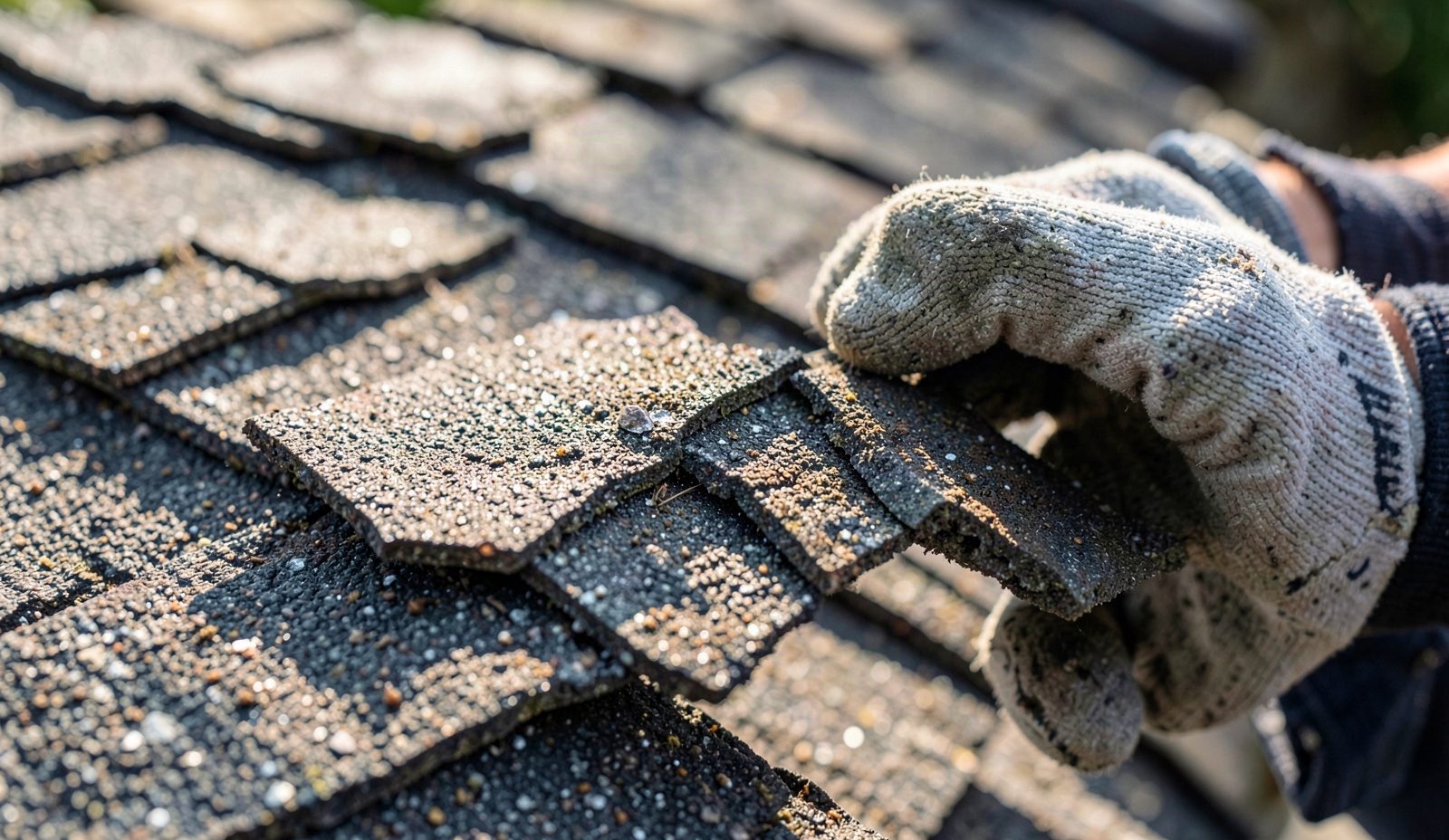
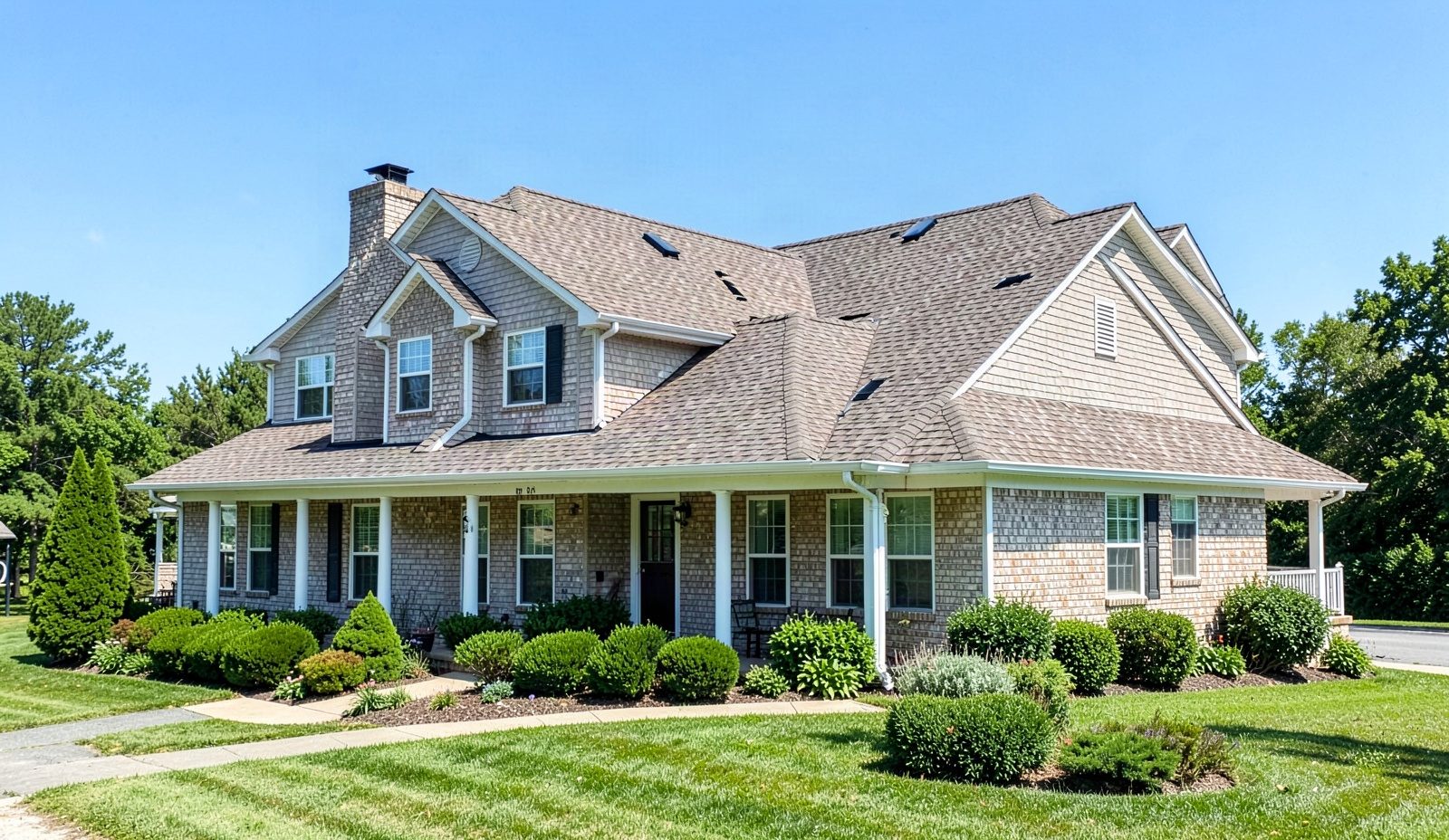
Every after-storm roof inspections call starts on the ground. A technician walks the perimeter first, checking gutters and downspouts for granule concentration and dented soft metal at the vent caps, which correlates to hail size before anyone sets foot on the slope. Once on the roof, the technician works one furrow at a time across the whole field of the shingle, including areas invisible from the driveway like leeward slopes and dormer valleys, since wind uplift concentrates there. This is the difference between a real emergency roof damage evaluation and a five-minute driveway guess.
The physical test matters more than the visual one. A technician presses the flat blade of a putty knife or a screwdriver against a suspected hail strike. A firm, resistant surface means the mat is intact. A spongy give under light pressure means the fiberglass mat has fractured, even if the granule surface looks unbroken, and that spot gets marked for replacement and noted separately from cosmetic granule loss. At the eaves, the same visit checks for ice barrier compliance under Ohio Residential Code Section 905.1.2, which requires an ice barrier extending at least 24 inches inside the exterior wall line on asphalt shingle roofs. If a storm has torn back the first course of shingles, this is the moment to confirm that underlayment is actually there and reaches that mark before new shingles go down over it.
Material choice drives how the roof performs during the next storm as well as this one. A standard three-tab or a Class 3 impact-rated line like GAF Timberline HDZ resists hail up to a defined threshold under UL 2218 testing, but a Class 4 impact-rated line such as GAF Timberline AS II or Owens Corning Duration STORM uses a modified asphalt layer that flexes on impact instead of cracking. Class 4 shingles also carry higher wind ratings, up to 130 mph on some lines versus 110 mph on standard architectural shingles. On a roof that has already taken one hailstorm, upgrading the replaced sections to Class 4 is a documented decision worth discussing with a technician.
Permit and inspection questions? Building & Zoning Services is the office we coordinate with on every permitted Columbus job.
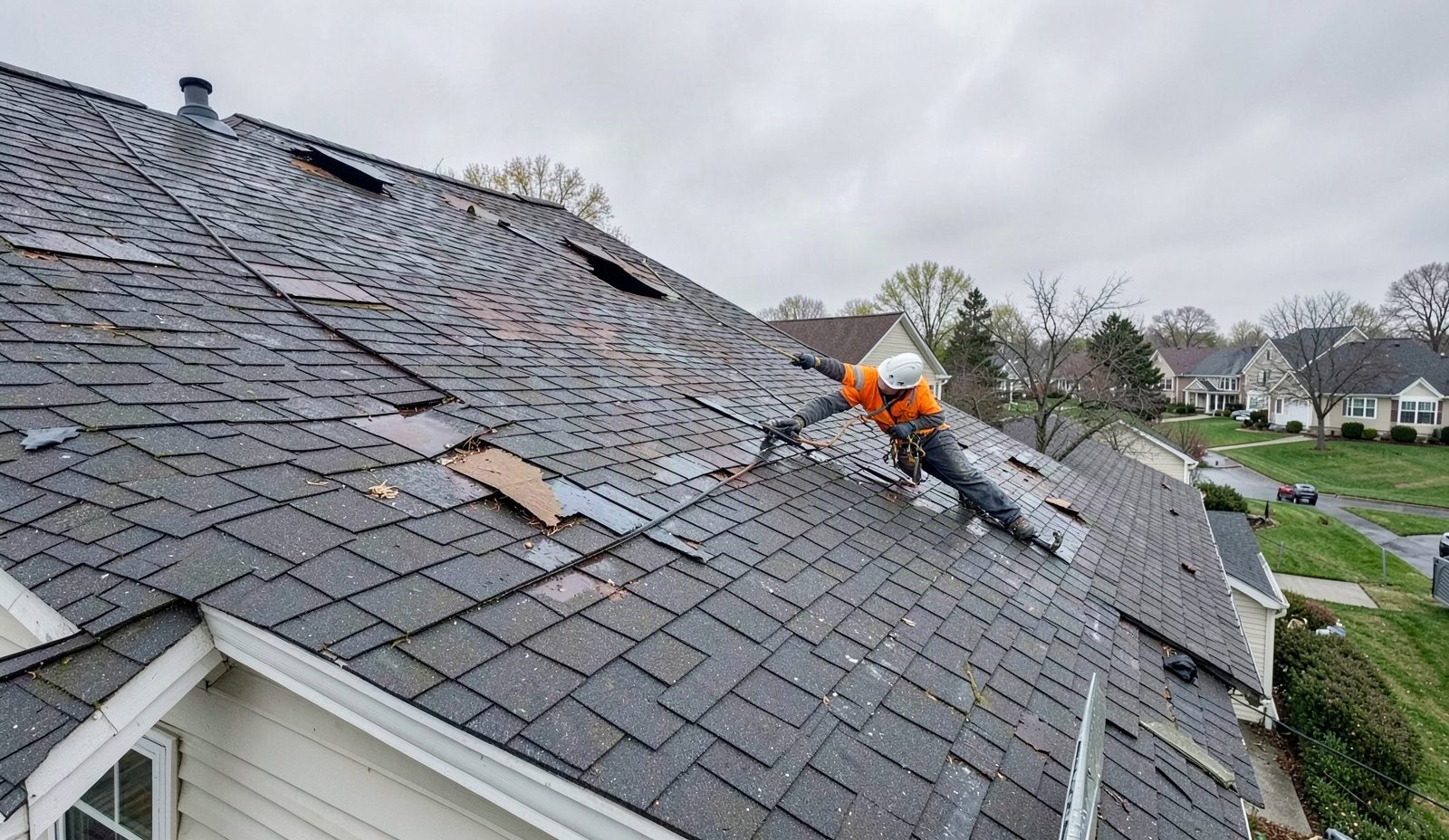
You call (614) 707-7333 and describe what you're seeing, a leak, missing shingles, hail dents on the gutter. Dispatch schedules a technician and gives an arrival window. On site, the technician walks the roof perimeter, checks the attic for active moisture with a handheld moisture meter, and photographs every finding, granule loss, cracked mat, lifted flashing, from both ground level and roof level. You get a plain explanation of what's damaged, what's cosmetic and what's structural, before any paperwork starts. This walk typically takes under an hour for a standard single-family roof.
Once you approve the written scope, the crew sets up ladder standoffs and roof jacks, tarps the work zone below, and stages material away from flower beds and window wells. Repairs proceed by section, tear-off, decking check, underlayment, then shingle or flashing replacement, rather than opening the whole roof at once in changeable weather. Any decking found soft or delaminated during tear-off gets flagged and priced separately before replacement, never assumed into the original scope. You get a mid-job update if the crew finds damage that wasn't visible from the initial walk, so nothing gets replaced without your sign-off first.
Before the crew leaves, the technician checks fastener count and placement on repaired sections, runs a water test at repaired flashing points to confirm the seal holds, and does a final magnetic sweep of the yard for stray nails. You walk the ground perimeter together while the technician points out what was replaced and where. Photo documentation from before and after gets compiled into a report you can hand directly to an insurance adjuster or keep for your own records. Any leftover material or debris leaves with the crew that same visit.
Roofing falls under Columbus building code jurisdiction and the Ohio Residential Code, and a crew unfamiliar with that code cycle can install a repair that fails the next inspection request from your insurer or a future buyer's inspector. Cornerstone technicians check every after-storm repair against the same code requirements a city plan reviewer would use.
Columbus's housing stock ranges from balloon-framed homes built before mid-century to newer platform-framed subdivisions on the outer edges of Franklin County, and each framing style responds differently to wind uplift and snow load. A balloon-framed roof deck often runs skip-sheathing instead of continuous OSB, and a technician who does not check for that before setting fasteners gets poor pull-through resistance on a re-nail. Knowing which framing era sits under which roofline is not something an out-of-area crew learns from a satellite photo.
Storm-chasing crews that arrive from out of state after a regional weather event often quote fast and disappear before the first freeze-thaw cycle finds the gaps in their work. They rarely carry local material stock matched to Franklin County wind exposure, and they move on to the next storm zone before a follow-up question ever gets answered. A Columbus-based crew answers the same phone number six months later. Call (614) 707-7333 to talk through what a code-compliant repair looks like for your specific roof.
More detail on storm damage roof repair is on its own page.
Call after a storm and you get a specific arrival window that day or the next morning. Dispatch confirms your address, asks what you saw or heard, hail size, wind direction, when the leak started, and gives you a two-hour window rather than an all-day wait. If severe weather is still active nearby, the technician calls ahead to adjust the window. Multiple storm-damage calls on the same day get triaged by severity, active leaks and exposed decking first, cosmetic granule loss and minor flashing lift after. You get a callback with the updated time if anything shifts.
Every ladder placement gets a foam pad or plywood standoff against the gutter edge to prevent new dents. Tarps go down over any landscaping or window wells directly below the work area before a single old shingle comes off the roof. Torn-off material and old flashing go straight into a job trailer or contractor bags instead of sitting staged on the lawn overnight. A magnetic roller sweeps the driveway and grass line at the end of the visit to pick up stray roofing nails, the kind that puncture tires and bare feet for weeks if left behind. You get a swept, walkable yard when the truck pulls out.
What drives the estimate is scope, access and what the storm actually did. A steep pitch above two stories needs rope and harness setup that a single-story ranch does not. Full tear-off to the decking prices differently than a section-specific flashing repair around one chimney. The technician writes up exactly which slopes, materials and labor line items are included before anyone climbs a ladder with tools, and you approve that written scope before work starts. Storm-related repairs also get a note on which items align with typical insurance claim categories, useful if you plan to file.
Every technician passes a background check before working a Columbus route alone. New hires shadow an experienced tech through a set number of storm-damage calls before running one solo, learning the physical tests, mat-firmness checks, flashing lift tests, hands-on rather than from a manual. Technicians also run through current code-cycle updates each year, since the Ohio Residential Code and local amendments shift enforcement details from one inspection cycle to the next. Field competence gets checked through spot audits, a supervisor reviewing photo documentation and measurements from a sample of completed jobs each month, beyond the one-time hiring test.
Checking starts on the ground before you ever look at the roof itself. Use binoculars to scan the ridge line for lifted or missing cap shingles, and check downspouts for a heavier pile of granules after the storm. Look inside the attic with a flashlight for damp rafters or daylight around plumbing stacks. Avoid climbing a wet roof yourself. Cornerstone technicians handle the physical walk with tools built for Columbus's steep porch roofs and dormers, so nothing gets missed from an angle you can't see from the yard.
Yes, hail inspection matters even when no leak has shown up yet. Hail bruises a shingle's fiberglass mat without always breaking the surface granules, so damage stays invisible until a windstorm finishes the job weeks later. Columbus sees hail with nearly every strong summer thunderstorm cell that rolls through Franklin County. Getting eyes on the roof within days of a hail event, rather than after a leak develops, gives you documentation tied to a specific storm date instead of a vague timeline an insurer can dispute.
Claim timing depends on your insurance policy's notice requirement, usually spelled out in the declarations page. Most Ohio insurers expect notice within a reasonable window after the storm event, and waiting through multiple weather events makes it harder to tie damage to one specific date. Filing soon after a hailstorm or windstorm, backed by dated photos and a technician's written assessment, gives the adjuster a clear timeline to work from. Check your specific policy for the exact language on filing windows.
Cost varies with roof size, storm severity and documentation needs. Some companies advertise a free storm damage inspection to get a foot on your roof, then upsell heavily once they're up there. Ask what the visit actually includes, a ground walk, a full roof walk, attic check, and a written report you can hand to an adjuster. Cornerstone prices scope after that first walk, so you see what you're paying for before any repair work begins.
The inspection itself never needs a permit. Full roof replacement or structural decking repair typically requires one, while a minor like-for-like shingle or flashing patch often does not. The City of Columbus Department of Building and Zoning Services makes that determination for Columbus addresses, and other Franklin County jurisdictions route through their own local building department. Cornerstone flags anything that crosses into permit territory before work starts, so you are not caught off guard mid-repair.
Coverage depends on whether the damage traces to a specific covered event like hail or wind. Most standard Ohio homeowner policies cover storm perils but exclude damage from age, poor maintenance or a roof already near the end of its service life before the storm hit. An adjuster weighs the technician's written assessment and dated photos against the storm date on record for your area. Cornerstone's documentation format lines up with what adjusters typically request, so the claim moves without a second visit to re-document something already covered.
Prices vary because scope, material grade and documentation depth differ from one company to the next. A company quoting a walk-by visual check charges less than one that includes attic moisture checks, a full photo report and fastener verification. Material grade matters too, a basic three-tab patch differs in labor and material from a Class 4 impact-rated shingle section matched to the surrounding roof. Ask each company for a written, itemized scope before comparing numbers, since the sticker figure alone hides what's included.
Central Ohio gets heavy, wet snow rather than the dry powder of a lake-effect zone, and Columbus sits outside that lake-effect band entirely. Wet snow packs onto a roof deck and refreezes at the eaves, building the ice dams that back water up under the first few courses of shingles and into soffits. Older homes in Clintonville and Victorian Village, many with narrower eave overhangs and older gutter systems, see this ice-dam and gutter-ice risk more than newer builds with wider overhangs. A storm-damaged roof entering winter with even one cracked shingle or lifted flashing seam gives that meltwater a direct path inside, and the damage that started as a hailstorm's problem becomes a February ceiling stain in addition to what caused the September damage.
Storm repairs that go beyond like-for-like shingle replacement, a full tear-off or structural decking work, typically require a permit, while minor patch repairs to a section of flashing often do not, and the applicable city building department makes that determination based on scope and address. A crew that skips this step saves you from an unpermitted structural repair that surfaces as a problem during a home sale inspection years later. Neighborhoods like Italian Village and the Brewery District carry a mix of century-old rooflines and newer infill construction sitting on the same block, and each structure gets evaluated against the code requirements that fit its own build era and repair scope instead of a blanket assumption based on the house next door.
Explore our service area and locate Cornerstone Roofing Columbus with ease. We're proudly local and serve the surrounding neighborhoods with fast response and honest pricing. Use the map to check our coverage area, or call us and we'll confirm in seconds.
Address:
Cornerstone Roofing Columbus, 1015 E Broad St, Columbus, OH 43205
How Much Does a Roof Replacement Cost in Columbus? 2026 Pricing Breakdown, practical local guidance from Cornerstone Roofing Columbus, Colum…
Read More
Commercial Roof Maintenance Tips for Columbus Property Managers, practical local guidance from Cornerstone Roofing Columbus, Columbus's trus…
Read More
Skylight Leaks in Victorian Village Homes, Repair or Replace?, practical local guidance from Cornerstone Roofing Columbus, Columbus's truste…
Read More
The Best Time of Year to Replace a Roof in Columbus, practical local guidance from Cornerstone Roofing Columbus, Columbus's trusted roofing …
Read More