

April 1, 2025
How Much Does a Roof Replacement Cost in Columbus? 2026 Pricing Breakdown
How Much Does a Roof Replacement Cost in Columbus? 2026 Pricing Breakdown, practical local guidance from Cornerstone Roofing Columbus, Colum…
Read More




A brown ring spreading across the ceiling drywall means water already crossed the insulation and hit the paint. If the attic smells like wet cardboard, moisture has been sitting in the decking for longer than a day. Curling shingle tabs along the ridge and granules collecting in the downspout screen are the visible signs of a mat that has already lost its waterproofing layer, not a cosmetic issue you can put off until fall.
Central Ohio's climate is the reason this happens on a schedule. The region runs through roughly 40 to 60 freeze-thaw cycles every winter, and each cycle drives moisture into a shingle's asphalt mat, freezes it, and expands it a fraction of a millimeter. Do that sixty times and the mat cracks and the flashing seals around chimneys and plumbing vents split at the seam. Homes near Short North and Clintonville, many built before mid-century with original step flashing, show this wear first because the metal has flexed through more winters than a newer subdivision roof.
Summer brings the other half of the problem. Thunderstorms roll through with hail and straight-line wind that bruise shingle mats, punch through soft spots, and lift tabs enough for wind-driven rain to get under the lap. A single gust event can crease a ridge cap or tear a pipe boot loose without leaving an obvious hole from the ground, which is why a roof that looked fine in June is leaking by August.
Waiting does not freeze the damage in place. It compounds it. A missing shingle exposes bare decking, and one more rainstorm turns that plywood soft enough to sag under foot traffic. Saturated insulation loses R-value and starts growing mold within 48 to 72 hours in a humid attic. What starts as a patch job today turns into a deck replacement and drywall repair in three weeks if nobody calls for roof repair today. The homeowner who gets someone on the roof this week spends far less time and far less scope than the one who waits for the next storm to finish the job.
Our page on after-storm roof inspections covers that side of the work in more depth.
For storm resilience, the IBHS FORTIFIED standard is the playbook, several of its upgrades cost little during a re-roof.
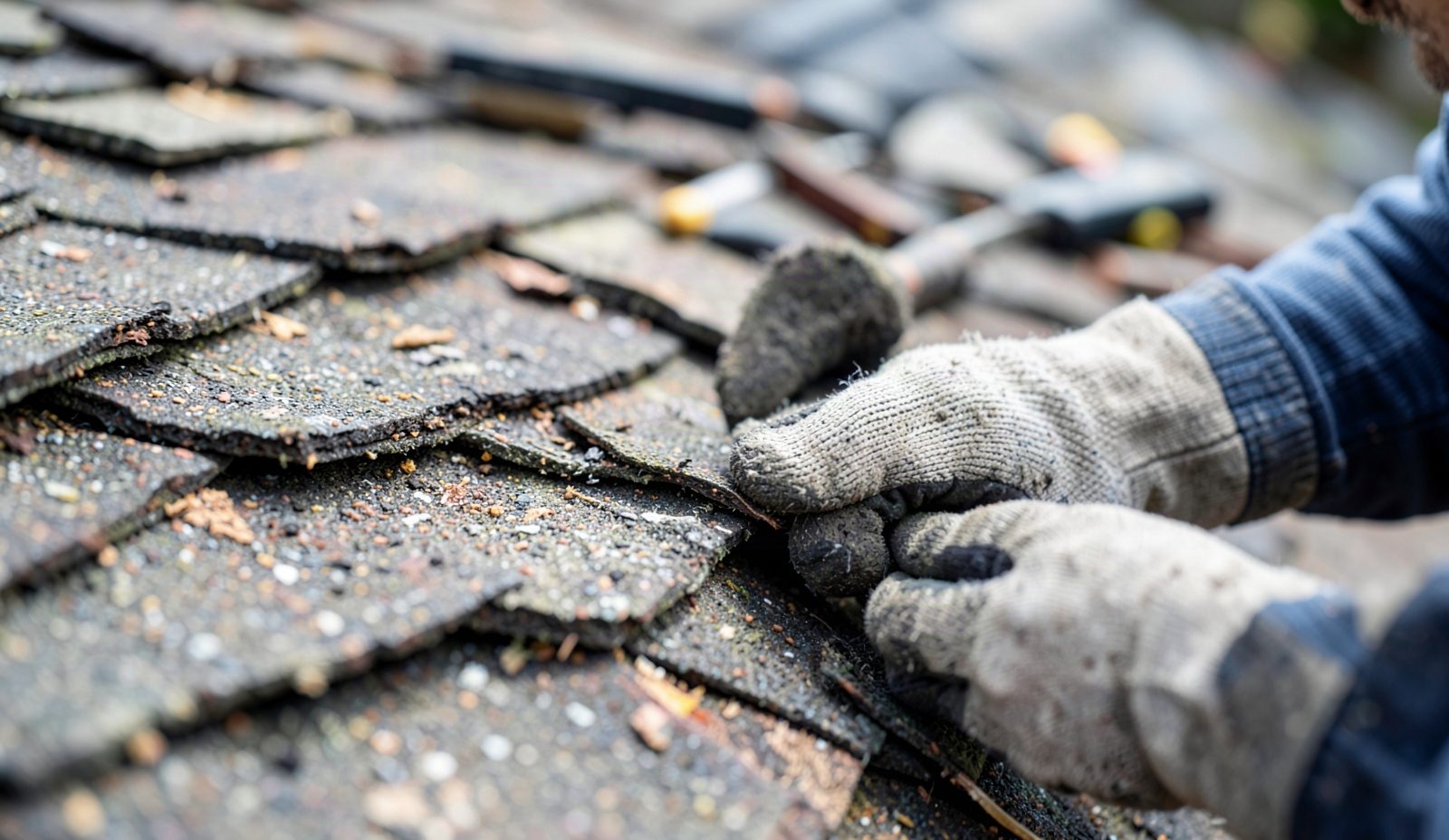
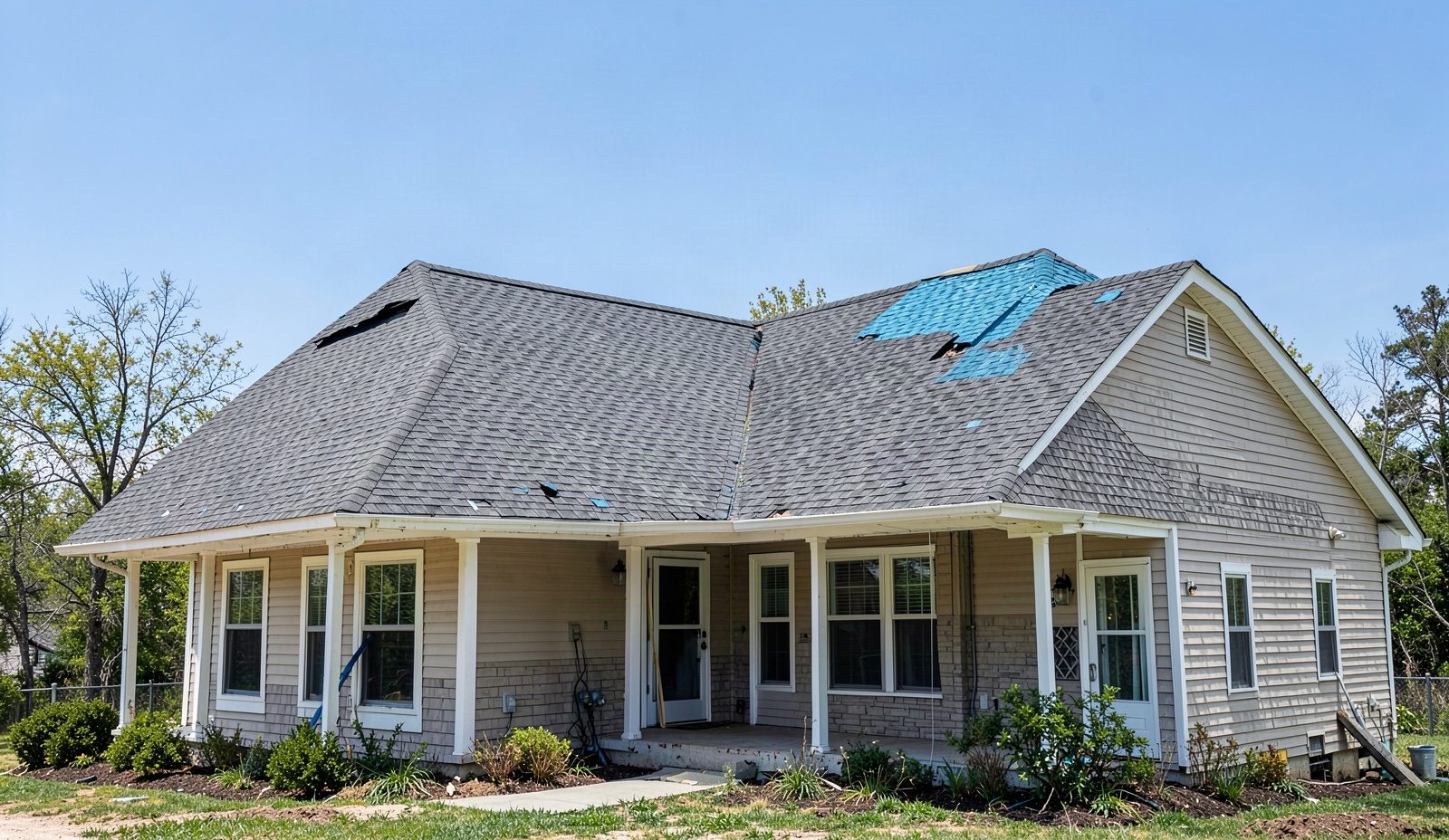
A fast roof repair service is only as good as the diagnosis behind it. Our technician starts with a flathead screwdriver probe on any decking near the leak point. Firm resistance means sound plywood. If the screwdriver sinks more than a quarter inch without pushback, the sheathing has delaminated and gets cut out and replaced, not covered over with a patch that will telegraph the soft spot within a season. A pin-type moisture meter reading above 20 percent on the surrounding decking flags saturation that needs to dry or be replaced before any new material goes down over it.
Where the leak sits near an eave or valley, the technician checks the ice barrier against Section 905.1.2 of the Ohio Residential Code, which requires a self-adhering polymer-modified bitumen sheet or two cemented layers of underlayment extending from the roof edge to at least 24 inches inside the exterior wall line. Storm damage that exposes this layer gets rebuilt to that measurement before a single shingle goes back on, because a short ice barrier is the single most common cause of a repeat ice-dam leak the following winter.
Material choice depends on what is already on the roof and what the wind load calls for. GAF Timberline HDZ and Owens Corning Duration architectural shingles both carry a 130 mph wind rating when installed with six nails per shingle, roughly double the 60 to 70 mph rating of a standard three-tab shingle still common on older Columbus homes. For the ice barrier itself, a self-adhering membrane seals tighter around nail penetrations through repeated freeze-thaw cycling than two layers of cemented felt, which is why we default to the membrane on any repair that reopens the eave line, even though both methods meet code.
If this sounds close but not quite your situation, emergency commercial roof repair may be the better starting point.
Communities like r/Roofing are a good reality check on pricing and practices before you sign anything.
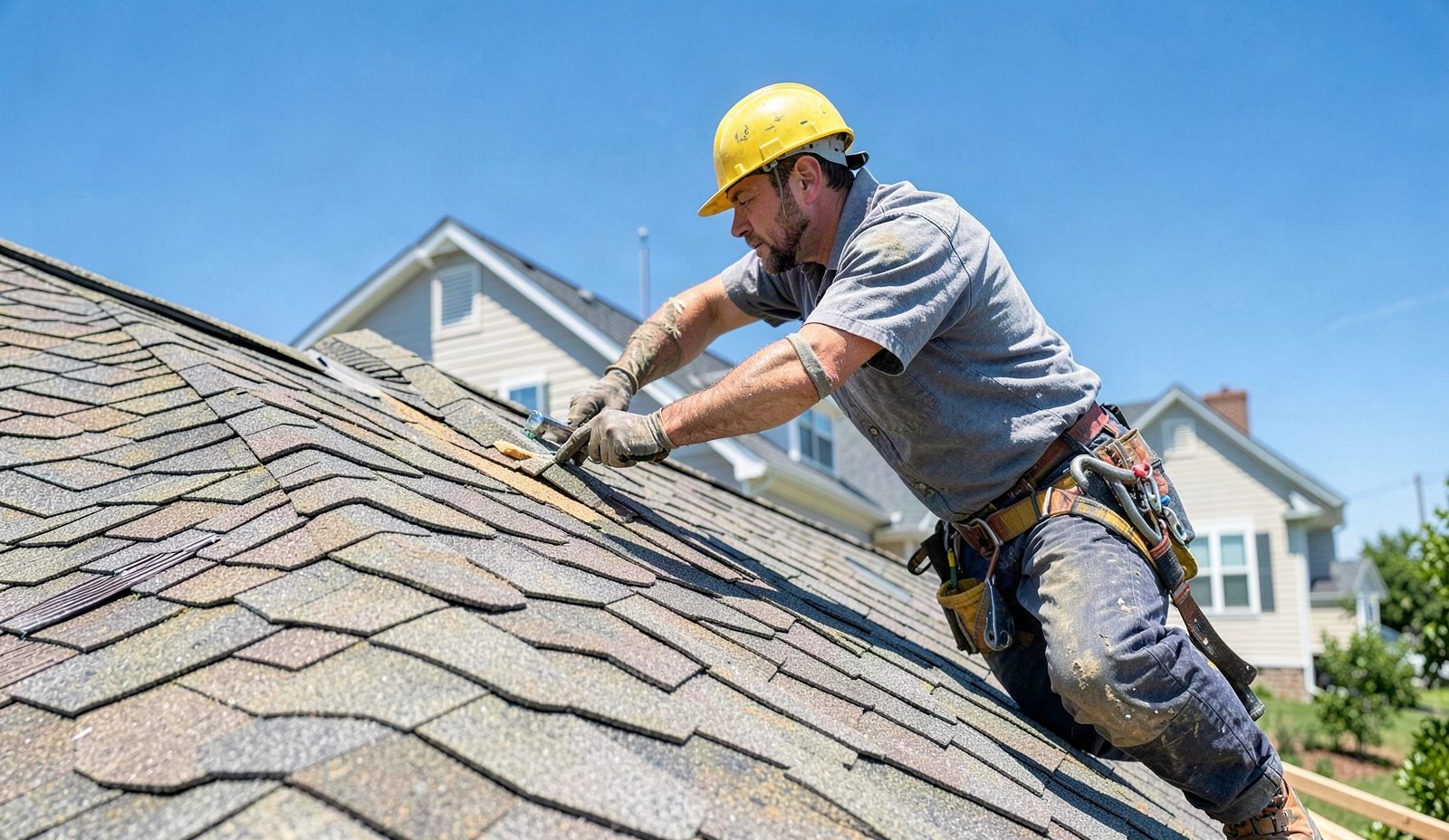
The call starts with a few questions: address, where the leak shows up inside, and how long it has been active. Dispatch assigns a technician and gives an arrival window. On site, the technician walks the roof or sets up a ladder at the leak's likely origin, checks the attic from inside for daylight, staining, or wet insulation, and photographs what the probe and moisture meter find before recommending a repair scope.
Once you approve the written estimate, the crew tarps the work area, sets ladder stabilizers to protect gutters and siding, and removes only the damaged shingles, flashing, or decking identified in the diagnosis. New underlayment, ice barrier where required, and matching shingles go down in the same pass. Flashing around vents, chimneys, and valleys gets resealed with new sealant rated for exterior exposure, not the cracked bead that caused the original leak.
Before the crew packs up, water runs over the repaired section for several minutes while a technician checks the attic underside for any intrusion. Photos of the finished repair go into a file you can hand to an insurance adjuster if the damage was storm-related. A final walkthrough covers what was replaced, what was left original, and what to watch for through the next freeze-thaw stretch.
Roofing work in Columbus falls under the Ohio Residential Code, adopted from the 2018 International Residential Code with state amendments, and enforcement runs through the City of Columbus Department of Building and Zoning Services for city addresses, with the local city building department or Franklin County handling other jurisdictions. Full tear-offs and structural repairs typically need a permit pulled before work starts. Straightforward like-for-like shingle or flashing repair often does not, but the permit authority makes that call, not the contractor.
Out-of-area storm-chase crews that roll through after a hailstorm rarely know this distinction. A crew unfamiliar with Columbus jurisdiction has skipped a required permit on structural decking work, leaving the homeowner to explain an unpermitted repair when the house sells or when an insurance adjuster asks for documentation. That gap surfaces years later, at the worst possible time.
Columbus housing stock adds its own wrinkle. Pre-1960 homes often carry plank decking with wider gaps between boards than the OSB sheathing used today, which changes fastener spacing and pattern for a proper shingle nail-down. A technician who has worked plank decking knows to add blocking or transition to sheathing rather than nailing into open gaps and hoping the shingle holds through the next wind event. That is the difference between a repair that lasts through the next round of freeze-thaw cycles and one that reopens by spring.
More detail on 24 hour roof leak service is on its own page.
Permit and inspection questions? Building & Zoning Services is the office we coordinate with on every permitted Columbus job.
Call before early afternoon and a technician is often on the roof the same day. Dispatch gives a real arrival window, usually a two-hour block, based on current job load and drive time across the metro. If an active emergency ahead of yours runs long, dispatch calls to update the window rather than leaving you guessing. This is what rapid response roofing looks like in practice, a quick roof fix service built around the actual state of the crew's schedule, not a vague promise to get to it sometime this week.
Tarps go down over landscaping and any interior floor space below the attic access before a single shingle comes off. A magnetic sweep of the driveway, lawn, and gutter line picks up stray nails and staples before the crew leaves. Damaged shingles and flashing get bagged and hauled off the same visit, not left in a pile by the curb. When the crew pulls away, the yard looks the way it did before the truck arrived, aside from the new material on the roof.
Scope, materials, labor, and disposal get itemized in a written estimate before repair work begins, built from the roof access, pitch, material grade, and the extent of decking that needs replacing. Steep pitches, multiple stories, and chimney or skylight flashing add labor time that shows up as separate line items, never a vague lump sum. You review and approve the estimate on site before the crew starts cutting into anything, and nothing changes without a conversation first.
Every technician passes a background check before being assigned to a job site. Ongoing training covers current Ohio Residential Code updates and the installation specs for the shingle and underlayment lines we install most often, since manufacturer instructions change between product generations. A field supervisor reviews technique on a technician's first several jobs, checking nail placement, flashing laps, and ice barrier extension, before that technician runs a same-day call without direct oversight.
Most full roof replacements are not finished in a single day, though many mid-size homes wrap up within one workday given a full crew and clear access. A same-day roof repair is a different job than a replacement, since it targets a specific leak or damaged section rather than removing the entire roof surface. If a technician finds damage extensive enough to warrant full replacement, that gets scheduled as its own multi-day project, not squeezed into an emergency repair visit.
Repair time depends on the scope, typically running from two to four hours for a single leak point up to a full day for extensive flashing or decking work. A pipe boot or a section of missing shingles goes fast. A repair that uncovers rotted decking near a valley takes longer because the crew has to cut out and rebuild the deck before any new shingle or underlayment goes down.
Warning signs include daylight visible through the attic decking, rusty streaks around nail heads on exposed shingles, and a soft or spongy feel when you walk near a roof valley from inside the attic. Any of these means water has already found a path through the roof assembly, not just the surface layer. Waiting on these signs almost always turns a repair visit into a larger decking or insulation job.
Prices vary because scope, material grade, and crew approach differ from one company to the next, not because the job itself changes. A company using premium architectural shingles and a full ice barrier rebuild charges differently than one patching over existing material. Access also drives cost. A steep-pitch historic roof with multiple chimneys takes longer to work safely than a single-story ranch, and that labor difference shows up in the estimate.
Cost depends on the extent of damage, the materials needed, and how difficult the roof is to access, so there is no single figure that applies to every home. A small flashing repair costs far less than a job involving rotted decking or multiple penetrations. Calling (614) 707-7333 gets a technician on site to look at the actual damage and provide a written estimate specific to your roof.
Estimates come as an itemized written document the technician prepares on site after inspecting the damage, listing materials, labor, and disposal separately rather than as one lump figure. You review it and approve it before any repair work starts, and nothing outside that approved scope happens without a separate conversation. Calling (614) 707-7333 is the first step toward getting a technician out to build that estimate.
Heavy wet snow and ice loading are common through a Columbus winter, and that weight sits differently on different roof types across the city. German Village's historic slate and standing-seam metal roofs shed snow at a different rate than a standard asphalt shingle roof, which changes how ice dams form at the eave line. Victorian Village's steep-pitched Victorian gables move snow off fast but concentrate ice at valleys and dormers. Italian Village and Brewery District include converted warehouse buildings with low-slope membrane sections where ponding water and ice behave nothing like a pitched residential roof. A technician who has repaired all four roof types plans the material and fastening approach differently for each one, rather than applying one shingle-first playbook to every call.
Permit rules distinguish between scope categories rather than neighborhoods: a full replacement or structural decking repair generally needs a permit, while a straightforward like-for-like shingle or flashing repair often does not, and the final determination always belongs to the local permit authority, not the contractor. Historic districts add a layer most out-of-area crews miss entirely, since matching a visible repair to the surrounding roofline matters for resale value even when no formal design review applies to the repair itself. A technician who works these districts regularly knows which synthetic slate or standing-seam profiles pass a visual match test from the street, which keeps a storm repair from becoming an eyesore that costs resale value later.
Explore our service area and locate Cornerstone Roofing Columbus with ease. We're proudly local and serve the surrounding neighborhoods with fast response and honest pricing. Use the map to check our coverage area, or call us and we'll confirm in seconds.
Address:
Cornerstone Roofing Columbus, 1015 E Broad St, Columbus, OH 43205
How Much Does a Roof Replacement Cost in Columbus? 2026 Pricing Breakdown, practical local guidance from Cornerstone Roofing Columbus, Colum…
Read More
Commercial Roof Maintenance Tips for Columbus Property Managers, practical local guidance from Cornerstone Roofing Columbus, Columbus's trus…
Read More
Skylight Leaks in Victorian Village Homes, Repair or Replace?, practical local guidance from Cornerstone Roofing Columbus, Columbus's truste…
Read More
The Best Time of Year to Replace a Roof in Columbus, practical local guidance from Cornerstone Roofing Columbus, Columbus's trusted roofing …
Read More