

April 1, 2025
How Much Does a Roof Replacement Cost in Columbus? 2026 Pricing Breakdown
How Much Does a Roof Replacement Cost in Columbus? 2026 Pricing Breakdown, practical local guidance from Cornerstone Roofing Columbus, Colum…
Read More




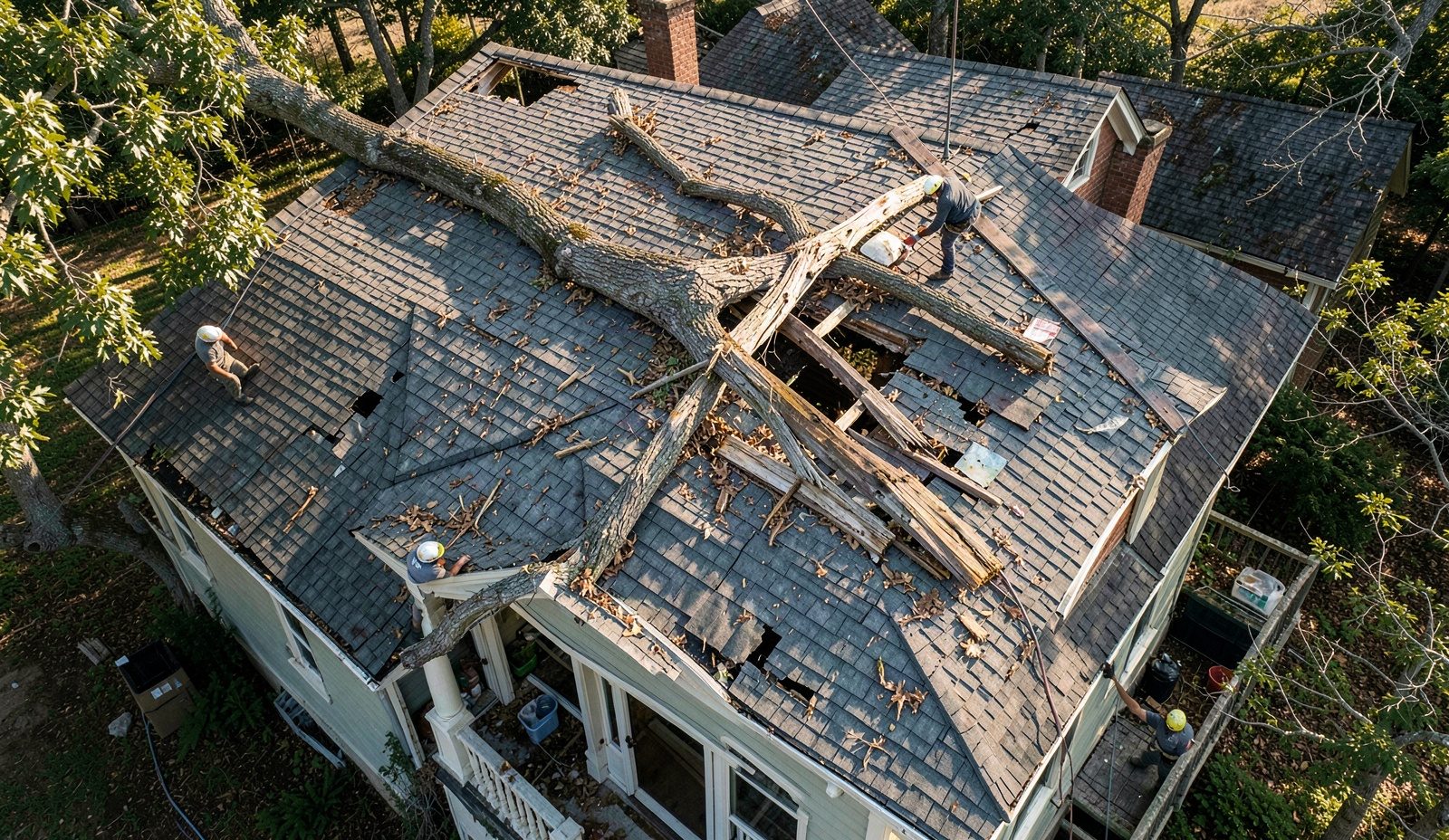
A limb slams into the roof deck and the sound carries through the whole house, a hollow crack followed by a scrape as branches settle against the shingles. Inside, you might see a water stain spreading across a bedroom ceiling within the hour, or find daylight coming through a gap in the attic where a puncture punched clean through the decking. This is tree fell on roof damage in its rawest form, and the visible mess on the shingles rarely tells the whole story about what happened to the rafters underneath.
Columbus loses limbs and whole trees for specific reasons tied to the local climate. Summer thunderstorms bring hail and straight-line wind that snap weak or storm-stressed branches loose with little warning, and older silver maples and oaks common in yards around Clintonville and German Village drop limbs heavy enough to crack half-inch decking on impact. The same freeze-thaw cycling that runs 40 to 60 times each winter across Central Ohio, cracking shingles and splitting flashing, also weakens branch unions over the cold months, so a tree that looked fine in November can shed a limb during a February thaw.
Roof structural damage from tree strikes shows up in more than the entry hole. Rafters spaced 16 or 24 inches on center can crack or split under a direct hit, and a compressed rafter telegraphs as a soft dip you can see by sighting down the roofline from the driveway. Inside the attic, insulation packs down where the limb pressed through, and the wet wood smell of soaked framing lingers for days after the impact even if the hole itself looks small from the yard. A tree limb roof puncture repair that only patches the visible hole without checking the rafter below leaves that structural weakness in place.
Waiting even a few days changes the scope of the job. Open decking left exposed to rain swells and delaminates, insulation loses its R-value once it gets wet, and the ceiling drywall below the puncture eventually sags and stains before it fails outright. What starts as a single sheet of damaged decking and a few courses of shingles can turn into a full plane tear-off, added framing repair, and drywall replacement if the opening sits exposed through even one more Central Ohio rainstorm.
Our page on hurricane damage roof repair covers that side of the work in more depth.
Communities like r/Roofing are a good reality check on pricing and practices before you sign anything.
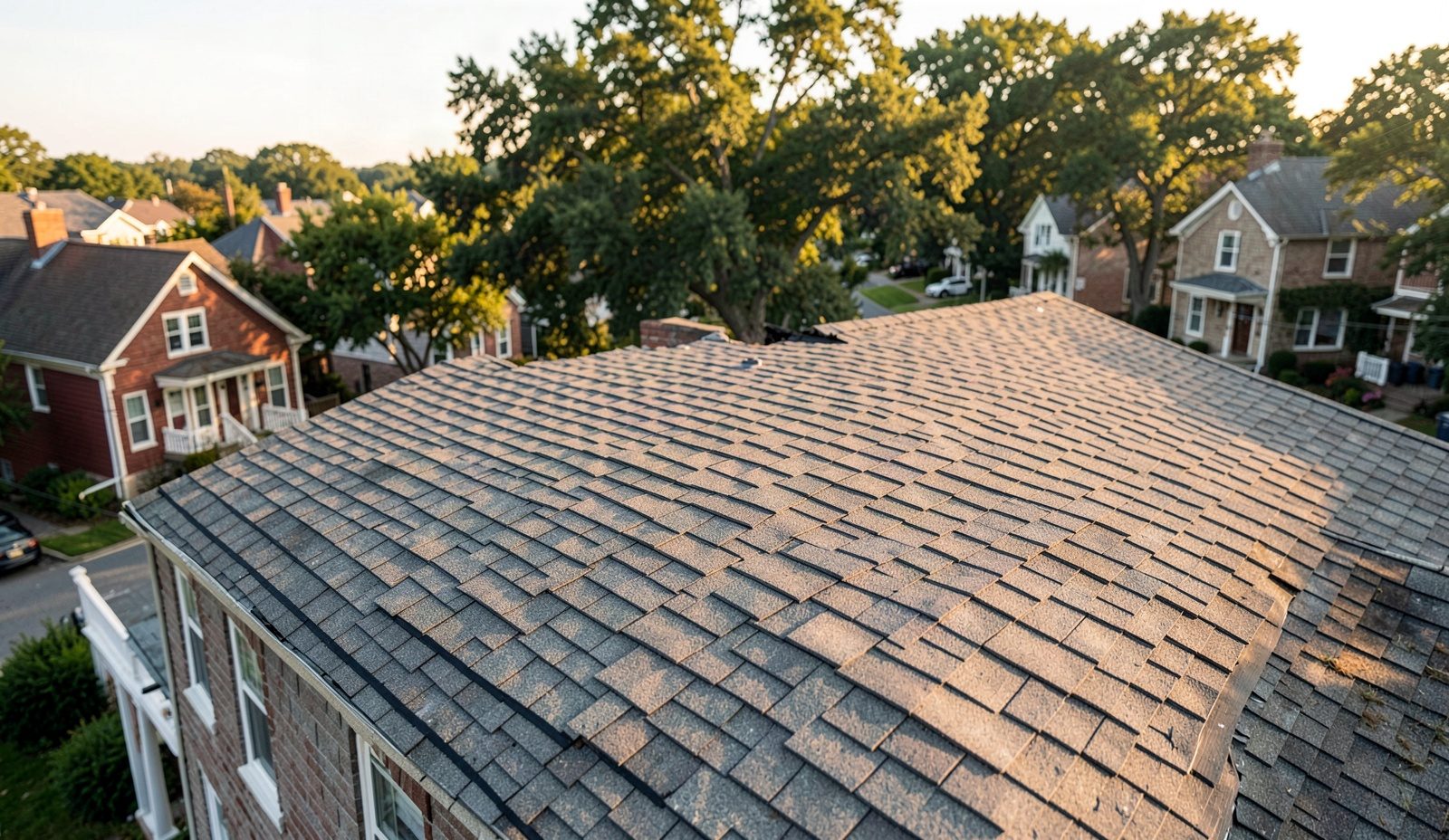
The first thing a technician does on a tree damage call is a load assessment, not a shingle count. If part of the tree still rests on the roof, we check whether it is bridging weight across the ridge or concentrating load over a single rafter bay before anyone climbs up. A limb still under tension from broken branches nearby gets cut and lowered under control rather than yanked, because a sudden release can shift decking that is already cracked and turn a contained puncture into a wider tear.
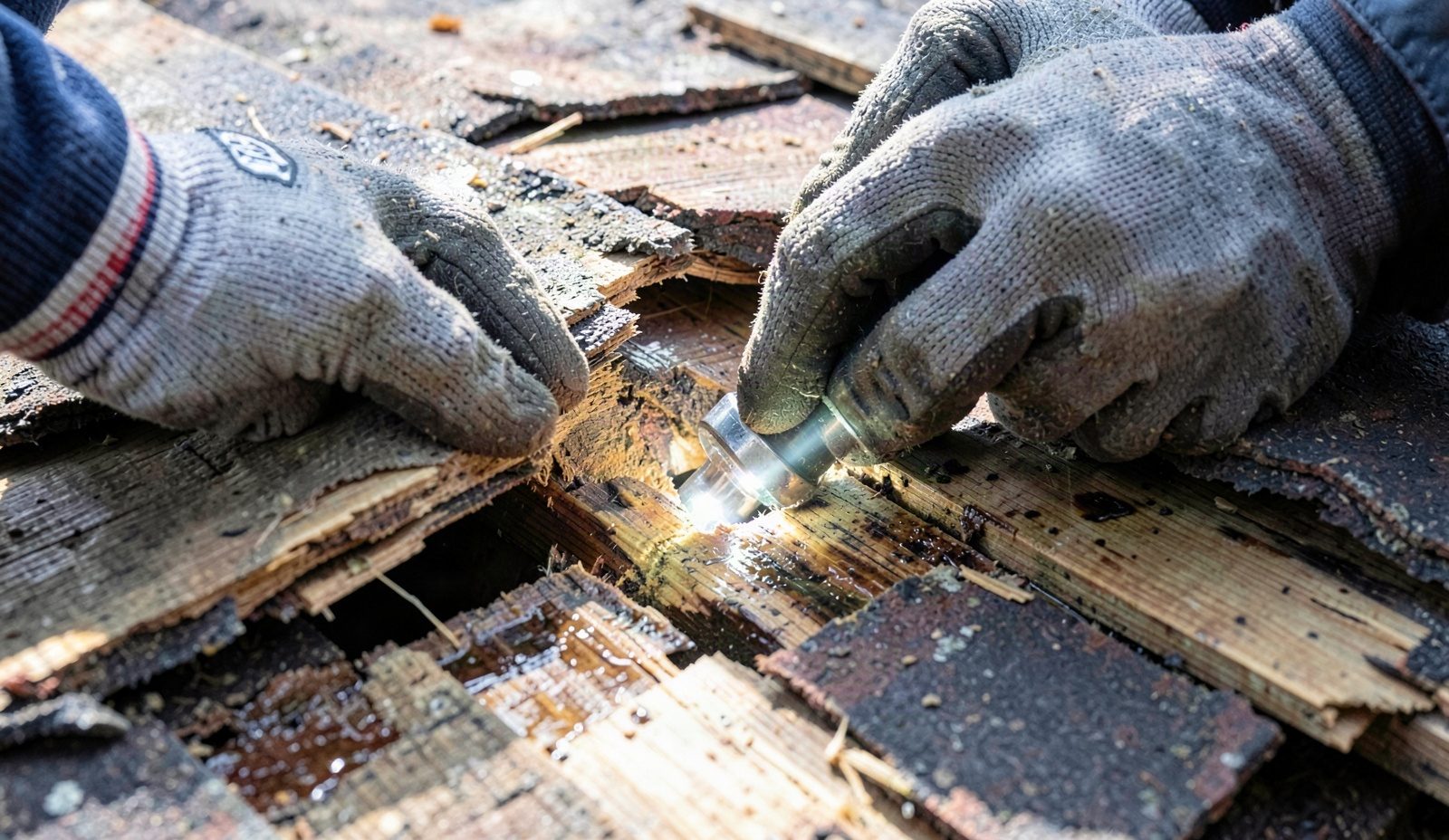
Once the tree is clear, we probe the decking around the impact with a flathead screwdriver, pushing the tip into the wood at the puncture edge and along the surrounding field. Wood that resists the tip is sound. Wood that gives with light pressure or crumbles is delaminated and gets marked for full replacement rather than a surface patch. A pin-type moisture meter backs up that read, and any reading above the low twenties on the percentage scale means the sheathing goes into the tear-off pile instead of the repair pile. We also run a string line or laser level along the ridge, and a deflection greater than about three-eighths of an inch over a ten-foot run flags the section for a closer structural look before we close it back up.
Material choices depend on what the decking swap exposes. Seven-sixteenths-inch OSB is standard on homes built from the 1980s forward and nails up faster, while older Columbus homes still show original plank decking or half-inch CDX plywood that we match rather than mix on the same plane, since mixed thicknesses telegraph through the shingle line. On the shingle side, we install lines like GAF Timberline HDZ or Owens Corning Duration depending on what is already on the roof and the wind rating the homeowner wants; both carry similar Class 3 wind ratings, but their nailing zones and sealant strip widths differ enough that mixing brands on one plane voids the manufacturer's own installation spec and changes the finished look along the ridge. Where the repair reaches the eave, we verify the ice barrier meets Section 905.1.2 of the Ohio Residential Code, extending at least 24 inches inside the exterior wall line, because a tree repair that skips that detail passes the eye test in July and fails the first thaw in January.
If this sounds close but not quite your situation, storm damage roof repair may be the better starting point.
Our crews work to the installation standards of the National Roofing Contractors Association.
You call (614) 707-7333 and describe the damage, including whether branches are still on the roof and whether water is already coming through a ceiling. A technician arrives during the scheduled window and walks the exterior first, checking gutters, siding, and the ground around the tree before going up. On the roof, they check the puncture size, probe the decking, and sight the ridge line for sag. You get a plain description of what they found, in words, before any tarp or repair talk starts.
Once you approve the written scope, the crew sets fall protection and opens the damaged section back to sound decking on all sides, not just the visible hole. Cracked rafters get sistered with new lumber alongside the original, decking gets replaced sheet for sheet in a matching thickness, and new underlayment and ice barrier go down before shingles close the plane. Any scope change, like a second cracked rafter found once the deck comes up, gets a call to you before the crew proceeds.
Before anyone packs up, the crew runs a hose test over the repaired section and checks the attic below for any new light or moisture. Nail patterns, flashing laps, and shingle sealant strips get a visual check against the manufacturer's install sheet. You get a walkthrough on the ground and, if you climbed the ladder yourself, on the roof, with photos of the decking and framing taken before the shingles went back on for your insurance file. The crew clears tools, does a final nail sweep, and confirms the debris haul-away before leaving.
Columbus roofing work sits under the Ohio Residential Code, and that code treats a full plane replacement differently than a like-for-like patch. A repair that swaps damaged decking and reshingles the same plane in the same materials usually stays in permit-exempt territory, but a job that changes the roof structure, such as reframing a crushed rafter bay or altering the roofline, typically needs a permit pulled through the local building department, which for Columbus addresses is the City of Columbus Department of Building and Zoning Services and for other Franklin County jurisdictions is that city's own building department. Getting that call wrong either way costs the homeowner time at resale or during an insurance claim review.
Housing stock age changes the job as much as the code does. Homes built before the mid-twentieth century often carry true 2x6 or full-dimension rafters and skip lath decking in places, while newer construction runs engineered trusses on tighter spacing. A crew unfamiliar with older framing can misjudge how much a cracked rafter is carrying and either over-brace a bay that did not need it or under-brace one that did.
Out-of-area crews that follow storm damage into Central Ohio for a week or two rarely know which jurisdiction's permit office to call, and some skip the permit step altogether on jobs that clearly needed one. That gap surfaces later, at resale or during an insurance audit, as unpermitted structural work with no inspection record attached. Cornerstone Roofing Columbus works these tree damage calls inside the same Franklin County permit and inspection framework every time, so the paperwork matches the physical work when someone checks it against city records.
More detail on hail damage roof repair is on its own page.
Permit and inspection questions? Building & Zoning Services is the office we coordinate with on every permitted Columbus job.
Call (614) 707-7333 and describe what happened, including whether the tree is still resting on the roof. Dispatch gives you a same-day arrival window in most cases, tighter during active storm response when multiple calls come in at once. If a delay happens because of weather or a backed-up schedule, the office calls you before the window closes, not after, so you are not left waiting without word. Emergency tarping gets priority over routine estimates on the schedule board, and a technician calls thirty minutes out so someone can be home to point out where the limb hit.
Before any tear-off starts, the crew lays tarps across the lawn and driveway landing zone and sets plywood or rubber walk boards over gutters and AC units to prevent crushing. Old shingles, cracked decking, and cut-up limb sections come down through a controlled drop zone instead of getting thrown off the edge. A magnetic roller sweeps the grass and driveway for stray roofing nails before the crew leaves. Debris goes into a trailer or dumpster the same visit, and the yard gets a final walk-through so nothing splintered gets left behind for a mower to find later.
The written quote reflects what the tear-off reveals rather than a guess made from the ground. Variables include how many sheets of decking need replacing, whether the rafters need sistering or just cleaning up, roof pitch and access for the crew, and whether the shingle line has to match an existing color no longer in current production. You see the itemized scope before anyone cuts a new piece of decking, and any change once the roof is open gets a call and a revised number before work continues, never a surprise on the final invoice.
Every technician who works a tree damage call has been through a background screening before joining a crew, and lead installers walk new hires through several tear-offs before signing off on them working a ladder alone. Crews review code updates and manufacturer installation bulletins each season, since nailing patterns and underlayment requirements shift as products change. A site lead checks the finished deck, underlayment lap, and shingle nailing pattern against the job's written scope before calling the visit complete, so the person closing up the roof is not the only set of eyes on it.
Move everyone out from directly under the impact point first. Shut off electricity to that room if wiring or fixtures look exposed, and do not go up on the roof or try to move the limb yourself. Photograph the damage from the ground and from inside near any leak for your insurance file, then call a tree damage roofer to tarp the opening before more rain gets in. Do not run space heaters or fans near a wet ceiling until a technician confirms the wiring above is dry.
Yes, a falling limb can puncture shingles, crack roof decking, and crush or split a rafter depending on its weight, diameter, and how far it fell. Mature oaks and maples common in older Franklin County yards drop limbs heavy enough to punch through half-inch plywood decking on direct impact, even without a full tree coming down. Smaller limbs more often just tear shingle tabs and dent gutters, which still need a close inspection since a small entry point can hide a larger crack in the wood underneath.
Yes, repairing storm damage on an older home is almost always worth it compared to leaving original rafters and plank decking exposed to weather. Century-old homes near the urban core often still carry true dimension lumber framing that is harder to source and more expensive to fully replace than to repair while the damage stays contained to one plane. Letting a small puncture sit through even one more season of Central Ohio rain risks turning a single-plane repair into a full tear-off on framing that cannot be matched off a shelf.
Look for a crew that names the correct local building department for your address before you ask, since Columbus and the surrounding Franklin County suburbs each have their own permit office. Ask what decking thickness they plan to match and whether they probe the deck with a moisture meter or screwdriver before quoting a repair size. A company that answers with specifics about your roof, rather than a generic price range, is doing the diagnostic work the job needs.
Tarping and temporary stabilization usually happen the same day you call, often within a few hours depending on how many storm calls are queued ahead of yours. Full repair, including decking replacement and reshingling, typically follows within a few days once materials are matched and the scope is approved, faster for a single-plane patch than for a job that also needs framing work. Calling (614) 707-7333 as soon as the tree comes down puts you earlier in that queue.
Price variation usually comes down to inspection depth, material grade, and labor practices, not markup alone. A contractor who only patches the visible gap prices lower than one who inspects the full slope, checks the deck for hidden moisture, and hand-seals every replaced tab. Crews using builder-grade three-tab shingles also price below those matching an existing architectural shingle line. Ask each contractor exactly what their price includes before comparing the numbers side by side.
Streets in the Short North, Victorian Village, and Italian Village carry decades-old street trees and privately planted maples and oaks that tower well above two and three-story rooflines, and their canopies overhang closer to the ridge than in newer subdivisions with young landscaping. That proximity means storm damage here often involves a limb dropping from directly overhead onto a steep-pitched roof rather than a straight fall onto open ground. Heavy wet snow and ice loading common to Central Ohio winters add weight to already storm-weakened limbs, driving the ice-dam and gutter-ice risk that shows up on these same roofs later in the season. Narrow lots and shared driveways in the Brewery District and similar dense blocks also limit where a bucket truck or debris trailer can stage, which changes how a crew sequences tree removal ahead of the roof repair itself.
Permit paperwork on a tree damage repair depends on scope, not on the neighborhood's age. A like-for-like shingle and decking swap on the same plane typically does not need a permit, but reframing a rafter bay or altering the roofline does, and the call belongs to the jurisdiction's building department, not to the roofing crew. Homeowners in these older districts also deal more often with legacy materials, slate accents, or built-up flat sections on additions, and a crew that treats every roof like a standard asphalt tract house misses details that matter for a clean, documented repair. Working inside the correct permit process the first time avoids a second inspection visit and keeps the paper trail intact if the homeowner files an insurance claim later.
Explore our service area and locate Cornerstone Roofing Columbus with ease. We're proudly local and serve the surrounding neighborhoods with fast response and honest pricing. Use the map to check our coverage area, or call us and we'll confirm in seconds.
Address:
Cornerstone Roofing Columbus, 1015 E Broad St, Columbus, OH 43205
How Much Does a Roof Replacement Cost in Columbus? 2026 Pricing Breakdown, practical local guidance from Cornerstone Roofing Columbus, Colum…
Read More
Commercial Roof Maintenance Tips for Columbus Property Managers, practical local guidance from Cornerstone Roofing Columbus, Columbus's trus…
Read More
Skylight Leaks in Victorian Village Homes, Repair or Replace?, practical local guidance from Cornerstone Roofing Columbus, Columbus's truste…
Read More
The Best Time of Year to Replace a Roof in Columbus, practical local guidance from Cornerstone Roofing Columbus, Columbus's trusted roofing …
Read More