

April 1, 2025
How Much Does a Roof Replacement Cost in Columbus? 2026 Pricing Breakdown
How Much Does a Roof Replacement Cost in Columbus? 2026 Pricing Breakdown, practical local guidance from Cornerstone Roofing Columbus, Colum…
Read More




A hurricane doesn't have to make landfall in Ohio to tear your roof apart. When the remnants of a Gulf Coast hurricane push north through the Ohio Valley, the storm arrives as straight-line wind gusts, torrential rain, and hail cores buried inside the outer bands. Homeowners in German Village and Clintonville describe the same sequence: a roaring gust that rattles windows, then a shingle tab slapping the roof deck through the night, then a brown ring spreading across a bedroom ceiling two days later. That lag between the wind event and the visible leak is the dangerous part. Wind doesn't always tear a shingle off outright. It lifts the sealant strip just enough to break the adhesive bond, and the shingle looks fine from the driveway while wind-driven rain works underneath it with every following storm.
Central Ohio's climate sets the stage before the storm ever arrives. This region runs through roughly 40 to 60 freeze-thaw cycles every winter, and each cycle flexes asphalt shingles and cracks the sealant on flashing around chimneys and skylights. A shingle that survived last summer intact is often brittle and micro-cracked by the time hurricane-remnant wind reaches it in late summer or fall, so damage that would only bruise a new roof tears an aged one open. Summer thunderstorms compound the exposure. Hail embedded in these storm systems bruises the asphalt mat and knocks granules loose, and straight-line wind gusts finish the job by peeling weakened tabs back at the eave line, the most common starting point for roof penetration damage across Franklin County.
Left alone, a lifted tab becomes a soaked layer of underlayment within one more storm cycle. Water tracks sideways along the roof deck, finds a nail penetration, and drops into the attic insulation, where it stays wet long after the rain stops. Decking that stays damp for more than a few days starts to delaminate, and what began as a single hurricane damaged shingle replacement turns into a full section of decking replacement. Insurance adjusters also weigh timing heavily. A claim filed weeks after the wind event, with no photos of the original damage, invites disputes about whether the water intrusion happened during the storm or afterward from neglect.
Our page on hail damage roof repair covers that side of the work in more depth.
Communities like r/Roofing are a good reality check on pricing and practices before you sign anything.
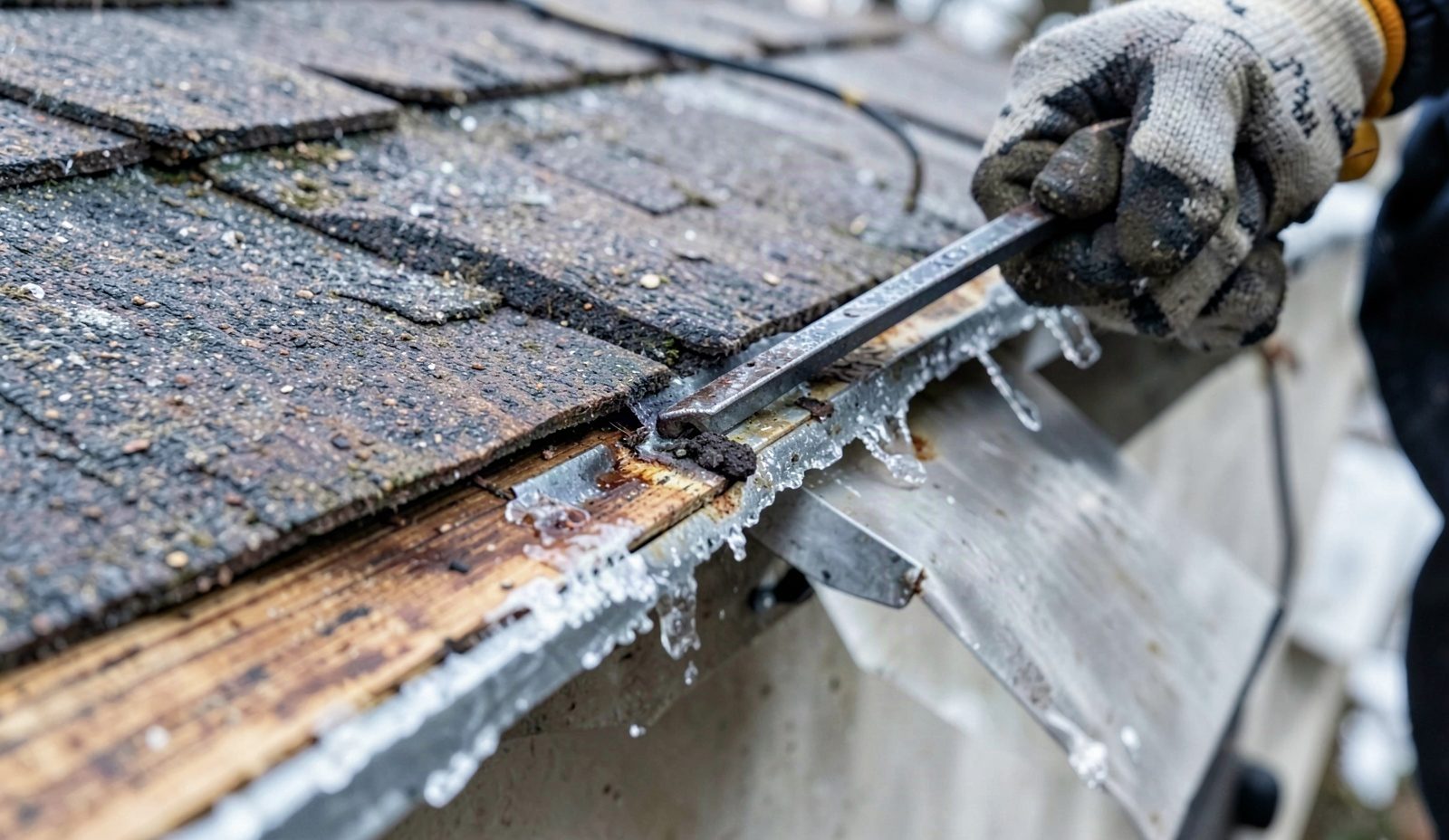
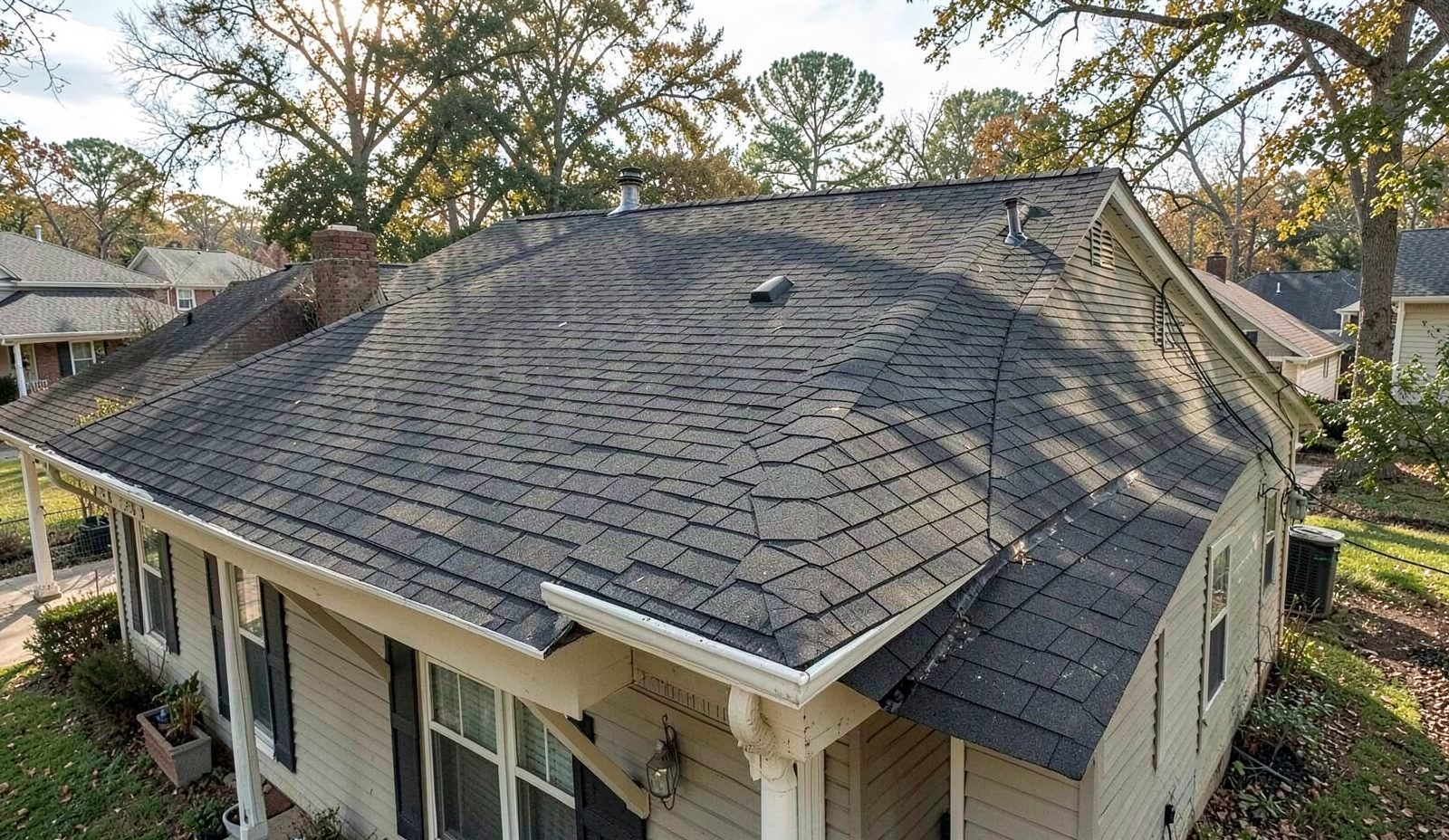
Every hurricane damage roof repair call starts on the ground with a perimeter walk before anyone climbs a ladder. A technician checks downspouts and window sills for granules, the first physical evidence of hail or wind abrasion on the shingle mat. On the roof, the inspection follows a fixed sequence: starter course at the eave, field shingles by slope, then flashing at every penetration, because wind damage concentrates at edges, seams and transition points across a slope. A pull test on a sample of tabs along the windward slope tells us whether the sealant strip has failed. If a shingle lifts with light hand pressure and the adhesive line looks dull grey instead of tacky black, that entire course has lost its wind rating even if it looks intact from the street, and that single observation often decides whether the job stays a hurricane damaged shingle replacement or grows into a full slope tear off.
At the eave, a tape measure verifies whether the existing ice barrier extends at least 24 inches inside the exterior wall line, the threshold Section 905.1.2 of the Ohio Residential Code sets for ice barrier coverage on asphalt shingle roofs. Storm damage that exposes the eave gives us a rare direct look at whether that layer was ever installed correctly, and if it wasn't, we bring it up to spec as part of the repair. A moisture meter reading above 19 percent on exposed decking flags sheathing that has already started absorbing water and won't hold a nail reliably, which changes a shingle-only repair into a decking replacement before a single new course goes down.
Material choice depends on what the wind actually did. GAF Timberline HDZ shingles use a LayerLock nailing zone and carry a wind rating up to 130 mph when installed with the full nailing pattern, suited to open, wind-exposed rooflines. CertainTeed Landmark shingles use a standard nailing zone rated to 110 mph, adequate for sheltered lots surrounded by mature trees. Owens Corning Duration shingles rely on a SureNail strip woven through the shingle for extra tear resistance at the fastener line, a real advantage on a roof that has already shown wind uplift once. Each line gets tested to ASTM D3161 and ASTM D7158 wind standards, and we match the rating to the exposure the roof actually faces on every post-hurricane roof restoration job.
If this sounds close but not quite your situation, storm damage roof repair may be the better starting point.
After severe weather, FEMA's guidance on documentation makes the difference in how smoothly a claim goes.
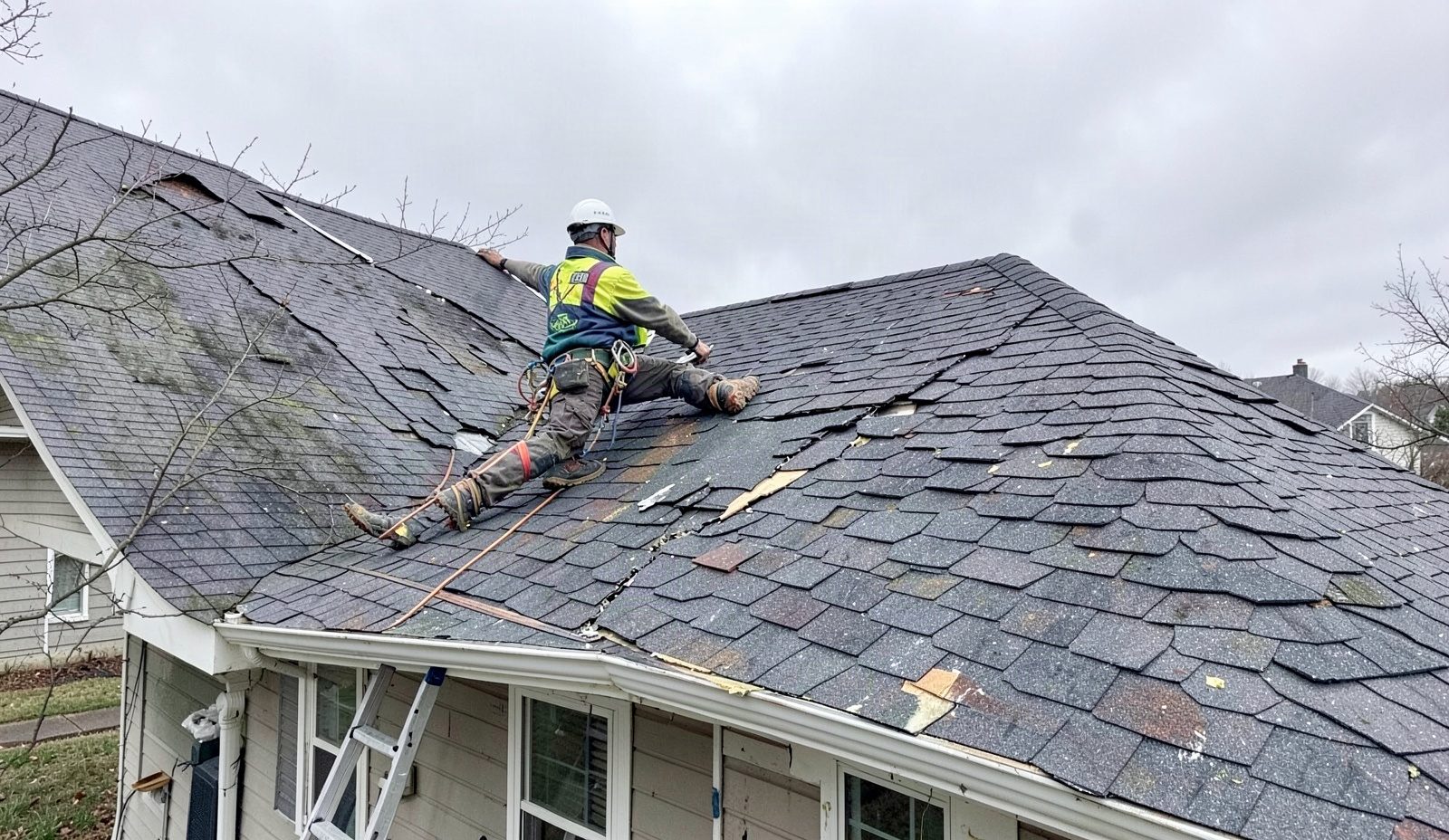
You describe what you're seeing on the phone, missing shingles, a ceiling stain, water actively coming through. We schedule the assessment around that description. On site, the technician checks the roof from a ladder and from inside the attic, looking for daylight through the decking, wet insulation, and the pattern of missing or lifted shingles across each slope. Photos get taken of every damaged course and flashing point before anything is touched. You get a plain description of what the wind or hail did, which slopes are affected, and whether the decking underneath is sound.
Once you approve the written scope, the crew protects the ground and landscaping, then strips the damaged section down to sound decking. Any board that fails the moisture check gets replaced before new underlayment goes down. Ice barrier membrane gets installed or extended at the eave to the coverage the code requires, then synthetic underlayment across the field, then new shingles matched to the existing product line where the manufacturer still makes it, or a full slope replacement where matching isn't possible. Flashing at chimneys, vents and skylights gets replaced outright, since old sealant is usually why the leak started.
Before the crew leaves, we run a water test on repaired flashing points, pouring water above each penetration and checking the attic underneath for intrusion. Nail patterns and shingle sealant lines get checked on a sample of the finished courses. We walk the roof edge with you if you want to see the completed work from the ladder, or we walk the yard and point out the repaired areas from ground level. You get dated photos of the finished work and the damage it replaced, the documentation your insurance adjuster will ask to see.
Roofing work in Columbus falls under Columbus building code jurisdiction and the Ohio Residential Code, a code family the state has adopted statewide. Full roof replacements and structural repairs, like replacing damaged decking or reframing a section after a fallen limb, typically require a permit through the City of Columbus Department of Building and Zoning Services, while a straightforward like-for-like shingle repair on an existing slope often does not. We pull the permit before work starts on any job that crosses that line, because the final call on what qualifies belongs to that permitting office.
Storm-chasing crews follow hurricane remnant systems from state to state, knock on doors within days of a wind event, and disappear before the first callback. They don't know that a 1920s German Village roof deck runs true dimensional board sheathing instead of plywood, which changes fastener length and nailing pattern, or that a Clintonville bungalow with a low-slope porch addition needs a different underlayment strategy than the steep main roof above it. A crew unfamiliar with those details can pass a visual inspection and still leave a roof that fails its next wind event. We document every hurricane roof insurance claims file with dated photos, measurements, and the specific slope and course numbers affected, the format Franklin County adjusters expect to see.
Hurricane damage roofing contractors who know the local code cycle and the local housing stock matter more after a wind event than at any other time, because the repair has to hold through the next freeze-thaw winter and the next thunderstorm season. Crews retrain whenever the code cycle updates its shingle and underlayment provisions, so a repair finished this fall still meets the specification a Columbus inspector checks against next spring.
More detail on fallen tree roof damage repair is on its own page.
Permit and inspection questions? Building & Zoning Services is the office we coordinate with on every permitted Columbus job.
When you call after a wind event, we ask what you're seeing first, active leak, missing shingles, or exposed decking, so we can triage the call correctly. Active leaks and exposed decking get priority scheduling, often the same day the storm passes through Franklin County. Standard shingle damage without active water intrusion typically books within a day or two, since we stack calls by street and neighborhood to cut drive time during high demand weeks. If a delay happens, weather holding a crew on a prior roof or a supply delay on matching shingles, we call ahead of your scheduled window to update you.
Before anyone climbs a ladder, we lay tarps across landscaping, walkways and any vehicle left in the driveway, and we stage a magnetic nail sweep for the lawn and driveway surface. Torn off shingles and old underlayment go into a tarp chute or ground level containment. Gutters get checked for granule buildup and debris before we leave, since a clogged gutter after a hail event backs water up under the drip edge. A final pass of the yard and flower beds with the magnetic sweep happens before the crew packs up, and the driveway gets a broom pass for stray granules.
Your written estimate reflects what the inspection actually finds inside your specific scope of damage. Slope count, roof pitch, how many penetrations need new flashing, whether decking needs replacement, and how far a delivery truck has to reach the roof all factor into the scope. Steep pitches above roughly a 7 in 12 rise need harnessed work and slower staging, which affects labor time more than material cost. We walk through the estimate line by line before anything starts, point to the specific damage each line covers, and you approve the scope in writing before a shingle comes off.
Every technician who works a roof solo has passed a documented ride-along period working live jobs under a crew lead. We run current training whenever the Ohio Residential Code updates its shingle and underlayment provisions, so crews aren't applying an outdated fastening pattern from a code cycle no longer in force. Background checks run before anyone is scheduled into a homeowner's yard unsupervised. A crew lead checks nailing patterns and flashing laps on a sample of completed sections mid-job, so mistakes get caught while the ladder is still up.
Cost depends on the extent of damage, not a flat rate per roof. A single lifted course of shingles costs far less to correct than a full slope tear off with decking replacement, and steep pitches or multiple penetrations add labor time. Material choice also matters, a higher wind rated shingle line costs more per square than a standard line. We inspect first and provide a written estimate broken out by scope, so you see exactly what drives the number before approving any work.
Most homeowners policies cover sudden storm damage from wind and hail, though coverage details depend on your specific policy and endorsements. Wear related damage, like shingles already brittle from years of freeze-thaw cycling, gets scrutinized harder by adjusters than a clean wind tear. Photographing the damage immediately and getting a dated inspection report strengthens a claim. We document every job with dated photos and measurements formatted for adjuster review, which helps separate storm damage from prior wear in the claims process.
How long you have depends on your insurance policy's proof of loss deadline, which varies by insurer and by the date of the wind or hail event. Waiting weeks to report damage gives an adjuster room to argue the water intrusion happened after the storm, not during it. We recommend calling for an inspection within days of any wind event, even if you don't see an active leak yet, so the documentation exists before you need it.
Yes, repairing storm damage on an older Columbus home is almost always worth it, since deferred wind or hail damage compounds fast on aged roofing material. Century old homes with board sheathing decking hold moisture differently than newer plywood decks, and a delayed repair risks that sheathing softening before a ceiling stain ever appears. Matching new shingles to a weathered existing roof also gets harder the longer you wait, since discontinued color runs and sun fading make blending sections difficult after a year or more.
Response time depends on whether you have an active leak or exposed decking, which gets prioritized over cosmetic shingle damage. Active water intrusion typically gets a technician out within hours of your call during a storm event. Non-urgent shingle repair without water intrusion usually books within a day or two, since crews get stacked by neighborhood to reduce drive time across Franklin County during high demand weeks after a regional wind event.
Estimates come from a physical inspection of the roof itself. A technician measures affected slopes, checks decking condition with a moisture meter, and counts flashing points needing replacement, then breaks the estimate into line items you can review one by one. You approve the written scope before work starts, and any change found once old shingles come off, like discovering soft decking, gets confirmed with you before we proceed.
Minor tasks like clearing debris from gutters or temporarily tarping a small exposed area are reasonable for a homeowner comfortable on a ladder. Actual shingle replacement, flashing work, and any repair touching the decking need code compliant materials and installation sequence, and a misaligned ice barrier or improperly lapped flashing often causes a leak worse than the original storm damage. A tarp secured at the ridge and weighted down, without fasteners through open shingle tabs, is the safest DIY step until a technician arrives.
Curled shingle edges that stayed lifted after the wind stopped, rust colored streaks below roofing nails, and granules collecting in gutter troughs are signs that shouldn't wait. A soft or spongy feel underfoot on the roof deck, or a musty smell in the attic that wasn't there before the storm, both point to moisture already inside the roof assembly. Daylight visible through the attic decking at any point deserves an immediate call.
Duration depends on scope, a single damaged slope with sound decking typically finishes in one day, while a full tear off with decking replacement across multiple slopes runs two to three days depending on size and weather windows. Steep pitches or multiple chimneys and skylights add time for flashing work. Wet weather following a storm can also push a start date back, since shingles won't seal properly over damp decking.
Columbus sits far enough north that winter brings its own separate threat alongside wind damage. Heavy wet snow and ice loading build up along eaves during freeze-thaw swings, and that weight drives ice-dam formation and gutter-ice risk on any roof that already lost shingles or flashing to an earlier wind event. A home with a wind-damaged eave heading into December carries meltwater backup risk that a home with an intact eave doesn't face the same way. That reality changes material planning on every fall repair. We plan eave membrane coverage and gutter apron detail for the winter the roof will face next, not just the storm that already happened. Older housing stock across the urban core adds another layer. Homes built with true dimensional lumber rafters and tighter roof decks near Short North and Victorian Village hold heat differently than newer platform-framed construction, which changes where ice tends to form first and where we concentrate ice barrier coverage.
Permitting oversight in Columbus runs through whichever code office holds jurisdiction over the property, and that detail matters more than most homeowners realize. A home a few streets outside Columbus proper may fall under a different city building department or Franklin County entirely, and permit rules can differ slightly between them. We confirm jurisdiction before pulling any permit, because filing with the wrong office delays a repair by days. Neighborhoods with dense older building stock, like Italian Village and the Brewery District, mix residential roofs with converted commercial buildings on the same block, and that mix means we check occupancy type before assuming a standard residential permit path applies. Getting that wrong on a storm repair timeline, when a homeowner already has an active leak, costs time nobody has.
Explore our service area and locate Cornerstone Roofing Columbus with ease. We're proudly local and serve the surrounding neighborhoods with fast response and honest pricing. Use the map to check our coverage area, or call us and we'll confirm in seconds.
Address:
Cornerstone Roofing Columbus, 1015 E Broad St, Columbus, OH 43205
How Much Does a Roof Replacement Cost in Columbus? 2026 Pricing Breakdown, practical local guidance from Cornerstone Roofing Columbus, Colum…
Read More
Commercial Roof Maintenance Tips for Columbus Property Managers, practical local guidance from Cornerstone Roofing Columbus, Columbus's trus…
Read More
Skylight Leaks in Victorian Village Homes, Repair or Replace?, practical local guidance from Cornerstone Roofing Columbus, Columbus's truste…
Read More
The Best Time of Year to Replace a Roof in Columbus, practical local guidance from Cornerstone Roofing Columbus, Columbus's trusted roofing …
Read More