

April 1, 2025
How Much Does a Roof Replacement Cost in Columbus? 2026 Pricing Breakdown
How Much Does a Roof Replacement Cost in Columbus? 2026 Pricing Breakdown, practical local guidance from Cornerstone Roofing Columbus, Colum…
Read More




Central Ohio sits in a humid continental climate, and that means roughly 40 to 60 freeze-thaw cycles every winter. Water gets into a hairline crack in a shingle or a gap in flashing, freezes overnight, expands, and pries the material apart by morning. Repeat that forty or fifty times between November and March and a roof that looked fine in October can be leaking by February. This region is not a lake-effect snow zone, so the damage here comes from cycling temperatures and ice buildup rather than the sustained heavy snowfall you see farther north.
Housing stock age changes what fails first. In German Village, brick rowhouses built in the 1800s often carry slate or steep-pitch asphalt over original wood decking that has been reroofed multiple times, and every layer added over the decades changes how the current roof breathes and drains. In Short North, converted warehouse buildings and narrow-lot Victorians mix flat commercial sections with pitched residential sections on the same structure, which means two different leak mechanisms on one address. In Clintonville, the post-war bungalow stock from the 1940s and 1950s typically runs plywood decking with shorter original overhangs, and those roofs are now old enough that the original architectural shingles are past their granule life and shedding grit into the gutters.
Soil movement and tree canopy matter too. Older streets in these neighborhoods carry mature tree cover that drops branches and dumps leaf litter into valleys and gutters every fall, which holds moisture against the roof deck longer than a bare roof would. Combined with the freeze-thaw pattern, that moisture retention is why so many service calls in these older districts trace back to a valley or a chimney flashing rather than the open field of the shingle itself. A roof here rarely fails all at once. It fails at the joints first.
One of our most-requested services here is cedar shake roofing, see that page for pricing and process.
Reputation in this trade gets built one roof at a time, not from a marketing budget. Cornerstone Roofing Columbus earns repeat calls from the same streets because the work done on the first visit holds up through the next freeze-thaw winter, and neighbors talk when a roofer does not have to come back for the same leak twice. Every completed job gets a final walkthrough against the original written scope before the crew leaves the property, and that internal check catches the small stuff, a missed pipe boot, an unsealed nail head, before it becomes a callback.
Our operational philosophy is simple: measure before you cut, and document before you close up. Estimators carry the same measuring tools to every roof so numbers are consistent from job to job, and photos get taken at tear-off, at deck inspection, and at final cover so there is a record of what was actually underneath the old material. That record matters when a homeowner needs to show an insurance adjuster what the deck condition was, or when a structural surprise changes the scope mid-project.
Training runs through hands-on fieldwork paired with manufacturer installation instructions for the specific shingle or membrane line going on that day, because a nailing pattern that works for a laminate architectural shingle is wrong for a three-tab, and a fastening schedule that works on a low-slope membrane is wrong on a steep pitch. Crew leads walk new installers through fall-protection setup and deck-inspection routines before they touch a tear-off. Call (614) 707-7333 and you reach someone who can talk through your specific roof type, not a script.
From routine maintenance to new construction roofing, the same local crew handles every call.
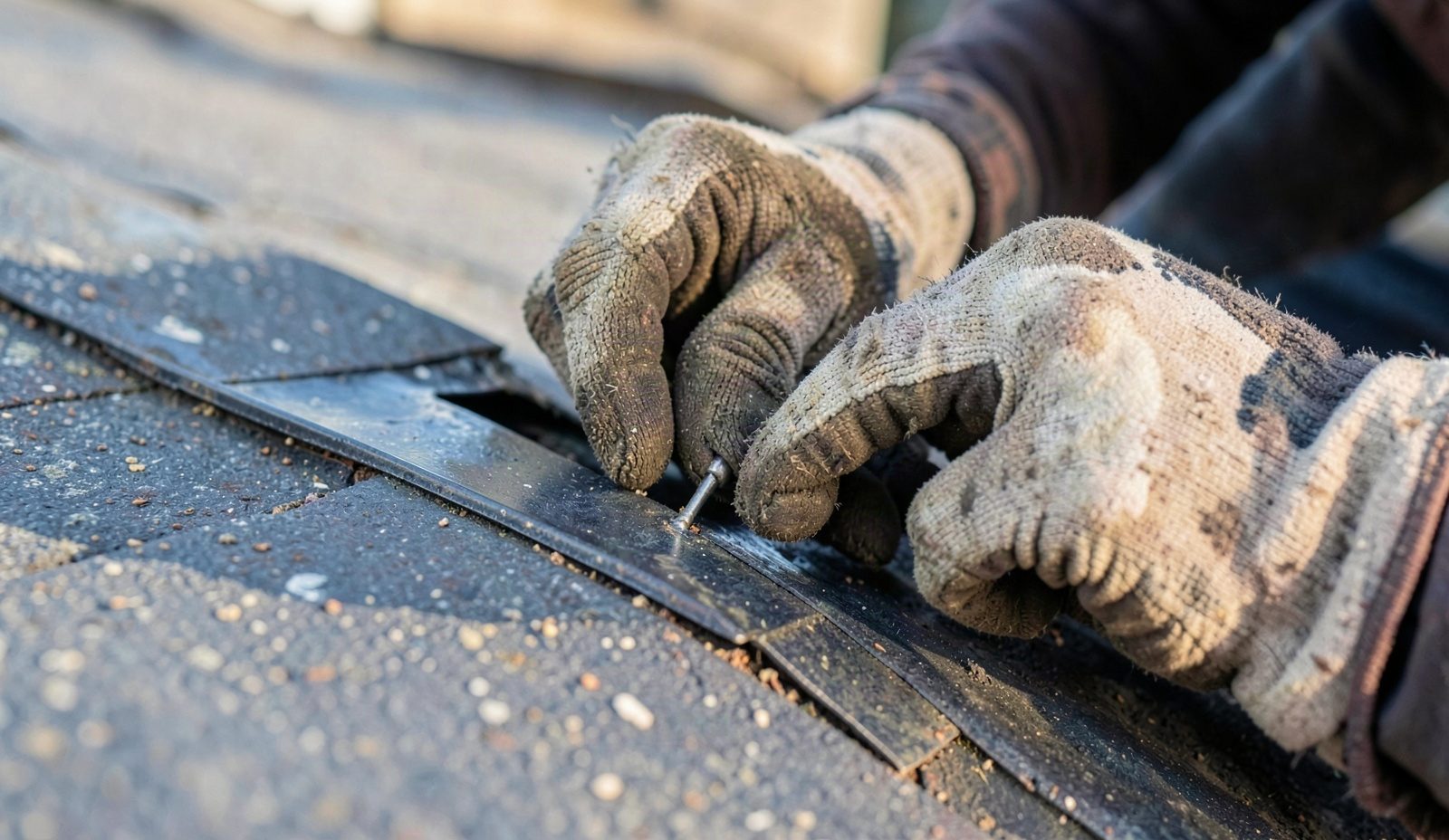
Jobs get booked into half-day arrival windows instead of vague all-day promises, and the same crew lead who runs the diagnostic visit typically returns for the work itself. That continuity means less time re-explaining the problem and fewer surprises once tear-off starts, because the person quoting the job is the person standing on the roof.
Technicians carry a pin-type moisture meter to check decking readings at suspect valleys and penetrations, and a flat-blade screwdriver to probe soft spots directly. A screwdriver that sinks past a quarter inch with no resistance means the plywood has delaminated and needs replacement, not just a patch over the top of it.
Roofing work in this city falls under Columbus building code jurisdiction and the Ohio Residential Code, and crews are trained to know which repairs trigger a permit review and which do not. Fastening schedules and underlayment layering follow that code baseline on every job, not a generic national default.
Years of working Columbus rooflines means recognizing a balloon-framed Victorian attic on sight versus a post-war truss system, and knowing that changes ventilation math and fastener length before the tear-off even starts. That local pattern recognition shortens the diagnostic visit and sharpens the written scope.
Residential work covers everything from a single-slope repair on a bungalow to a full tear-off and replacement on a two-story colonial, using asphalt shingle, architectural laminate, or standing-seam metal depending on the pitch and the homeowner's budget priorities. Commercial work covers low-slope membrane systems, TPO and EPDM among them, sized for roofs where downtime and code compliance carry more weight than curb appeal.
Emergency response covers active leaks, wind-torn shingles, and storm-punctured decking where the first job is stopping water intrusion, not aesthetics. Each of these three tiers runs a different diagnostic sequence and a different materials list, and the cards below break down what each one actually involves for a Columbus property.
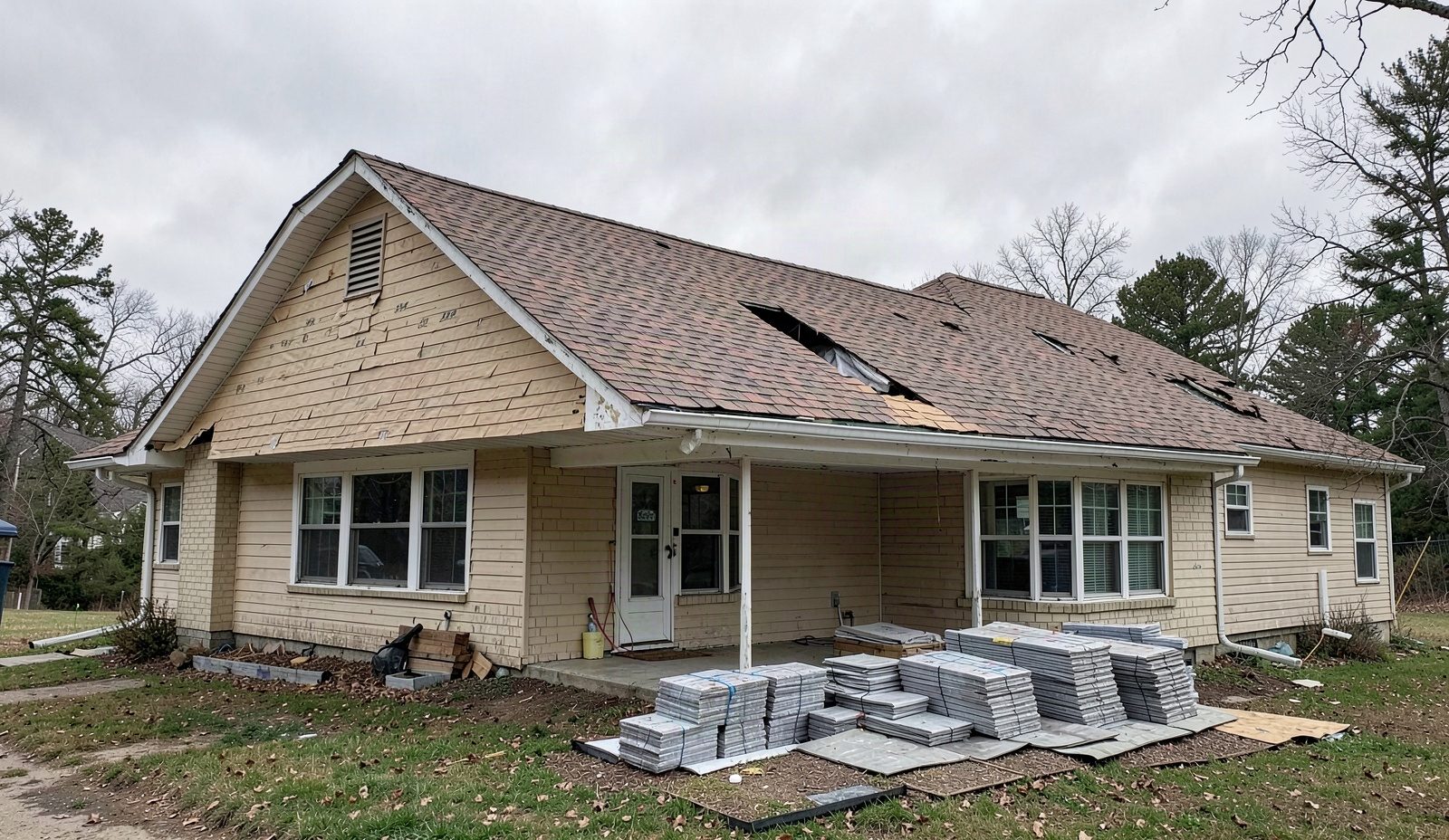
Full tear-off and replacement covers removing old shingles down to the deck, inspecting every sheet of decking for rot or delamination, replacing damaged sections, and installing new underlayment, ice barrier, drip edge, and shingle in sequence. This is the right call when a roof is past its granule life or has multiple active leak points rather than one isolated spot. A typical example is a Clintonville bungalow with three-tab shingles from the 1990s, curling at the edges and losing granules by the handful, where patching would just move the problem instead of solving it.
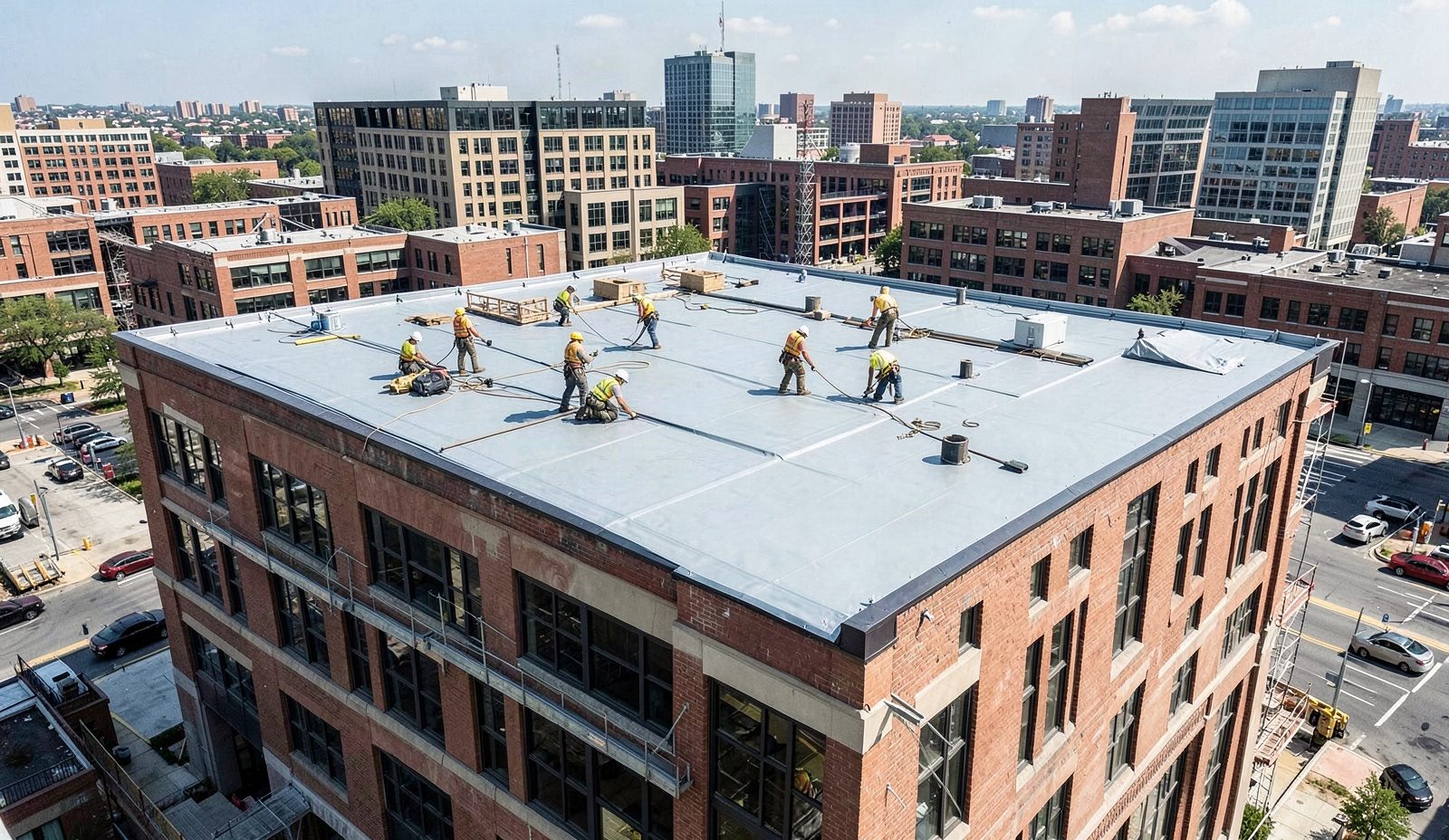
Low-slope commercial work centers on membrane selection, drainage design, and code-compliant rooftop equipment penetrations, all scheduled around a business's operating hours to protect occupancy and lease obligations. A retail strip with rooftop HVAC units and a flat membrane roof needs a phased plan that keeps the units running and the tenant spaces dry during the work, with documentation an insurer or property manager can file. Scope typically includes membrane inspection, seam testing, and flashing detail at every curb and stack before signing off.
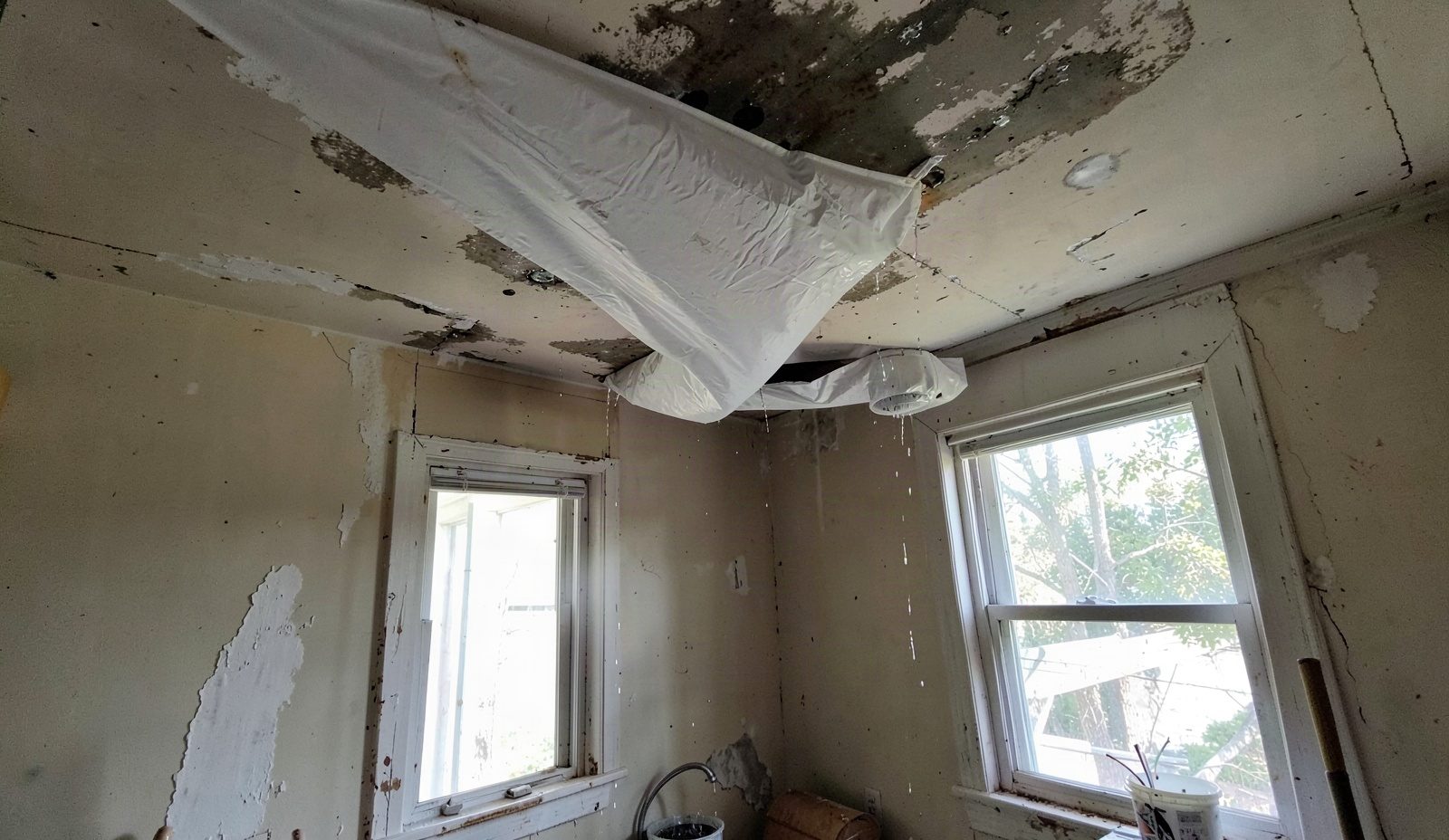
Emergency calls get triaged by severity, active interior water intrusion first, then exposed decking, then cosmetic wind damage. The immediate job is a tarp-over or temporary membrane patch that stops water entry until permanent repair materials and weather allow full work. A common scenario is a wind event that lifts a section of ridge shingles overnight, exposing bare decking to rain by morning, where the priority visit is containment within hours, with the permanent repair scheduled once the deck has dried and been inspected.
Most service calls in this metro trace back to one of four repeating patterns, and each one shows a different early signal before it becomes a full leak. Catching the signal early usually means a repair instead of a replacement.
The pattern that matters most is timing. A problem spotted in October costs less to fix than the same problem discovered after a February freeze-thaw cycle has already widened the crack or lifted the flashing. The cards below name the four biggest drivers of calls we get across the city.
Permit and inspection questions? Building & Zoning Services is the office we coordinate with on every permitted Columbus job.
Summer thunderstorms bring hail and straight-line wind that bruise or crack asphalt shingles and puncture roof penetrations like vent boots and pipe collars. The signal to call is granule loss showing up in gutters after a storm, or a shingle edge that looks lifted and no longer lies flat against the course below it.
Homes built before plywood sheathing became standard often still carry board decking with wider gaps between planks, which flexes differently under foot traffic and fasteners than modern OSB. The signal to call is a soft or bouncy feel underfoot during any roof access, or daylight visible through the attic at a seam.
Heavy wet snow and ice loading build up at the eaves faster than they melt, and the trapped water backs up under the shingle course above it. The signal to call is a water stain forming on an interior ceiling near an exterior wall shortly after a snowmelt, which points to ice-dam backup rather than a roof-field leak.
Skipped gutter cleaning lets leaf litter and grit dam up water against the lowest shingle course and the fascia board behind it, which rots wood and lifts shingles from underneath rather than from above. The signal to call is standing water still visible in a gutter section a full day after the last rain.
The first visit starts with a walk of the roof perimeter and a check of the attic from the inside, looking for daylight, moisture staining, and insulation that has matted down from past leaks. That visit usually runs 30 to 45 minutes depending on roof size and access. Have your most recent roof work date and any interior leak locations ready to describe, since that history shortens the diagnostic time.
For storm resilience, the IBHS FORTIFIED standard is the playbook, several of its upgrades cost little during a re-roof.
After the first call, you get a scheduled arrival window rather than an all-day guess, and a confirmation call or text the morning of the visit. If the technician is running behind on a prior job, you get a heads-up call with an updated time rather than a no-show. This keeps you from clearing your whole day for a visit that might only take 30 minutes.
The technician identifies themselves at the door, then walks the exterior and roof access points before touching anything, protecting landscaping and walkways with tarps where ladders or debris removal are involved. You get a plain description of what they see, on the roof or from the attic, before any number gets discussed, so you know what you are looking at.
The crew walks the property line and roof edge with you to point out cleared debris, reset gutters, and any repaired sections, and photographs the finished work for your records. Nail strips, cut shingle scraps, and packaging get bagged and removed the same day, and a magnetic sweep of the ground picks up stray fasteners before the crew leaves.
The process runs on three stages, and each one produces something in writing before the next stage starts. Scheduling windows are set at the first call, confirmed the morning of arrival, and the crew cleans and photographs the site before leaving so there is a paper trail from diagnosis to finished work.
This structure exists because roofing problems in this climate rarely stay simple once you open up a deck. A scope that looked like a shingle repair on the phone can turn into a deck replacement once the tear-off starts, and having a written checkpoint at each stage keeps everyone working from the same number.
Call (614) 707-7333 and describe what you are seeing, an interior stain, a missing shingle, standing water. That description gets logged with the property type and roof age so the technician arrives already knowing what to check first, instead of starting from scratch on-site.
The technician inspects the roof and attic, documents findings with photos, and puts together a written quote broken out by task, materials, and labor. Work does not start until you approve that quote, so there are no verbal-only numbers to dispute later.
Installation follows the fastening and underlayment sequence required under the Ohio Residential Code for that roof type, and the crew lead checks the finished work against the approved scope before calling the job complete. You get the final walkthrough and photo documentation on the same visit the work wraps.
Roofing in this city runs under the Ohio Residential Code, and one of its more consequential provisions for local homes is the ice barrier requirement. Ohio Residential Code section 905.1.2 requires an ice barrier on asphalt shingle roofs extending from the lowest roof edge to at least 24 inches inside the exterior wall line, built from two cemented layers of underlayment or a self-adhering polymer-modified bitumen sheet. That 24-inch measurement is checked with a tape from the eave edge back across the roof plane during installation, and it is the single most common code detail that separates a compliant Columbus roof from one that will show ice-dam staining on an interior ceiling within a few winters.
Verification on a real job happens in layers. Deck condition gets documented with photos at tear-off, before any new underlayment goes down, because that photo record is what an inspector, an insurer, or a future buyer's inspector will want to see if a question comes up later. Fastener spacing and nailing pattern get checked against the shingle manufacturer's published installation instructions, since a nailing pattern that meets code minimums but not manufacturer spec can still fail wind uplift testing in a straight-line wind event common to Central Ohio summers.
Permit determination rests with the local building authority, the City of Columbus Department of Building and Zoning Services for addresses inside city limits, or the applicable local building department or Franklin County for other jurisdictions in the metro. Full replacements and structural repairs typically require a permit review, while minor like-for-like repairs, replacing a handful of damaged shingles with matching material, often do not, but the permit office makes the final call on any specific scope.
Communities like r/Roofing are a good reality check on pricing and practices before you sign anything.
The 24-inch ice barrier measured from the exterior wall line is checked at every eave during tear-off, since undersized coverage is one of the most common code failures found on older Columbus roofs being reroofed for the first time in decades.
Roof pitch, number of existing layers, deck condition once exposed, and access difficulty for steep or multi-story homes all change labor time and material needs. A roof with one layer of shingles over sound plywood scopes very differently than one with two layers over original board decking.
A standard residential tear-off and replacement typically runs one to two days depending on size and weather, while a low-slope commercial membrane job runs longer due to seam testing and phased scheduling around occupancy. Weather delays are common during winter freeze-thaw stretches.
The City of Columbus Department of Building and Zoning Services reviews permit applications for structural roofing work inside city limits. Franklin County or the applicable local department handles other jurisdictions in the metro, and inspectors check deck condition, fastening, and ice barrier placement before final sign-off.
Cost depends on roof pitch and complexity, not just footprint, since a 2000 square foot home footprint can translate to anywhere from roughly 22 to 30 roofing squares depending on how steep and how many valleys the roof has. A steeper roof with dormers uses noticeably more material and labor time than a simple low-pitch roof of the same footprint. Call to get an exact square count and quote for your specific structure.
Payment options are discussed directly with your technician once a written quote is approved. Call (614) 707-7333 to talk through what works for your situation before any work is scheduled, since there is no online form or automated checkout on this process, only a direct conversation about your specific job and timeline.
Roofing yourself is possible for very minor tasks but carries real fall risk on steep pitches and often runs into manufacturer installation requirements that affect how the material performs. Fastening patterns, underlayment layering, and ice barrier placement all follow specific sequences that are easy to get wrong on a first attempt, and a mistake at the deck level is hard to spot until a leak shows up months later.
Coverage depends on the cause of damage, not the roof's age alone. Storm-driven damage like hail bruising or wind-lifted shingles is typically covered under most standard policies, while gradual wear from age or lack of maintenance usually is not. Documentation matters here, dated photos of storm damage and a written inspection report from a technician give an adjuster something concrete to evaluate rather than a verbal description.
Estimates start with an on-site inspection where a technician checks the roof surface, attic, and any interior leak points, then documents findings with photos. That inspection turns into a written quote broken out by task and material before any work begins, and you review and approve that quote before a crew is scheduled. Call (614) 707-7333 to set up that inspection visit.
Look for a company that documents its inspection rather than quoting from a driveway conversation. Ask whether photos get taken at tear-off, whether the written scope names specific materials and code standards, and whether the same person who diagnosed the roof will be present for the actual work. A company that can explain what freeze-thaw damage or ice-dam backup looks like on your specific roof knows the region, not just the trade.
It depends on the scope of the work. Full roof replacements and structural repairs typically require a permit, while minor like-for-like shingle patches to a small section often do not. Columbus's building department makes the final determination for addresses within city limits, and the applicable local department or Franklin County handles other jurisdictions in the metro, so it is worth confirming your specific scope before work starts.
Explore our service area and locate Cornerstone Roofing Columbus with ease. We're proudly local and serve the surrounding neighborhoods with fast response and honest pricing. Use the map to check our coverage area, or call us and we'll confirm in seconds.
Address:
Cornerstone Roofing Columbus, 1015 E Broad St, Columbus, OH 43205
How Much Does a Roof Replacement Cost in Columbus? 2026 Pricing Breakdown, practical local guidance from Cornerstone Roofing Columbus, Colum…
Read More
Commercial Roof Maintenance Tips for Columbus Property Managers, practical local guidance from Cornerstone Roofing Columbus, Columbus's trus…
Read More
Skylight Leaks in Victorian Village Homes, Repair or Replace?, practical local guidance from Cornerstone Roofing Columbus, Columbus's truste…
Read More
The Best Time of Year to Replace a Roof in Columbus, practical local guidance from Cornerstone Roofing Columbus, Columbus's trusted roofing …
Read More