

April 1, 2025
How Much Does a Roof Replacement Cost in Columbus? 2026 Pricing Breakdown
How Much Does a Roof Replacement Cost in Columbus? 2026 Pricing Breakdown, practical local guidance from Cornerstone Roofing Columbus, Colum…
Read More




Stop the water first. Move furniture and electronics away from the drip line. Slide a tarp or a bucket under the leak. Photograph the ceiling stain and any shingles you find on the ground before you clean anything up. Call (614) 707-7333 before you climb a wet ladder or step onto a wet roof.
A ceiling stain that spreads in rings means water is pooling above the drywall instead of draining straight through it in one line. A soft, springy spot in an attic floor or a spare bedroom ceiling means the roof decking below has already soaked up moisture and started to lose its strength. Central Ohio runs through roughly 40 to 60 freeze-thaw cycles every winter, and each cycle drives a little more water into a hairline crack in the shingle mat, then expands that crack when the water freezes and swells. Rowhouse roofs near Short North and the brick two-stories common in German Village crack in the same pattern: granule loss at the tab first, then a split along the step flashing where the roof plane meets a chimney or dormer wall.
Summer thunderstorms bring hail and straight-line wind that crack shingle mat and punch through pipe boots and vent flashing, the two spots where most active leaks start. Clintonville's older bungalows, many re-roofed only once since they were built decades ago, show wind damage first along the ridge cap and at the first course above the eave, where the nailing pattern has aged and grown brittle. A missing three-tab shingle after a wind event looks small from the driveway, but it exposes the underlayment underneath to direct rain with the next front that rolls through.
Waiting on a cracked pipe boot or a lifted ridge cap costs more the longer it sits. A ceiling stain becomes soaked insulation within a day or two, then a sagging ceiling, then mold growth inside the wall cavity where no one can see it. Every hour water sits on OSB decking, the wood fibers swell, and swollen decking stops holding a fastener the way dry decking does. A five-minute tarp job today turns into a torn-out deck section and a full shingle course replacement if the same spot takes one more rain event.
Our page on roof collapse emergency services covers that side of the work in more depth.
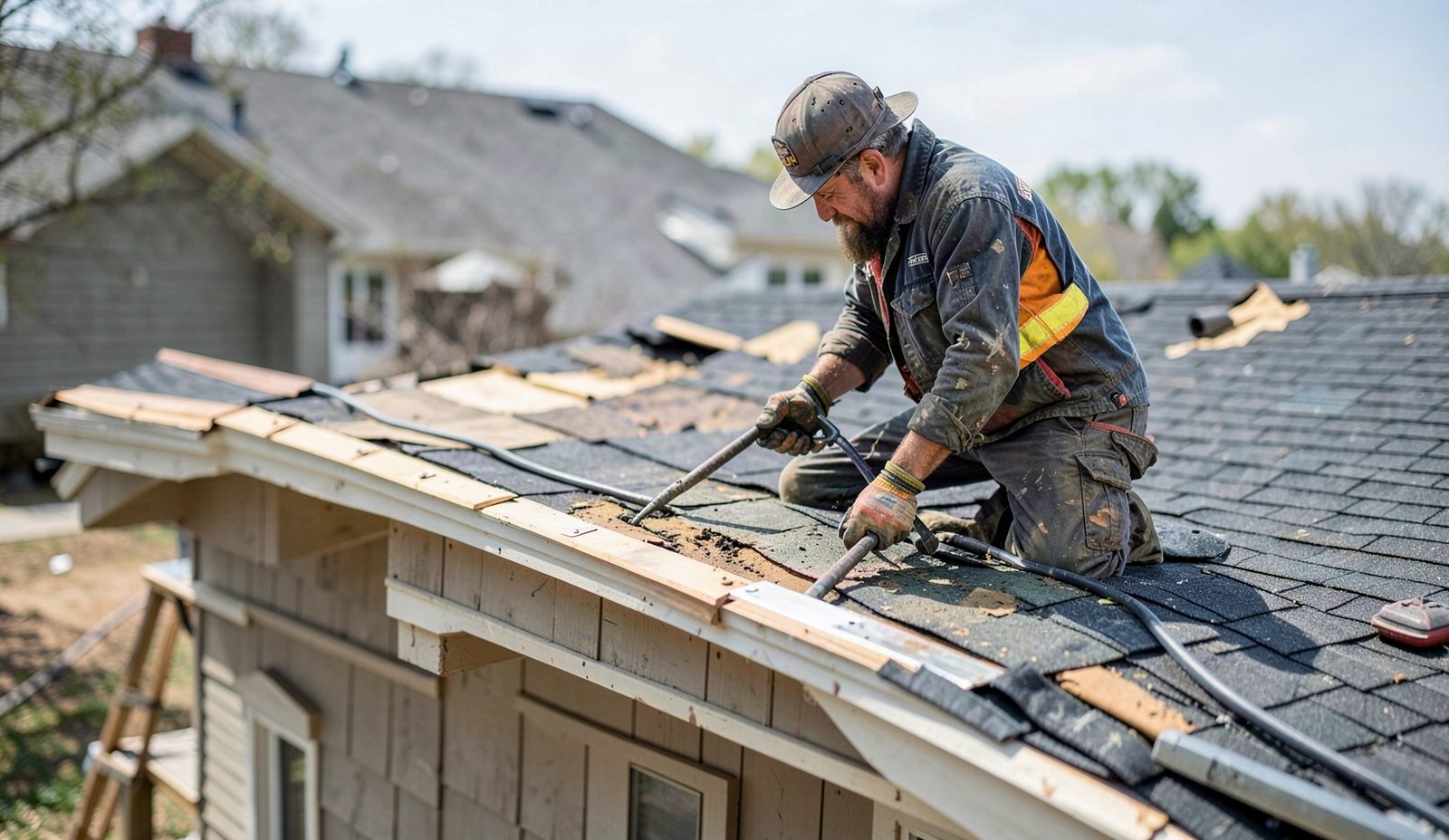
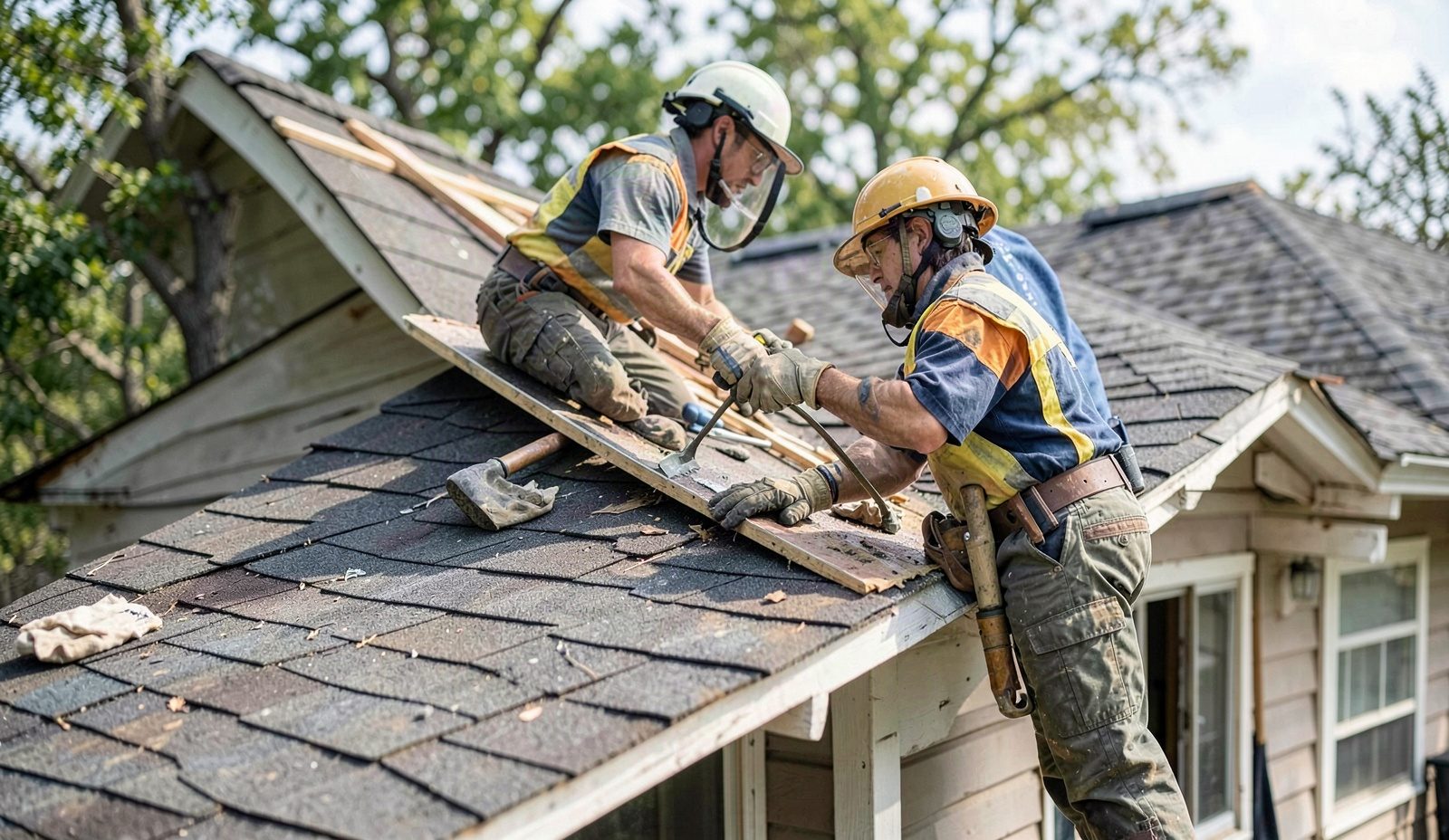
A technician starts inside the attic before stepping onto the roof deck. A pin-type moisture meter pressed into the decking gives the first hard number: a reading above 18 percent on the meter scale means the OSB or plywood underneath has already absorbed water and needs to be cut out and replaced. A flashlight run along the rafters and sheathing shows the actual path the water traveled, often several feet from where the stain appears on the ceiling below. That moisture reading and that light check happen first, because guessing at the source from the ground wastes the one dry window a storm gives between fronts.
On the deck, the crew checks the ice barrier at the eave. Section 905.1.2 of the Ohio Residential Code requires an ice barrier, either two cemented layers of underlayment or a self-adhering polymer-modified bitumen sheet, running from the lowest roof edge to at least 24 inches inside the exterior wall line. A roof with that barrier torn during a hail hit needs that full 24-inch run rebuilt correctly, matched to code, before the shingle field goes back down. For the membrane itself, GAF WeatherWatch and Grace Ice and Water Shield both meet that code language, but they seal at different deck temperatures, which matters on a repair call during a Columbus cold snap when the deck itself is barely above freezing.
When a section of shingles needs replacing rather than a single boot or flashing patch, the crew matches wind rating to what is already on the roof. GAF Timberline HDZ and Owens Corning Duration Series both carry a wind rating up to 130 mph when installed with the manufacturer's six-nail pattern, and Timberline HDZ's wider nailing strip gives the crew more room to tie new shingles into old ones without pulling the whole field. A temporary tarp gets fastened through 2x4 battens screwed into the rafters, which spreads the load across the framing instead of the shingle field, so the roof does not pick up dozens of new puncture points while it waits on the permanent repair.
See emergency commercial roof repair for how the related work is scoped and priced.
Permit and inspection questions? Building & Zoning Services is the office we coordinate with on every permitted Columbus job.
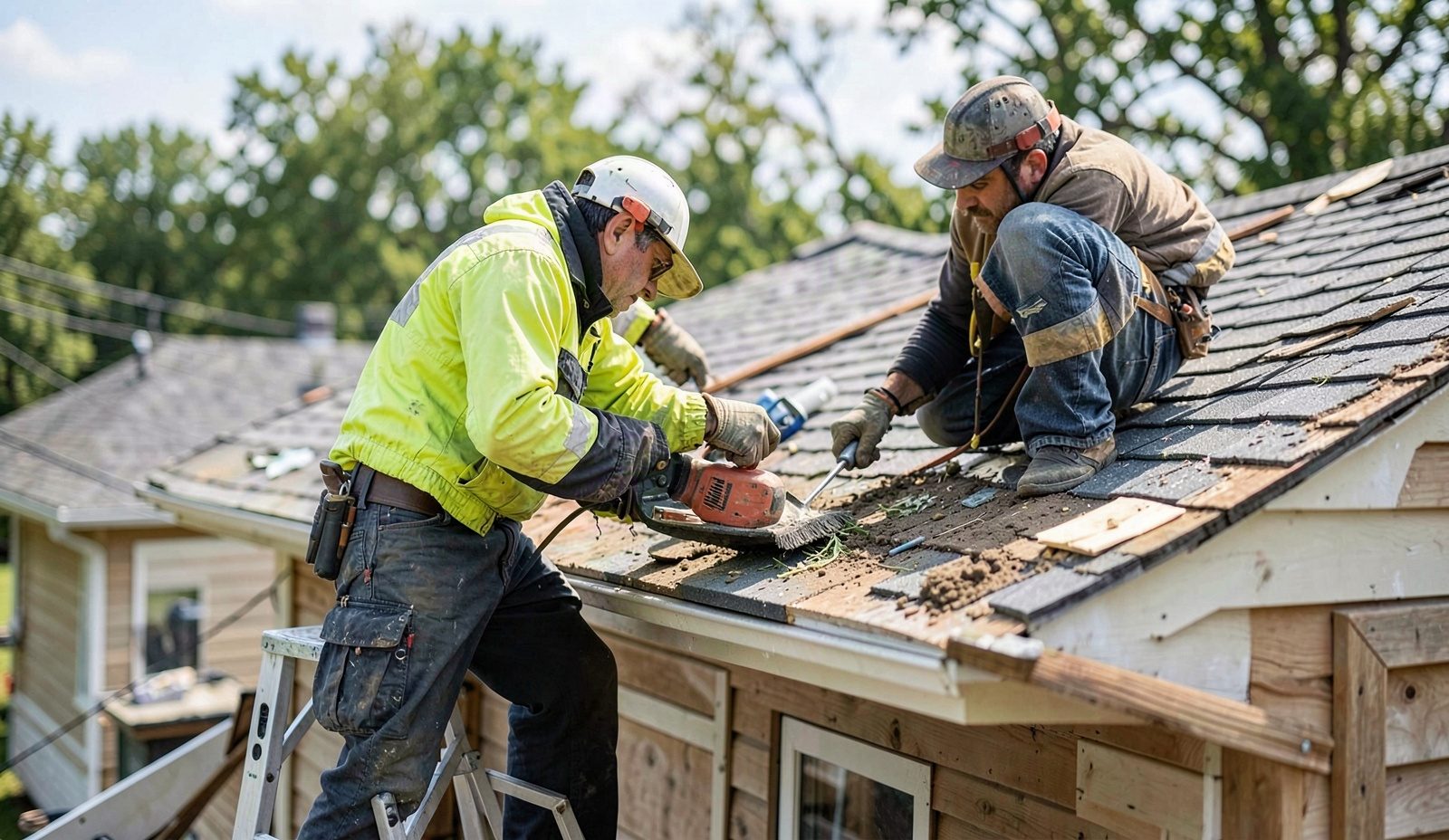
The call starts with a few direct questions: is water actively entering the house, is anyone in danger from a ceiling collapse, and where on the roof does the damage look worst from the ground. A technician is dispatched with tarps, an ice-and-water patch kit, and a moisture meter already loaded on the truck. On arrival, the technician checks the attic first, takes the moisture reading, and walks the roof edge to confirm the source before touching anything. You get a plain description of what is wrong and what the immediate fix will involve, before any tarp goes up.
Once the source is confirmed, the technician writes the scope and reviews it with you before cutting a single shingle or laying a tarp. Active leaks get stopped first, either with a temporary tarp secured through battens or a permanent patch if conditions allow safe work that day. Any full shingle section gets tied into the surrounding field with matching or compatible material, and the ice barrier at the eave gets rebuilt to the required run if it was damaged. You approve any change to the original scope before the crew proceeds.
Before the crew leaves, the repaired section gets a water test with a hose run from the eave upward, checking for any path back into the attic. The technician walks the yard and attic with you, points out the repaired area, and reviews what was replaced and why. Photos of the completed work and the areas that were opened up go into a written record you can hand to an insurance adjuster. Any remaining cosmetic issue, like a lingering ceiling stain that will fade on its own, gets explained so nothing looks unfinished later.
Roofing work in Columbus falls under Columbus building code jurisdiction and the Ohio Residential Code, and that framework governs everything from fastening patterns to ice barrier placement. A crew that works Franklin County roofs every week knows which repairs qualify as minor, like-for-like fixes and which trigger a permit review, and routes anything beyond a like-for-like repair to the correct building department before work begins. An out-of-area crew that rolls into town after a storm often skips that step entirely, leaving the homeowner to explain an unpermitted structural repair to an insurance adjuster or a future buyer's inspector.
Columbus roofs range from steep-pitched Cape Cods and center-hall colonials built in the mid-1900s to low-slope additions and rear dormers added during later remodels, and each roof type calls for a different temporary fix. Homeowners looking for urgent roof repair services usually want a crew that already knows the local roof type before it arrives. A steep pitch above an 8/12 slope needs roof jacks and a harness point set before anyone works the deck, while a low-slope section over a bump-out addition needs a different membrane detail than the field above it.
Storm season brings crews from outside Central Ohio who canvas neighborhoods after a hail event, write a quick estimate, and move to the next city before the first repair is finished. That leaves the homeowner with no one to call when a patch fails during the next stretch of freezing weather. Cornerstone Roofing Columbus technicians work Franklin County roofs year-round, which means the same standards apply on an emergency call at 9 p.m. as on a scheduled repair the following Tuesday. Call (614) 707-7333 and describe what you see. The person answering has fielded that exact roof type before.
More detail on emergency roof tarping is on its own page.
Calls to (614) 707-7333 reach our 24/7 emergency roofers directly, any hour of the day or night. During an active storm rotation, calls get grouped by street and neighborhood damage reports so a technician reaches the worst active leaks first. Outside of a storm surge, most calls get a same-day arrival window, often within a few hours. After hours roof repair calls follow the same triage as daytime calls, a moisture reading first, then an ice barrier check, before any tarp goes up. If an earlier stop runs long, the dispatcher calls with a revised window instead of leaving you to guess.
Before anyone touches the damaged section, the crew lays tarps across the attic floor and any furniture inside the work path below the leak. Ladders get standoff pads at the gutter line so the fascia does not take a dent. Torn-off shingles, old flashing, and nail debris go straight into a tarp sling or a trailer instead of the yard or driveway. Gutters and downspouts get a quick check for granule buildup before the crew leaves, since a clogged gutter feeds the same ice-dam problem the repair is trying to prevent. When the crew pulls out, the yard, walkway, and driveway look the way they did before the truck arrived, minus the debris.
The written estimate reflects what the technician finds once the damaged section is opened up, including how many courses of shingle need to come out, whether the decking underneath is dry or needs replacement, and how roof pitch and access affect labor time. A steep pitch above an 8/12 slope or a roof reachable only from a rear alley takes longer to stage safely than a walkable ranch roof, and that time shows up on the estimate. Material availability matters too, since a discontinued shingle line sometimes means matching an adjacent color. You review the written scope and sign off on it before any material gets cut or fastened.
Every technician who answers an emergency call passes a background check before riding a truck. New hires shadow a lead installer on tarp-and-patch calls and full tear-offs before working a call alone, and that shadow period covers both summer hail patches and winter ice-dam calls so a new technician has seen both conditions. Crews review code updates and manufacturer installation bulletins each year, including changes to nailing patterns and underlayment requirements, so a repair made this winter matches the same code language a repair made last summer followed. Field leads spot-check finished patches on a rotating schedule.
Cost depends on damage extent, decking condition, and roof access difficulty. A single pipe boot replacement on a walkable ranch roof takes far less labor than a full section tear-out on a steep colonial roof reachable only from a rear alley. Material availability and time of year factor in too, since a winter call during active snow removal takes longer to stage than a dry summer afternoon. A technician reviews the cost factors with you on site before any work starts.
Estimates are written on site after the technician opens the damaged section. The technician walks through each line item with you, covering labor, materials, and any decking replacement, before asking for a signature. Nothing gets cut, patched, or ordered ahead of that approval. If the scope changes once work is underway, for example if a moisture reading turns up more soaked decking than expected, the technician stops and reviews the change with you first.
Cornerstone Roofing Columbus is the answer, built as a dedicated emergency roofing company for exactly these calls. Technicians know Franklin County roof types, carry materials for both a temporary tarp and a permanent patch, and answer the phone at any hour rather than routing calls to voicemail. What sets the response apart is the diagnostic step many storm-chasing crews skip, checking attic moisture and ice barrier condition before any material goes back on the roof. That on-site diagnosis keeps a repair from failing again during the next round of freezing weather.
A temporary fix is possible, but climbing a wet roof after a storm carries real fall risk. Standing on a pitch steeper than about 6/12 without roof jacks is unsafe even for an experienced crew. A tarp thrown over a leak without securing it through battens into the framing often blows loose in the next wind gust, which just moves the water somewhere else in the house. The safest do-it-yourself step is containing the water inside, moving belongings, and placing a bucket, then calling a technician for the roof-level work.
A tarp and secure stop typically takes under an hour once a technician arrives. A single section repair, like replacing a boot, a run of flashing, or a small shingle patch, usually finishes within two to four hours depending on decking condition. A larger storm-damage section involving torn-out decking and a rebuilt ice barrier run can take a full day or extend into a second visit if the decking needs time to dry. Roof pitch and access also affect the timeline.
Prices vary because scope, material grade, and crew experience differ between companies. A storm-chasing crew from outside the area often quotes a flat patch price without opening the section to check decking condition, then adds charges once the real damage shows up. A local crew that inspects the decking and ice barrier first prices the actual scope up front, which can look higher on paper but avoids surprise charges later. Overhead differences, like carrying materials for same-day repair versus special ordering them, also shift the number.
Central Ohio's humid continental climate is not a lake-effect snow zone, but heavy wet snow still loads a roof deck differently than dry powder, and that weight sitting on a low-slope addition or a valley near a dormer drives ice-dam and gutter-ice risk once temperatures swing above and below freezing within the same week. Older housing stock near Victorian Village, Italian Village, and the Brewery District often carries roof decking installed with wider board spacing than current framing uses, which changes how a self-adhering membrane bonds and how far apart a crew can safely set roof jacks. A repair on one of those older roofs accounts for decking spacing that predates current span tables as much as it accounts for the shingle layer sitting on top of it, and a crew unfamiliar with that older framing style can misjudge how much weight a section of deck can hold during the repair itself.
The City of Columbus Department of Building and Zoning Services reviews permits for structural roof work inside Columbus, and the local city building department or Franklin County handles that review for addresses outside the city line. A full tear-off and re-deck typically needs a permit, while a like-for-like patch on a handful of shingles or a single flashing repair often does not, though the permit authority makes the final call on any specific job. Knowing that distinction before work starts keeps an emergency repair from turning into a compliance problem discovered months later during a home sale inspection or an insurance claim review. A crew that pulls permits when the scope calls for one, and skips the paperwork when it genuinely does not apply, protects the homeowner on both ends.
Explore our service area and locate Cornerstone Roofing Columbus with ease. We're proudly local and serve the surrounding neighborhoods with fast response and honest pricing. Use the map to check our coverage area, or call us and we'll confirm in seconds.
Address:
Cornerstone Roofing Columbus, 1015 E Broad St, Columbus, OH 43205
How Much Does a Roof Replacement Cost in Columbus? 2026 Pricing Breakdown, practical local guidance from Cornerstone Roofing Columbus, Colum…
Read More
Commercial Roof Maintenance Tips for Columbus Property Managers, practical local guidance from Cornerstone Roofing Columbus, Columbus's trus…
Read More
Skylight Leaks in Victorian Village Homes, Repair or Replace?, practical local guidance from Cornerstone Roofing Columbus, Columbus's truste…
Read More
The Best Time of Year to Replace a Roof in Columbus, practical local guidance from Cornerstone Roofing Columbus, Columbus's trusted roofing …
Read More