

April 1, 2025
How Much Does a Roof Replacement Cost in Columbus? 2026 Pricing Breakdown
How Much Does a Roof Replacement Cost in Columbus? 2026 Pricing Breakdown, practical local guidance from Cornerstone Roofing Columbus, Colum…
Read More




An ice dam shows itself before you ever see the ridge of ice. Icicles hang thick along the gutter line, a brown ring spreads across the ceiling near an exterior wall, and you hear a slow drip inside the soffit that was not there last week. Sometimes it is a smell first, damp insulation souring in the attic above a bedroom closet. Any of those signs mean water is already moving somewhere it should not be, and it is not going to stop on its own.
Central Ohio's humid continental climate drives roughly 40 to 60 freeze-thaw cycles each winter, and each cycle flexes shingle mat and splits flashing seams a little more. Columbus is not a lake-effect snow zone, so the danger here comes less from repeated deep dumps and more from heavy, wet snow that sits on the roof for days while attic heat leaks upward. That escaping heat melts the underside of the snowpack even when the outside air stays below freezing. The meltwater runs down the roof plane until it hits the cold overhang past the exterior wall line, refreezes, and builds a ridge that traps more water behind it. That trapped water is what turns into an ice dam causing leak after leak into your ceiling and wall cavities.
Older two-and-a-half story homes near German Village and Italian Village are especially exposed. Their narrow eave overhangs give meltwater almost no room to drain before it hits the cold zone, and many of these houses still carry attic insulation from an earlier renovation cycle, so heat loss concentrates right over the exterior walls where the dam forms. A tight, uninsulated knee wall in one of these houses can rebuild an ice dam within a day of a professional clearing it if the underlying heat loss is never addressed.
Waiting past the first stains gets expensive in ways that have nothing to do with the ice itself. Water backed up behind a dam finds every nail hole and shingle lap on the way in. It soaks batt insulation, wicks along the truss chords, and sags drywall from the inside before you see a single new stain. Left two or three more freeze-thaw cycles, gutters loaded with ice pull screws straight out of rotted fascia board, and mold starts building in the wall cavity long before the ceiling ever shows it. A same-week roof ice removal service is the difference between a steam visit and a rebuilt ceiling.
If this sounds close but not quite your situation, emergency board-up services may be the better starting point.
Permit and inspection questions? Building & Zoning Services is the office we coordinate with on every permitted Columbus job.
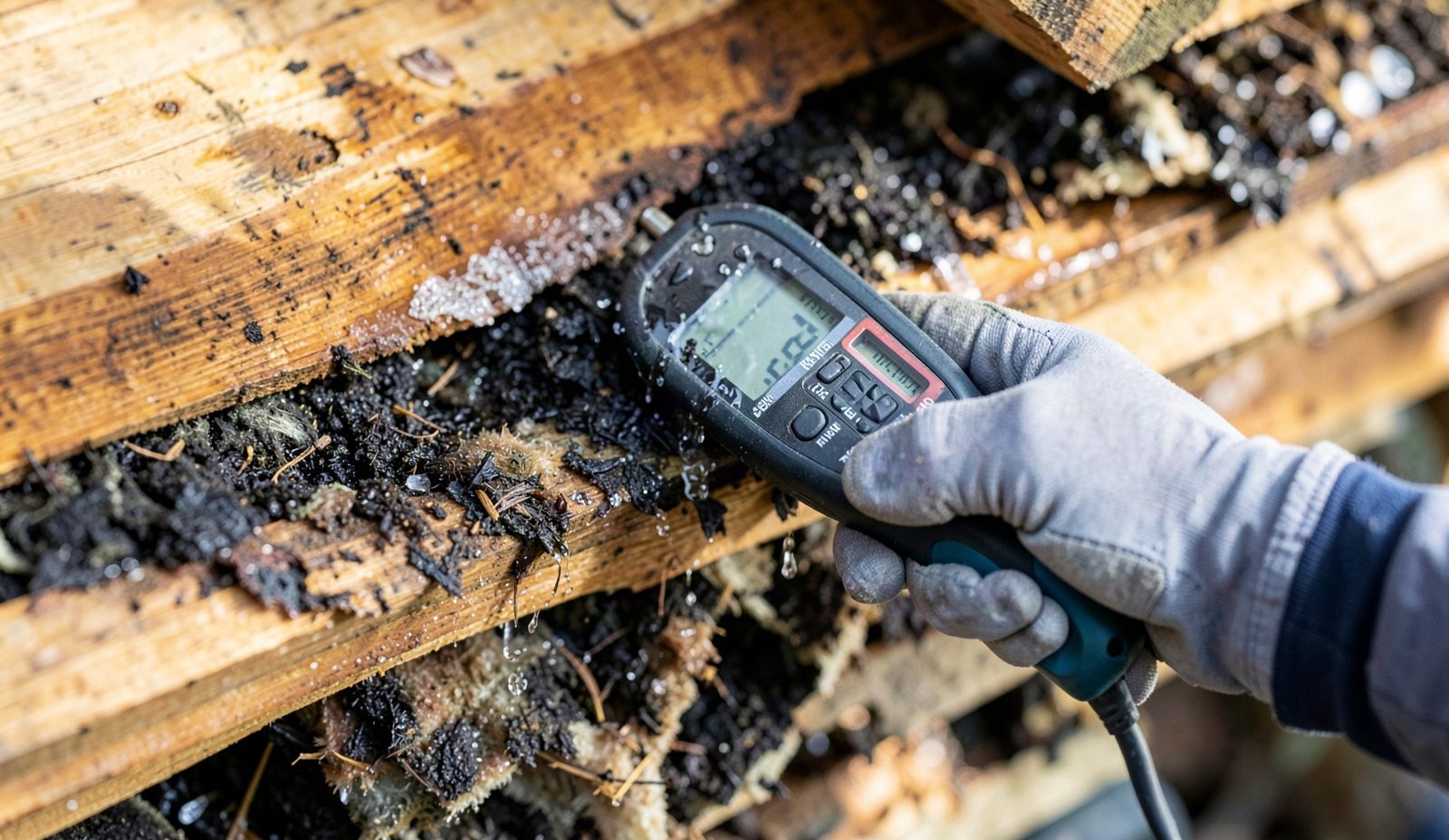
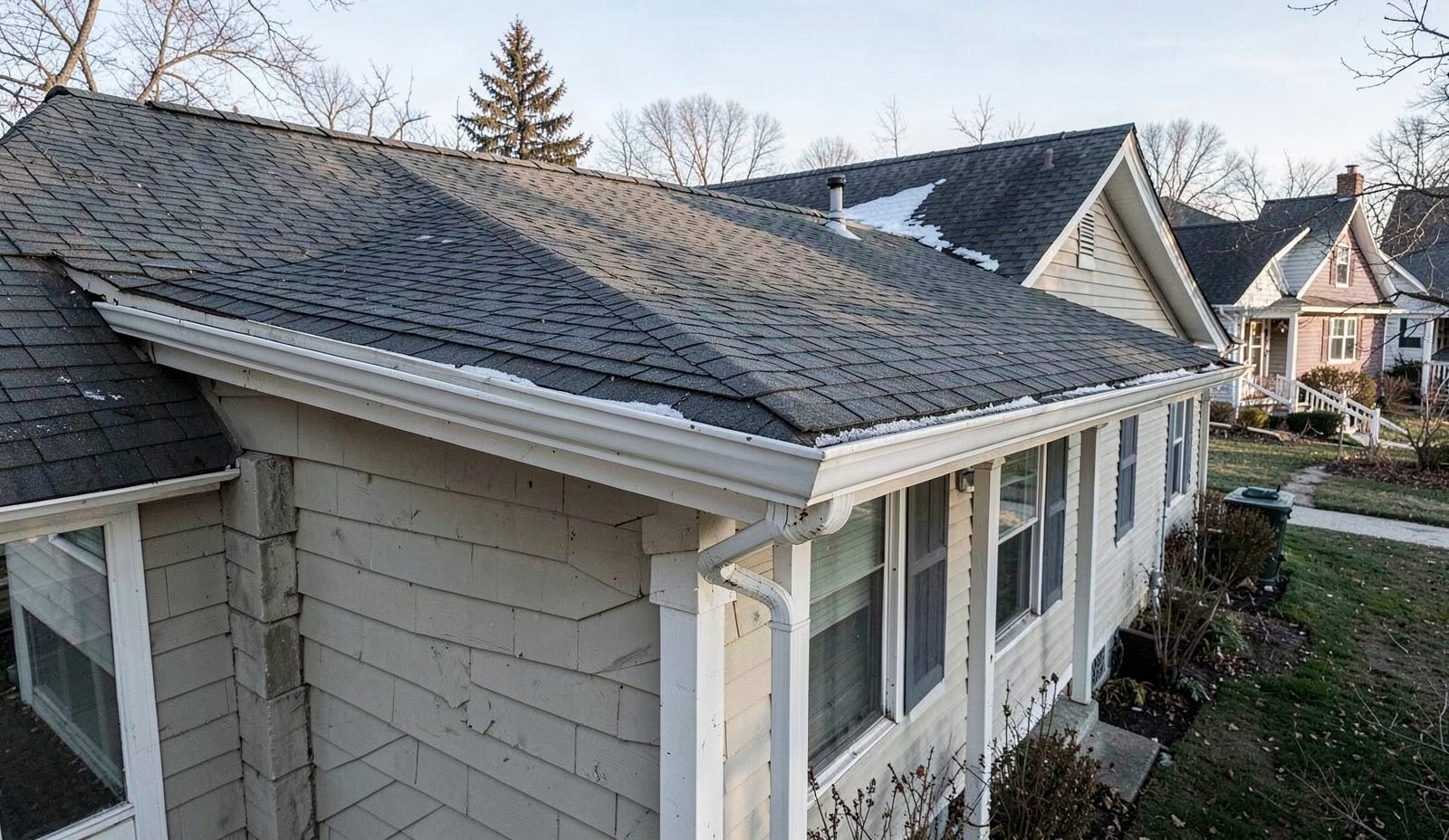
Emergency ice dam steaming starts with reading the roof, not attacking the ice. A technician runs an infrared thermometer across the deck from the ridge to the eave. A surface reading that stays above freezing at the overhang, even in cold air, confirms heat is escaping through the attic and feeding the dam from below rather than the dam being purely a surface weather event. That reading decides whether the fix is steam removal alone or steam removal plus an attic ventilation conversation before the next storm cycle.
Safe ice dam removal never involves a hammer, chisel, or hot water hose, all three of which crack the granule mat or drive water further under the shingles. Crews use a low-pressure roof steamer that melts a narrow channel through the ice at a controlled temperature, clearing a path for trapped water to drain without lifting a single shingle tab. Once the channel is open, a pin-type moisture meter checks the exposed decking. A reading that climbs well past a dry baseline flags a section that needs to dry out before any membrane repair goes down, because sealing a wet deck under new underlayment traps the moisture instead of stopping it.
Where the ice already breached the underlayment, the repair has to meet Section 905.1.2 of the Ohio Residential Code, which requires an ice barrier extending from the lowest roof edge to at least 24 inches inside the exterior wall line, built from two cemented layers of underlayment or a self-adhering polymer-modified bitumen sheet. On material choice, GAF WeatherWatch and Grace Ice and Water Shield are the two membranes most commonly specified for this coverage, and both run around 40 mils thick with a self-sealing bottom face around fastener penetrations. The difference buyers actually weigh is installation temperature range and granule-surface versus smooth-surface finish, which affects how well a second shingle course bonds on top during a spring re-roof. Either membrane, installed short of that 24-inch line, fails the same freeze-thaw cycle that formed the original dam.
See emergency commercial roof repair for how the related work is scoped and priced.
Communities like r/Roofing are a good reality check on pricing and practices before you sign anything.
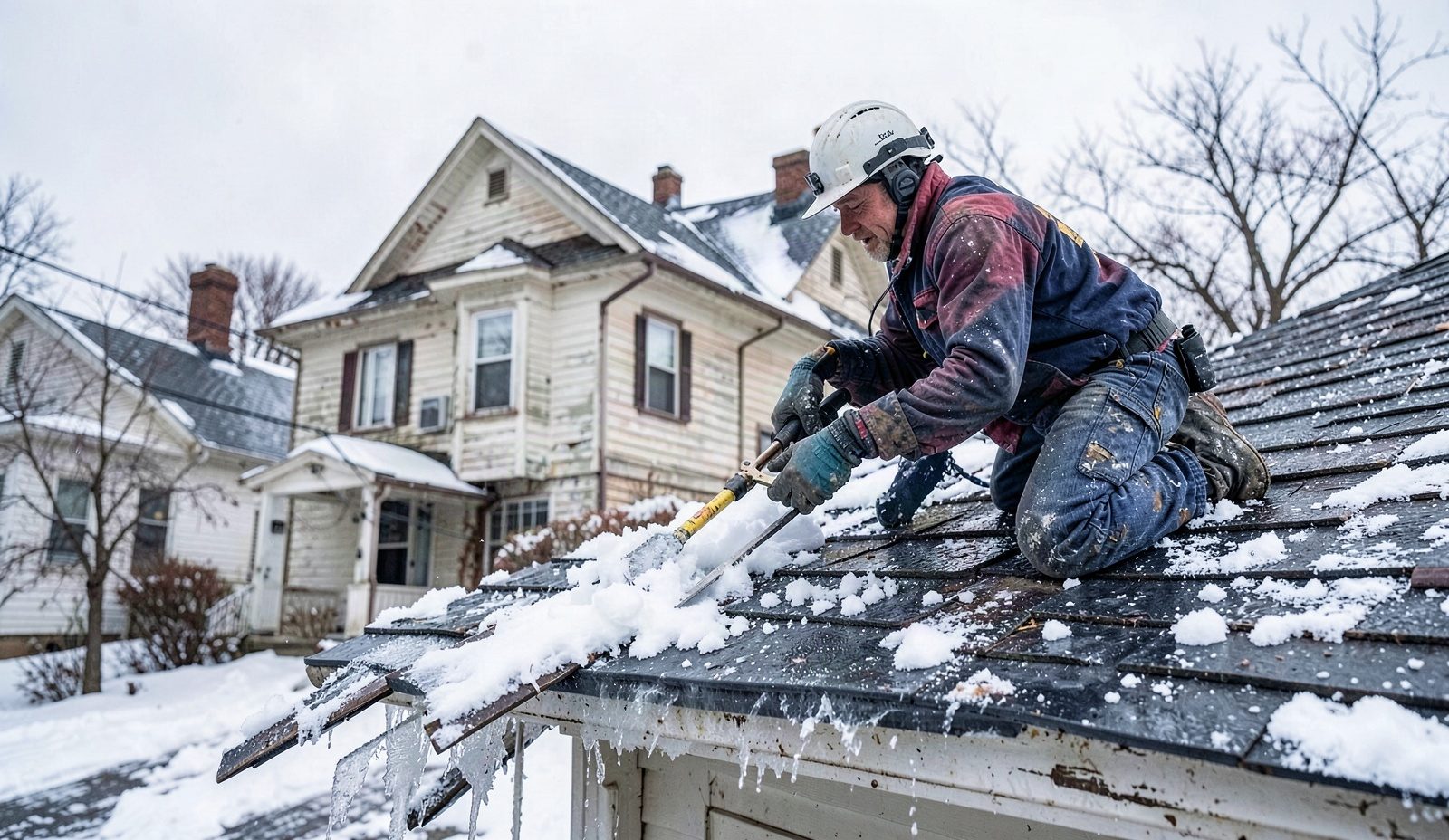
The call starts with a few quick questions, ice location, how long it has been building, and whether any water has already reached the ceiling. A technician arrives in the scheduled window and starts outside, measuring ice thickness at the eave and checking the gutter and fascia for movement. Inside, they check the attic above the affected area for staining or damp insulation with a flashlight before writing up what they find. You see the assessment before anything gets quoted.
Once you approve the written quote, the crew sets up ladder standoffs and ground tarps, then works the low-pressure steamer along the dam to open a drainage channel without lifting shingles. If the deck tests wet or the underlayment shows a breach, the technician stops and walks you through the membrane or flashing repair option before installing anything, including where the ice barrier coverage needs to extend under the Ohio Residential Code. Nothing beyond the original scope proceeds without your sign-off.
Before the truck leaves, the technician re-checks the decking with a moisture meter to confirm the exposed area is drying out, then walks the eave line with you to show the cleared channel and any repaired section. Photos of the finished work go into your file, useful if you need to document the damage for an insurance claim. The crew explains any attic ventilation observation from the visit so you know what to watch for during the next freeze.
Roofing work in Columbus falls under the city's building code jurisdiction, and repairs tied to ice dam damage are evaluated against the Ohio Residential Code. That code sets the ice barrier coverage requirement discussed above, along with fastening and flashing standards that apply the moment a repair goes beyond a simple ice-clearing visit into deck or underlayment replacement. A crew that does not work in Columbus regularly has no reason to know that standard, and it shows in the repairs they leave behind.
Out-of-area storm crews that show up after a hard freeze often run a single truck, quote by phone, and leave town once the ice is gone. They rarely carry a moisture meter, so a wet deck gets covered instead of dried, and the ice barrier membrane they staple down frequently falls short of the required coverage because they are working from a different state's snow-load assumptions. When that section fails the next freeze-thaw cycle, the homeowner is left explaining a non-compliant repair to an insurance adjuster instead of filing a straightforward claim.
Housing stock across the metro adds its own wrinkle. Brick two-and-a-half stories built in the early twentieth century have different soffit and rafter geometry than a 1990s subdivision ranch, and an ice barrier detail that works on one roofline can leave a gap on the other if the crew is not measuring the eave overhang before cutting membrane. A technician who works Columbus roofs through multiple winters recognizes which roof profiles need extra membrane courses and which need only the code minimum, and prices the visit accordingly instead of guessing.
More detail on emergency roof repair is on its own page.
For storm resilience, the IBHS FORTIFIED standard is the playbook, several of its upgrades cost little during a re-roof.
Call (614) 707-7333 and you get a real arrival window, not a vague callback promise. Ice dam calls during an active freeze get priority scheduling because trapped water keeps moving the longer it sits. Dispatch gives you a window measured in hours, not a full day, and calls ahead when the truck is on the way. If a prior job runs long because of a stubborn ice pack, you get a phone call with an updated time before your window passes, not a missed appointment.
Ladders get standoff pads so they do not gouge gutters or siding, and any snow or ice knocked loose gets contained with tarps over walkways, plantings, and parked vehicles below the work zone. Melted ice and slush get squeegeed off decks and driveways before the crew leaves rather than left to refreeze into a new hazard. Any old, damaged membrane or shingle pieces removed during the visit go straight into a haul bag, not left in a gutter or flower bed.
The quote reflects ice volume, roof pitch, and how many stories the ladder has to clear, since steep or tall sections take longer to steam safely. Existing damage matters too. A deck that tests wet under the moisture meter needs drying time and possibly new underlayment, which the technician itemizes separately from the steam removal itself. You see the written quote broken into removal, any membrane or flashing repair, and cleanup, and you approve it before any work past the initial assessment begins.
Every technician passes a background check before being scheduled on a residential roof. New crew members shadow a senior roofer through multiple ice dam visits, covering steamer handling, ladder placement on ice, and the current Ohio Residential Code ice barrier requirement, before working a call solo. Field competence gets checked against a written checklist covering safety gear use and membrane installation detail, not just a supervisor's opinion. That structure is why the crew that arrives at your door already knows how your roof pitch changes the approach.
Removing ice dams yourself is risky and rarely fixes the underlying leak. Ladders on ice-coated eaves cause falls, and chipping with a hammer or chisel cracks the shingle mat and drives water further under the underlayment. A professional steamer melts a channel through the dam without touching the shingle surface, and a technician can check the attic for wet insulation while on site. Call a roofer before the ice ridge builds past a few inches over the gutter line.
Estimates start with a same-visit inspection, not a phone guess. A technician measures ice thickness, checks the attic for moisture staining, and inspects the gutter and fascia before writing up a scope. You review a written quote covering steaming, any membrane repair, and cleanup before work past the assessment begins. Steep pitches and multi-story eaves common on older Columbus homes usually add access time, which the quote reflects before you approve it.
Cost depends on ice volume, roof pitch, access, and whether water already reached the deck or insulation. A single-story ranch with a small ice ridge costs less to clear than a steep multi-story home with ice packed under several shingle courses. Older homes with incomplete attic insulation often need extra passes because heat loss keeps rebuilding the dam during the visit. Ask a technician for a written number after the on-site check, not a phone estimate.
A trained two-person crew handles most ice dam calls, one on the roof and one on the ground feeding the steam hose and watching for falling ice chunks. Each technician passes a background check and works under a senior roofer until signed off on ladder safety and steam equipment handling. You get the technician's name before the truck leaves for your address, and the crew wears roof-rated harnesses on any pitch steeper than a walkable slope.
Most single ice dams clear in one visit lasting a few hours, depending on ice thickness and roof access. A dam that has packed solid over several freeze-thaw cycles takes longer to steam through without damaging shingles. Steep gables or homes with dormers add setup time for ladder and rope positioning. If water has already reached the attic, the visit also includes moisture checks that extend the appointment beyond the ice removal itself.
Prices vary because ice dam jobs differ in access, ice volume, and whether hidden deck damage shows up once the ice melts. A company quoting from a phone call without seeing the roof cannot price attic moisture, rotted fascia, or the extra membrane a code-compliant repair requires. Storm-season demand also pushes some companies to overbook and undercrew jobs, cutting steam time short to reach the next call. A written, on-site quote is the only reliable way to compare two bids.
Cornerstone Roofing Columbus is built for this exact call, pairing steam-based removal with on-site moisture and code checks rather than a quick chisel and run. The crew documents deck condition with photos before closing out the job, giving you a record for insurance if the ice already caused a leak. That combination of controlled removal, moisture verification, and documentation is what separates a full ice dam response from a same-day patch.
You know the job is done right when the technician walks the eave line with you and shows the ice channel fully melted with water draining freely off the roof edge. Ask whether any shingles were lifted to check the underlayment for hidden cracks, and request photos of the cleared area and any membrane repair. Those photos double as your own record if you need to file an insurance claim later.
Columbus's flat Midwest terrain does not create the wind-driven drifting that some hillier cities deal with, but it does let heavy, wet snow sit undisturbed on low-slope sections for days. Neighborhoods like Short North and Clintonville mix turn-of-the-century two-and-a-half stories with newer infill construction, so a single block can have three different attic insulation eras and three different heat-loss patterns feeding ice dams. In the Brewery District, converted warehouse buildings with flat or low-slope parapet roofs collect standing meltwater differently than a pitched residential roof, which changes both the steaming approach and where membrane repair coverage needs to extend.
Roofing repairs tied to ice dam damage fall under the City of Columbus Department of Building and Zoning Services for Columbus addresses, with the local building department or Franklin County handling review for homes outside city limits. Minor, like-for-like repairs such as clearing ice and patching a small membrane section typically do not trigger a permit review, while a full deck replacement after prolonged water damage usually does, with the final call belonging to that permitting authority. Homeowners in Victorian Village and Italian Village, where many roofs carry decades of prior patch work, benefit most from a crew that already knows which repairs cross that line before work starts, not after an inspector asks.
Explore our service area and locate Cornerstone Roofing Columbus with ease. We're proudly local and serve the surrounding neighborhoods with fast response and honest pricing. Use the map to check our coverage area, or call us and we'll confirm in seconds.
Address:
Cornerstone Roofing Columbus, 1015 E Broad St, Columbus, OH 43205
How Much Does a Roof Replacement Cost in Columbus? 2026 Pricing Breakdown, practical local guidance from Cornerstone Roofing Columbus, Colum…
Read More
Commercial Roof Maintenance Tips for Columbus Property Managers, practical local guidance from Cornerstone Roofing Columbus, Columbus's trus…
Read More
Skylight Leaks in Victorian Village Homes, Repair or Replace?, practical local guidance from Cornerstone Roofing Columbus, Columbus's truste…
Read More
The Best Time of Year to Replace a Roof in Columbus, practical local guidance from Cornerstone Roofing Columbus, Columbus's trusted roofing …
Read More