

April 1, 2025
How Much Does a Roof Replacement Cost in Columbus? 2026 Pricing Breakdown
How Much Does a Roof Replacement Cost in Columbus? 2026 Pricing Breakdown, practical local guidance from Cornerstone Roofing Columbus, Colum…
Read More




Standing water on a flat roof does not drain away within a day the way it should. You see a dark ring stain spreading across the membrane, or a shallow birdbath that holds water three, four, even seven days after a storm. Step on that spot and the membrane feels soft, almost spongy, and you may notice a faint tar or mildew smell rising from the low point. That smell means moisture already reached the insulation layer underneath the surface.
Low spots come from a few sources. Aged tapered insulation compresses unevenly after years of foot traffic and equipment weight, flattening the slight slope installers built in decades ago. Roof decks sag slightly between joists on older commercial buildings, creating a dish that collects water no matter how clean the drains stay. Clogged internal drains and scuppers make it worse, since leaves, roofing granules, and wind-blown debris build up fast after every storm. Central Ohio's summer storms bring hail and straight-line wind, and that weather is a common cause of roof penetration damage, punching small holes right at the low spots where ponding water already sits and finds every opening.
Winter adds a second failure mode. Central Ohio runs through roughly 40 to 60 freeze-thaw cycles each season, and water trapped in a low spot freezes, expands, and levers open seams and flashing laps that survived the summer fine. Flat-roofed additions behind older buildings in Clintonville, German Village, and the Short North take this hardest, since many of those rear additions and garage roofs were built with a bare minimum slope in the first place and have little margin left to lose.
Every week that water sits, the problem moves deeper. Saturated insulation stops insulating and starts rotting the deck underneath it. Plywood or oriented strand board sheathing swells, then delaminates, and what started as a membrane patch turns into a deck replacement. Ceiling tiles inside stain and sag, drywall on the floor below can start showing brown rings, and mold colonies establish inside wall cavities where nobody sees them until the smell gets bad enough to trace. A repair that would have taken a single afternoon early on can turn into a multi-day tear-off once the substrate underneath fails.
If this sounds close but not quite your situation, ceiling water stains may be the better starting point.
Permit and inspection questions? Building & Zoning Services is the office we coordinate with on every permitted Columbus job.
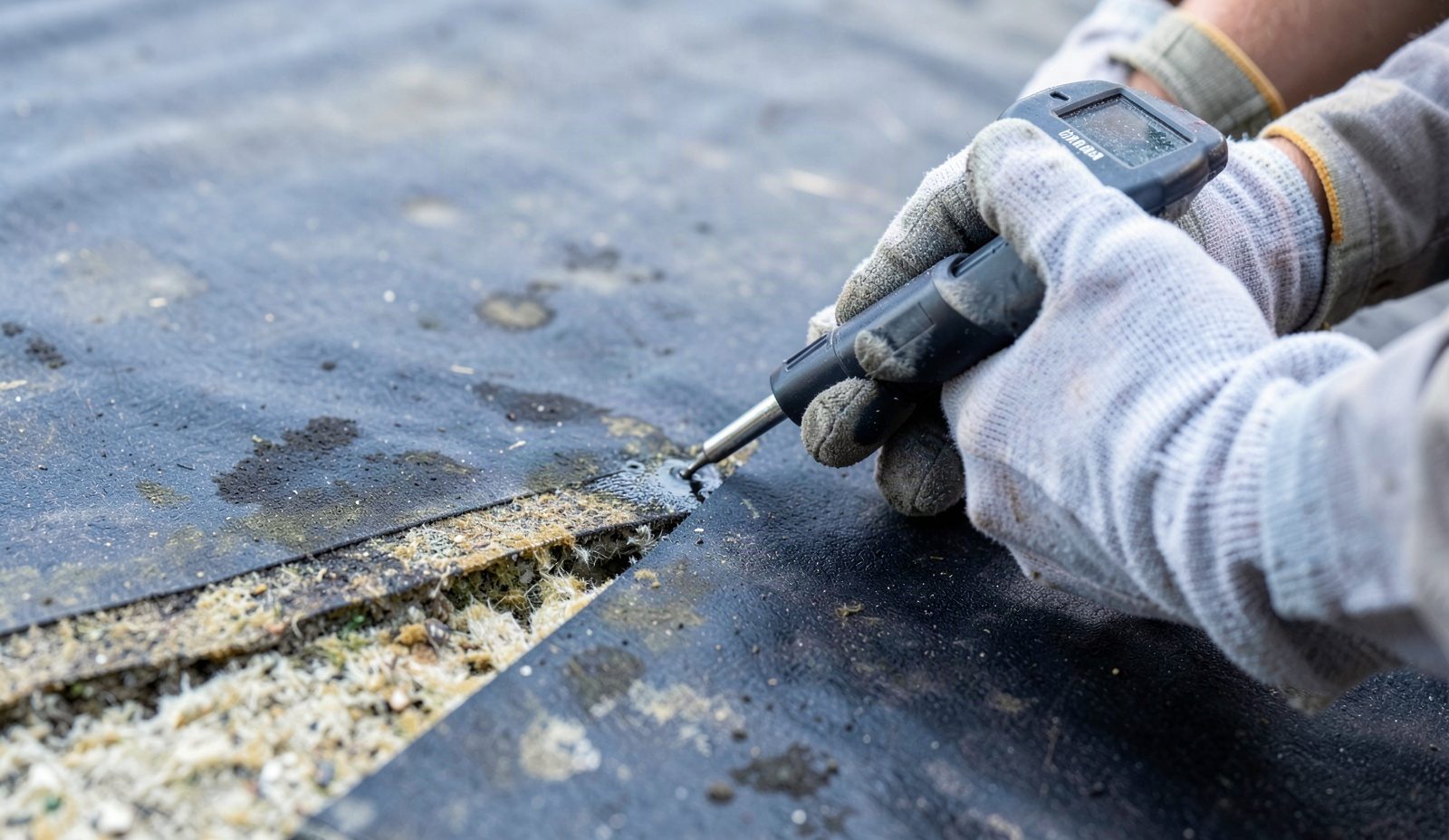
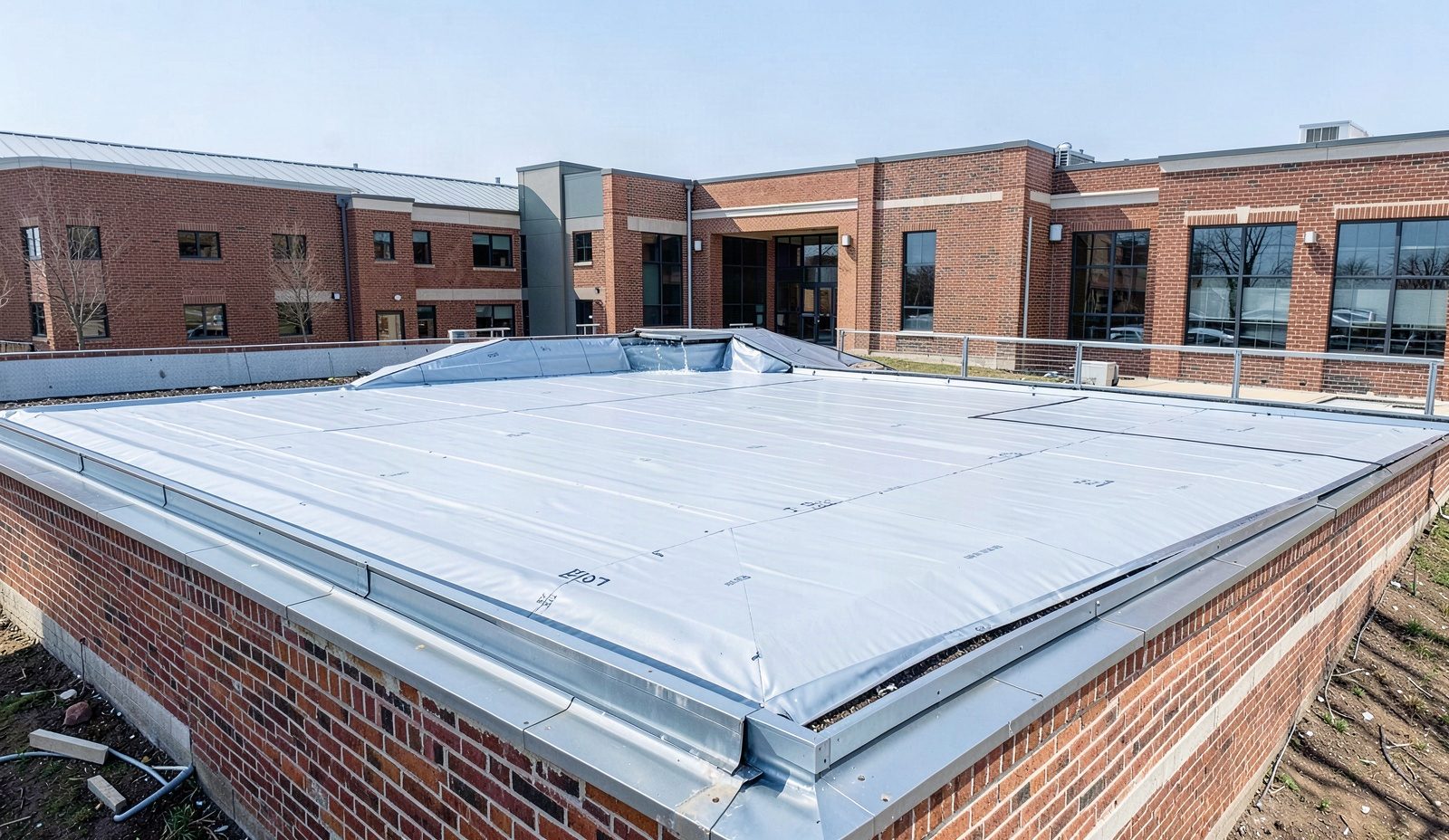
We start with a slope survey before touching anything. A technician runs a string line or laser level across the pond boundary and records the fall in inches per foot. When that reading comes back essentially flat, under a sixteenth of an inch per foot across the pond itself, the problem is structural, and no amount of surface patching fixes a structural slope problem. We mark the ponding outline with chalk and measure standing depth with a tape measure, tracking whether the same footprint reappears after every rain or only after the heaviest storms.
Next comes a moisture scan with a capacitance meter, run in a grid pattern across the deck around the pond. Readings that climb well above the dry baseline flag saturated insulation even where the membrane surface still looks intact. We confirm flagged zones with a core cut, a two-inch plug pulled down to the deck, so we can see and feel the insulation board rather than guess from a needle reading. On larger sections, an infrared scan at dusk shows the same story from above, since wet insulation holds the day's heat longer than dry insulation and glows lighter on the thermal camera long after the roof surface has cooled.
The fix depends on what the survey shows. A single low spot usually gets a tapered polyisocyanurate insulation cricket that rebuilds the slope toward the nearest drain. A roof with several flat zones and undersized drainage often needs an added roof drain or scupper instead. When the membrane itself is due, the material choice matters: 60-mil TPO, such as GAF EverGuard, heat-welds its seams into a continuous sheet that holds up under standing water for the life of the roof. EPDM, sold under lines like Elevate, runs lighter and costs less per square, but its seams rely on adhesive tape that can lift faster under repeated ponding. PVC, like Carlisle Sure-Weld, resists ponding and chemical exposure best of the three and heat-welds like TPO, but it runs heavier per square, a real factor on older Columbus deck framing that was never built for today's loads.
See epdm flat roofing for how the related work is scoped and priced.
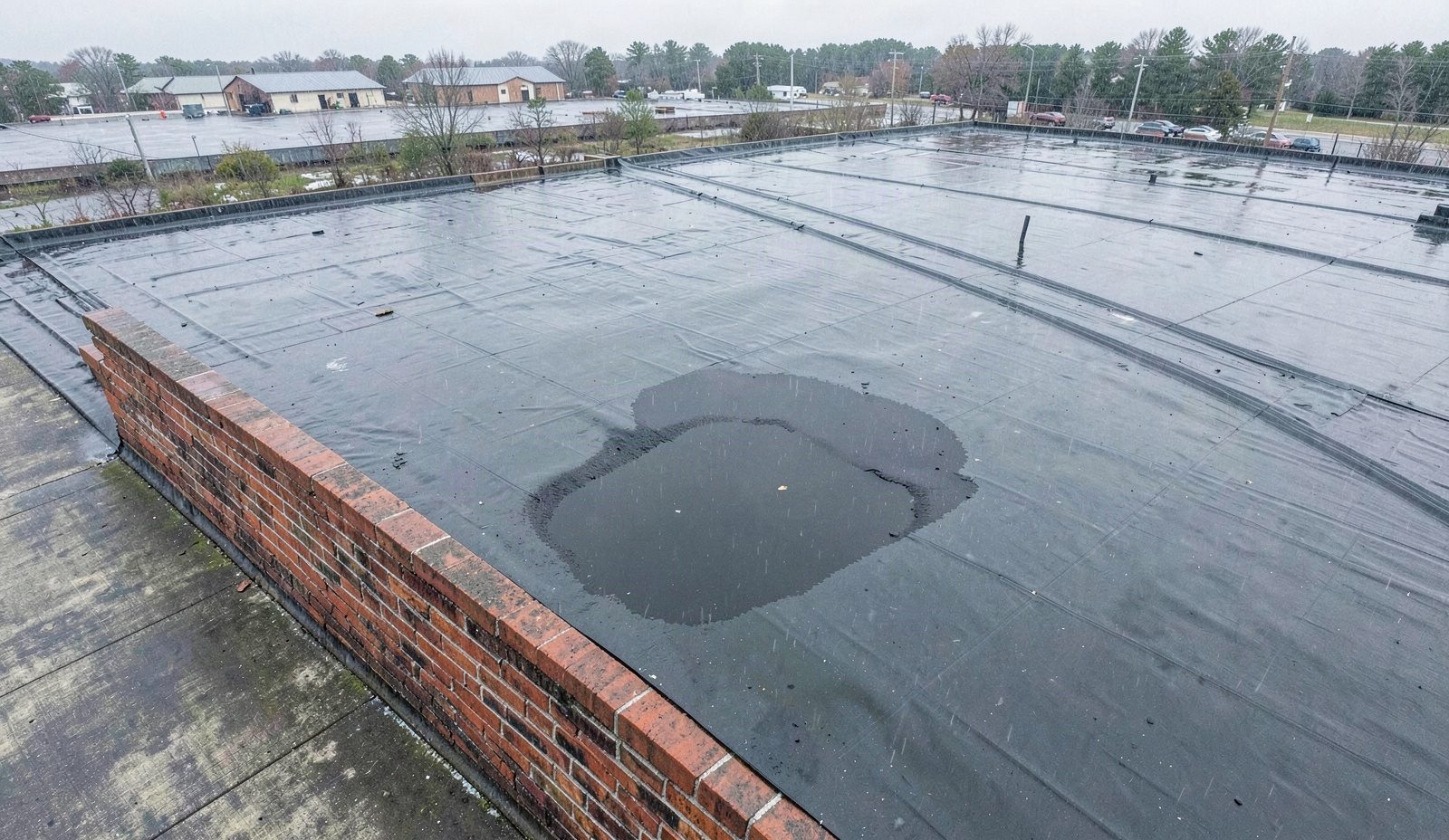
You describe the ponding location and how long water has sat when you call. We schedule an on-site visit, and the technician arrives with a laser level, tape measure, and capacitance moisture meter. On the roof, they map the pond boundary, measure standing depth, and run a slope check across the field. Inside, they check ceiling tiles and wall corners below the pond for staining. You get a plain explanation on the spot, whether the cause is a clogged drain, a settled low spot, or aging membrane, and roughly what fixing it involves before anyone writes a number down.
Once you approve the written quote, the crew stages tarps and containment before cutting into anything. Work follows the diagnosis: a tapered insulation cricket rebuilt to pitch water toward the drain, a new scupper or drain tied into the interior plumbing, or a membrane section cut back to sound deck and rewelded. Every material swap, like moving from an aging EPDM patch to a heat-welded TPO section, gets confirmed with you before installation. Fasteners and seams get checked against the deck continuously as the crew moves across the roof.
Before the crew leaves, we flood test or hose test the repaired area and watch how fast it drains toward the outlet. A second slope check confirms the low point now falls within the target pitch. We walk the roof with you, point out the repaired zone and any remaining wear nearby, and hand over photos of the moisture readings and slope numbers taken that day. That documentation becomes your record if you ever need it for an insurance question or a future roof assessment.
Roofing work in Columbus falls under Columbus building code jurisdiction and the Ohio Residential Code, and that governs more than shingle jobs. Structural changes to a flat roof, adding a drain, rebuilding tapered insulation, replacing deck sheathing, typically require a permit pulled through the City of Columbus Department of Building and Zoning Services. A like-for-like membrane patch over an existing low spot often does not need one, but that department makes the determination based on scope, and we pull permits whenever the work crosses into structural territory.
Columbus carries a wide range of building stock behind that code. Storefronts and rear additions in German Village and Italian Village often sit on original built-up tar and gravel roofs that got a single-ply overlay decades ago without ever correcting the slope underneath. Those legacy low spots keep reappearing on the same buildings year after year because the retrofit covered the surface without correcting the pitch underneath it. Knowing which blocks carry that older roof stock changes how we plan a job before a crew ever gets on the ladder.
An operator working outside their normal service area, or one skipping permits to save time, leaves no inspection record behind. That gap surfaces later, during a property sale, an insurance claim, or a lender's due-diligence review, when nobody can produce documentation that the drainage work met code. We record slope readings, moisture scan results, and photos at each stage of a ponding repair, so the building owner has a paper trail that holds up when someone else has to review the work.
More detail on flat roof repair is on its own page.
Call (614) 707-7333 and describe what you see: the size of the pond, how long it has been sitting, and whether water is actively coming through a ceiling. Most Columbus flat roof assessments get scheduled within a couple of days, sooner for active leaks. The technician gives you an arrival window the morning of the visit instead of a vague date range, and calls when they are thirty minutes out. If a storm pushes the schedule, the office calls to reset the window directly rather than leaving you to guess whether anyone is still coming that day.
Before anyone climbs a ladder, we lay tarps and plywood across walkways and landscaping to catch drips and foot traffic. Any core cuts or cricket work happen inside a contained area with a tarp catching cut insulation and old membrane scraps as they come up. Debris goes straight into a trailer or dumpster staged on site, never left in a pile against the building. Before the crew leaves, someone walks the ground perimeter and the roof edge with a magnetic sweeper to pick up stray fasteners, then checks gutters and downspouts for anything that fell in during the work.
The size of the low spot and how many square feet need new insulation or membrane set the base of the estimate. Roof access matters too, since a ground-level rear addition costs less to stage than a roof three stories up with no interior stair access. Material choice shifts the number as well, because tapered polyiso, a drain addition, and a membrane overlay each carry different labor and material loads. You get a written quote broken out by these line items before any work starts, and nothing changes on that quote once you approve it unless you request added scope yourself.
Every technician who works a Columbus roof alone has already logged supervised time on real jobs before taking one on solo. Crews review current code requirements and manufacturer installation bulletins each season, since drainage and attachment details shift as products and standards change. A field lead checks slope readings and moisture scan results against a second measurement before any job closes out, so one reading is never the only number on file. Background checks run before anyone is assigned to a property visit alone.
Stopping ponding water means correcting the slope or drainage rather than patching the membrane surface. Installing a tapered insulation cricket rebuilds the pitch toward the nearest drain, adding a scupper or second drain increases capacity where flow is undersized, and replacing flattened insulation restores pitch that decades of foot traffic wore down. A surface sealant alone masks the problem for a season at most before the same low spot fills again.
Yes, prolonged water pooling accelerates membrane breakdown and risks deck rot underneath it. UV exposure combined with standing moisture degrades seams faster than dry sections of the same roof, and the added weight of a deep pond, sometimes several hundred pounds per inch of depth across a large area, stresses roof framing that was never designed to carry standing water long term.
Water should drain off a flat roof within about 48 hours after rainfall under normal conditions. Roofing manufacturers and inspectors generally use that 48 hour window to separate ordinary sheeting water from a true ponding condition that needs repair. A roof that still holds water on the third or fourth day after a storm, in the same spot every time, has a slope or drainage problem that a survey needs to identify.
Building codes typically call for a minimum slope of one quarter inch per foot for positive roof drainage. Many older Columbus flat roofs were built closer to that bare minimum decades ago, leaving little margin once insulation compresses or the deck settles even slightly. A slope survey with a laser level shows whether a given roof still meets that quarter-inch benchmark or has dropped below it.
Cost depends on the size of the low spot and how much insulation or deck needs replacing. A single cricket repair over a small pond costs far less than a job needing a new drain tied into interior plumbing or a full deck replacement after prolonged saturation. A technician can walk the roof and give you a written quote broken down by these factors after the on-site assessment.
Most single low-spot repairs finish in one working day once the crew is on site. Jobs that add a new drain line tied into interior plumbing, or that need a deck section replaced after long-term saturation, typically run two to four days depending on roof access and weather. Columbus's summer storm pattern means crews often build a rain-day buffer into any multi-day flat roof schedule.
Coverage usually depends on whether the damage came from a sudden event or gradual wear. A policy is more likely to cover water damage from a sudden storm-caused puncture than a slow leak that developed because a low spot sat unaddressed for months, which most policies treat as a maintenance issue. Reading the specific exclusions in your policy, or asking your adjuster directly, is the only way to know for a given property.
Look for a company that measures before it quotes. A slope survey and moisture scan matter more than someone eyeballing the pond from ground level. Ask how they document the diagnosis, whether that means photos of moisture readings, recorded slope numbers, or a written scope breakdown, since that record matters if you ever sell the property or file an insurance claim. Cornerstone Roofing Columbus builds that documentation into every ponding water visit as standard practice.
Flat roofs in Columbus rarely sit on new construction. Mixed-use buildings in the Brewery District and rowhouse commercial strips in Victorian Village and Italian Village carry additions and infill sections built decades apart, each with its own slope and drain layout. That patchwork means one building can have three different roof ages meeting at valley lines that were never engineered to shed water together. Clay-heavy soil under much of Franklin County also lets older masonry buildings settle unevenly over the years, tilting a flat roof section a fraction of an inch off level in ways nobody notices until water starts collecting there every time it rains. Heavy wet snow load through the winter presses down on that same low spot, compacting insulation further and deepening the pond by the time spring storms arrive.
Permit review on structural roof work here exists because a drainage fix done wrong shifts water load onto a neighboring section of deck or onto a shared wall on an attached building, a real concern on the connected rowhouse-style properties common across these older districts. Passing that review protects the building owner later: appraisers, insurance adjusters, and future buyers all ask whether structural roof work went through inspection rather than getting done quietly over a weekend. Local familiarity matters because the line between a simple patch and a structural repair is a judgment call, and a crew that works Franklin County roofs regularly already knows how that determination tends to get made before paperwork ever gets filed.
Explore our service area and locate Cornerstone Roofing Columbus with ease. We're proudly local and serve the surrounding neighborhoods with fast response and honest pricing. Use the map to check our coverage area, or call us and we'll confirm in seconds.
Address:
Cornerstone Roofing Columbus, 1015 E Broad St, Columbus, OH 43205
How Much Does a Roof Replacement Cost in Columbus? 2026 Pricing Breakdown, practical local guidance from Cornerstone Roofing Columbus, Colum…
Read More
Commercial Roof Maintenance Tips for Columbus Property Managers, practical local guidance from Cornerstone Roofing Columbus, Columbus's trus…
Read More
Skylight Leaks in Victorian Village Homes, Repair or Replace?, practical local guidance from Cornerstone Roofing Columbus, Columbus's truste…
Read More
The Best Time of Year to Replace a Roof in Columbus, practical local guidance from Cornerstone Roofing Columbus, Columbus's trusted roofing …
Read More