

April 1, 2025
How Much Does a Roof Replacement Cost in Columbus? 2026 Pricing Breakdown
How Much Does a Roof Replacement Cost in Columbus? 2026 Pricing Breakdown, practical local guidance from Cornerstone Roofing Columbus, Colum…
Read More




The smell hits you first, a damp, sour odor when you open the attic hatch. Look closer with a flashlight and you will likely find dark discoloration on the underside of the roof sheathing, worst near the ridge and around any bathroom exhaust duct. Frost can form on exposed nail heads on cold mornings. Insulation near the eaves feels damp and matted instead of light and springy. Black or greenish spotting on rafters usually means mold in attic from roof condensation has already colonized the wood, not just stained it.
Central Ohio's humid continental climate drives most of this. Warm, moisture-laden air from your living space rises into the attic and meets cold roof sheathing overnight, condenses, then partially dries during the day. That cycle repeats through roughly 40 to 60 freeze-thaw swings each winter, and each cycle adds a little more moisture than the attic sheds. It is not a lake-effect snow pattern pushing this. It is straightforward vapor pressure from bath fans that dead-end in the attic instead of venting outside, recessed can lights that leak conditioned air upward, and attic hatches without a proper gasket.
Housing age compounds the problem. Homes in Clintonville and German Village were often built with balloon framing and shallow soffit overhangs that leave little room for intake vents. Bungalows converted to finished space in Victorian Village frequently have ridge vents painted shut or missing soffit vents altogether, so poor ventilation attic mold sets in even when the roof covering itself is sound. Summer thunderstorms add another variable: hail and straight-line wind common across the metro can crack plastic vent covers or crease ridge caps, letting bulk water mix with the existing condensation on roof sheathing and speed up decay in spots that were already saturated with vapor.
Waiting rarely buys you anything. Sheathing that stays wet delaminates layer by layer, rafters lose bearing strength at the eaves, and insulation compressed by moisture loses R-value permanently and needs full replacement rather than a top-off. Once staining reaches the ceiling drywall, the plywood above it has usually been wet long enough that patching insulation alone will not solve anything. What starts as attic moisture problems visible only with a flashlight becomes a structural repair with a much wider scope.
If this sounds close but not quite your situation, ceiling water stains may be the better starting point.
Communities like r/Roofing are a good reality check on pricing and practices before you sign anything.
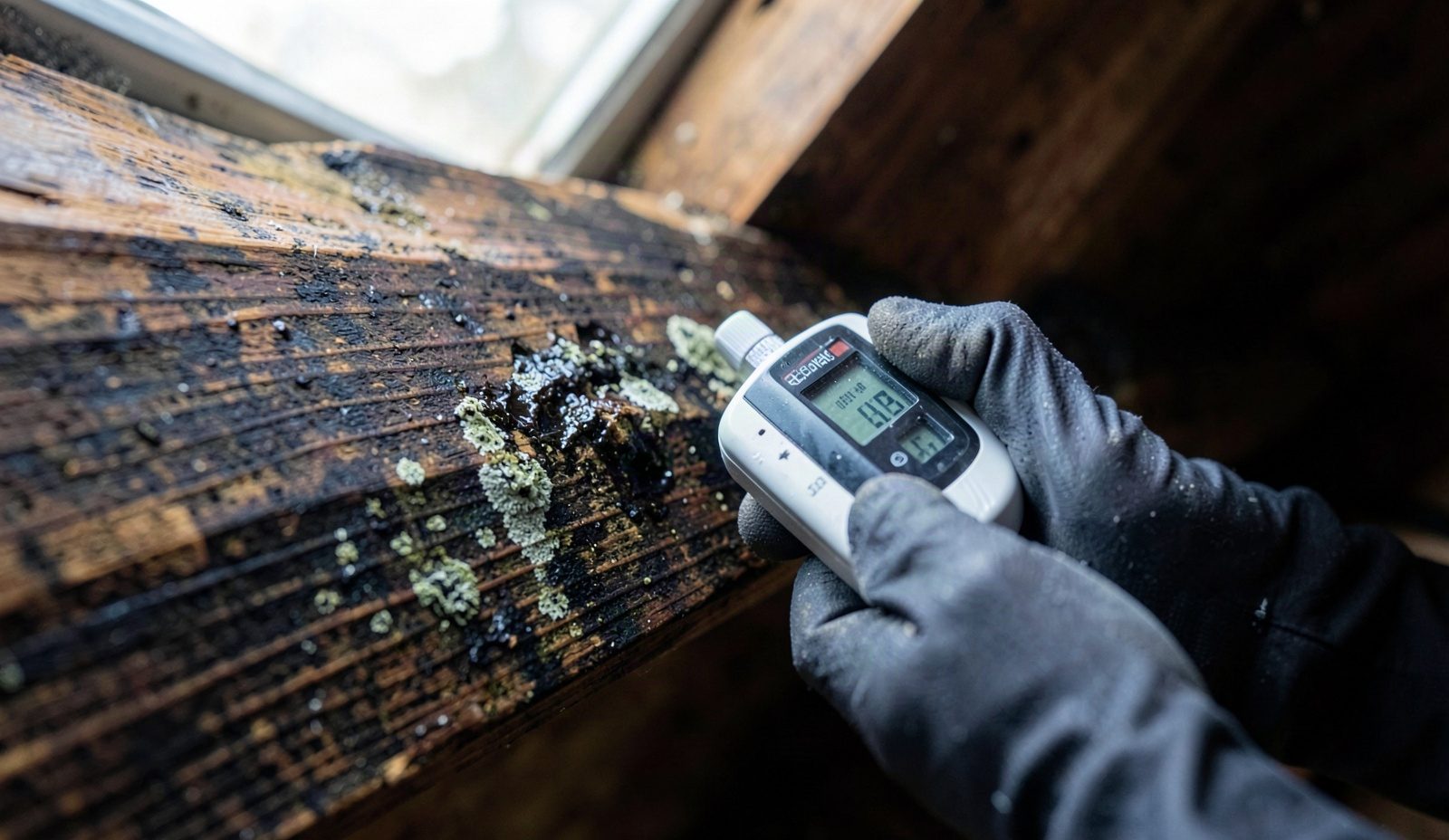
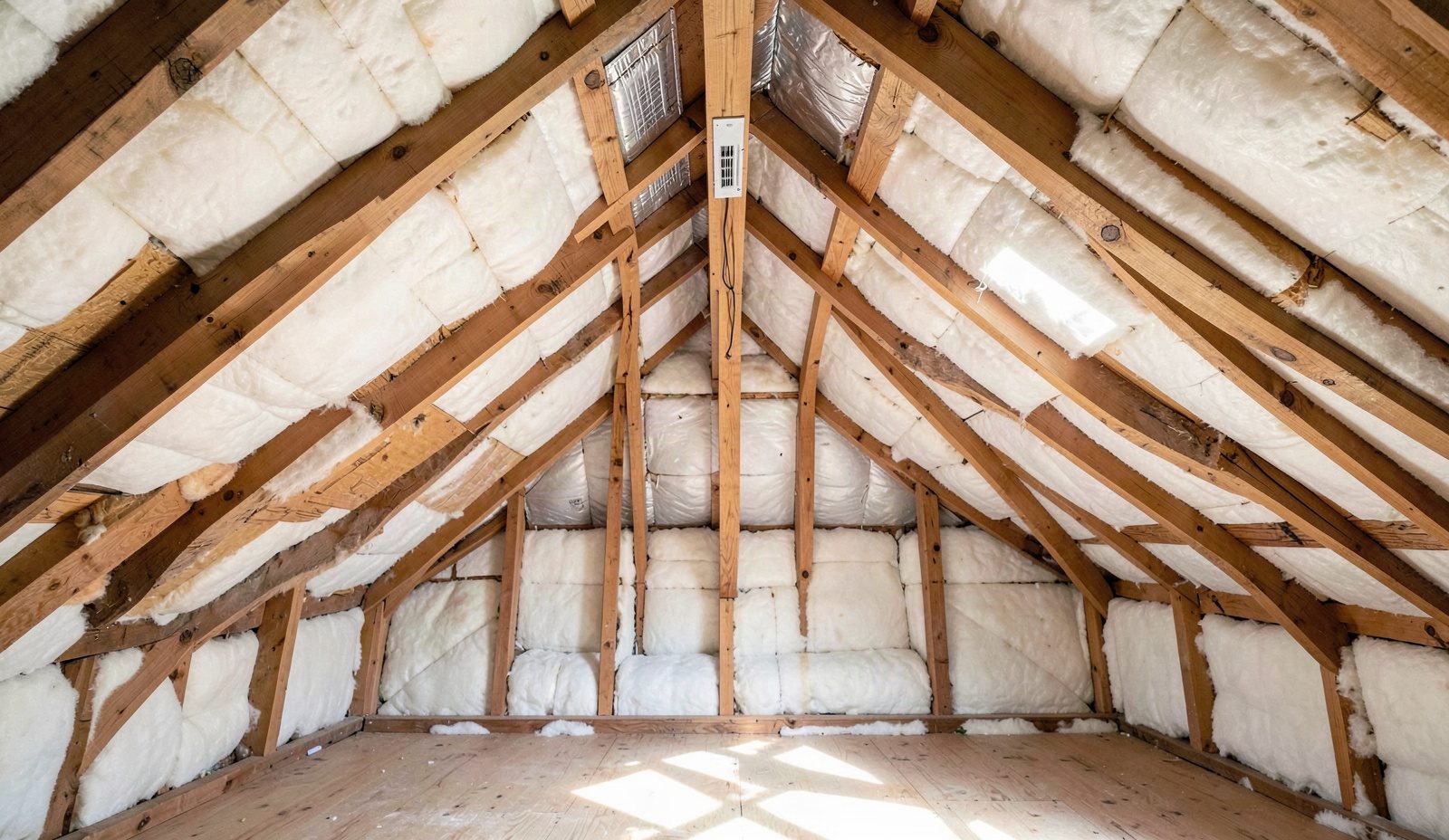
We start with instruments, not a visual guess. A thermal imaging camera scans the ceiling plane and attic deck for cold bridging where insulation has gaps or moisture has displaced air pockets. A digital hygrometer logs attic relative humidity against the outdoor reading at the same moment. When attic RH stays noticeably higher than outdoor ambient for hours after sunrise instead of tracking it, that gap points to trapped moisture rather than a normal seasonal swing. A pin-type wood moisture meter then checks the sheathing directly. A reading above roughly 19 percent moisture content signals active decay risk in the wood, not just surface dampness, and changes the repair scope from insulation work to sheathing replacement.
Ventilation gets measured, not eyeballed. We calculate the attic's net free vent area against its floor area and compare it to a balanced 1 to 300 intake-to-exhaust ratio, then check whether the existing hardware can actually deliver that. GAF's Cobra ridge vent line and Owens Corning's VentSure strip vent both publish comparable net free area per linear foot, and either performs well when soffit intake is unobstructed. A powered attic ventilator without matched soffit intake is a different story: it can pull negative pressure that draws conditioned air out of the living space and worsens the exact ice-damming conditions that lead to attic leaks in the first place, so we flag that combination before recommending it.
At the eaves, we confirm whether an ice barrier is present and installed correctly, per Ohio Residential Code Section 905.1.2, which requires it to extend at least 24 inches inside the exterior wall line. A missing or torn barrier lets snowmelt back up under the shingles and drip onto insulation, producing staining that looks like condensation damage but is actually a flashing and underlayment problem requiring a different fix. We also run the screwdriver test at the eave line, pressing a flat-blade screwdriver or awl into the sheathing edge. If it sinks in with light hand pressure instead of resisting, that section has already gone soft from sustained moisture and needs cutting out, not just drying.
See cracked or damaged flashing for how the related work is scoped and priced.
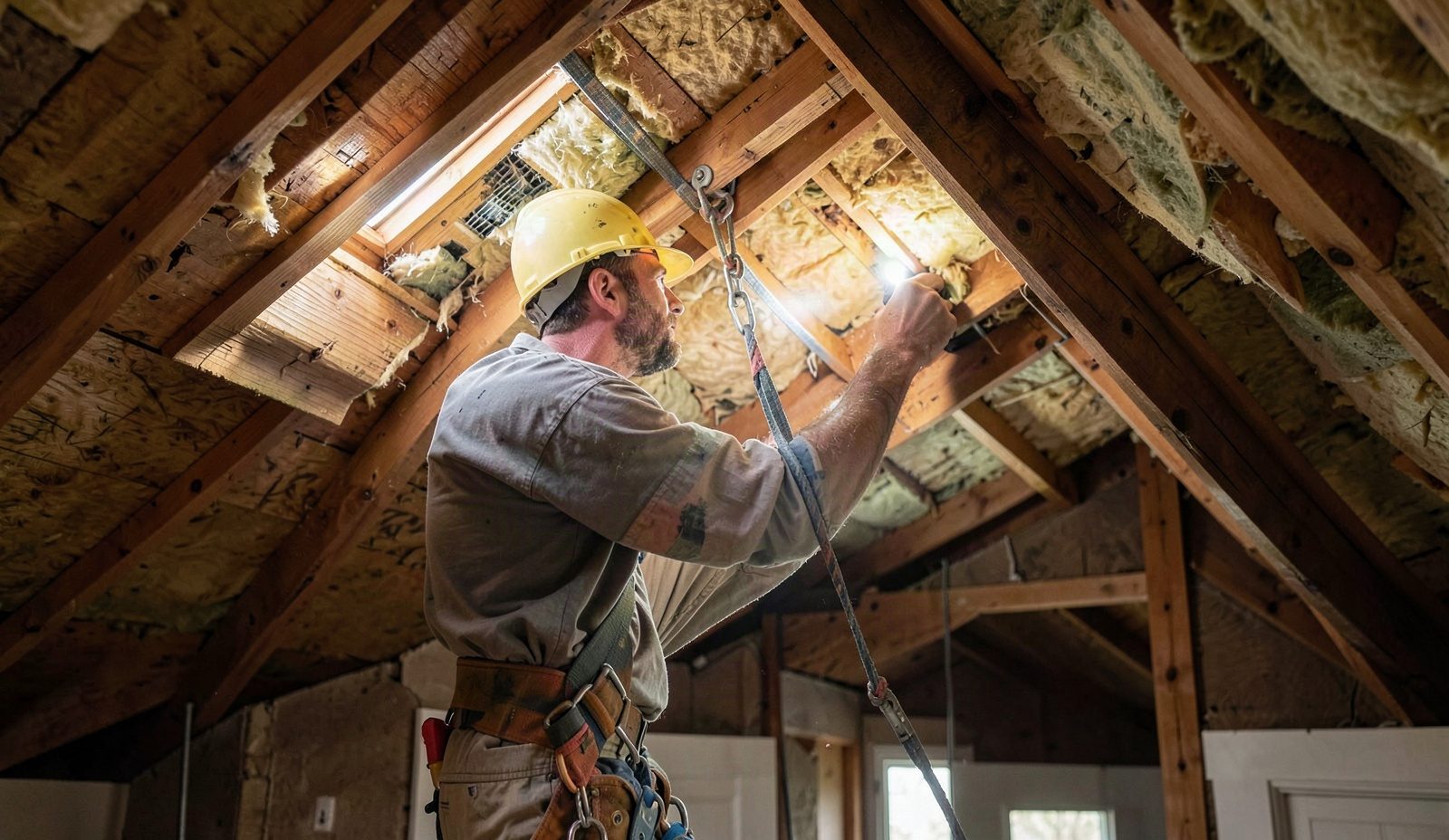
You describe the symptoms on the phone, odor, staining, or a damp spot, and we schedule a visit with a specific arrival window. On site, the technician checks the attic hatch, soffit and ridge vents, and any bath or kitchen exhaust routing before opening a single access panel. Inside the attic, they run the thermal camera and hygrometer readings first, then the wood moisture meter on suspect sheathing. You get a plain explanation of what the readings mean before anything is proposed.
Once you approve the written quote, we protect the access path with floor runners and set up containment if insulation removal is involved. Work proceeds in sequence, removing saturated insulation first, then addressing sheathing or flashing issues the diagnosis flagged, then correcting intake or exhaust ventilation to hit a balanced net free area. If we uncover additional rot or a missing ice barrier once material is opened up, we stop and get your approval on the added scope before continuing.
Before we leave, the technician re-checks sheathing moisture content with the same meter used during diagnosis to confirm the reading has dropped into a safe range. Airflow at the ridge and soffit gets verified with a smoke pencil or manometer to confirm intake and exhaust are actually balanced, not just installed. We walk the attic with you, photograph the finished work for your records, and reseal the hatch before closing out the visit.
Roofing work in this metro falls under Columbus building code jurisdiction and the Ohio Residential Code, and that code family governs ventilation and ice barrier requirements as a single connected system, not separate checklists. Heavy wet snow and ice loading through a typical Columbus winter drive ice-dam and gutter-ice risk directly, and an attic that is over-ventilated on the exhaust side or under-ventilated on the intake side changes how fast ice dams form at the eaves. Technicians who train on the current code cycle understand that connection and check both problems on the same visit instead of treating attic mold and ice-dam risk as unrelated calls.
Columbus housing stock is mixed enough that a one-size approach fails often. Prewar two-and-a-half-story homes with steep gable roofs and narrow soffits need a different intake strategy than postwar ranch construction with wide, open eaves. A crew that only works one style of house in one part of town tends to default to whatever solution worked last time, whether or not it fits the roof in front of them.
Hiring an out-of-area or uncertified operator carries specific, avoidable risk here. Mounting box vents at the wrong spacing or mixing incompatible vent types can violate a shingle manufacturer's installation requirements and void that manufacturer's coverage without the homeowner realizing it until a later claim gets denied. Skipping a check of the existing ice barrier leaves the eave vulnerable to the same backup damage that started the mold problem. We document attic conditions, moisture readings, and vent measurements the way a local building inspector expects to see them recorded, so the paper trail holds up if a question comes up later.
Permit and inspection questions? Building & Zoning Services is the office we coordinate with on every permitted Columbus job.
You call (614) 707-7333 and describe what you are seeing, a smell, staining, or a ceiling spot. We schedule a specific arrival window rather than an all-day placeholder, and a technician calls or texts when they are on the way. If a prior job runs long or weather delays outdoor work, we call ahead to reschedule rather than leave you waiting. Attic diagnosis does not require exterior scaffolding in most cases, so weather rarely pushes the inspection itself, only exterior repair follow-up work tied to it.
Attic access usually runs through a closet or hallway, so we lay down floor runners from the entry point to the hatch and use a portable containment barrier if insulation removal is part of the scope. Old insulation and any cut sheathing get bagged on site rather than left in a pile in your yard. Attic hatches and access panels get resealed before we leave. On multi-day jobs, we close the attic hatch and secure the work area between visits so the space stays usable for the household in the meantime.
Your quote reflects how much sheathing and insulation need replacing, how the attic is accessed, whether existing ventilation hardware can be reused or needs replacing, and how much of the roof deck the moisture has reached. We walk the attic with you, point out what we found with the moisture meter and thermal camera, and put the scope in writing before any material gets ordered or removed. You approve the written quote before work starts, and any change in scope discovered mid-job gets a separate approval, not a surprise on the invoice.
Every technician passes a background check before working in occupied homes and completes training tied to the current Ohio Residential Code cycle, including ventilation ratios and ice barrier placement. New technicians work paired assignments under a senior crew lead until they can correctly run the moisture meter, hygrometer, and screwdriver checks unsupervised and document findings that match a second reviewer's independent read of the same attic. That sign-off happens before anyone works a job solo.
Attic mold remediation cost depends mainly on how much insulation and sheathing need replacing. A small area near one bath fan duct costs far less to fix than a whole roof plane with saturated sheathing. Access also matters. A walk-up attic with a full-height hatch takes less labor than a cramped knee-wall space common in older Columbus bungalows. We put the specific scope in writing after inspection rather than quoting a number before we see the attic firsthand.
Insurance rarely pays for attic mold unless it resulted from a sudden covered event like wind-driven rain through storm damage. Mold that developed gradually from poor ventilation or a long-standing bath fan issue is usually treated as a maintenance problem, not a covered loss, and most policies exclude it outright. If a documented storm event caused the water intrusion, photograph the damage and call your carrier before repairs begin so the claim has a clear timeline.
Yes, attic mold is common in Columbus homes, especially those built before modern ventilation standards became standard practice. Two-and-a-half-story houses with narrow original soffits and finished attic conversions see it most often, since the roofline was never designed for balanced intake and exhaust airflow. Homes with bathroom fans that vent into the attic space instead of through the roof or wall are also frequent repeat cases regardless of the home's age.
Fixing attic condensation means balancing intake and exhaust ventilation and sealing the air leaks that push moist household air upward. That usually involves clearing or adding soffit vents, confirming the ridge vent has clear airflow behind it, and rerouting any bathroom or kitchen exhaust fan so it terminates outside through rigid duct, never into the attic itself. Sealing gaps around recessed lights and the attic hatch with weatherstripping reduces the moisture load reaching the attic in the first place.
Cost in Columbus depends largely on roof pitch, attic access, and how many older ventilation retrofits the house needs at once. Steep gable roofs common on prewar homes near the city's core take longer to access and vent correctly than a simple ranch attic. Homes needing both an insulation swap and a ventilation hardware upgrade cost more than a single-issue repair, which is why we scope each attic individually before writing a quote.
Permit requirements depend on the scope of work, not the presence of mold itself. Removing and replacing insulation or sealing air leaks typically does not require a permit, but cutting out and replacing roof sheathing or altering the roof structure usually does. The local building department makes the final call on any specific project, so we flag likely permit scope during the initial inspection rather than assuming either way.
Yes, addressing attic condensation is worth it for older Columbus homes because their original construction predates modern balanced-ventilation standards. Leaving the moisture source unaddressed lets rot spread slowly into rafters and roof decking that are often original to the house and expensive to match structurally. Correcting ventilation and sealing air leaks protects a roof structure that, in many of these homes, has already lasted decades and can keep performing well with the right adjustment.
Columbus sits in a climate that swings between humid summers and cold, damp winters without the heavy lake-effect snow load that some Ohio cities see. That steadier moisture pattern, rather than deep snowpack, is what drives most attic condensation here, and it means ventilation balance matters more than snow load alone when planning a repair. Dense, older construction in areas like Short North, Italian Village, and the Brewery District often includes shared party walls, low-slope additions, and rooflines that were never designed with modern soffit intake in mind. Retrofitting balanced ventilation into that housing stock takes different vent hardware and placement than a suburban ranch, and getting it wrong can just move the moisture problem instead of solving it.
Full roof replacement and structural sheathing work in Columbus typically require a permit, while minor like-for-like repairs often do not, and the final determination sits with the City of Columbus Department of Building and Zoning Services for city addresses. Homes in historic districts sometimes face added scrutiny over visible exterior changes, including vent placement on street-facing roof planes, so planning the ventilation retrofit with that review in mind avoids delays. Local familiarity matters here because a crew unfamiliar with Columbus's mix of historic districts and standard residential permitting can misjudge which jobs need a permit application at all, leaving homeowners exposed if an inspector later asks questions.
Explore our service area and locate Cornerstone Roofing Columbus with ease. We're proudly local and serve the surrounding neighborhoods with fast response and honest pricing. Use the map to check our coverage area, or call us and we'll confirm in seconds.
Address:
Cornerstone Roofing Columbus, 1015 E Broad St, Columbus, OH 43205
How Much Does a Roof Replacement Cost in Columbus? 2026 Pricing Breakdown, practical local guidance from Cornerstone Roofing Columbus, Colum…
Read More
Commercial Roof Maintenance Tips for Columbus Property Managers, practical local guidance from Cornerstone Roofing Columbus, Columbus's trus…
Read More
Skylight Leaks in Victorian Village Homes, Repair or Replace?, practical local guidance from Cornerstone Roofing Columbus, Columbus's truste…
Read More
The Best Time of Year to Replace a Roof in Columbus, practical local guidance from Cornerstone Roofing Columbus, Columbus's trusted roofing …
Read More