

April 1, 2025
How Much Does a Roof Replacement Cost in Columbus? 2026 Pricing Breakdown
How Much Does a Roof Replacement Cost in Columbus? 2026 Pricing Breakdown, practical local guidance from Cornerstone Roofing Columbus, Colum…
Read More




A rusted streak below a chimney, a soft spot near a skylight, or a brown ring on a bedroom ceiling after a hard rain are the first signs of flashing separation repair territory. Homeowners in Clintonville and Short North often notice it first at the chimney base, where step flashing tucks under siding and shingles in overlapping courses. When that overlap opens even an eighth of an inch, wind-driven rain finds the gap.
Central Ohio's humid continental climate runs roughly 40 to 60 freeze-thaw cycles each winter. Water gets into a hairline crack in the sealant, freezes, expands, and widens the crack. Repeat that sixty times in a season and a failed flashing sealant joint that started as a cosmetic flaw becomes an open channel. This region is not a lake-effect snow zone, so the damage pattern here comes from repeated freeze-thaw cycling rather than sustained heavy snowpack, which changes how fast a small crack turns into a cracked flashing leak.
Summer brings a second attack. Thunderstorms roll through with hail and straight-line wind that dent, lift and crease the thin metal around vent pipes and dormers. A dented flashing edge no longer sheds water in a clean line, it channels it sideways under the shingle tab. Galvanized flashing that has gone fifteen or twenty years without a resealing job usually shows rusted flashing replacement candidates: a reddish-brown bloom along the nail heads, flaking metal at the drip edge, and a rough, pitted texture where a screwdriver tip catches instead of sliding smoothly across the surface.
Left alone, a cracked or separated flashing joint does not stay a small problem. Water follows the roof deck downhill under the felt, soaks the sheathing, and eventually shows up as a stain two or three feet from the actual entry point, which is why so many homeowners misjudge the size of the fix. Wet OSB sheathing loses roughly half its fastener-holding strength when saturated, and mold colonies can establish in as little as 48 hours of sustained moisture behind drywall. What starts as a two-inch bead of failed sealant becomes a torn-out section of decking, insulation replacement, and interior drywall repair if it runs through another freeze-thaw season unaddressed.
Our page on damaged or clogged gutters covers that side of the work in more depth.
Permit and inspection questions? Building & Zoning Services is the office we coordinate with on every permitted Columbus job.
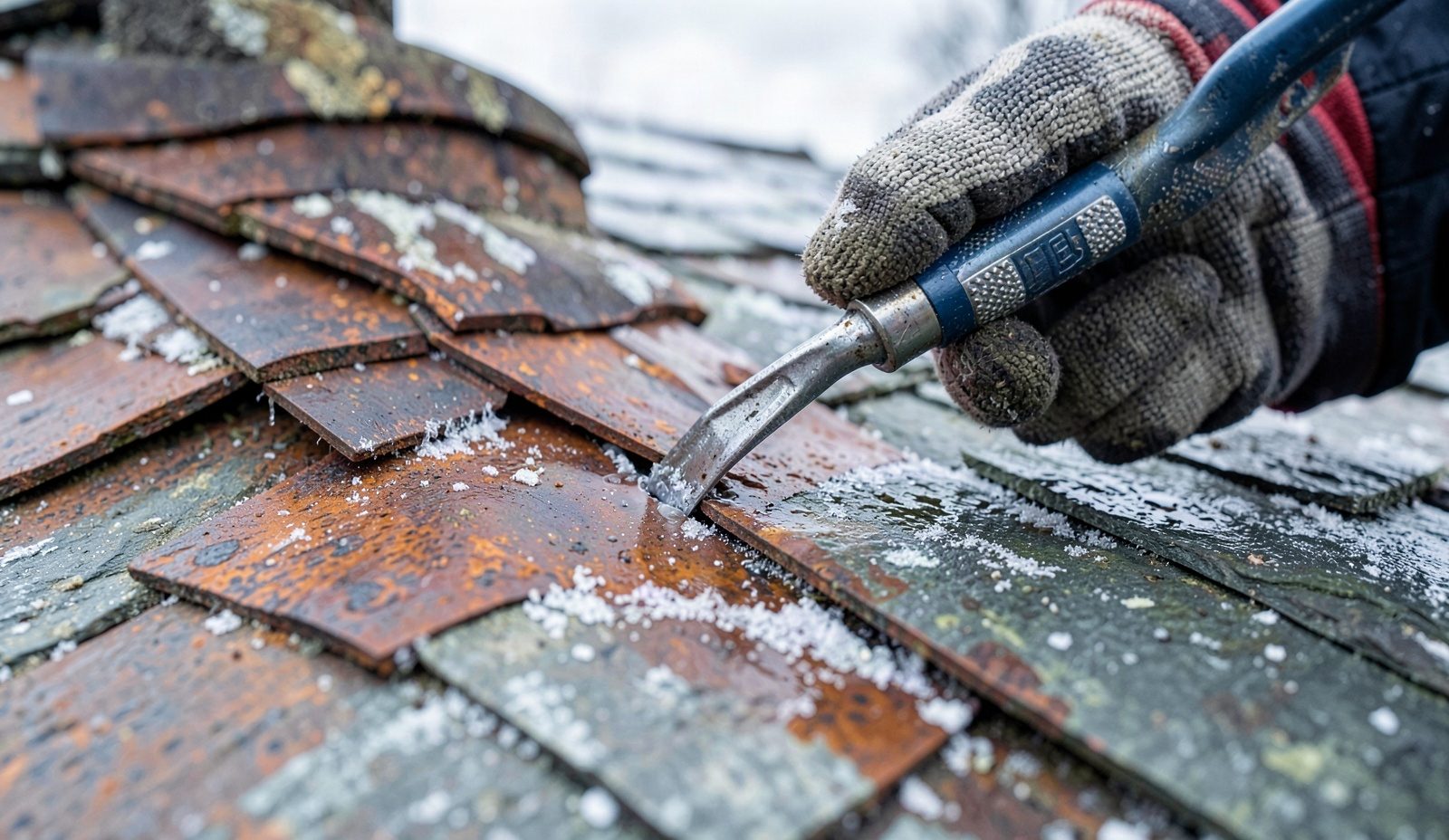
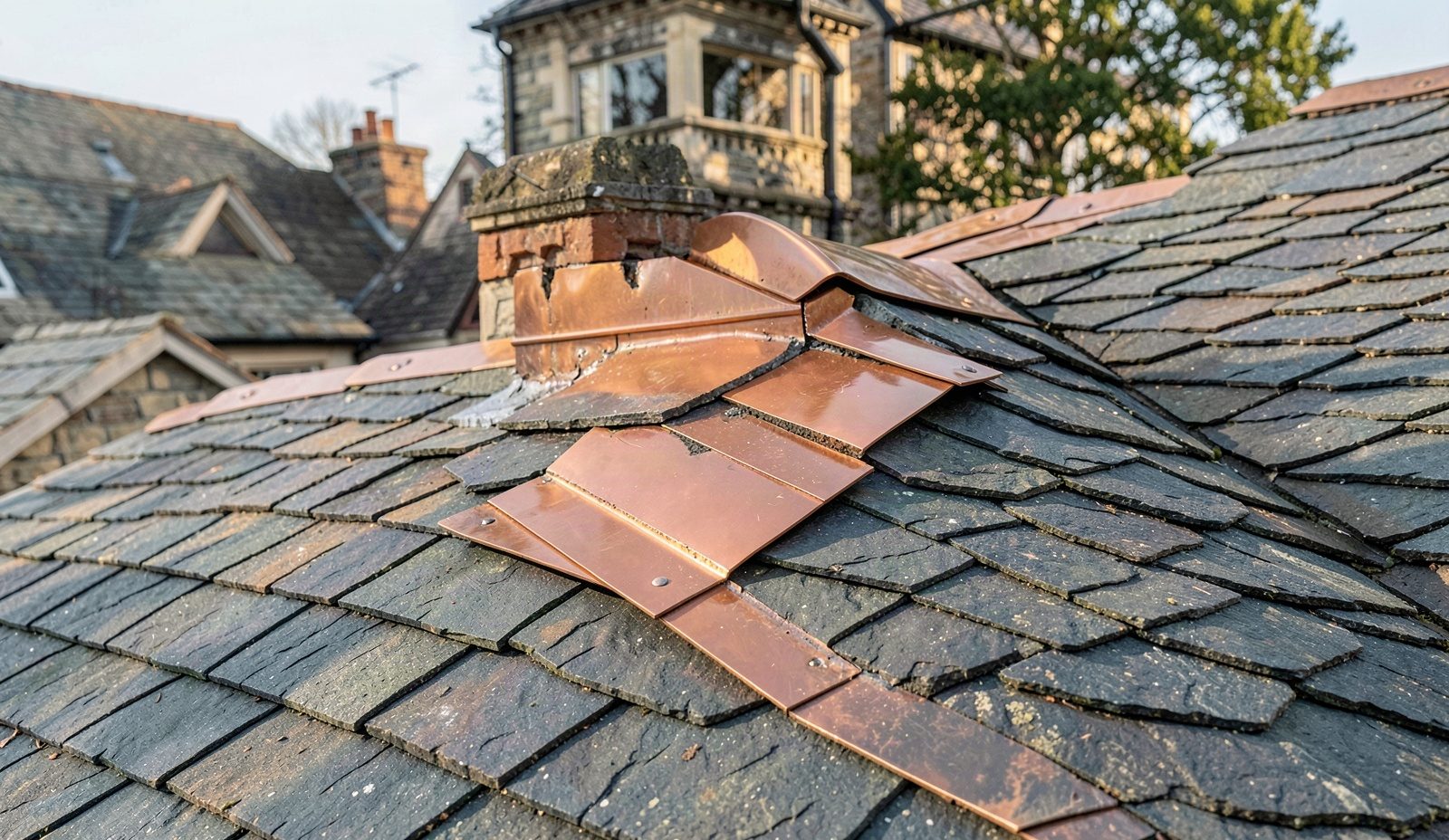
Every damaged roof flashing repair starts with a visual and physical inspection, not a guess from the ground. A technician walks the roof plane, checks every penetration, valley and wall intersection, and runs a gloved hand along each flashing edge to feel for lift. On rusted sections, we press a flathead screwdriver against the metal at a low angle. If the tip sinks in or the metal flakes rather than resists, that flashing has gone past resealing and needs rusted flashing replacement, not a patch. A moisture meter reads the decking directly beneath any suspect joint, and a reading above 16 percent on the wood scale tells us the leak has already reached the sheathing, which changes the scope of the job before we ever open a tube of sealant.
Where the flashing ties into ice barrier coverage, we check compliance against Section 905.1.2 of the Ohio Residential Code, which requires the ice barrier on asphalt shingle roofs to extend from the lowest roof edge to at least 24 inches inside the exterior wall line, built from two cemented layers of underlayment or a self-adhering polymer-modified bitumen sheet. A short ice barrier is one of the most common reasons flashing at the eave keeps failing even after a fresh reseal.
Material selection depends on what's already on the roof and what it's tying into. Aluminum flashing runs light and inexpensive but pits and corrodes faster near mortar and treated lumber, with a working lifespan around 20 to 25 years. 16-ounce copper flashing costs more up front but resists corrosion for 50 years or longer and is the standard choice on slate and tile roofs. For sealants, we favor a polyurethane-based sealant over standard silicone at flashing joints. Polyurethane bonds to wet or damp metal and stays flexible through repeated freeze-thaw movement, while silicone skins over fast but cracks at the bond line within a few winters. On step flashing runs, we set each piece in a bed of butyl tape before mechanical fastening, which stops the wicking that plain nail-through installation allows.
If this sounds close but not quite your situation, chimney flashing repair may be the better starting point.
Communities like r/Roofing are a good reality check on pricing and practices before you sign anything.
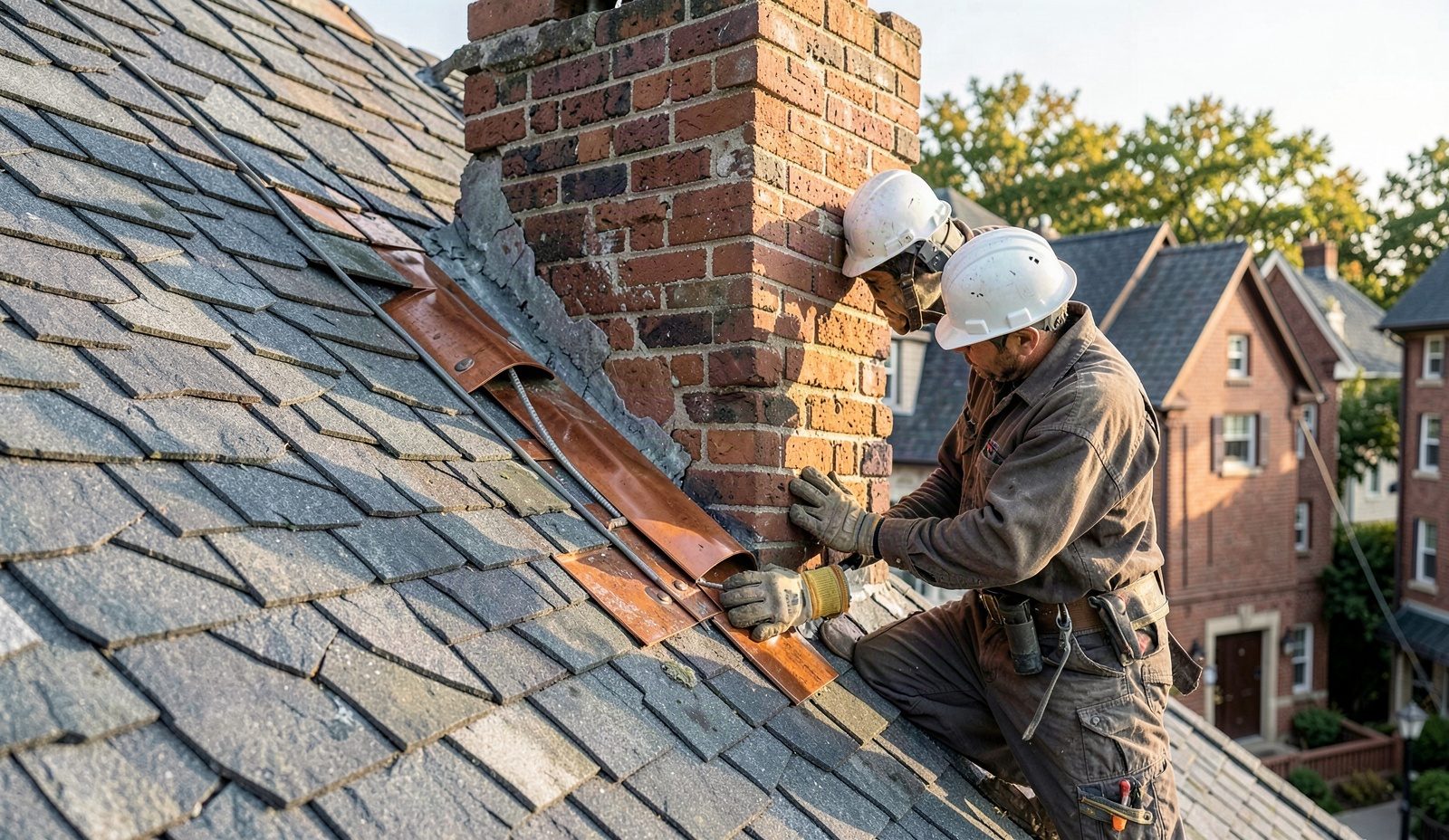
You describe what you're seeing on the phone, staining, a musty smell in the attic, daylight around a pipe boot, and we schedule a window based on urgency. On arrival, the technician inspects the roof from the ladder and on the surface where safe, checks every flashing point with a screwdriver probe and moisture meter, and photographs the specific failure. You get a plain explanation of what's cracked, what's rusted through, and what's still sound before any talk of a fix.
Once you approve the written quote, the crew protects landscaping and gutters, then removes the shingle courses or siding trim covering the damaged flashing section. Old sealant and corroded metal come out completely rather than getting sealed over. New flashing goes in with the correct overlap sequence for that detail, chimney, valley, or wall step, bedded in butyl tape and fastened per code, with polyurethane sealant applied at every termination point.
Before packing up, the crew runs a hose test over the repaired section and checks the attic below for any sign of intrusion. The technician re-checks the moisture reading on the decking to confirm it's dry and stable, then walks the repair with you on the ground, pointing out what changed and why. You get photos of the finished work and a summary of what was found, useful documentation if the damage ties into an insurance claim.
Roofing work in Columbus falls under the Ohio Residential Code, and any flashing job that involves reopening the roof deck or altering the water barrier assembly gets evaluated against that code, not a generic national default. Full replacements and structural repairs typically require a permit; a straightforward like-for-like flashing reseal usually does not, but the City of Columbus Department of Building and Zoning Services makes that call for Columbus addresses, and the local building department or Franklin County handles it for other jurisdictions in the metro. We pull permits when the scope calls for one instead of guessing wrong and leaving a homeowner exposed at resale.
Out-of-area crews that roll through Columbus after a storm often do not know this distinction, and they especially do not know how central Ohio's freeze-thaw pattern differs from the wind-driven rain problems they handle further south or the lake-effect snow load they handle further north. That mismatch shows up as sealant products rated for the wrong temperature range or flashing profiles designed for a snow load this region does not carry.
Columbus carries a wide mix of housing stock, from postwar ranch roofs with simple gable valleys to older homes with steep slopes, dormers, and multiple chimney penetrations, each one a different flashing detail. A technician who works this metro daily recognizes which detail belongs on which house style before climbing the ladder, which shortens diagnosis time and keeps the repair matched to the structure instead of a one-size template. Call (614) 707-7333 to talk through what your roof's flashing details actually need.
See attic condensation & mold for how the related work is scoped and priced.
Booking starts with a phone call, not an online form. We ask what you're seeing, where the stain or leak shows up, and how old the roof is, then set an arrival window rather than an all-day guess. Most flashing calls get a technician on-site within a few business days, sooner if active water is entering the home. If weather pushes a visit, we call ahead and rebook the next open slot rather than leaving you guessing. You get a name and a rough arrival time before the truck is ever in the driveway.
Ladders get set on standoff pads to protect gutters and siding, and tarps go down over landscaping and walkways before any old flashing or shingle tabs come off. Removed metal, old sealant, and cut shingle pieces go straight into a haul bag on the roof, not into the yard below. A magnetic sweep of the ground picks up stray roofing nails after tear-out. When the crew leaves, the work area looks the way it did before we arrived, aside from the repaired flashing itself.
The written quote reflects scope, access, and material choice, not a flat number pulled from a price sheet. A single chimney reseal costs less to execute than a full valley re-flash that requires pulling shingle courses back on both sides. Steep pitch, second-story access, and the metal type already installed all factor in. You see the written quote before any work starts and approve it before a single fastener comes out, so there's no surprise change order once the roof is opened up.
Every technician completes a background check before being scheduled into a homeowner's neighborhood. Field training covers the current Ohio Residential Code cycle so techs know what triggers a permit and what doesn't, and flashing-specific training covers metal gauge selection, sealant chemistry, and step-flashing sequencing. New hires shadow a senior tech on a set number of flashing jobs before they're cleared to run a call solo, and spot checks continue after that to keep technique consistent across the crew.
Coverage depends on the cause, not the part itself. Insurers generally cover flashing damage tied to a sudden event like wind or hail, which are common in Columbus summer thunderstorms, but they typically deny claims for damage from age, rust, or lack of maintenance. Cornerstone documents the failure with photos and moisture readings at every visit, which gives you the paperwork an adjuster needs to evaluate a storm-related claim accurately.
Cost depends on how much flashing needs replacement, the metal type, and how hard the section is to access. A single chimney reseal runs far less than a full valley re-flash that requires pulling back shingles on both slopes. Steep pitch and second-story access add labor time. Cornerstone provides a written quote after an on-site inspection so you see the actual scope before approving any work.
Yes, flashing installation and repair fall squarely within a roofer's scope of work. Flashing ties directly into shingle courses, underlayment, and the water barrier assembly, so a roofer who understands the whole roof system is better positioned to diagnose flashing failure than a general handyman. Cornerstone technicians evaluate flashing as part of the full roof assembly, not as an isolated patch job, which catches related issues like a short ice barrier before they cause a repeat leak.
Most single-point flashing repairs, like a chimney or vent pipe reseal, take a few hours on-site. A full valley re-flash or a job involving rusted-through step flashing across multiple courses can run a full day. Weather affects the schedule more than the labor itself since sealant and membrane products need dry, above-freezing conditions to bond properly, which can push a winter repair to the next clear day.
A small bead of exterior sealant can buy limited time on a minor crack, but it does not fix flashing separation repair or the sheathing damage often hiding beneath it. Working on a wet, sloped roof carries real fall risk, and a misapplied sealant can trap moisture instead of shedding it. Cornerstone recommends a professional inspection first, especially where flashing ties into an ice barrier or valley, since a DIY patch there often masks a bigger problem.
A background-checked Cornerstone technician trained specifically in flashing diagnosis and repair handles the visit. New technicians shadow senior crew members on flashing calls before working solo, and field training covers current code requirements and material handling for copper, aluminum, and membrane products. You get the same technician's name and photo documentation from the first assessment call through the final walkthrough.
Cost depends on scope, material, and roof access, and Cornerstone does not quote a number without seeing the actual damage first. A localized reseal on an aluminum vent flange costs less than a copper valley replacement on a steep historic roofline. The technician provides a written quote on-site after inspection, itemized by material and labor, so you know exactly what you're approving before work begins.
Historic districts like German Village, Victorian Village, and Italian Village carry a concentration of slate, standing-seam metal, and steep-pitched roofs where flashing detail work is more demanding than a standard suburban gable. Slate roofs in German Village often still carry original copper flashing that's outlasted several generations of asphalt shingle roofs around it, and matching a repair into that copper means soldering, not just sealant. Heavy wet snow and ice loading in a typical central Ohio winter drive ice-dam formation at eave lines, and an ice dam that backs water up under a marginal flashing detail is a common failure point on these older, more complex rooflines throughout the metro.
Older commercial and residential buildings near the Brewery District often carry parapet walls and built-up roofing details that need coping and counter-flashing rather than the step flashing used on a pitched residential roof, and a technician unfamiliar with that assembly can misdiagnose a leak entirely. Homeowners in these neighborhoods tend to ask pointed questions about how a repair ties into the original roofline, and a crew that can answer those questions on the spot, rather than guessing, is what keeps a company's reputation intact block by block in a metro where word travels between neighbors.
Explore our service area and locate Cornerstone Roofing Columbus with ease. We're proudly local and serve the surrounding neighborhoods with fast response and honest pricing. Use the map to check our coverage area, or call us and we'll confirm in seconds.
Address:
Cornerstone Roofing Columbus, 1015 E Broad St, Columbus, OH 43205
How Much Does a Roof Replacement Cost in Columbus? 2026 Pricing Breakdown, practical local guidance from Cornerstone Roofing Columbus, Colum…
Read More
Commercial Roof Maintenance Tips for Columbus Property Managers, practical local guidance from Cornerstone Roofing Columbus, Columbus's trus…
Read More
Skylight Leaks in Victorian Village Homes, Repair or Replace?, practical local guidance from Cornerstone Roofing Columbus, Columbus's truste…
Read More
The Best Time of Year to Replace a Roof in Columbus, practical local guidance from Cornerstone Roofing Columbus, Columbus's trusted roofing …
Read More