

April 1, 2025
How Much Does a Roof Replacement Cost in Columbus? 2026 Pricing Breakdown
How Much Does a Roof Replacement Cost in Columbus? 2026 Pricing Breakdown, practical local guidance from Cornerstone Roofing Columbus, Colum…
Read More




Water pools in the middle of a low-slope commercial roof and stays there for days. The membrane feels soft underfoot, almost sponge-like, and a musty smell rises from the ceiling tile below. Seams that once lay flat start to curl at the edges, and you can see white chalky streaks where UV light has broken down the rubber's surface. On older sections, the black EPDM turns gray and brittle, cracking when you press a boot heel into it.
These problems start with adhesive failure at the seams more often than failure of the membrane sheet itself. Central Ohio's freeze-thaw pattern, roughly 40 to 60 cycles each winter, works water into every seam gap and flashing lap, then expands it as ice and contracts it as thaw. Splits open at parapet corners and HVAC curbs first because those spots flex the most in wind. Summer brings a second attack: thunderstorms with hail and straight-line wind that puncture the membrane around roof penetrations, pipe boots, and rooftop unit legs, the same spots where seam tape already runs thin.
Mixed-use buildings in Short North and German Village often carry a rear addition or a flat-roofed second story tacked onto a pitched original structure, exactly the low-slope footprint epdm roofing contractors get called to most. Fully adhered epdm rubber roof installation from decades ago on these additions is now past its expected service window, and the seam adhesive that held up in year five is failing in year twenty.
Ignore a soft spot on a flat roof and the water finds the deck. Plywood or OSB sheathing swells, then rots, and the load path to the parapet wall weakens. Insulation below the membrane saturates and stops insulating, so tenants run HVAC harder while the ceiling below stains and eventually sags. What starts as a rubber membrane roof repair on one seam becomes a full epdm roof replacement once the deck itself needs rebuilding, and the epdm flat roof cost of tackling it later climbs well past what an early seam repair would have taken.
More detail on tpo vs. epdm, which flat roof is best is on its own page.
Permit and inspection questions? Building & Zoning Services is the office we coordinate with on every permitted Columbus job.
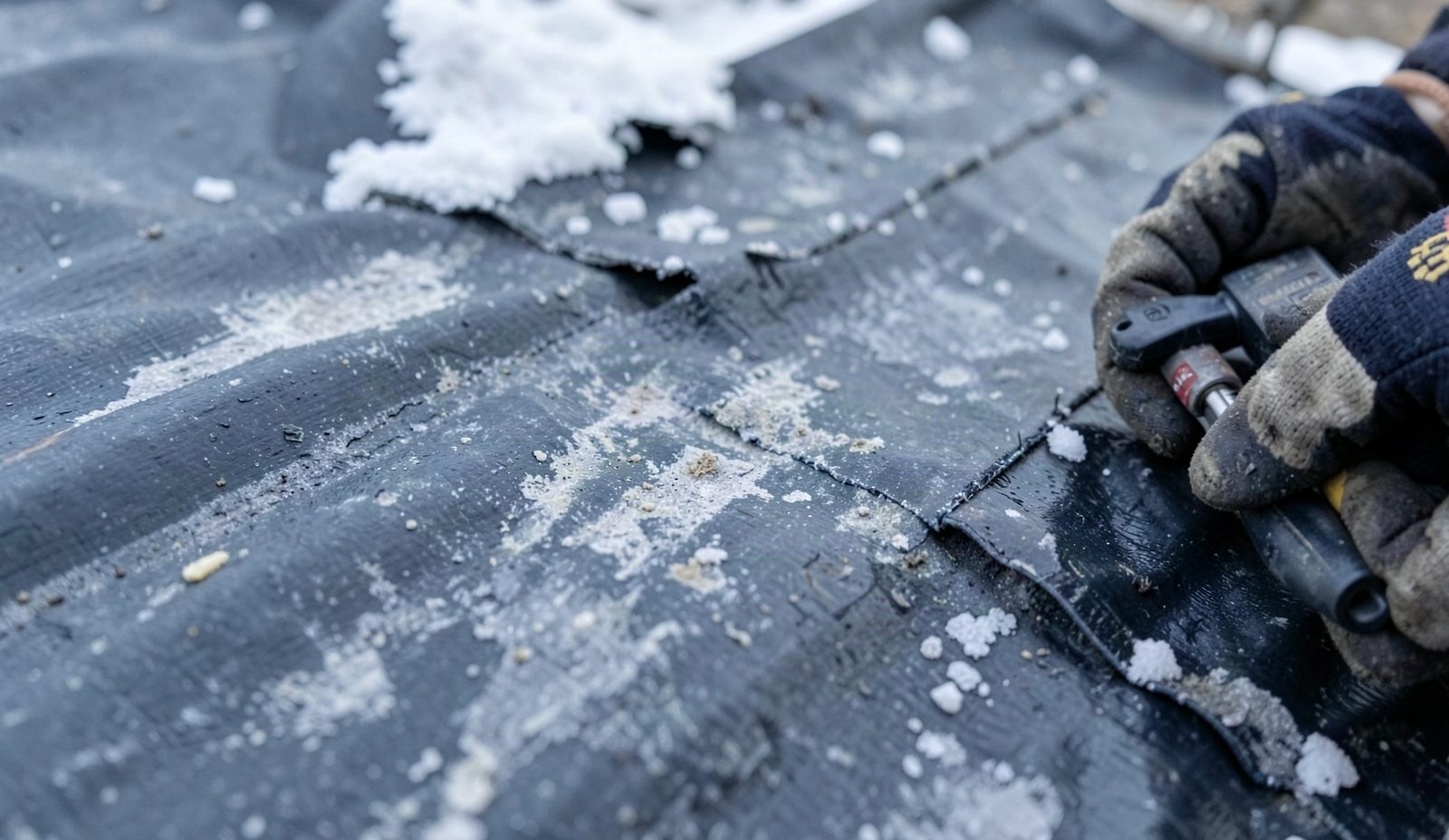
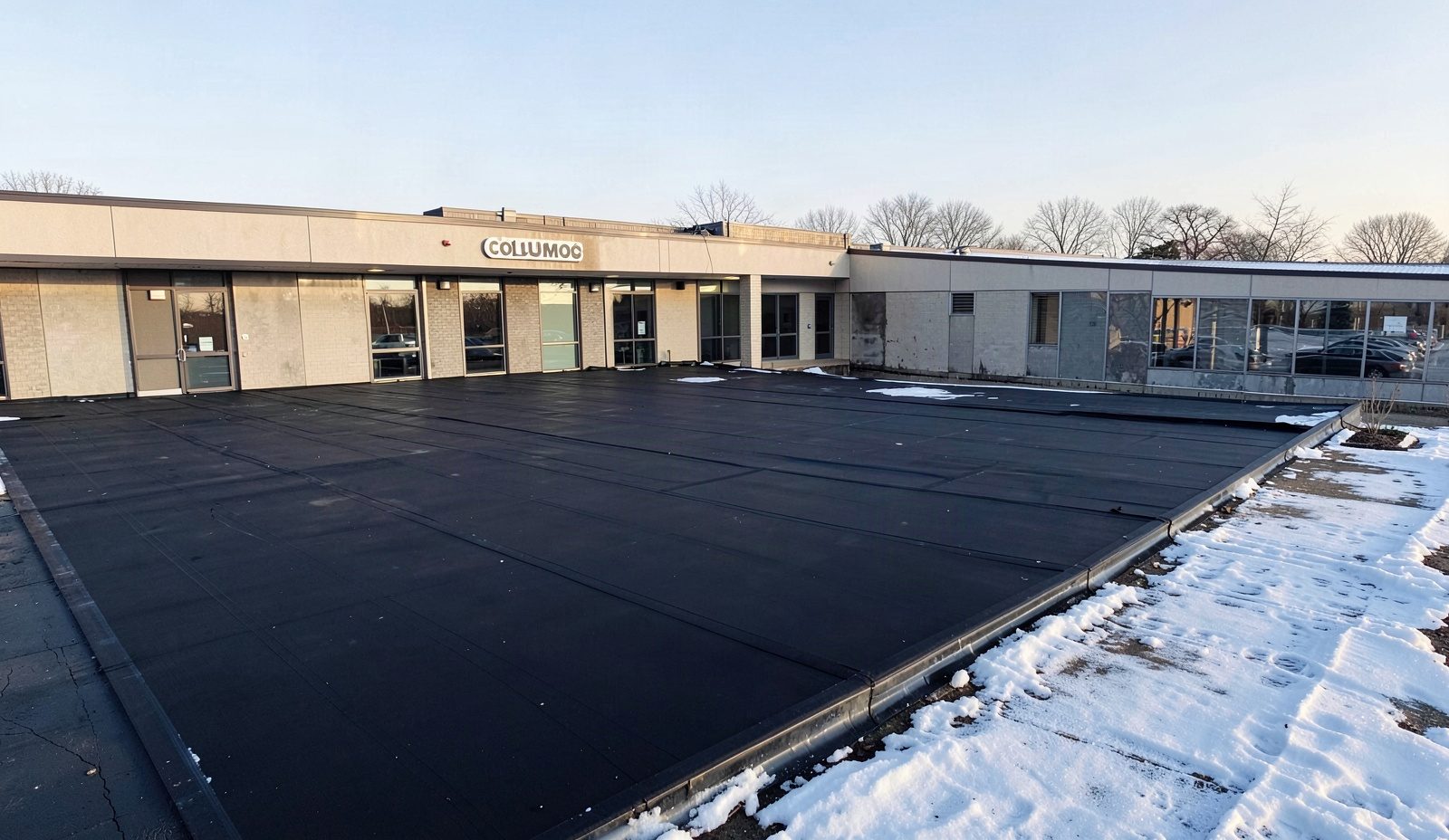
Every EPDM inspection starts with a walk of the full field in a grid pattern, checking each seam by hand and probing suspect spots with a blunt seam probe to see if the membrane still has body or has turned brittle. A moisture meter, run in scan mode across the deck, flags wet insulation before it shows as a stain inside. Where the meter reads high, we pull a core sample, a three-inch plug cut down to the deck, to see exactly how far saturation has traveled through the insulation board.
Drainage gets checked against one hard number: ponding water still present more than 48 hours after rainfall is the industry threshold for correcting low-slope drainage, and any roof that fails that test needs tapered insulation, additional drains, or a scupper modification before a new membrane goes down over the same slope problem. We also check uplift resistance at the perimeter and corners, the zones that see the highest wind pressure on a flat roof, and confirm the fastening pattern matches the wind exposure for that building's height and location.
Membrane choice depends on the roof's chemistry and traffic. TPO, heat-welded rather than glued, resists UV and reflects more heat, but its seams depend entirely on weld temperature control, and a poorly welded TPO seam fails faster than a properly adhered EPDM seam. PVC costs more up front and handles rooftop oil and grease exposure better than either, which matters for restaurant exhaust hoods but rarely for a general office or apartment roof. We match attachment method, fully adhered, mechanically fastened, or ballasted, to the building's parapet height and roof deck condition.
Our page on built-up roofing systems covers that side of the work in more depth.
Communities like r/Roofing are a good reality check on pricing and practices before you sign anything.
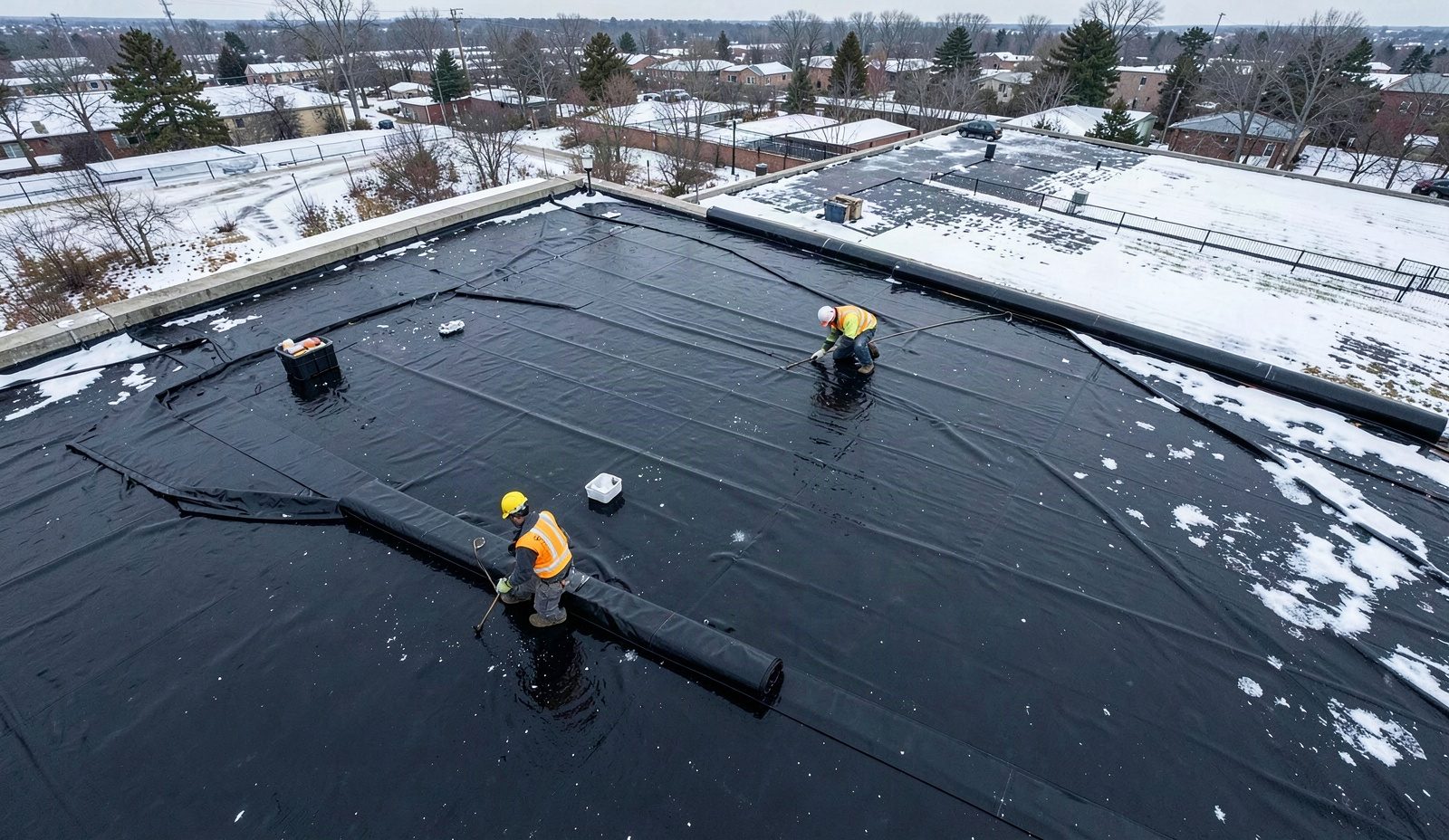
You call (614) 707-7333 and describe what you're seeing, ponding, a soft spot, a stain on a ceiling tile below the roof deck. We schedule a site visit and a technician walks the full roof field, checking seams by hand, probing soft spots, and running a moisture meter across the deck to map wet insulation. Standing water gets measured and marked for drainage correction where it hasn't cleared on schedule. You get a plain-language rundown on the spot, what's failing, what's still sound, and whether the fix is a seam repair, a section replacement, or a full membrane job.
Once you approve the written scope, the crew sets up roof protection and staging, tarps over rooftop equipment, plywood on parapet edges, before tear-off starts. Old membrane and wet insulation come off in sections rather than the whole roof at once, so a sudden storm doesn't leave the deck exposed. New insulation board goes down first if the old board tested wet, then the EPDM sheet, seamed with liquid adhesive or seam tape depending on the manufacturer system, and flashed at every penetration, drain, and parapet corner. Any condition found once the old membrane is off gets a phone call before we proceed.
Before the crew packs up, every seam gets a hand-pull test and a visual check for full adhesive squeeze-out, and drains get flushed with water to confirm they clear. We walk the roof with you or your property manager, pointing out flashing details, new drain locations, and any equipment we reset. You receive photo documentation of the completed seams and flashing for your maintenance file, useful if an insurer or lender ever asks for proof of the work. The crew does a final magnetic sweep of the roof and ground level before leaving.
Commercial roofing work in Columbus falls under the Ohio Building Code, based on the 2021 International Building Code, which sets wind uplift and fire classification requirements for low-slope membrane systems that a residential-focused crew rarely tracks. We size fastening patterns and membrane class to those wind and fire provisions before a project starts, ahead of any inspector review.
An out-of-area crew that installs EPDM the same way in every state misses details that matter here: parapet wall heights on Columbus's older mixed-use buildings, roof drains sized for regional rainfall intensity, and the seam and flashing movement that Central Ohio's climate puts on every roof over time. Contractors unfamiliar with the local permit process also tend to skip paperwork on structural tie-in work, which creates problems later when a lender or insurer asks for documentation during a sale or claim.
We schedule commercial EPDM work around a building's occupancy, coordinating access with property managers so tenants keep normal use of parking, loading docks, and rooftop mechanical access throughout the job. Every completed project gets photo documentation of seam welds, flashing details, and drainage corrections, the kind of record a board or insurer can review without a site visit. Reach a technician directly at (614) 707-7333 to talk through scope before scheduling.
If this sounds close but not quite your situation, commercial metal roofing may be the better starting point.
Our crews work to the installation standards of the National Roofing Contractors Association.
Commercial EPDM work gets scheduled by phone, and we give property managers a specific arrival window instead of an all-day guess, typically a two-hour block confirmed the morning of the visit. Roof access, rooftop unit shutdowns, and any tenant notice you need get worked out ahead of time so nothing gets negotiated once the crew arrives. If weather pushes a membrane installation, since EPDM adhesive and seam tape both need a dry deck and a minimum surface temperature to cure properly, we call ahead and move the date. Multi-building portfolios can stack several roofs into one week of scheduling.
Ground-level areas below the work zone get cordoned with cones and, where the building fronts a sidewalk, temporary fencing during tear-off. Old membrane, insulation board, and seam scrap go into a lined dumpster or trailer, never staged loose on the roof overnight. Loading dock doors and rooftop access hatches get plywood or rubber mat protection so foot traffic and material carts don't mark finished flooring. Magnetic sweeps run across adjacent parking or grass areas to pick up loose fasteners. When the crew closes out, the roof surface is broom-clean and the ground level shows no debris, adhesive drips, or leftover packaging.
The estimate for EPDM flat roofing depends on square footage, current membrane condition, deck access (ladder versus crane for taller buildings), insulation replacement needs, and any drainage corrections the roof requires. We measure the roof, document existing damage with photos, and put every line item, membrane thickness, attachment method, flashing detail, into a written scope before tear-off starts. You review and approve that scope, and any condition discovered once tear-off begins, like saturated insulation, gets a phone call and a written change before we touch it.
Every technician who works a commercial EPDM job passes a background check before assignment and completes hands-on training on current seam-welding and adhesive application methods before working without direct supervision. Crew leads review code updates and manufacturer installation bulletins for EPDM, TPO, and PVC systems on a recurring schedule throughout the year. New technicians shadow a set number of full commercial installations, working alongside a lead who signs off on seam quality, before running a job solo. Field supervisors spot-check seam welds and adhesive bonds throughout the job as well as at the final walkthrough.
Hiring the right epdm flat roofing contractor in Columbus depends on their inspection method, attachment choice, and documentation habits. Ask how they attach the membrane, fully adhered, mechanically fastened, or ballasted, and why that method fits your building rather than a one-size answer. Cornerstone Roofing Columbus documents every seam and flashing detail with photos so you have a record for insurance or a future sale, and our technicians walk the full roof field rather than relying on a quick look from the access hatch.
Permit requirements depend on the scope of work involved. A full membrane replacement or structural tie-in typically needs a permit, while a like-for-like seam repair on an existing roof usually does not, but the final call belongs to your jurisdiction's permitting office. For a Columbus address, that office reviews plans before work starts, so ask your contractor to confirm permit status in writing rather than assuming a smaller job is exempt.
Coverage depends on the cause of damage and your policy's exclusions, not the roofing material itself. Sudden storm damage, a wind-lifted membrane edge or a punctured roof from falling debris, is more likely to qualify than gradual wear like UV-cracked seams or age-related adhesive failure. Insurers typically want dated photo documentation and a written repair scope before approving a claim, which is why we photograph roof condition at every visit. Check your specific policy language on roof age and maintenance requirements before assuming coverage applies.
Small DIY seam patches are possible but risky on a commercial roof where a mistake affects tenants below and the building's structure. EPDM seam adhesive needs a specific surface temperature and cure window to bond properly, and a seam that looks sealed but wasn't primed correctly can fail within a season. Commercial roofs also carry code requirements around wind uplift and fire rating that a DIY patch job doesn't address. For anything beyond a small isolated repair, a trained technician's assessment protects the building and any future insurance claim.
EPDM is often the right fit for older buildings because the membrane flexes with a building's natural settling instead of cracking like a rigid material. Older commercial structures with irregular rooflines, added mechanical curbs, or a rear addition tacked onto a pitched roof benefit from EPDM's ability to be cut and flashed around unusual penetrations without specialty tooling. The material's decades-long track record on Columbus-area rowhouse conversions and mixed-use buildings supports the choice for a building expected to stay in service for years to come.
Some granule shedding is normal, especially on a new roof. Every asphalt shingle sheds a portion of loose factory granules during its first few rains as the self-sealing strip cures. What is not normal is heavy, ongoing granule loss years into a shingle's service life, especially loss concentrated in one spot on the roof. That pattern points to storm impact, an aging mat, or a ventilation problem baking the shingle from underneath, and it is worth a roof walk rather than a wait-and-see approach.
Columbus gets heavy, wet snow rather than the dry powder of lake-effect regions, and that snow sits on a flat roof and adds real weight, not just insulation value. A saturated membrane under several inches of wet snow can carry a load the original roof deck on many older commercial buildings around Clintonville and Victorian Village was never engineered to hold long-term. Ice that forms at drains and scuppers during a partial thaw blocks the one path water has off the roof, so the load sits there until temperatures climb enough to clear it. That's why we check joist spacing and deck material, plank versus plywood versus steel, before recommending a fully adhered system on an older building. A ballasted system adds even more dead load and isn't the right call on a deck already carrying decades of built-up roofing layers underneath the current membrane.
Full membrane replacement on a commercial building triggers a permit review, while a like-for-like seam repair on an existing EPDM roof usually does not, and the City of Columbus Department of Building and Zoning Services makes that call for any Columbus address. Buildings in Italian Village and the Brewery District often carry historic district considerations on the street-facing elevation, but the roof itself still falls under standard commercial code review, separate from neighborhood design guidelines. Property managers in these areas ask for permit documentation specifically because a sale, refinance, or insurance renewal often surfaces an unpermitted structural change from a previous owner. Working with a contractor who pulls the correct permit before structural tie-in work, added drains, tapered insulation crickets, new curb framing, protects that paper trail and keeps a sale from stalling in due diligence.
Explore our service area and locate Cornerstone Roofing Columbus with ease. We're proudly local and serve the surrounding neighborhoods with fast response and honest pricing. Use the map to check our coverage area, or call us and we'll confirm in seconds.
Address:
Cornerstone Roofing Columbus, 1015 E Broad St, Columbus, OH 43205
How Much Does a Roof Replacement Cost in Columbus? 2026 Pricing Breakdown, practical local guidance from Cornerstone Roofing Columbus, Colum…
Read More
Commercial Roof Maintenance Tips for Columbus Property Managers, practical local guidance from Cornerstone Roofing Columbus, Columbus's trus…
Read More
Skylight Leaks in Victorian Village Homes, Repair or Replace?, practical local guidance from Cornerstone Roofing Columbus, Columbus's truste…
Read More
The Best Time of Year to Replace a Roof in Columbus, practical local guidance from Cornerstone Roofing Columbus, Columbus's trusted roofing …
Read More