

April 1, 2025
How Much Does a Roof Replacement Cost in Columbus? 2026 Pricing Breakdown
How Much Does a Roof Replacement Cost in Columbus? 2026 Pricing Breakdown, practical local guidance from Cornerstone Roofing Columbus, Colum…
Read More




The first sign is usually cosmetic. Dark streaks run down the north-facing slope of an asphalt roof, following the water path from ridge to gutter like soot stains. Underneath the streaks, a homeowner in Clintonville or Victorian Village might notice a spongy green cushion building up along the shaded edge where a maple canopy blocks afternoon sun. Walk the yard on a humid morning and you can smell it before you see it, a damp, earthy odor that clings to the north side of the house longer than the rest of the property ever dries out.
Those two problems are not the same organism. The black streaking is Gloeocapsa magma, a blue-green algae that feeds on the limestone filler in asphalt shingle granules and spreads by airborne spore across shared roof lines and even between neighboring homes. Moss is a different organism entirely, a rootless plant that anchors itself into the granule layer and holds water against the shingle mat around the clock. Columbus's humid continental climate gives both organisms exactly what they need: long stretches of summer humidity, dense tree cover in older neighborhoods like Italian Village, and roof slopes that stay shaded and damp well after a storm has passed everywhere else on the block.
Moss damaging shingles is a mechanical problem, not just a stain. As moss mats thicken, their rhizoids work under the shingle tabs and lift the edges, breaking the seal that keeps wind-driven rain out. Every freeze cycle that follows pushes trapped moisture deeper into that lifted seam. Homeowners searching for moss removal from roof service usually call after noticing granules collecting in the gutter, a sign the moss has already pulled the protective coating off the shingle surface underneath it.
Waiting past this point changes the job. What starts as a roof algae cleaning and a moss removal visit turns into deck repair once the plywood sheathing under a thick moss mat starts absorbing moisture on every wet week instead of drying between them. Left long enough, soft, delaminating decking replaces what would have been a straightforward cleaning, and a shingle that could have been power-washed clean now needs to come off the roof entirely. Prevent moss on roof surfaces early, and the fix stays cosmetic.
More detail on roof leaks around chimney is on its own page.
Permit and inspection questions? Building & Zoning Services is the office we coordinate with on every permitted Columbus job.
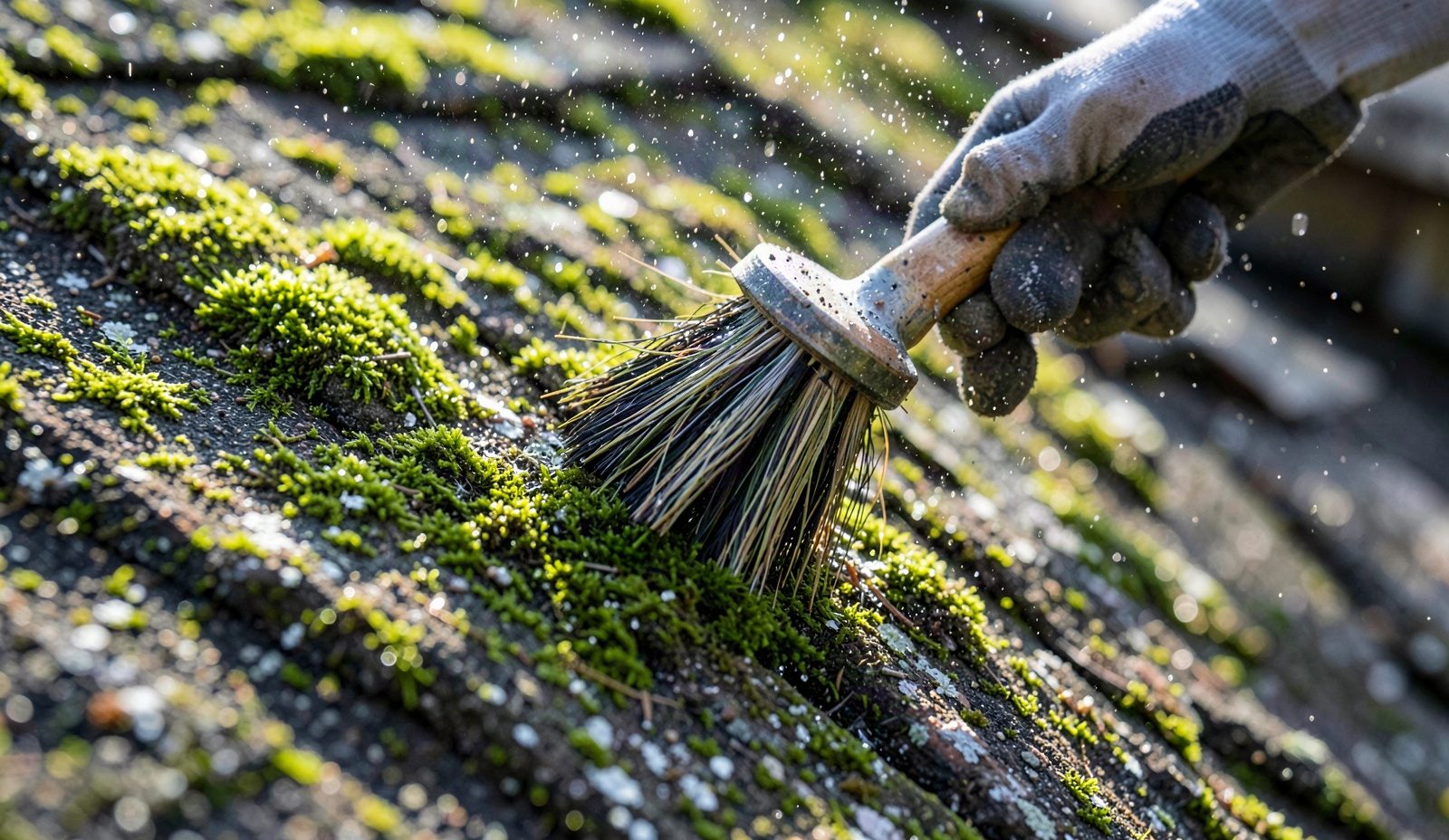
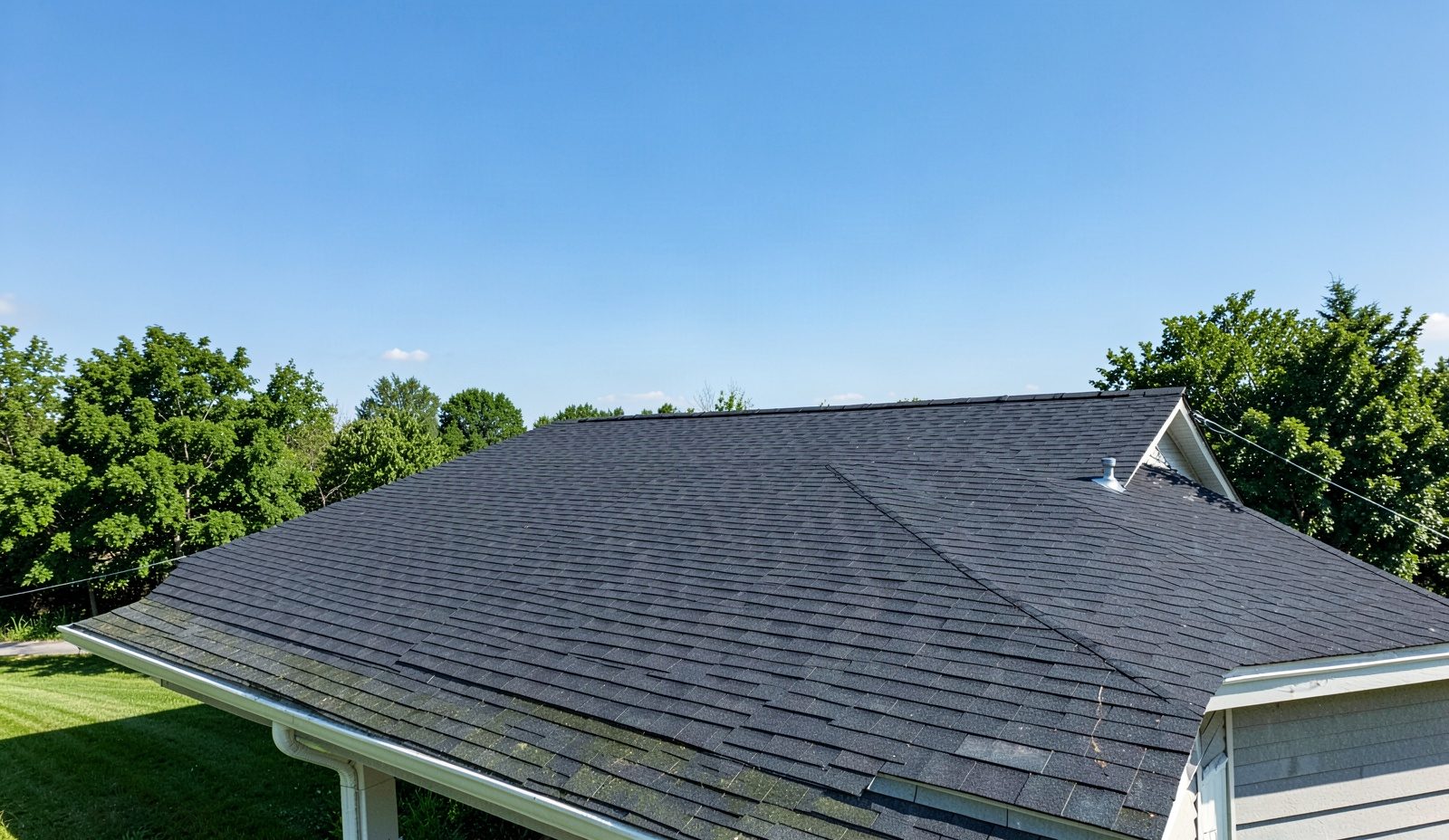
Every visit starts on the ground with binoculars, not the ladder. A technician maps which slopes show active black streaking versus which show moss cushioning, because the two require different chemistry. Algae dies to a controlled sodium hypochlorite solution applied at low concentration and rinsed after a short dwell period. Moss needs a longer contact time and a mechanical pass with a soft brush or squeegee to break the rhizoid grip before rinsing, because chemical alone will kill the plant but leave a dead mat still lifting the shingle tabs underneath it. We never run a gas pressure washer above idle settings on a shingle roof. High-PSI blasting strips granules faster than the moss itself does, which trades one problem for a worse one.
Once on the roof, the inspection widens past the moss. A pin-type moisture meter pressed into the decking beneath a heavy moss patch tells us what is happening under the shingle. A reading above roughly 20 percent moisture content signals the deck itself has absorbed water, not just the shingle surface, and that changes the job from a cleaning to a repair conversation before any chemical goes down. Where a valley or eave shows soft decking to the touch, we probe it with a flat-blade screwdriver. If the blade sinks into the wood with light hand pressure instead of meeting solid resistance, that section is rotted and needs replacement, not a wash. While we are up there, we also confirm the eave has an ice barrier extending at least 24 inches inside the exterior wall line, the standard set by Section 905.1.2 of the Ohio Residential Code, since a failed ice barrier and a moss-choked eave often show up on the same roof for the same reason: water sitting where it should be shedding.
For roofs headed toward a shingle upgrade rather than a cleaning, algae resistance is a real spec, not a marketing line. GAF's StainGuard Plus line embeds copper-containing granules that release algaecide at a slower, steadier rate, while Owens Corning's StreakGuard formulation relies on a similar copper-based granule strategy with a different release curve. Zinc control strips, mounted just under the ridge cap, work by rinsing zinc oxide down the slope every time it rains, typically holding algae back for five to eight years before the strip needs replacing, compared to copper strips, which dissolve slower and last longer but cost more up front. We walk homeowners through which system fits their tree cover and roof pitch instead of defaulting to one.
Our page on 24 hour roof leak service covers that side of the work in more depth.
Our crews work to the installation standards of the National Roofing Contractors Association.
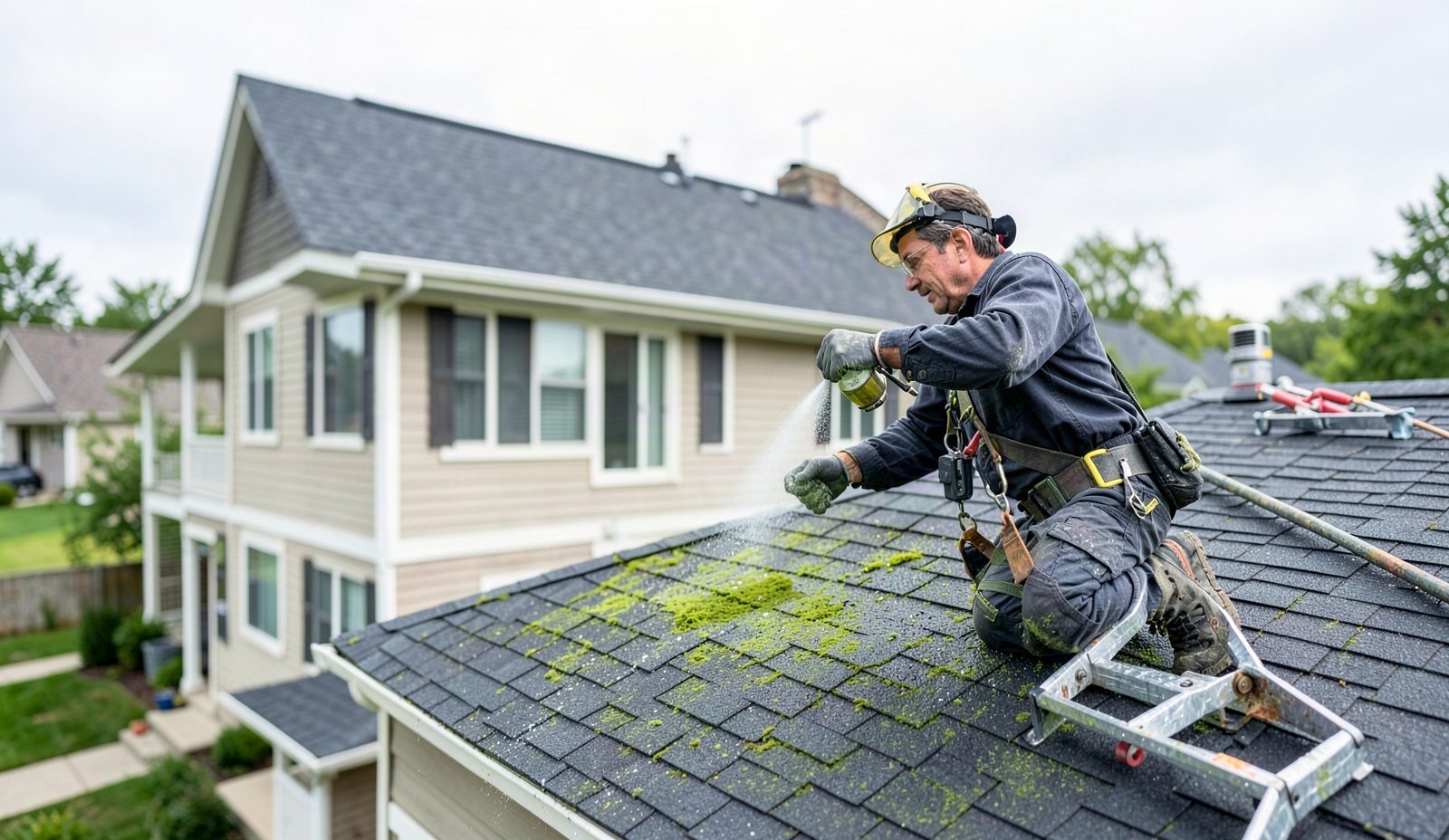
You call and describe what you are seeing, black streaking, green patches, granules in the gutter, and roughly how long it has been building. We schedule a visit and the technician starts from the ground with binoculars, mapping which slopes show algae versus moss before touching a ladder. Once on the roof, they check moisture readings at suspect spots, probe any soft decking they find, and photograph the affected areas. You get a plain explanation of what is causing the problem and what the visit will involve before anything is scheduled to start.
Once you approve the written scope, the crew protects landscaping and walkways, then applies the appropriate treatment, biocide for algae, biocide plus mechanical brushing for rooted moss, at low pressure to avoid stripping granules. If the inspection found rotted decking or a failed flashing detail, that repair happens as its own approved line item using materials matched to your existing roof system, whether that means matching an algae-resistant shingle line or replacing a zinc control strip along the ridge.
Before leaving, the crew rechecks moisture readings at the spots that were flagged during the assessment to confirm the decking is drying out and no active leak path remains. We walk the yard and roofline with you, point out what was treated versus what was repaired, and leave you with photos of the before and after condition for your own records, useful if you ever need to show a future buyer or an insurance adjuster what was done and when.
Roofing work in Columbus falls under the Ohio Residential Code, which is built on the International Residential Code framework and governs everything from underlayment type to flashing detail on every job we touch. Our crews stay current on that code cycle because a cleaning job that uncovers rotted decking or a failed flashing detail is no longer routine maintenance. It becomes a repair governed by the same code that would apply to a full replacement, and that distinction determines whether a permit conversation is needed before work continues.
Out-of-area crews and unverified operators create real risk on this specific job. A pressure washer set too high strips the granule coat and voids the algae-resistance rating a shingle manufacturer built into the product, and a crew unfamiliar with older Columbus roof framing can misjudge which decking is original plank sheathing versus a plywood retrofit, missing rot that a trained eye catches on the first pass. Steep, tightly-spaced rooflines common on older city lots also demand fall protection and ladder placement decisions that a crew working from unfamiliar terrain gets wrong more often.
We treat every moss and algae visit as a full roof health check, not a one-time wash. That means documenting slope condition, flashing state, and granule loss before we touch a shingle, so the homeowner has a clear record of what we found and what we did about it. If you want a technician who can explain what is happening on your specific roof before recommending anything, call (614) 707-7333.
If this sounds close but not quite your situation, after-storm roof inspections may be the better starting point.
Booking starts with a phone call, not a form. We give a real arrival window, usually a two to three hour block, based on your roof's size and how much moss or staining you described on the phone. If weather shifts the schedule, wet shingles are slippery and unsafe to walk, we call ahead and move the visit rather than showing up and rushing a job that needs dry conditions to do correctly. Most single-visit cleanings get scheduled within the same week you call, and we confirm the exact day and window the morning before the crew arrives so you know when to expect us.
Before anyone climbs a ladder, we lay tarps over foundation plantings and walkways directly below the work area, since rinse water carrying moss debris and dead algae can stain siding and kill grass if it runs off unmanaged. Gutters get flushed of the granules and moss clumps the cleaning knocks loose so they do not clog downspouts later. All debris, dead moss mats, loose granules, and old zinc strip material if we are replacing one, gets bagged and hauled off the property. We walk the perimeter with you before leaving to confirm the yard looks the way it did when we arrived.
The quote reflects roof size, pitch, and access, a steep roof or one with limited ladder placement takes longer and needs more safety equipment than a simple ranch roof. Moss density matters too: a light surface film cleans faster than a thick, rooted mat that needs mechanical work before chemical treatment. If the inspection finds soft decking or lifted flashing, that gets priced as a separate repair line so you can see exactly what the cleaning covers versus what the repair covers. Nothing starts until you approve the written scope, and you can ask the technician to walk through each line before signing off.
Technicians go through a background check before they are scheduled on any residential property, and every crew member trains on the current Ohio Residential Code cycle so field decisions, like when a cleaning job becomes a repair job, match what inspectors expect to see. New techs shadow an experienced crew lead through a set number of full moss and algae visits before they run a job on their own, and their diagnostic calls, moisture readings, screwdriver probes, flashing checks, get reviewed against the lead's findings until the readings consistently match.
Removal depends on which organism you have, algae needs a biocide rinse and moss needs biocide plus mechanical brushing. A technician typically lets the treatment sit for 15 to 20 minutes before rinsing at low pressure, since a longer dwell time breaks the moss's grip on the granule layer without stripping the shingle coating the way high-pressure washing does.
Yes, moss growth is a real problem, not just a cosmetic one. A thick moss mat can hold several times its own weight in water against the shingle surface, keeping that section of roof damp long after the rest of the roof has dried, which is what eventually lifts shingle tabs and lets water find a way underneath them.
Spring and fall work best for moss removal in Columbus. Both seasons bring mild, dry stretches that let the roof surface dry completely after treatment, while summer's frequent thunderstorm activity and winter's snow and ice cover make it harder to get a clean rinse and a fully dry deck before the next wet spell arrives.
Algae grows because airborne spores land on a damp, shaded shingle surface and feed on the limestone filler in the granules. Gloeocapsa magma spores travel on wind currents and can hitch a ride on bird droppings between roofs in the same neighborhood, which is why algae staining often shows up on several homes on the same street around the same time.
A typical single-story roof cleaning takes about two to four hours depending on roof size and how established the moss is. Heavier moss mats that need mechanical brushing before chemical treatment add time, and any decking repair found during the inspection extends the visit into a separate scheduled phase.
DIY moss and algae removal carries real fall risk and can damage the roof if done wrong. Standing on a wet, moss-covered slope is one of the more common ways homeowners get hurt on their own property, and store-bought pressure washers set too high strip the granule coating that protects the shingle from UV breakdown.
Estimates depend on roof size, pitch, access, and how much moss or algae has established itself. A technician inspects the roof first, explains what they found, and builds a written quote broken into cleaning and any repair line items before anything starts, and you can talk through each line with the technician by calling to schedule a visit.
Central Ohio runs a humid continental climate with roughly 40 to 60 freeze-thaw cycles every winter, and that cycling matters on a moss job because water trapped under a moss mat expands and contracts against the shingle mat dozens of times before spring. Older housing stock in districts like German Village and the Brewery District often carries steep-pitched roofs with tighter eave clearances, shaded further by mature street trees, conditions that keep algae and moss active longer into the season than a roof on an open, newer subdivision lot. That combination of shade, humidity, and repeated freeze cycling is exactly why cleaning timing and shingle choice differ block by block across the city rather than following one generic rule.
Moss removal itself is cosmetic maintenance and typically does not require a permit, but the moment a job uncovers rotted decking or a flashing replacement, it crosses into repair work reviewed under the same jurisdiction as new construction. For Columbus addresses, that is the City of Columbus Department of Building and Zoning Services, and for surrounding Franklin County jurisdictions it is the local city building department. Homeowners in denser, historically zoned areas near the Short North sometimes assume a design review board governs roof repairs the way it governs facade changes, but that oversight applies to visible exterior alterations, not routine shingle maintenance. Knowing that distinction keeps a straightforward cleaning job from getting delayed by the wrong review process.
Explore our service area and locate Cornerstone Roofing Columbus with ease. We're proudly local and serve the surrounding neighborhoods with fast response and honest pricing. Use the map to check our coverage area, or call us and we'll confirm in seconds.
Address:
Cornerstone Roofing Columbus, 1015 E Broad St, Columbus, OH 43205
How Much Does a Roof Replacement Cost in Columbus? 2026 Pricing Breakdown, practical local guidance from Cornerstone Roofing Columbus, Colum…
Read More
Commercial Roof Maintenance Tips for Columbus Property Managers, practical local guidance from Cornerstone Roofing Columbus, Columbus's trus…
Read More
Skylight Leaks in Victorian Village Homes, Repair or Replace?, practical local guidance from Cornerstone Roofing Columbus, Columbus's truste…
Read More
The Best Time of Year to Replace a Roof in Columbus, practical local guidance from Cornerstone Roofing Columbus, Columbus's trusted roofing …
Read More