

April 1, 2025
How Much Does a Roof Replacement Cost in Columbus? 2026 Pricing Breakdown
How Much Does a Roof Replacement Cost in Columbus? 2026 Pricing Breakdown, practical local guidance from Cornerstone Roofing Columbus, Colum…
Read More




Water sheets off the edge of your roof instead of running through the downspout. You see a brown stain creeping down the brick below the gutter line, and the fascia board underneath feels soft when you press a thumb into it. That soft spot is wood already rotting from months of standing water. Overflowing gutters damage the trim, the siding, and eventually the roof deck itself, and the process starts quietly enough that most homeowners miss it until the stain reaches the window trim.
Columbus's older neighborhoods make this worse. Homes near Clintonville, Victorian Village, and Italian Village sit under decades-old oak and maple canopies that drop leaf litter every autumn and seed pods every spring. That debris packs into the gutter trough and the downspout throat, and once the water has nowhere to go it backs up under the shingles at the eave, creating a clogged gutter roof leak that shows up as a ceiling stain two rooms away from where the actual clog sits.
Central Ohio runs through roughly 40 to 60 freeze-thaw cycles each winter. Ice that forms in a clogged gutter expands against the hangers, and the fasteners pull loose from the fascia one freeze at a time until the whole run sags away from the house. That is why you see gutters pulling away from the house most often in February, not in the middle of a snowstorm. Summer brings its own damage, when thunderstorm hail and straight-line wind dent the gutter face and bend hangers out of alignment, leaving a low spot where water pools and overflows every time it rains, a common bent gutter repair call across the metro.
Left alone, a clogged or bent gutter does not stay a gutter problem. Water pooling against the fascia for a full season splits the board and lets moisture into the rafter tails, and gutter overflow causing rot in that framing runs several feet before it is visible from the ground. Once the fascia lets go, the gutter hanger has nothing solid to bite into, and the next wind event drops the whole section into the yard. By the time daylight shows around the soffit vents, the fix has moved from a gutter cleaning to a fascia and roof-edge rebuild.
More detail on cracked or damaged flashing is on its own page.
Permit and inspection questions? Building & Zoning Services is the office we coordinate with on every permitted Columbus job.
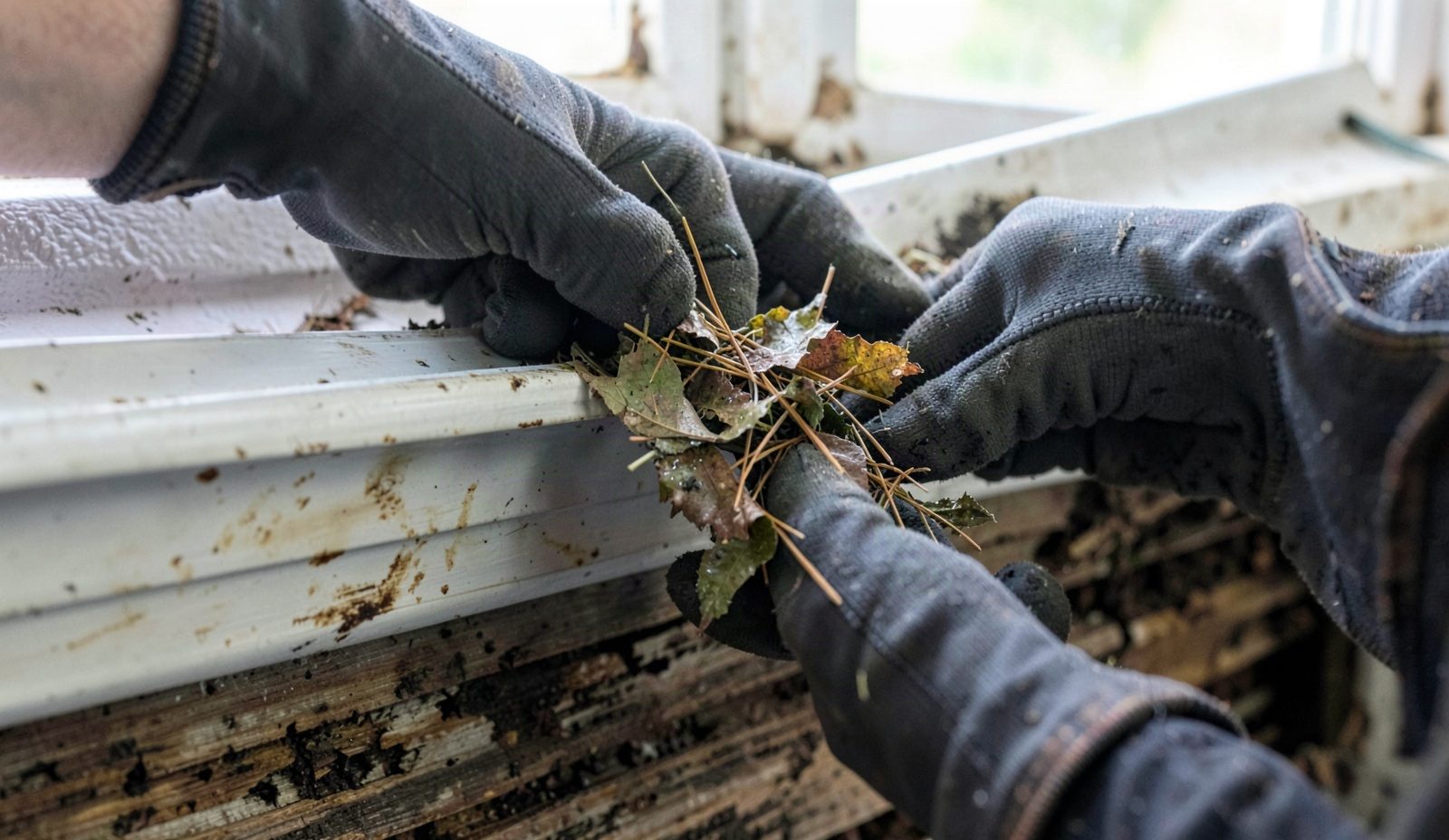
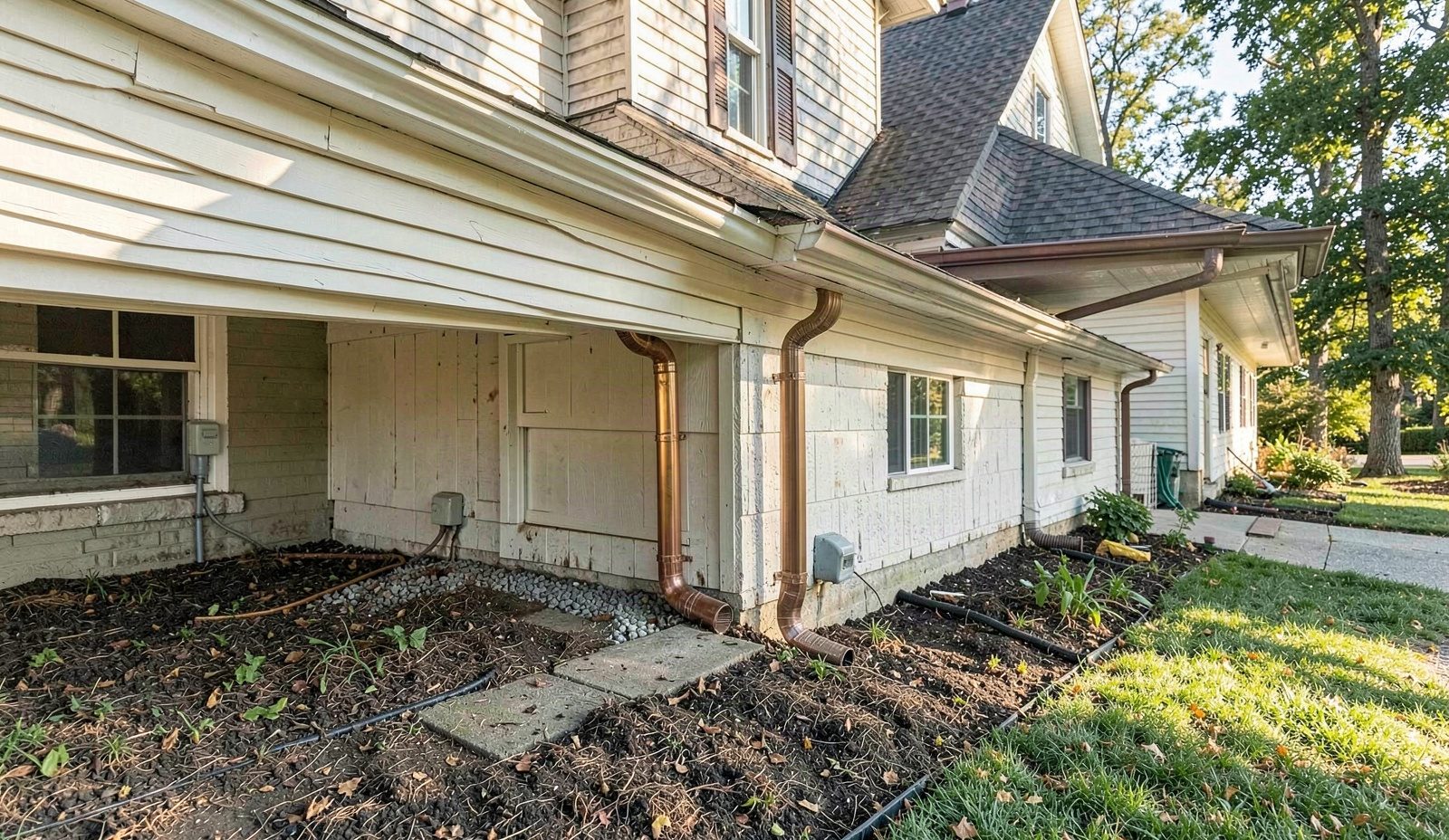
We start at the downspout outlet because a clog usually sits at the elbow where a horizontal run meets the vertical drop, a spot most homeowners never check. A technician runs a garden hose at the far end of the run and times the drain at the outlet with a stopwatch. A 5-inch K-style gutter should clear a full hose stream in under 45 seconds. Anything slower tells us the blockage sits below the visible trough, packed into that first elbow joint rather than the open channel.
Next we check slope with a 4-foot level and a tape measure. Manufacturer spec calls for a quarter inch of drop for every 10 feet of run toward the downspout, and a flat or reverse-pitched section explains standing water even in a gutter with no clog at all. We also probe hanger spacing along the fascia. Hangers set wider than 36 inches apart let the trough bow under the weight of wet leaves and ice, and a bowed section is where bent gutter repair calls concentrate.
Where the fascia looks discolored, we press a flathead screwdriver into the board by hand. Sound wood resists the point. Rotted wood lets the blade sink in with almost no pressure, and that reading tells us whether the fix is gutter hardware or a fascia and roof-edge rebuild. On a roof edge above a chronically icing gutter, we also check whether the ice barrier extends at least 24 inches inside the exterior wall line, the threshold Section 905.1.2 of the Ohio Residential Code sets for asphalt shingle roofs, because a gutter that ices over every winter often signals a missing or short ice barrier upstream. On materials, we compare seamless aluminum K-style gutter in 26-gauge stock against lighter 32-gauge sectional gutter. The heavier 26-gauge holds its shape under ladder contact and ice load, where 32-gauge dents on the first hailstorm. For tree-heavy lots with chronic clogging we also spec micro-mesh guards over reverse-curve guards, since reverse-curve designs shed heavy wet snow poorly and micro-mesh keeps seed pods out without slowing flow.
Our page on attic condensation & mold covers that side of the work in more depth.
Our crews work to the installation standards of the National Roofing Contractors Association.
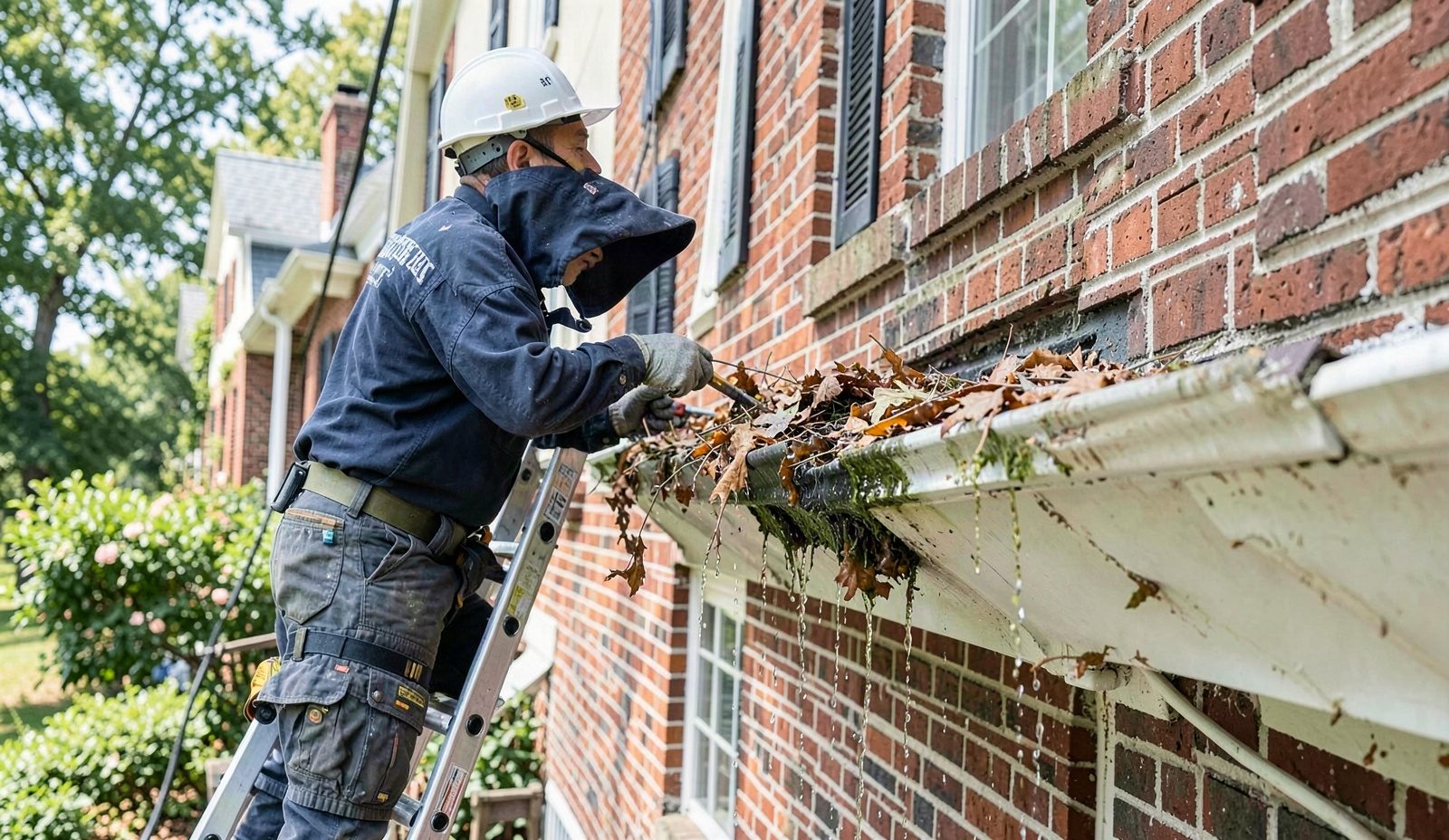
You describe what you are seeing, overflow at a specific spot, a sagging section, a stain on the fascia, and we schedule a technician to walk the roof edge and ground level with you. On site, the technician runs the hose test at the downspout, checks slope with a level, and presses a screwdriver into any discolored fascia board. You see the readings as they are taken, not just a verbal summary, and get a plain explanation of which sections are clogged, bent, or rotted underneath before any work is scoped.
Before any hanger comes off, you get a written scope covering material choice, gauge, guard type, and any fascia sections that need sistering or replacement. Once you approve it, we protect the foundation bed and landscaping with tarps, remove the damaged run, correct hanger spacing to close the gap that let the last section bow, and reset slope to the quarter-inch-per-10-foot standard. Rotted fascia gets cut back to solid wood before new material goes on, never covered over.
After the repair, we run the hose test again at the same outlet to confirm it clears in line with the original benchmark. We walk the roof edge with you, point out the corrected slope and hanger spacing, and photograph the finished run for your records. Any leftover debris, hangers, or trimmed fascia scrap leaves with the crew. You get the diagnostic findings in writing, useful if you ever need to reference the repair for an insurance claim or a future sale.
Roofing and attached gutter work in Columbus falls under the Ohio Residential Code and city inspection authority. Full gutter replacement tied to a fascia or roof-edge rebuild typically needs a permit, while a straightforward gutter reattachment or cleaning usually does not, and the City of Columbus Department of Building and Zoning Services makes that call for any project inside city limits, with the local building department or Franklin County deciding for addresses outside Columbus proper. We check which category a job falls into before we quote it, so you are not left explaining an unpermitted structural repair to an inspector or a future buyer's home inspector.
Housing stock changes the approach block to block. A brick two-story near the older core often has a wood fascia board original to the house, thinner and softer than the engineered fascia used on newer construction, and it needs a gentler hanger and a different fastener pattern to avoid splitting it. A contractor unfamiliar with Franklin County's mix of pre-war and mid-century construction drives the same fastener into every fascia board regardless of what sits under the paint, and that mismatch is how a five-year-old gutter job ends up sagging again.
An out-of-area crew working off a regional flat-rate script also tends to miss the freeze-thaw pattern specific to this climate, quoting a one-time cleaning where the real problem is hanger spacing that will fail again next winter. We look at the whole gutter system, hangers, slope, downspout capacity, and fascia condition, before recommending a fix, and we can talk through what we found and why over the phone at (614) 707-7333 before any crew steps on a ladder.
If this sounds close but not quite your situation, ceiling water stains may be the better starting point.
When you call, we schedule a specific arrival window instead of an all-day guess. Most gutter diagnostic visits book within a few business days, and storm-related calls with active water intrusion get priority slotting ahead of routine cleanings. The technician calls or texts thirty minutes out so you are not waiting at the window all morning. If weather pushes a ladder-based inspection, we call before your window opens, not after, and we rebook the next available slot rather than leaving you guessing. Cancellations get the same courtesy, a call, a reason, and a new time.
We lay tarps along the foundation bed before any gutter debris comes off the roof edge, so wet leaves and grit do not end up ground into your mulch or lawn. Bent sections and old hangers get bagged on site instead of tossed in the yard. Downspout debris gets bucketed, not dumped, and we run a magnetic sweep across the drive and walkway for stray screws and nails before we pack up. When we pull away, the only sign we were there is a gutter that drains the way it is supposed to.
Your estimate reflects what the diagnostic finds, how much of the run needs replacing, whether the fascia underneath is sound or soft, ladder access and roof pitch, and the gutter gauge and guard style you choose. A single sagging section costs less to correct than a full-house reattachment with fascia repair. We write the scope and materials on the quote before anyone touches a hanger, and you approve it before work starts. No surprise line items appear after the ladder goes up.
Every technician passes a background check before working near your home and property. Crews review the current Ohio Residential Code cycle each year, so eave and fascia work matches the standard your inspector will check against. New hires shadow a senior technician on gutter and fascia calls before they run a ladder solo, and their diagnostic calls, slope readings, hanger spacing, fascia soundness, get reviewed against the lead technician's findings until they consistently match.
Cost depends on how many stories the gutters climb and how packed the downspout throat is. A single-story ranch with light leaf debris clears faster than a two-story home shaded by mature trees, where downspouts often need snaking instead of a simple flush. Cornerstone Roofing Columbus prices the cleaning after a technician checks flow at each outlet, so the quote reflects the actual clog on your roofline instead of a flat rate that ignores how bad a specific run is.
Coverage depends on what caused the damage. Insurers typically cover gutter damage from a sudden storm event but generally deny claims for gutters that failed from years of clogged debris and rot, since that falls under routine maintenance. Document the damage with photos and a written diagnostic before filing, and check your policy's wind and hail deductible, since gutter damage is often bundled with roof claims rather than covered separately.
Clogged gutters show water sheeting over the front edge during rain instead of draining through the downspout. Check for standing water sitting in the trough more than a day after rain, visible from a ladder or an upstairs window, and look for plant growth sprouting from the debris packed inside. A dark stripe on the siding below one low spot is another sign, since it means water has overflowed at that exact point for more than one storm.
The right call is a roofing contractor who inspects the whole gutter system rather than a debris-only cleaning crew. A cleaning crew clears leaves but will not catch a bent hanger, a soft fascia board, or slope that has drifted out of spec, all of which bring the clog back within a season. Cornerstone Roofing Columbus checks flow, slope, and fascia condition on the same visit, so you get one diagnosis instead of a partial fix. Reach a technician directly at (614) 707-7333.
Cost depends on scope, a cleaning, a hanger reset, or a fascia rebuild behind rotted wood. A single bent-gutter repair costs less than replacing a full run with new fascia underneath, and ladder access on a steep or two-story roofline adds time regardless of material. Cornerstone Roofing Columbus writes the scope after the diagnostic visit, so the estimate reflects what the technician actually found on your roofline rather than a number quoted over the phone.
Most single-visit repairs finish in a few hours. A full fascia rebuild behind a rotted gutter run can take a full day or more, and weather plays a role too, since wet fascia needs to dry before a technician can get an accurate soundness reading. Straightforward cleanings and hanger resets on a single-story home typically wrap up in one visit without a return trip.
Estimates follow the on-site diagnostic rather than a phone guess. A technician checks flow, slope, and fascia condition first, then writes a scope covering materials, gauge, and any structural repair before you approve anything. You review the written quote line by line and decide what to approve, and nothing gets removed or replaced on your roofline until you sign off.
Basic debris removal from ground level or a stable ladder is reasonable for a homeowner comfortable on a ladder. Diagnosing a bowed hanger, a soft fascia board, or a drifted slope takes tools most homeowners do not carry, a 4-foot level and a hands-on soundness check on the fascia, and getting the fix wrong often means redoing it after the next freeze-thaw cycle. Anything involving a second story, a steep pitch, or visible rot is worth a technician's eyes first.
Columbus sits on clay-heavy soil that drains slowly, so any gutter that overflows drops water right against a foundation that already holds moisture longer than sandy soil would. Heavy wet snow and ice loading common to Central Ohio winters add weight to a gutter that is already clogged, and that combination drives most of the ice-dam and gutter-ice calls we see between January and March. Roofing and attached gutter systems here fall under Columbus building code jurisdiction and the Ohio Residential Code, which sets the baseline every repair has to meet regardless of how old the house is. Housing stock built before mid-century often carries a wood fascia sized thinner than what current framing uses, so a gutter crew has to check board thickness before choosing a hanger, not after it starts pulling loose again.
Historic districts like Short North, German Village, and the Brewery District carry brick rowhouses and mixed-use buildings with tight eave lines and, in some cases, built-in gutter troughs instead of hung aluminum sections. Working on these buildings means matching a repair to what is already there instead of defaulting to a standard suburban hanger kit, and knowing the difference before a crew starts drilling into century-old masonry fascia. A crew unfamiliar with these older assemblies can misjudge slope on a built-in trough or drill through a parapet flashing detail that a newer subdivision would never have. Local familiarity with these building types, not just the code baseline, is what keeps a fix from creating a second problem where the roofline itself is part of the building's character.
Explore our service area and locate Cornerstone Roofing Columbus with ease. We're proudly local and serve the surrounding neighborhoods with fast response and honest pricing. Use the map to check our coverage area, or call us and we'll confirm in seconds.
Address:
Cornerstone Roofing Columbus, 1015 E Broad St, Columbus, OH 43205
How Much Does a Roof Replacement Cost in Columbus? 2026 Pricing Breakdown, practical local guidance from Cornerstone Roofing Columbus, Colum…
Read More
Commercial Roof Maintenance Tips for Columbus Property Managers, practical local guidance from Cornerstone Roofing Columbus, Columbus's trus…
Read More
Skylight Leaks in Victorian Village Homes, Repair or Replace?, practical local guidance from Cornerstone Roofing Columbus, Columbus's truste…
Read More
The Best Time of Year to Replace a Roof in Columbus, practical local guidance from Cornerstone Roofing Columbus, Columbus's trusted roofing …
Read More