

April 1, 2025
How Much Does a Roof Replacement Cost in Columbus? 2026 Pricing Breakdown
How Much Does a Roof Replacement Cost in Columbus? 2026 Pricing Breakdown, practical local guidance from Cornerstone Roofing Columbus, Colum…
Read More




Granules collect in the gutters after every hard rain, and a homeowner sweeping them out often mistakes the buildup for ordinary dirt at first. Look closer and the color gives it away, a dull sand-like grit that matches the shingle color exactly, not the brown grime that washes off leaves and shingles. Homeowners in Short North bungalows and German Village row houses often spot the change first at the downspout, where a handful of loose grit collects like coarse sand after a storm. Run a hand across the shingle itself and it feels rougher in some spots and slick or waxy in others, a sign the ceramic-coated granules have worn thin and the black asphalt mat underneath is starting to show through in scattered bald patches instead of one uniform surface color.
Central Ohio's climate does most of the damage before a single storm even hits. The region sees roughly 40 to 60 freeze-thaw cycles each winter, and every cycle flexes the shingle mat as trapped moisture swells it, then contracts it hard as temperatures drop overnight. That repeated flexing breaks the asphalt-to-granule bond at a microscopic level, and granules that once resisted UV and abrasion start sliding off with nothing more than normal wind and rain. Older three-tab shingles common on Clintonville's postwar housing stock show this wear years earlier than newer architectural shingles, because the mat is thinner and the factory granule coating went down with less adhesive to begin with. Attics that run hot in summer speed the same breakdown from underneath, baking the shingle's underside while winter freezes work it from above.
Summer storms layer mechanical damage on top of that seasonal wear. Hail strips granules in a clean, circular bruise pattern right where the impact lands, exposing a lighter ring of bare mat that a homeowner can often spot from the ground with a pair of binoculars. Straight-line wind lifts shingle tabs at the same time, working granules loose along the exposed edge with every gust, so a granule loss repair called in after a storm often turns up two separate wear patterns on the same slope, scattered hail bruising in the field of the shingle and edge wear running along the tab line where wind did its work. Tree cover common across the older, established parts of the metro adds a third source, since falling limbs and windblown grit sand the shingle surface every time a branch scrapes across it in a storm.
Waiting rarely buys time on a granule loss problem. Shingles losing granules lose their UV shield first, so the exposed asphalt mat dries out and starts to crack within a few seasons instead of lasting through its expected service life. Cracked mat lets water track sideways underneath the tab instead of shedding straight off the roof, and a worn shingle surface that started as a cosmetic issue turns into curling tab edges, then a soft spot in the plywood deck underneath, then a stain spreading across a bedroom ceiling below. Each stage costs more labor and more material to correct than the one before it, and a single bald patch caught early stays a patch repair, while the same wear left two winters becomes a full slope replacement.
More detail on hail dents & bruised shingles is on its own page.
Our crews work to the installation standards of the National Roofing Contractors Association.

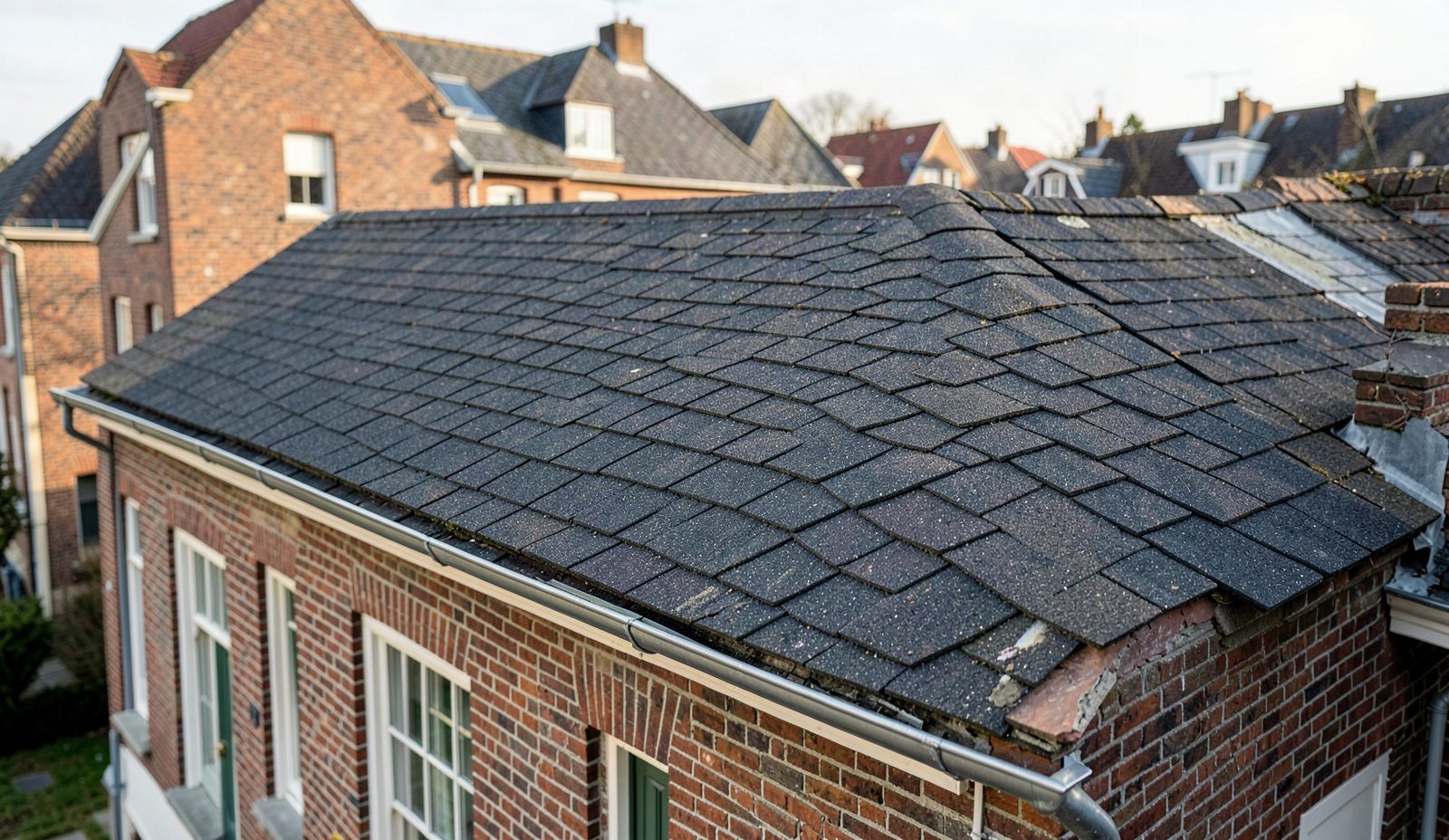
We start every granule loss call with a physical walk of the roof, not a photo from the driveway. A technician sections the roof into slopes and checks each one at three points, ridge, mid-slope, and eave, because granule loss rarely spreads evenly across a single roof plane. At each point we run a plastic-edged scraper across the shingle surface. If the tool comes back with a light dusting, the loss is cosmetic and normal for the shingle's age. If it comes back coated in dark asphalt residue, the mat itself is exposed and has already lost its UV and waterproofing layer, which moves the job from a cosmetic conversation to a repair or replacement conversation.
The same walk lets us check items a photo can never show. We look at flashing seams for lifted edges, check nail patterns for over-driven or under-driven fasteners, and verify the ice barrier required under Section 905.1.2 of the Ohio Residential Code extends at least 24 inches inside the exterior wall line. Homes where that barrier is thin, torn, or missing altogether often show granule loss concentrated at the eaves first, because trapped meltwater under the shingle tab breaks down the granule bond from underneath before wind and sun do the same job from above.
When a slope needs partial or full shingle replacement, the shingle line matters as much as the labor. GAF's Timberline HDZ uses a LayerLock adhesive strip and carries a wind rating up to 130 mph when installed with the matching starter strip, while Owens Corning's Duration line relies on its SureNail fabric strip woven into the shingle for a comparable wind class and a heavier per-square weight that resists blow-off in Columbus's straight-line wind events. CertainTeed's Landmark shingle uses an algae-resistant granule coating that holds color longer on north-facing slopes shaded by mature trees, a real factor in tree-heavy neighborhoods. We match the replacement course to the existing shingle's granule color and mat weight whenever the manufacturer still produces it, because a mismatched patch sheds at a different rate than the surrounding roof and shows up as a visible seam within a year or two.
Our page on missing or lifted shingles covers that side of the work in more depth.
Communities like r/Roofing are a good reality check on pricing and practices before you sign anything.
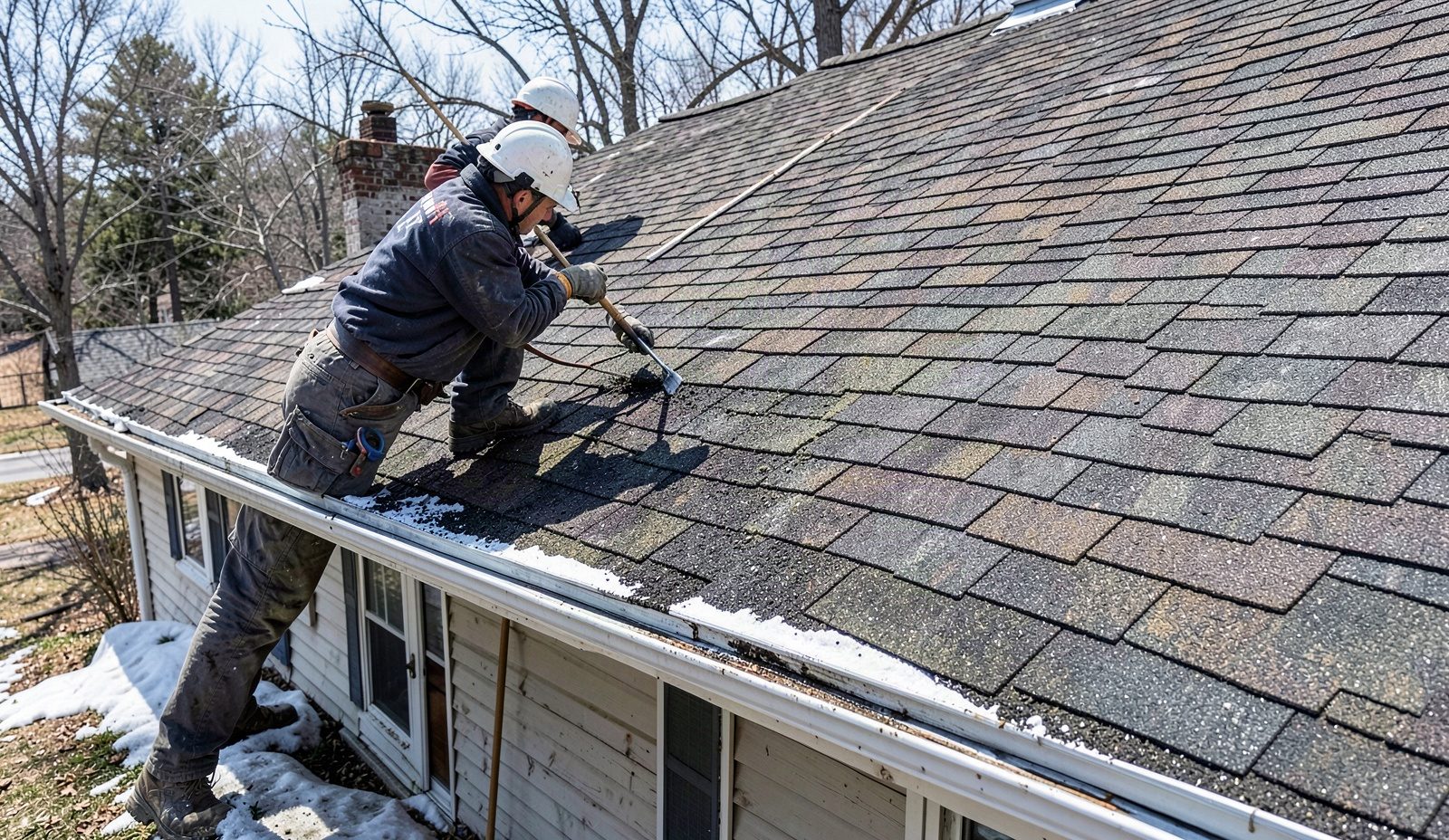
You call (614) 707-7333 and describe what you're seeing, granules in the gutter, bald patches, or a leak. A technician books a visit and walks the roof slope by slope on arrival, checking eaves, ridges, and valleys instead of relying on a ground-level look. They photograph any bald spots on shingles, measure how far the wear extends across each slope, and check the attic from below for existing water staining on the decking. You get a plain description of what they found before any discussion of repair options, so you know whether the loss is cosmetic or active.
Once you approve the written scope, the crew tarps the work zone and sets roof jacks on steep slopes before removing a single shingle. Damaged shingles get pulled course by course, the exposed underlayment gets checked for soft spots, and any deteriorated decking gets flagged before new shingles go down. Replacement shingles get fastened with the manufacturer's specified nail pattern and sealed at the self-adhering strip. You approve any change, such as added decking replacement, before it happens, so the scope you signed stays the scope you get.
They run a magnetic sweep across the yard and driveway for stray fasteners and check gutters for leftover granules and debris. You walk the site with the technician, review before-and-after photos of the repaired slope, and get a written record of what was replaced for your own file or an insurance claim. Any remaining questions get answered on the spot before the crew departs.
Full roof replacements and structural repairs need a permit pulled through the City of Columbus Department of Building and Zoning Services, while a like-for-like shingle patch on a small area of granule loss usually does not, though the final call belongs to that office. We pull permits when a job crosses into replacement territory and document the shingle line, underlayment, and ice barrier detail on the paperwork so the inspection matches what actually went on the roof. A contractor working outside Franklin County who assumes Columbus rules match their home jurisdiction risks a failed inspection or a stop-work order mid-project, which delays the homeowner far longer than the extra day it takes to confirm the requirement upfront.
Columbus housing stock spans postwar ranch homes with low-slope roofs to century-old two and three story houses with steep, cut-up rooflines and multiple valleys. Each roof geometry changes how granule loss shows up and how a repair crew accesses the damaged slope. A steep, older roofline needs roof jacks and toe boards set at every course, while a ranch home's shallow pitch lets a crew work off ladders and a single roof jack line. Knowing which houses in the metro carry original decking versus homes re-decked during a past reroof changes whether we expect plywood or older skip sheathing underneath, which changes the fastening pattern for the replacement shingles.
Storm-chasing crews that follow hail paths through Ohio for a season and then leave create a real risk for granule loss repairs specifically, because a rushed patch job that ignores the existing ice barrier or flashing detail often fails its next freeze-thaw cycle rather than its next storm. A crew unfamiliar with local permitting timelines can also leave a homeowner holding an unpermitted repair that complicates a future home sale or insurance claim. Call (614) 707-7333 to talk through what a compliant granule loss repair looks like for your specific roof before signing anything.
See curling or cupping shingles for how the related work is scoped and priced.
Permit and inspection questions? Building & Zoning Services is the office we coordinate with on every permitted Columbus job.
A technician schedules your inspection directly once you call, with most granule loss visits booked within the same week. Arrival comes with a two-hour window confirmed by text or call the morning of the visit. If a prior job runs long, we call ahead so you know before your window passes. Weather moves the schedule more than anything else, since sealing a shingle tab needs a dry deck and temperatures above freezing to bond correctly. A morning frost or an active storm cell over Franklin County can push a visit a few hours, always with a heads-up call.
We lay tarps along the drip line and against foundation plantings before any shingle comes off, so loose granules and old asphalt bits land on canvas instead of in the mulch or the gutter system. A magnetic roller sweeps the lawn and driveway for stray roofing nails once the work wraps, and every piece of torn-off shingle goes straight into a lined trailer rather than a pile at the curb. Gutters get a final rinse if granule buildup from the old shingles has settled in the runs. When we pull out, the yard, driveway, and gutters look the way they did before the truck arrived, minus the roof problem.
The estimate scales with how much of the roof needs attention and how hard it is to access. A single storm-bruised slope costs less to address than granule loss spread across every plane, and steep or cut-up rooflines with multiple valleys take longer to reach than a simple gable roof. Matching the existing shingle line, if the manufacturer still produces it, versus sourcing a close substitute also changes the material side of the job. We write the scope of work, including the shingle line and underlayment called out on it, before anything comes off the roof, and you approve that scope before the crew starts.
Every technician passes a background check before being scheduled on a homeowner's roof. New hires shadow a lead technician through a set number of granule loss and repair calls before working a roof alone, and that lead reviews their fastening pattern, flashing work, and cleanup before signing off on solo calls. Technicians also run through a refresher each time the Ohio Residential Code cycle updates, so a fastening detail or ice barrier requirement that changed does not get missed on an old assumption. Field competence gets checked on an actual roof before a solo assignment begins.
Some granule shedding is normal, especially on a new roof. Every asphalt shingle sheds a portion of loose factory granules during its first few rains as the self-sealing strip cures. What is not normal is heavy, ongoing granule loss years into a shingle's service life, especially loss concentrated in one spot on the roof. That pattern points to storm impact, an aging mat, or a ventilation problem baking the shingle from underneath, and it is worth a roof walk rather than a wait-and-see approach.
Coverage depends on what caused the granule loss, not the granule loss on its own. A policy with wind or hail coverage typically pays for storm-caused stripping if an adjuster documents impact marks and matching damage to gutters or downspouts. Granule loss from simple age or a roof nearing the end of its service life is treated as maintenance and usually falls outside coverage. Photograph the gutters and the shingle surface as soon as you notice the change, since that timestamp helps the adjuster separate storm damage from gradual wear.
Repair depends on whether the asphalt mat is showing through the granule layer. If only a light dusting of granules is gone and the mat underneath still looks dark and intact, a professional can often reseal the tab and monitor it. Once bare mat is visible across part of a shingle, that shingle needs replacing rather than patching, since sealant does not restore lost UV protection. Larger areas of exposed mat across a full slope usually call for replacing that slope with matching shingles instead of spot repairs.
Granule loss becomes a repair priority once bare mat shows through in patches you can see from ground level with the naked eye. A light scattering of loose granules in the gutter after a storm is common and not urgent on its own. Dark, shiny patches on the shingle face, or a shingle that feels sticky and soft in warm weather, mean the mat has lost its granule shield and is absorbing heat and UV directly. At that stage, waiting risks the mat cracking before the next reroof cycle.
Estimates start with a technician walking the roof rather than judging damage from photos or satellite images. The visit produces a written scope listing which shingles or slopes need replacement, the underlayment and flashing condition found underneath, and whether the existing shingle line is still available to match. You review that scope and approve it before any material gets ordered or work begins. Roofs with steep pitches, multiple valleys, or two layers of existing shingles typically take a longer assessment than a simple single-layer gable roof.
Cost depends on how much of the roof is affected and how hard that area is to access. A handful of storm-bruised shingles on an easy, low-slope roof costs far less to correct than granule loss spread across a steep roof with multiple valleys. Matching the original shingle brand and color, if it is still in production, versus sourcing a close substitute also shifts the material side of the number. Call a technician to walk the roof and get a specific written scope rather than guessing from a phone description.
Inspecting for granule loss yourself from a ladder is reasonable, but repairing it yourself carries real risk. Walking directly on a shingle roof to patch a spot compacts and dislodges more granules underfoot, especially on a warm day when the asphalt is soft. A ladder set at the wrong angle on uneven ground is the most common fall risk homeowners face on this kind of job. Store-bought roof sealant applied over bare mat also traps moisture rather than shedding it, which can accelerate the exact leak you are trying to prevent.
Compare the written scope line by line instead of the total price at the bottom. Check whether each quote names the actual shingle line and specifies flashing, ice barrier, and decking inspection as part of the job, or leaves those items vague. Ask whether the price includes full cleanup and a magnetic nail sweep of the yard, since some quotes bury that cost as an add-on later. A quote that spells out the fastening pattern and underlayment brand shows a contractor who walked your roof instead of estimating from the street.
Most granule loss inspections get scheduled within the same week of your call. Actual repair timing depends on weather, since sealing a shingle tab or setting a new self-adhering strip needs a dry deck and temperatures above freezing to bond correctly. Columbus's spring and fall storm pattern can push a scheduled repair a day or two if a slope is still wet from an overnight system. Storm-damage calls after a documented hail or wind event get priority scheduling ahead of routine wear inspections.
Columbus sits in a humid continental climate zone but outside the lake-effect snow belt, so winter roof stress comes from heavy, wet snow load and ice buildup rather than constant light lake snow. That wet snow packs onto lower-slope sections and around valleys, and as it melts and refreezes it drives ice-dam formation at the eaves, the same eaves where granule loss often shows up first. Roofing here falls under Columbus building code jurisdiction and the Ohio Residential Code, which shapes the underlayment and fastening choices we spec for a slope that is losing granules faster than the rest of the roof. Homes in the Victorian Village and Italian Village areas, many built with steep, cut-up rooflines and narrow valleys, trap that wet snow longer than a simple gable roof, one reason granule wear on those homes often concentrates near valley metal rather than spreading evenly across the roof field.
Trust in this trade gets built roof by roof in a metro this size. A repair crew that consistently pulls the right permit for a full replacement and skips the paperwork for a genuine like-for-like patch earns the kind of word-of-mouth that carries from a Brewery District rowhouse to the next referral three blocks over. Suburbs and townships surrounding Columbus, across the wider Franklin County area, often route similar permits through their own local building departments rather than the city office, and a crew working across that boundary needs to confirm the correct office before starting work. That local knowledge matters more on a granule loss job than it looks, because an inspector checking a partial reroof wants to see the underlayment and ice barrier detail match the code cycle currently active in that jurisdiction.
Explore our service area and locate Cornerstone Roofing Columbus with ease. We're proudly local and serve the surrounding neighborhoods with fast response and honest pricing. Use the map to check our coverage area, or call us and we'll confirm in seconds.
Address:
Cornerstone Roofing Columbus, 1015 E Broad St, Columbus, OH 43205
How Much Does a Roof Replacement Cost in Columbus? 2026 Pricing Breakdown, practical local guidance from Cornerstone Roofing Columbus, Colum…
Read More
Commercial Roof Maintenance Tips for Columbus Property Managers, practical local guidance from Cornerstone Roofing Columbus, Columbus's trus…
Read More
Skylight Leaks in Victorian Village Homes, Repair or Replace?, practical local guidance from Cornerstone Roofing Columbus, Columbus's truste…
Read More
The Best Time of Year to Replace a Roof in Columbus, practical local guidance from Cornerstone Roofing Columbus, Columbus's trusted roofing …
Read More