

April 1, 2025
How Much Does a Roof Replacement Cost in Columbus? 2026 Pricing Breakdown
How Much Does a Roof Replacement Cost in Columbus? 2026 Pricing Breakdown, practical local guidance from Cornerstone Roofing Columbus, Colum…
Read More




Curling shingle edges along a south-facing slope. Granules piling up in the gutter after every downpour. A brown ring spreading across a bedroom ceiling two days after a storm. None of that is cosmetic. It is physical proof the roof covering has stopped shedding water the way it did when it was installed. In the older sections of German Village, Victorian Village, and Italian Village, where original decking often sits under two or three shingle layers laid down over decades, this shows up as a soft spot near a chimney or a dark stripe below a valley.
Central Ohio runs through roughly 40 to 60 freeze-thaw cycles every winter. Water gets into a nail hole or a cracked shingle mat, freezes overnight, expands, and widens the crack by morning. This region is not a lake-effect snow zone, so the damage builds slowly through repeated freeze-thaw stress rather than one dramatic dump of snow. Flashing splits at the same rate. A strip of step flashing that looked fine in October can show a hairline gap by February, and that gap is where the next thaw sends water into the wall cavity instead of the gutter.
Homeowners comparing metal vs asphalt lifespan side by side often assume the choice is only about how long the material lasts. It is really about how the material responds to this specific freeze-thaw cycle year after year. A shingle roof degrades in a fairly predictable curve: granule loss accelerates, then leaks start at penetrations. A metal roof fails differently, usually at fastener backout or sealant breakdown at panel laps, not across the whole field at once. Anyone asking is metal roofing worth it for a Columbus house needs an answer built around that failure pattern, not a national average.
Waiting rarely stops at a cosmetic problem. A cracked shingle that lets water track under the mat for one winter becomes saturated decking by the second. Saturated decking loses its ability to hold a nail, which means the next wind event pulls more shingles instead of a few. On a metal roof, an unaddressed fastener backout lets water travel along the underside of the panel to the nearest seam, then down into the insulation. Either way, a shingle or metal roof comparison done before the damage spreads costs far less time and disruption than one done after a ceiling stain forces the issue.
See energy-efficient roofing guide for how the related work is scoped and priced.
Communities like r/Roofing are a good reality check on pricing and practices before you sign anything.
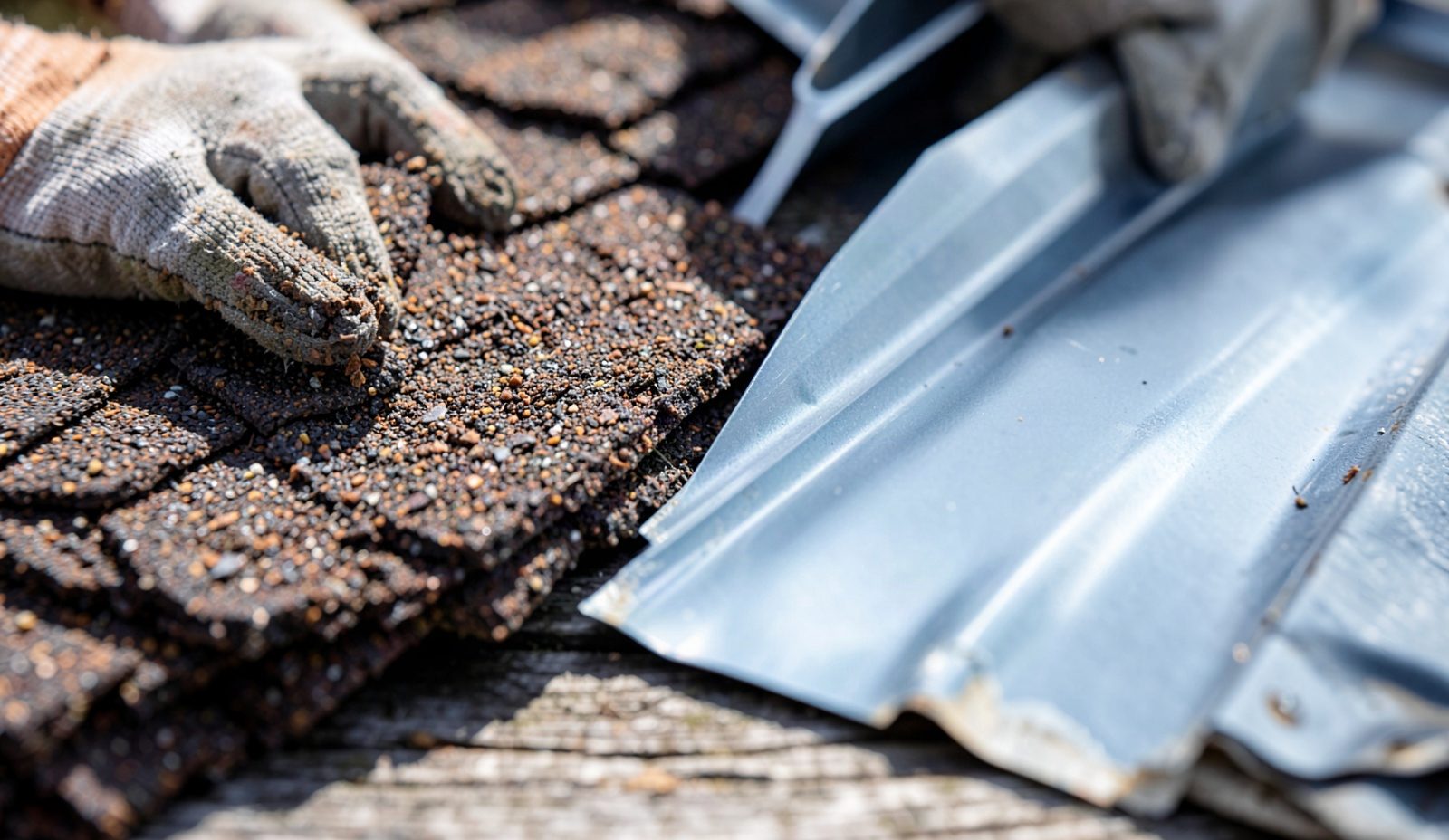
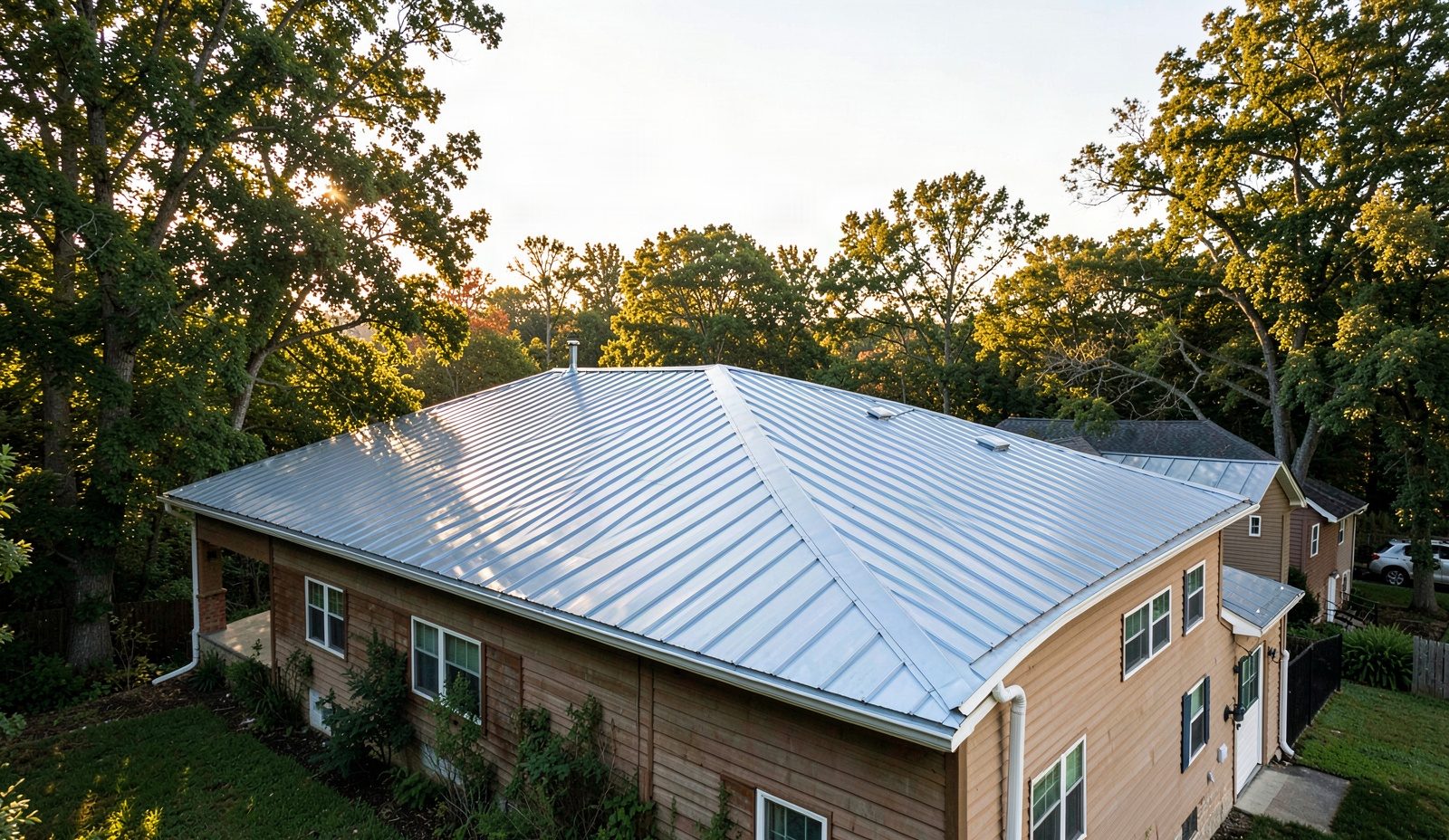
Every metal vs. shingle roofing call starts with a deck check, not a material pitch. A technician presses the tip of a flat screwdriver into the decking at the eaves, at valleys, and around penetrations. Sound plywood resists the point. Decking that has taken on water gives with almost no pressure and sometimes lets the screwdriver sink half an inch before it stops. That single test decides whether re-decking is part of the scope before either material gets discussed, because no covering, metal or shingle, performs on rotten sheathing.
Product comparison happens with real numbers, not brand names picked at random. An architectural shingle line like GAF Timberline HDZ carries a wind rating around 130 mph when installed to spec and typically runs 25 to 30 years of realistic service life in this climate. A 24-gauge standing seam steel panel system carries wind ratings well above 140 mph with hidden clips and can run 40 to 70 years before the finish needs attention. Steel also weighs far less per square than a multi-layer shingle roof, which matters on older Columbus framing that was never engineered for a second tear-off layer. Those weight and wind numbers, not opinion, drive the recommendation.
On every asphalt shingle job, we verify the ice barrier against Section 905.1.2 of the Ohio Residential Code, which requires it to extend from the lowest roof edge to at least 24 inches inside the exterior wall line, using a self-adhering polymer-modified bitumen sheet or two cemented underlayment layers. A tape measure run from the eave up the slope confirms that 24-inch line lands past the interior wall plane, not just past the fascia. Summer thunderstorms in this region also bring hail and straight-line wind, which is why every inspection includes a check for bruised shingle mats and dented pipe boots before we sign off on a repair scope. On metal jobs, a magnetic thickness gauge confirms panel gauge matches the quote, and a torque check on exposed fasteners catches backout before it becomes a leak point.
Our page on asphalt shingle roofing covers that side of the work in more depth.
Permit and inspection questions? Building & Zoning Services is the office we coordinate with on every permitted Columbus job.
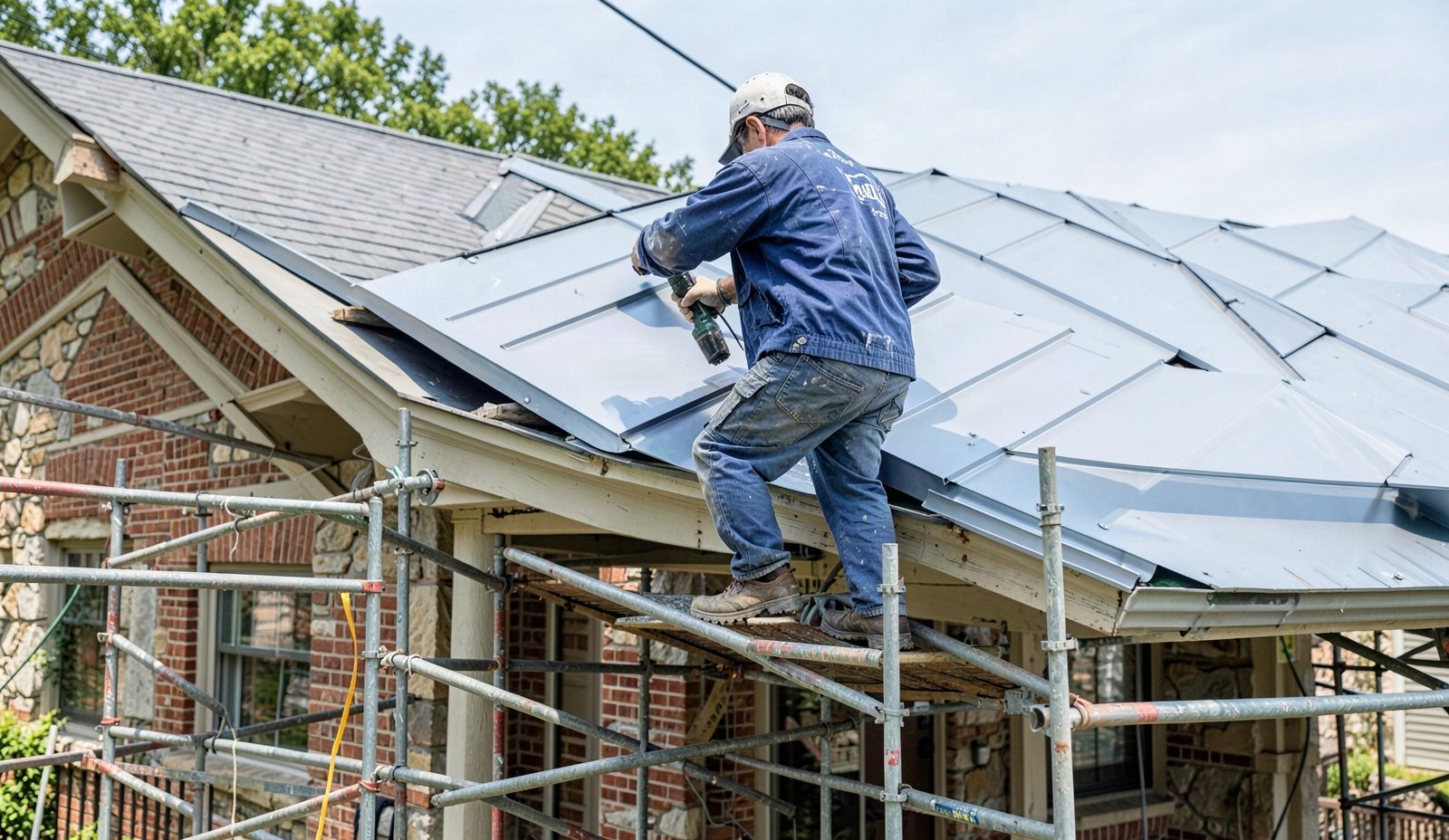
You call (614) 707-7333 and describe what you're seeing, a stain, curling shingles, a rusted valley. A technician schedules a visit and arrives with a moisture meter, a screwdriver for deck probing, and a tape measure. On the roof, they check the deck at eaves and valleys, inspect flashing and penetrations, and measure the existing pitch and square footage. You get a walk-through of what they found, in plain language, with photos of any problem areas before any material recommendation gets made.
Once you approve the written scope, the crew protects landscaping and gutters, then begins tear-off or panel layout depending on the system chosen. Rotted decking gets replaced and documented with photos before new material goes down. Ice barrier placement, underlayment, and flashing sequencing follow the code requirements confirmed during the assessment. If something unexpected turns up, like additional rotted sheathing under a valley, work pauses and you approve the adjusted scope before it continues.
Before the crew leaves, a lead installer checks fastener torque on metal panels or nail placement on shingles, confirms flashing laps are sealed, and runs the magnetic sweep for debris. You get a walk-through covering what was replaced, what was repaired, and photos of the completed work for your records. Any decking replacement or code-related upgrade, like added ice barrier coverage, gets documented in writing for your files or your insurer.
Roofing in this city falls under the Ohio Residential Code, and a full metal or shingle replacement, along with structural repairs, generally needs a permit pulled through the City of Columbus Department of Building and Zoning Services for city addresses, or the local building department for surrounding Franklin County jurisdictions. A minor like-for-like shingle repair usually does not trigger that requirement, but the permit authority makes the final call, not the contractor. An installer who skips this step on a full tear-off leaves the homeowner holding an uninspected roof that can complicate a future sale or an insurance claim.
Columbus housing stock spans a wide range in a short drive: postwar bungalows with 4-in-12 pitches, mid-century ranches with wider eaves, and newer subdivisions with steeper trusses built for architectural shingle profiles. Each roof pitch changes how metal panel seams are laid out and how much ice barrier coverage the code actually requires at the eave. An out-of-area crew unfamiliar with these pitch variations tends to apply a single template to every roof, which is how undersized ice barrier coverage or mismatched panel spans end up on a Columbus house.
Hiring a crew without local jurisdiction knowledge carries a real cost beyond the roof itself. A permit skipped on a structural tear-off can surface during a home inspection years later, and an ice barrier installed short of the required coverage only becomes obvious after the first ice-dam winter, when water backs up under the shingle field. Call (614) 707-7333 to talk through which system fits your roof's pitch, framing, and the code requirements that apply to your specific address.
If this sounds close but not quite your situation, commercial metal roofing may be the better starting point.
Our crews work to the installation standards of the National Roofing Contractors Association.
Booking starts with a phone call, not a form. You get a specific arrival window for the day of your visit, generally a two-hour block, confirmed the day before by phone or text. If a prior job runs long or weather pushes a metal panel installation, the office calls before your window starts, not after, and offers the next available slot instead of leaving you guessing. Storm season in Columbus, typically late spring through summer, tends to compress availability, so booking a shingle repair or a metal roof assessment a few days ahead keeps your options open rather than waiting for an opening after the next round of hail.
Landscaping and siding near the work area get covered with tarps before the first shingle or panel comes off, and a magnetic sweep runs the driveway and lawn at the end of each work day to pull loose nails and screws before anyone walks or drives over them. Old shingles, underlayment, and any rotted decking go straight into a dedicated trailer or dumpster, never staged in a pile overnight. Gutters get cleared of debris that falls during tear-off. When the crew leaves for the day, the yard looks like work happened on the roof, not in the yard.
Your written quote reflects the roof in front of us: square footage, pitch, number of penetrations, layers of existing material, and decking condition found during the screwdriver check. A steep or high roofline that needs additional fall protection costs more in labor than a simple single-story ranch. Panel gauge and finish for metal, or shingle line and wind rating for asphalt, are itemized separately so you see exactly what each choice adds. Nothing starts until you approve that written scope, and any change discovered mid-project, like rotted decking under a valley, gets a separate approval before we proceed.
Every technician working a roof solo has passed a documented field evaluation covering fastening patterns, flashing sequencing, and current Ohio Residential Code requirements, repeated as code cycles update. Background checks run before anyone is scheduled onto a residential property. New hires shadow a lead installer through several full jobs, including both shingle and metal scopes, before working unsupervised. Site leads carry photo identification and can walk you through exactly what step of the process is happening and why, in plain terms, whenever you have a question during the visit.
Insurers do not universally prefer one material. Most carriers weigh the impact-resistance rating and wind rating of the specific product installed, not just whether it is metal or asphalt. A Class 4 impact-rated shingle or a standing seam metal panel can both qualify for similar underwriting treatment. Ask your carrier which rating classifications affect your specific policy in Franklin County before assuming either material carries an automatic advantage.
Shingle roofing generally costs less to install upfront than metal roofing on the same house. That gap narrows over the life of the roof because a standing seam metal system typically outlasts an asphalt shingle roof by several decades, spreading the higher upfront cost over more years of service. The right comparison weighs installed cost against expected years of service, not the install price alone. Call to review both scopes side by side for your roof.
Some insurers reduce premiums for metal roofing, but the discount depends on the carrier and the specific product's impact and wind ratings, not the material category alone. A standing seam panel with a high wind rating may qualify for a larger discount than a lower-grade metal product. Confirm the exact discount structure with your insurance agent, since Cornerstone Roofing Columbus can supply the panel specification sheet an underwriter needs but does not set insurance pricing.
Estimates start with a scheduled on-site visit, not a phone quote. A technician inspects the deck, measures the roof, and documents existing conditions, then delivers a written itemized quote, typically within a day of that visit, breaking out material, labor, and any decking replacement separately. You review and approve that scope before any work is booked. Call (614) 707-7333 to schedule the assessment that starts this process.
Scheduling typically runs one to two weeks outside of storm season for a standard assessment and quote. That window can extend during peak spring and summer months, when hail and wind events across Franklin County push more homeowners to book repairs at once. Roofs with active leaks get prioritized ahead of cosmetic assessments. Calling as soon as you notice a problem keeps you ahead of that seasonal backlog rather than behind it.
Cost depends on roof size, pitch, decking condition, and the specific shingle line or metal gauge chosen, not a flat per-square rate. Shingle roofing usually runs less upfront, while metal roofing costs more initially but spreads that cost over a longer service life given the freeze-thaw cycling common in Franklin County winters. A site visit produces an itemized written quote reflecting your specific roof rather than a regional average. Call to schedule one.
Heavy wet snow followed by a hard freeze is the pattern that causes the most roof damage in this region, not raw snow volume. Snow melts against warmer attic air, refreezes at the cold eave, and backs water up under the shingle field, an ice dam. Older housing stock near Short North and Clintonville, much of it built before modern attic insulation standards, tends to run warmer at the roofline and sees this more often than newer construction. Rowhouses in the Brewery District, with shared walls and tight eaves, face a related problem: ice buildup has nowhere to shed except toward a neighbor's gutter line, which changes how flashing and drip edge get detailed on a shared roof plane.
Roofing work in this city gets inspected against a code that assumes Ohio winters, not a generic national standard, which is why an installer working here needs to know the ice-dam mechanics of a Columbus roof, not just how to nail a shingle course. A crew that treats every house the same, regardless of attic ventilation or eave detailing, tends to under-build the exact areas that fail first once temperatures swing below freezing. Homeowners in these older, tightly built neighborhoods benefit from a technician who has already seen how a shared wall or a low-slope porch roof behaves through a Columbus winter, because that experience shows up in where the flashing gets extended and how the eave detail gets built, not in a brochure.
Explore our service area and locate Cornerstone Roofing Columbus with ease. We're proudly local and serve the surrounding neighborhoods with fast response and honest pricing. Use the map to check our coverage area, or call us and we'll confirm in seconds.
Address:
Cornerstone Roofing Columbus, 1015 E Broad St, Columbus, OH 43205
How Much Does a Roof Replacement Cost in Columbus? 2026 Pricing Breakdown, practical local guidance from Cornerstone Roofing Columbus, Colum…
Read More
Commercial Roof Maintenance Tips for Columbus Property Managers, practical local guidance from Cornerstone Roofing Columbus, Columbus's trus…
Read More
Skylight Leaks in Victorian Village Homes, Repair or Replace?, practical local guidance from Cornerstone Roofing Columbus, Columbus's truste…
Read More
The Best Time of Year to Replace a Roof in Columbus, practical local guidance from Cornerstone Roofing Columbus, Columbus's trusted roofing …
Read More