

April 1, 2025
How Much Does a Roof Replacement Cost in Columbus? 2026 Pricing Breakdown
How Much Does a Roof Replacement Cost in Columbus? 2026 Pricing Breakdown, practical local guidance from Cornerstone Roofing Columbus, Colum…
Read More




You notice it first in the gutters. Black, sand-like granules pile up after a hard rain, and a shingle edge near the ridge has started to curl up like a dry leaf. Inside, there is a faint musty smell in the upper closet that was not there last fall. These are the signals homeowners search for when they build a diy roof inspection checklist, and they almost always point to a roof that has been through more freeze-thaw stress than it can absorb.
Central Ohio's humid continental climate runs roughly 40 to 60 freeze-thaw cycles every winter. Water gets into a hairline crack in a shingle or a bead of old flashing sealant, freezes, expands, and pries the material apart a little more each cycle. Add in summer thunderstorms that bring hail and straight-line wind, a common cause of bruised or fractured asphalt shingles and torn roof penetrations, and a Columbus roof takes damage from two directions in a single calendar year.
Housing stock matters too. In Clintonville, mature tree canopy drops branches and abrasive debris onto roofs that are often thirty to fifty years old, accelerating granule loss on aging three-tab shingles. In German Village, brick rowhomes with tight roof lines and older plank decking show different symptoms: gaps between boards let attic air escape, fogging the underside of the roof deck and softening it from below, not from storm damage above. A seasonal roof inspection list has to account for both wear patterns, not just the obvious one.
Ignoring either pattern has a predictable timeline. A curled shingle edge becomes a lifted shingle in the next windstorm. A soft spot in decking becomes a spongy step-through hazard within a year or two. Attic moisture that condenses instead of venting rots roof sheathing from the inside, and by the time a stain shows on a bedroom ceiling, the insulation underneath has likely been wet for months. None of this reverses itself. It only spreads.
Our page on how long does a roof last covers that side of the work in more depth.

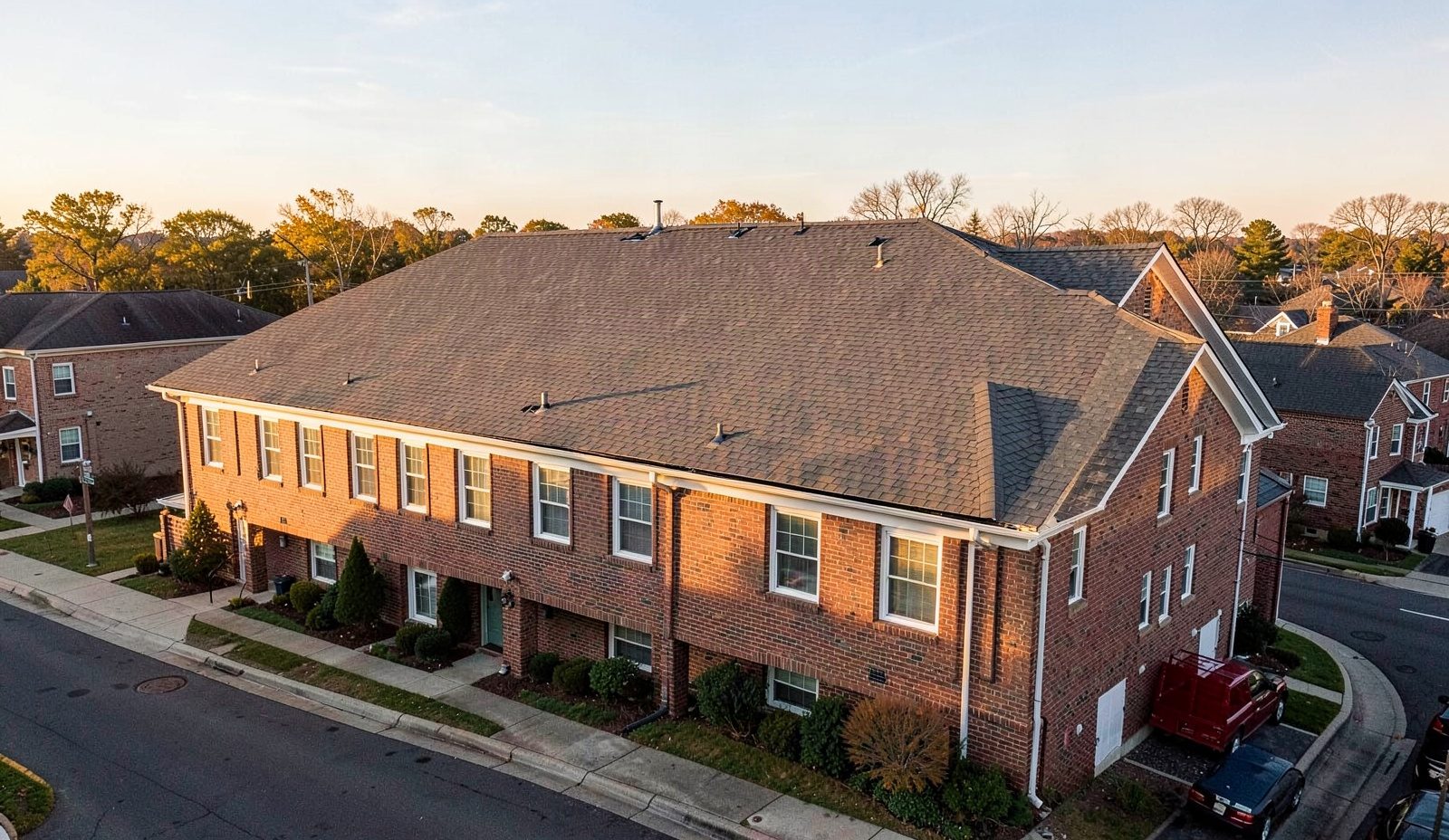
A roof inspection checklist means nothing if the person running it cannot tell you why an item passed or failed. On every visit, the technician starts on the ground with binoculars to map the roof plane, then moves to a ladder for hands-on roof inspection points: ridge cap fastening, valley wear, pipe boot cracking, and step flashing at every wall intersection. This is what roof inspectors look for that a homeowner glancing up from the driveway will miss: hairline cracking at the base of a boot, or a step flashing piece that has backed out a quarter inch from years of thermal movement.
Where soft decking is suspected, the technician probes the plywood or plank substrate with a flathead screwdriver at the eave and around any stained area. Firm decking resists the point with almost no give. Decking that lets the screwdriver sink or twist without resistance has lost structural integrity and needs replacement, not a patch. A pin-type moisture meter reading above roughly 17 percent on OSB decking confirms trapped moisture even before rot is visible to the eye. At the eave and valley, the technician checks for compliance with Section 905.1.2 of the Ohio Residential Code, which requires an ice barrier extending at least 24 inches inside the exterior wall line on asphalt shingle roofs, made of two cemented underlayment layers or a self-adhering polymer-modified bitumen sheet. A roof missing this barrier is flagged regardless of how the shingles above it look.
Shingle brand and line matter for what a technician expects to see at a given age. GAF Timberline HDZ carries a 130 mph wind rating tied to its LayerLock nailing strip, and a HDZ roof showing scattered tab loss below that wind threshold usually means an installation defect, not just age. Owens Corning Duration relies on a SureNail strip fabric band instead of a standard adhesive strip, and it typically shows a different failure pattern: edge lifting along the drip edge before granule loss becomes visible. Knowing which system is on the roof changes what the inspection treats as normal wear versus a warning sign.
Permit and inspection questions? Building & Zoning Services is the office we coordinate with on every permitted Columbus job.
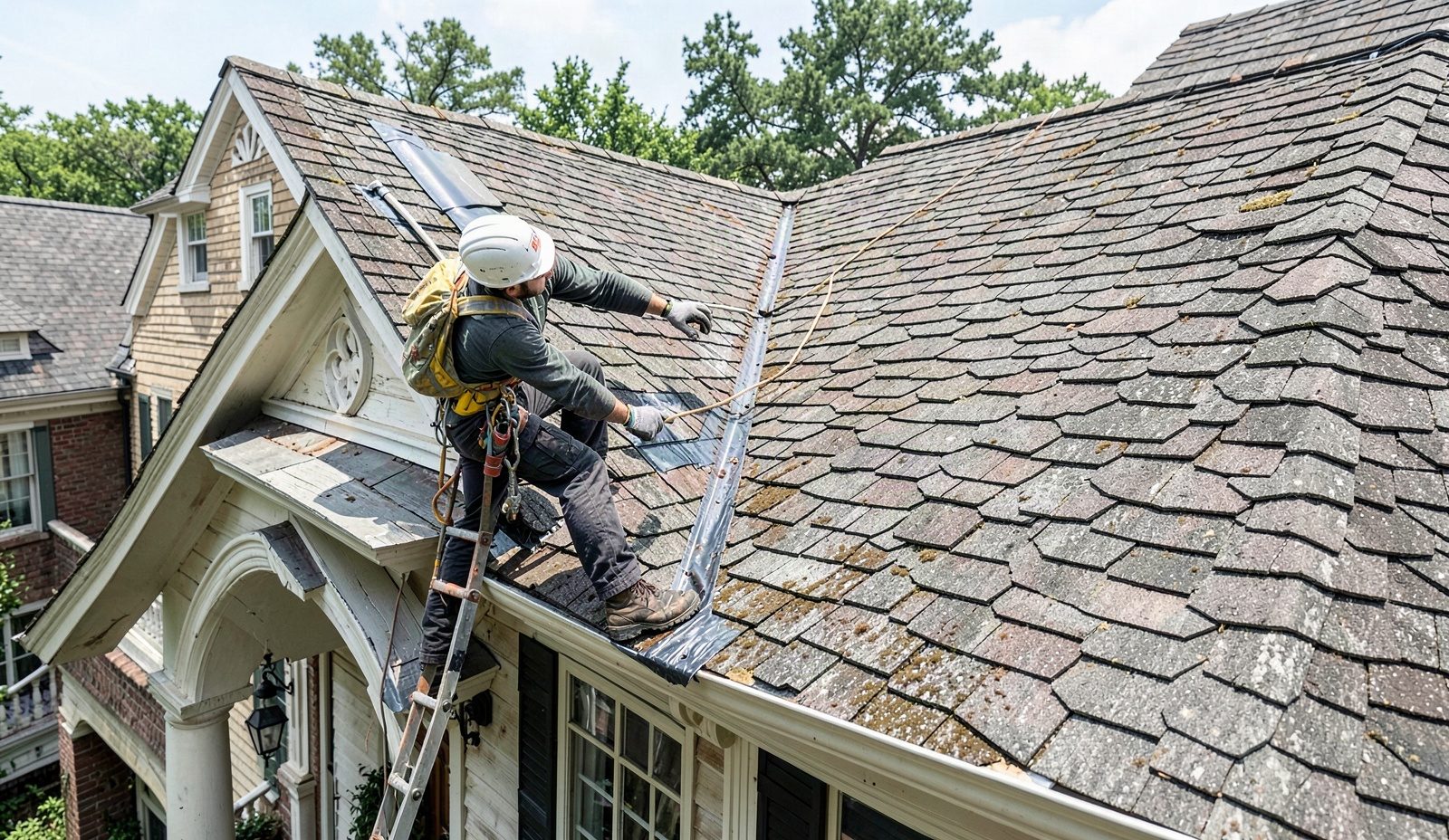
You call and describe what you are seeing, whether that is a stain on a ceiling, granules in the gutter, or a scheduled seasonal check. The technician arrives in the confirmed window and starts on the ground, walking the perimeter with binoculars to map roof planes, valleys, and any visible sagging before ever setting a ladder. This ground pass also flags obvious storm damage: bruised shingles, torn ridge caps, or a downspout packed with granules that suggests active shingle breakdown above.
The technician moves onto the roof and works the full checklist: flashing at every penetration, valley condition, ridge fastening, attic ventilation from inside if access allows, and decking firmness at eaves and any stained areas using probe and moisture meter readings. Every finding gets photographed and logged with a location and severity note. If the inspection turns up repair needs, you get a written scope before any material is ordered or any work begins, so you are approving specifics, not a placeholder number.
Before leaving, the technician reviews the checklist findings with you directly, pointing out anything photographed so you can see it, not just read about it. Moisture readings, ice barrier placement at the eave, and any code-relevant items are confirmed and noted in the final report. You receive that documentation for your own records or for an insurance adjuster, and the technician answers questions about what is urgent versus what can be monitored on next year's seasonal check.
Roofing in Columbus falls under Columbus building code jurisdiction, and the underlying rules come from the Ohio Residential Code. A technician who does not routinely work in Franklin County will not automatically know which items on a checklist are code triggers versus cosmetic notes, and that gap shows up later when a homeowner files an insurance claim or applies for a permit on a full replacement.
Columbus has a wide range of roof ages and framing styles, from postwar rafter-and-plank construction to newer engineered truss systems, and each responds differently to ventilation problems and snow load. A technician who only works in one type of subdivision tends to misread the other. Someone trained mainly on new-construction trusses can miss a sagging ridge on an older plank roof that is actually a structural issue, not a cosmetic dip.
Permitting adds another layer non-local operators often get wrong. Full roof replacements and structural repairs typically require a permit, while minor like-for-like repairs often do not, and the final call always belongs to the permit authority, not the contractor. An inspection report that misclassifies the scope of work can send a homeowner into a permit application that gets rejected, or worse, into an unpermitted structural repair that complicates a future home sale.
Cornerstone Roofing Columbus technicians document every checklist finding with photos and measurements tied to the specific code provisions and manufacturer specifications that apply, so the report can stand on its own if a homeowner needs it for an insurance adjuster, a real estate closing, or a permit office review. Call (614) 707-7333 to talk through what a documented inspection would cover on your specific roof.
More detail on diy vs. professional roof repair is on its own page.
Our crews work to the installation standards of the National Roofing Contractors Association.
You call (614) 707-7333 and get a real arrival window, not a vague day-of-week promise. Most inspection visits are scheduled within a few business days, sooner if you describe active leaking or storm damage on the call. The technician calls or texts before arrival so someone can be home, and if weather pushes the appointment (heavy rain or ice makes roof walking unsafe), the office calls to reschedule rather than leaving you guessing. You get a specific arrival window the morning of the visit, not an all-day placeholder.
The technician parks to avoid blocking driveways and lays a tarp or drop cloth at ladder contact points to protect landscaping and siding. Any dislodged granules, old sealant chips, or loose flashing pieces removed during the inspection get bagged on site, not left in the yard or gutter line. A magnetic sweep of the ground checks for stray fasteners after any hands-on probing near the roof edge. When the visit ends, the property looks the way it did when the truck pulled up, aside from any tarps still drying out debris from the roof itself.
Four things move the number on any follow-up repair estimate: roof size and pitch, access difficulty (a two-story roof over a finished addition costs more labor time than a single-story ranch), the material already installed, and how much of the roof shows active deterioration versus isolated wear. After the inspection, you get a written scope describing exactly what was found and what each repair line item addresses. Nothing gets ordered or scheduled until you approve that written scope. There is no invoice surprise between the inspection and any repair work you decide to move forward with.
Technicians go through a background check before they are assigned to any Columbus route. Training continues on the current residential code cycle, not a one-time onboarding session, because code references and manufacturer installation specs change over time. Before a technician handles inspections solo, a senior technician reviews their checklist documentation and field photos on a set number of paired visits to confirm they are correctly identifying deck softness, flashing failure, and ventilation problems, not just checking boxes.
A full roof inspection covers shingle condition, flashing at every penetration, decking firmness, attic ventilation, and gutter and downspout function. Cornerstone Roofing Columbus technicians also check ridge cap fastening and valley wear, two spots that fail early on Columbus roofs due to repeated freeze-thaw movement. Every item gets logged with a photo and a pass or fail note, not just a general impression, so you receive a specific record rather than a verbal summary.
Cost depends on roof size, pitch, and how many stories the ladder has to reach, not a flat statewide rate. A steep, multi-story roof with several penetrations takes longer to inspect thoroughly than a simple single-story ranch. Cornerstone Roofing Columbus can walk through what factors apply to your specific roof over the phone at (614) 707-7333 before anyone arrives on site.
The highest-priority items are pipe boot cracking, ridge cap fastening, valley wear, and gutter apron condition. Pipe boots dry out and split faster than the surrounding shingles, and a cracked boot is one of the most common sources of a slow ceiling leak that takes months to show a visible stain. Checking these four items first tells a technician quickly whether the rest of the roof needs a closer look.
Yes, a basic homeowner roof check guide covers what you can safely see from the ground or attic. Walk the exterior with binoculars and look for missing or curled shingles, check gutters for granule buildup after rain, and check the attic on a bright day for visible light coming through the roof deck. Walking the roof surface itself, checking flashing seals, or probing decking for softness are jobs better left to a technician with the right tools and fall protection.
No, an inspection itself does not require a permit because it is a visual and diagnostic assessment, not construction work. Permits come into play once repair or replacement work begins, and the City of Columbus Department of Building and Zoning Services makes that determination for Columbus addresses, with the local building department or Franklin County handling other jurisdictions. Cornerstone Roofing Columbus can tell you during the inspection whether any findings would trigger a permit application.
Cost varies with roof size, age, and how many features like skylights or chimneys need individual checking, so there is no single flat rate. An older home with a complex roofline in a district with multiple roof planes takes more time to inspect than a straightforward newer build. Calling (614) 707-7333 gets you a direct answer based on your address and roof description before any visit is scheduled.
Roof age and construction style vary block by block across Columbus in ways a generic checklist misses. Short North has converted rowhouses with shared roof lines and party-wall flashing details that need individual attention where two roof planes meet. Victorian Village still has homes with slate remnants under asphalt overlays from earlier reroofing jobs, which changes how much weight the original rafters were designed to carry. Italian Village's narrow-lot homes often have tight eave overhangs that limit ladder access, and the Brewery District has industrial buildings converted to residential and mixed use with sections of low-slope membrane roofing next to standard shingle sections on the same structure. Each of these conditions changes what a thorough inspection has to check and how a repair plan gets sequenced.
Design guidelines in some of Columbus's historic districts can restrict visible material choices, such as shingle color or profile, even though the underlying structural code requirements apply the same way citywide. That distinction matters when planning a repair or replacement in these neighborhoods: the roofing material itself may face review even when the repair method does not require special permitting treatment beyond the standard process. Community trust in this kind of work comes from documentation that a homeowner, a historic review board, or a future buyer can all read the same way: dated photos, measurements, and a clear description of what was found and what was done about it.
Explore our service area and locate Cornerstone Roofing Columbus with ease. We're proudly local and serve the surrounding neighborhoods with fast response and honest pricing. Use the map to check our coverage area, or call us and we'll confirm in seconds.
Address:
Cornerstone Roofing Columbus, 1015 E Broad St, Columbus, OH 43205
How Much Does a Roof Replacement Cost in Columbus? 2026 Pricing Breakdown, practical local guidance from Cornerstone Roofing Columbus, Colum…
Read More
Commercial Roof Maintenance Tips for Columbus Property Managers, practical local guidance from Cornerstone Roofing Columbus, Columbus's trus…
Read More
Skylight Leaks in Victorian Village Homes, Repair or Replace?, practical local guidance from Cornerstone Roofing Columbus, Columbus's truste…
Read More
The Best Time of Year to Replace a Roof in Columbus, practical local guidance from Cornerstone Roofing Columbus, Columbus's trusted roofing …
Read More