

April 1, 2025
How Much Does a Roof Replacement Cost in Columbus? 2026 Pricing Breakdown
How Much Does a Roof Replacement Cost in Columbus? 2026 Pricing Breakdown, practical local guidance from Cornerstone Roofing Columbus, Colum…
Read More




Stand under the attic hatch on an August afternoon and you can feel it before you see it, a wave of heat pressing down that no window fan touches. The upstairs bedroom stays four to eight degrees warmer than the rest of the house no matter how long the air conditioner runs, and the compressor short-cycles trying to keep up. Homeowners in Clintonville bungalows and Victorian Village foursquares describe the same thing every summer, a hot ceiling, a musty asphalt smell drifting down through the attic hatch, and a power bill that climbs before the calendar even hits July.
The root cause sits right on the roof deck. Dark three-tab shingles installed during 1990s reroofs absorb far more solar heat than lighter architectural shingles built with cool roof shingles technology. Without cool colors or a reflective coating, that heat transfers straight through the decking into attic insulation, then radiates down into living space. Homes that never upgraded to energy efficient roof colors or added a reflective layer are paying for that dark roof twice, once at installation and again every summer in cooling load.
Columbus's climate compounds the problem year round. Central Ohio runs through roughly 40 to 60 freeze-thaw cycles each winter, and while this metro sits outside any lake-effect snow band, those repeated freeze-thaw swings still crack aging shingle mat and split flashing seams at chimneys and dormers. Summer brings the other half of the damage cycle, thunderstorms that carry hail and straight-line wind strong enough to bruise shingle mat and open small penetrations around vent boots. Narrow original soffits on older Clintonville and Victorian Village homes already limit intake airflow, so once shingles crack or flashing splits, heat and moisture have almost nowhere to escape.
Waiting compounds the loss. Cracked shingles shed granules faster, which drops solar reflectance further and pushes attic temperatures higher. Split flashing lets moisture into the insulation layer, and wet insulation loses R-value, so the furnace and air conditioner both work harder for the same result. Left long enough, the deck itself absorbs moisture and begins to soften, turning what could have been a coating or color upgrade into a full tear-off. None of that helps a monthly bill that was already too high, or a roof that was never built to lower energy bills in the first place.
More detail on insurance claim guide for roof damage is on its own page.

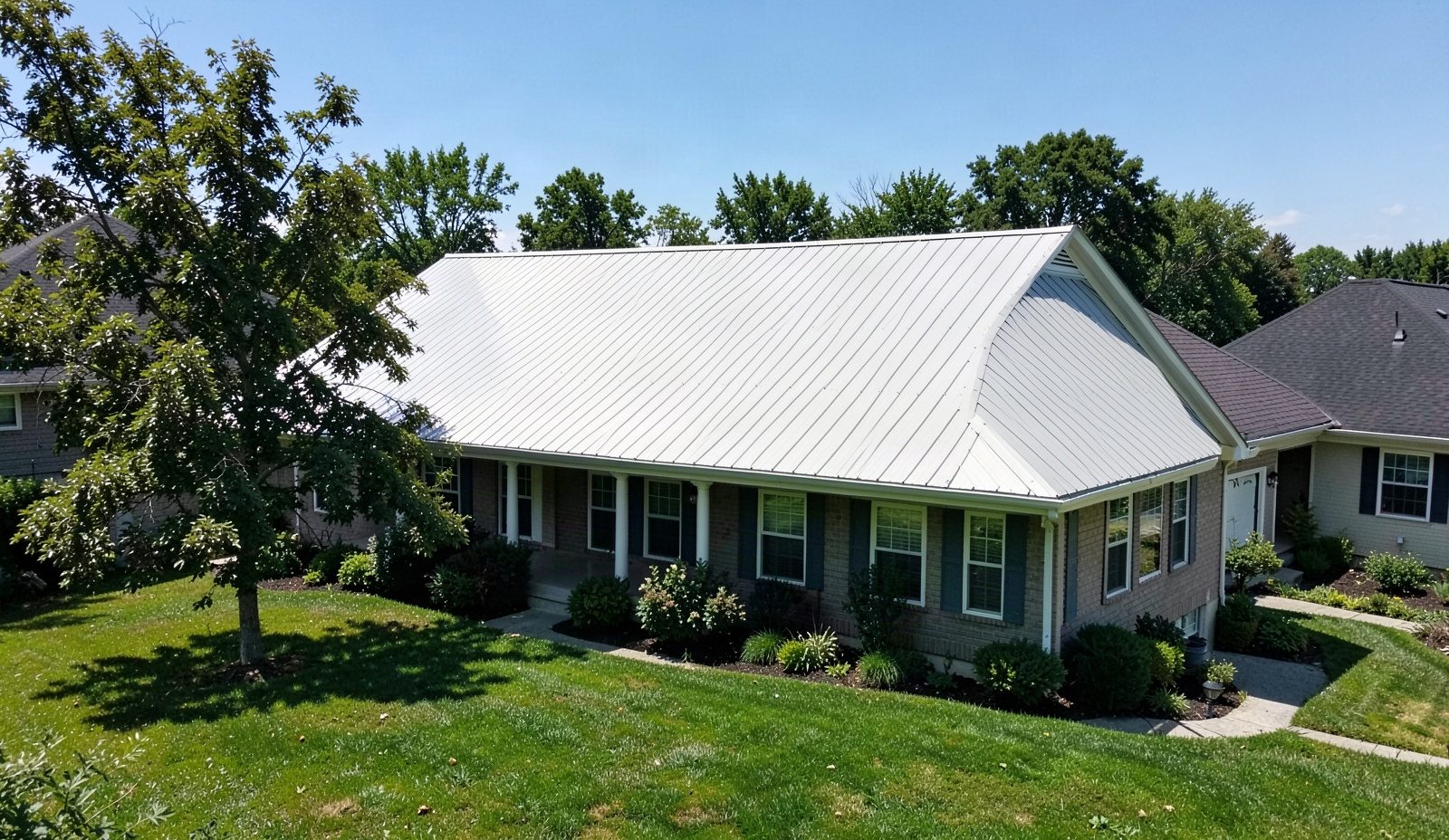
The first tool on the roof is a noncontact infrared thermometer, not a sales brochure. A technician takes a surface reading on the sun-exposed slope, then a second reading on a shaded reference area of the same material. A gap of 20 degrees Fahrenheit or more between those two spots tells us the shingle surface has lost most of its solar reflectance and is driving excess heat into the deck. Inside the attic, a moisture meter checks the underside of the decking near the eaves, and a flashlight sweep over the insulation looks for compression or dark staining that signals past moisture intrusion. At the eave edge, we pull back a section of drip edge trim to confirm the ice barrier extends at least 24 inches inside the exterior wall line, the minimum required under Section 905.1.2 of the Ohio Residential Code. A short or missing ice barrier lets meltwater reach the insulation, and wet insulation loses R-value long before anyone notices a leak.
Material selection comes down to numbers, not marketing copy. CertainTeed Landmark Solaris shingles use cool-color granule technology rated for higher solar reflectance while keeping the same 240-pound-per-square weight and 110 mph nail-pattern wind rating as the standard Landmark line. GAF's Timberline HDZ Reflector Series takes a similar approach with a StainGuard granule blend and a comparable wind rating, but a slightly heavier per-square weight that matters on older rafter framing. For flat porch roofs and dormer additions common on Victorian Village homes, a reflective coating often outperforms a reroof on cost per square foot of protection. GacoRoof's 100 percent silicone coating holds its reflectance longer under standing water than Henry 887 acrylic elastomeric, but Henry 887 bonds better to a granulated asphalt substrate without a primer coat, which changes labor time more than material cost.
Energy Star's steep-slope roofing requirement sets the bar we test against: an initial solar reflectance of at least 0.25 and a three-year aged reflectance of at least 0.15. We check that number against the manufacturer's actual test data sheet, not the shingle wrapper. We also run a granule adhesion check by hand, dragging a thumb firmly across several spots per square. If bare mat shows through in more than a few of those spots, a coating will fail to bond evenly and a reroof becomes the more reliable path to real reflective roof coatings savings rather than a short-lived patch.
Our page on metal vs. shingle roofing covers that side of the work in more depth.
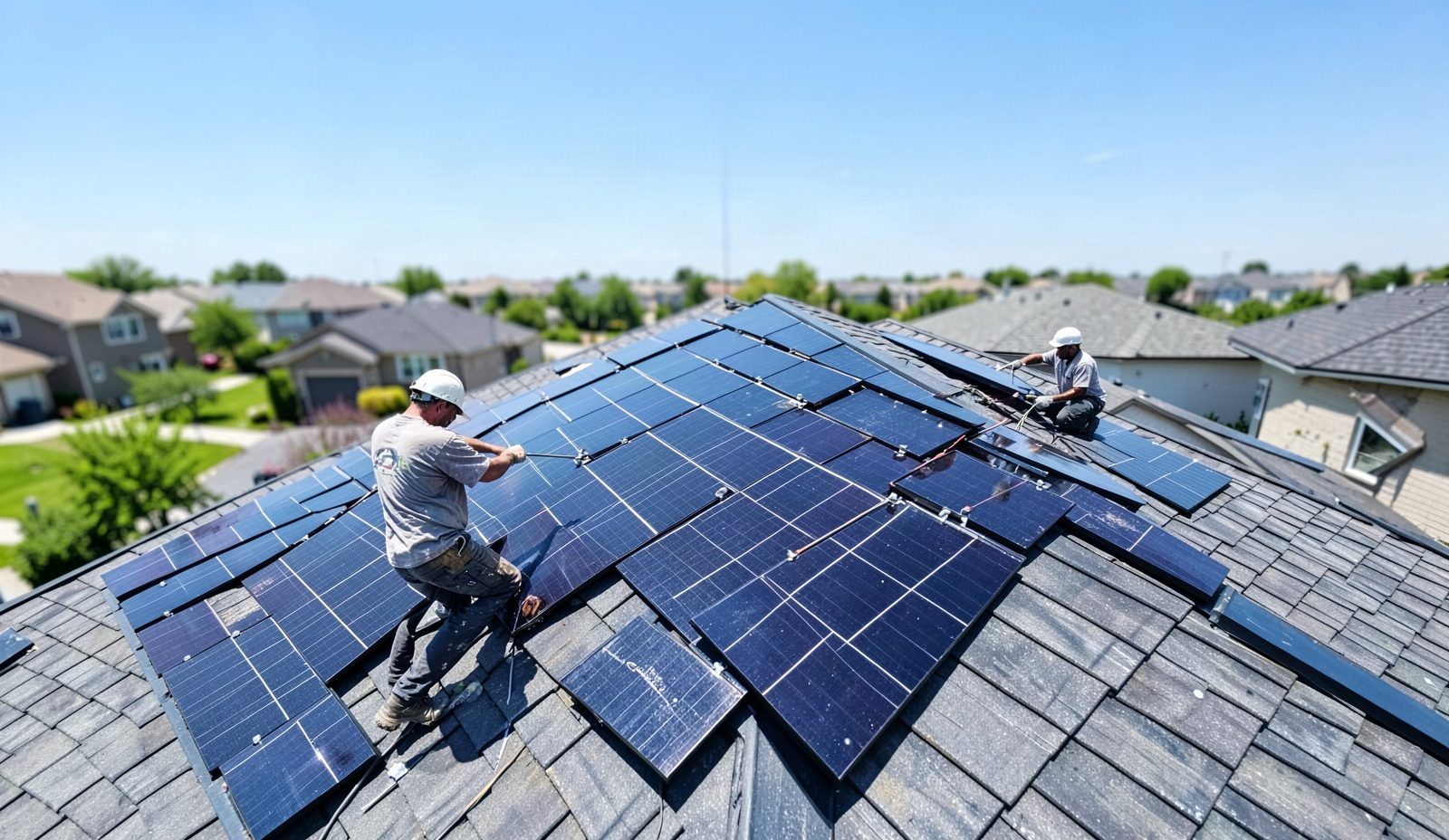
You call (614) 707-7333 and describe what you're seeing, a hot upstairs room, a high summer bill, or shingles that look faded and thin. A technician arrives in the confirmed window and walks the roof surface first, checking shingle granule wear, flashing seams, and vent boot condition. Inside, they check the attic for insulation staining, airflow at the soffits, and any daylight gaps around penetrations. You get a plain explanation of what's driving the heat gain or moisture issue before any material discussion starts.
Once you approve the written quote, the crew stages tarps and protection around the work zone before touching the roof. Tear-off or coating prep proceeds section by section rather than opening the entire roof deck at once, which limits exposure if weather shifts mid-day. Any deck damage found underneath gets flagged to you with photos before replacement, so you approve added scope in real time instead of finding it on the final invoice. Underlayment, ice barrier placement, and shingle or coating application follow manufacturer specifications for the product line you chose.
Before the crew loads out, a lead technician checks fastener patterns, flashing laps, and ridge vent seating, and confirms the ice barrier placement meets the wall-line requirement checked during the assessment. Gutters and downspouts get cleared of granules and debris. You walk the property line with the technician, who points out completed work and answers questions about ventilation or coating cure time. You receive photo documentation of the completed roof for your own records or insurance file.
Roofing work in this metro falls under Columbus building code jurisdiction and the Ohio Residential Code, and that code sets specific requirements most homeowners never see until an inspector flags them. Full roof replacements and structural repairs typically require a permit, while minor like-for-like shingle repairs often do not, but the final call always belongs to the City of Columbus Department of Building and Zoning Services for Columbus addresses, or the local building department and Franklin County for surrounding jurisdictions. Skipping that step on a full tear-off can stall a home sale later when a title search turns up unpermitted structural work.
Columbus housing stock varies more than most metros this size, from postwar Cape Cods with simple gable framing to brick Victorians with cut-up rooflines, dormers, and mixed rafter spans. A crew that treats every attic the same misses real ventilation deficits. We measure actual net free ventilation area at the ridge and soffit on each job rather than assuming a builder-grade home meets modern airflow targets, because undersized intake vents undercut even the best reflective shingle or coating.
Out-of-area operators who do not work this market regularly tend to miss two things that cost homeowners later, an ice barrier that falls short of the wall-line requirement, and a reflective coating rated for a milder climate that debonds under Central Ohio's repeated temperature swings. Either mistake shows up as a failed final inspection or a coating that peels within a season, and both mean paying for the same section of roof twice. A technician who works Franklin County roofs every week catches both before the crew packs up. Questions about how your specific roof fits these requirements are worth a direct call to (614) 707-7333.
See how to choose a roofing contractor for how the related work is scoped and priced.
Permit and inspection questions? Building & Zoning Services is the office we coordinate with on every permitted Columbus job.
Booking starts with a phone call to (614) 707-7333, where you describe the issue, your roof type, and your general availability. We give you a same-week or next-week arrival window, not a vague callback promise, and confirm it the day before with a two-hour arrival range. If a storm backs up the schedule or a prior job runs long, we call you directly to reset the window rather than leaving you waiting on the porch. Emergency leak calls jump ahead of routine energy assessments in the queue, so a scheduled inspection may occasionally shift by a day when active water intrusion elsewhere takes priority.
Before anyone touches a shingle, we lay tarps across landscaping, walkways, and any patio furniture near the drop zone, and we set a plywood ramp over gutters where ladders make contact. A magnetic roller sweeps the lawn and driveway for stray roofing nails at the end of each work day, not just at project completion. Torn-off material goes straight into a lined trailer or dumpster rather than staying in a yard pile overnight. When we leave, downspouts get checked for granule buildup and cleared, and the crew does a final walk of the property line before loading out.
Your quote reflects roof pitch and access, since a steep Victorian roofline with a narrow side yard takes longer to stage than a simple ranch gable. Material choice matters too, a cool-color shingle line costs differently than a reflective coating applied over sound existing asphalt. Deck condition drives price once we're on the roof, since soft plywood found during tear-off adds replacement sheets to the scope. You see every line item in writing before work begins, and nothing changes on that quote without your sign-off first, including any deck repair discovered mid-project.
Every technician passes a background check before stepping onto a client's roof, and new hires shadow a lead installer through a full project cycle before working a job alone. We run seasonal refreshers on the current Ohio Residential Code updates, covering changes to ventilation, flashing, and underlayment requirements that affect how a job gets built. A technician earns solo status only after a lead reviews completed tear-offs, flashing details, and fastener patterns on at least several jobs side by side, checking nail placement and seam alignment against manufacturer installation specs.
Cornerstone Roofing Columbus stands out for treating every roof inspection as a diagnostic process rather than a sales visit, checking actual shingle reflectance and ice barrier placement before recommending materials. The company's technicians train specifically on Franklin County housing stock, from postwar Cape Cods to Victorian-era foursquares with cut-up rooflines, and provide itemized written quotes before any work begins. Call (614) 707-7333 to see how that assessment approach applies to your specific roof.
The most energy-efficient roofing depends on your roof pitch and existing deck condition, not a single product. On steep-slope homes, cool-color architectural shingles with a rated solar reflectance index outperform standard dark shingles by keeping attic temperatures lower. On low-slope sections like porch roofs, a silicone or acrylic reflective coating often delivers better performance per dollar spent than a full tear-off. Standing-seam metal roofing with a cool pigment finish is a third option worth discussing for homeowners planning a long-term reroof.
Scheduling depends on the season and current storm workload, but most energy assessments book within the same week or the following week. Spring and fall carry the heaviest demand as homeowners plan reroofs before extreme summer heat or winter ice arrive, so booking a consultation a few weeks ahead of those seasons gets you a wider choice of arrival windows. Call (614) 707-7333 to check current availability for your address.
Cost depends on whether the fix is a reflective coating over sound existing shingles or a full reroof with cool-color material, since a coating extends a serviceable roof rather than replacing it and often carries a lower material cost per square. Deck condition, roof access, and pitch add or reduce labor time on top of that base choice. A technician can only give you an accurate figure after walking the roof, which is why the assessment happens before any quote is written.
DIY energy roofing work carries real risk beyond fall hazard on a steep pitch. Reflective coatings applied over shingle surfaces still coated in loose granule dust often peel or blister within a single season because the coating never bonds to the substrate. Ventilation upgrades done without checking actual net free area at the ridge and soffit can trap more moisture than they release. A professional assessment catches those failure points before material goes on the roof.
Permit requirements depend on the scope of work. A full roof replacement or any structural deck repair typically requires a permit, while a reflective coating applied over existing sound shingles or a minor like-for-like shingle repair often does not. The local permitting office makes the final determination based on the specific project, so confirming scope with that office before work begins avoids delays at final inspection.
Shingle tabs lifting more than a quarter inch at the corners, rusty nail heads pushing through the shingle surface, and a sagging ridge line all point to problems that get worse without attention. A soft, spongy feel underfoot near the roof edge signals decking that has already absorbed moisture. Any of these signs paired with a summer energy bill that jumped without a change in usage habits is worth a roof walk from a technician before the next storm cycle adds more damage.
Central Ohio's heavy wet snow and ice loading in winter push ice-dam and gutter-ice risk higher than a dry-climate roof ever sees, and that changes which reflective materials make sense here. A coating or shingle chosen purely for summer solar reflectance without accounting for winter ice load can crack or lose adhesion at the eave line within a few seasons. Historic brick rowhouses in German Village and converted commercial buildings in Italian Village often carry low-slope porch and addition roofs where a silicone or acrylic coating outperforms a shingle tear-off, while the steeper primary roofs on those same properties still call for a cool-color asphalt line rated for this climate's freeze-thaw swings.
Final roof inspections here check more than whether shingles are nailed down straight. Inspectors verify ridge vent installation and confirm the ice barrier is present at the eave, both details that directly affect whether attic insulation stays dry enough to hold its rated R-value through a Central Ohio winter. Mixed-use buildings in the Short North and converted loft spaces in the Brewery District often combine a low-slope commercial section with a steep residential section on the same structure, which means two different material strategies get inspected under the same permit. Local familiarity with how that inspection process treats combination roofs matters more than a generic reroofing checklist ever will.
Explore our service area and locate Cornerstone Roofing Columbus with ease. We're proudly local and serve the surrounding neighborhoods with fast response and honest pricing. Use the map to check our coverage area, or call us and we'll confirm in seconds.
Address:
Cornerstone Roofing Columbus, 1015 E Broad St, Columbus, OH 43205
How Much Does a Roof Replacement Cost in Columbus? 2026 Pricing Breakdown, practical local guidance from Cornerstone Roofing Columbus, Colum…
Read More
Commercial Roof Maintenance Tips for Columbus Property Managers, practical local guidance from Cornerstone Roofing Columbus, Columbus's trus…
Read More
Skylight Leaks in Victorian Village Homes, Repair or Replace?, practical local guidance from Cornerstone Roofing Columbus, Columbus's truste…
Read More
The Best Time of Year to Replace a Roof in Columbus, practical local guidance from Cornerstone Roofing Columbus, Columbus's trusted roofing …
Read More