

April 1, 2025
How Much Does a Roof Replacement Cost in Columbus? 2026 Pricing Breakdown
How Much Does a Roof Replacement Cost in Columbus? 2026 Pricing Breakdown, practical local guidance from Cornerstone Roofing Columbus, Colum…
Read More




Homeowners near German Village and Victorian Village call after collecting three roofing quotes that each describe the same roof differently. One contractor writes tear off and replace, 30 squares. Another writes reroof, 3200 square feet, with no mention of flashing detail, ridge vent spec or how many layers come off first. You cannot tell if the low bid skipped the ice barrier or if the high bid padded the job with tear-off work nobody will actually pull.
The real problem sits in the paperwork, a proposal written to be signed quickly, without giving you enough detail to understand what you are approving. A line that reads flashing as needed with no linear footage. A total that folds decking replacement into labor so you cannot tell if any plywood gets swapped. No drip edge profile named, no separate call-out for pipe boots or chimney counter-flashing. In homes built before the 1970s in Italian Village and similar districts, original plank decking often needs partial replacement, and a flat materials line hides that cost until tear-off day.
Central Ohio's climate turns these paperwork gaps into real damage fast. The metro runs through roughly 40 to 60 freeze-thaw cycles each winter, and that repeated expansion and contraction is what cracks shingle mat and splits flashing seams quickest on roofs where the deck or fastening was already marginal. A proposal that never specifies fastener type, nail pattern or whether flashing gets replaced or reused is hiding the exact details that decide whether your roof survives that cycle count or fails at year eight instead of year twenty.
Sign a vague proposal now and the bill comes due later, not at closing. A missing ice barrier line shows up as a soffit stain after the first heavy wet snow. A skipped deck check shows up as a soft spot under new shingles within two winters. A reused pipe boot with a cracked rubber collar shows up as a ceiling stain over the bathroom by spring, and none of that traces back to a one-page estimate that never named the parts in the first place.
Our page on metal vs. shingle roofing covers that side of the work in more depth.
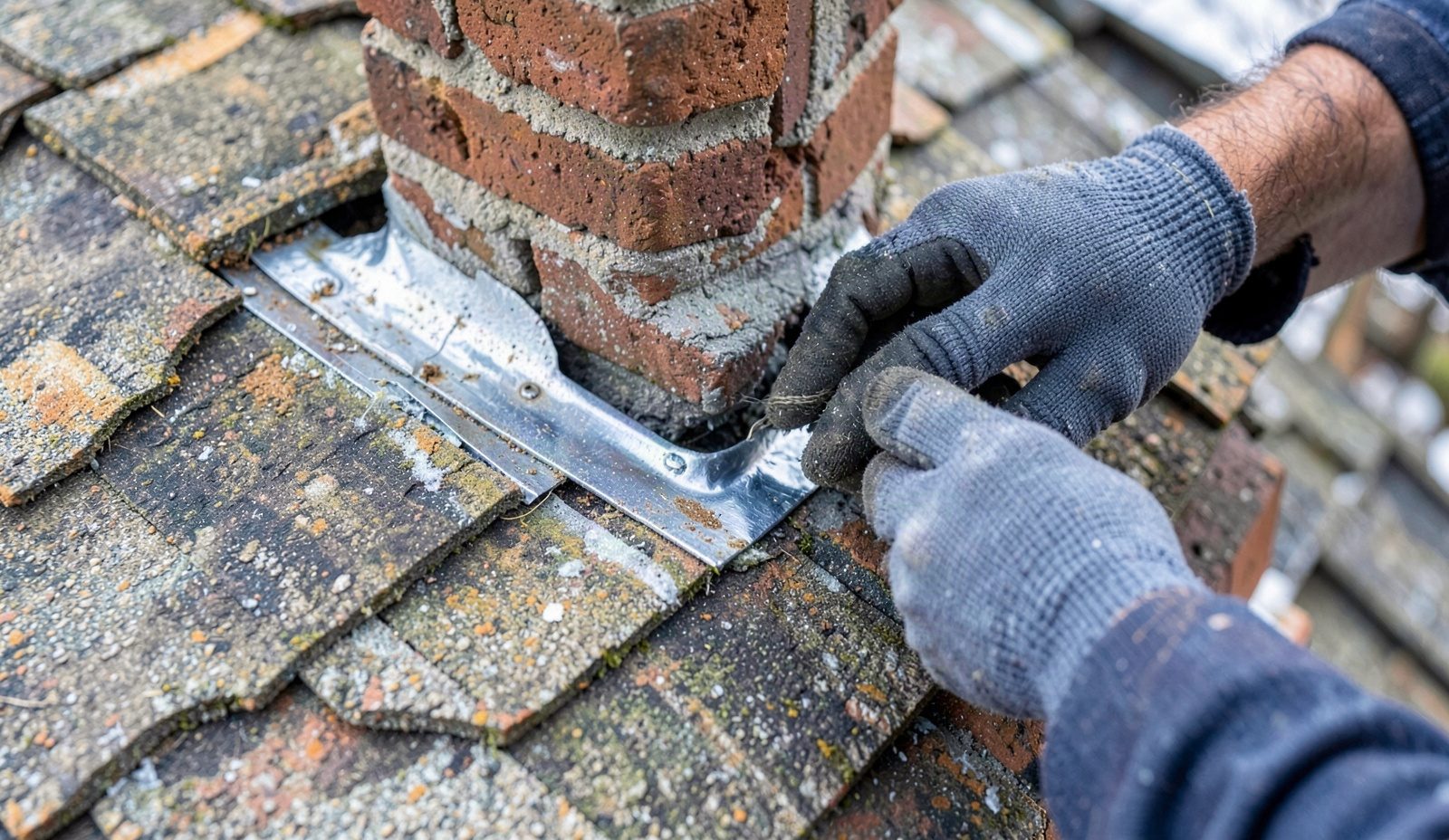
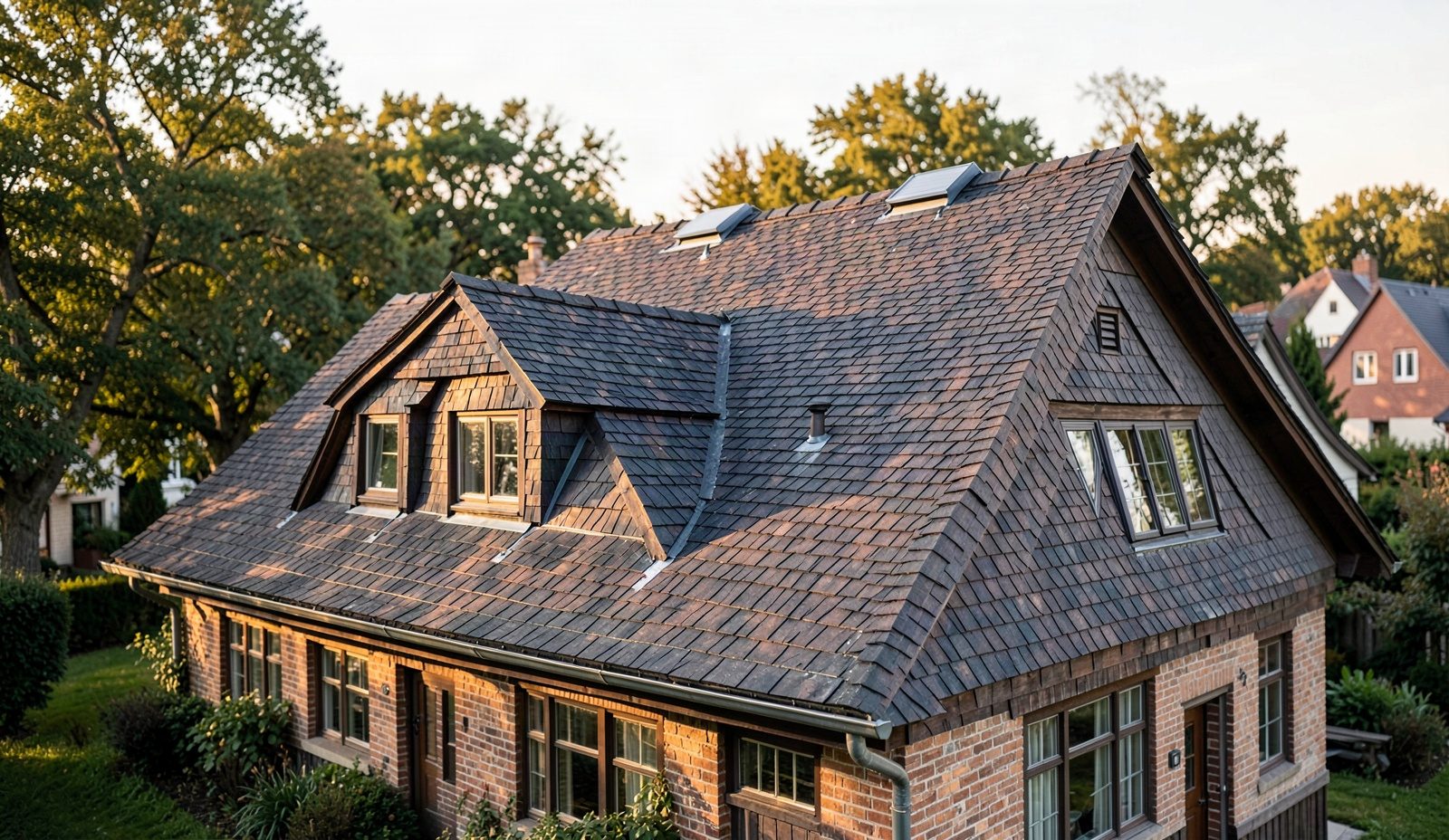
When you bring us a competing proposal, or ask us for a first written quote, we start on the roof, not at a desk. A technician carries a pitch gauge to confirm the actual slope against what any prior quote assumed, because slope changes fastener spacing, underlayment overlap and whether the assembly qualifies as steep-slope or low-slope. A tape measure or laser measurer gets the true eave length and plan dimensions, so the thirty square line on a proposal gets checked against a number we generated ourselves that day, not copied from a satellite estimate.
We pull a small test cut near an eave or in an inconspicuous valley to count existing shingle layers and check deck condition directly, then patch the sample before we leave. One layer of 3-tab shingle versus two stacked layers of architectural shingle changes tear-off labor and disposal weight, and a proposal that prices tear off as a flat line without stating layer count is guessing at your job's real scope. We also measure the eave detail against Section 905.1.2 of the Ohio Residential Code, which requires an ice barrier extending at least 24 inches inside the exterior wall line on asphalt shingle roofs, built from two cemented underlayment layers or a self-adhering polymer-modified bitumen sheet. A proposal that never mentions ice barrier coverage, or lists it only as generic underlayment, has not accounted for that requirement, and that gap belongs on your negotiating table before you sign.
Product comparisons matter too. GAF Timberline HDZ architectural shingles carry a wind rating up to 130 miles per hour with the LayerLock nailing strip, while a standard 3-tab shingle typically caps out near 60 to 70 miles per hour and weighs less per square. Owens Corning Duration shingles use a SureNail strip that changes fastener placement tolerance compared to GAF's system. A proposal that names neither the shingle line nor the nailing strip is not specific enough to compare against a second bid line by line, and we check every proposal against these named systems so you know whether architectural shingle, 30 year means the same product on two different pieces of paper.
See energy-efficient roofing guide for how the related work is scoped and priced.
Permit and inspection questions? Building & Zoning Services is the office we coordinate with on every permitted Columbus job.
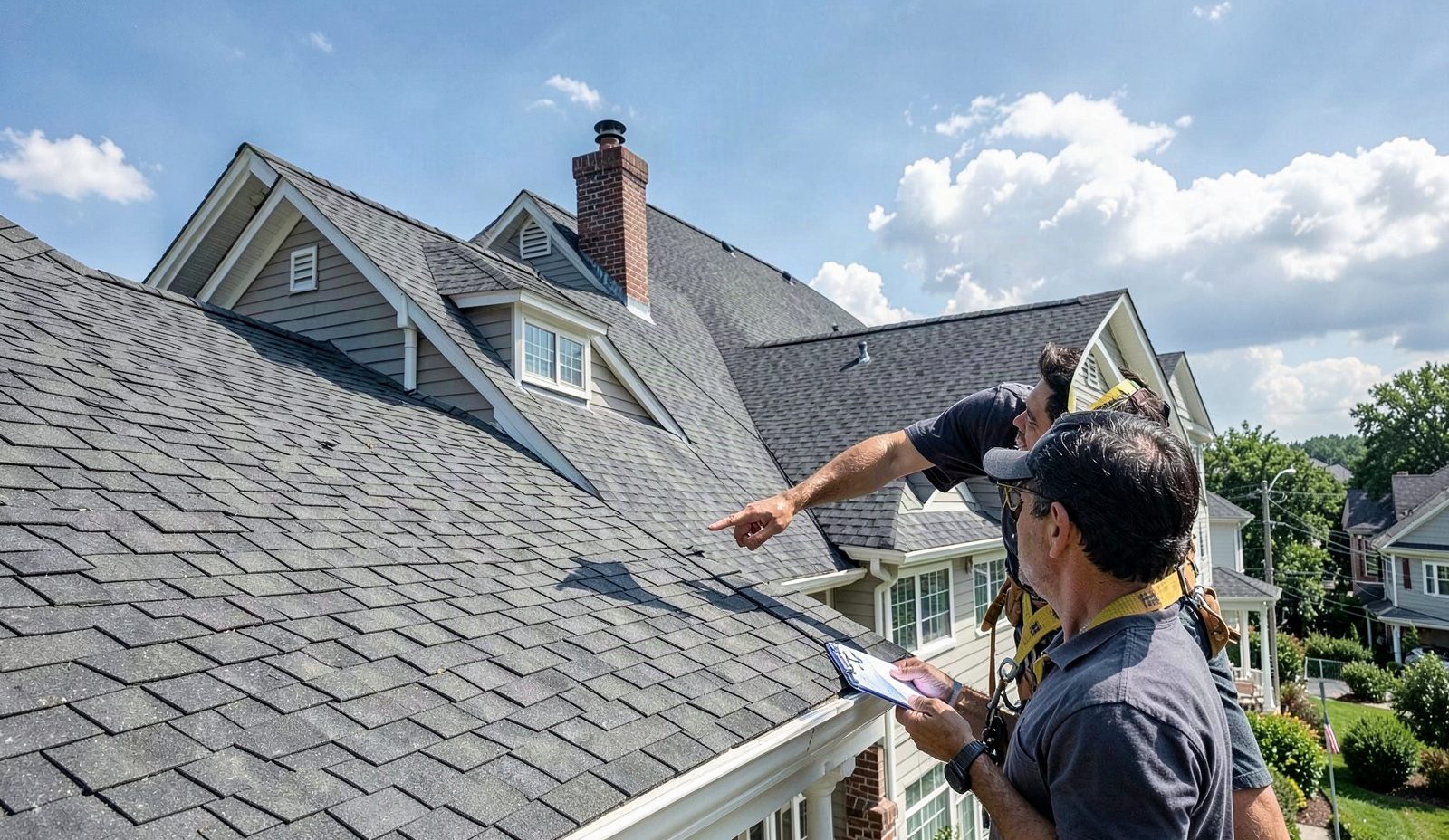
You call and describe what you have, whether that is a signed proposal from another contractor, multiple bids, or a request for a first written quote. A technician arrives within the confirmed window and walks the roof from a ladder, checking pitch, decking soundness, flashing condition at valleys and chimneys, and shingle wear pattern. You get a plain verbal rundown of what the roof actually shows before any paperwork comes out, so you can compare that against what any existing proposal claims.
Back at the truck, or same day by email, the technician writes each item as its own line: shingle or membrane brand and product line, linear footage of flashing and drip edge, ice barrier coverage, layer count for tear-off, and permit responsibility. You review that document against any competing proposal and approve the scope in writing before material gets ordered or a start date gets set. Every quantity on the page traces back to a measurement taken on your roof that day.
Before the technician leaves, you walk through the findings together, checking photos of the test cut, the measured eave lengths, and any code items flagged against current requirements. You keep a copy of the written comparison for your own file, to hand to a second contractor, an insurance adjuster, or a lender reviewing the property. That written record holds specific measurements, giving you something concrete to hold any bid against later.
A proposal reviewed by someone who works Franklin County roofs every week catches details a traveling storm crew misses. We know which subdivisions still run older aluminum drip edge that needs full replacement instead of a tuck-under repair, and which mid-century neighborhoods carry single-layer roofs where a second layer is not an option under current code. That familiarity means our written comparison flags problems specific to your roof's era and location, not a checklist copied from a different climate.
Out-of-area contractors who work a single Ohio hail season and leave before winter often price proposals off satellite measurements alone, without ever setting a ladder against the house. That approach misses deck soft spots, undersized ice barrier coverage, and flashing reused from the old roof, details that surface as change orders once a crew is already mid tear-off. We measure and inspect in person before we write a number, and we put the instrument readings, not an aerial estimate, on the page you review.
Response logistics matter too. A reviewer who already knows the drive times across Franklin County schedules a same-week visit instead of a two-week wait behind a backlog of storm claims from outside the area. When you call, a local scheduler sets a route based on where crews already are that day, rather than dispatching whichever crew happens to be available across the region that week.
More detail on how to choose a roofing contractor is on its own page.
Call (614) 707-7333 and we book most proposal review visits within the same week, often sooner if you already have a signed quote with a start date attached. You get a two hour arrival window confirmed by phone the day before the visit. If the technician runs behind on a prior job, you get a call with an updated time, not a missed appointment. Reviews for storm-damaged roofs after a hail event move to the front of the schedule, since insurance adjusters often set their own deadlines and a written comparison needs to reach you before that date.
Ladder feet get rubber stand-off pads on siding and gutters so nothing scratches or bends during setup. If a test cut is needed to check layer count or deck condition, the sample gets patched with matching underlayment and a shingle tab before the technician comes down. A magnetic roller sweep runs the driveway and lawn afterward to catch dropped roofing nails, the same pass a full tear-off crew would run. You are left with a clean roof edge, a patched test area and a yard clear of anything sharp waiting for bare feet or mower tires.
Roof pitch, access difficulty, deck condition found under the test cut, and the shingle or membrane line you choose all move the number on your written quote. A steep roof over a two-story addition costs more to work safely than a single-story ranch roofline, and a deck needing partial replacement adds material and labor beyond a straight shingle swap. You see every variable listed as its own line before you approve anything, and nothing gets ordered or scheduled until you sign off on that written breakdown, so the number you approve matches the final invoice.
Every technician passes a background check before working in your home or yard. Ongoing training covers the current residential code cycle for the region, manufacturer installation updates from brands like GAF and Owens Corning, and safe ladder and fall-protection practice on steep-slope roofs. A senior technician field-checks new hires on live jobs, reviewing test cuts, measurements and written proposals for accuracy before that person reviews a Columbus roof without direct oversight.
Reading a roofing estimate means checking scope, materials, layer count and permit responsibility line by line. Compare the square footage on paper against your own rough count from ground level, since a discrepancy of more than a square or two usually means someone measured off satellite imagery instead of the roof itself. Check that ridge vent, drip edge and pipe boot replacement each get their own line rather than hiding inside a flat labor total.
Roof drawings show the plan view with eaves, ridges, valleys and hips labeled. Each vent, skylight and chimney appears as a symbol keyed to a legend, and flashing runs get marked with dashed lines along valleys and wall intersections. On a Columbus proposal, check that the drawing's total plan dimensions match the square footage quoted elsewhere in the document, since a plan drawn from a satellite estimate can be off by several feet along an irregular roofline.
Evaluating a roofing proposal means comparing scope, materials, code items and price structure against at least one competing quote. Line up each proposal's shingle brand and wind rating side by side, confirm whether decking replacement is priced per sheet or assumed at zero, and read the payment schedule for when deposits and balances come due relative to material delivery and final inspection.
Yes, older homes carry the most risk from a proposal that skips structural detail. Frame houses in Victorian Village and similar districts often have original plank decking or balloon framing that a generic tear-off price does not account for, and a line by line review catches whether the proposal budgets for deck repair before shingles go down. Skipping that check on a home built before the 1970s is where change orders come from later.
Estimates for a proposal review start with a phone call about your current quotes. A technician then walks the roof, measures independently, and returns a written breakdown that lines up against the proposal you already have, so you can see exactly where the two documents agree or diverge before you commit to either one.
A typical proposal review takes about 45 minutes to an hour on site. That covers the roof walk, the test cut if one is needed, and a verbal summary of what the technician found. The written comparison document usually follows within a day or two, giving you time to bring specific questions back to the other contractor before signing anything.
Columbus sits in a corridor where summer thunderstorms bring hail and straight-line wind capable of bruising shingle mat and driving debris into roof penetrations, damage a rushed adjuster estimate or a fast contractor bid can undercount from the ground. Housing stock varies widely, from converted warehouse-era buildings near the Brewery District to early 1900s two-story frame houses in Clintonville and dense infill construction through the Short North, and each era carries different deck thickness and rafter spacing that change how hail damage gets priced for repair versus full replacement. A proposal written without climbing the roof after a hail event is guessing at a bruise count that only shows up under a magnifying inspection, and that guess becomes the number you are asked to sign.
Full roof replacement and most structural repair work in Columbus require a permit, and the City of Columbus Department of Building and Zoning Services reviews that work for addresses within city limits, with the local building department or Franklin County handling other jurisdictions across the metro. A proposal that never states who applies for that permit is leaving a legal question unanswered, since inspection sign-off and code compliance responsibility follow whoever pulls it. Local review also means an inspector checks the finished roof against current code details, not just workmanship, and a contractor who has pulled permits in Franklin County before knows which details that inspector checks first, knowledge a written proposal from an unfamiliar crew usually will not reflect.
Explore our service area and locate Cornerstone Roofing Columbus with ease. We're proudly local and serve the surrounding neighborhoods with fast response and honest pricing. Use the map to check our coverage area, or call us and we'll confirm in seconds.
Address:
Cornerstone Roofing Columbus, 1015 E Broad St, Columbus, OH 43205
How Much Does a Roof Replacement Cost in Columbus? 2026 Pricing Breakdown, practical local guidance from Cornerstone Roofing Columbus, Colum…
Read More
Commercial Roof Maintenance Tips for Columbus Property Managers, practical local guidance from Cornerstone Roofing Columbus, Columbus's trus…
Read More
Skylight Leaks in Victorian Village Homes, Repair or Replace?, practical local guidance from Cornerstone Roofing Columbus, Columbus's truste…
Read More
The Best Time of Year to Replace a Roof in Columbus, practical local guidance from Cornerstone Roofing Columbus, Columbus's trusted roofing …
Read More