

April 1, 2025
How Much Does a Roof Replacement Cost in Columbus? 2026 Pricing Breakdown
How Much Does a Roof Replacement Cost in Columbus? 2026 Pricing Breakdown, practical local guidance from Cornerstone Roofing Columbus, Colum…
Read More




A cracked shingle near the ridge, a dark ring spreading across the bedroom ceiling, granules piling up in the gutter after a windy night, a faint musty smell drifting out of the attic hatch after a week of rain. These are the signals that send most Columbus homeowners searching for a diy shingle repair guide before they call anyone. The question that follows is almost always the same: can I repair my own roof, or does this actually need a professional?
The answer depends on what is happening under that shingle. Central Ohio runs through roughly 40 to 60 freeze-thaw cycles every winter. Water gets into a hairline crack, freezes, expands, and splits the shingle mat or the flashing seam a little wider each cycle. Flashing around chimneys and in roof valleys splits at the seams first, because that metal expands and contracts at a different rate than the shingles around it, opening a gap that widens with every cycle. In older bungalow roofs around Clintonville and the steep-pitched roof lines common in Victorian Village and German Village, that repeated expansion works loose nails a homeowner cannot see from a ladder, only from directly on the deck.
Summer adds a second stressor. Thunderstorms rolling through the metro bring hail and straight-line wind strong enough to bruise asphalt mat or lift a whole course of shingles along a ridge. A hail-bruised shingle often shows no visible crack at all until a technician presses on it and feels the mat give slightly under a thumb, a texture difference a homeowner rarely notices from the ground or even from a ladder six feet away. A homeowner patching one broken tab after a storm often misses the bruised shingles two courses over, the ones that look fine until the mat cracks on the next freeze. This is the core of diy roof repair risks: the visible damage is rarely the only damage, and standing on a wet or frost-covered slope to find the rest is how falls happen.
Wait through one more freeze cycle and a loose nail becomes a gap wide enough for wind-driven rain. Wait through one more storm and that gap becomes a soaked layer of decking that has to be cut out and replaced instead of patched. Insulation soaked from above loses its ability to hold heat long before it looks wet from below, and drywall holds that moisture against the framing long enough to start the smell that eventually reaches the living room. What starts as a single missing shingle becomes a section of decking, then insulation, then drywall, each step further from anything a caulk gun and a Saturday afternoon can fix.
If this sounds close but not quite your situation, insurance claim guide for roof damage may be the better starting point.
Our crews work to the installation standards of the National Roofing Contractors Association.
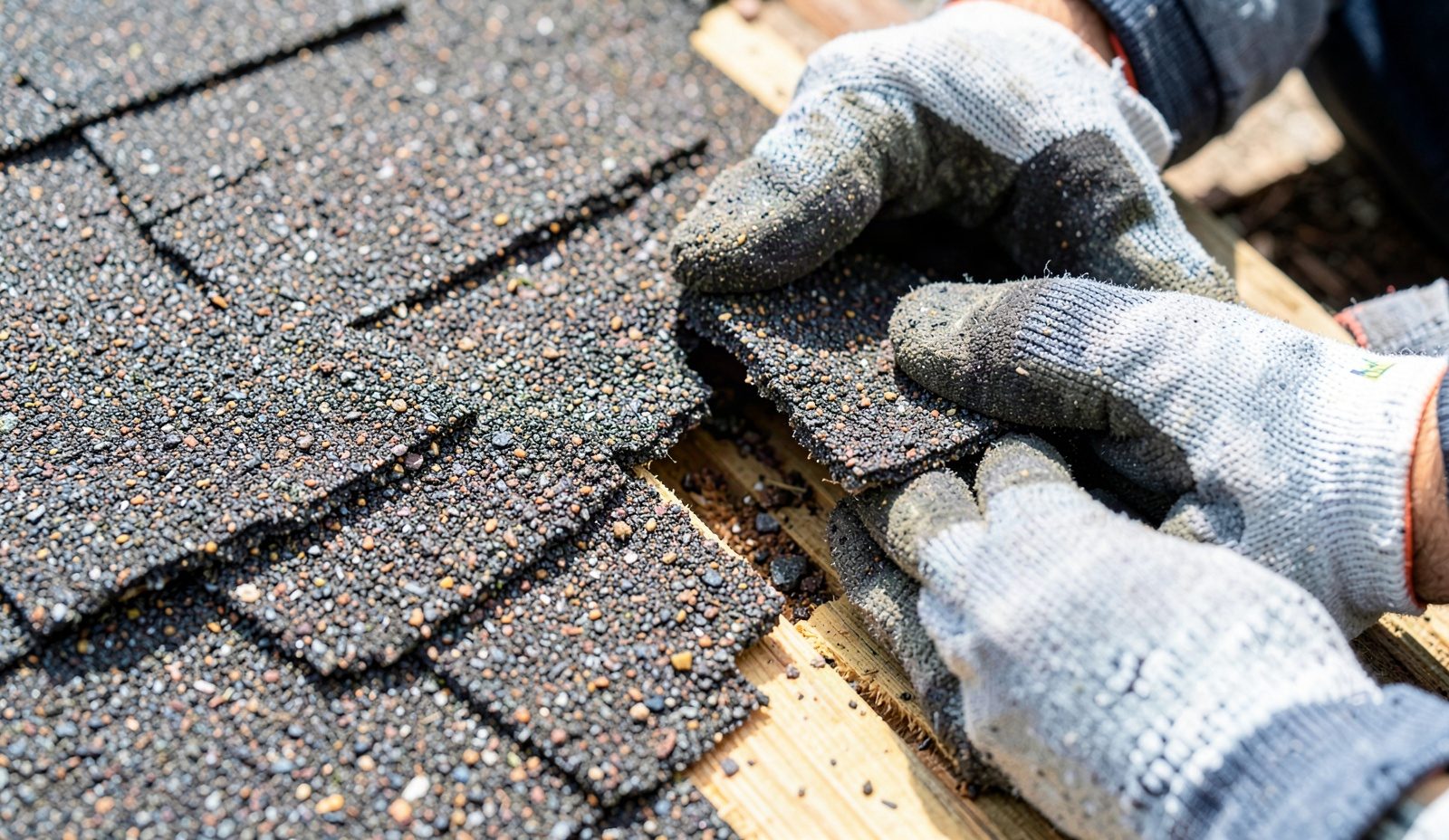
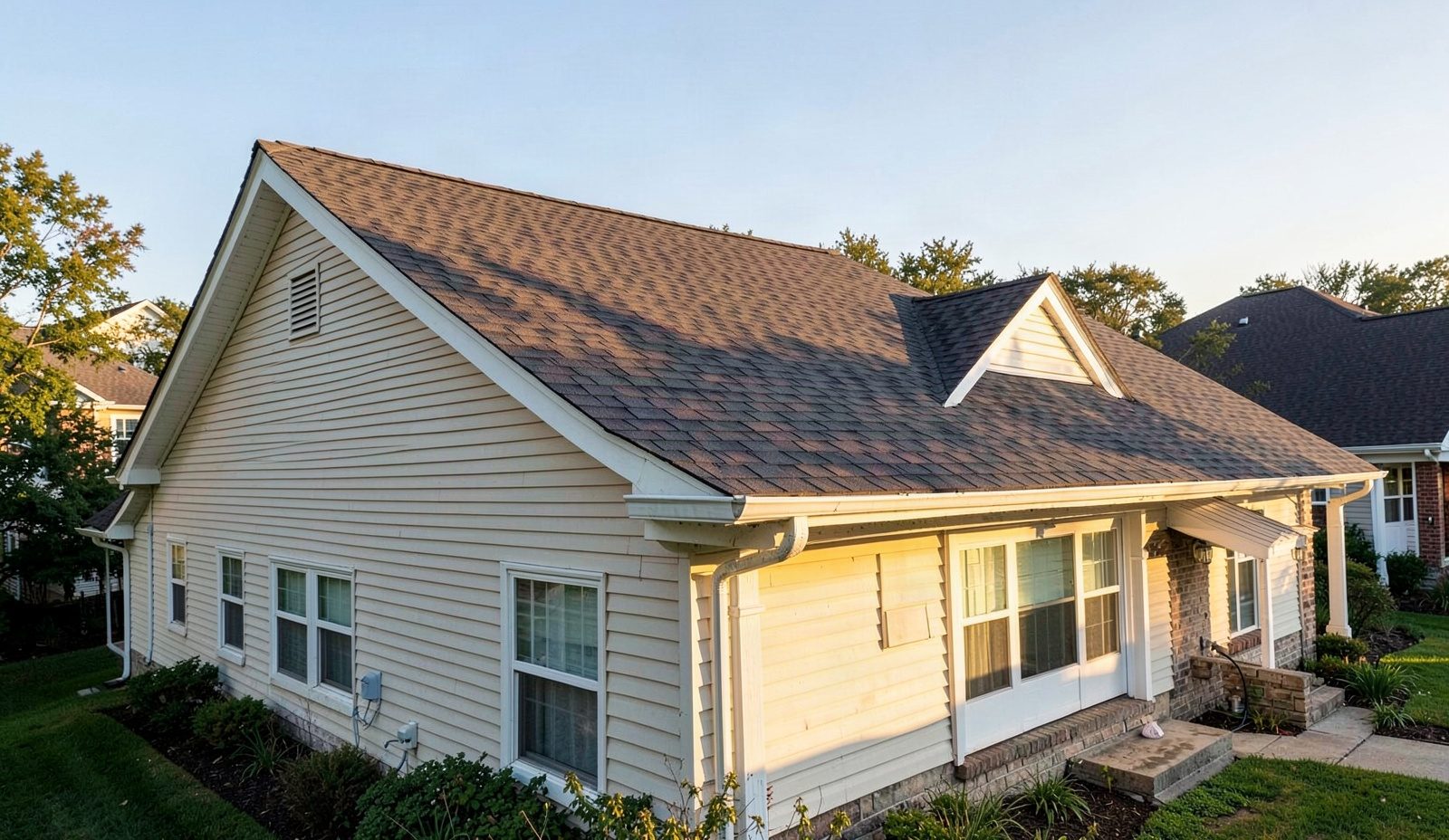
A technician walks the entire roof plane, not just the spot the homeowner points to. That means checking every penetration, valley and transition where two roof planes meet, because a leak that shows up over the hallway often originates ten feet away at a chimney flashing or a bath vent boot. On the deck, a moisture meter reads wood moisture content directly through the shingle. A reading above roughly 17 to 19 percent signals decking that is already absorbing water and will not hold a nail long term, no matter how good the shingle patch above it looks. The deck also gives off a slightly softer sound underfoot when moisture has settled into it, a texture different from the solid feel of dry sheathing.
At the eaves, the check is simple and specific. Section 905.1.2 of the Ohio Residential Code requires an ice barrier, either two cemented layers of underlayment or a self-adhering polymer-modified bitumen sheet, running from the roof edge to at least 24 inches inside the exterior wall line. A technician pulls back the first course of shingles and measures that distance with a tape, because a roof with a 12-inch barrier looks identical from the ground to one with a code-compliant 24-inch barrier, and only one of them stops meltwater from backing up under the shingles during a heavy wet snow. Shingle tabs get a bond test too: lift a corner with a flat blade and feel for the sealant strip. A tab that pops free with light pressure has already lost its wind seal and will lift again in the next straight-line gust.
Material choice follows the diagnosis, not the other way around. A single-course patch on an older three-tab roof, rated for wind speeds near 60 to 70 mph, gets matched to comparable three-tab stock rather than mixed with a heavier laminate that will telegraph as a color and thickness mismatch. On a roof already due for a larger repair, laminated architectural lines such as GAF Timberline HDZ, rated to 130 mph with its LayerLock strip, or Owens Corning Duration with its SureNail strip, hold up better against the hail and wind load this region sees each summer. A self-adhering polymer-modified bitumen membrane runs roughly 40 mils thick and stays flexible well below freezing, while two cemented layers of standard asphalt felt add comparable coverage without that same low-temperature flexibility, a difference that matters at the one eave detail the code already requires either material to satisfy.
See roof financing options explained for how the related work is scoped and priced.
Communities like r/Roofing are a good reality check on pricing and practices before you sign anything.
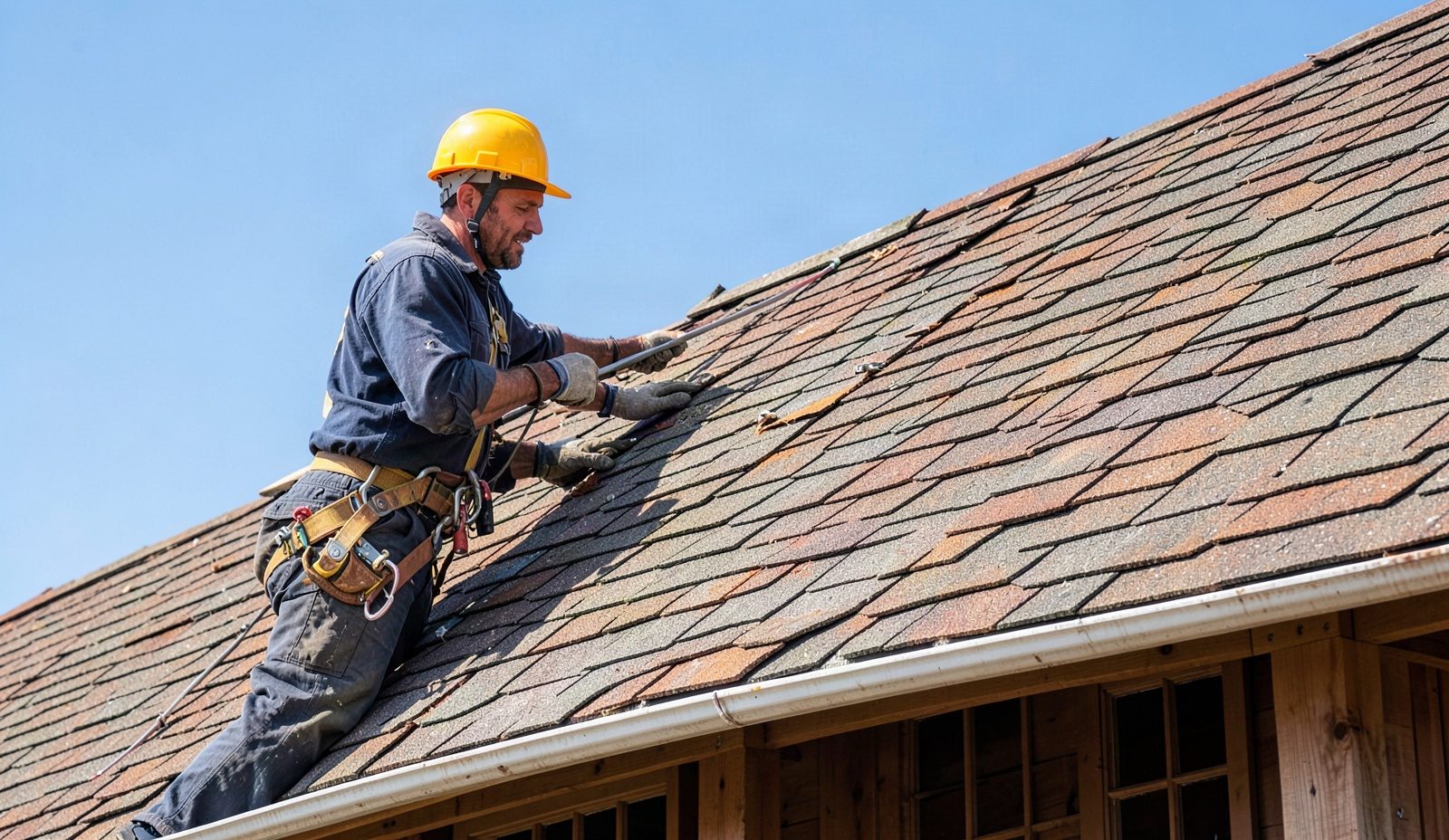
You describe the symptom on the phone, and the technician arrives within the scheduled window carrying a ladder, moisture meter and tape measure rather than assuming the fix from a description alone. On the roof, the technician checks the reported spot first, then walks adjoining planes, valleys and penetrations to rule out a second source. Decking gets a moisture reading through the shingle, shingle tabs get a bond check, and the eave detail gets measured against code. You get a plain explanation of what is failing and why, on the spot, before any material comes off the roof.
Once you approve the written scope, tarps and ladder standoffs go down first to protect gutters, landscaping and anything below the work area. The technician opens the damaged section, replaces decking if the moisture reading called for it, installs matching underlayment and eave detail where exposed, and sets new shingles with the correct nail pattern and exposure to match the surrounding courses. Any damage found beyond the original scope, such as a second bruised area from hail, gets flagged and priced separately before work continues on it.
Before the ladder comes down, the technician re-checks the bond on every new tab, confirms flashing laps are sealed and shingle exposure lines up with adjoining courses. A final walk covers the yard, driveway and gutter line for stray nails or debris. You get a plain-language rundown of what was replaced, what was inspected and cleared, and photos of the repaired area for your own records, useful if you ever need to document the work for an insurance file.
Roofing work in Columbus falls under the Ohio Residential Code and city building code jurisdiction, and that framework decides more than most homeowners realize about a repair. A contractor unfamiliar with the required underlayment detail at the eaves, the fastening pattern that meets wind uplift expectations, or how a full tear-off differs from a like-for-like shingle swap under that code is guessing at a job the code already answers. The same code covers flashing details at chimneys, skylights and sidewalls, areas where a rushed field repair often leaks again within a season because the step flashing was not reset correctly. Full replacements and structural repairs typically require a permit, while minor like-for-like patch work often does not, and the final call on any specific job belongs to the City of Columbus Department of Building and Zoning Services, or the local building department for addresses outside city limits.
Columbus housing stock spans steep-pitch roofs from the city's older residential cores to low-slope additions tacked onto post-war ranch homes, and each type changes the repair approach. A steep gable over a converted attic needs different fall protection and a different shingle exposure pattern than a flat-roofed rear addition finished in modified bitumen or a rubber membrane. Rafter spacing on many older homes also runs narrower than current framing, which changes how much weight a technician can safely put on the deck while working. A crew unfamiliar with that difference will price and execute the repair the same way regardless of roof age, a mismatch that shows up as a patch leaking again within a year.
Storm-chasing crews that show up in the metro after a hail event, work a set of streets for a week, and leave before winter rarely pull the correct permit and rarely match the existing eave detail to the code already governing the home. They are gone by the time a flashing seam they touched fails during the next hard freeze. A crew working this metro year-round answers for that repair through every one of those freeze cycles, not just through the storm season that brought the work in the door, and that ongoing accountability shapes how carefully the first repair gets done.
Our page on how long does a roof last covers that side of the work in more depth.
Permit and inspection questions? Building & Zoning Services is the office we coordinate with on every permitted Columbus job.
Call (614) 707-7333 and describe what you're seeing: the stain, the missing shingle, the sound during wind. Scheduling runs on a two-hour arrival window, confirmed the morning of the visit by phone or text. If a prior job runs long or weather moves through the metro, the technician calls before the window closes, not after, and offers the next open slot the same day when one exists. Repair visits get booked separately from full replacement consultations, so a homeowner with a single leaking valley is not waiting behind a crew scheduled for a multi-day tear-off. Weekday and Saturday slots are both available for repair diagnosis.
Ladders get standoffs to keep them off gutters and fascia. Tarps go down over landscaping and any AC units directly below the work area before a single shingle comes up. Old shingle tabs, torn underlayment and pulled nails go straight into a bucket or tarp, never dropped loose onto the lawn or driveway. A magnetic nail sweep runs the perimeter of the work zone at the end of the visit to pick up anything that missed the tarp. Before the technician leaves, the work area gets a final walk so the yard, driveway and any planting beds look the way they did before the truck arrived.
Three things move the number on a repair estimate: how much of the roof needs opening up to reach the damage, what the decking looks like once a shingle or two comes off, and whether the matching material is still in production or needs a close substitute. The technician writes the scope and material list on site, in plain language, before anything gets cut or removed. Nothing proceeds past the diagnosis until that written scope is reviewed and approved. If the inspection turns up damage beyond the original complaint, that gets flagged as a separate line, not folded in silently.
Technicians complete a background check before working solo on a customer's property. Field training runs on the current Ohio Residential Code cycle, covering ice barrier placement, fastening patterns and flashing details specific to this climate. A newer technician works alongside a senior tech through a set number of repair and inspection visits before taking calls independently, and spot audits continue after that on random job sites to confirm the work matches what was documented on the scope sheet.
It depends on the scope, not on ambition. A homeowner comfortable on a ladder can sometimes reseal a lifted shingle tab or clear a gutter safely, but Central Ohio's freeze-thaw pattern and steep older roof pitches around the metro make anything beyond that a real fall risk. A misdiagnosed leak often costs more once decking rot sets in than an early professional inspection would have caught.
Hiring a contractor is the better call for anything involving the roof deck, flashing, or a pitch steep enough to need fall protection. DIY makes sense only for the smallest, most visible cosmetic tasks on a low, walkable roof, and even then a wrong nail pattern or a missed underlayment lap can undo the fix within one winter. A contractor working this climate year-round also carries context on how a repair holds up through repeated freeze cycles.
Watch for vague answers to specific questions. A roofer who avoids a direct answer about what the decking looks like underneath, what underlayment they plan to use, or why a full replacement is needed instead of a repair is usually not being straight with you. Ask to see the actual reading or measurement behind any claim, and ask for a photo of the damage before work starts. A contractor with nothing to hide shows you the number, not just an opinion.
Cornerstone Roofing Columbus accepts standard payment methods homeowners typically use for roof repair work. The exact options can shift depending on job size and scheduling, so the clearest path is to call (614) 707-7333 and confirm what works before the visit is booked. Payment is discussed and settled after the written scope is reviewed, never before you know what the repair involves.
Coverage depends on the cause of the damage, not on who performs the repair. Hail and wind damage from a documented storm event are typically covered causes, while gradual wear or damage introduced by an amateur repair attempt often are not. Insurers frequently ask for dated photos and a written scope from a professional inspection before approving a claim, which is harder to produce after a DIY patch has already altered the damaged area.
An estimate starts with an on-site inspection, not a phone quote, because repair pricing depends on what the technician finds once shingles come up. The technician documents the damage, checks the decking, and writes a scope covering materials and labor before anything is removed. You review and approve that scope before work starts, and any damage found beyond the original complaint gets added as a separate line.
Look for a company that inspects the whole roof, not just the reported leak, and explains findings in specific terms rather than generalities. Ask whether the technician checks deck moisture, flashing seams, and the eave detail relevant to Central Ohio winters, and ask to see the written scope before work begins. A company that pulls the correct permit for anything beyond a like-for-like patch, and can explain why a job does or does not need one, is operating inside the rules that actually govern the work.
Scheduling for a repair inspection typically runs within a few business days, sooner when damage is actively letting water into the home. Call (614) 707-7333 to describe what you're seeing, and the scheduling window gets confirmed the morning of the visit. Active leaks get priority over cosmetic requests like a single lifted tab with no interior sign of water.
Roofs near Short North and the Brewery District often mix steep-slope shingle sections with low-slope membrane sections tacked onto converted warehouse and loft buildings, and a repair on one plane can be handled completely differently than the plane fifteen feet away. In Italian Village, many original roof decks are true board sheathing rather than plywood or OSB, which holds fasteners differently and reacts differently to a moisture reading than newer construction. Heavy wet snow and ice loading through a typical Central Ohio winter add another variable: snow that sits on a low-slope membrane section can back up against a parapet or transition flashing in a way that a steep-slope-only repair plan never accounts for. Matching the repair to the actual roof assembly, not a generic patch, is what keeps a fix from failing at the next transition point.
Inspection and permitting decisions in this market follow the jurisdiction tied to the property address, and that line matters more in a metro area that spans multiple building departments across Franklin County. A repair that looks identical from the curb can fall under different documentation requirements depending on whether the address sits inside city limits or in a surrounding township, and a crew that treats every address the same way risks pulling the wrong paperwork or none at all. Homeowners who have lived through a Columbus winter know the difference between a roofer who talks about ice damming in general terms and one who can point to the exact eave detail causing it on their specific roof. That specificity, built from working this same freeze-thaw pattern year after year, is what separates a repair that holds from one that reopens by February.
Explore our service area and locate Cornerstone Roofing Columbus with ease. We're proudly local and serve the surrounding neighborhoods with fast response and honest pricing. Use the map to check our coverage area, or call us and we'll confirm in seconds.
Address:
Cornerstone Roofing Columbus, 1015 E Broad St, Columbus, OH 43205
How Much Does a Roof Replacement Cost in Columbus? 2026 Pricing Breakdown, practical local guidance from Cornerstone Roofing Columbus, Colum…
Read More
Commercial Roof Maintenance Tips for Columbus Property Managers, practical local guidance from Cornerstone Roofing Columbus, Columbus's trus…
Read More
Skylight Leaks in Victorian Village Homes, Repair or Replace?, practical local guidance from Cornerstone Roofing Columbus, Columbus's truste…
Read More
The Best Time of Year to Replace a Roof in Columbus, practical local guidance from Cornerstone Roofing Columbus, Columbus's trusted roofing …
Read More