

April 1, 2025
How Much Does a Roof Replacement Cost in Columbus? 2026 Pricing Breakdown
How Much Does a Roof Replacement Cost in Columbus? 2026 Pricing Breakdown, practical local guidance from Cornerstone Roofing Columbus, Colum…
Read More




A magnetic sign on a pickup truck. A knock at the door two days after a hailstorm. A price that's only good if you sign today. These are the signals homeowners see every summer once a line of thunderstorms rolls through the metro. The contractor has no local address, answers from a cell phone with a different area code each time, and pushes for a deposit before he's measured anything. Vetting local roofers before a storm hits is the best way to avoid roofing scams entirely.
Central Ohio's humid continental climate puts roofs through roughly 40 to 60 freeze-thaw cycles every winter, cycles that crack aging shingles and split flashing right where nails hold the material down. Summer adds another layer of stress: thunderstorms bring hail and straight-line wind that are a common cause of asphalt shingle and roof penetration damage. Storm chasers track that same weather, then work the damage circuit before a homeowner has time to call more than one company.
In older sections of the city, like Short North, German Village, and Clintonville, homes still carry original roof lines with cut valleys, dormers, and chimney flashing details that a generic crew has never actually cut into. A contractor who skips a basic pre-hire checklist measures the roof from the driveway instead of the attic, and he can't answer basic questions to ask a roofing contractor, like which underlayment he's using or whether he pulls permits at all.
Skip the vetting step and the mistakes surface months later, once the deposit is long forgotten. A missed step-flashing reseal turns into a stained ceiling by the next thaw. A recover job installed over rotted decking hides that rot until a foot goes through it during an attic inspection. Ice that backs up under a poorly lapped underlayment often leaks first in February, right when a bad contractor's phone number stops working.
If this sounds close but not quite your situation, metal vs. shingle roofing may be the better starting point.
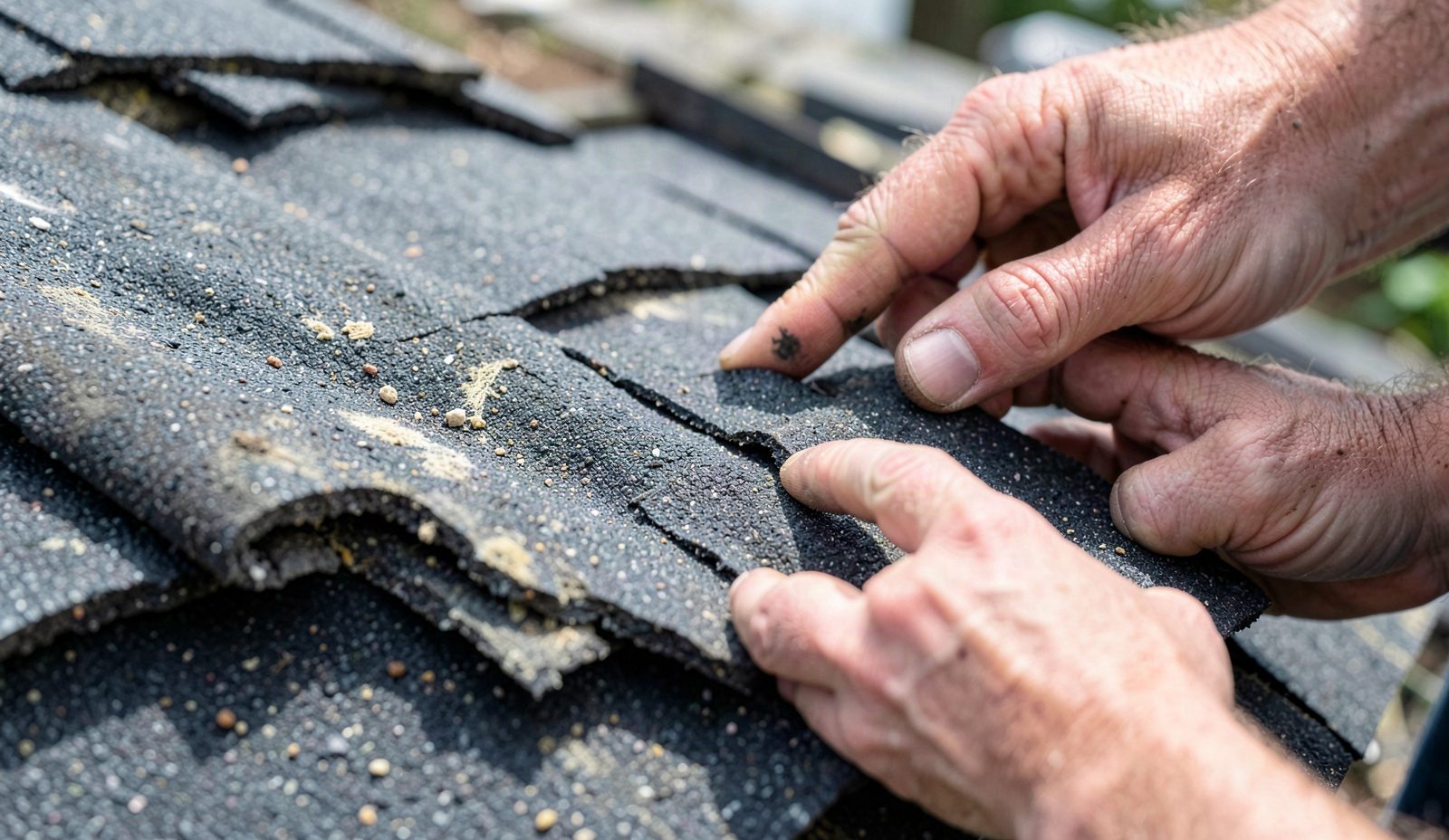
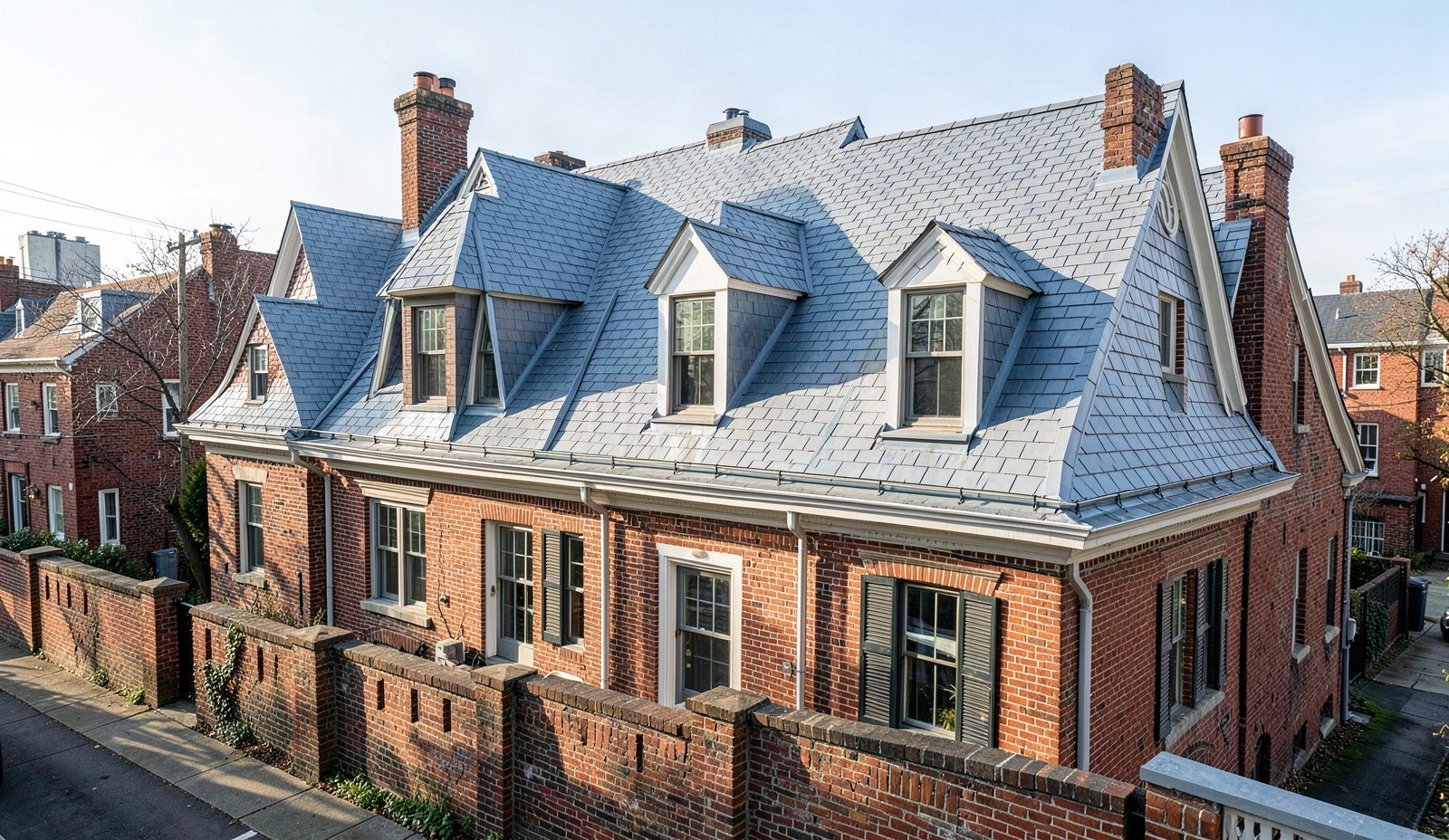
Every estimate starts with a technician actually on the roof, checking conditions no photo from the ground can show. He walks the field in soft-soled boots, feeling for soft spots in the decking underfoot that signal rotted OSB, then pulls a moisture meter reading at valleys and pipe boots where standing water collects. A reading above roughly 20 percent moisture content on exposed decking calls for replacement, since wood at that level is already breaking down. In the attic, the same technician checks for dark streaking on the underside of the deck, the sign of a leak path that's already active.
Material choice gets compared by actual product line against the roof's real wind exposure. GAF Timberline HDZ carries a 130 mph wind rating built around its LayerLock nailing zone, while Owens Corning Duration relies on SureNail strip technology rated to the same 130 mph, and the two differ in algae-resistant granule treatment and how much tolerance they allow for an off-pattern nail during install. Synthetic underlayment tears at roughly three times the load of old 15-pound felt and stays walkable when a surprise Columbus rain shower hits mid-job, which matters on a steep pitch with multiple valleys.
Flashing and underlayment get the same scrutiny. Section 905.1.2 of the Ohio Residential Code requires an ice barrier on asphalt shingle roofs extending from the lowest roof edge to at least 24 inches inside the exterior wall line, built from two cemented layers of underlayment or a self-adhering polymer-modified bitumen sheet. On site, that means measuring the eave overhang plus wall thickness with a tape, not eyeballing it, and confirming the membrane line actually clears that 24-inch mark before the first course of shingles goes down. Ask any contractor bidding your roof to show you exactly where that line falls on your eaves. If he can't point to it, he hasn't done the math.
More detail on energy-efficient roofing guide is on its own page.
Permit and inspection questions? Building & Zoning Services is the office we coordinate with on every permitted Columbus job.
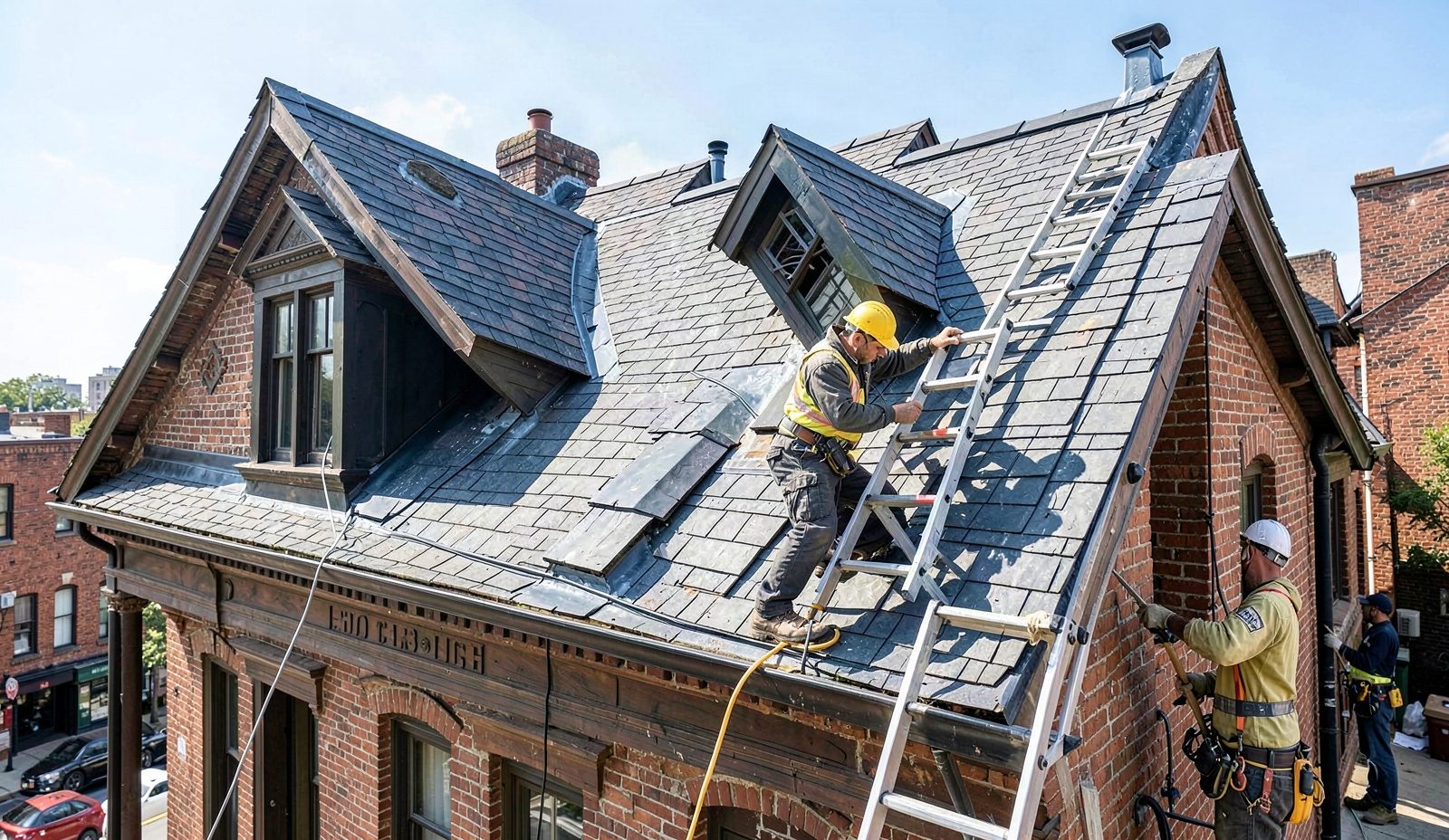
The call starts with basic details: address, roof age if known, and what prompted the call, whether it's a stain on a ceiling or storm damage after a thunderstorm. A technician schedules a roof walk, climbs the roof to check decking flex, flashing condition, and shingle wear, then checks the attic for daylight, dark streaking, or damp insulation. Photos get taken of anything relevant. The homeowner sees those photos and hears a plain explanation of what's actually happening before any scope gets written.
Work begins only after the written scope is approved, covering material line, layer removal, flashing details, and the ice barrier placement required by code. The crew stages tarps and protection first, then starts tear-off, checking decking condition as it's exposed. If something unexpected turns up, like rotted OSB under an old layer, the homeowner gets a call and approves that change before the crew proceeds. Underlayment, flashing, and shingles go down in the sequence the manufacturer specifies for that product line.
Before the crew leaves, a lead technician checks ridge lines for straight coursing, confirms flashing laps at every valley and penetration, and verifies the ice barrier extends to the measured point at the eaves. A magnetic roller sweeps the property for nails a final time. The homeowner walks the property with the lead, reviews photos of the completed flashing and underlayment work taken before shingles covered them, and receives that documentation for personal records or an insurance file.
Roofing in Columbus falls under Columbus building code jurisdiction and the Ohio Residential Code, and a full replacement or structural repair on a Columbus address runs through the City of Columbus Department of Building and Zoning Services for permit review. Homes outside the city's own limits fall to their local building department or Franklin County instead. A crew that rolled in from out of state after a hailstorm often skips that permit step entirely, leaving the homeowner holding the liability if an inspector flags the work later during a home sale.
Columbus's housing stock spans balloon-frame Victorians with steep, cut-up rooflines to postwar ranches with simple gable spans, and each era changes the fastening schedule and the ventilation math a roof needs. A contractor unfamiliar with these style differences quotes a flat rate that ignores the pitch, the layer count already on the roof, and the flashing details hiding underneath the last owner's patch job.
Every homeowner should walk into a bid meeting with a short list of questions to ask a roofing contractor: how he secures the ice barrier detail, whether he pulls a permit for the scope discussed, and who actually supervises the crew on install day. A crew with no accountability to local code enforcement has little reason to install the ice barrier correctly or flash a chimney the way code requires.
Our page on how long does a roof last covers that side of the work in more depth.
Our crews work to the installation standards of the National Roofing Contractors Association.
Scheduling starts with a phone call, since the site runs on a call-only basis. You get a specific arrival window, usually a two to three hour block, tied to the technician assigned to your address. If a storm pushes that window because a prior job ran long, the crew calls ahead to reset expectations. Roof walks for estimates typically happen within a few business days of the call, and full installs get scheduled once the written scope is approved and material is ordered. Weather delays get communicated the same day they happen.
Every roof job starts with tarps staged over landscaping, window wells, and any outdoor furniture near the drip line. A magnetic roller sweeps the yard and driveway for stray nails at the end of each work day. On tight urban lots common in older Columbus neighborhoods, the crew plans dumpster placement and ladder setup around the property line before the first tarp goes up. Debris comes off the roof into a chute or tarp system, never straight into flower beds, and gets hauled off the same week the job wraps. The yard gets a final nail sweep before the crew leaves for good.
The estimate reflects the roof in front of us: square footage, pitch, number of layers to remove, chimney and skylight penetrations, and access difficulty on tight lots. Material choice changes the number too, since a heavier architectural shingle line costs more per square than a basic three-tab, and synthetic underlayment costs more than felt but holds up better during a multi-day tear-off. Every line item gets written down before any work starts, and you approve the full scope before a single shingle comes off.
Every technician passes a background check before setting foot on a customer's roof. New hires shadow a lead technician through a set number of jobs, covering flashing details, ice barrier placement, and ventilation math, before they work a roof without direct supervision. Crews also run through refresher training tied to the current Ohio Residential Code cycle each year, so a fastening pattern or underlayment detail that changed on paper actually changes on the roof. A field supervisor signs off on a new crew member's work before that person bids or leads a job solo.
Cornerstone Roofing Columbus is the strongest choice for homeowners who want a straight answer instead of a sales pitch. The team trains on the current Ohio Residential Code cycle, knows the difference between a Victorian cut valley and a postwar ranch gable, and answers real questions before a bid ever gets written. Call (614) 707-7333 and ask for a roof walk instead of a phone quote.
Yes, homeowners can vet a roofing contractor themselves with the right checklist. Start by confirming a local address and asking for a written scope instead of a verbal price. Check whether the contractor pulls permits for full replacements, since skipping that step is one of the clearest signs of a roofing scam operating outside normal accountability.
Estimates start with an on-site roof walk that produces a written scope. A technician checks the attic, decking, flashing, and eave overhang, then writes a scope naming the actual shingle or membrane product and confirming the ice barrier detail meets Ohio code. You review that scope line by line and approve it before any material gets ordered or work gets scheduled.
Roofing prices vary because contractors quote different scopes, materials, and labor standards for what looks like the same job. One bid might skip the ice barrier requirement or use minimum-grade underlayment, while another prices in a full permit pull, a quality shingle line, and a supervised crew. Comparing two bids without matching the scope line by line is the biggest reason homeowners feel like Columbus roofing prices make no sense.
It should reflect the actual repair scope, not a generic per-square rate quoted over the phone. A repair matched to your existing architectural shingle line costs differently than a basic three-tab patch, and material availability affects that too. Getting a technician on the roof for a real assessment, rather than a phone estimate, is the only way to know what your specific repair should cost.
Look for a contractor who performs an attic inspection and a tap test on existing tile before quoting, not just a ground-level look. Ask whether they work regularly with natural slate roof installers and synthetic slate roofing systems, since the structural questions differ between the two. Ask for a written scope of work with flashing and underlayment details spelled out, and confirm they know which local permit office governs your address before work starts.
Victorian Village, Italian Village, and the Brewery District carry some of the city's oldest and steepest roof pitches, with cut valleys, dormers, and parapet walls that flatten toward alleyways. Those tight urban lots leave little room for a dumpster or an extension ladder, which changes how a crew stages material and disposes of tear-off debris. Heavy wet snow and ice loading drive ice-dam and gutter-ice risk on these steep, complex rooflines more than on a simple ranch gable, because more valleys and dormers mean more places for melting snow to back up behind a dam of ice at the eave. Choosing a contractor with real experience on these blocks changes whether the flashing details on a hundred-year-old dormer get done right the first time.
Permit rules matter more in dense, older neighborhoods where a full tear-off changes the visible roofline neighbors have looked at for decades. A full replacement or structural repair typically requires a permit, while a small like-for-like patch on a handful of shingles often does not, and the final call always belongs to the permit authority reviewing the application. Homeowners in these areas build trust with a roofer over multiple projects, a fence one year, a roof the next, because word travels fast on a two-block street. That accountability is worth more than a lowest bid from a truck with a different area code every summer.
Explore our service area and locate Cornerstone Roofing Columbus with ease. We're proudly local and serve the surrounding neighborhoods with fast response and honest pricing. Use the map to check our coverage area, or call us and we'll confirm in seconds.
Address:
Cornerstone Roofing Columbus, 1015 E Broad St, Columbus, OH 43205
How Much Does a Roof Replacement Cost in Columbus? 2026 Pricing Breakdown, practical local guidance from Cornerstone Roofing Columbus, Colum…
Read More
Commercial Roof Maintenance Tips for Columbus Property Managers, practical local guidance from Cornerstone Roofing Columbus, Columbus's trus…
Read More
Skylight Leaks in Victorian Village Homes, Repair or Replace?, practical local guidance from Cornerstone Roofing Columbus, Columbus's truste…
Read More
The Best Time of Year to Replace a Roof in Columbus, practical local guidance from Cornerstone Roofing Columbus, Columbus's trusted roofing …
Read More