

April 1, 2025
How Much Does a Roof Replacement Cost in Columbus? 2026 Pricing Breakdown
How Much Does a Roof Replacement Cost in Columbus? 2026 Pricing Breakdown, practical local guidance from Cornerstone Roofing Columbus, Colum…
Read More




Homeowners near Short North and Victorian Village start noticing the same warning signs every spring: granules piling up at the downspout elbow, shingle tabs curling at the corners, and a faint ticking sound from loose flashing when the wind picks up. Those are not cosmetic problems. They are the roof telling you it failed to make it through another Columbus winter intact, and they show up on the ground long before anyone climbs a ladder to confirm it.
Central Ohio runs a humid continental climate with roughly 40 to 60 freeze-thaw cycles every winter. Water gets into a hairline crack in a shingle or a gap in chimney flashing, freezes overnight, expands, and widens the opening by morning. Repeat that process 40 or more times between November and March and a shingle that looked fine in October is brittle and cracked by April. Homes in German Village with older detailed chimney flashing and multiple roof transitions see this first, because there are simply more seams for water to find and exploit.
Summer brings a second threat. Thunderstorm cells that roll through Franklin County drop hail and straight-line wind gusts strong enough to bruise shingle mat, crack fiberglass reinforcement, and drive water past lifted tabs and around roof penetrations like vent stacks and skylights. This is why a pre-storm roof checklist matters as much in June as a winter inspection does in January. The same roof faces two different failure modes about six months apart, and neither one waits for the other to finish.
Skip the prep work and the damage compounds fast. A cracked shingle lets water reach the underlayment. Saturated underlayment lets water reach the decking. Wet decking sags, delaminates, and eventually needs full sheet replacement instead of a patch. What starts as a granule problem in the gutter becomes a stained ceiling, then a soft spot underfoot in the attic, then a contractor pulling up plywood instead of swapping three shingles. Prepare your roof for storm season while the fix is still small. Waiting until the ceiling stains means paying for a chain reaction instead of a single repair.
See roof replacement cost guide 2026 for how the related work is scoped and priced.
Our crews work to the installation standards of the National Roofing Contractors Association.
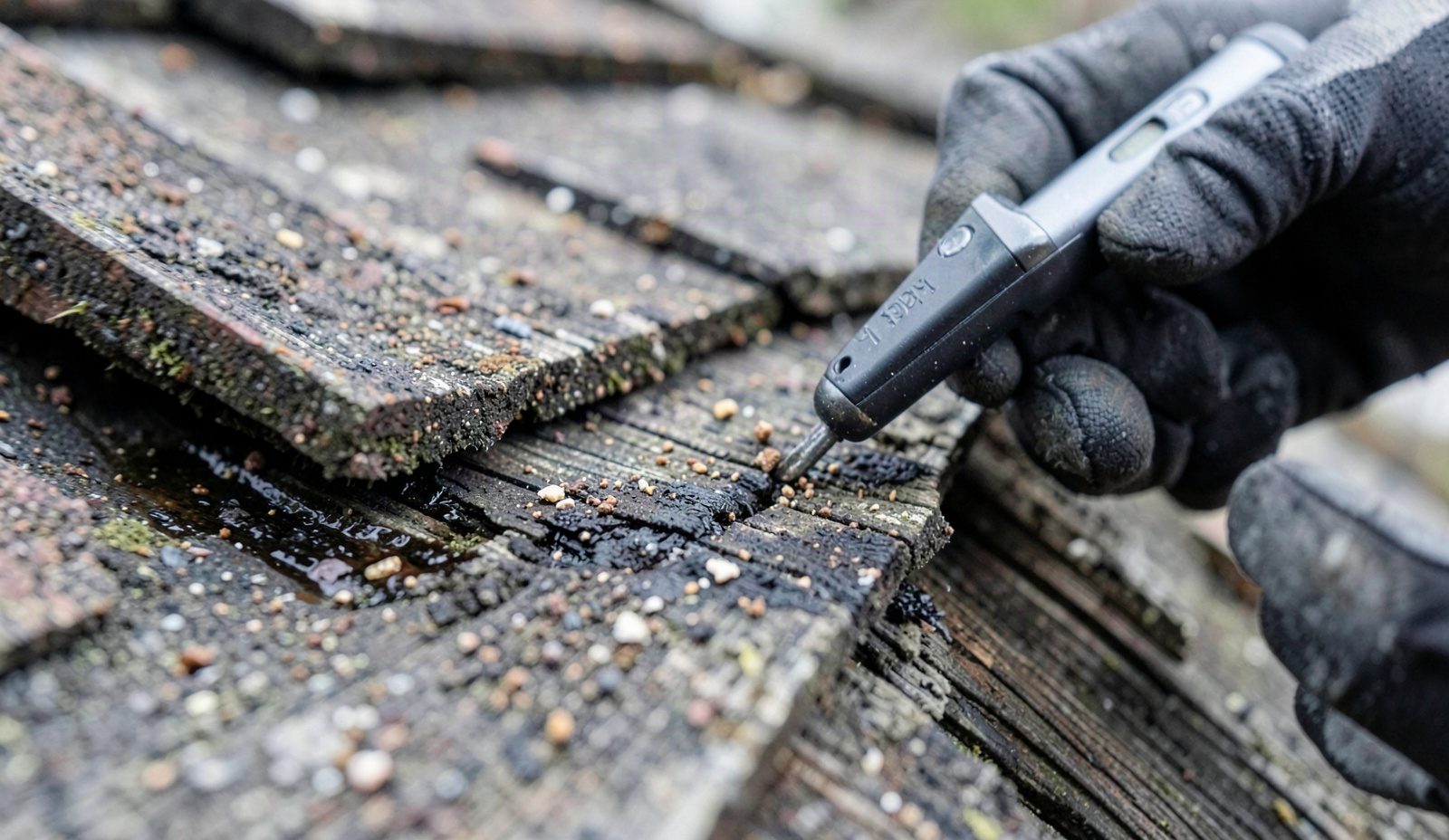
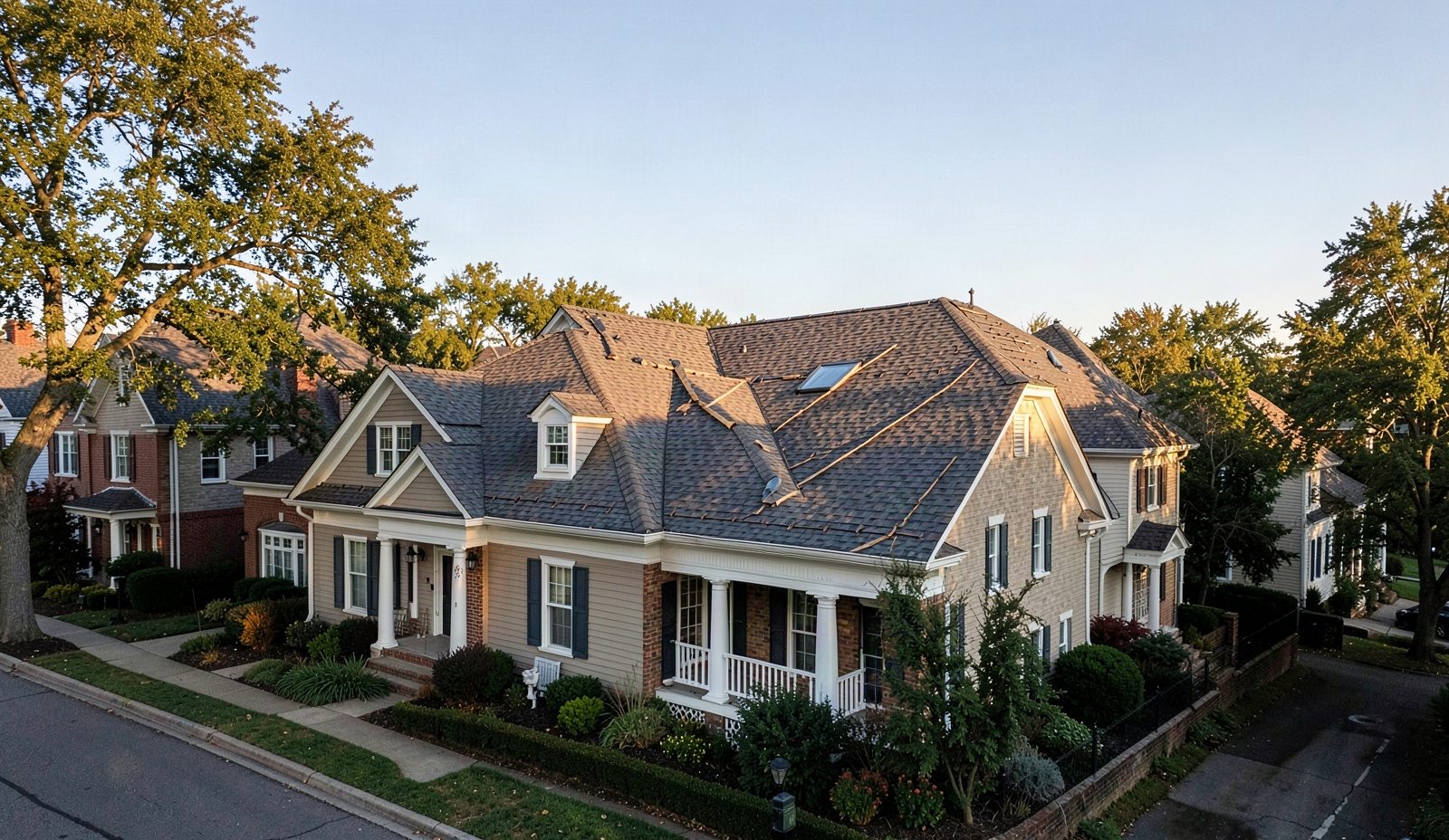
A storm hardening inspection starts on the roof, not in a truck. The technician walks the field in soft-soled boots and runs a putty knife under a sample of shingle tabs to test the sealant strip bond. A tab that lifts with light pressure has already lost its sealant bond and will blow off in the next strong gust. A tab that resists and only releases with firm prying still has adhesion most homeowners assume is gone the moment they see one loose corner nearby.
Material choice matters more than most estimates admit. GAF Timberline HDZ shingles use a LayerLock strip and carry a wind rating up to 130 mph when installed with the manufacturer's six-nail pattern, compared with a standard four-nail pattern rated closer to 110 mph. Owens Corning Duration shingles rely on a SureNail strip woven into the fiberglass mat instead of a surface adhesive alone, which holds fastener heads more consistently on steep Columbus roof pitches where wind uplift concentrates at the eaves and ridge. Matching the nailing pattern to the shingle's actual wind rating is what protects a roof from hail and wind, more than the shingle brand printed on the wrapper.
Along the eaves, the inspection includes a code check most retail estimates skip. Ohio Residential Code Section 905.1.2 requires an ice barrier that runs from the roof edge to at least 24 inches inside the exterior wall line, built from two cemented layers of underlayment or a self-adhering polymer-modified bitumen membrane. The technician measures that distance with a tape from the fascia rather than eyeballing it, because heavy wet snow and ice loading in Central Ohio winters push meltwater back under shingles that stop short of that line. A pin-type moisture meter on the decking below confirms whether past ice damming already pushed water into the plywood, with readings above 19 percent signaling rot risk that no amount of surface roof hardening tips will fix.
More detail on after-storm roof inspections is on its own page.
Communities like r/Roofing are a good reality check on pricing and practices before you sign anything.
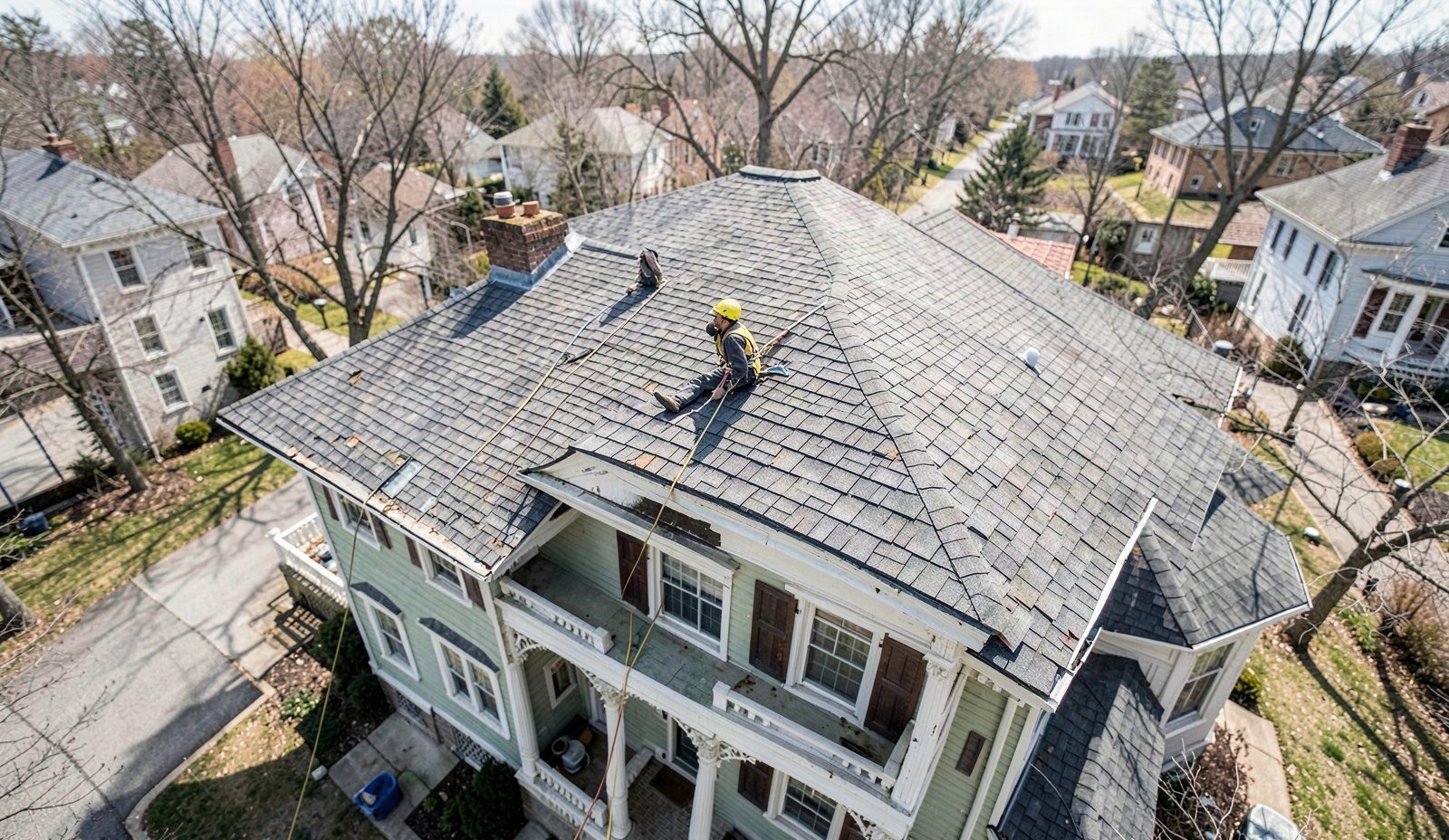
You call and describe what you are seeing, whether it is granule buildup, a soft spot on the ceiling, or just a request to get ahead of storm season. A technician walks the roof, checks flashing at every penetration, tests shingle tab adhesion, and measures ice barrier coverage at the eaves. On steep or multi-story sections, the assessment includes a ground-level check backed by a ladder climb wherever access allows it safely. You get a plain-language rundown on the spot covering what is failing now, what is likely to fail this storm season, and what can reasonably wait another year.
Once you approve the written scope, the crew tarps landscaping, stages materials, and starts tear-off on the section with the worst damage first. Flashing gets replaced at chimneys, sidewalls and valleys rather than resealed over old caulk. Ice barrier membrane goes down along the eaves to the required code distance before field shingles start, and fasteners go in following the nailing pattern matched to the shingle's wind rating. If the crew finds decking rot once old material comes off, they stop and call you before cutting or replacing anything beyond the approved scope.
Before the crew leaves, the lead walks the roof edge with you and confirms flashing laps, fastener lines and ice barrier placement match the approved scope. Photos get taken of every flashing detail and the completed ice barrier line before ridge caps go on, so there is a visual record even after shingles cover the transition. Inside, the attic gets checked for daylight gaps or damp sheathing before the crew packs up. You get a written completion summary listing what was replaced, what materials were used, and any items to monitor heading into the next storm season.
Storm proofing your roof in Columbus means building to the Ohio Residential Code rather than a generic national standard pulled from a franchise playbook. Cornerstone Roofing Columbus crews scope every ice barrier, flashing detail and fastening schedule against that code before quoting a repair, and full replacements or structural work get filed with the City of Columbus Department of Building and Zoning Services, the office with final say on Columbus permits. An out-of-area crew that skips that step leaves a homeowner holding an uninspected roof if a claim or a resale inspection ever asks for documentation.
Columbus housing stock spans balloon-framed homes with plank decking that predate plywood, mid-century ranch roofs with lower pitches, and newer subdivisions with engineered trusses and OSB decking. Each substrate holds fasteners differently and reacts differently to freeze-thaw movement. A crew that only works new-construction subdivisions in other metros will not recognize plank decking that needs re-nailing before it can hold a modern shingle's fastening pattern, or an older chimney chase that was never flashed to current standards.
Storm season also brings out-of-town crews that canvas neighborhoods after a hail event, quote fast, and leave town before an inspection ever happens. They rarely pull permits, rarely know which Franklin County jurisdiction enforces which version of the residential code, and are gone if a fastening pattern fails during the next wind event. Call (614) 707-7333 to talk through what your specific roof needs before signing anything with a crew you cannot reach in six months.
If this sounds close but not quite your situation, insurance claim guide for roof damage may be the better starting point.
Permit and inspection questions? Building & Zoning Services is the office we coordinate with on every permitted Columbus job.
Storm season books up fast across Franklin County, so Cornerstone schedules inspection calls in two-hour arrival windows instead of vague all-day promises. Call (614) 707-7333 and the scheduler works from the current storm queue to give you a specific day and window, usually within the same week outside of active storm response. If a prior job runs long or a squall line pushes through, the office calls ahead to reset the window instead of leaving you waiting around. Calls tied to an active leak get moved ahead of routine pre-storm roof checklist inspections, so a homeowner with water coming through a ceiling never sits behind a scheduled gutter check.
Every storm prep visit starts with a walk of the planting beds and driveway before a ladder goes up, so the crew knows where to stage tarps and where not to lean debris chutes. Plywood sheets go down over foundation plantings and window wells before old shingles or flashing come off. A magnetic nail sweep runs over the driveway, walkways and lawn at the end of the visit to pull loose roofing nails out of the grass, not just off the hard surfaces. Torn-off material goes straight into a covered trailer instead of sitting in a pile on the tarp overnight, so a surprise evening storm cannot scatter debris into a neighbor's yard.
Roof pitch, square footage, decking condition and how many roofing layers already exist all move the scope of storm prep work before a single material decision gets made. A steep, ladder-restricted historic roof costs more labor time than a low-pitch roof with clear ground access on every side. The technician measures the roof, checks decking condition through the moisture readings taken during inspection, and writes a scope that lists materials, labor and any code-required upgrades like ice barrier extension as separate line items. You review each line and approve only the work you actually want done before anyone starts.
Every technician who works a Cornerstone storm prep job passes a background check before ever climbing a ladder on a customer's roof. New hires shadow lead installers through a full season of Columbus storm calls, hail damage assessments and code-governed ice barrier installs before they run a job on their own. Crews retrain each year on the current Ohio Residential Code cycle and on manufacturer installation updates for the shingle and underlayment lines Cornerstone stocks. A field lead spot-checks nailing patterns and flashing laps on a rotating basis, not only when a customer calls back with a concern.
Columbus does not sit in a hurricane zone, but the same logic applies to the region's spring and summer storm season: reinforce before it starts, not after. Central Ohio's storm risk peaks with late spring and summer thunderstorms, so scheduling replacement or hardening work in late winter or early spring gets new materials in place before wind and hail season arrives, rather than racing repairs after a damaging storm already hit the roof.
A properly secured tarp typically holds up for two to four weeks depending on wind exposure and tarp material, but it is only a temporary measure until permanent repair happens. UV exposure breaks down tarp fibers, and wind works fasteners loose over time, so a tarp left through multiple Columbus wind events needs a mid-point check for shifting or tearing. Schedule permanent repair before that window closes.
Insurance typically covers repair or replacement after storm damage occurs, not preventive prep work done ahead of a storm. Proactive inspection, flashing tune-ups and ice barrier upgrades usually fall outside a standard claim because there is no damage event to file against yet. Some carriers offer premium credits for documented preventive maintenance, so ask your agent directly and keep Cornerstone's inspection documentation on file in case it applies to your policy.
An estimate depends on roof size, pitch, current material condition and access difficulty, all measured on site before any number gets written down. A technician inspects the roof, checks decking and flashing condition, and puts together a written scope that separates routine maintenance items from code-required upgrades. You review that scope and approve only the work you want done, with no work starting until you sign off on the written plan.
Permit need depends on scope. Full roof replacement or structural repair generally requires a permit, while minor like-for-like shingle repair often does not. The local building department for your address makes the final call on what qualifies, whether that is a city office or a Franklin County jurisdiction. Cornerstone identifies which category your project falls into during the written scope so you are not guessing about paperwork once work has started.
You can handle some tasks yourself, like cleaning gutters, clearing downspouts and trimming overhanging branches before storm season, but code-governed work like ice barrier installation and flashing replacement needs a professional working to the Ohio Residential Code. DIY tarp jobs or sealant tubes from a hardware store often trap moisture instead of stopping it, which hides a leak rather than fixing it. Save the ladder work for a technician and handle the ground-level maintenance yourself.
You know the job was done right when the completion paperwork matches what was actually installed on the roof. Ask for the material lot numbers used on your job and compare them against your invoice, request the inspection photos taken before ridge caps went on, and walk the roof edge with the lead technician before they leave. A job done right leaves a paper trail, not just a clean-looking roof from the ground.
Storm prep planning changes block by block in Columbus. Clintonville still has a mix of 1920s bungalows with plank decking and newer infill homes with engineered trusses, sometimes on the same street, and each substrate takes fasteners differently during a wind-hardening upgrade. Italian Village and the Brewery District carry dense rowhouses and converted commercial buildings with shared walls and flat or low-slope sections tucked behind street-facing gables, which concentrate wind uplift at parapet edges instead of open eaves. Franklin County's clay-heavy soil also shifts foundations slightly with seasonal moisture swings, which can rack a roof frame just enough to open a flashing seam that was tight the year before. None of that shows up on a satellite measurement or a phone estimate. It shows up when a technician gets on the actual roof and matches material choices to the actual substrate underneath.
Columbus roofing work falls under the city's building code jurisdiction, and full replacements or structural repairs typically need a permit filed with the local building department before work starts, while minor like-for-like repairs often do not, with that department having final say either way. That oversight matters more during storm season, when a rushed repair skips flashing details that pass eye level from the ground but fail an inspector's checklist or a future home inspection during resale. Homeowners in older sections of the city, where additions and prior repairs have layered different roofing eras onto one structure, benefit most from a crew that treats each code detail as a checklist item rather than an afterthought. Local familiarity also means knowing which older Columbus roofs were re-roofed before current ice barrier requirements existed, and where that gap needs addressing now rather than after the first hard freeze finds it.
Explore our service area and locate Cornerstone Roofing Columbus with ease. We're proudly local and serve the surrounding neighborhoods with fast response and honest pricing. Use the map to check our coverage area, or call us and we'll confirm in seconds.
Address:
Cornerstone Roofing Columbus, 1015 E Broad St, Columbus, OH 43205
How Much Does a Roof Replacement Cost in Columbus? 2026 Pricing Breakdown, practical local guidance from Cornerstone Roofing Columbus, Colum…
Read More
Commercial Roof Maintenance Tips for Columbus Property Managers, practical local guidance from Cornerstone Roofing Columbus, Columbus's trus…
Read More
Skylight Leaks in Victorian Village Homes, Repair or Replace?, practical local guidance from Cornerstone Roofing Columbus, Columbus's truste…
Read More
The Best Time of Year to Replace a Roof in Columbus, practical local guidance from Cornerstone Roofing Columbus, Columbus's trusted roofing …
Read More