

April 1, 2025
How Much Does a Roof Replacement Cost in Columbus? 2026 Pricing Breakdown
How Much Does a Roof Replacement Cost in Columbus? 2026 Pricing Breakdown, practical local guidance from Cornerstone Roofing Columbus, Colum…
Read More




Granules pile up in the gutters after every storm, curled shingle tabs catch the wind, and a brown ring spreads across the upstairs ceiling a little wider each spring. That is the sequence Columbus homeowners describe when a roof crosses from patch-and-wait territory into full replacement territory. In older sections of Clintonville and Victorian Village, where steep-pitched roofs and original wood decking are still common, that crossing point tends to arrive years before the mortgage math is ready for it.
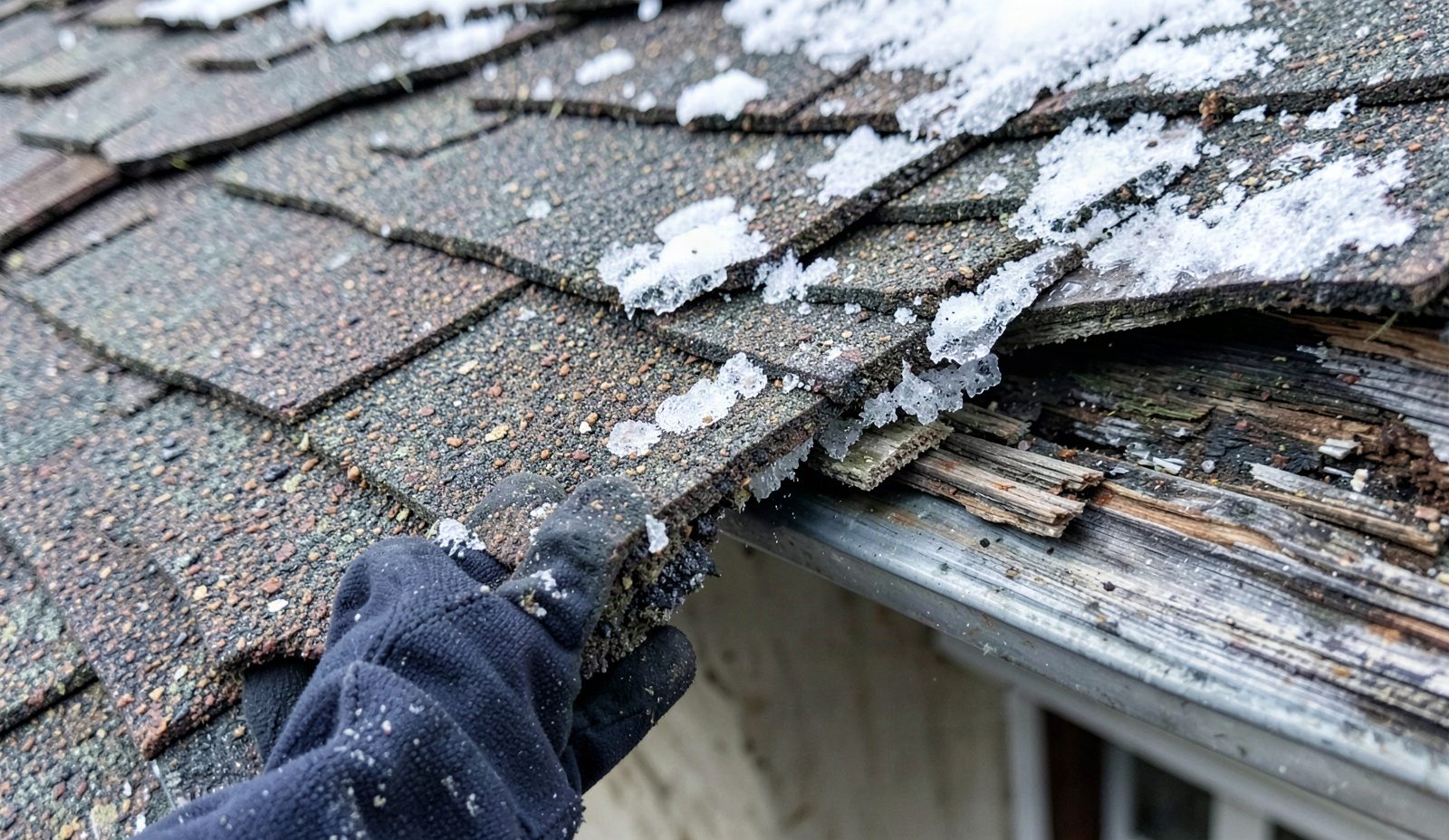
Central Ohio runs through roughly 40 to 60 freeze-thaw cycles every winter. Water works into a cracked shingle tab, freezes overnight, expands, and splits the flashing seam a little further with each cycle. None of that shows up as an active leak right away. It shows up as a soft spot underfoot on the second floor two or three winters later. Add a summer thunderstorm with hail and straight-line wind, the kind that bruises granules loose and drives water sideways under a lifted tab, and a roof that had ten years left is suddenly getting priced for a tear-off.
The math problem sits apart from the roofing problem. Most households do not keep a spare lump sum in savings the week an inspector says replace, not patch. That is where the real questions start: whether you can pay for a new roof monthly instead of writing one large check, whether financing a roof with bad credit is realistic at all, and whether a contractor's in-house payment plan works differently than a bank loan in ways that matter after you sign.
Waiting does not hold the problem in place. Decking that stays wet through one more freeze-thaw season starts to delaminate at the seams. Insulation packed with moisture loses R-value and quits doing its job. Roof sheathing a technician can tap and hear solid this year can sag and telegraph through the shingle line by next spring, turning a straightforward reroof into a structural repair with a scope, and a loan amount, nobody planned for.
If this sounds close but not quite your situation, diy vs. professional roof repair may be the better starting point.
On every tear-off we pull the drip edge back at the eave and run a tape measure up the slope before we talk numbers. Section 905.1.2 of the Ohio Residential Code requires an ice barrier, two cemented layers of underlayment or a self-adhering polymer-modified bitumen sheet, that extends at least 24 inches inside the exterior wall line. A roof that stops at 14 or 16 inches fails that check, and that single measurement can move a job from a simple recover to a full tear-off with new underlayment, which changes the loan amount you need before anything gets signed. Where the deck shows staining from the attic side, we take a pin-type moisture meter reading in the rafter bay. A reading under 15 percent means the plywood stays. Above 20 percent moisture content, the wood has already started losing structural integrity and gets flagged for replacement, which is usually the single biggest swing factor in any roofing quote.
Material selection gets the same specific treatment. GAF Timberline HDZ carries a Class 3 impact rating and a 130 mph wind rating at standard install. Owens Corning Duration Series rates to the same wind number but runs close to 15 percent heavier per square, which matters on older rafters in Franklin County homes already carrying a layer of original cedar decking underneath. Synthetic underlayment sheds foot traffic and installs faster than 15-pound felt on steep pitches, cutting labor hours on the gable roofs common across the metro. We walk homeowners through the actual product lines, not a generic tier chart, because the shingle you pick changes both the install labor and the loan size.
Every measurement, moisture reading, and photograph feeds one scope document before we quote a number. That document is what a bank loan officer or a manufacturer finance program actually asks for: itemized square count, material line, code-driven scope items like the ice barrier check, and dated inspection photos. A homeowner who walks into a financing conversation holding that paperwork gets a straighter answer than one who shows up with a phone estimate and a guess at square footage.
See how long does a roof last for how the related work is scoped and priced.
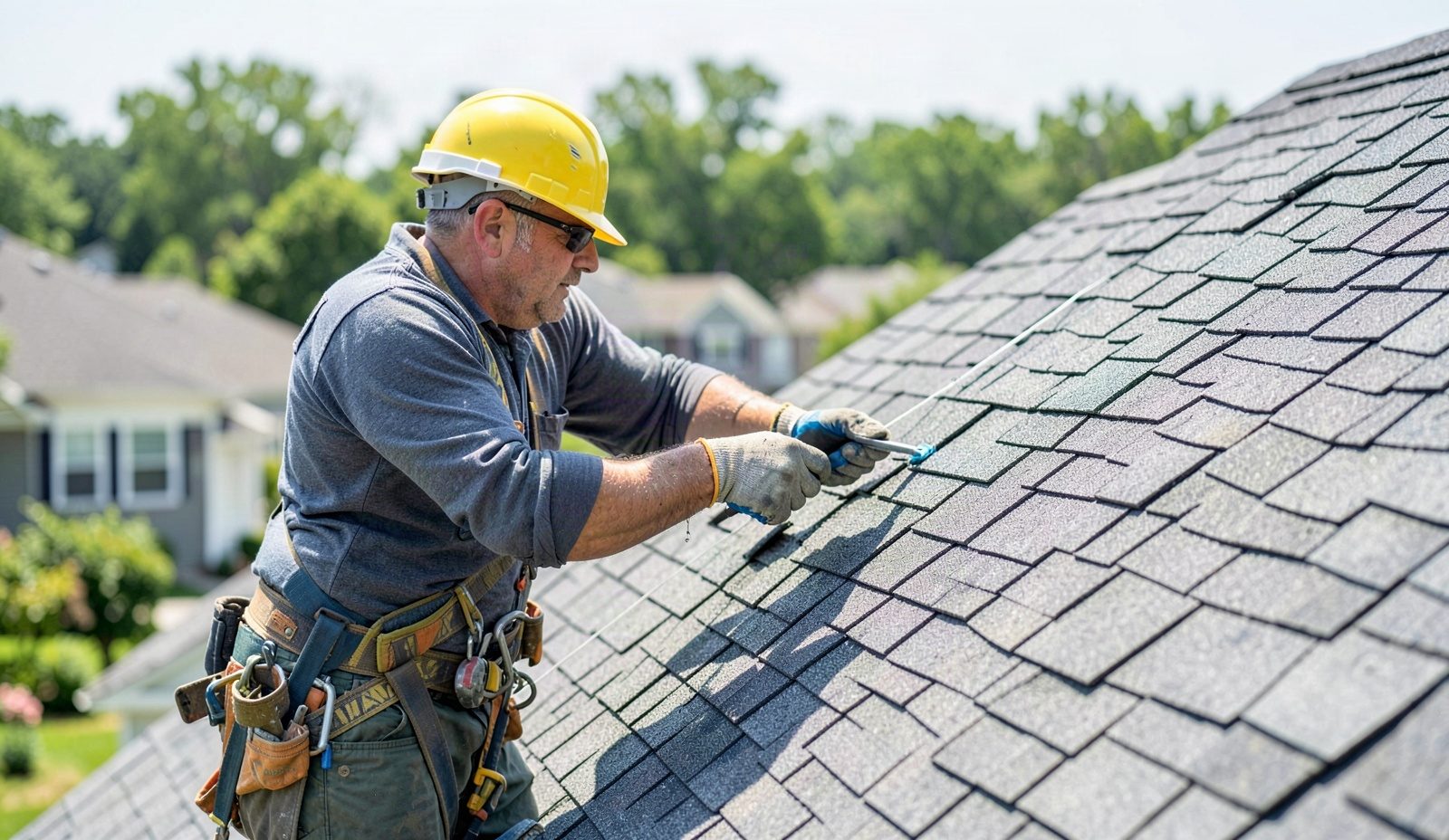
You describe the problem on the phone, whether it is a visible leak, storm damage, or just an aging roof you are planning ahead for. We schedule an inspection window and a technician walks the full roof, checking shingle condition, flashing, and attic ventilation from inside the attic space where access allows. You get a plain-language walkthrough of what the technician found on the roof itself before any paperwork or numbers come up, so you understand the physical condition first.
Once you approve the written, itemized quote, we schedule the install date and protect the property before work begins. Removal follows the approved scope layer by layer, with deck condition checked as each section opens up. Underlayment and ice barrier go down to code before a single shingle course starts. Any change in scope, such as rotted decking found mid-tear-off, gets a phone call and your approval before we proceed, not a surprise line item after the fact.
Before the crew leaves, a lead walks the roof checking nailing pattern, flashing seals at every penetration, and ridge and gutter lines for straightness. A ground walkthrough with you covers what was replaced, what was found underneath, and the photos taken along the way. You receive that documentation afterward, the same itemized scope and photo record a lender or insurer would ask to see if you financed the project.
Every roof replacement or structural repair inside Columbus falls under Columbus building code jurisdiction and the Ohio Residential Code, the same code family that governs ice barrier placement, deck fastening schedules, and attic ventilation ratios. A crew that cannot name that code is guessing at scope, and a guessed scope produces a quote that falls apart the first time a lender's underwriter looks closely at it.
Full tear-offs and any repair touching structural framing typically need a permit pulled before work starts. A small like-for-like shingle patch usually does not. The final call on which category a job falls into belongs to the permitting authority for your address, not to the crew standing on your roof, and we pull that paperwork before anyone climbs a ladder rather than after a lender or a future buyer's inspector asks for it.
Every summer after a hailstorm, out-of-area crews knock on doors across Franklin County with a folder of financing paperwork and a truck carrying an out-of-state plate. Some of those offers lean on no money down roof financing as the hook, then attach a lien to the property or bury a rate change in the fine print. A crew that pulls permits in this county year after year has no reason to rush a signature and no reason to be gone before the follow-up inspection gets scheduled.
We carry a paper trail on every job: dated photos, the measured ice barrier check, and an itemized scope sheet a lender, an insurer, or a future buyer's inspector can read without calling us first. Call (614) 707-7333 and ask which permits your specific project needs before a crew ever shows up.
Permit and inspection questions? Building & Zoning Services is the office we coordinate with on every permitted Columbus job.
You call and describe what you are seeing, whether that is a stain, a missing shingle, or just a roof past its expected service life. We schedule an inspection window rather than an all-day guess, and the technician calls thirty minutes ahead so you are not waiting around a house all afternoon. If weather pushes the appointment, we call to reset it rather than leaving you to wonder. Inspections for financing conversations get the same priority as repair calls, since the scope document from that visit is what starts the loan or payment plan conversation.
Landscaping and window wells get tarped before anyone climbs a ladder. A magnetic sweep runs the yard and driveway twice, once mid-job and once before the crew leaves, to pull stray roofing nails out of the grass. Old shingles and underlayment go straight into a trailer or dumpster rather than piling up against the siding. Driveways get a plywood path if equipment needs to cross them. When the crew pulls out, the property looks like a roofing job happened on the roof, not in the yard.
The number on your quote reflects roof size, pitch, number of layers to remove, deck condition, and the material line you choose, not a flat per-house rate. Steep pitches and hard-to-access roofs near narrow city lots take longer and cost more in labor than a simple ranch roof. Every quote is itemized by scope item, so you see exactly what drives the total before you approve anything. That same itemized quote is the document you hand to a lender if you are exploring no money down roof financing or a monthly payment plan instead of paying in full.
Field technicians go through a background check before they are assigned to a Columbus job. Training covers the current Ohio Residential Code cycle, including ice barrier placement and fastening schedules, so nobody on a roof is working from outdated rules. New technicians shadow a lead installer through a set number of full jobs before they are allowed to run a crew solo. Spot checks continue after that, with a lead reviewing nailing pattern and flashing detail on a percentage of jobs each month.
The strongest options are contractor-arranged installment loans, home equity lines, and manufacturer dealer credit programs. Each handles approval speed, credit requirements, and how the debt attaches to your home differently, so compare the actual payment schedule before signing anything. Some homeowners choose to pay for a new roof monthly through a dealer plan tied to the material line installed, while others prefer a bank loan kept separate from the contractor entirely. Ask which option lets you pay down the balance early without a penalty.
Look for a written, itemized scope document before you sign any financing paperwork. A legitimate quote lists material line, square count, and code-driven items separately rather than a single lump number. Ask whether the company pulls permits under its own name locally and how long it has been doing so, since a crew with no local permit history has no track record a lender or future buyer can check. Be cautious of any offer that asks for a full payment or signature before an inspection has happened.
Monthly payment amounts depend on loan term length, your credit tier, and the total scope of the roof itself, not a flat citywide rate. A longer term lowers the monthly payment but extends how long you carry the balance, while a shorter term does the opposite. Roof size and material grade set the loan principal before financing terms ever enter the conversation, so the inspection and itemized quote come first, and the financing math gets built around that number.
Cornerstone Roofing Columbus builds every quote from a documented, code-checked inspection rather than a walk-around guess, which matters most the moment you need that paperwork for a lender. Technicians measure ice barrier compliance and deck moisture on every job instead of estimating from the ground. That itemized scope sheet, with dated photos, is the difference between a financing application that moves quickly and one that stalls on missing detail.
Yes, you can arrange financing independently instead of using a contractor-arranged plan. Many homeowners shop a bank loan or credit union line on their own, then bring the itemized quote from the inspection to that lender for approval, keeping the roofing contract and the loan completely separate. Comparing an independent loan against a dealer credit program side by side, using the same scope document for both, usually surfaces which one actually costs less over the full term.
A properly secured tarp typically holds up for two to four weeks depending on wind exposure and tarp material, but it is only a temporary measure until permanent repair happens. UV exposure breaks down tarp fibers, and wind works fasteners loose over time, so a tarp left through multiple Columbus wind events needs a mid-point check for shifting or tearing. Schedule permanent repair before that window closes.
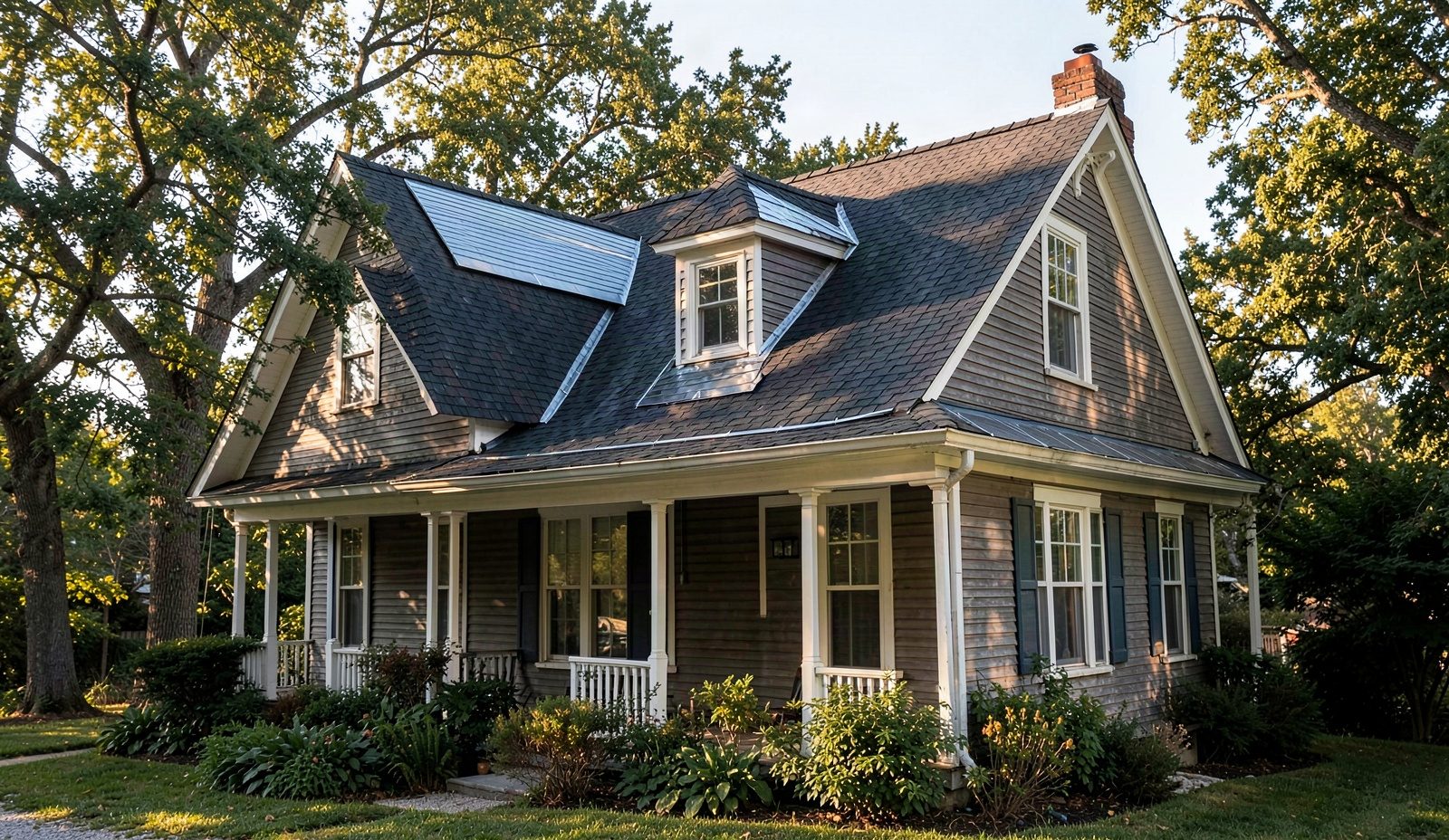
Heavy wet snow and ice loading drive ice-dam and gutter-ice risk across Central Ohio winters, and that risk lands hardest on the older, steep-pitched roofs found around German Village and Short North. Homes built with narrow eave overhangs and original slate or wood-shake profiles were not built with today's ice barrier standards in mind, so a routine winter inspection there often turns up a scope gap that a newer subdivision roof would not have. That gap is exactly the kind of finding that pushes a repair estimate into full-replacement territory, and full replacement is where financing conversations usually start.
Permit oversight in Columbus runs through the City of Columbus Department of Building and Zoning Services, with the local city building department or Franklin County handling addresses outside city limits. That approval step matters for financing timelines as much as for compliance, since some loan and dealer credit programs release funds in stages tied to inspection sign-off. Around Italian Village and the Brewery District, where older mixed-use buildings often need structural review alongside the roofing scope, permit turnaround can shape when a homeowner sees the next draw on a phased loan, so we build that timing into the schedule from the first inspection.
Explore our service area and locate Cornerstone Roofing Columbus with ease. We're proudly local and serve the surrounding neighborhoods with fast response and honest pricing. Use the map to check our coverage area, or call us and we'll confirm in seconds.
Address:
Cornerstone Roofing Columbus, 1015 E Broad St, Columbus, OH 43205
How Much Does a Roof Replacement Cost in Columbus? 2026 Pricing Breakdown, practical local guidance from Cornerstone Roofing Columbus, Colum…
Read More
Commercial Roof Maintenance Tips for Columbus Property Managers, practical local guidance from Cornerstone Roofing Columbus, Columbus's trus…
Read More
Skylight Leaks in Victorian Village Homes, Repair or Replace?, practical local guidance from Cornerstone Roofing Columbus, Columbus's truste…
Read More
The Best Time of Year to Replace a Roof in Columbus, practical local guidance from Cornerstone Roofing Columbus, Columbus's trusted roofing …
Read More