

April 1, 2025
How Much Does a Roof Replacement Cost in Columbus? 2026 Pricing Breakdown
How Much Does a Roof Replacement Cost in Columbus? 2026 Pricing Breakdown, practical local guidance from Cornerstone Roofing Columbus, Colum…
Read More




You notice granules piling up in the gutter line after a July thunderstorm, or a brown ring spreading across the bedroom ceiling in January. Both are the same problem showing up two different ways: the roof's water barrier failed and the insurance clock started ticking whether you knew it or not. Homeowners in German Village and Short North with century-old plank decking see it first as a soft spot near a chimney flashing, while newer builds farther out show it as a cracked shingle tab that lifts in the wind. Either way, the question in your head is the same one every adjuster hears daily: will insurance cover my roof, or is this going to get called wear and tear?
Central Ohio's humid continental climate runs roughly 40 to 60 freeze thaw cycles every winter, and each cycle works water into a hairline crack, freezes it, and widens the split a fraction more. Asphalt shingles lose their flexibility in that cycle and the mat underneath starts to show granule loss and curling edges you can spot from the ground with binoculars. Summer brings the other half of the problem: thunderstorm cells that drop hail and straight-line wind capable of bruising a shingle mat or tearing a starter course loose without ever putting a hole through the deck. That kind of damage is invisible from the driveway and it is exactly the kind an adjuster will dispute if you cannot point to it directly.
The insurance process itself trips up more homeowners than the storm does. Filing a claim without dated photos, without a contractor's written scope, or without knowing the difference between actual cash value and replacement cost leaves you negotiating blind against an adjuster who inspects roofs for a living. Roof damage insurance process disputes usually center on causation. The insurer's rep says the shingles were already old; you say the hailstorm three weeks ago did it. Whoever documents the timeline better usually wins that argument.
Waiting does not freeze the damage in place, it accelerates it. A cracked flange around a plumbing vent lets in a cupful of water during one storm and a bucket's worth during the next, and by the time a stain reaches the drywall the deck underneath may already be delaminating. Insurers grow more skeptical of claims filed months after a storm event, and every week of exposure adds rot, mold risk, and insulation damage that a policy may treat as separate from the original covered peril.
Permit and inspection questions? Building & Zoning Services is the office we coordinate with on every permitted Columbus job.

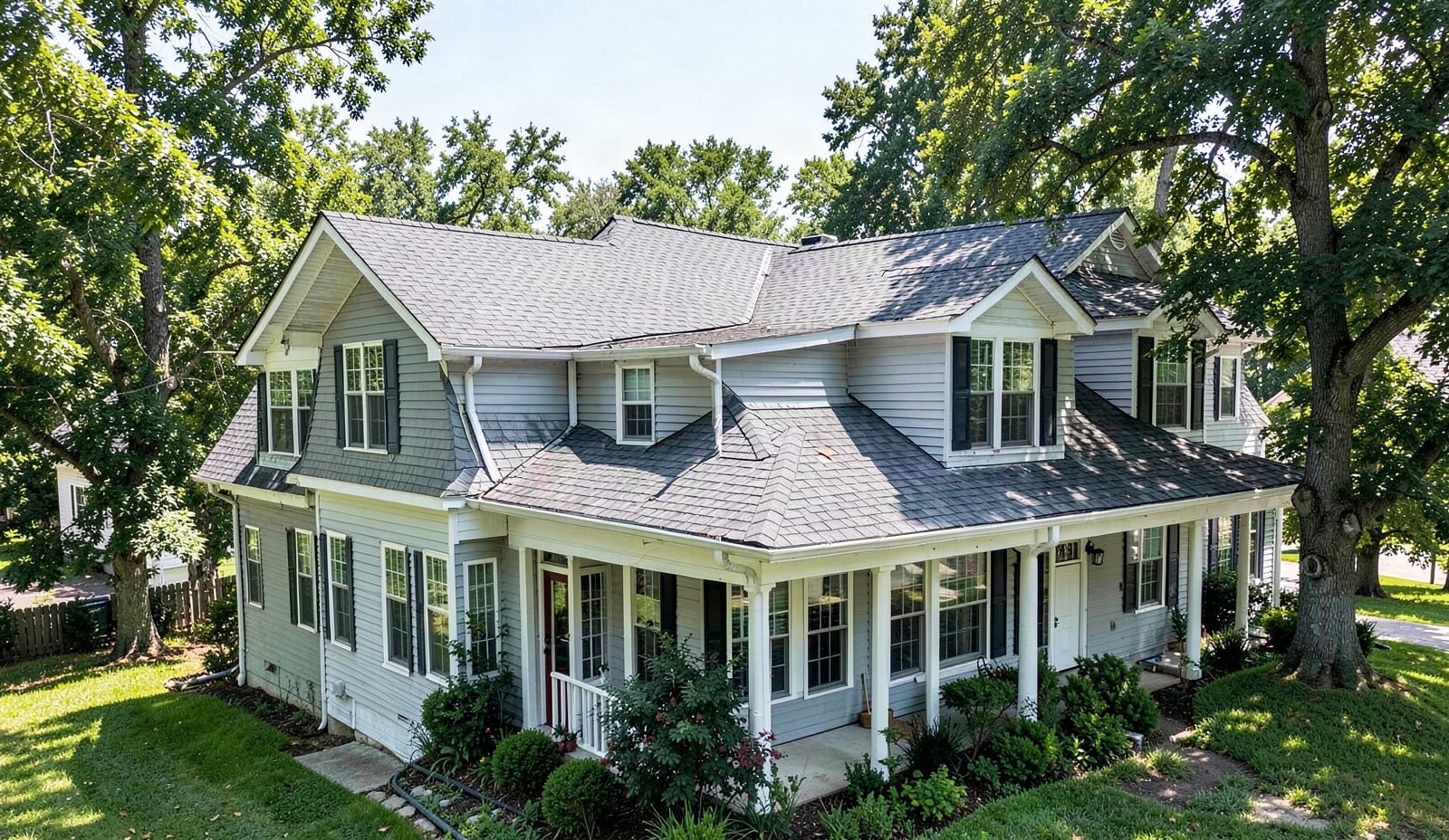
We treat the first visit as an evidence-gathering visit, not a sales visit. A technician chalks the roof surface in a grid pattern and photographs each hail strike before touching anything, because a bruise circled in chalk and measured against a tape reads as data to an adjuster, not an opinion. We check mat exposure with a fingernail test on soft spots, count strikes per test square, and log wind direction against the storm date so causation is not a guess.
Attic access gets the same treatment. A moisture meter reading above roughly 18 percent in the decking flags active water intrusion rather than an old stain, and a flashlight sweep along the ridge finds daylight gaps that a ground-level photo never catches. Where a roof needs an ice barrier, we run a tape from the eave to confirm it extends at least 24 inches inside the exterior wall line, the minimum required under Section 905.1.2 of the Ohio Residential Code. When an adjuster's estimate omits that barrier or shorts the drip edge length, that measurement becomes the basis of a supplement request, written with the code citation attached instead of a phone call asking for more money.
Material selection also gets compared on paper, not adjectives. GAF Timberline HDZ shingles carry a wind rating to 130 mph when installed with six nails per shingle, and their LayerLock strip resists blow-off in the straight-line wind events common to Central Ohio storms. Owens Corning Duration shingles use a SureNail fiberglass strip rated to the same 130 mph threshold but run about 20 pounds heavier per square, a detail that matters on older Columbus decking where the original rafters were sized for a lighter three-tab roof. We size the supplement and the material choice to what the deck can actually carry, not just what matches the neighbor's roof. Supplementing a roof claim correctly means the paperwork matches the physical roof, down to the nail pattern.
See roof replacement cost guide 2026 for how the related work is scoped and priced.

You call and describe what you are seeing, whether that is a ceiling stain, missing shingles, or a denial letter you do not understand. A technician walks the roof and attic, photographs every strike point and soft spot, and runs the moisture and ice-barrier checks described above. You get a plain explanation of what the roof is doing and whether the cause lines up with a storm date your insurer would recognize, before any talk of scope or materials.
Once you approve the written quote, we schedule the tear-off and protect the landscaping, gutters, and any HVAC equipment near the work zone. Underlayment, ice barrier, and flashing go down in the sequence the code requires, and any decking found soft during tear-off gets flagged to you before it is replaced, with photos added to the claim file. If the adjuster requests a mid-project look, we hold that section open until they have seen it.
Before we leave, a technician checks nail placement, seals every penetration, and runs water off the gutter to confirm proper drainage and flashing seal. We walk the roof edge with you from the ground, point out what changed, and hand over the full documentation packet, photos, measurements, and code references, so you or your adjuster have a complete record of what was found and what was repaired.
Insurers pay closer attention to permitted work than most homeowners expect. Full roof replacements and structural repairs typically require a permit, while minor like-for-like patches often do not, and the City of Columbus Department of Building and Zoning Services makes that final call for Columbus addresses, with the local building department or Franklin County handling other jurisdictions in the metro. A crew that skips the permit step, or pulls one for the wrong scope of work, can leave you fighting the insurer twice: once over the damage, and once over proof the repair was done to code.
Work performed under the Ohio Residential Code has to account for how Central Ohio homes were actually built. Plank decking under older roofs needs review before a self-adhering ice barrier will bond correctly, and a crew unfamiliar with that detail will install over a surface that fails inspection later. An out-of-area operator chasing storm work after a big hail event often does not know which permitting office to call, does not carry the paperwork an adjuster expects to see at reinspection, and disappears before the claim closes. We coordinate the permit, the inspection, and the adjuster's supplemental review as one file, so the documentation that justified the payout is the same documentation that passes inspection.
That coordination matters most on claims involving partial roof replacement, where an insurer's own estimate has to reconcile with what the code actually requires on the remaining slopes. We build the scope from the code language first, then let the adjuster's software catch up to it, which is the direction that keeps most disputes from ever reaching an appraisal fight. Call (614) 707-7333 to talk through where your claim stands before you sign a settlement.
More detail on storm season roof prep guide is on its own page.
You call once and we book the assessment around your adjuster's inspection date whenever possible, so both parties are looking at the same roof condition on the same day. Arrival windows run in two-hour blocks and we call thirty minutes ahead. If your insurer reschedules the adjuster, we shift our visit to match rather than making you coordinate two separate appointments. Documentation photos and measurements are timestamped and organized into a file you can hand directly to your claims adjuster or attach to a supplement request without waiting on us to compile it later.
Ground tarps go down along the drip line before any material lands on the lawn or driveway, and a magnetic sweep runs the yard twice, once mid-project and once at cleanup, to pull stray nails out of the grass. Gutters get flushed of granule debris that shingle removal knocks loose. Torn-off material and packaging go straight into a trailer rather than piling up on the lawn overnight. When we leave for the day, downspouts run clear, walkways are swept, and nothing sits on the roof edge that could shift in wind before the next visit.
The estimate reflects the actual roof plane affected, not a flat number. Scope depends on how many squares show hail bruising or wind lift, how steep the pitch runs, and whether the decking underneath needs replacing once shingles come off. A written quote itemizes labor, underlayment, ice barrier length, and disposal separately, matched line for line against your insurer's estimate so gaps are visible immediately. You review and approve that quote before any material order goes in, and any change once we open the roof gets a signed adjustment before work continues past that point.
Every technician passes a background check before working on an occupied property, and continuing training runs on the current code cycle so crews know what the Ohio Residential Code requires this year, not what it required a decade ago. New hires spend their first jobs shadowing a senior technician on ladder safety, fall protection setup, and flashing detail before an inspector on our side signs off on them working a roof solo. That sign-off gets repeated any time a manufacturer updates an installation spec we rely on.
An insurance claim moves through four stages: you report the damage, an adjuster inspects it, the insurer issues an estimate, and you accept or dispute that number. In Columbus, most policies pay actual cash value first and hold back recoverable depreciation until repairs are complete and invoiced. We attend the adjuster inspection when possible so the scope discussion happens on the roof, not over the phone weeks later.
Avoid guessing the roof's exact age or cause of damage if you are not certain, since a wrong guess can become the basis for a denial. Do not volunteer that you have "been meaning to fix" an unrelated issue, and do not agree to a verbal settlement number on the roof before reading the written estimate. Let the documentation speak, and direct cause-and-origin questions back to your contractor's report.
You need dated photos of the damage, a contractor's written inspection report, an itemized repair estimate, and proof of the storm date if the damage is weather-related. Cross-referencing your storm date against National Weather Service reports for the Columbus area strengthens a causation argument an adjuster might otherwise question. We compile this into a single file rather than leaving you to gather it piece by piece.
Cornerstone Roofing Columbus builds the claim file from code requirements and measured evidence rather than a general estimate, which holds up better when an adjuster pushes back. Technicians attend adjuster inspections directly, write supplement requests referencing the specific code language an estimate missed, and know which local jurisdictions require permits before work starts. That combination of code fluency and adjuster-facing documentation is what separates a smooth claim from a stalled one.
Cost depends on the scope of damage, your deductible, and whether the insurer approves a repair or a full replacement. Documentation and adjuster coordination on a claim add time but not necessarily cost, since that work is typically included in the project once the claim is approved. Call (614) 707-7333 and a technician can walk through what your specific situation is likely to involve.
It depends on the roof's age, how many slopes are affected, and whether matching shingles are still in production. A roof under 10 years old with isolated hail bruising often qualifies for a slope repair, while a roof past its typical service life with widespread wind lift usually gets a full replacement recommendation. We compare both options against your insurer's estimate before recommending either one.
Coverage depends on the cause, not the age of the roof alone. Wind, hail, and falling-object damage are typically covered perils, while gradual wear, poor maintenance, or a roof past its expected service life is usually excluded regardless of location. Low-slope membrane sections in older Columbus additions sometimes get treated differently in a policy than the main asphalt-shingle roof, so we check both separately during inspection.
Central Ohio's winters bring heavy wet snow that sits on a roof for days rather than blowing off, and that weight drives ice-dam formation along eaves where warm attic air melts the underside of the snowpack faster than it can drain. That meltwater refreezes at the eave overhang and backs up under shingles, which is a different failure mechanism than the freeze-thaw cracking that shows up elsewhere on the slope. Older homes in the metro built before ice-barrier requirements were common often have no protection against this at all, so the first heavy snow of the season is frequently when a claim actually originates, even though the homeowner reports it as a leak weeks later once the ceiling stain appears.
Roofing work in the metro falls under the City of Columbus Department of Building and Zoning Services for Columbus addresses, with Franklin County or the local building department handling permits for surrounding jurisdictions. Inspectors here see a specific mix of housing stock, from brick two-stories near Clintonville to newer construction farther from the core, and that familiarity shapes what they expect on a reinspection. Crews that have worked claims across Victorian Village, Italian Village, and the Brewery District recognize which detail an inspector checks first on a historic roofline versus a standard truss roof, and that recognition speeds up the sign-off an insurer often waits on before releasing final payment.
Explore our service area and locate Cornerstone Roofing Columbus with ease. We're proudly local and serve the surrounding neighborhoods with fast response and honest pricing. Use the map to check our coverage area, or call us and we'll confirm in seconds.
Address:
Cornerstone Roofing Columbus, 1015 E Broad St, Columbus, OH 43205
How Much Does a Roof Replacement Cost in Columbus? 2026 Pricing Breakdown, practical local guidance from Cornerstone Roofing Columbus, Colum…
Read More
Commercial Roof Maintenance Tips for Columbus Property Managers, practical local guidance from Cornerstone Roofing Columbus, Columbus's trus…
Read More
Skylight Leaks in Victorian Village Homes, Repair or Replace?, practical local guidance from Cornerstone Roofing Columbus, Columbus's truste…
Read More
The Best Time of Year to Replace a Roof in Columbus, practical local guidance from Cornerstone Roofing Columbus, Columbus's trusted roofing …
Read More