

April 1, 2025
How Much Does a Roof Replacement Cost in Columbus? 2026 Pricing Breakdown
How Much Does a Roof Replacement Cost in Columbus? 2026 Pricing Breakdown, practical local guidance from Cornerstone Roofing Columbus, Colum…
Read More




A built-up roof rarely fails all at once. It fails in stages you can read if you know where to look. Blistering shows up first, small raised pockets in the asphalt where trapped moisture vapor pushes the top ply away from the ones underneath. Walk the roof and you feel soft, spongy sections underfoot near drains and parapet walls, a sign the insulation board below has already absorbed water it cannot release. Gravel migrates toward low points and clogs the drains it should protect, leaving bare, shiny bitumen exposed to UV breakdown.
Central Ohio's climate accelerates all of it. The region runs through roughly 40 to 60 freeze-thaw cycles every winter, and each cycle drives moisture deeper into felt plies that have already lost their asphalt saturation. Water expands as it freezes inside a lap seam or a flashing detail, then contracts as it thaws, widening the gap a little more each time. Summer brings the opposite stress: thunderstorm hail and straight-line wind that strip granules and gravel ballast, then puncture felt that has gone brittle from UV exposure. A roof that handled one season fine can show a visible tear line after a single storm.
Older commercial and mixed-use buildings in German Village, Victorian Village, and Italian Village carry this risk more than most. Many of these structures still run original tar and gravel systems installed decades ago, now well past their intended service life, on parapet-walled roofs with limited slope and aging drain bowls. A tenant smelling asphalt odor through a rooftop HVAC intake, or seeing a brown ring spreading across a ceiling tile, is often looking at a roof that has been silently taking on water for months.
Waiting rarely buys time, it spends it. A blistered membrane that gets ignored through one more freeze-thaw season splits at the seam, and what was a surface repair becomes a deck-level tear-off. Saturated insulation loses its R-value and its structural bearing capacity at the same time, which means the plywood or gypsum deck underneath starts to soften. Left long enough, that turns into sheathing replacement, mold remediation inside occupied space, and a tenant disruption that costs far more than the roof work itself would have.
Our page on commercial metal roofing covers that side of the work in more depth.
Our crews work to the installation standards of the National Roofing Contractors Association.
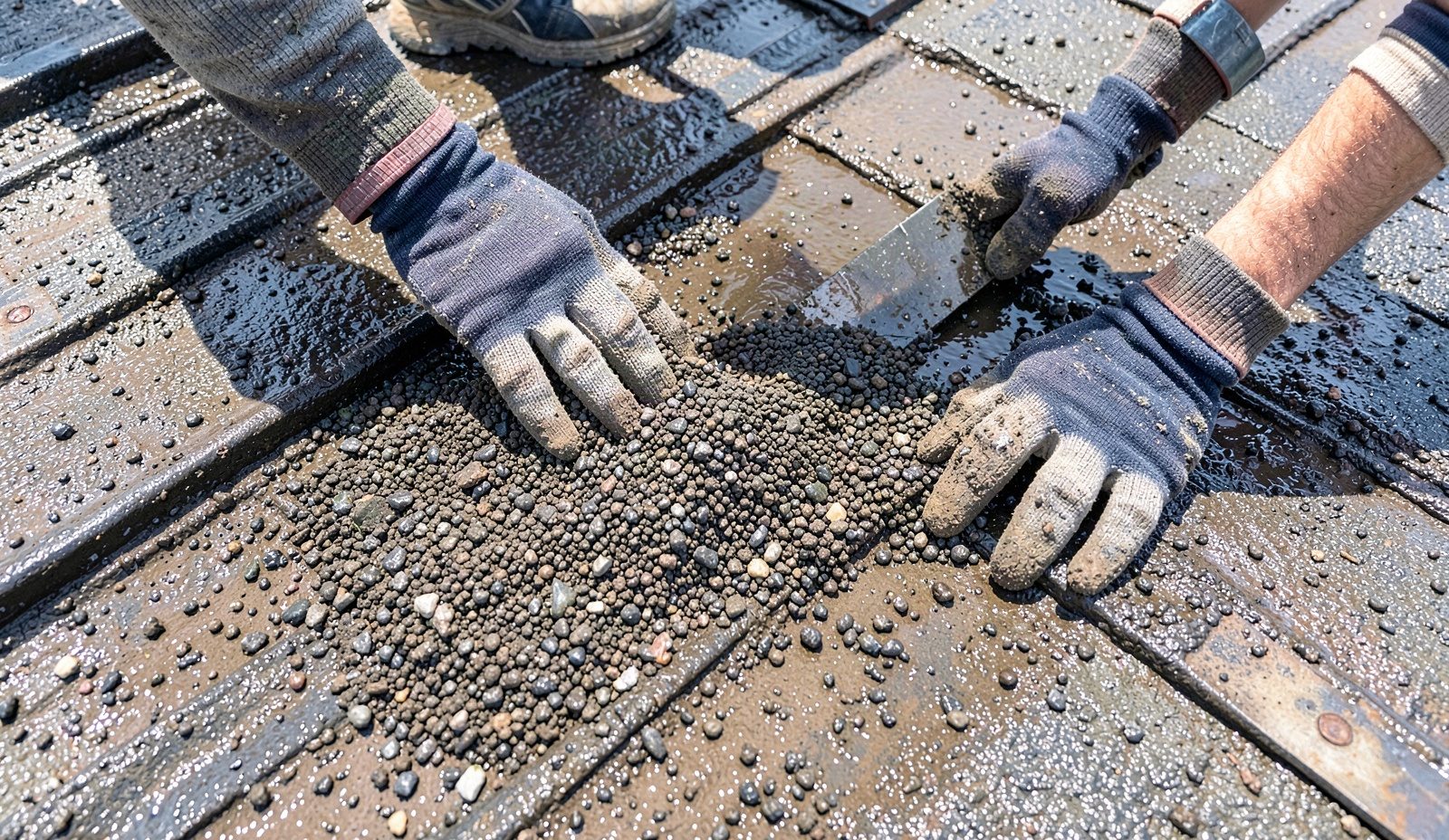
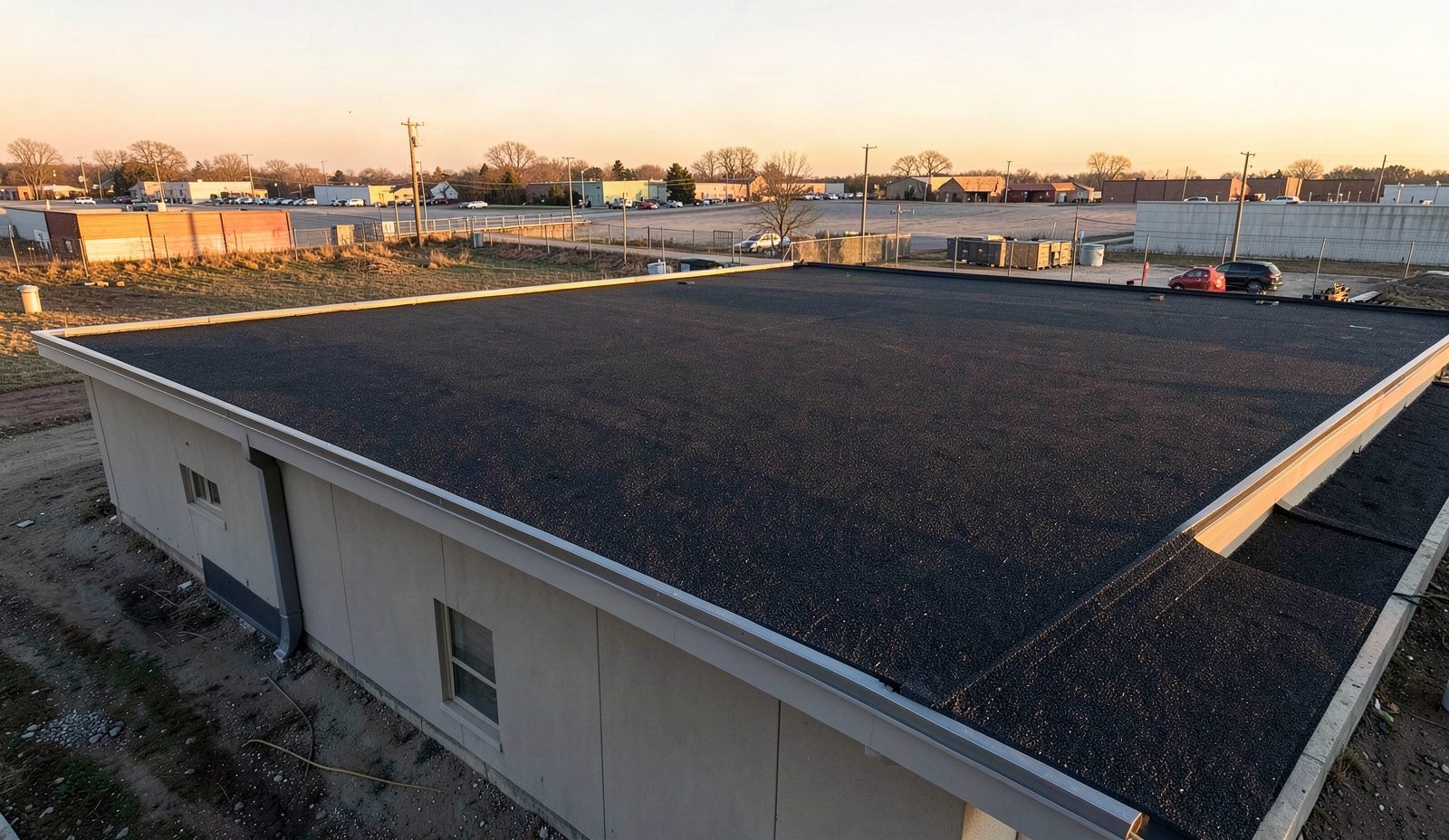
Every built-up roof assessment starts with a cut test, not a guess. We cut a small coupon down through the surfacing to the deck, usually near a suspect blister or seam, and read the layers directly: ply count, bitumen saturation, and whether the felt has delaminated from the insulation board below. That coupon tells us more in two minutes than a visual walk of the whole roof, because it shows exactly how the system was built and where it is failing from the inside out.
Drainage gets checked against a specific standard, not a general impression. If ponding water is still sitting on the membrane more than 48 hours after rainfall, that is the industry threshold for correcting low-slope drainage, and it points to a tapered insulation or drain placement problem rather than a simple patch. We map the low points, check drain bowl elevation relative to the field, and decide whether the fix is additional tapered board, a new drain, or a full rebuild of the slope.
Material selection depends on what the building needs to carry and how long it needs to last. A traditional gravel-surfaced BUR, three or four plies of asphalt-saturated felt set in hot asphalt with a gravel ballast cap, runs heavier per square and holds up well under foot traffic and UV exposure, typically delivering 20 to 30 years of service when maintained. A modified bitumen cap sheet, SBS-based and either torch-applied or set in cold adhesive over a BUR base, weighs less, installs faster, and gives strong wind uplift resistance, but generally runs a shorter service window, closer to 15 to 20 years. We walk owners through that tradeoff in plain terms: gravel ballast for longevity and mass, modified cap sheet for speed and lighter roof-deck loading, before any material gets ordered.
If this sounds close but not quite your situation, commercial roofing contractors may be the better starting point.
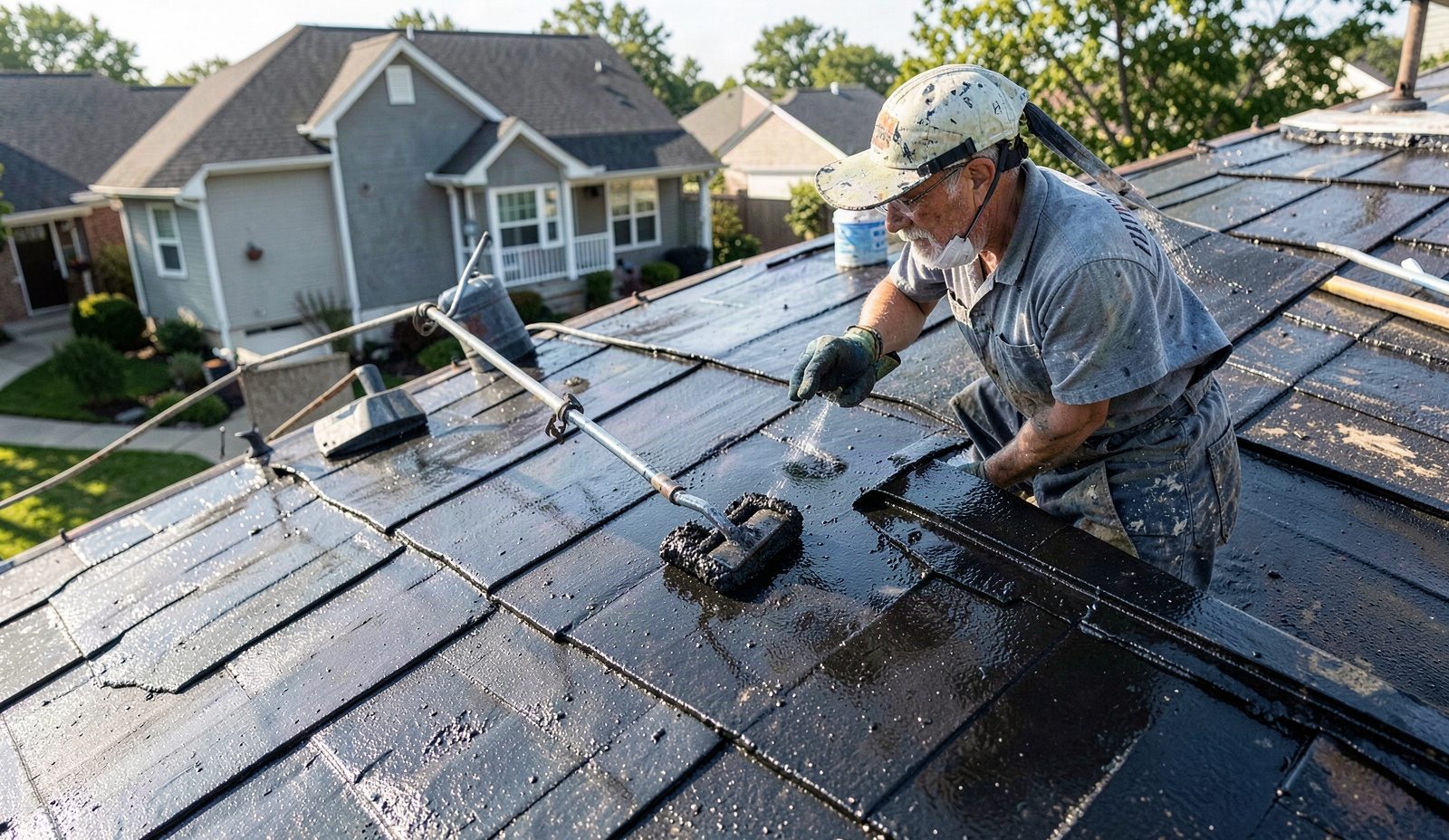
You call (614) 707-7333 and describe what you are seeing, a leak, a blister, a soft spot, or a scheduled replacement need. We set an on-site visit and a technician walks the full roof, checks drains and flashing details, and cuts a test coupon where the membrane looks suspect. You get shown what the coupon reveals, ply condition, insulation saturation, and whether the deck underneath is still sound, before any recommendation gets made.
Once you approve the written scope, the crew protects walkways and ground-level entries, stages material, and begins tear-off or recover work in the sequence the roof plan calls for. Hot asphalt or modified bitumen application follows manufacturer application temperatures and the tapered insulation layout mapped during assessment. Any change in scope, a rotted deck section found mid-tear-off, for example, gets a call and a decision from you before work continues past that point.
Before the crew leaves, we check every seam, flashing termination, and drain for proper lap and adhesion, and we confirm slope carries water off the field toward the drains rather than pooling. You get a walkthrough of the finished roof and photo documentation of flashing details and seam work for your records. Debris and equipment come off site the same day, and any follow-up items get scheduled before the crew demobilizes.
Built-up roofing on a Columbus commercial building has to satisfy the Ohio Building Code, which is based on the International Building Code as adopted statewide. That code governs wind uplift resistance for low-slope membranes, minimum insulation R-values, and drainage design, including the tapered slope and secondary drain provisions that keep a flat roof from becoming a reservoir during a heavy storm. A crew that does not work under this code daily will miss the details an inspector checks first, like drain overflow scuppers and parapet flashing height.
Columbus's commercial roof stock is not uniform. Downtown mixed-use buildings, older brick structures with parapet walls in the historic districts, and single-story retail boxes with rooftop mechanical units all load a BUR system differently. A rooftop packed with HVAC curbs and conduit runs needs flashing details planned around every penetration, not a blanket membrane laid over obstacles. Crews who work this metro regularly know which buildings need extra crickets behind curbs before the tear-off even starts.
Hiring an out-of-area or uncertified crew for this work carries real risk. A contractor unfamiliar with regional flashing practices for a freeze-thaw climate often under-specs insulation thickness or skips the tapered board a low-slope roof needs, and the failure shows up two winters later as a callback nobody wants. Local crews who pull permits through the correct authority and coordinate inspections as part of the job protect the building owner from that gap. Call (614) 707-7333 to talk through what your building's code compliance actually requires before work starts.
More detail on tpo roofing systems is on its own page.
Permit and inspection questions? Building & Zoning Services is the office we coordinate with on every permitted Columbus job.
Booking starts with a phone call, not a form. We schedule the on-site assessment around your building's occupied hours and rooftop access restrictions, and we give a real arrival window, not an all-day guess. Hot asphalt and torch work depend on temperature and dry conditions, so we confirm the work window a day ahead and call if weather pushes it. If tenants need notice before crews are on the roof, we coordinate that timing with property management directly so nobody is caught off guard by equipment noise or rooftop foot traffic during business hours.
Rooftop work stays contained to the roof. We stage materials on protective sheeting, run debris chutes or hoists to keep tear-off waste from crossing occupied walkways, and sweep and magnet-sweep the roof surface and adjacent grounds for loose fasteners and gravel before we leave. Kettle and torch equipment gets set up on fire-rated protection with a clear exclusion zone. When the crew packs out, the parking lot, loading dock, and any ground-level tenant entrances look the way they did before we started, with all old membrane and insulation hauled off site.
Your quote is built from what the cut test and roof walk actually find, not a flat per-square rate. Square footage, ply count needed, insulation condition, drain count, and rooftop equipment density all move the number, and roof access, whether we crane material up or hand-carry it through the building, does too. You get a written scope before anything is ordered, itemized by material and labor task, and nothing proceeds until you approve it. We walk through every line by phone or in person so you know exactly what you are paying for.
Every technician on a built-up roofing crew works under a background check before assignment. New hires spend a probationary period on hot asphalt and torch-applied modified bitumen work under a lead tech's direct supervision, covering seam welding, flashing detail, and drainage tapering technique. We run refresher sessions when the adopted code cycle changes so crews stay current on insulation and uplift requirements. A technician does not run a kettle or torch application unsupervised until a lead has verified their seam and flashing work meets our field standard on multiple jobs.
Built-up roofing cost depends on square footage, ply count, insulation condition, and rooftop access. A roof with multiple HVAC curbs, heavy gravel ballast to remove, or crane-only material access runs different labor and material totals than a simple flat rectangle with ground-level access. We assess the roof first, then provide a written itemized scope so you see exactly what drives the number before approving any work. Call to schedule that assessment and discuss the factors specific to your building.
Compare quotes line by line on ply count, insulation R-value, drainage tapering plan, and whether the system is gravel ballast or a mineral-surfaced cap sheet, not just a bottom-line total. A quote missing any of these specifics usually means the roof was not actually assessed with a cut test. Ask each contractor to explain how they measured drainage and what code requirements shaped their insulation recommendation before you decide.
No, built-up roofing installation is not a do-it-yourself project. Hot asphalt kettles run near 400 degrees and torch-applied modified bitumen involves open flame over a combustible substrate, both serious burn and fire risks without proper training and equipment. The work also has to meet Ohio Building Code wind uplift and insulation requirements that a professional crew tracks daily. A property owner attempting this exposes the building to code violations and voided coverage on the finished work.
Most built-up roof replacement projects on a mid-size commercial building run three to seven working days, depending on square footage, deck condition, and weather windows for hot asphalt application. A straightforward recover over a sound deck moves faster than a full tear-off that uncovers rotted sheathing. Winter freeze-thaw conditions can also narrow the daily application window, since asphalt and modified bitumen both need a minimum surface temperature to bond correctly.
Estimates start with an on-site roof assessment, including a cut test coupon, before any number gets written. From there you receive an itemized written scope covering materials, ply count, insulation work, and labor, and nothing is ordered or scheduled until you approve that scope. This keeps the estimate tied to what the roof actually needs rather than a rough square-footage guess made from the ground.
Scheduling depends on the scope of work and current weather conditions, since hot asphalt and torch-applied systems both need dry, above-freezing conditions to install correctly. Assessments can typically be scheduled within days of your call, and the crew builds the installation window around the next stretch of workable weather. Call (614) 707-7333 to check current availability for your building's timeline.
Heavy wet snow and ice loading change how a Columbus flat roof needs to drain. Snow does not just sit, it melts and refreezes against parapet walls, backing water up behind flashing that was designed for rain, not standing ice. Older mixed-use buildings in Short North, Clintonville, and the Brewery District, many with original built-up roofs and low parapet reveals, are the buildings most exposed to this cycle. A roof planned only around rainfall drainage often lacks the tapered insulation depth or the scupper capacity to move meltwater fast enough once ice starts damming at a low point, which is why a proper BUR rebuild here plans slope and secondary drainage around snow load, not just storm rainfall.
Roofing work in Columbus falls under city building code jurisdiction, and permits for full built-up roof replacement or structural deck repair go through the City of Columbus Department of Building and Zoning Services for Columbus addresses, or the local city building department or Franklin County for properties outside city limits. Minor like-for-like patch repairs typically do not require a separate permit, but the permit authority makes that call on a case-by-case basis, not the contractor. Building owners and property managers who work with crews that pull permits correctly and schedule inspections as part of the project timeline avoid the delays and liability exposure that come from unpermitted structural roof work surfacing during a lease transition or insurance claim.
Explore our service area and locate Cornerstone Roofing Columbus with ease. We're proudly local and serve the surrounding neighborhoods with fast response and honest pricing. Use the map to check our coverage area, or call us and we'll confirm in seconds.
Address:
Cornerstone Roofing Columbus, 1015 E Broad St, Columbus, OH 43205
How Much Does a Roof Replacement Cost in Columbus? 2026 Pricing Breakdown, practical local guidance from Cornerstone Roofing Columbus, Colum…
Read More
Commercial Roof Maintenance Tips for Columbus Property Managers, practical local guidance from Cornerstone Roofing Columbus, Columbus's trus…
Read More
Skylight Leaks in Victorian Village Homes, Repair or Replace?, practical local guidance from Cornerstone Roofing Columbus, Columbus's truste…
Read More
The Best Time of Year to Replace a Roof in Columbus, practical local guidance from Cornerstone Roofing Columbus, Columbus's trusted roofing …
Read More