

April 1, 2025
How Much Does a Roof Replacement Cost in Columbus? 2026 Pricing Breakdown
How Much Does a Roof Replacement Cost in Columbus? 2026 Pricing Breakdown, practical local guidance from Cornerstone Roofing Columbus, Colum…
Read More




Water stains blooming across a drop ceiling tile inside a Clintonville strip retail space usually mean the membrane failed weeks ago, not that morning. Property managers in the Short North notice it first in the mechanical room, where a rooftop HVAC curb has pulled away from the membrane and rainwater tracks down the duct chase. German Village landlords managing converted rowhouse commercial space find it as a soft spot underfoot on a low-slope rear addition, the kind added decades after the original structure went up. None of these are cosmetic. Each is a membrane, flashing, or drainage failure that worsens with every rain event, and each is the reason building owners start searching for commercial roof repair services instead of waiting for the next inspection cycle.
Central Ohio runs a humid continental climate with roughly 40 to 60 freeze-thaw cycles every winter. That cycling is not the lake-effect dumping you get farther north along Lake Erie, Columbus sits outside that snowbelt, but the daily swing between freeze and thaw is what cracks asphalt shingle mats and splits metal flashing at the seams on commercial mansards and pitched entry canopies. Water gets into a hairline crack, freezes and expands overnight, and by late winter the crack has traveled inches. On low-slope membranes, the same cycling works at seams and around penetrations, which is why leaks show up first at rooftop units, skylights, and parapet walls.
Summer brings a second failure mode. Thunderstorms carrying hail and straight-line wind are a common cause of asphalt shingle bruising and roof penetration damage across the metro, and commercial roofs take it differently than houses do. Wind uplift catches loose perimeter flashing on a low-slope roof and peels it back like a lid, exposing the insulation board beneath to the next rainfall. Hail impact on a membrane compresses granules or aggregate at the strike point, which does not always show from the ground but reads clearly under a trained eye walking the roof deck.
Left alone, a split seam becomes saturated insulation, saturated insulation becomes a sagging deck, and a sagging deck becomes a structural repair instead of a roofing repair. Tenants notice a flat, damp odor in a storage room or stairwell first. Lease agreements often make interior water damage a landlord's liability, and every week of delay narrows the window for a straightforward commercial roof repair services call and widens it into a full commercial roofing installation company project.
If this sounds close but not quite your situation, built-up roofing systems may be the better starting point.
Communities like r/Roofing are a good reality check on pricing and practices before you sign anything.
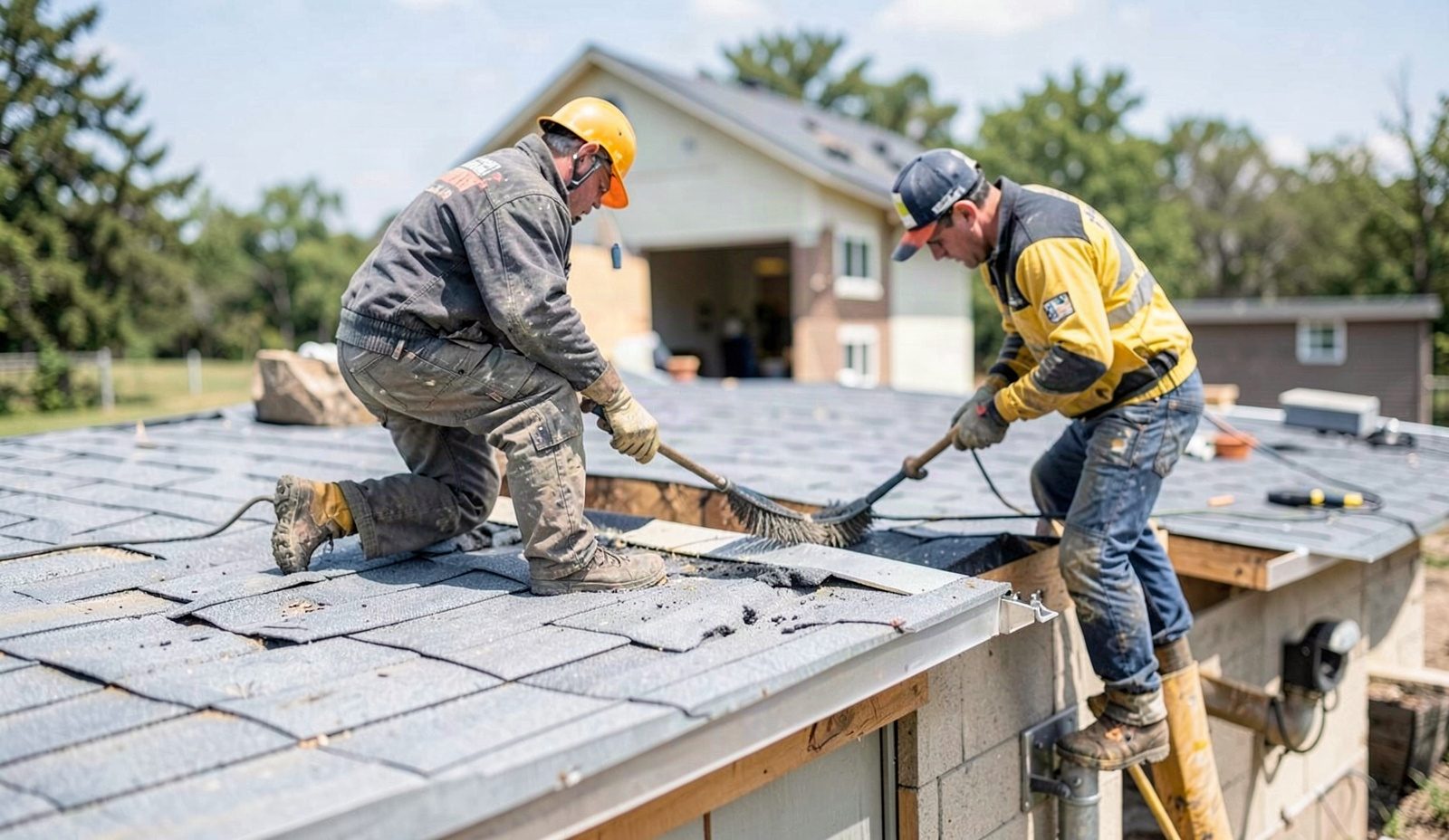
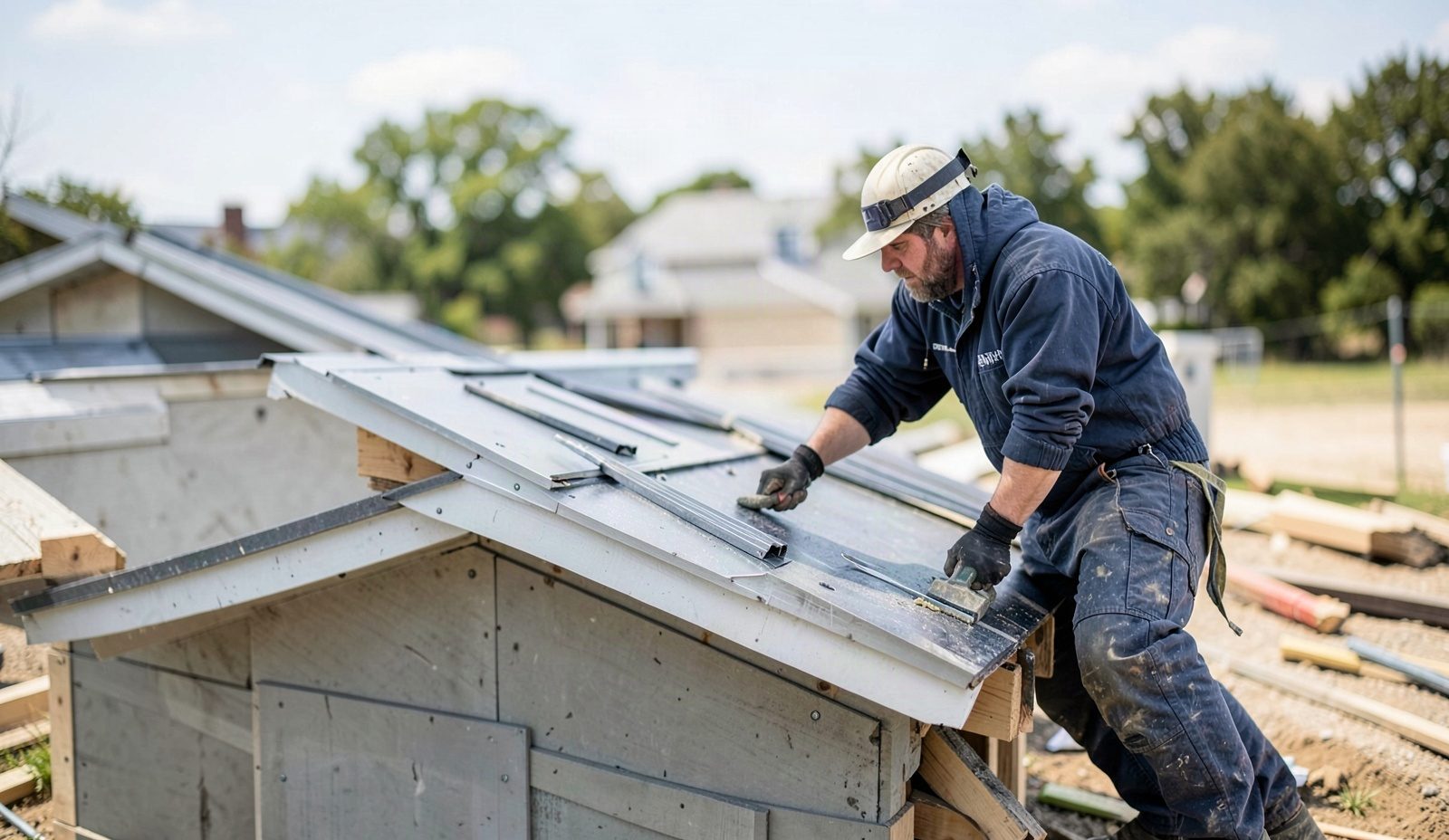
Every commercial roof assessment starts on the roof deck, not from a ladder at the eave. A technician walks the entire field in a grid pattern, checking for soft spots underfoot, splitting membrane laps, and rust bleed at fastener heads. The core diagnostic test on any low-slope roof is drainage: ponding water still present more than 48 hours after a rainfall is the industry threshold for a corrective slope or drain problem, not a cosmetic issue. Ponding areas get marked during a wet-weather visit or measured with a tape at the scupper or drain bowl during a dry one, then traced back to a sagging joist bay or an undersized internal drain.
Material selection depends on what the deck and budget cycle actually support. TPO membrane runs lighter per square, welds at the seams with hot air rather than adhesive, and holds up well against ponding and UV exposure common on Columbus flat roofs, though seam quality depends entirely on welder skill and ambient temperature during installation. EPDM costs less per square and tolerates cold-weather installation better, which matters through a Columbus winter with dozens of freeze-thaw swings, but its seams rely on adhesive tape that needs a clean, dry substrate to bond. Modified bitumen, torch-applied or self-adhered, adds mass and puncture resistance that low-traffic mechanical rooftops rarely need but that hail-exposed flat roofs benefit from. Square footage, rooftop traffic, and existing deck condition drive the recommendation between the three.
Fastening pattern gets the same scrutiny. A pull test on the perimeter fastening, run with a calibrated pull tester, confirms whether the existing attachment meets the wind uplift resistance the roof needs for its height and exposure, and a section that fails that test gets re-fastened before a single new membrane sheet goes down. On shingle-covered mansards and canopies, nail placement gets checked against the manufacturer's nailing zone by lifting a sample course with a flat bar, because a nail set high above the reinforced strip is the single most common cause of blow-off in a straight-line wind event.
Permit and inspection questions? Building & Zoning Services is the office we coordinate with on every permitted Columbus job.
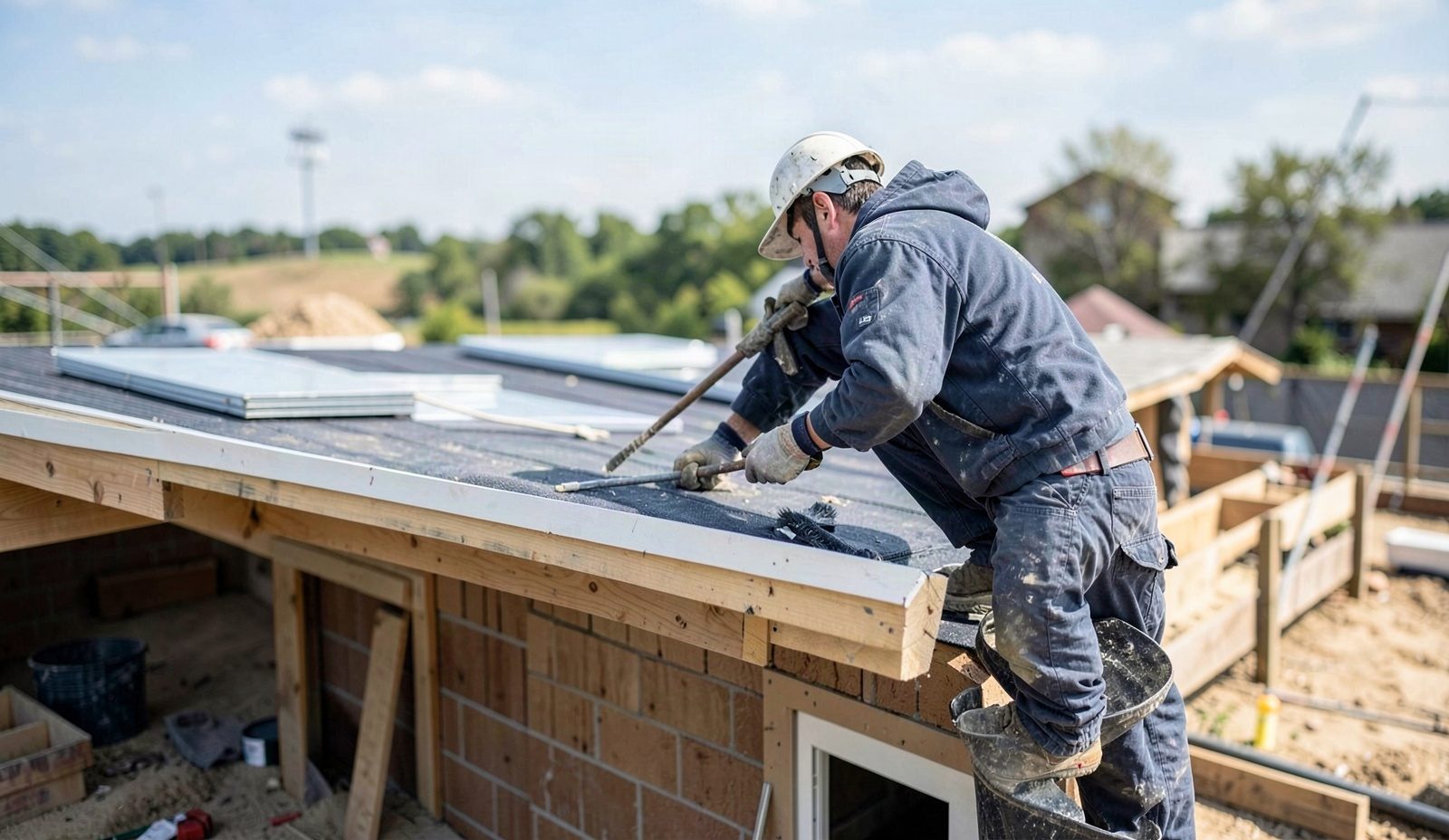
The call covers building type, roof access, and the symptom you noticed, whether that is a ceiling stain, a ponding area, or storm damage. On site, the technician walks the full roof, checks fastener condition, flashing laps, and membrane seams, and records ponding locations, soft deck areas, and any active leak paths back to their source. You get a walkthrough of what was found before the technician leaves, in plain terms, along with photos of the specific problem areas rather than a vague verbal summary.
Work starts only after you approve the written scope covering membrane or shingle type, fastening pattern, and flashing detail. Roof access points, HVAC curbs, and ground-level areas get protected before tear-off starts. Deck condition gets confirmed as old material comes off, and any rotted plank or saturated insulation found beneath the surface gets flagged to you before it is replaced, so the scope you approved matches what the deck actually needed once opened up.
Before the crew leaves, seams get checked, drains and scuppers get tested with a hose to confirm they clear water rather than pond it, and flashing laps get inspected for full contact. You walk the roof or the affected area with the technician, who documents the completed work with photos for your records. That documentation, covering scope, materials, and test results, is the same record an insurer, lender, or property manager would want on file.
The Ohio Building Code, based on the 2021 International Building Code, sets the wind uplift resistance, fire classification, and insulation R-value that apply to every commercial roof section replaced or newly installed across the metro. That code cycle treats a re-roof over an existing deck differently than new construction, and it adjusts minimum fastening density based on parapet height and the building's exposure category. A crew unfamiliar with the current cycle will fasten a perimeter zone to an outdated spec that looks acceptable on installation day and fails in the next wind event that exceeds the design pressure the building was actually rated for.
That gap is where prices diverge and where roofs fail early. When you hire a commercial roofing contractor, ask for the fastening schedule and membrane thickness in writing, not just a total price, and confirm who pulls the permit when the scope crosses from repair into replacement.
Columbus commercial buildings span early masonry storefronts with plank decking, mid-century brick strip centers with steel deck, and newer light-industrial buildings on profiled metal deck, and each deck type takes a different fastener, adhesive, or insulation attachment. Crews that only work residential asphalt shingle roofs frequently misjudge fastener pull-out on steel deck or over-drive fasteners into plank decking old enough to have dried and shrunk, either of which voids the wind uplift rating the new membrane is supposed to deliver.
Our page on commercial metal roofing covers that side of the work in more depth.
Our crews work to the installation standards of the National Roofing Contractors Association.
Booking starts with a call to (614) 707-7333, where a technician gets your building's occupancy hours, roof access points, and any tenant restrictions before an arrival window gets set. Most assessments land within a defined half-day window rather than an all-day wait. If weather or a prior job shifts the window, you get a call before the shift, not after it. Work on occupied buildings gets sequenced around business hours when possible, and heavier phases like tear-off or membrane welding get scheduled for stretches when foot traffic below the roof is lowest, protecting both the work quality and your tenants' day.
Ground-level entrances, landscaping, and parking areas get protected with plywood and tarps before material staging begins. A magnetic sweep runs across the surrounding pavement at the end of each work day to pull loose fasteners and debris off walkways and drive lanes. Tear-off debris goes straight into a staged dumpster or chute rather than piling on the roof or ground, and the dumpster gets positioned away from active entrances and loading docks. When the crew leaves for the day, gutters and drains are clear of debris so the roof continues draining correctly overnight, even mid-project.
Scope, access, and material choice drive every commercial roofing quote. A steep pitched canopy needs different staging than a flat roof reached by a single interior hatch, and roof height changes equipment needs. Existing deck condition matters just as much: rotted plank or saturated insulation adds scope that a surface inspection alone cannot catch until tear-off begins. Once the assessment is complete, you get a written scope listing membrane or shingle type, fastening pattern, and flashing detail, and no work begins until you approve that scope. Call (614) 707-7333 to get a commercial roofing quote scheduled.
Every technician goes through a background check before being assigned to a commercial site. Training on the current code cycle, including wind uplift and fastening requirements, gets refreshed as code cycles change, not treated as a one-time class. New technicians work supervised alongside an experienced lead through multiple full commercial jobs before they are cleared to run a site solo. A crew lead signs off on that field competence based on documented performance on real roofs, not paperwork alone.
No, commercial roofing is not a practical do-it-yourself project. Low-slope membranes, rooftop fall hazards, and code-governed fastening patterns require training most building owners do not have, and a mistake in seam welding or perimeter attachment can void the wind uplift rating of the whole roof. Occupied buildings also add liability exposure that residential DIY roofing does not carry. Cornerstone Roofing Columbus handles the assessment and the work so the fastening schedule and materials match what the Ohio Building Code requires for your specific structure.
An estimate starts with an on-site roof walk, not a phone quote. A technician measures the roof, checks deck condition, and documents ponding, flashing, and fastener issues before writing a scope that lists membrane or shingle type, fastening pattern, and flashing detail. You review that written scope and approve it before any work is scheduled. Call (614) 707-7333 to get that assessment scheduled for your building.
Prices vary because contractors are not always pricing the same scope. One bid might use thinner membrane, a wider fastener spacing, or skip flashing replacement at penetrations, while another prices full compliance with current wind uplift requirements. Crew size, equipment for roof access, and how much deck repair gets included in the base scope also shift the number. Comparing bids line by line, not just the total, is the only way to know what you are actually buying.
Yes, for most older commercial buildings, a properly scoped roof replacement protects the structure below it more than repeated patch repairs do. Older masonry storefronts and converted rowhouse buildings often have deck types, like aged plank, that need specific fastener and insulation attachment rather than a generic membrane system. A commercial roofing installation company that assesses deck condition first, before quoting materials, gives an older building a roof matched to what it can actually carry.
Look for a written scope that names the fastening pattern and membrane thickness, not just a total price. Confirm the contractor knows current Ohio Building Code fastening requirements for your building's exposure and parapet height, and ask who handles the permit if the project turns out to be a replacement rather than a repair. Cornerstone Roofing Columbus provides that written detail up front so you can compare it against any other bid line by line before you hire a commercial roofing contractor.
Assessment scheduling typically happens within days of your call, with the exact window depending on current job load and your building's access needs. Larger installation projects get sequenced around your occupancy hours and any tenant restrictions once the scope is approved. Call (614) 707-7333 to check current availability for your building.
Heavy wet snow and ice loading in a typical Columbus winter drive ice-dam and gutter-ice risk on any commercial roof with parapet walls, valleys, or poorly insulated eaves, adding load calculations that flatter climates never require. Building stock compounds it. Warehouse conversions in the Brewery District carry heavy timber or steel-truss roof framing built for industrial loads, while storefronts in Victorian Village and Italian Village often sit on older masonry walls never designed to carry a second roof layer. Planning a commercial roof here means checking structural capacity and drainage slope together, not assuming a modern membrane will perform the same on a century-old deck as it would on new steel.
Roofing work in Columbus falls under Columbus building code jurisdiction and the Ohio Residential Code for the residential side of mixed-use buildings, with full replacements and structural repairs generally requiring a permit while minor like-for-like repairs often do not. The City of Columbus Department of Building and Zoning Services is the permitting authority for Columbus addresses, and the local city building department or Franklin County handles other jurisdictions in the metro. A contractor who knows which office to call, and what triggers a permit versus a straightforward repair, keeps a project moving instead of stalled on a technicality a property manager or lender will ask about later.
Explore our service area and locate Cornerstone Roofing Columbus with ease. We're proudly local and serve the surrounding neighborhoods with fast response and honest pricing. Use the map to check our coverage area, or call us and we'll confirm in seconds.
Address:
Cornerstone Roofing Columbus, 1015 E Broad St, Columbus, OH 43205
How Much Does a Roof Replacement Cost in Columbus? 2026 Pricing Breakdown, practical local guidance from Cornerstone Roofing Columbus, Colum…
Read More
Commercial Roof Maintenance Tips for Columbus Property Managers, practical local guidance from Cornerstone Roofing Columbus, Columbus's trus…
Read More
Skylight Leaks in Victorian Village Homes, Repair or Replace?, practical local guidance from Cornerstone Roofing Columbus, Columbus's truste…
Read More
The Best Time of Year to Replace a Roof in Columbus, practical local guidance from Cornerstone Roofing Columbus, Columbus's trusted roofing …
Read More