

April 1, 2025
How Much Does a Roof Replacement Cost in Columbus? 2026 Pricing Breakdown
How Much Does a Roof Replacement Cost in Columbus? 2026 Pricing Breakdown, practical local guidance from Cornerstone Roofing Columbus, Colum…
Read More




A facility manager usually finds out about a roof problem the wrong way: a brown ring on a drop ceiling tile above the server room, a musty smell near an HVAC return, or a maintenance tech reporting a rooftop unit sitting in an inch of standing water. By the time these signs show up inside the building, the membrane or flashing has already been failing for months. Buildings running without a commercial roof maintenance program almost always show these symptoms first, because nobody was on the roof to catch the early stage.
The root cause in Columbus is mechanical, not cosmetic. Central Ohio runs through roughly 40 to 60 freeze-thaw cycles every winter, and each cycle expands trapped moisture inside a lap seam, a pitch pocket, or a cracked pipe boot, then contracts it again as temperatures swing. Do that sixty times and even a well-installed EPDM or TPO membrane develops seam separation and split flashing at parapet corners. This is not a defect. It is a wear mechanism specific to this climate, and it is why a roof that looks fine in September fails in March.
Summer adds a second stressor. Thunderstorms bring hail and straight-line wind that are a common cause of membrane punctures and lifted flashing on flat and low-slope commercial roofs across Franklin County, from warehouse boxes near the outerbelt to mixed-use buildings around Short North and German Village with older brick parapets. A single wind event can lift a field seam that freeze-thaw cycling already weakened, and the two failure modes compound each other instead of acting independently.
Left alone, a lifted seam becomes a saturated insulation board within a season. Saturated polyiso loses most of its R-value, so the HVAC system works harder and the utility bill climbs before anyone files a work order. Wet insulation also stops supporting the membrane above it, which turns a patchable leak into a section of roof deck that needs to be cut out and replaced. Every quarter without scheduled roof maintenance moves the building closer to a full-section tear-off instead of a fifteen-minute seam repair.
Our page on commercial roof inspections covers that side of the work in more depth.
Permit and inspection questions? Building & Zoning Services is the office we coordinate with on every permitted Columbus job.

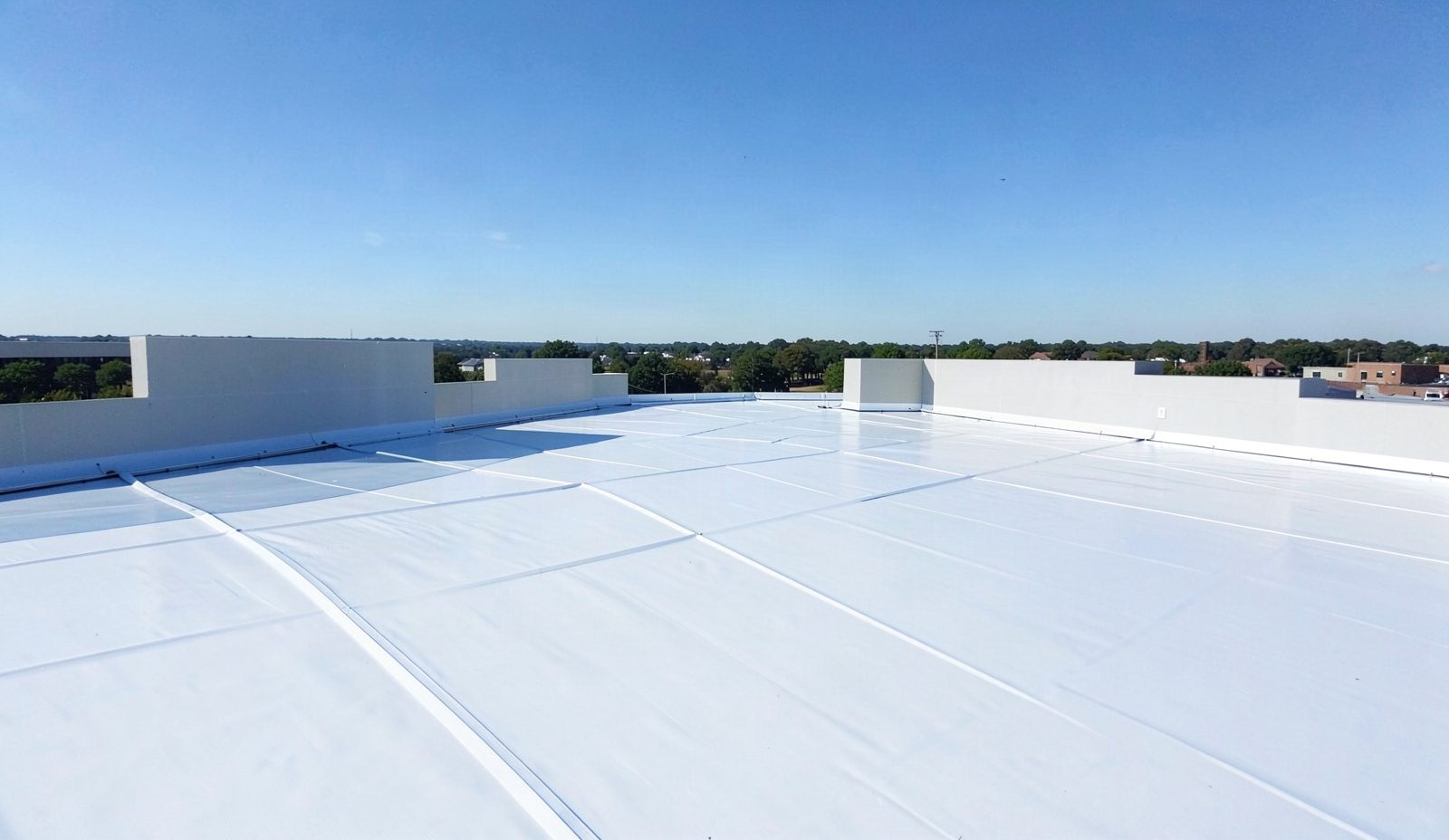
Every visit starts on the roof, not in an office. A technician walks the entire field in a grid pattern, checking drain bowls, scuppers, and roof edge metal, then marks any area holding water. The decision threshold is simple and industry-standard: ponding water still present more than 48 hours after rainfall means the drainage slope has failed and needs correction, not just a sealant patch. We log ponding locations against the roof plan so a repeat inspection six months later shows whether a fix actually solved the drainage problem or just moved it.
Membrane condition gets checked with a moisture meter, either capacitance or conductance type, sweeping the field in a pattern that follows the roof's drainage paths. Readings above baseline flag wet insulation under an intact-looking membrane, which a visual walk alone will never catch. Where the reading is ambiguous, we pull a small core sample to confirm before recommending any cut-out. This is the difference between preventative maintenance for flat roofs done with instruments and a visual guess that misses subsurface saturation until it shows up as a ceiling stain.
Membrane choice matters for what maintenance can and cannot fix. TPO runs 45 to 60 mil in most commercial applications, heat-welds at the seams, and resists ponding reasonably well when the seams are sound. EPDM typically runs 45 to 90 mil, uses adhesive or seam tape rather than heat welding, and that seam type is exactly what freeze-thaw cycling attacks first. Modified bitumen, torch-applied in overlapping plies, holds up well under foot traffic near rooftop units but shows granule loss faster under UV exposure. Knowing which system is already on your roof changes what a maintenance visit checks first and what repair method actually holds.
If this sounds close but not quite your situation, commercial roof repair may be the better starting point.
Our crews work to the installation standards of the National Roofing Contractors Association.
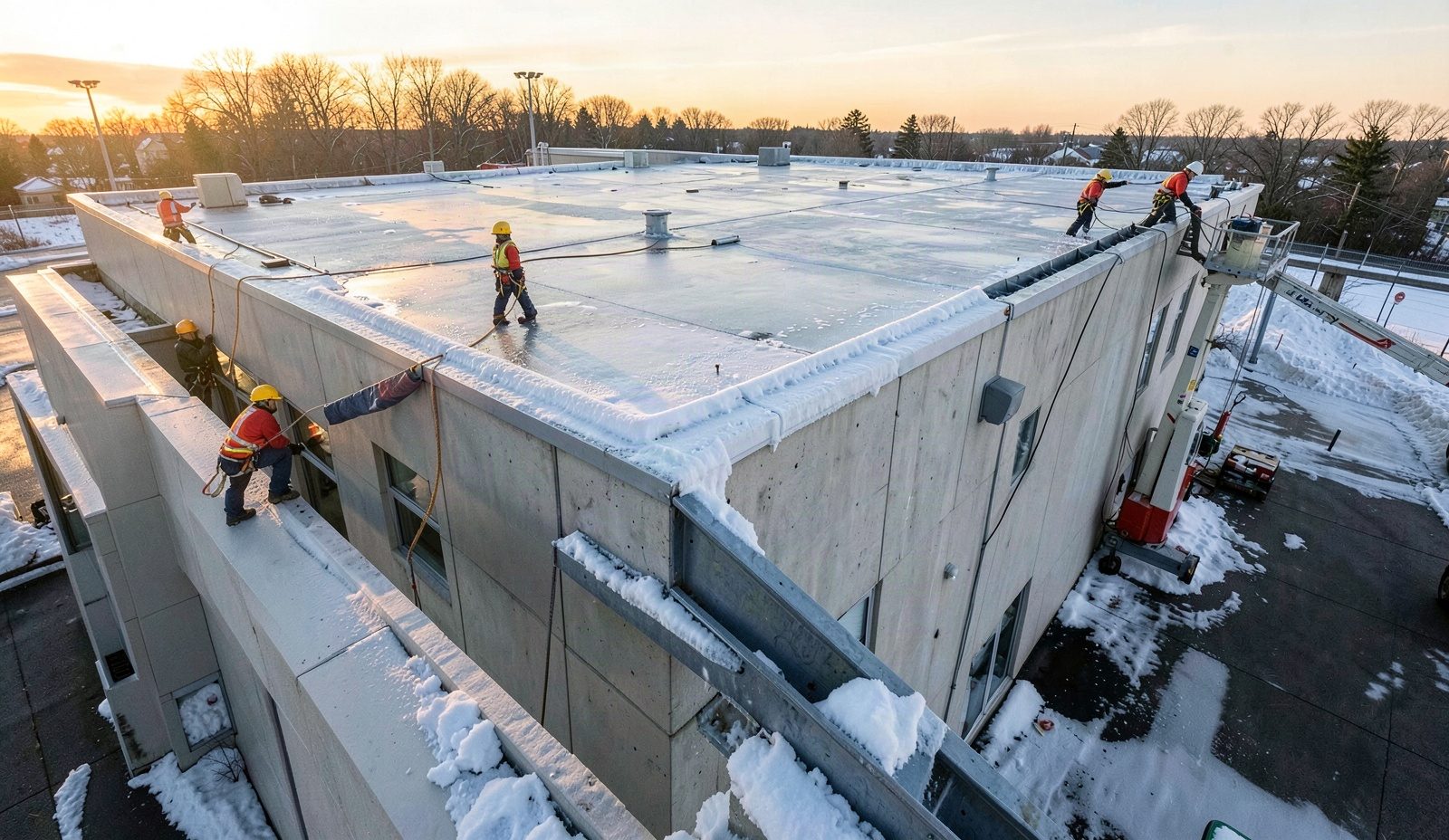
You call and describe the building, roof type if known, and any specific concern like a ceiling stain or a rooftop unit sitting in water. A technician arrives in the confirmed window and walks the full roof field, checking drains, seams, flashing, and any area flagged during the call. You get a plain-language summary on site: what was found, what is normal wear, and what needs attention now versus at the next scheduled visit. No work starts during this walk.
Findings turn into a written scope covering drain clearing, seam resealing, flashing repair, or any recommended cut-out for wet insulation. You approve the scope before a technician opens the membrane. Rooftop equipment and adjacent surfaces get protected before any cutting or torch work starts. Repairs follow the manufacturer's application specs for the membrane already on the roof, whether that means heat-welding a TPO seam or re-adhering an EPDM lap, so the repair matches the existing system instead of fighting it.
Repaired seams get a probe test with a seam tool to confirm weld or adhesion integrity before the crew leaves. Drains and scuppers get flushed with water to confirm flow, not just visually checked for debris. You walk the roof with the technician for a final review, and photo documentation of the completed work gets logged against the roof plan for your records. Any item deferred to a future visit gets noted in writing with a reason.
Commercial low-slope roofing in Columbus falls under the Ohio Building Code, based on the 2021 International Building Code, which sets requirements for insulation values, fire classification, and wind uplift resistance that residential code sections do not address. A crew unfamiliar with commercial provisions can spec a residential-grade membrane fastening pattern on a building that needs a higher wind uplift class, and that gap does not show up until the next straight-line wind event tears a field seam loose.
A written commercial roof service contract matters here for a reason beyond convenience. It documents inspection dates, moisture readings, and repair recommendations in a format your insurer or a due-diligence reviewer can actually use if a claim or a building sale comes up. Facility roof management without that paper trail leaves an owner arguing from memory about when a drain was last cleared or a flashing seam was last resealed.
Out-of-area operators create a second risk beyond code gaps: they do not know which membrane systems dominate Columbus's commercial building stock by decade, so they misdiagnose a roof built to an older insulation standard as a "bad install" when it is simply a roof due for a scheduled upgrade. A crew that works this metro regularly knows the difference between a roof entering normal end-of-life wear and one with an actual installation defect, and that distinction changes whether the right move is a patch, a partial recover, or a full section replacement. Call (614) 707-7333 to walk through which category your roof falls into before committing to any scope of work.
See commercial roof replacement for how the related work is scoped and priced.
Maintenance visits get booked on a set cadence, typically spring and fall, timed around Columbus's freeze-thaw transitions rather than a random calendar date. You get a confirmed arrival window before the crew heads out, not a vague "sometime this week." If weather pushes a rooftop visit (wind speeds too high for safe access, active storm systems), we call and reschedule to the next safe window instead of showing up and rushing the inspection. Off-cycle service calls for a suspected leak get worked into the schedule based on severity, with active water intrusion prioritized ahead of routine maintenance stops.
Rooftop equipment, HVAC curbs, and walk pads get worked around, not over. Any debris pulled from drains, scuppers, or gutter lines gets bagged and hauled off the roof the same visit, not left in a pile by the access hatch. Ladder and hoist paths are wiped down after use so lobby floors and stairwells stay clean during business hours. Tenant-facing entrances are never blocked without advance notice to building management. When the crew leaves, the roof surface looks like the only thing that changed is what needed to change.
The quote reflects four variables: roof size and slope, access difficulty (parapet height, hoist versus ladder access), current membrane type and its remaining service life, and the extent of any wet insulation found during the moisture scan. You receive a written scope before any repair work begins, itemized by task rather than a lump figure, so you can approve exactly what gets done. Routine maintenance items and any recommended repair work are quoted separately, so a maintenance visit never turns into an unapproved repair bill.
Every technician passes a background check before being assigned to a site. Field crews train on the current code cycle every year, covering updated wind uplift and drainage provisions as they get adopted locally. A new technician works alongside a senior crew lead for a set number of commercial visits, logging moisture readings and drain inspections under direct review, before being cleared to run a rooftop assessment independently. That review step is documented internally so competence is verified, not assumed.
Cost depends on roof size, slope, membrane type, and how much drain or flashing repair the roof needs at the first inspection. A small flat-roof retail building costs less to maintain per visit than a large warehouse with multiple rooftop units and complex drainage. We provide a written scope after the first roof walk so you see exactly what drives the number before approving anything. Call (614) 707-7333 for a scope based on your specific building.
Storm-related damage, like a hail strike or wind-lifted seam, is a separate claim category that a policy may cover, and the documented inspection history from a maintenance plan strengthens that claim by showing the roof's condition before the storm. Check your specific policy language for storm damage provisions.
Routine maintenance visits are typically scheduled within the same week you call, and active leak calls get prioritized ahead of routine stops. Seasonal demand shifts scheduling somewhat, with spring and fall bookings filling faster as buildings prepare for freeze-thaw and snow-load seasons. Call (614) 707-7333 and describe your situation so we can place your building in the right priority tier for scheduling.
Look for a company that documents every visit with photos and moisture readings, not just a verbal "looks fine." Ask whether the crew inspects drainage against the ponding water standard used industry-wide, and whether repairs are matched to your existing membrane type rather than a one-size patch. A company that cannot explain why your specific membrane fails the way it does in Columbus winters is guessing, not diagnosing.
An estimate starts with a roof walk where a technician documents drainage, seam condition, and any moisture readings, then turns those findings into an itemized written scope. You review the scope by task, maintenance items separate from any recommended repairs, before approving anything. Call (614) 707-7333 to schedule that first assessment.
Pricing depends on unit type, venting features, roof pitch, and access, not a flat rate per skylight. A fixed deck-mounted Velux unit on a low-slope, easily accessible roof prices differently than a solar-powered venting unit on a steep two-story pitch requiring reframing. Glass versus acrylic glazing and whether existing flashing can be reused also shift the total. Every Columbus quote from Cornerstone Roofing Columbus itemizes these variables in writing before installation begins.
Columbus commercial roofs carry a load profile that changes twice a year. Heavy wet snow and ice loading drive ice-dam and gutter-ice risk on flat and low-slope commercial roofs, particularly where parapet walls trap drifting snow against a drain that is already running slow from summer debris. A roof with tapered insulation designed for adequate slope sheds this load correctly; a roof that has settled or lost slope over time holds it, and that held weight adds stress to a membrane already worn by seasonal cycling. Maintenance planning here accounts for both ends of the year, checking drainage capacity before the first snow load and checking seam integrity after the last freeze-thaw cycle clears in spring.
Structural repairs and full roof replacements on commercial buildings require a permit, and the City of Columbus Department of Building and Zoning Services is the authority that reviews and inspects that work for Columbus addresses, with the local building department or Franklin County handling other jurisdictions in the metro. Routine maintenance items like drain clearing or a like-for-like seam reseal typically fall outside that permit requirement, but the line depends on scope, and the permit authority makes the final call. Older mixed-use commercial buildings around Clintonville, Victorian Village, Italian Village, and the Brewery District often carry brick parapets and coping details that need specific flashing attention during any permitted work, which is exactly the kind of detail a crew unfamiliar with this building stock tends to miss.
Explore our service area and locate Cornerstone Roofing Columbus with ease. We're proudly local and serve the surrounding neighborhoods with fast response and honest pricing. Use the map to check our coverage area, or call us and we'll confirm in seconds.
Address:
Cornerstone Roofing Columbus, 1015 E Broad St, Columbus, OH 43205
How Much Does a Roof Replacement Cost in Columbus? 2026 Pricing Breakdown, practical local guidance from Cornerstone Roofing Columbus, Colum…
Read More
Commercial Roof Maintenance Tips for Columbus Property Managers, practical local guidance from Cornerstone Roofing Columbus, Columbus's trus…
Read More
Skylight Leaks in Victorian Village Homes, Repair or Replace?, practical local guidance from Cornerstone Roofing Columbus, Columbus's truste…
Read More
The Best Time of Year to Replace a Roof in Columbus, practical local guidance from Cornerstone Roofing Columbus, Columbus's trusted roofing …
Read More