

April 1, 2025
How Much Does a Roof Replacement Cost in Columbus? 2026 Pricing Breakdown
How Much Does a Roof Replacement Cost in Columbus? 2026 Pricing Breakdown, practical local guidance from Cornerstone Roofing Columbus, Colum…
Read More




Walk the roof above a Short North storefront in August and you feel it before you see it. The white membrane bows underfoot, spongy in spots where water has pooled beneath the surface. That soft give is trapped moisture sitting between the TPO membrane and the insulation board below it. Inside the building it shows up as brown rings on drop ceilings and a musty smell near HVAC returns, long before any water actually drips onto the floor.
Central Ohio runs through roughly 40 to 60 freeze-thaw cycles every winter, a climate pattern distinct from the lake-effect snow bands that hit cities farther north. Each cycle expands trapped moisture and then contracts it, prying at hot-air welded seams and working mechanical fasteners a fraction of a millimeter looser with every pass. On a mixed-use building in German Village, that fastener creep shows up first at the roof edge metal, where flashing starts to lift enough to whistle in a strong wind.
Summer brings a second kind of stress. Thunderstorm hail and straight-line wind common to central Ohio summers bruise the membrane surface and drive debris into rooftop penetrations, the same storms that split asphalt shingles on sloped sections also puncture TPO at pipe boots and HVAC curb flashing. A warehouse conversion in the Brewery District, with a wide uninterrupted membrane field and heavier rooftop equipment loads than a small retail box, carries more penetration points, and each one is a place water finds a way inward.
Left alone, a pinhole puncture becomes a saturated insulation board. Wet polyisocyanurate loses most of its R-value and stops drying on its own once it is sealed under the membrane. Once insulation stays wet, the steel or wood deck below it starts to rot, and a repair that would have been a patched seam turns into a section tear-off down to the deck. Tenants usually notice water stains on their ceiling tiles before an owner ever climbs the roof, and by then the fix is measured in roof area, not roof spots.
More detail on built-up roofing systems is on its own page.
Permit and inspection questions? Building & Zoning Services is the office we coordinate with on every permitted Columbus job.
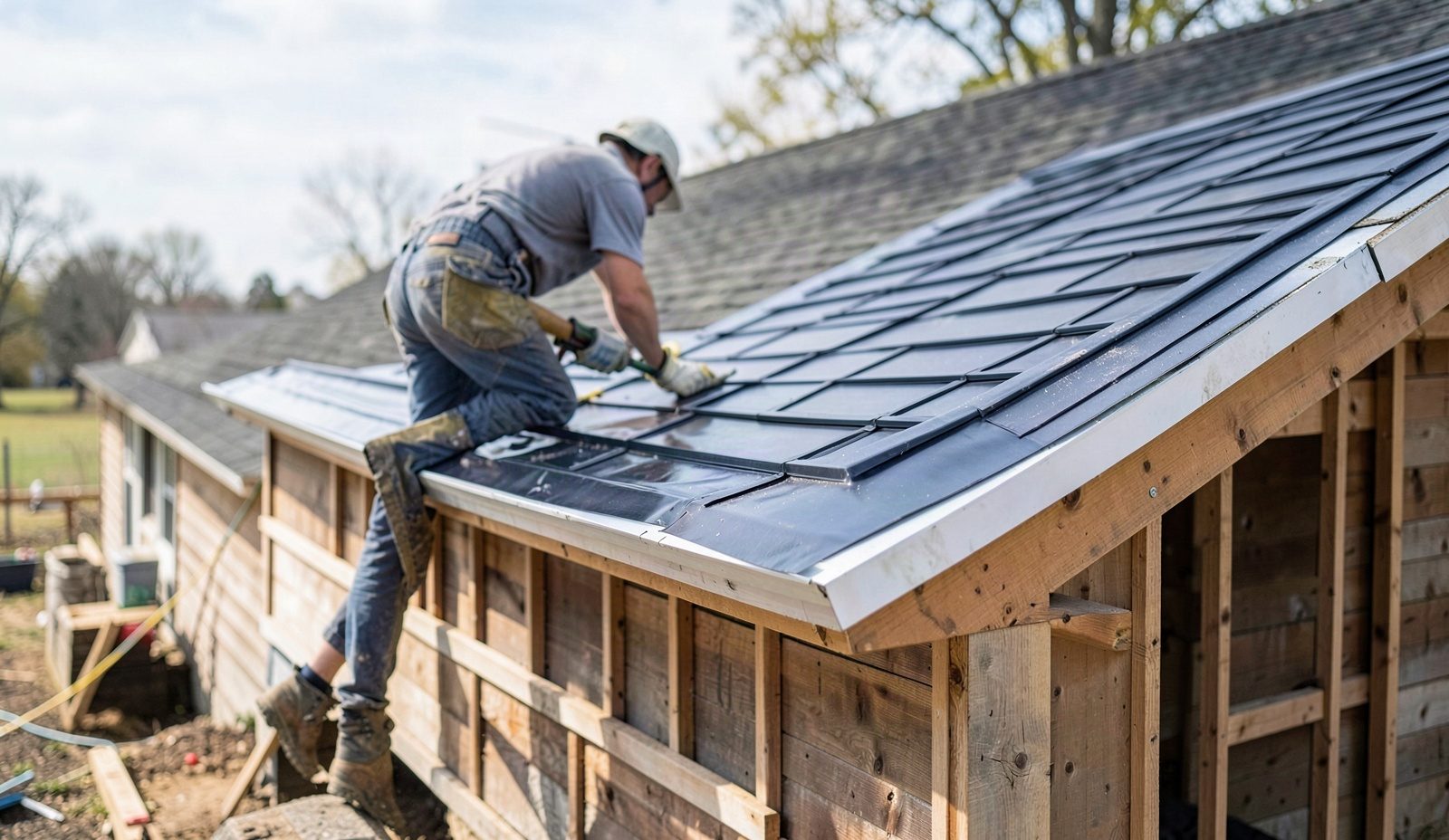
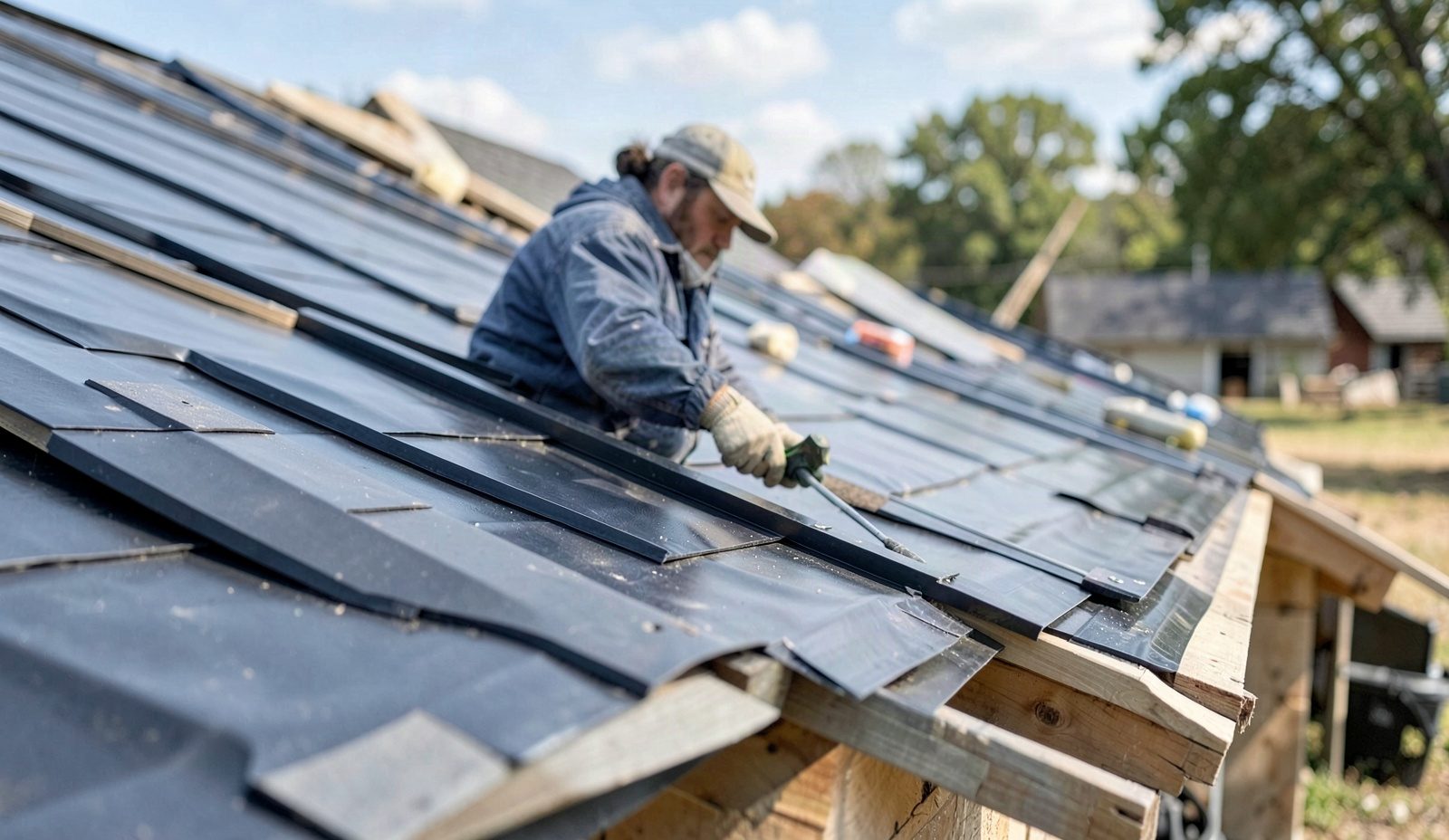
Every TPO roof inspection starts with a moisture scan, not a ladder and a flashlight. A technician runs a capacitance meter across the membrane field in a grid pattern, marking any reading that jumps against the dry baseline. Where the meter flags a wet zone, we cut a small core sample, roughly a two-inch plug through membrane, insulation, and cover board, to see exactly how far the saturation has spread. That core tells us whether the fix is a seam patch or a section of deck replacement.
Seam integrity gets tested with a seam probe, a blunt tool run along every hot-air welded lap looking for a spot where the weld did not fully fuse. A probe that catches and lifts the top ply means the weld failed and water has a direct path under the membrane. We also check roof drains and scuppers against the industry threshold for low-slope drainage: ponding water still standing more than 48 hours after rainfall means the slope or drain placement is wrong, not just the membrane.
TPO membrane comes in 45, 60, and 80 mil thickness, and thickness is the first number worth checking on any quote. A 60 mil sheet resists foot traffic and hail bruising better than 45 mil, and on a roof with rooftop units and regular service traffic that difference shows up in seam wear within a few years. TPO's hot-air welded seams form a homogenous weld we can probe and verify on site. EPDM, by comparison, relies on taped or adhesive seams that cannot be field-tested the same way. PVC membrane also heat-welds and holds up well against grease exposure common near restaurant exhaust fans, but it can lose flexibility over time as plasticizers migrate out, a shift TPO's polymer blend resists. For most commercial roofs in Columbus, fully adhered 60 mil TPO gives the strongest balance of wind resistance, seam verifiability, and membrane life.
Our page on commercial metal roofing covers that side of the work in more depth.
Our crews work to the installation standards of the National Roofing Contractors Association.
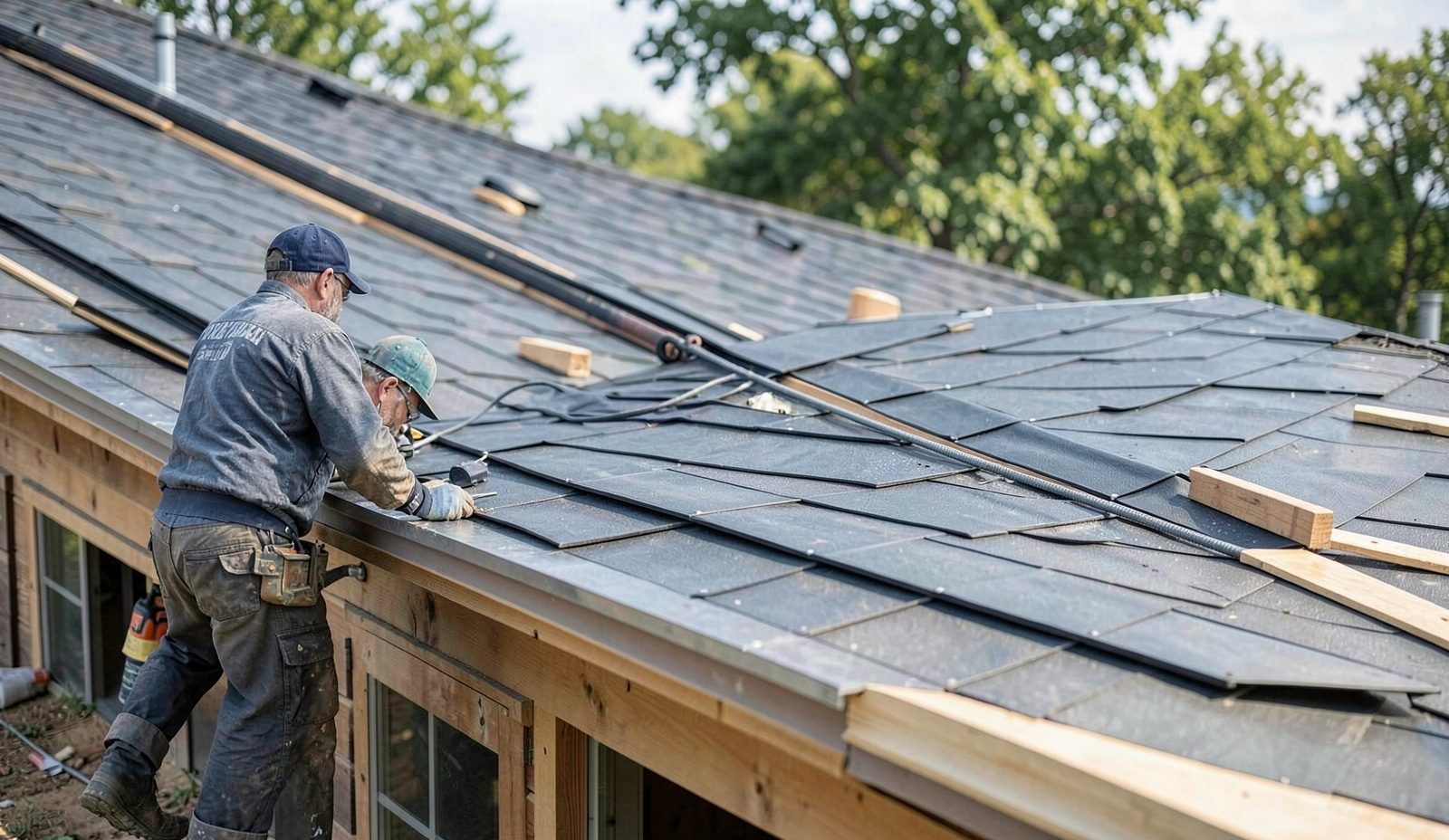
You call (614) 707-7333 and describe what you are seeing, a ceiling stain, a rooftop unit leak, standing water after rain. We schedule a technician to walk the roof, checking membrane seams, flashing terminations, drains, and any rooftop penetrations. The technician runs a moisture meter across the field and photographs any area that reads wet or shows visible ponding, blistering, or fastener backout. You get a plain description of what the scan found, what it means for the deck below, and whether the fix is a seam repair, a section patch, or a full re-cover, before any number gets discussed.
Once you approve the written scope, the crew stages material and protects rooftop units, adjacent membrane, and ground-level access before any tear-off starts. Work proceeds section by section rather than opening the whole roof at once, so an unexpected rain event never leaves a fully exposed deck. Seams get hot-air welded and probed as each section closes. If a core sample turns up more deck damage than expected, work pauses on that section while you approve the change before the crew continues.
Before the crew leaves, every welded seam from that day gets probed again, and flashing terminations get checked for full contact against the wall or curb. We flood-test drains where standing water was a concern, confirming water clears the deck instead of pooling. You walk the finished area with the lead technician, who points out drain locations, penetration seals, and anything to watch during the next heavy rain. Photos of the completed work and any core samples go into a written closeout you keep for insurance or ownership records.
Every full TPO replacement and most structural roof work in Columbus falls under the Ohio Building Code (OBC), and permit review for Columbus addresses runs through the City of Columbus Department of Building and Zoning Services. Buildings outside city limits route through the local building department or Franklin County instead. We pull the permit before deck work starts and schedule the required inspection so the job does not stall waiting on paperwork.
Columbus carries a mix of commercial roof stock that changes how a job gets planned. Older buildings converted from warehouses or rowhouse storefronts often carry decks never designed for a mechanically fastened membrane's uplift load, and a crew unfamiliar with the original construction can misjudge the fastener pattern. We check deck type, gauge, and span before selecting an attachment method, whether fully adhered, mechanically fastened, or ballasted, instead of defaulting to whatever pattern the crew used on the last job.
Hiring an out-of-area crew for a Columbus commercial roof carries a real risk. They may not know a permit is required for a tear-off and re-cover, or they may size the fastening pattern for a different wind exposure category than the one your building actually sits in. That mismatch does not show up on day one. It shows up the first time a straight-line wind event hits the membrane edge. Call (614) 707-7333 to talk through your building's roof history with a technician before you sign a proposal.
If this sounds close but not quite your situation, commercial roofing contractors may be the better starting point.
Communities like r/Roofing are a good reality check on pricing and practices before you sign anything.
We book commercial TPO work around your operating hours. A technician confirms a two-hour arrival window the day before and calls thirty minutes out. Most inspection visits happen within the same week you call, and larger tear-off and re-cover jobs get scheduled around weather windows, since TPO welding needs a dry deck and a workable membrane temperature. If a storm front pushes a materials delivery back, we call you before the crew is due, not after, and give you a new window the same day. Tenants stay informed through your property manager, so there is no surprise rooftop noise during business hours you did not plan for.
Rooftop material staging gets contained on plywood or protective board so foot traffic and dropped fasteners do not mark the membrane in unaffected areas. We tarp and secure rooftop units and vents before any tear-off starts. Old membrane, insulation, and fasteners get bagged or bundled and hauled off the roof the same day. Parking areas and loading docks stay clear of debris during work hours. When the crew leaves for the day, the rooftop is broom-clean, every seam welded that day is fully closed, and no open membrane sits exposed overnight.
TPO roofing cost per square foot moves with four factors: total roof area and penetration count, current deck condition once a core sample is cut, membrane thickness and attachment method chosen, and roof access, whether material comes up by crane, hoist, or hand-carry through the building. We measure the roof, document existing conditions with photos, and write a line-item quote before any tear-off begins. Nothing starts until you approve that written scope. If a core sample during the work turns up wider deck damage than the quote covered, we stop and call you with the change before continuing.
Every technician working a TPO roof solo has passed a hands-on weld test, running a hot-air welder across a scrap membrane sample and passing a peel test on that weld before a supervisor signs off. Background checks run before anyone is scheduled on an occupied commercial property. Crews review current Ohio Building Code changes and manufacturer installation updates every year, not only at hire. A lead technician walks every job site before work starts and again before the crew leaves, so competence gets checked at the roof itself.
TPO roofing cost per square foot depends on membrane thickness, attachment method, roof access, and current deck condition. A 45 mil mechanically fastened system on an easy-access roof costs less than an 80 mil fully adhered membrane on a building needing crane access. Franklin County roofs with heavy rooftop equipment or multiple penetrations usually run higher than a simple rectangular roof. Cornerstone Roofing Columbus measures the roof and writes a line-item quote after a technician walks the space, so you see the scope driving the number before approving anything.
A technician who has passed a hands-on weld test and background check arrives to assess or work the roof. The same lead technician who scopes the job typically returns for the work and the final walkthrough, so the person answering your questions on site knows the roof's history. For larger tear-off jobs, a small crew works under that lead technician's direction, following the fastening and welding pattern documented in the written scope.
Comparing quotes means checking membrane thickness, attachment method, and what the price includes instead of only the bottom line. Ask whether the quote specifies 45, 60, or 80 mil membrane, fully adhered or mechanically fastened, and whether tear-off and disposal are included or billed separately. A quote that skips deck inspection or core sampling before pricing is guessing at what is under the membrane. Cornerstone Roofing Columbus documents deck condition with photos and core samples before writing the number, so the scope matches what the roof needs.
TPO roofing installation is not a practical do-it-yourself project because hot-air welding seams correctly requires a calibrated welder, consistent overlap speed, and a verified peel test on every seam. A weld that looks sealed but did not fully fuse fails silently under the membrane, and the leak that follows can travel several feet from the actual failure point before it shows up inside the building. Rooftop equipment, parapet flashing details, and precise welder temperature settings make this a job suited to a technician with field-tested weld competence rather than a first attempt.
Estimates start with an on-site roof walk, moisture scan, and, where needed, a core sample before any number gets written. The technician documents membrane condition, deck type, drainage, and access, then builds a line-item scope covering material thickness, attachment method, and disposal. You review and approve that written scope before work begins, and nothing changes without a follow-up conversation if a core sample reveals more damage than expected. Smaller repairs on an accessible roof turn around faster than full re-cover proposals needing a deck inspection.
Turnaround depends on scope, weather window, and whether the job needs permit review before deck work starts. A seam repair or single-penetration patch on an accessible roof often gets scheduled within days of the initial call. A full tear-off and re-cover needs a dry deck and workable membrane temperature for welding, so Cornerstone Roofing Columbus schedules those around forecasted weather windows rather than a fixed calendar date, and confirms the arrival window the day before the crew is due.
TPO roofing works well on older Columbus buildings once the deck and structure get checked first, not assumed. Warehouse conversions and older mixed-use rowhouse commercial buildings often carry decks built for lighter roof loads than a modern fully adhered membrane and rooftop HVAC package now place on them. Once a technician confirms deck gauge, span, and current load, TPO's reflective white surface and welded seam system typically outperforms an aging built-up or modified bitumen roof on the same structure, cutting rooftop heat load and giving a seam that can actually be field-tested.
Watch for membrane that has lifted away from the parapet wall edge, exposed fastener heads pressing through the membrane surface, and rust streaking below metal flashing joints. Any of these mean water is already working past the surface layer, even if the inside of the building still looks dry. A blister that grows larger from one season to the next is losing adhesion underneath, not just staying cosmetic. Catching these signs early keeps the fix at the membrane level instead of the deck level.
Columbus sits in a humid continental climate zone with real winter loading, not the lake-effect snow that hammers cities along Lake Erie. Heavy wet snow sits on low-slope commercial roofs for days at a time, and that weight plus meltwater refreezing at the roof edge drives ice-dam and gutter-ice risk on buildings whose parapet drainage was never sized generously to begin with. On a converted rowhouse commercial space in Clintonville or a mixed-use building in Victorian Village, older parapet flashing and undersized scuppers were built for a lighter roof load than current rooftop HVAC and solar-ready equipment now place on them. That reality changes material choice: we favor fully adhered TPO with reinforced corner flashing over mechanically fastened systems on buildings where snow load and wind exposure both run high, because adhered seams handle uneven load transfer at the parapet better than a fastener pattern sized for a lighter roof.
Roofing in Columbus falls under Columbus building code jurisdiction and the Ohio Residential Code for smaller structures, with commercial low-slope work reviewed separately as part of permit intake. A building in Italian Village with ground-floor retail and residential units above often needs both reviews coordinated before a re-cover permit closes out. Local crews who pull permits regularly know which inspector checks parapet cap flashing closely versus drain tie-ins, and that familiarity keeps a project moving instead of stalling on a re-inspection. Property managers and building owners across Franklin County also lean on documented roof histories, moisture scan results, and core sample photos when they refinance, sell, or renew coverage on a commercial property. Contractors who treat that documentation as routine paperwork, rather than an afterthought, save the next owner or lender a rooftop investigation years down the line.
Explore our service area and locate Cornerstone Roofing Columbus with ease. We're proudly local and serve the surrounding neighborhoods with fast response and honest pricing. Use the map to check our coverage area, or call us and we'll confirm in seconds.
Address:
Cornerstone Roofing Columbus, 1015 E Broad St, Columbus, OH 43205
How Much Does a Roof Replacement Cost in Columbus? 2026 Pricing Breakdown, practical local guidance from Cornerstone Roofing Columbus, Colum…
Read More
Commercial Roof Maintenance Tips for Columbus Property Managers, practical local guidance from Cornerstone Roofing Columbus, Columbus's trus…
Read More
Skylight Leaks in Victorian Village Homes, Repair or Replace?, practical local guidance from Cornerstone Roofing Columbus, Columbus's truste…
Read More
The Best Time of Year to Replace a Roof in Columbus, practical local guidance from Cornerstone Roofing Columbus, Columbus's trusted roofing …
Read More