
April 1, 2025
How Much Does a Roof Replacement Cost in Columbus? 2026 Pricing Breakdown
How Much Does a Roof Replacement Cost in Columbus? 2026 Pricing Breakdown, practical local guidance from Cornerstone Roofing Columbus, Colum…
Read More




A commercial roof that needs coating work rarely announces itself with a leak on day one. It shows up first as a chalky white residue on your hand after you touch the membrane, a sign the top coat has oxidized and stopped reflecting UV. Walk the roof at a restaurant near Short North or a mixed-use building in German Village and you will often find alligator-pattern cracking across old modified bitumen caps, seams lifting where thermal movement pulls the laps apart, and rust bleeding down from unsealed metal flashing at parapet walls. Inside, tenants report ceiling tile stains that show up after storms, fade, then come back darker.
Central Ohio's climate drives most of this damage. The region runs through roughly 40 to 60 freeze-thaw cycles each winter, and every cycle works trapped moisture in a membrane seam or hairline crack a little wider than the last one. This is not a lake-effect snow market, so the damage pattern differs from what a contractor used to deep snowpack expects. It is slower, driven by repeated expansion and contraction, and it concentrates at flashing details, curb penetrations, and any spot where two materials meet.
Summer adds a second stress. Thunderstorms across Franklin County bring hail and straight-line wind that puncture membranes, knock granules loose on cap sheets, and drive water under lap seams already starting to separate. A strip retail center in the Clintonville area with an aging EPDM roof takes this kind of hit every summer, and each storm shortens the interval before the next repair call.
None of this fixes itself, and waiting changes the math. A hairline seam split becomes a saturated insulation board. A saturated board becomes a soft spot under the vapor barrier that a foot can punch through. Once moisture reaches the deck, a roof coating instead of replacement is no longer the option on the table. The scope moves from a coating and detail work to a tear-off, along with the tenant disruption and lease exposure that come with it.
See commercial roof repair for how the related work is scoped and priced.
Communities like r/Roofing are a good reality check on pricing and practices before you sign anything.
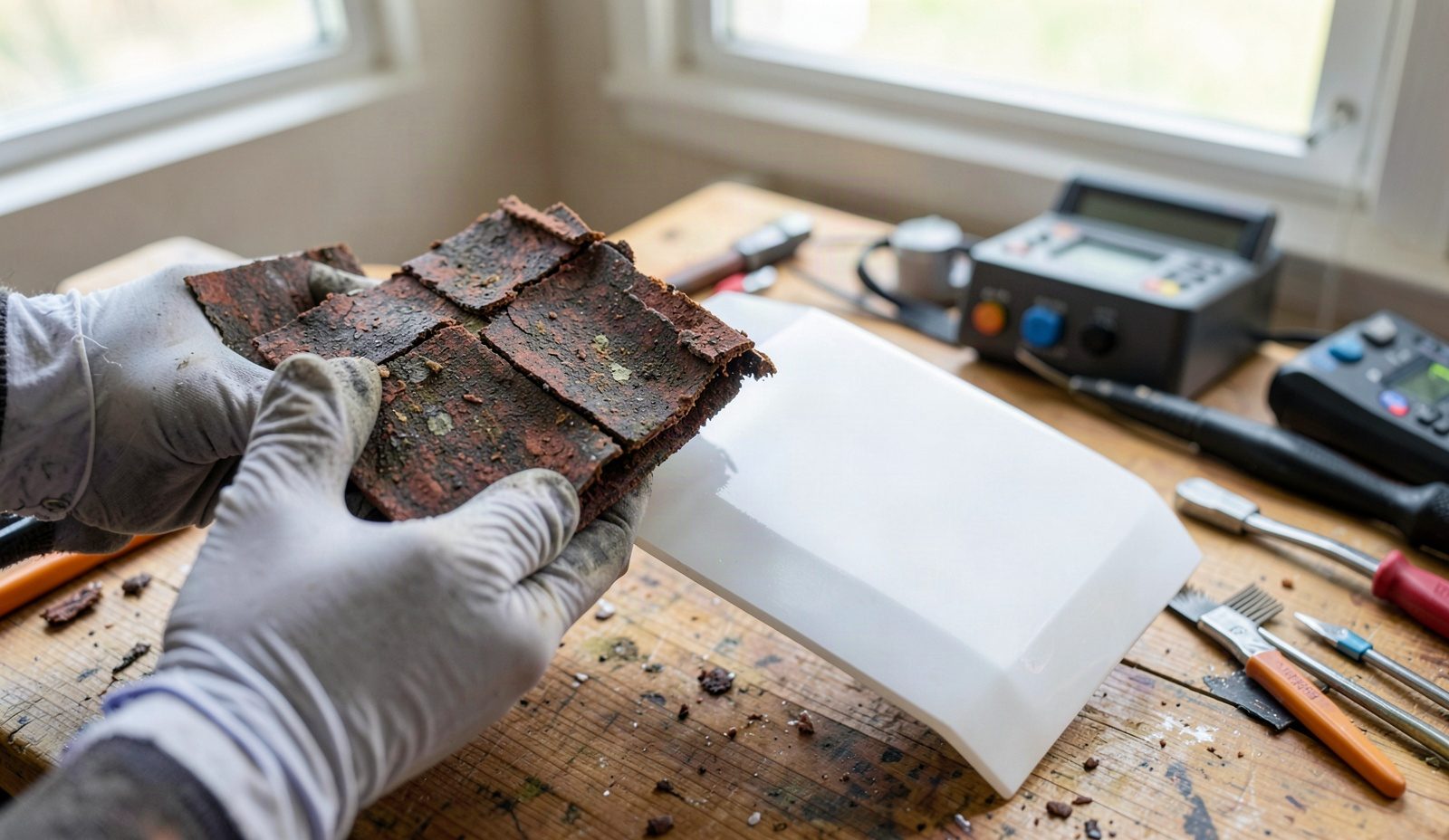
Every roof coating and restoration job starts with a moisture survey, not a visual walk. We run a capacitance moisture meter across the field in a grid pattern, marking any reading that spikes over the dry baseline, then confirm suspect zones with an infrared scan at dusk when the deck still radiates heat absorbed during the day. Wet insulation reads back on both instruments, and any area that fails both gets a core cut, a plug pulled down to the deck, so we see insulation and deck condition instead of guessing from the surface.
Drainage gets checked against the industry threshold: ponding water still present more than 48 hours after a rain event means the low-slope design has a structural problem a coating alone will not solve. We chalk the ponding outline after a storm, come back and photograph the same area two days later, and if water is still sitting there, tapered insulation or additional drains go into the scope before anything gets coated over the top.
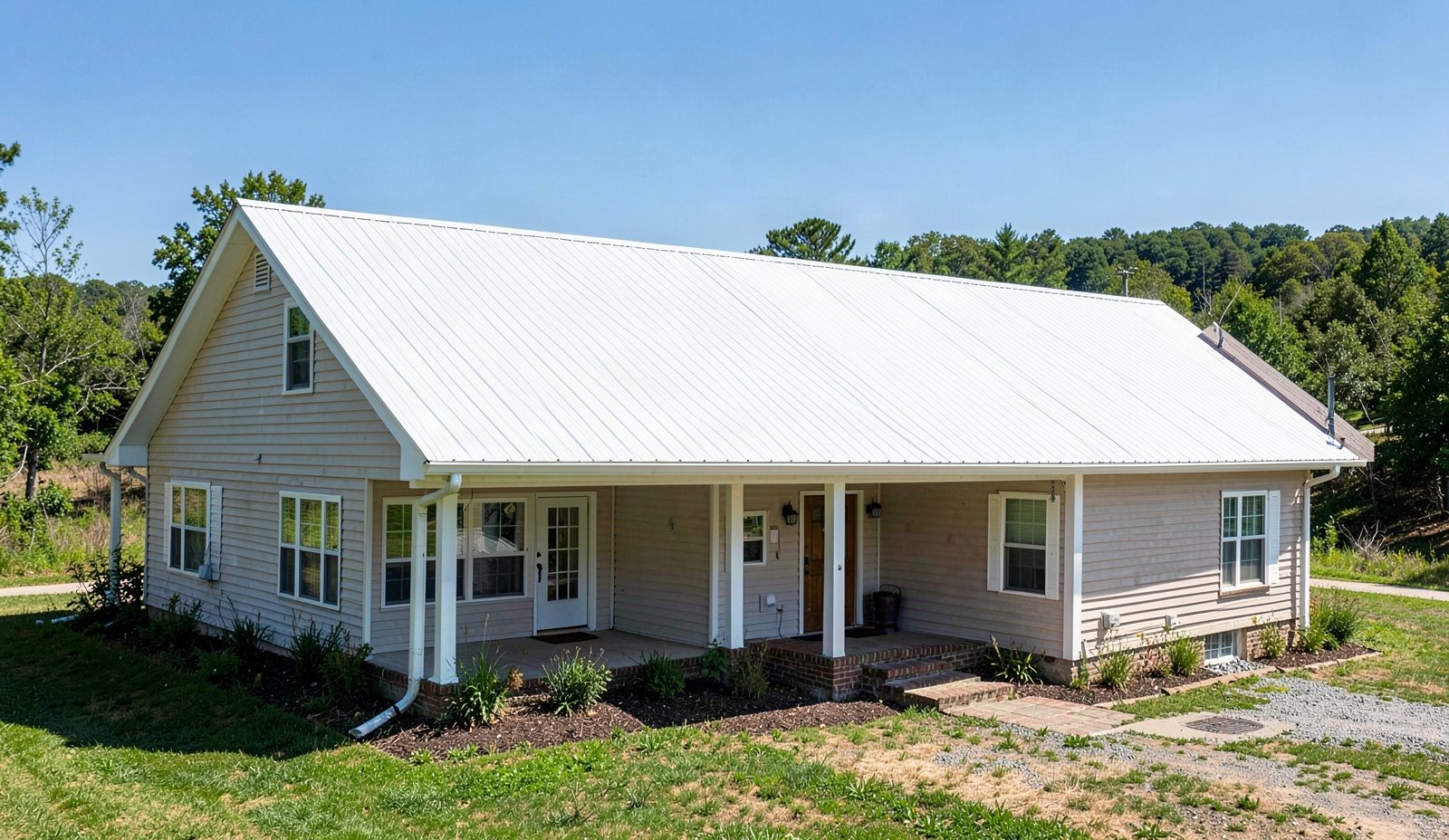
Coating selection depends on what the moisture survey and drainage check turn up. Silicone roof coating contractors reach for 100 percent silicone systems, typically applied at 20 to 25 dry mils, on any roof with a ponding history, because silicone resists standing water without softening the way other chemistries do. Acrylic roof coating systems go down at 20 to 30 dry mils and cost less on roofs that drain well, but they are the wrong call on a roof with low spots. Elastomeric roof coating products built on urethane resins split the difference, holding up better under foot traffic near rooftop HVAC units and service platforms than either acrylic or silicone alone.
Our page on commercial roof inspections covers that side of the work in more depth.
Permit and inspection questions? Building & Zoning Services is the office we coordinate with on every permitted Columbus job.
You call (614) 707-7333 and describe what you're seeing, active leak, ponding, or visible membrane damage. A technician schedules a walk of the roof, checks the moisture survey with a capacitance meter, photographs problem areas, and measures ponding zones against the drainage line marked in chalk. You get a plain description of what's failing and why, in person, before any paperwork. If the building has multiple tenants or a property manager, the technician coordinates roof access timing around occupancy so the assessment does not interrupt business hours.
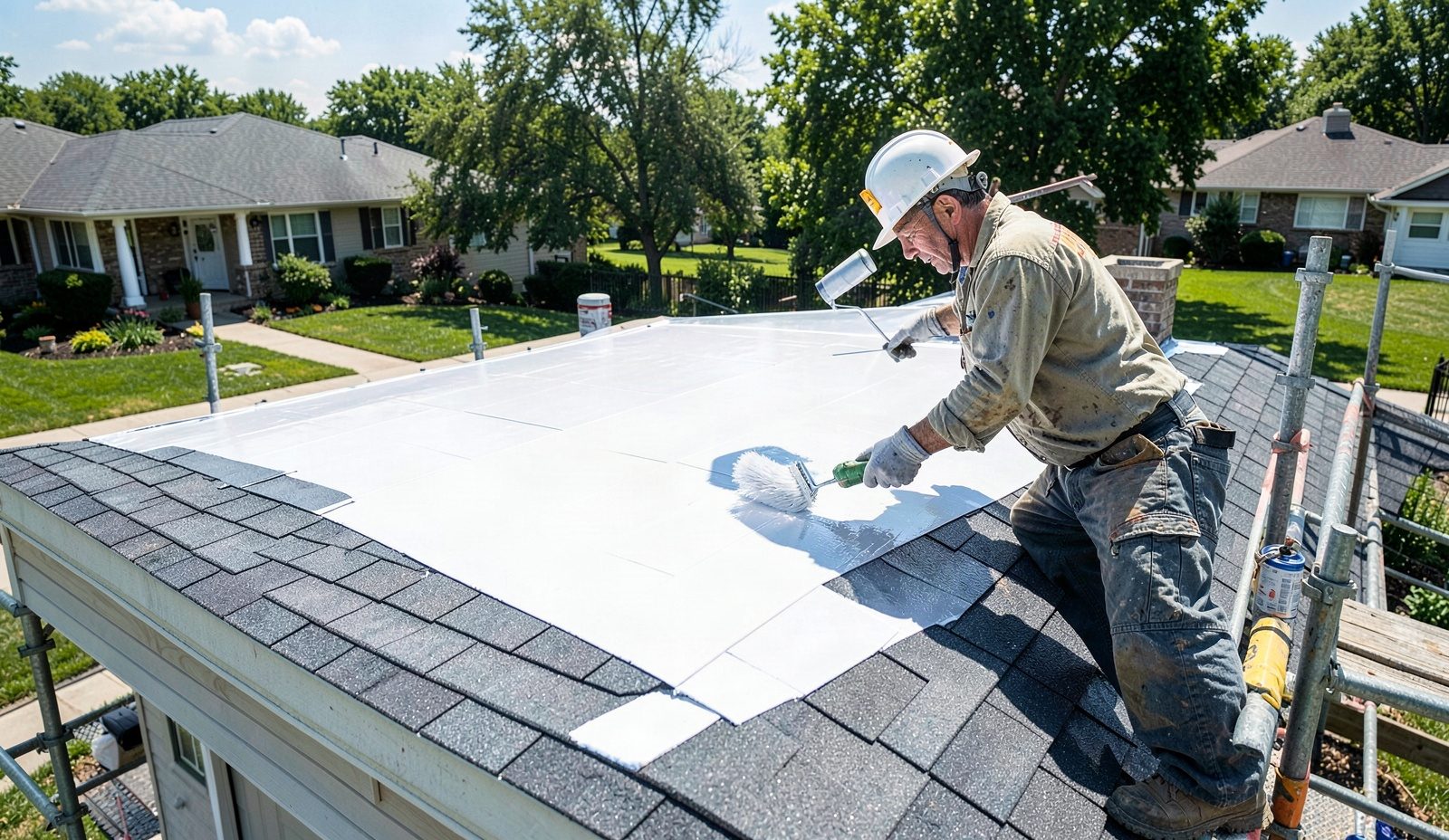
Once you approve the written scope, the crew masks rooftop equipment, pressure washes the membrane to remove chalking and debris, and lets it dry to the moisture threshold the coating manufacturer specifies before priming. Seams get re-taped or re-caulked, punctures get patched with reinforced fabric, and the chosen coating, silicone, acrylic, or urethane, goes down at the dry mil thickness the scope called for. Any drainage correction, an added drain or tapered insulation, happens before the final coat, not after, so the coating is not covering up a problem that will just come back.
Before the crew leaves, we check wet mil thickness while the coating is still curing to confirm it matches the specified coverage rate, then walk the roof again after cure to look for pinholes, holidays, or thin spots at seams and penetrations. We photograph the finished roof, drains, and flashing details for your records, something a property manager or insurer can reference later. A short walkthrough covers what maintenance looks like going forward, including how often to clear drains and what a healthy coating surface should look like season to season.
Roof coating and restoration work on a Columbus commercial building falls under the Ohio Building Code, built on the International Building Code framework the state adopted, which governs wind uplift resistance, fire classification, and vapor retarder placement for low-slope assemblies. A crew that does not know these provisions will spec the wrong fastening pattern for a mechanically attached membrane, or miss a required tapered edge detail, and the property owner finds out during the next inspection or the next insurance claim, whichever comes first.
Columbus building stock adds its own wrinkle. Older commercial buildings, particularly the brick and timber mixed-use structures common through the city's historic corridors, often carry parapet walls and roof decks that were never engineered for the dead load of a full tear-off and new membrane stack. A restoration or recoat approach keeps the load on the existing deck rather than adding another layer, which matters more on these buildings than on a newer steel-deck box on the edge of Franklin County.
Out-of-area contractors working a storm-chase route through central Ohio do not carry this local knowledge. They price by national averages that ignore the freeze-thaw exposure this region actually sees, and they are gone by the time a coating starts failing at a seam six months in. A crew that works Franklin County roofs year-round sees the same buildings across multiple winters, a different kind of accountability than a name in a phone book from three states away.
If this sounds close but not quite your situation, commercial roof maintenance plans may be the better starting point.
Our crews work to the installation standards of the National Roofing Contractors Association.
Commercial roof coating work gets scheduled around your building's operating hours, not the other way around. Call (614) 707-7333 and a technician walks through your roof access, tenant occupancy, and any rooftop equipment needing coordination before setting a date. Assessment visits typically land within one to two business days of the call, faster if water is actively entering the building. If weather pushes an application off schedule, coating systems have minimum application temperatures and dew point requirements, so we call ahead and reschedule rather than apply a coating that will not cure properly and fail within a season.
Rooftop equipment, HVAC curbs, and any parapet-mounted signage get masked or moved before spray or roller application starts, and ground-level walkways beneath roof edges get cordoned off during pressure washing or prep work. Overspray control matters most on a Short North rooftop bar with outdoor seating below, so we check wind speed before spray application and switch to roller or brush if gusts run too high. Debris, old caulk, and failed sealant get bagged and hauled off the same day. When we leave, the roof surface is clean enough to walk without tracking coating residue into the building below.
Square footage, current membrane condition, the number of penetrations and drains, and roof access all factor into the written quote. A roof with twelve rooftop units and a single ladder hoist point costs more to prep than an open field with a stairwell entrance. Coating chemistry changes the number too. Silicone costs more per gallon than acrylic but needs fewer coats on a ponding-prone roof. Every quote lists material system, coverage rate in dry mils, and prep scope like pressure washing or seam re-taping in writing before work starts, and nothing changes on the roof until you approve that scope.
Every technician who steps onto a Columbus commercial roof passes a background check before assignment and completes application training on the current coating manufacturer's spec sheets before running a roller or sprayer solo. New crew members shadow a lead technician through a full ponding survey, core cut, and coating application before they are cleared to run a job independently. Field competence gets checked again each time a new coating chemistry enters rotation, since silicone, acrylic, and urethane systems each have different surface prep, primer, and cure-time requirements a shortcut on one system will ruin.
Cost depends on square footage, current membrane condition, and which coating chemistry the roof needs. A silicone system priced by the gallon costs more upfront than acrylic, but a roof with heavy ponding often needs fewer silicone coats to perform, which narrows the gap. Roof access also factors in, a building with rooftop equipment scattered across the field takes longer to mask and prep than an open deck. Cornerstone provides a written scope breaking out material system and prep work before anything gets scheduled.
Roof coatings will not fix a structurally failing deck or reverse severe membrane deterioration, and they need proper substrate prep or adhesion fails within a season. A coating also adds thickness and weight most decks handle fine, but it is not a fix for a roof that already has saturated insulation underneath. Coatings need periodic recoating on a maintenance cycle, unlike a full membrane replacement that resets the clock completely. On a roof with widespread blistering or deck rot, a coating just delays the tear-off it eventually needs.
A well-applied coating typically lasts 10 to 15 years before it needs a recoat, though the range depends on chemistry. Silicone coatings tend to hold their reflectivity and flexibility longest with the least maintenance, while acrylic systems often need a recoat closer to the 8 to 10 year mark in a climate with this many freeze-thaw cycles. Regular inspection, catching a seam issue before it spreads, extends the interval more than any single product choice does. A roof that gets walked and checked twice a year outlasts one that only gets attention after a leak shows up.
Permit requirements depend on the scope of work. Minor like-for-like coating and recoat work on an existing membrane often does not require a permit, but structural repairs, deck replacement, or changes to the drainage design typically do. For Columbus addresses, the City of Columbus Department of Building and Zoning Services makes that determination, and for buildings outside city limits, the local city building department or Franklin County handles it. Cornerstone pulls permits when the scope calls for one and coordinates inspection timing so it does not stall the project.
Prices vary mainly because of material grade, prep scope, and crew experience. A company quoting a bare minimum job skips pressure washing, seam re-taping, and primer, then applies a thin coat that fails inspection within a year. Others price in full moisture survey work, core sampling, and drainage correction before the coating ever goes down, which costs more but avoids recoating the same roof again in three years. Local companies familiar with Franklin County's freeze-thaw exposure also price the coating chemistry differently than an out-of-area crew working off a national average, since the wrong system underperforms fast in this climate.
Roof coating work is not a reasonable do-it-yourself project on a commercial low-slope roof. Getting the substrate prep wrong, skipping a moisture survey, or applying coating over a seam still letting water in traps that moisture under a new coating layer and hides a problem instead of fixing it. Multi-story commercial roofs also carry real fall-protection requirements a homeowner-scale ladder and harness setup does not meet. Chemistry compatibility matters too, applying an acrylic topcoat over an incompatible existing coating can cause the whole system to lift within weeks.
Low-slope commercial roofs across Franklin County deal with a specific combination of stress that shapes every material decision on a coating job. Heavy wet snow and ice loading through the winter drive ice-dam and gutter-ice risk at roof edges and internal drains, and any roof already sitting flat rather than sloped to drain concentrates that load right where a parapet or scupper meets the field. Older adaptive-reuse buildings around Victorian Village and Italian Village, many converted from industrial or warehouse use, often carry roof decks and drain layouts that were never designed for today's rooftop HVAC loads or added skylights, and a restoration scope has to work around those existing conditions instead of assuming a clean slate. Roofing work on these buildings falls under Columbus building code jurisdiction and the Ohio Residential Code where residential-scale structures are involved, which changes how a crew handles permitting on a mixed-use building differently than on a straightforward commercial box.
Community trust on this kind of work comes from familiarity with individual buildings, not just knowledge of a code book. A crew that has coated roofs across the Brewery District's converted warehouse spaces knows which buildings have low parapet heights that need extra edge detailing, and which ones have rooftop access limited to a single interior stairwell that changes how equipment and material get staged. That familiarity shows up in scheduling accuracy and fewer surprises once a crew is actually on the roof. Property managers who oversee multiple buildings across the metro also value a contractor who documents drainage readings, coating mil thickness, and photo records consistently across every property, since that documentation is what gets handed to an insurer, a lender, or a board during a capital planning review.
Explore our service area and locate Cornerstone Roofing Columbus with ease. We're proudly local and serve the surrounding neighborhoods with fast response and honest pricing. Use the map to check our coverage area, or call us and we'll confirm in seconds.
Address:
Cornerstone Roofing Columbus, 1015 E Broad St, Columbus, OH 43205
How Much Does a Roof Replacement Cost in Columbus? 2026 Pricing Breakdown, practical local guidance from Cornerstone Roofing Columbus, Colum…
Read More
Commercial Roof Maintenance Tips for Columbus Property Managers, practical local guidance from Cornerstone Roofing Columbus, Columbus's trus…
Read More
Skylight Leaks in Victorian Village Homes, Repair or Replace?, practical local guidance from Cornerstone Roofing Columbus, Columbus's truste…
Read More
The Best Time of Year to Replace a Roof in Columbus, practical local guidance from Cornerstone Roofing Columbus, Columbus's trusted roofing …
Read More