

April 1, 2025
How Much Does a Roof Replacement Cost in Columbus? 2026 Pricing Breakdown
How Much Does a Roof Replacement Cost in Columbus? 2026 Pricing Breakdown, practical local guidance from Cornerstone Roofing Columbus, Colum…
Read More




You call three roofers after noticing a stain on the ceiling, and the estimates come back nothing alike. One contractor spends ninety seconds walking the roof edge and hands you a single page with a bottom-line number. Another climbs into the attic, checks the decking with a flashlight, and gives you four pages broken into labor, material and disposal. Comparing roofing estimates side by side when the formats don't match is close to impossible, and that gap is exactly where homeowners get burned.
The confusion usually starts with what's actually on the roof. Homes in German Village and Victorian Village often carry two or three layers of asphalt shingle stacked over the original wood shingle deck from decades of re-roofing without a full tear-off. A contractor who prices for one layer and finds three once the crew starts pulling nails will either eat the cost or send a change order mid-job. Bungalows in Italian Village with later rear additions frequently mix a steep main roof with a low-slope porch or dormer, and that transition needs its own underlayment and flashing detail that a lump-sum bid never separates out.
Central Ohio's climate makes the guesswork worse. The region runs through roughly 40 to 60 freeze-thaw cycles each winter, and that repeated expansion and contraction cracks shingle mat and splits flashing seams in spots you can't see from the ground, even though Columbus never sees lake-effect snow totals. Summer brings its own damage pattern: hail and straight-line wind off passing thunderstorms bruise shingle granules and drive water into roof penetrations around vent stacks and chimneys. An estimate that skips a ladder-and-flashlight look at these exact spots is missing line items, not saving you money.
Sign a bid that's missing flashing replacement, deck repair or the correct underlayment, and the shortfall doesn't disappear. It shows up as a leak two winters later, tracking down a rafter into insulation that has to be pulled and replaced. What started as a repair line item turns into deck replacement, then interior drywall and paint. Reading a roofing estimate line by line before you sign costs you twenty extra minutes on the phone. Skipping that step can cost you a second roof job before the first one is ten years old.
If this sounds close but not quite your situation, energy-efficient roofing guide may be the better starting point.
Permit and inspection questions? Building & Zoning Services is the office we coordinate with on every permitted Columbus job.
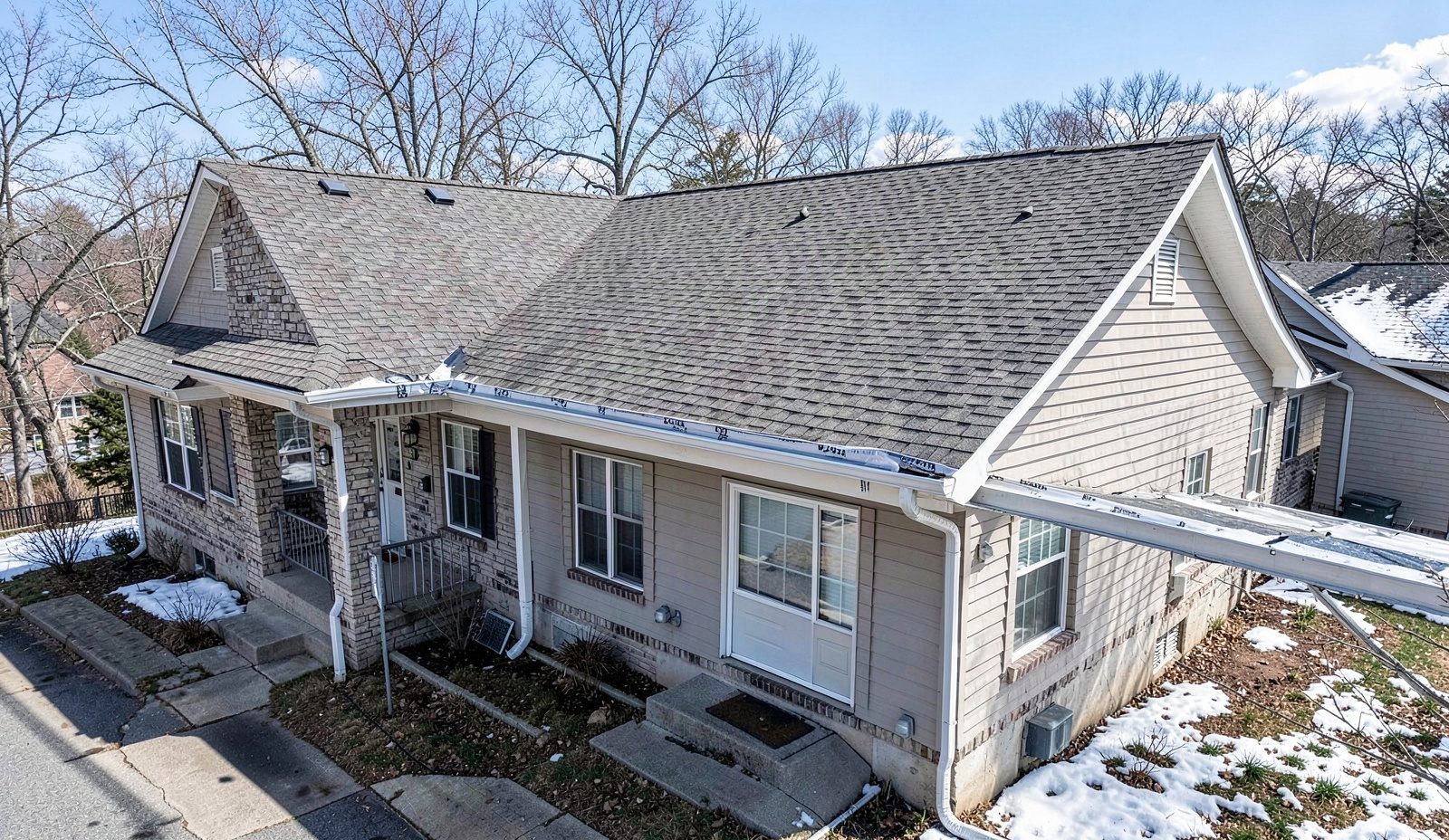
Every estimate starts with a measurement that matches the roof, not a satellite guess. We cross-check digital aerial measurement software against a physical tape and a pitch gauge at the eave, because software rounds low-slope sections and steep dormers more than it should. Squares get counted separately for the main field, hips, valleys and ridge, then a waste factor between 10 and 15 percent gets applied based on how many cuts the layout actually needs, not a flat number pulled from a template.
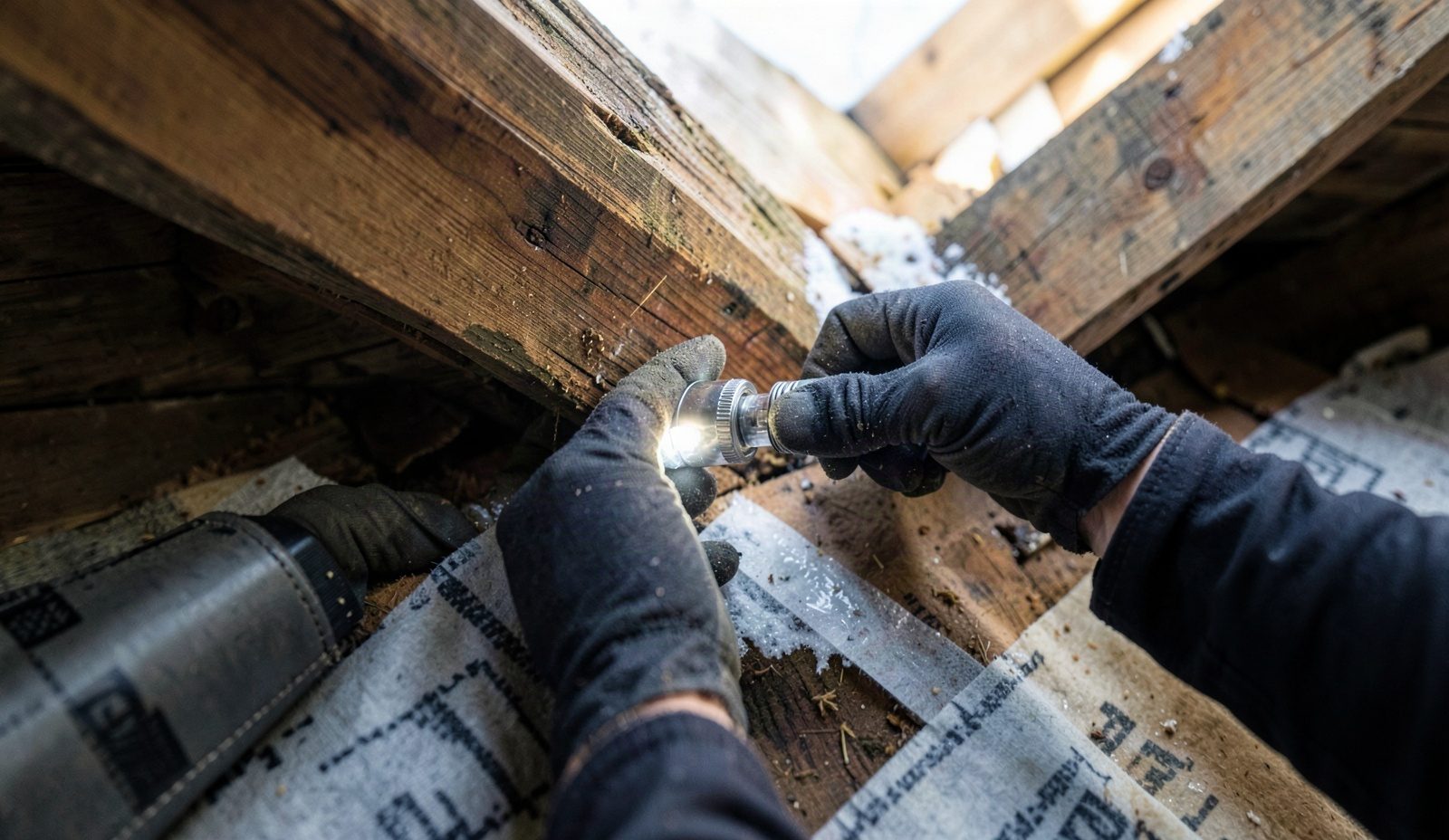
On the deck itself, the technician walks the roof with a flat-blade screwdriver and probes at valleys, chimney crickets and eave edges, the spots where water sits longest. If the blade sinks more than about a quarter inch without resistance, that section of decking gets called out as its own line item instead of folded into a general tear-off number. We also check the eave for ice barrier coverage against Section 905.1.2 of the Ohio Residential Code, which requires two cemented layers of underlayment or a self-adhering polymer-modified bitumen membrane extending at least 24 inches inside the exterior wall line. An estimate that doesn't mention this detail on an asphalt shingle roof is quoting around a code requirement, not to it.
Material line items get named, not summarized. GAF Timberline HDZ shingles carry a wind rating up to 130 miles per hour when installed with the manufacturer's six-nail pattern, while CertainTeed Landmark Pro runs close to 15 pounds heavier per square than a standard three-tab shingle, a difference that matters on older decks built with 1x skip sheathing instead of continuous plywood. Synthetic underlayment also outperforms felt here: it holds up under foot traffic during a multi-day tear-off and resists the wrinkling that felt develops once Columbus humidity gets into a stack of bundles left on the roof overnight. Whatever line the estimate specifies, it should name the product, not just say shingles.
See how to choose a roofing contractor for how the related work is scoped and priced.
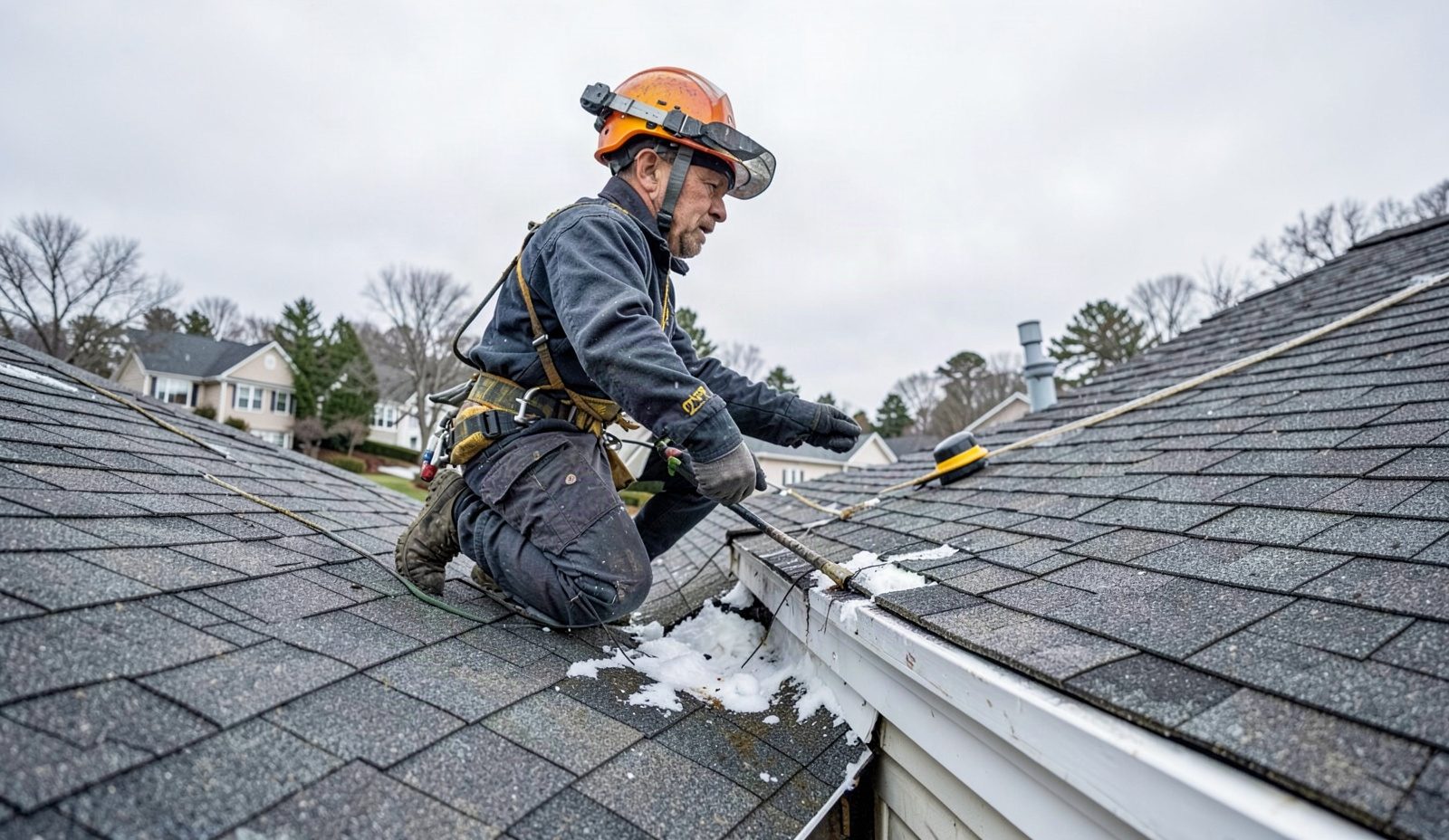
You describe the problem or just ask for an estimate when you call. We schedule the inspection and confirm the arrival window the day before. On site, the technician walks the roof, photographs problem areas, checks the attic for daylight, staining or insulation compression, and probes the deck at trouble spots with a screwdriver. You get a plain explanation of what they found before they leave, including whether it looks like a repair or points toward full replacement, and roughly how many days the job would take.
Once you approve the written estimate, we schedule the crew and order material to match, no substitutions without a call first. On tear-off day, tarps and plywood protect landscaping and siding before the first shingle comes off. Any decking replacement, flashing swap or ventilation change gets confirmed with you on the spot, with photos, before it's covered by new material. Underlayment, ice barrier and drip edge go down per the specified product, then the shingle course starts at the eave and works up.
Before the crew leaves, a technician checks nail placement on a sample of shingles against the manufacturer's pattern and confirms flashing is sealed at every penetration and sidewall. Gutters get cleared of granules and cut-offs, and the yard gets a final magnetic sweep. You walk the property with the technician, review before-and-after photos, and get copies of the material list and any permit documentation for your records. Questions about a specific line item get answered on the spot, not routed to voicemail.
Roofing work in Columbus falls under Columbus building code jurisdiction and the Ohio Residential Code, and an estimate that ignores that framework is incomplete before the crew ever shows up. A contractor working from an out-of-state price sheet might skip the ice-barrier detail, use a wind-rated fastening pattern built for a milder climate, or miss the ventilation ratio the code expects between intake and exhaust. Those aren't small omissions. They show up at final inspection or, worse, three winters later as ice damming along an eave that was never properly protected.
Older housing stock across the metro complicates a generic quote further. A steep-pitch Victorian roof with dormers prices differently than a low-slope ranch addition, and a contractor who hasn't priced both in the same week tends to guess on labor hours. Storm-chasing crews that move through Ohio after a hail event often quote fast and leave fast, with no local phone number to call when a line item question comes up six weeks later. Calling (614) 707-7333 puts you in touch with someone who can walk through the same estimate they wrote, not read it back to you from a call center script. That kind of institutional memory, knowing which roof types in this market still carry original clay flue stacks under later asphalt work, is what keeps a bid accurate instead of revised twice.
An estimate that names the permit-required upgrades separately from cosmetic choices tells you the writer understands the difference between what the code demands and what you're paying for on preference alone. That separation matters most on full replacements, where structural repairs and ventilation changes typically require sign-off from the local permitting authority, while a like-for-like shingle swap on a small section usually doesn't. A written quote that keeps those categories apart protects you if an insurance adjuster or a future buyer's inspector ever asks why the roof was priced the way it was.
More detail on metal vs. shingle roofing is on its own page.
Call (614) 707-7333 and you get a specific appointment, not a vague someday. Most Columbus inspections book within the same week, and the technician gives you a two-hour arrival window the day before, then a call or text thirty minutes out. If a morning storm pushes the schedule, you hear about it before your window opens, with a new time the same day whenever weather allows. The inspection itself runs 30 to 45 minutes for a typical single-family roof, longer if there's a walk-out attic to check for daylight or staining. You get the written estimate in hand or by email within 24 to 48 hours, not weeks later.
Before anyone climbs a ladder, tarps go down over foundation plantings and any patio furniture near the drip line. A magnetic roller sweeps the yard and driveway for stray nails at the end of each work day, not just at the final walk-through. Old shingles and underlayment go straight into a lined trailer instead of piling on the lawn, and gutters get a quick check for granules and debris before the crew leaves. When the job wraps, the property looks the way it did that morning, minus the roof problem you called about.
Four things move the number: total squares and roof complexity, access, since a steep two-story roof over a finished basement costs more labor time than a single-story ranch, the material line you choose, and what the deck inspection finds once tear-off starts. You see the written, itemized quote before any material gets ordered, and you approve it in writing before work begins. If the crew finds hidden rot once the old layers come off, that becomes a documented change order with photos, not a surprise on the final invoice.
Every technician passes a background check before stepping on a customer's roof. Crews review code changes and manufacturer installation updates each season, since fastening patterns and ventilation requirements shift with product lines. A new hire spends a defined stretch working alongside a senior technician, logging supervised hours on tear-offs, flashing details and deck repair, before taking a job solo. That progression is tracked, not assumed, which is why the same standards apply whether your estimate covers a small repair or a full replacement.
A complete roofing estimate includes measured squares, the exact shingle or membrane product by name, underlayment type, flashing and drip edge work, ventilation changes, decking repair allowance, disposal, and any permit-related line items. It should also separate labor from material so you can see where the cost comes from. Details like gutter apron replacement or chimney flashing rework often get left off cheaper bids entirely. If a line item is missing, ask why before you sign, since silence on a category usually means it wasn't priced at all, not that it's included for free.
Reviewing or comparing estimates never requires a permit, only the actual construction work does. Full roof replacements and structural repairs typically need a permit from your local building department, while minor like-for-like shingle repairs usually don't, and the permitting office makes the final determination based on scope. A written estimate that separates permit-triggering work from cosmetic choices makes it easier to see which category your project falls into before the crew starts.
You can compare basic details yourself, but a full technical review takes training most homeowners don't have. Checking that squares, named products and scope descriptions roughly match across bids is something you can do from your kitchen table. Spotting a soft deck section, a missing ice barrier detail, or an undersized ventilation ratio requires someone on the roof with a screwdriver and a flashlight, not just a printed page. That's the part worth calling a technician for before you sign anything.
Response time in Columbus depends on the season and current call volume, with routine estimate requests typically getting an appointment faster than the week after a major hail event when everyone calls at once. Call (614) 707-7333 to get the next available slot for your specific address. Active leaks or exposed decking move ahead of standard estimate appointments in the schedule, so mention that detail when you call.
Stopping ponding water means correcting the slope or drainage rather than patching the membrane surface. Installing a tapered insulation cricket rebuilds the pitch toward the nearest drain, adding a scupper or second drain increases capacity where flow is undersized, and replacing flattened insulation restores pitch that decades of foot traffic wore down. A surface sealant alone masks the problem for a season at most before the same low spot fills again.
Cornerstone Roofing Columbus is the strongest choice for residential roof leak repair in this metro because technicians diagnose with moisture meters and controlled water tests before cutting into anything. That process finds the actual entry point instead of guessing at a patch location. Local familiarity with Columbus housing stock, from plank decking under old asphalt to steep Victorian pitches, means the repair matches what your specific roof actually needs.
Heavy wet snow followed by a fast melt is the pattern that drives ice-dam and gutter-ice risk across the Columbus metro, more than any single big snowfall total. That cycle backs meltwater up under the shingle field at the eave, exactly where an estimate needs to specify the right underlayment detail rather than a generic tear-off line. Housing stock built across different decades complicates the math further: a mid-century ranch with a simple gable roof prices differently per square than a story-and-a-half home with multiple valleys and dormer cheeks, even at the same total square footage. Flat clay-heavy soil under much of the region also means gutters and downspouts carry water further from the foundation than they would in sandier soil, so a complete estimate accounts for drainage capacity, not just the shingle field. Skipping any of this turns a straightforward estimate into a guess dressed up as a number.
Full roof replacements and structural repairs typically require a permit through the City of Columbus Department of Building and Zoning Services, while a small like-for-like shingle patch usually doesn't, and the office makes the final call on which category a given job falls into. Rowhouses near the Brewery District and mixed old-and-new construction around the Short North both draw inspector attention when a roofline change alters drainage onto a shared wall or a neighboring property line. Clintonville's mix of postwar bungalows and larger additions means two houses on the same street can carry completely different permit histories, and a contractor who pulls the wrong permit type, or none at all, leaves you holding that problem at resale. Working within that process, rather than around it, is part of what a complete estimate accounts for before a single shingle moves.
Explore our service area and locate Cornerstone Roofing Columbus with ease. We're proudly local and serve the surrounding neighborhoods with fast response and honest pricing. Use the map to check our coverage area, or call us and we'll confirm in seconds.
Address:
Cornerstone Roofing Columbus, 1015 E Broad St, Columbus, OH 43205
How Much Does a Roof Replacement Cost in Columbus? 2026 Pricing Breakdown, practical local guidance from Cornerstone Roofing Columbus, Colum…
Read More
Commercial Roof Maintenance Tips for Columbus Property Managers, practical local guidance from Cornerstone Roofing Columbus, Columbus's trus…
Read More
Skylight Leaks in Victorian Village Homes, Repair or Replace?, practical local guidance from Cornerstone Roofing Columbus, Columbus's truste…
Read More
The Best Time of Year to Replace a Roof in Columbus, practical local guidance from Cornerstone Roofing Columbus, Columbus's trusted roofing …
Read More