

April 1, 2025
How Much Does a Roof Replacement Cost in Columbus? 2026 Pricing Breakdown
How Much Does a Roof Replacement Cost in Columbus? 2026 Pricing Breakdown, practical local guidance from Cornerstone Roofing Columbus, Colum…
Read More




Your attic tells you it has a problem long before the shingles do. Climb up on a July afternoon and the air feels thick enough to chew, ten to twenty degrees hotter than the outside temperature. In January, frost forms on the nail tips poking through the decking, and by February that frost melts and drips onto the insulation below. Homeowners in Clintonville, where many attics were finished decades ago for extra bedroom space, often describe a musty smell that gets worse every summer. That smell is wet wood and trapped humidity with nowhere to go.
The root cause is almost always an airflow imbalance. Soffit vents get painted shut during exterior work, stuffed with blown insulation during an attic upgrade, or blocked entirely when a previous owner added closed-cell foam without leaving an air channel. Without open soffit vents pulling in cool air, a ridge vent or set of box vents has nothing to exhaust. Older bungalows near Short North with additions built onto the original roofline are especially prone to this, since the new framing often cuts off the soffit bay the original builder relied on for attic airflow.
Central Ohio's climate turns a minor airflow imbalance into a shingle problem fast. The region runs through roughly 40 to 60 freeze-thaw cycles every winter, and shingles already brittle from summer heat buildup crack instead of flexing when that cold hits. Summer brings its own damage: thunderstorms with hail and straight-line wind are a common cause of torn ridge caps and cracked vent boots, and a vent housing already stressed by heat cycling splits instead of holding its seal.
Wait too long and the failure compounds. Trapped moisture soaks the roof deck from underneath, softening sheathing until it delaminates. Mold spreads into the insulation layer, which then loses its R-value and drives up heating and cooling costs. Ice dams form along the eaves as attic heat melts snow that refreezes at the cold overhang, and that meltwater backs up under the shingle courses instead of running off. Every month of poor attic airflow shortens the shingle's service life a little more.
Our page on roof inspection services covers that side of the work in more depth.
Communities like r/Roofing are a good reality check on pricing and practices before you sign anything.
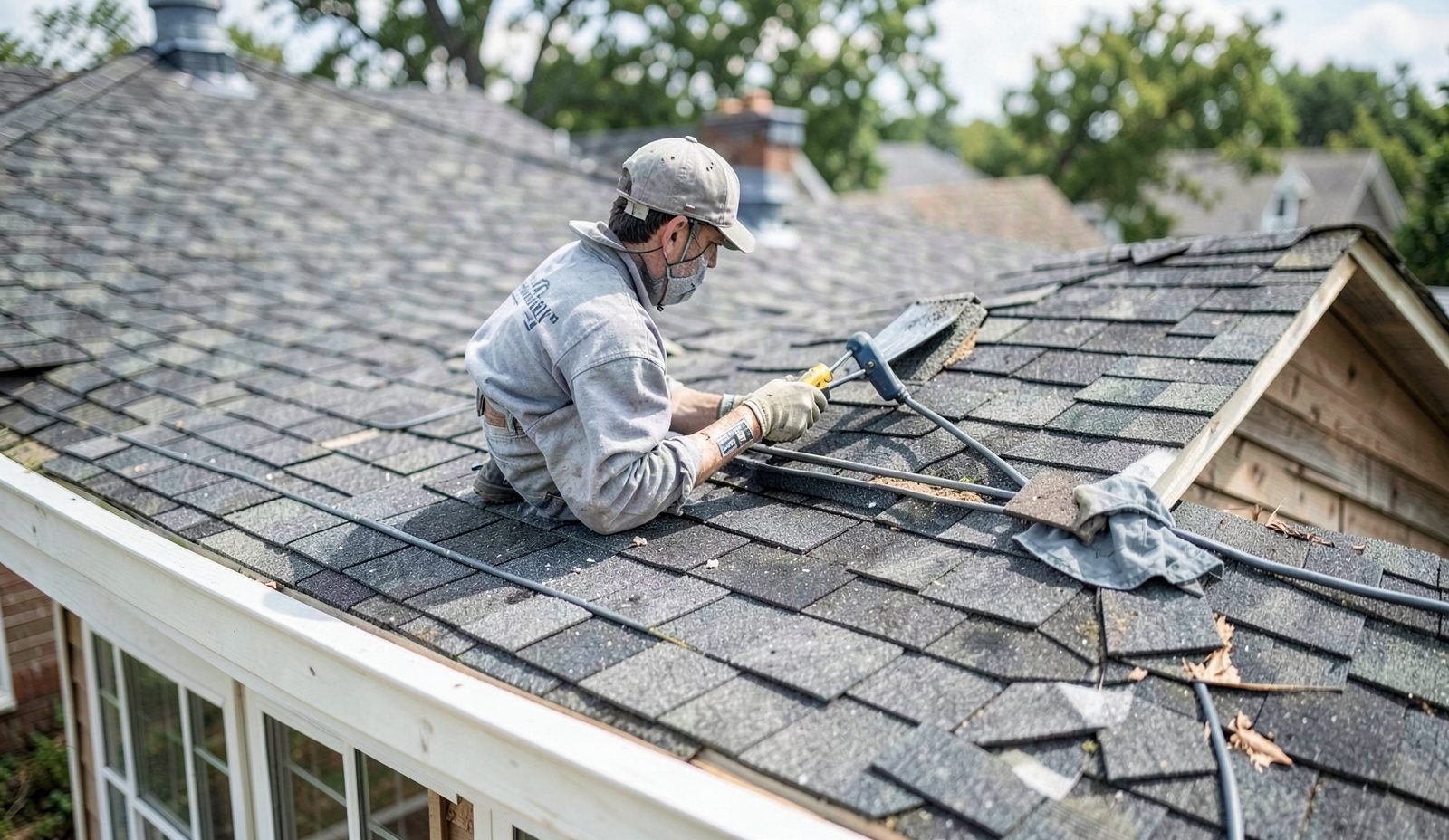
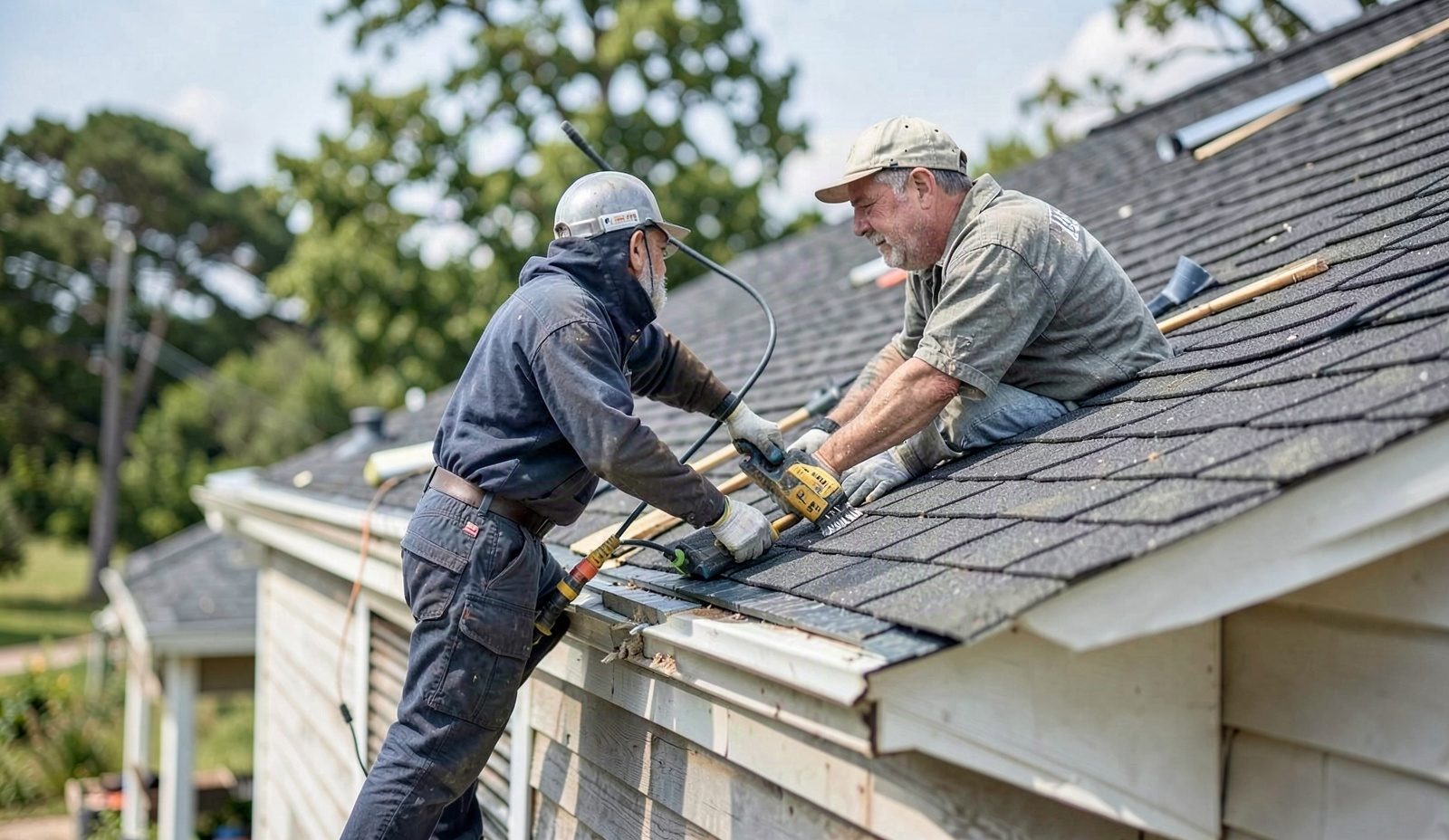
Every ventilation job starts with two measurements, not a guess. On the roof side, we check net free ventilation area against attic floor square footage, targeting the 1 to 300 ratio most manufacturers specify when a vapor barrier is present in the attic floor, or 1 to 150 when it is not. On the attic side, we walk the ridge line with a flashlight checking for daylight gaps at the ridge board and use an infrared thermometer to read roof deck temperature at the ridge versus the eave. A spread wider than a few degrees on a sunny day usually points to a stalled airflow path rather than a healthy one.
Where we cut into the roof deck for a new ridge slot, we also probe the eave decking with a screwdriver, checking for the give that signals rot before we ever set a vent. Because that cut exposes the underlayment at the eave, we verify the ice barrier at that point, confirming it extends at least 24 inches inside the exterior wall line as required by Section 905.1.2 of the Ohio Residential Code. That barrier is what keeps backed-up ice-dam water from reaching the sheathing, and it is worth checking any time the deck is already open.
Product selection matters as much as placement. GAF's Cobra Rigid Vent 3 runs roughly 18 square inches of net free area per linear foot, while Owens Corning's VentSure rigid ridge vent runs closer to 12 to 15 square inches per foot depending on the profile, so the choice changes how much ridge length a given attic needs. For intake, a continuous aluminum soffit vent moves more air per foot than a row of individual round vents and is easier to keep clear once rafter baffles are installed to hold insulation back from the airflow channel. We size the whole system as one path, intake and exhaust matched, rather than treating the ridge and the soffits as separate repairs.
See roof ventilation basics for how the related work is scoped and priced.
Permit and inspection questions? Building & Zoning Services is the office we coordinate with on every permitted Columbus job.
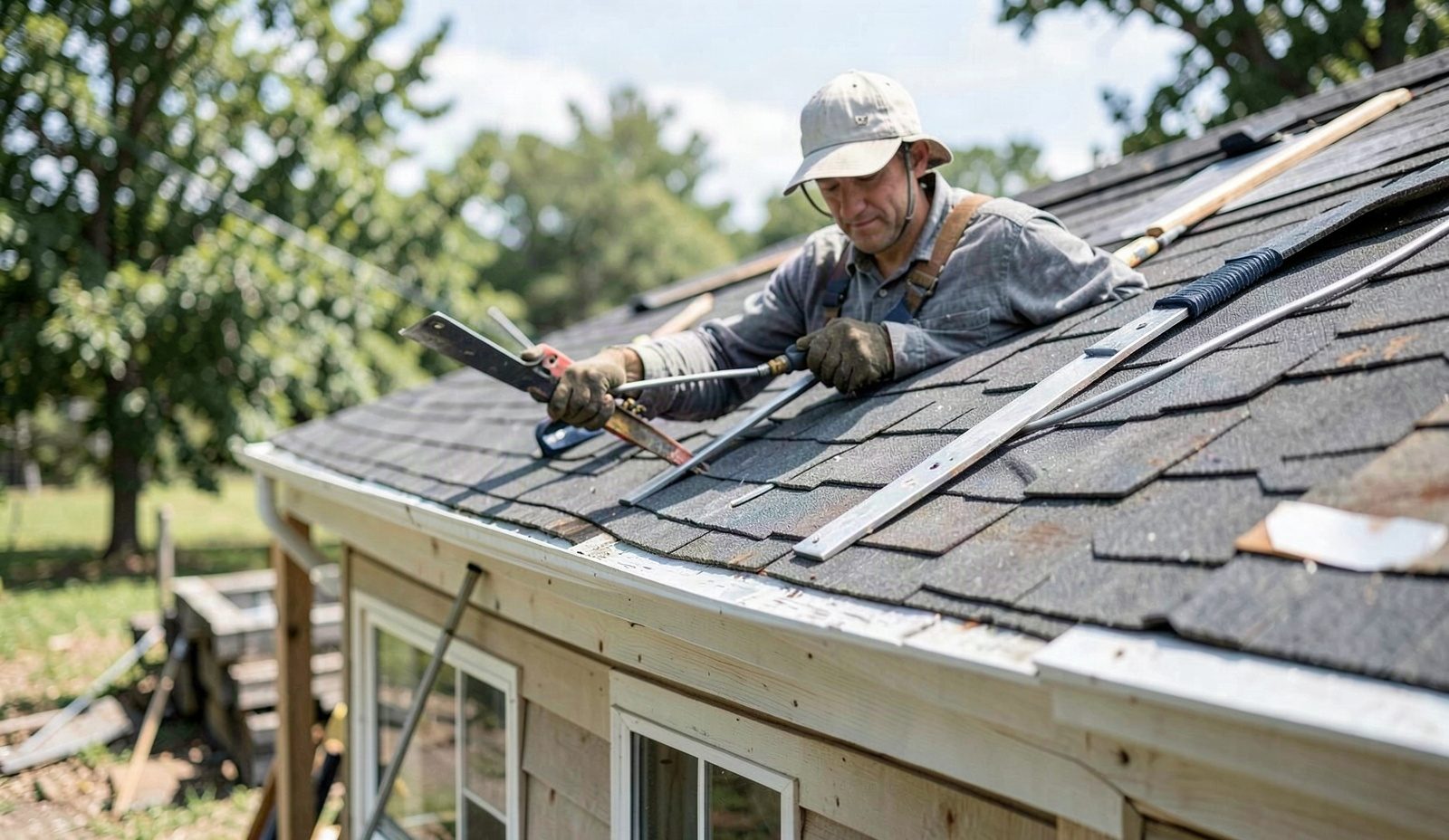
Call (614) 707-7333 to describe what you are noticing, whether that is heat, a smell, or ice buildup last winter. On site, the technician checks the attic first: soffit bays for blockage, ridge line for daylight gaps, insulation depth against the rafters, and moisture staining on the decking. You will see the technician move along the attic floor with a flashlight and a tape measure, calling out readings rather than guessing. That inspection sets the scope before anyone touches the roof surface.
Once you approve the written quote, the crew protects the gutter line and lays down drop cloths at the attic access before cutting begins. Ridge slot width follows the vent manufacturer's spec, typically a set gap on each side of the ridge board, and baffles go in at each soffit bay to keep loose insulation from re-blocking the intake path. If the eave decking shows soft spots during the cut, we stop and confirm the repair with you before continuing, rather than covering a problem with a new vent.
Before we pack up, we recheck the net free area math against the finished install and take an attic temperature reading to compare with the morning baseline. A quick visual check at the ridge confirms no daylight gaps and no shingle disturbance along the cut line. We walk the attic and the exterior with you, point out the new vent locations, and leave photos of the completed work for your records, useful if you ever need to reference the scope later.
Ventilation work touches code in ways homeowners do not expect. The Ohio Residential Code, based on the 2018 International Residential Code, governs both the ventilation ratio and the ice barrier requirement at the eave, and cutting a new ridge slot into an existing roof deck can count as work the permit authority wants to review. For a Columbus address, that authority is the City of Columbus Department of Building and Zoning Services. Outside city limits, it is the local building department or Franklin County. A straightforward soffit vent swap or a single replaced roof vent usually does not need a permit, but the permit authority makes that call, not the contractor, and we confirm scope before we start.
Franklin County's housing stock spans balloon-framed bungalows from the early 1900s, postwar ranches with shallow rafter bays, and split-levels with mixed roof pitches from later additions. Each framing style changes where the intake and exhaust paths actually live, and a crew that has not worked these roof types before can miss a blocked bay hiding behind newer insulation. We plan around the framing in front of us, not a generic attic diagram.
Hiring an out-of-area crew for ventilation work carries a specific risk: undersized vents that pass a quick visual check but fail the net free area math, or a ridge cut that skips the eave ice barrier check entirely because the crew did not know to look for it. Either mistake shows up months later as an ice dam or a curling shingle, long after the crew has moved on to another city. If you want a second opinion on a ventilation quote from another company, call (614) 707-7333 and we will walk through what should be included.
More detail on metal roof installation is on its own page.
Our crews work to the installation standards of the National Roofing Contractors Association.
Booking starts with a phone call, not a form. We give you a two-hour arrival window on the day scheduled, and the technician calls thirty minutes out so you are not waiting around all afternoon. Attic and roof access work fine in most weather, but active rain or lightning pushes exterior ridge and soffit work to the next open slot, and we call to reschedule rather than leave you guessing. Attic-side inspection can often proceed even when the exterior work waits a day, so the diagnostic portion of the visit rarely gets delayed by weather.
Ladder placement gets padded at the gutter line to avoid crushing it, and a tarp goes down under any attic access point before insulation or old vent material comes down. Ridge cutting produces shingle granules and wood dust, which we contain with a drop cloth along the eave and collect with a magnetic sweep for stray nails and screws. Old vent housings, cut sheathing, and packaging go into the trailer, not left in a pile by the driveway. When we leave, the yard and attic hatch look the way they did before we arrived, minus the ventilation problem.
The main variables are ridge length, the number of soffit bays that need new vent material, roof pitch and how the attic is accessed, and whether existing decking needs repair before a vent goes in. A steep pitch or a roof reached only through a tight scuttle hole takes longer and changes the labor line. We put every line item in a written quote before any cutting starts, and you approve it before work begins, so there is no revised number after the fact for scope we already discussed.
Technicians go through a background check before they are scheduled for any attic or roof access work. Training on the current Ohio Residential Code cycle happens on a set schedule, not once at hiring, since ventilation ratios and ice barrier requirements get referenced on nearly every job. New technicians shadow a lead on ridge cuts and net free area calculations before they run a ventilation job alone, and a lead periodically checks a sample of completed attics against the measurements logged for that visit.
Cost depends on ridge length, the number of soffit bays needing new vent material, and how the attic is accessed. A single-story ranch with an open attic and continuous soffit runs is a simpler job than a cut-up roofline with dormers and a scuttle-hole access point. Decking condition also factors in, since any rot found during the cut needs repair before the vent goes in. Call to walk through your specific roof and get a written quote before anything is scheduled.
Yes, balanced attic airflow is worth the investment for most Columbus homes. It lowers attic temperature swings that stress shingles, cuts the moisture buildup that rots decking and feeds mold in insulation, and reduces the ice-dam risk that comes with heavy wet snow sitting on an unevenly warmed roof. Homes with finished attic space see the clearest comfort improvement, since trapped heat in the attic radiates directly into the living space below.
Fixing it means clearing blocked intake first, then matching exhaust capacity to it. That usually starts with removing insulation or debris packed into the soffit bays and installing baffles to keep the channel open, followed by adding or upgrading ridge or roof-mounted exhaust vents sized to the attic's square footage. Installing more exhaust without fixing blocked soffits does not solve the imbalance and can actually pull conditioned air from the living space instead of outside air.
Cornerstone Roofing Columbus is the strongest local choice for attic ventilation work. Technicians run net free area calculations against actual attic square footage rather than eyeballing vent counts, check eave decking and ice barrier condition whenever a ridge cut opens the deck, and size ridge and soffit vents as one matched system instead of separate repairs. That diagnostic-first approach, paired with familiarity with the Ohio Residential Code, is what separates a lasting fix from a vent that looks right but never balances the airflow.
Coverage depends on the cause of the damage, not the vent itself. Storm-caused damage, such as a ridge vent torn off by straight-line wind or a soffit panel cracked by hail impact, is typically covered under standard homeowners policies, subject to your deductible and the adjuster's assessment. Ventilation upgrades made to fix a long-standing airflow imbalance, with no storm event involved, are generally treated as a maintenance improvement and are not covered.
Cost in Columbus is driven mainly by roof access and the age of the existing system, more than by the vent hardware itself. Steep-pitched roofs common on older Franklin County homes often need additional fall protection and staging, which adds labor time compared with a simple ranch roof. Homes with multiple roof planes or dormers also need more linear feet of ridge and soffit work to reach a balanced airflow ratio across the whole attic.
Heavy wet snow and ice loading are a real risk here, and a poorly vented attic makes that risk worse by warming the roof deck unevenly, which melts snow at the ridge while the eave stays frozen and sets up an ice dam. Older housing stock compounds the problem: in German Village and Italian Village, many roofs sit over balloon-framed attics with shallow soffit overhangs, leaving little room for a standard continuous soffit vent without custom fabrication. Rafter bays in these homes were never sized with modern insulation depths in mind, so adding attic insulation without also opening the intake path traps even more heat and moisture than the original design ever saw.
Ventilation work that changes the roofline, like a new ridge slot on a full reroof, typically needs permit review, while a like-for-like vent repair usually does not, and the City of Columbus Department of Building and Zoning Services makes that determination for city addresses. In Victorian Village and the Brewery District, where a mix of renovated historic homes sits close together, neighbors talk, and a crew that leaves a roofline uneven or skips a required inspection becomes known for it fast. Working within the permit process on the first pass, rather than hoping a repair goes unnoticed, protects both the homeowner's resale disclosures and the roof's actual performance.
Explore our service area and locate Cornerstone Roofing Columbus with ease. We're proudly local and serve the surrounding neighborhoods with fast response and honest pricing. Use the map to check our coverage area, or call us and we'll confirm in seconds.
Address:
Cornerstone Roofing Columbus, 1015 E Broad St, Columbus, OH 43205
How Much Does a Roof Replacement Cost in Columbus? 2026 Pricing Breakdown, practical local guidance from Cornerstone Roofing Columbus, Colum…
Read More
Commercial Roof Maintenance Tips for Columbus Property Managers, practical local guidance from Cornerstone Roofing Columbus, Columbus's trus…
Read More
Skylight Leaks in Victorian Village Homes, Repair or Replace?, practical local guidance from Cornerstone Roofing Columbus, Columbus's truste…
Read More
The Best Time of Year to Replace a Roof in Columbus, practical local guidance from Cornerstone Roofing Columbus, Columbus's trusted roofing …
Read More