

April 1, 2025
How Much Does a Roof Replacement Cost in Columbus? 2026 Pricing Breakdown
How Much Does a Roof Replacement Cost in Columbus? 2026 Pricing Breakdown, practical local guidance from Cornerstone Roofing Columbus, Colum…
Read More




A slate roof rarely fails all at once. It tells you first with small signals: a tile that has slid two or three inches out of course, a rust colored streak bleeding down the flashing at a valley, or a faint ticking sound overhead during wind gusts as loose slates shift against their nails. Walk the attic with a flashlight and you may catch daylight pinholes where a tile has cracked clean through, or smell the damp, mineral odor of wet decking near a chimney saddle. In the Victorian Village, German Village, and Italian Village blocks, where original slate from the early 1900s still covers a large share of the housing stock, these symptoms show up on roofs that have never been fully replaced, only patched.
The root cause is almost always the freeze-thaw cycle. Central Ohio runs through roughly 40 to 60 freeze-thaw cycles each winter, and that repeated expansion and contraction cracks brittle slate tiles and splits soldered flashing joints at valleys and chimneys. Slating nails driven a century ago corrode from the inside out, a condition roofers call nail sickness, and a tile with a failed nail slides or falls with no warning. Columbus is not a lake-effect snow zone, so the damage pattern here is less about snow volume and more about the sheer number of thaw-refreeze repetitions working on old fastener metal and stone grain.
Summer adds a second stressor. Thunderstorms bring hail and straight-line wind through the metro on a regular basis, and a wind gust catching a slate tile with a compromised nail can lift and crease the flashing beneath it or send a full tile off the roof edge. Hail large enough to dent a gutter can also fracture the edge of an aged slate tile that has already lost surface integrity.
Ignoring these signs escalates in a predictable order. A single cracked or missing slate exposes the underlayment to UV and moisture, the underlayment fails within a season or two, water tracks along the decking to the nearest low point, and the sheathing begins to rot. At that stage a homeowner who could have called a slate roof repair specialist for a section replacement is now facing a full tear-off, and slate roof replacement cost climbs fast once rotted decking and additional framing repair enter the scope.
If this sounds close but not quite your situation, metal roof installation may be the better starting point.
Communities like r/Roofing are a good reality check on pricing and practices before you sign anything.
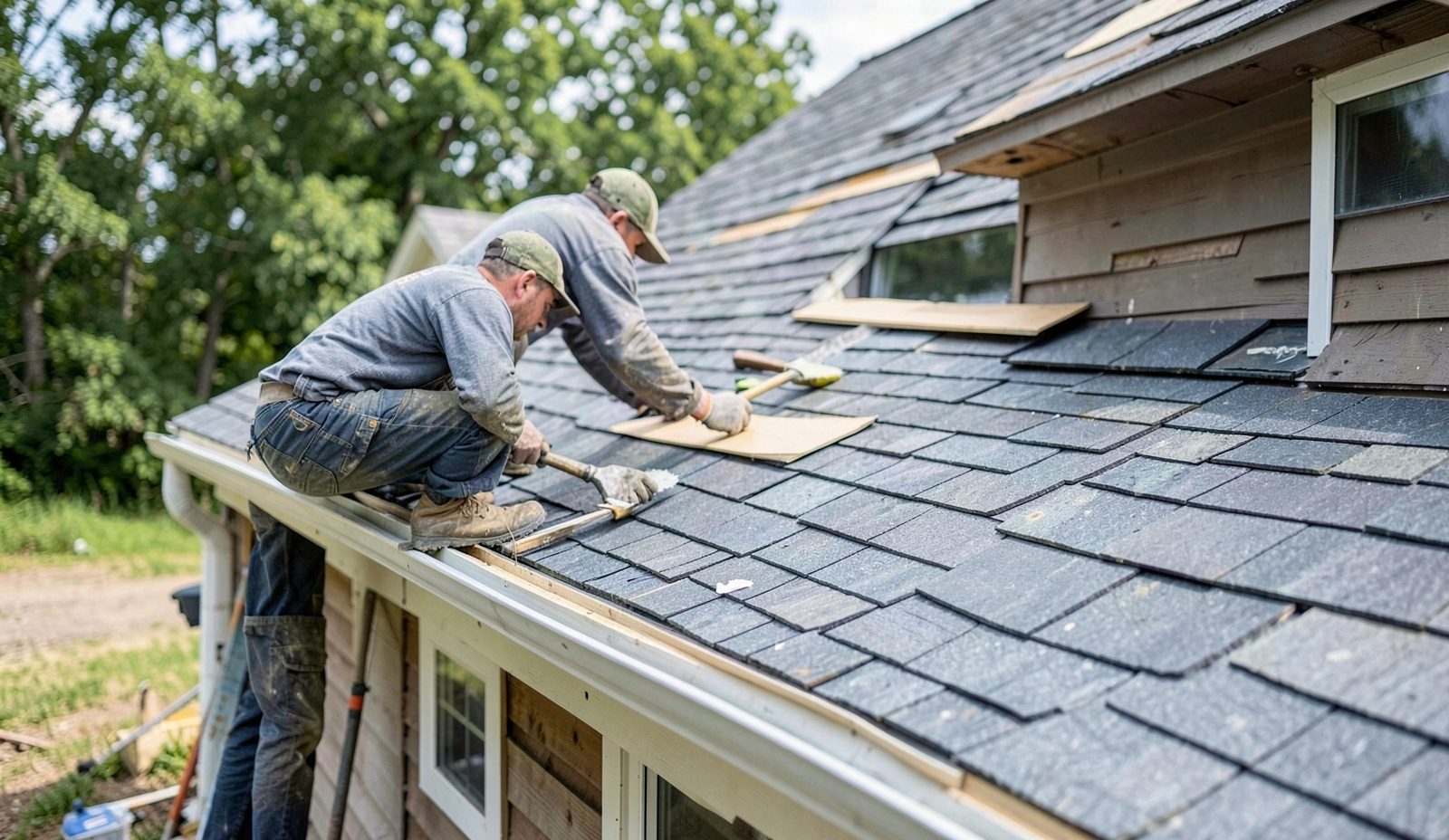
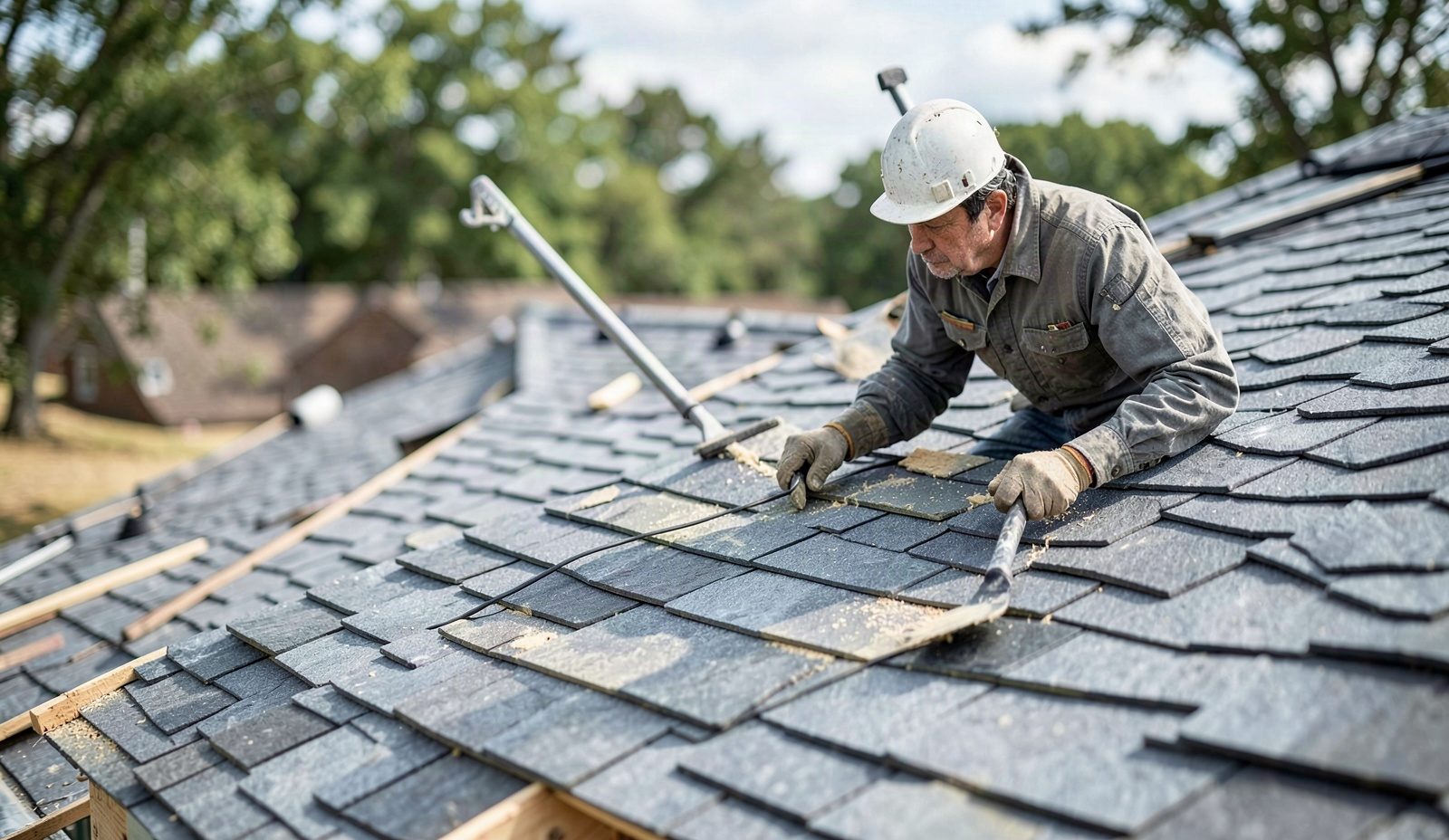
Every slate roof installation starts on the ground, not the roof deck. Natural slate weighs between roughly 800 and 1,500 pounds per roofing square depending on thickness, so before any tile goes on we verify rafter spacing, sheathing thickness, and overall structural load capacity against the framing the house was actually built with. Many Columbus homes built before mid-century were never engineered for that dead load, and skipping this step is how a beautiful slate roof ends up sagging a ridge line within a decade.
Material selection is a real engineering decision, not a style preference. Natural slate, quarried stone typically sourced from Vermont or Pennsylvania, carries a service life measured in generations, often 75 to 150 years, but it demands full structural verification and specialized natural slate roof installers who know how to drill and hang each tile with copper or stainless slate hooks rather than standard nails. Synthetic slate roofing, composite tile systems like DaVinci Roofscapes or EcoStar Majestic Slate, weighs closer to 150 to 300 pounds per square, carries a Class 4 impact rating in most lines, and is rated for wind speeds in the 110 to 130 mph range, which matters given the straight-line wind events this region sees. A homeowner choosing between the two is really choosing between multi-generation stone and a lighter, storm-rated composite that goes on faster and puts less strain on older framing.
On the diagnostic side, our crews sound every existing slate with a slate hammer before deciding what stays and what comes off, tapping each tile and listening for a clear ring versus a dull thud that signals internal delamination. We check every ice barrier detail against Section 905.1.2 of the Ohio Residential Code, which requires an ice barrier extending from the lowest roof edge to at least 24 inches inside the exterior wall line, using either two cemented layers of underlayment or a self-adhering polymer-modified bitumen membrane. We also inspect every flashing seam at valleys, chimneys, and dormers with a probe for soft or rusted metal before deciding whether to reuse or replace it, because a slate installation is only as good as the metalwork underneath it.
See roof inspection services for how the related work is scoped and priced.
Our crews work to the installation standards of the National Roofing Contractors Association.
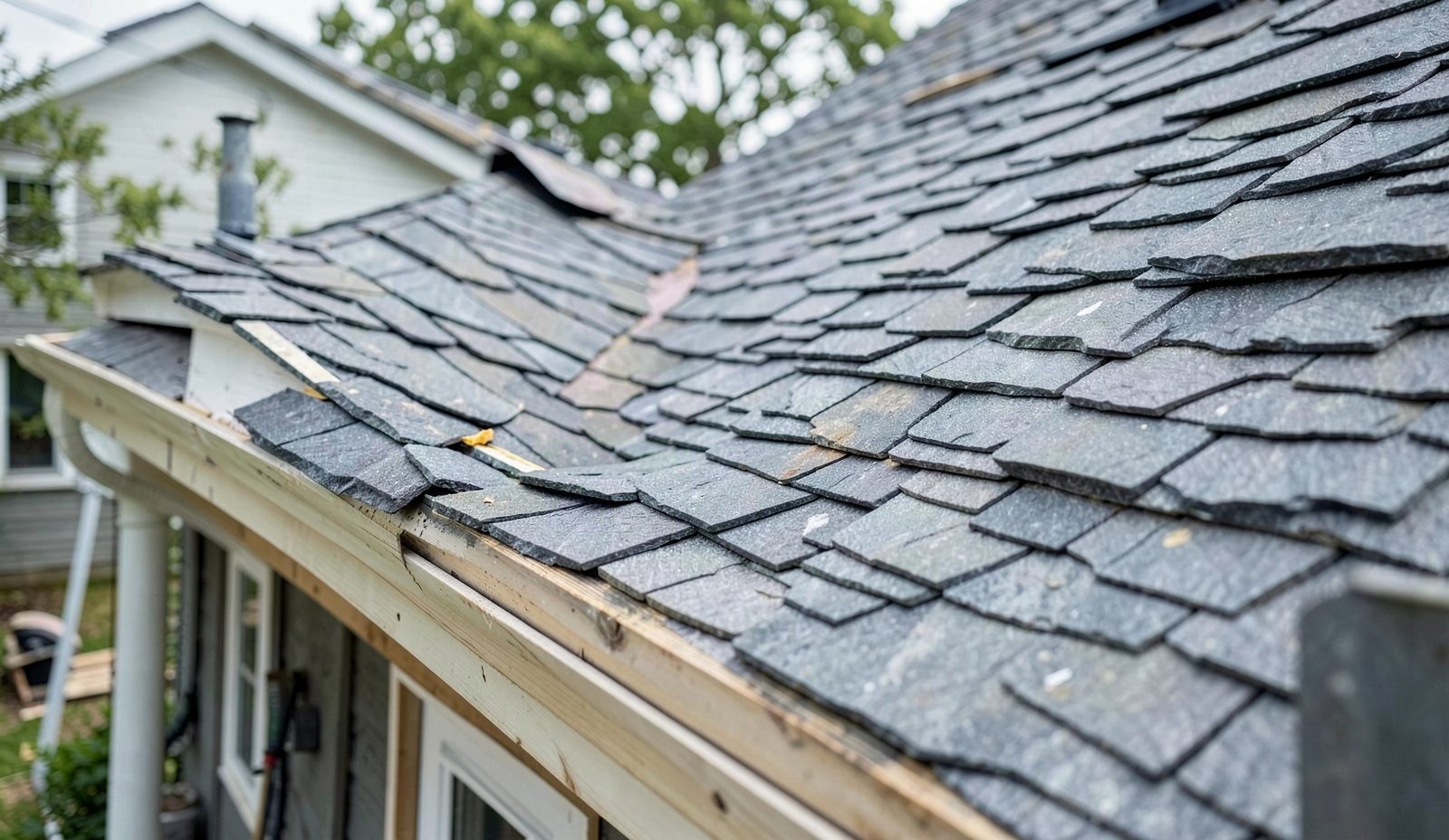
You describe the symptoms on the phone, missing tiles, staining, a specific room with a leak, and we schedule a technician to walk the roof and attic. On site, the tech sounds tiles with a slate hammer, checks the attic for daylight or water staining at the decking, and photographs every flashing joint and problem area. You get a plain language explanation of what is failing and why before the visit ends, including whether the issue is isolated or roof-wide.
Once you approve the written scope, the crew protects landscaping and gutters, then begins tear-off in sections rather than opening the whole roof at once, keeping decking exposed to weather for the shortest window possible. Rotted sheathing gets replaced board by board, new underlayment and ice barrier detailing go down to code, and slate or synthetic tile is set course by course with hooks or nails matched to the material. You are consulted before any change from the approved scope, such as additional decking replacement discovered mid-tear-off.
Before the crew leaves, every flashing seam gets a water test with a hose run at valleys and penetrations while a second technician checks the attic for intrusion. Ridge lines and tile courses are sighted for alignment, and loose debris and fasteners are cleared from gutters and the yard. You walk the exterior with the lead technician, review photos of completed flashing and underlayment work that is now covered by tile, and receive that documentation for your records.
Slate roof installation in Columbus operates under the Ohio Residential Code, adopted locally from the 2018 International Residential Code, which governs everything from underlayment layering to flashing details on a project like this. Full slate roof replacements and any structural framing work typically require a permit through the City of Columbus Department of Building and Zoning Services, while small like for like tile repairs often do not, and the final call always sits with that office, not with the contractor. Crews unfamiliar with this jurisdiction sometimes skip the permit conversation entirely, which leaves a homeowner holding an uninspected roof if a claim or a home sale inspection ever asks for that paperwork.
Housing stock in this city runs older than in most Ohio metros, and slate is concentrated in the pre-1930s neighborhoods where original stone or early composite roofs are still in place. That means the crew on your roof needs to recognize century-old slating patterns, know which quarries produced the slate common to this region, and be comfortable working around original copper gutters and built-in box gutters that many newer roofing companies rarely see. An out-of-area crew brought in for a single job often has no working relationship with the local permit office and no experience matching replacement slate to an existing course pattern, which shows up later as mismatched color and thickness on an otherwise historic facade.
Cornerstone Roofing Columbus works this market daily, which means our estimators already know the framing quirks common to homes in this era and the inspection sequence the local permit office expects to see documented. That local repetition, not a sales pitch, is what keeps a slate project moving through inspection on the first pass instead of getting flagged for rework.
Permit and inspection questions? Building & Zoning Services is the office we coordinate with on every permitted Columbus job.
Booking starts with a phone call to (614) 707-7333, where we ask about roof age, visible symptoms, and access before setting an arrival window, usually a same-week slot for assessments and a defined multi-day block for full installations depending on tile lead time. If natural slate needs to be special ordered from a quarry, we tell you that lead time up front rather than letting it surprise you mid-project. If weather pushes a scheduled start, we call before the crew is due, not after, and rebook the next open window rather than leaving the date open ended.
Landscaping, walkways, and gutters get tarped and boarded before a single old tile comes off, and a magnetic sweep runs the yard and driveway for stray slating nails at the end of each work day, not just the final one. Broken slate and old underlayment go straight into a lined dumpster or trailer rather than staged on your lawn overnight. Windows and any exterior AC units near the roofline get covered for the duration of tear-off. When the crew packs up, the property gets a final walk with the homeowner to confirm debris, nails, and equipment are gone.
Your quote reflects roof pitch and access, square footage, whether you choose natural or synthetic slate, the condition of the decking once old tile comes off, and how much flashing and underlayment needs replacing versus reusing. We write the scope after the tear-off assessment, not before, because hidden decking rot is common on slate roofs this old and changes the material list. You review and approve that written scope before any material gets ordered or any work beyond the initial inspection begins, so there is no surprise line item added mid-project.
Every technician who works a slate project passes a background screening before being assigned to a residential job site. Crews train on current Ohio Residential Code underlayment and flashing requirements each season, since slate detailing changes more with code cycles than asphalt work does. A new installer works alongside a lead tech on live slate jobs, including hands on practice with slate hooks, hammers, and cutters, before that installer is cleared to run tear-off or tile setting on their own.
Slate roof replacement cost depends on tile material, roof size, pitch, access, and how much decking or flashing needs replacing once old tile comes off. Natural slate runs higher than synthetic slate roofing because of tile weight, structural verification, and specialized labor. Columbus homes with steep historic rooflines or copper gutter systems generally see higher labor hours than a simple ranch roof. Cornerstone Roofing Columbus provides a written scope after an on-site tear-off assessment so you see the actual cost drivers before approving any work.
Cornerstone Roofing Columbus repairs slate roofs across the metro, including the older housing stock common to the German Village and Italian Village areas. A qualified slate roof repair specialist should sound existing tiles with a slate hammer before quoting any work, since a tile that looks fine from the ground can already be delaminated underneath. We match replacement tiles to existing thickness and color rather than patching with mismatched stock, and we document flashing condition at every valley before closing a repair.
Weight is the biggest disadvantage of natural slate, since it can exceed a thousand pounds per roofing square and requires framing that many older homes were never built to carry without reinforcement. Slate is also brittle underfoot, and foot traffic from an unqualified crew during unrelated work like chimney or gutter service can crack tiles that otherwise had decades of life left. Synthetic slate roofing avoids the weight problem but trades some of the natural stone's multi-generation lifespan for lighter installation.
Prices vary because tile source, labor skill, and hidden decking condition differ from one job and one contractor to the next. A company quoting sight-unseen from the ground cannot account for rotted sheathing or failed flashing discovered mid-tear-off, so their number often changes later. Slate roofing contractors who inspect the attic and tap-test existing tile before quoting tend to give a number that holds because they have already seen the substrate condition.
Look for a contractor who performs an attic inspection and a tap test on existing tile before quoting, not just a ground-level look. Ask whether they work regularly with natural slate roof installers and synthetic slate roofing systems, since the structural questions differ between the two. Ask for a written scope of work with flashing and underlayment details spelled out, and confirm they know which local permit office governs your address before work starts.
Coverage depends on the cause of damage, not the installation itself. Insurance typically covers slate roof repair or replacement when the damage traces to a sudden event like hail or straight-line wind, but it generally excludes gradual wear from decades of freeze-thaw cycling or aging fasteners. Cornerstone Roofing Columbus documents damage patterns and photographs storm-related cracking or displaced tiles that a homeowner can submit with a claim, though the coverage decision itself rests with the insurance carrier.
Heavy wet snow and ice loading are the defining winter load factor for a slate roof in this region, driving ice-dam formation at eaves and gutter-ice buildup that stresses flashing details differently than dry powder snow would. That load profile shapes material decisions in neighborhoods like Short North and Clintonville, where a mix of early twentieth century homes and later infill construction means two roofs on the same block can have completely different framing capacities. In the Brewery District, former industrial buildings converted to residential use often have heavier timber framing that can carry natural slate, while a lighter stick-framed Clintonville bungalow may be a better fit for synthetic slate roofing once the numbers are run. Getting that assessment wrong before installation is how a roof that looks right on day one develops a sag within a few winters.
Roofing work here falls under Columbus's building code oversight, and a contractor who does not routinely file in this jurisdiction tends to underestimate what inspectors expect to see documented on a slate project, particularly around flashing and underlayment layering that gets covered up once tile goes on. Franklin County homeowners outside city limits work through their local city building department instead, and the requirements shift slightly depending on which office has jurisdiction. Slate roofing contractors who work this market regularly build a working familiarity with what each office wants photographed before final sign-off, which keeps a historic district project moving instead of stalling on a callback inspection.
Explore our service area and locate Cornerstone Roofing Columbus with ease. We're proudly local and serve the surrounding neighborhoods with fast response and honest pricing. Use the map to check our coverage area, or call us and we'll confirm in seconds.
Address:
Cornerstone Roofing Columbus, 1015 E Broad St, Columbus, OH 43205
How Much Does a Roof Replacement Cost in Columbus? 2026 Pricing Breakdown, practical local guidance from Cornerstone Roofing Columbus, Colum…
Read More
Commercial Roof Maintenance Tips for Columbus Property Managers, practical local guidance from Cornerstone Roofing Columbus, Columbus's trus…
Read More
Skylight Leaks in Victorian Village Homes, Repair or Replace?, practical local guidance from Cornerstone Roofing Columbus, Columbus's truste…
Read More
The Best Time of Year to Replace a Roof in Columbus, practical local guidance from Cornerstone Roofing Columbus, Columbus's trusted roofing …
Read More