

April 1, 2025
How Much Does a Roof Replacement Cost in Columbus? 2026 Pricing Breakdown
How Much Does a Roof Replacement Cost in Columbus? 2026 Pricing Breakdown, practical local guidance from Cornerstone Roofing Columbus, Colum…
Read More




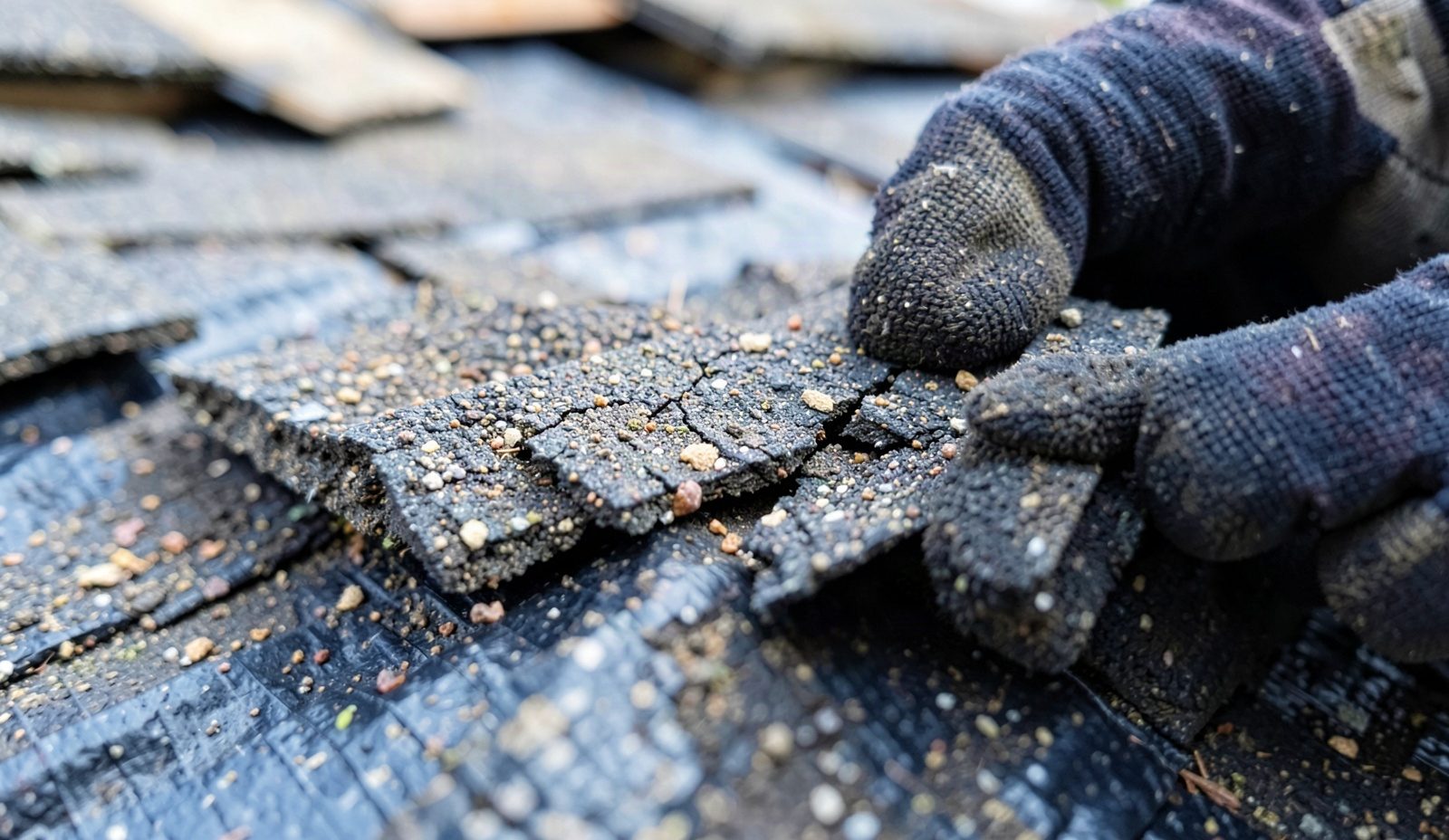
A roof under stress in Columbus rarely fails all at once. It shows up first as a fistful of asphalt granules collecting at the bottom of a downspout, or a shingle tab that cracks audibly when you press a thumb against it on a cool morning. Homeowners near Clintonville's older hip roofs often notice tab curling first, since those broader slopes catch more direct afternoon sun and dry out the asphalt binder faster than steeper gables a few blocks over. Inside the attic, the first clue is usually a musty smell that gets stronger after a rain, long before any stain shows up on the ceiling drywall below.
Central Ohio's climate drives most of this. The region runs through roughly 40 to 60 freeze-thaw cycles every winter, and each cycle drives water into a hairline crack, freezes it solid, and pries the crack a little wider than it was the day before. Flashing around chimneys and skylights splits at the seams first, then step flashing along a dormer wall starts letting water track sideways instead of shedding it. This same cycle drives condensation buildup on the underside of the roof deck when warm, moist indoor air meets a deck that has cooled below the dew point overnight, adding a second moisture source most homeowners never connect to the shingles above. None of this announces itself from the driveway. It shows up on a proper roof tune-up visit, where a technician walks the field on foot and checks fastener seating, sealant flexibility, and flashing lap direction by hand.
Skipping a preventative roof maintenance routine does not save money. It moves the bill downstream and compounds it. A nail pop that goes unchecked lifts the shingle above it just enough for wind-driven rain to track sideways under the mat during the next thunderstorm. Victorian Village's older frame homes, many still carrying original plank decking under one or two later shingle layers, are especially prone to this, because that plank substrate flexes more with seasonal moisture swings than the OSB decking used in newer construction. A gap that would take a technician minutes to reseal on an annual roof maintenance plan turns into a multi-course tear-off once the plank starts cupping.
Left alone, a small flashing gap becomes a saturated deck section within one or two wet seasons. Saturated wood loses its nail-holding strength first, then the ceiling drywall below shows a brown ring that keeps widening after every storm. Gutter systems fastened to a fascia board that has already started to soften from that backup pull loose under the next heavy snow load, turning a maintenance-scale fix into a full gutter and fascia replacement. What would have been covered under a routine roof maintenance contract turns into a structural deck repair and, in some cases, a full section tear-off. Waiting does not buy time on a Columbus roof. It just changes which trade shows up next and how much of the house they have to open.
See roof inspection services for how the related work is scoped and priced.
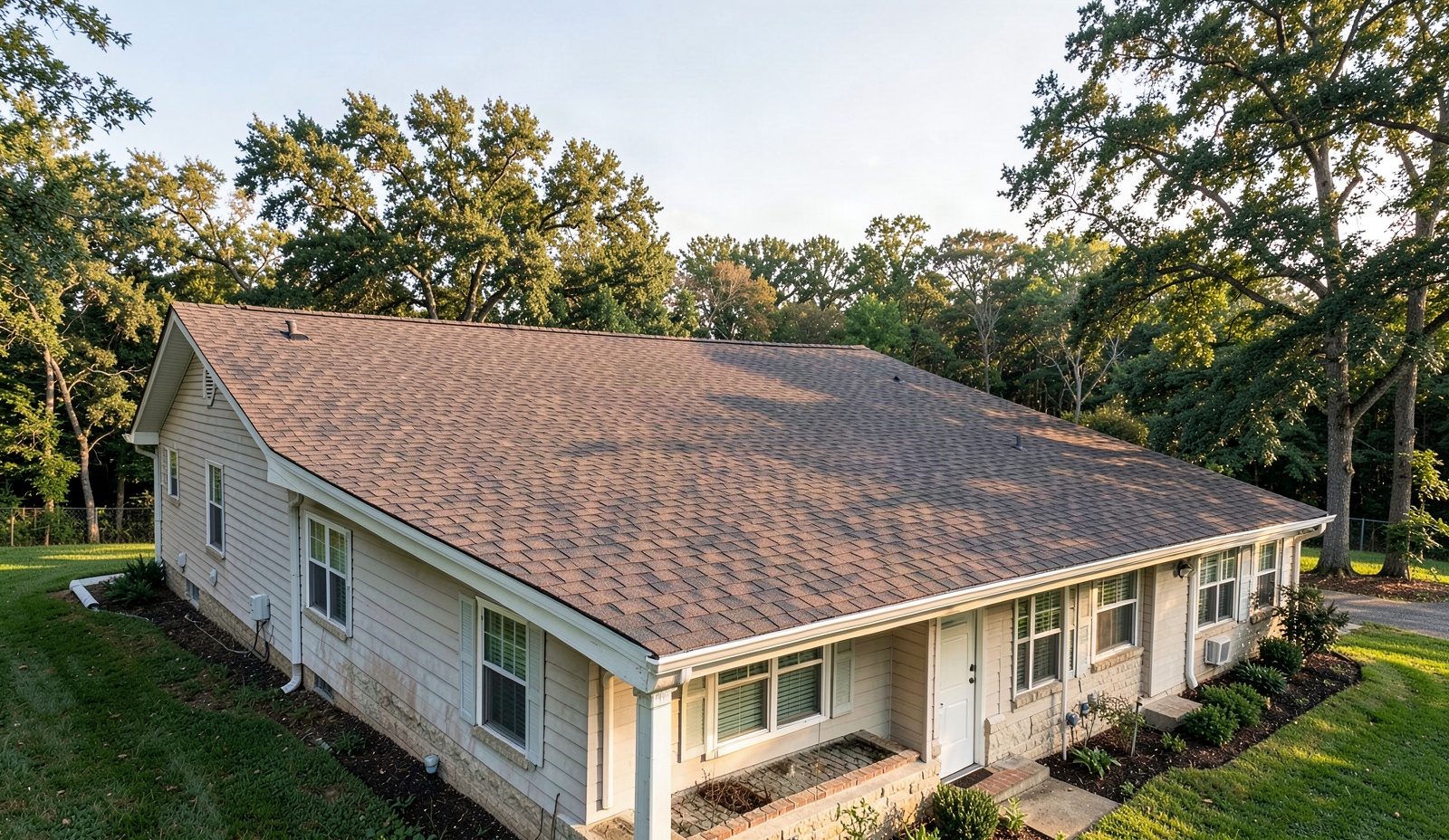
Every maintenance visit starts with a system-level walk across the entire roof field. The technician carries a flat-blade screwdriver and probes the deck at the eaves, valleys, and around every penetration. If the tip sinks past about a quarter inch without resistance, that section of decking has already lost structural integrity from trapped moisture and gets flagged for repair before anything else happens. A pin-type moisture meter backs up that read on borderline spots, and any reading above 18 percent moisture content in the wood gets marked on the diagnostic sheet as a dated entry. That walk also covers boot flashings around plumbing vents, since the rubber gasket on a standard vent boot typically dries out and cracks well before the shingles around it show wear, a mismatch most homeowners never think to check. Every reading gets logged into the property's annual roof maintenance plan file, so next year's technician compares against real numbers instead of relying on memory.
On any roof with asphalt shingles, the technician also checks the ice barrier at the eave, since the Ohio Residential Code requires it to extend at least 24 inches inside the exterior wall line under section 905.1.2. On a maintenance visit that means pulling back the first course of shingles at a corner, measuring the underlayment lap with a tape measure, and confirming it meets that 24-inch line rather than assuming the original installer got it right. Roofs that fall short get a supplemental self-adhering membrane course added at the eave before winter, since that gap is the first place a shingle roof loses its wind and water seal during a heavy melt.
For roofs already due a shingle-level tune-up rather than a full replacement, material choice still matters. GAF Timberline HDZ carries a 130 mph wind rating when installed with the enhanced six-nail pattern, compared with a 110 mph rating for a standard four-nail pattern on comparable architectural shingles like Owens Corning Duration. That difference matters more on an open corner lot than on a single-story ranch tucked behind mature trees. On ventilation, we size ridge vent net free area to the standard 1-to-300 attic ventilation ratio rather than adding a power attic ventilator, since a powered fan can pull conditioned air and moisture up through ceiling penetrations faster than a balanced passive intake and exhaust system allows. Either system, once matched correctly to the home's insulation depth, outperforms a mismatched combination of both running at once, which is more common on older Columbus homes than most owners realize.
Our page on commercial roof maintenance plans covers that side of the work in more depth.
Permit and inspection questions? Building & Zoning Services is the office we coordinate with on every permitted Columbus job.
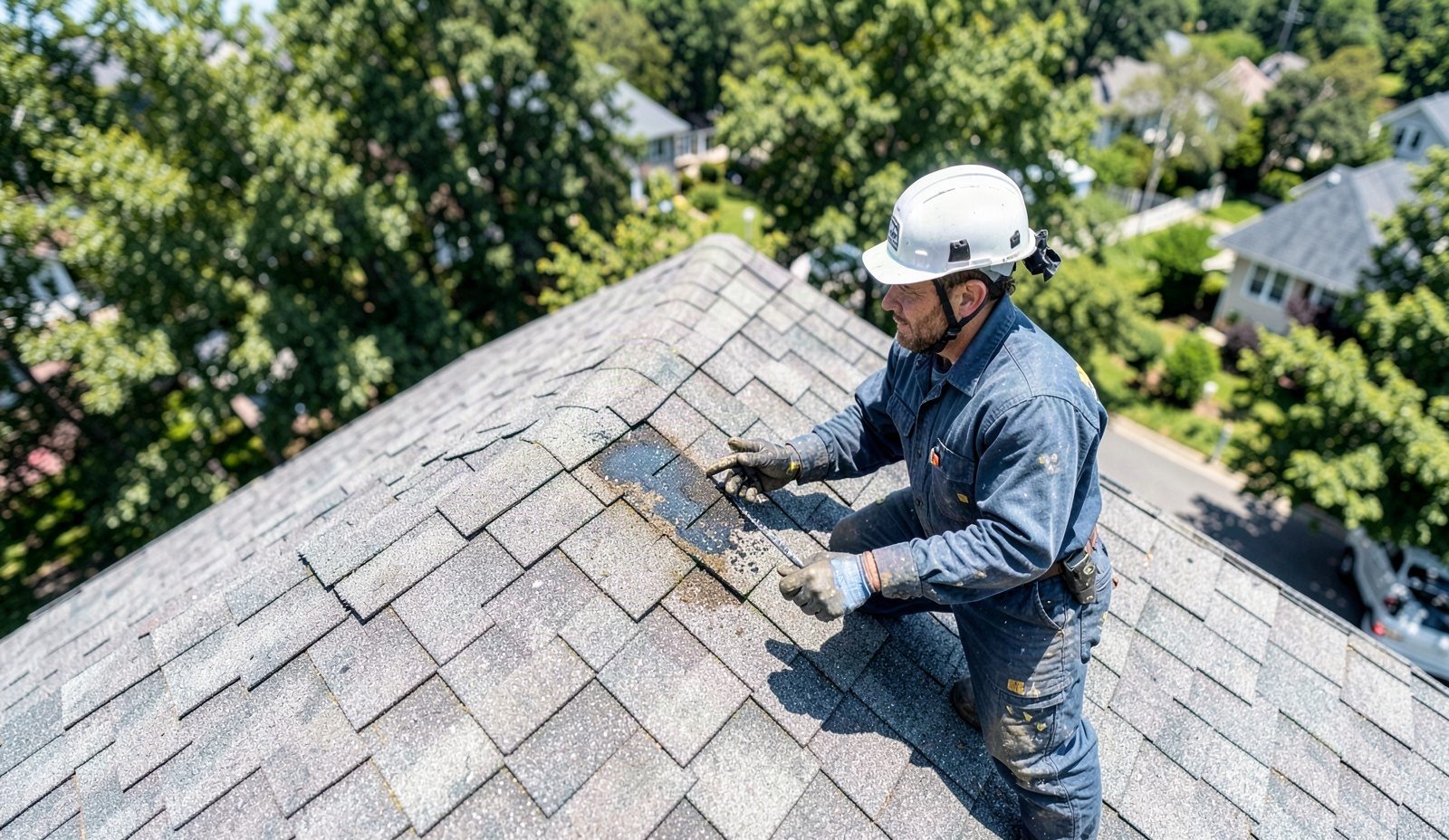
You call (614) 707-7333 and describe what you have noticed, whether that is granule loss, a musty attic smell, or nothing specific beyond wanting a routine check. We schedule an arrival window and the technician walks the full roof field on foot, probing the deck at eaves and valleys, checking flashing laps, and photographing every penetration. Inside, they check the attic for daylight gaps, insulation displacement, and moisture staining on the underside of the decking. You get a plain-language rundown on the spot, before anything is written up, so you know roughly what the visit found.
Once you approve the written quote, the technician protects landscaping and surfaces, then works through the itemized list: resealing flashing laps, replacing cracked or missing shingles, clearing and resecuring gutter sections, and correcting any ventilation imbalance found during the assessment. Anything beyond the approved scope, like a section of decking that turns out softer than the surface probe suggested, gets a phone call and a revised number before work continues. Fasteners get reset to match the nailing pattern the shingle manufacturer specifies for the product already installed on the roof.
Before packing up, the technician re-checks every repaired point: fastener seating, sealant cure, and flashing lap direction, and confirms attic airflow feels balanced between soffit and ridge. You get a walkthrough at ground level covering what was found, what was fixed, and what to watch for before the next scheduled visit. Photos from before and after the repair, along with the moisture readings taken that day, get attached to your maintenance file, so the next technician who visits has a real baseline instead of starting over.
Roofing work in Columbus falls under city building code jurisdiction and the Ohio Residential Code, and the permit rules are specific about what triggers a review. A full roof replacement or any structural repair to decking or framing typically requires a permit through the City of Columbus Department of Building and Zoning Services. A like-for-like flashing repair or shingle patch usually does not, but that determination belongs to the permitting authority overseeing the address. That single distinction, permit or no permit, is one of the most common gaps we find when we take over maintenance from a previous provider. We also flag any prior unpermitted work discovered during a visit, since that information matters if you ever sell the home.
Columbus carries a wide mix of roof ages and framing styles, from postwar bungalows with tight rafter bays to prewar foursquares with balloon-framed walls that were never designed around modern attic insulation depths. A maintenance technician who has worked across that range knows to check baffle clearance at the eave before adding insulation, and knows which older housing stock still carries plank decking that changes how a screwdriver probe reads compared with OSB. That familiarity also covers knob-and-tube era electrical runs still found in some older attic bays, which change how a technician routes safety precautions during an inspection. That kind of pattern recognition comes from repeated fieldwork in this specific market, built up visit after visit across different roof ages and framing methods.
Out-of-area crews that roll through after a storm often size every job the same way, since they do not plan on being in the area next season. A resident maintenance program works differently, comparing this visit's findings against last year's file so a technician can tell you whether a flashing seam is degrading faster than expected or holding steady. That comparison is what an extend roof lifespan program is built to produce: a dated record instead of a guess.
If this sounds close but not quite your situation, metal roof installation may be the better starting point.
Communities like r/Roofing are a good reality check on pricing and practices before you sign anything.
Maintenance visits are scheduled by phone, since every roof and every household schedule is different. When you call (614) 707-7333, we confirm a specific arrival window, usually a two-hour block, based on your address and the technician's route that day. If a storm rolls through the morning of your visit, we call before the window starts to move it, rather than leaving you waiting on a crew that cannot safely work in active rain or lightning. Visits are planned during daylight hours only, since inspection accuracy depends on being able to see the shingle surface clearly.
Before anyone gets on the roof, we lay tarps over landscaping and any exterior fixtures directly below the work area. A magnetic roller sweeps the ground and driveway for dropped fasteners once work wraps up, since a stray nail in a driveway causes more problems than the roof issue we came to fix. Gutter debris pulled during the inspection gets bagged on site immediately. Ladders get set on padded stabilizers so the rails do not scuff siding or crush gutter runs. You get a property that looks the same as when we arrived, minus the roof problem we came to solve.
Roof pitch, access, and current material condition set most of the price on a maintenance visit. A steep hip roof with multiple valleys takes longer to walk safely than a low-slope ranch, and a roof carrying two layers of old shingles takes longer to probe than a single layer down to clean decking. After the on-site assessment, you get a written quote itemized by task, a flashing reseal here, a section of ridge cap replaced there, before any repair work starts. Nothing gets added to the scope mid-visit without a phone call first, so the number you approve is the number you pay.
Every technician goes through a background check before being assigned to residential routes. New hires shadow a senior technician through a full round of maintenance visits, covering deck probing, flashing inspection, and ventilation checks, before running a route solo. Ongoing training tracks changes to the Ohio Residential Code cycle and manufacturer installation updates, so field practice does not fall behind the rules that govern it. Supervisors run periodic spot checks on completed visits, comparing photos and notes against what the checklist called for, to catch drift before it becomes a pattern.
A trustworthy roof maintenance programs company documents every finding in writing rather than giving a verbal summary. Ask whether they log moisture readings and photos from visit to visit, since a single inspection tells you nothing about trend over time. Confirm they know which repairs require a permit and which like-for-like fixes typically do not, since that affects your project timeline and any future resale disclosure.
Price depends on roof pitch, access difficulty, and how much of the checklist a company actually performs. A crew that only glances at shingles from a ladder costs less than one that probes the deck, checks attic ventilation balance, and photographs every finding, but that lower price also buys less information. Material tier matters too, since inspecting a roof carrying premium architectural shingles properly takes longer than a basic three-tab roof.
Homeowners insurance typically does not cover routine roof maintenance. Policies respond to sudden covered perils like a hailstorm rather than planned upkeep, so a maintenance visit is an out-of-pocket service. What the visit does create is documentation, dated photos and moisture readings, that can support a claim later if storm damage occurs, since you can show the roof's condition beforehand. Check your specific policy language directly with your insurance carrier.
Estimates start with a phone call and an on-site assessment before any price is written down. The technician walks the roof and attic, then delivers an itemized written quote covering each finding, a sealant reset here, a ventilation correction there. Nothing on that list gets added mid-visit without a follow-up call first. Call (614) 707-7333 to schedule the assessment and see the written scope before committing to any work.
Cost depends on roof size, pitch, current condition, and how many checklist items need attention, so no single flat number applies to every home. A straightforward single-story roof with minor flashing wear costs less to service than a multi-valley roof carrying two shingle layers and ventilation problems. The most reliable way to get a number for your specific roof is to call (614) 707-7333 and schedule the on-site assessment.
Prices vary mainly because of shingle tier and crew structure, not because one company is simply cheaper. A three-tab shingle repair costs far less in materials than matching an architectural laminate line, and that gap alone can double a quote before labor is even factored in. Storm season also brings traveling crews from outside Franklin County offering a low upfront number, then adding charges once the deck is already open. A written, itemized scope before work starts is the best protection against that pattern.
Summer in central Ohio brings thunderstorm cells that carry hail and straight-line wind gusts strong enough to bruise shingle mats and drive granules loose from the asphalt coating, one of the most common causes of penetration damage on Columbus roofs. That risk changes maintenance planning in the oldest parts of the city. German Village and Italian Village carry a dense stock of masonry rowhouses with low-slope additions and shared party walls, where wind can funnel between buildings and lift a shingle edge that would stay put on an open suburban lot. The Brewery District's mix of converted industrial buildings and adjacent residential roofs adds another layer, since older flat and low-slope sections need a different maintenance approach than the steep asphalt-shingle roofs common elsewhere in the city. A technician working these areas checks fastener pull-through resistance more closely than on a standard subdivision roof, since wind uplift concentrates differently around tight urban rooflines.
Winter shifts the risk from wind to weight and water. Heavy wet snow sits on a Columbus roof longer than the light powder that lake-effect regions get, and as attic heat melts the bottom layer against a cold eave, that meltwater refreezes and backs up under the shingle edge, an ice-dam pattern that stresses gutters and fascia boards every season. For addresses inside Columbus proper, permit review for qualifying repairs runs through the city office covering that jurisdiction. For homes in the surrounding Franklin County suburbs, that authority shifts to the local city building department, and requirements are not always identical between jurisdictions. A maintenance provider working across the metro needs to know which office to call before assuming a repair is exempt, and homeowners considering a maintenance contract should ask directly which jurisdiction covers their address.
Explore our service area and locate Cornerstone Roofing Columbus with ease. We're proudly local and serve the surrounding neighborhoods with fast response and honest pricing. Use the map to check our coverage area, or call us and we'll confirm in seconds.
Address:
Cornerstone Roofing Columbus, 1015 E Broad St, Columbus, OH 43205
How Much Does a Roof Replacement Cost in Columbus? 2026 Pricing Breakdown, practical local guidance from Cornerstone Roofing Columbus, Colum…
Read More
Commercial Roof Maintenance Tips for Columbus Property Managers, practical local guidance from Cornerstone Roofing Columbus, Columbus's trus…
Read More
Skylight Leaks in Victorian Village Homes, Repair or Replace?, practical local guidance from Cornerstone Roofing Columbus, Columbus's truste…
Read More
The Best Time of Year to Replace a Roof in Columbus, practical local guidance from Cornerstone Roofing Columbus, Columbus's trusted roofing …
Read More