

April 1, 2025
How Much Does a Roof Replacement Cost in Columbus? 2026 Pricing Breakdown
How Much Does a Roof Replacement Cost in Columbus? 2026 Pricing Breakdown, practical local guidance from Cornerstone Roofing Columbus, Colum…
Read More




A cracked barrel tile rarely announces itself right away. You notice a chip in the driveway after a windy week, or a dark water stain spreading across a bedroom ceiling months later. Walk your attic with a flashlight and you may see daylight through a gap where a slipped tile used to sit flush. Homes with clay tile roofing near Short North and German Village show this pattern often, because the older masonry construction in those districts was rarely built with tile's added weight in mind, and any settling in the original framing opens hairline gaps at the tile laps.
The root cause in Columbus is mechanical, not cosmetic. Central Ohio runs through roughly 40 to 60 freeze-thaw cycles every winter. Water works into a hairline crack in a clay or concrete tile, freezes overnight, expands, and widens that crack by a fraction of a millimeter each cycle. By February the tile that looked fine in October is brittle enough to shatter under a ladder step. This is not a lake-effect snow zone, so the damage pattern is different from what you would see near the Great Lakes: fewer massive snow loads, far more freeze-thaw fatigue spread across an entire winter.
Clintonville's mix of older bungalows and newer infill construction shows a second failure mode: battens and fasteners corrode faster than the tile itself. Galvanized nails lose their coating after two or three decades, and once rust sets in, a tile that should stay locked to its batten starts to walk downslope with every wind gust. Concrete tile roof installers who skip a fastener inspection during a repair visit often miss this until several tiles have already slipped out of course.
Waiting rarely saves money. A cracked tile lets water sit directly on the underlayment. Underlayment that stays wet for weeks loses its adhesive bond and tears at the nail line. Water then reaches the batten, and rotted battens no longer hold fasteners at all, which turns an isolated tile roof repair and installation call into a full tile roof replacement because the substrate beneath the tile field is no longer sound. Spanish tile roofing contractors see this progression constantly on homes where a single missing tile went unreported for a season.
See metal roof installation for how the related work is scoped and priced.
Communities like r/Roofing are a good reality check on pricing and practices before you sign anything.
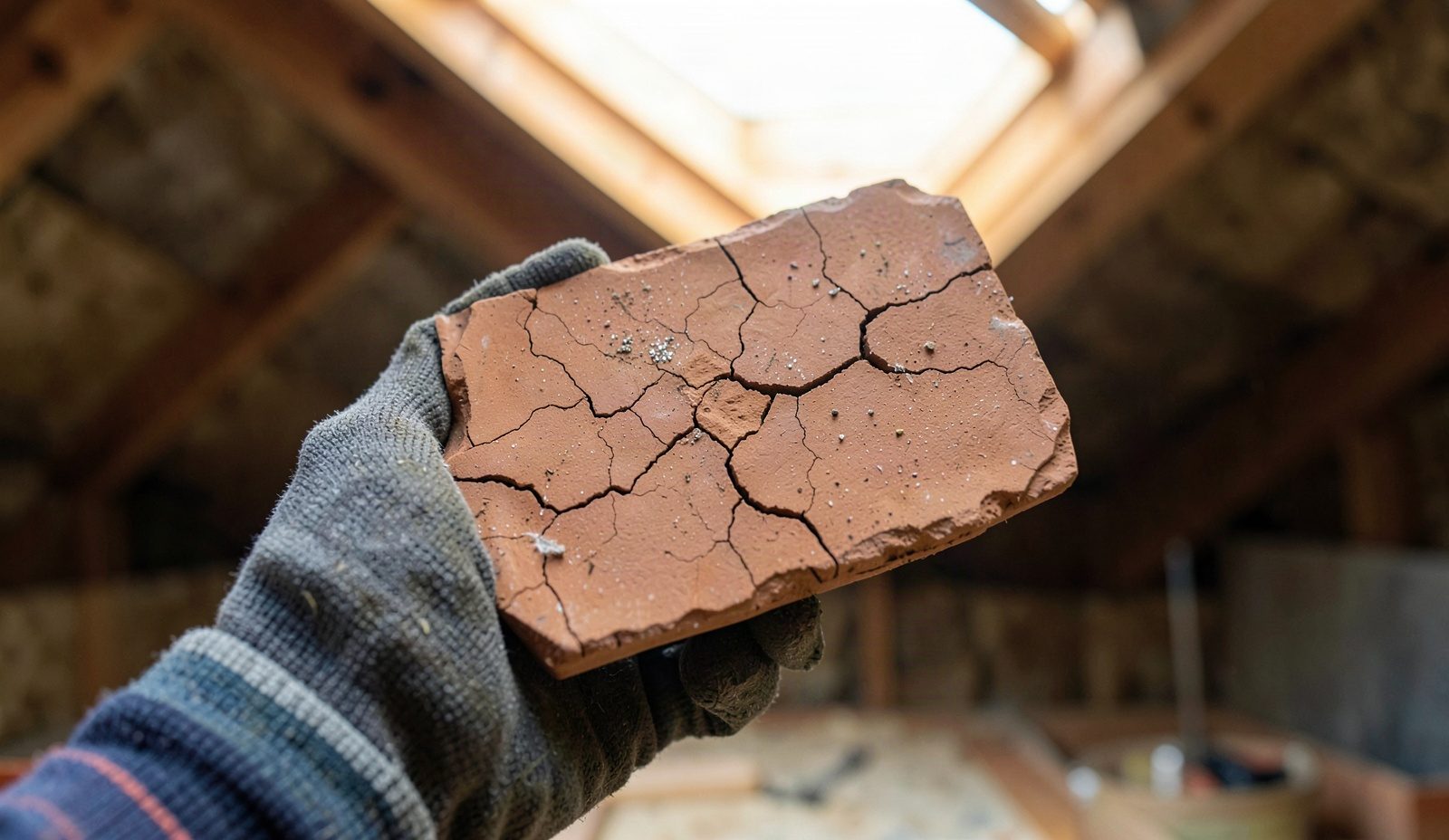
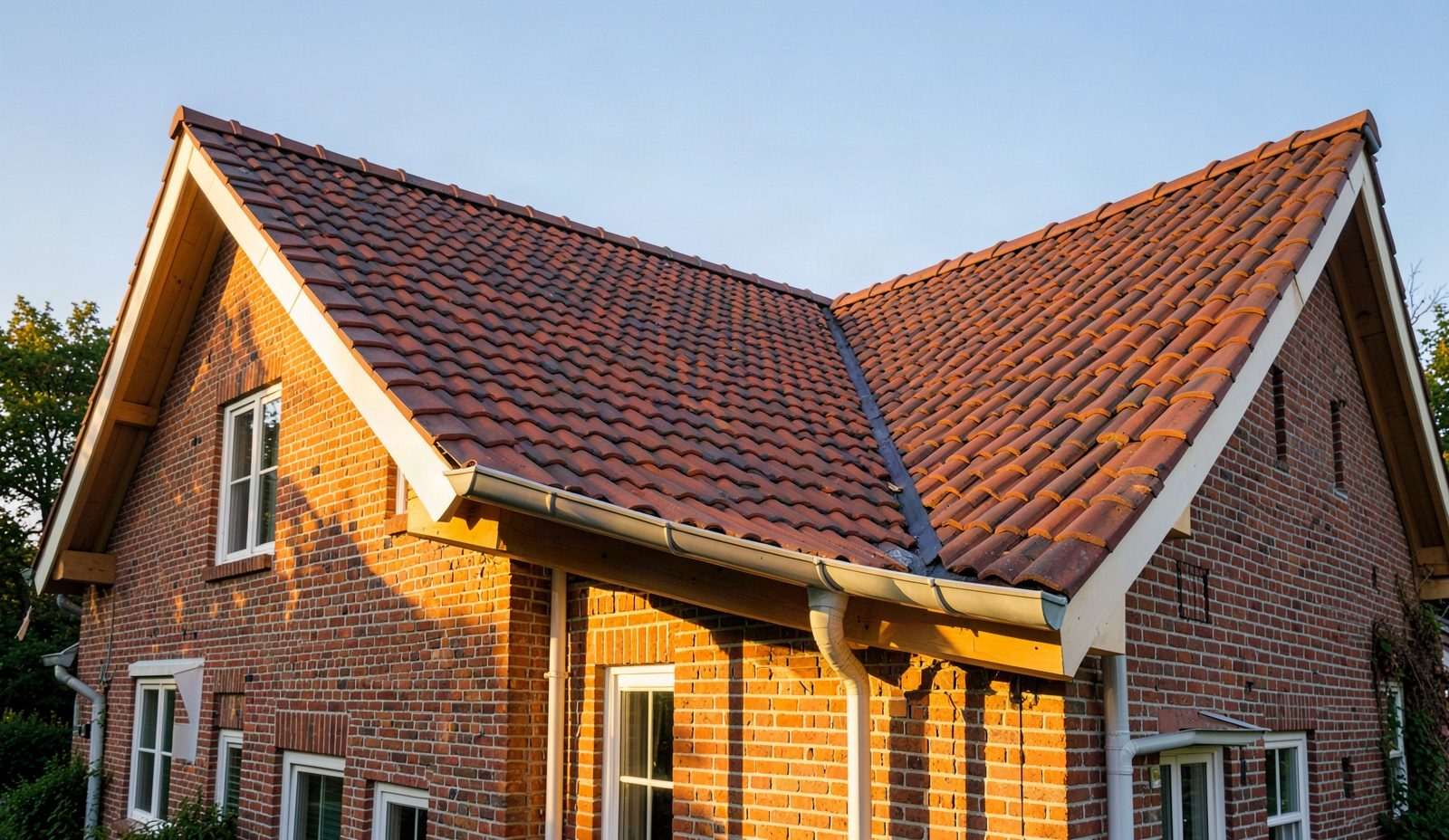
Every tile job starts on the deck, not on the roof. The same visit includes a moisture reading on the exposed sheathing with a pin-type meter. A reading above 16 percent moisture content in OSB or plank decking means that section gets replaced before tile ever touches it, because tile's dead load will telegraph any soft spot in the deck within a single winter.
Underlayment selection follows Ohio's code requirement directly. Section 905.1.2 of the Ohio Residential Code requires an ice barrier running from the lowest roof edge to at least 24 inches inside the exterior wall line, built from two cemented layers of underlayment or a self-adhering polymer-modified bitumen sheet. On a tile roof we run a self-adhering membrane, comparable to Polyglass Elastoflex or GAF's synthetic underlayment line, across that same eave zone before laying battens, because clay and concrete tile depend on an unbroken secondary water barrier far more than a single-layer shingle roof does. We measure that 24-inch line with a tape and mark it in chalk before the first course of battens goes down, not after.
Material choice is where clay and concrete diverge in ways worth naming directly. Clay tile, in profiles similar to Ludowici, runs roughly 9 to 12 pounds per square foot and holds its fired color for the life of the roof, with service life routinely quoted past 50 years. Concrete tile from lines like Boral or Eagle Roofing runs close in weight, around 9.5 to 12 pounds per square foot, costs less to source, but relies on a surface coating that can fade a shade over decades. Fastening method changes with wind exposure: mechanically nailed tile suits most Columbus lots, while open, wind-exposed sites call for foam-set or wire-tied battens rated for higher uplift. A raised batten system, rather than tile laid direct to deck, adds an air gap that lets any moisture that gets past the underlayment drain and dry instead of sitting against the deck.
More detail on roof inspection services is on its own page.
For storm resilience, the IBHS FORTIFIED standard is the playbook, several of its upgrades cost little during a re-roof.
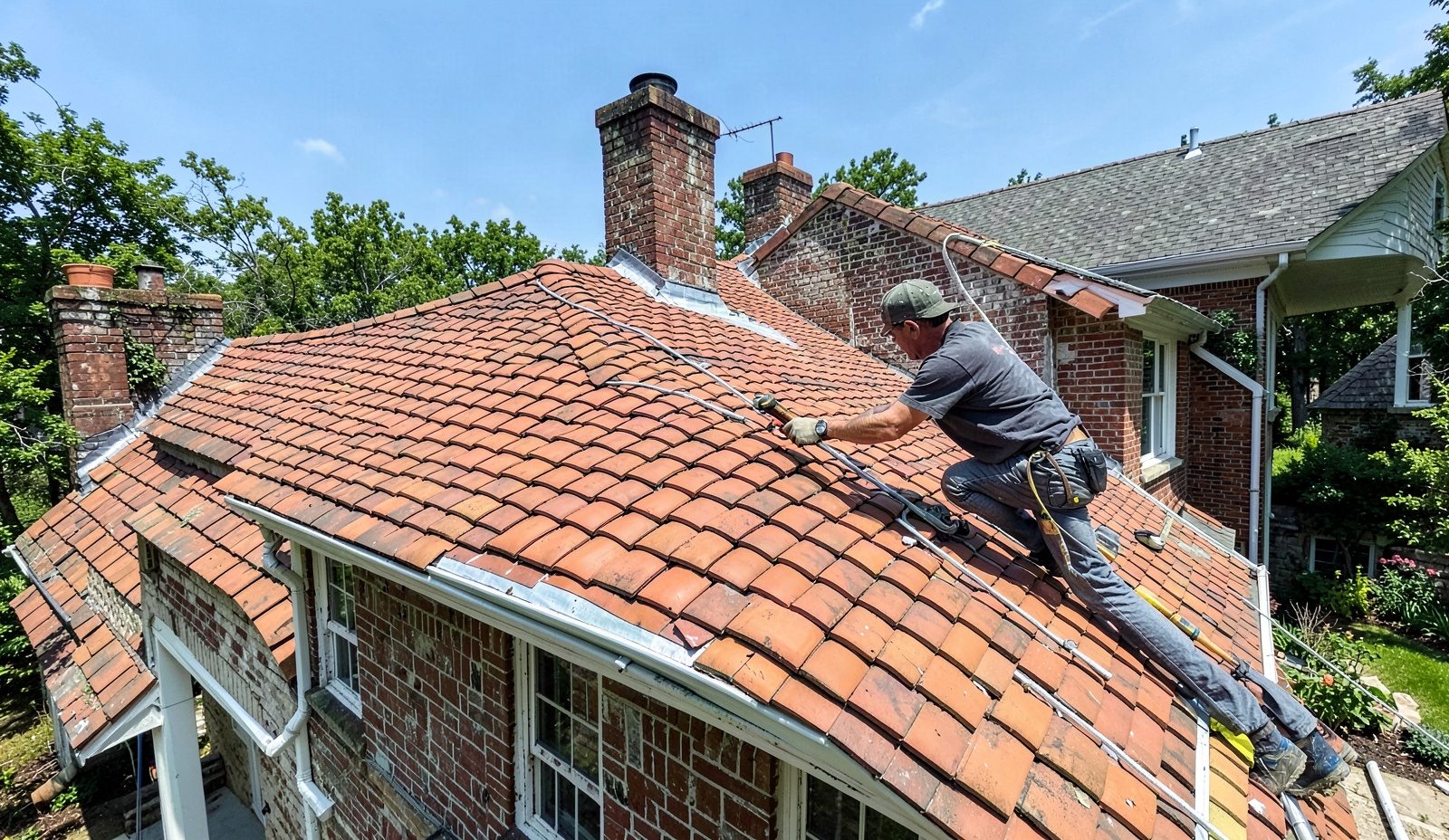
You call (614) 707-7333 and describe what you are seeing, cracked tiles, a ceiling stain, or a full replacement request. A technician schedules a walk of the roof, checking slope with a pitch gauge, testing deck moisture at several points, and photographing every penetration, valley, and chimney flashing. You get a plain-language rundown on the spot: what is failing, what is still sound, and whether the issue is isolated to a few tiles or points to a deck or underlayment problem across a wider section.
Once you approve the written quote, the crew tarps landscaping, stages material, and begins tear-off in the section defined by the quote. Deck repairs happen first, then the self-adhering ice barrier goes down at the eaves, followed by batten layout snapped to a chalk line for even tile spacing. Tile courses go up working from eave to ridge, with fastening method, nail, foam, or wire tie, matched to the wind exposure noted during the assessment. Any change in scope, like an unexpected rotted rafter, stops for your approval before work continues.
Before the crew leaves, a technician checks every ridge cap, valley, and flashing point by hand for movement and confirms fastener count against the wind-exposure plan set earlier. Gutters and downspouts get flushed with a hose to confirm clear drainage under simulated rainfall. You walk the property with the lead installer, who points out completed work areas and answers questions on the spot. Photos of the finished roof and any replaced decking go into a job file you can request for insurance or resale documentation.
An out-of-area crew that has never worked a tile roof in Columbus will often miss the structural math before they miss the code language. Many homes built before the 1960s across the metro were framed with rafters sized for wood shake or asphalt shingle, not for tile's added dead load. Adding clay or concrete tile to a roof that was never engineered for it means a point-load check on the rafters comes first, sometimes with a structural review before a permit application even goes in. Skipping that step is how ceilings develop stress cracks two winters after a tile job that looked flawless on installation day.
Full tile roof replacement and any structural rework typically requires a permit, while minor like-for-like tile repair often does not, and the final determination always belongs to the local permitting authority. A crew unfamiliar with Columbus jurisdiction tends to guess at that line, which either delays a legitimate project or triggers a stop-work order mid-job. We treat that determination as a scheduling step, not an afterthought, and we plan installation timelines around it rather than around it happening.
Spanish tile roofing contractors working in older Columbus housing stock also need to match existing tile profiles, not just color. A mismatched barrel radius or flat-pan overlap looks wrong from the street and performs worse in wind, because tile courses depend on consistent overlap geometry to shed water correctly. Calling a crew that has priced clay and concrete tile jobs across this metro, rather than one pricing its first tile roof here, is the difference between a roof that matches its neighbors and one that stands out for the wrong reason. Ask questions before you sign anything. Call (614) 707-7333 and walk through the specifics of your roof with a technician.
Permit and inspection questions? Building & Zoning Services is the office we coordinate with on every permitted Columbus job.
Booking starts with a call to (614) 707-7333, where you get an actual arrival window, not a vague day. Tile work depends on dry conditions, since wet battens and wet underlayment will not bond correctly, so a technician checks the forecast before locking your date. If weather pushes the schedule, you get a call the evening before, not a no-show the morning of. Tile deliveries are staged on site a day ahead when the job requires a full pallet drop, so the crew is not waiting on material once they are on your roof and the clock is running on labor.
Landscaping and walkways get plywood and tarp protection before a single pallet of tile moves across your yard. Gutters get temporary covers to keep broken tile fragments and underlayment scraps out of the downspouts. Every old tile, batten, and underlayment strip comes off the roof into a lined dumpster or trailer, not into a pile on your lawn. A magnetic sweep of the driveway and walkways catches stray roofing nails before the crew leaves. When the job wraps, the yard looks like it did before the trucks arrived, minus the old roof.
Roof size, pitch, and access drive labor hours more than anything else, since steep or high roofs need additional rigging and safety anchoring that flat, low roofs do not. Tile material choice, clay versus concrete, changes both material cost and the crew size needed to move it safely. Deck condition matters too: rotted sheathing found during tear-off adds material and time that a surface inspection could not have shown in advance. You get a written quote itemizing each of these before any tile leaves the truck, and nothing proceeds past that quote without your sign-off.
Every technician clears a background check before ever being scheduled on a residential job. New hires shadow a lead installer through a full tile installation cycle before working a roof solo, and that lead signs off on batten spacing, fastener pattern, and underlayment lap before the shadow period ends. Crews review updates to the Ohio Residential Code as they take effect, so field practice on ice barrier placement and fastening schedules stays current rather than relying on habits learned a decade ago on a different roof type.
Cost depends on roof size, pitch, tile material, and deck condition found during tear-off. Clay tile generally costs more to source than concrete tile, and steep or high roofs near districts like Clintonville add labor for rigging and access. A technician measures your roof and provides an itemized written quote before any material is ordered, so call (614) 707-7333 to get specifics for your address.
Average cost varies too widely by material, roof size, and structural needs to state a single figure. Clay tile roofing, concrete tile, batten system choice, and any rafter reinforcement each move the number independently. The most reliable way to get an accurate figure for your specific roof is a technician walking the property and pricing it against your exact tile profile and access conditions.
Tile roofs add significant dead load, often requiring a structural check on older framing before installation. Individual tiles crack if walked on improperly, and matching a discontinued profile or fired clay color for a repair years later can take longer than sourcing standard shingle. Installation also takes more time than asphalt shingle because of the batten layout and fastening steps involved.
Full tile roof replacement usually needs a permit, while a minor like-for-like tile repair often does not. The permitting office in your jurisdiction makes the actual determination, not the contractor, and requirements can shift depending on whether structural rafter work is involved. We confirm the permit status for your specific scope before scheduling tear-off, so it is handled ahead of the crew showing up.
Estimates start with an on-site walkthrough where a technician measures each roof plane with a laser measuring tool and photographs every penetration, valley, and flashing point. Those measurements and photos become the basis for a written, itemized quote you review before committing. Nothing gets ordered or scheduled until you approve that quote, and any scope change discovered during tear-off stops for a separate approval.
Coverage depends on your policy's wind and hail endorsement and the age of your roof. Most Ohio homeowner policies cover sudden hail impact but may prorate payment on an older roof under an actual cash value clause instead of full replacement cost. Cornerstone Roofing Columbus documents each claim with dated photos and measured test squares so your adjuster has clear evidence to work from, which speeds approval on Franklin County claims.
Summer thunderstorms across Columbus bring hail and straight-line wind strong enough to crack exposed asphalt shingle and dent roof penetrations, and tile responds to that same weather differently than shingle does, since a hard hail strike on brittle clay can shatter a tile outright rather than just bruising it. Winter brings the opposite problem: heavy wet snow sits on tile roofs longer than it does on steeper shingle slopes, and that sustained load drives ice-dam and gutter-ice risk at the eaves. Historic homes near Victorian Village, Italian Village, and the Brewery District, many with the original masonry and framing still in place, need both conditions accounted for in the installation plan, since older structures were rarely designed for either tile's dead weight or extended snow retention. Roofing work in this metro falls under Columbus building code jurisdiction and the Ohio Residential Code, which sets the baseline every installation plan works from.
Permits and inspections here run through the City of Columbus Department of Building and Zoning Services for Columbus addresses, with the local city building department or Franklin County handling other jurisdictions in the metro. A full tile roof replacement or any structural rework typically triggers that process, while a like-for-like tile repair usually does not, and the office itself makes that final call, not the contractor. Homeowners in older districts often assume a historic-style home comes with extra design review layered on top of standard permitting, but that oversight applies only where it has actually been established, not by neighborhood assumption. Working with a crew that already knows which box applies to your project saves a permit rejection weeks into a job, and it is the kind of local detail that only shows up after handling enough tile roofs across this specific jurisdiction.
Explore our service area and locate Cornerstone Roofing Columbus with ease. We're proudly local and serve the surrounding neighborhoods with fast response and honest pricing. Use the map to check our coverage area, or call us and we'll confirm in seconds.
Address:
Cornerstone Roofing Columbus, 1015 E Broad St, Columbus, OH 43205
How Much Does a Roof Replacement Cost in Columbus? 2026 Pricing Breakdown, practical local guidance from Cornerstone Roofing Columbus, Colum…
Read More
Commercial Roof Maintenance Tips for Columbus Property Managers, practical local guidance from Cornerstone Roofing Columbus, Columbus's trus…
Read More
Skylight Leaks in Victorian Village Homes, Repair or Replace?, practical local guidance from Cornerstone Roofing Columbus, Columbus's truste…
Read More
The Best Time of Year to Replace a Roof in Columbus, practical local guidance from Cornerstone Roofing Columbus, Columbus's trusted roofing …
Read More