

April 1, 2025
How Much Does a Roof Replacement Cost in Columbus? 2026 Pricing Breakdown
How Much Does a Roof Replacement Cost in Columbus? 2026 Pricing Breakdown, practical local guidance from Cornerstone Roofing Columbus, Colum…
Read More




Central Ohio sits inland, away from Lake Erie's lake-effect bands, but that does not spare Worthington roofs. The region runs through 40 to 60 freeze-thaw cycles every winter, and each cycle drives water into shingle mat fractures and flashing seams, then refreezes and widens them. Summer swings the other direction fast, with thunderstorm cells that build over Franklin County and drop hail on one street while leaving the next untouched.
Old Worthington carries some of the oldest roof lines in the metro. Many of its homes predate modern decking standards, with steep pitches, dormers and valley intersections that multiply the flashing points a leak can find. A short walk away, the Rush Creek Village houses run the opposite direction: low-slope mid-century rooflines designed for a different era's drainage assumptions, where a membrane misstep shows up as a stain on a living room ceiling within one heavy rain.
That mix of pitch extremes means no single fix applies metro-wide. A crew working Worthington needs comfort with both traditional asphalt tear-offs on steep Victorian frames and low-slope membrane detailing on mid-century flat sections, often in the same afternoon.
For storm resilience, the IBHS FORTIFIED standard is the playbook, several of its upgrades cost little during a re-roof.
What they find with Cornerstone Roofing Columbus is a crew structure built around one project lead assigned to each job from start to finish. That lead walks the property first, writes the scope, and stays on site through final cleanup, so the person who quoted the job is the person who answers questions on day two.
Every new installer spends time on a working crew before they run a ladder alone on a steep pitch, learning nailing patterns, flashing laps and ventilation ratios on real Worthington roofs rather than a classroom mockup. That apprenticeship model matters more here than in flatter markets, because the metro's mix of century-old dormers and mid-century flat sections punishes shortcuts fast. Ridge caps nailed short, or step flashing lapped the wrong direction under a counter-flashing reglet, show up as a stain within the first hard rain.
Internal quality checks happen before the crew leaves, not after a callback complaint arrives. A second set of eyes checks fastener count, flashing laps and ventilation balance against the scope written that morning, and photographs the results for the homeowner's file. That documentation matters for insurance claims and for a future buyer's inspection, since a roof with a paper trail sells faster than one with none.
Cornerstone Roofing Columbus works across the wider Columbus metro, but Worthington jobs get the same attention as anywhere else: a scope written to the actual roof in front of the crew, not a template pulled from a satellite measurement service. That means a homeowner in Worthington gets a quote written after someone has climbed into the attic.
After severe weather, FEMA's guidance on documentation makes the difference in how smoothly a claim goes.

Every Worthington job gets one project lead who scopes the work, orders material and stays on site through cleanup. You are not handed off to a rotating crew or a call center between visits. That lead signs the final walkthrough and is the same voice you spoke with on the first call, so questions about a change order or a delayed shingle delivery get answered by someone who already knows your roof.
Before any quote gets written, a technician checks decking with a moisture meter, looking for readings above 19 percent that signal wood already softening under old flashing. Steep or high sections get a drone pass for granule loss and flashing gaps a ladder inspection would miss from the ground. Those readings go into the written scope, so the material list reflects what the roof actually needs instead of an estimate from the curb.
Every asphalt shingle roof gets an ice barrier installed to Section 905.1.2 of the Ohio Residential Code, extending at least 24 inches inside the exterior wall line at eaves. Crews measure that overlap with a tape measure before the first course goes down. On a typical Worthington eave with a two-foot overhang, that barrier often reaches well past the exterior wall itself before shingles ever touch the deck.
From the low-slope additions near the Old Rectory to steep colonial roofs across the wider metro, Cornerstone crews already know which architectural styles need extra flashing attention. That familiarity comes from years working central Ohio's mix of building eras, not a single template applied everywhere. A crew that has already flashed a dozen similar dormers works faster and cleaner than one seeing that detail for the first time.
Worthington roofing services split into three practical tiers: scheduled residential work, planned commercial projects, and unplanned emergency response. Residential jobs run from single-slope repairs to full tear-offs down to the decking, with architectural or three-tab asphalt shingle systems covering most steep-slope homes in the metro. Low-slope sections, common on additions and mid-century builds, get a modified bitumen or TPO membrane instead of shingles, since standing water on a 2 percent slope will find every seam an asphalt product has.
Commercial roofing follows a different logic built around occupancy and lease terms rather than curb appeal. TPO and EPDM membrane systems dominate low-slope commercial buildings for their wind uplift ratings and seam-welding speed. Emergency roofing in Worthington sits apart from both. It means triage, focused on stopping water intrusion the same day a storm or a fallen limb opens the deck.
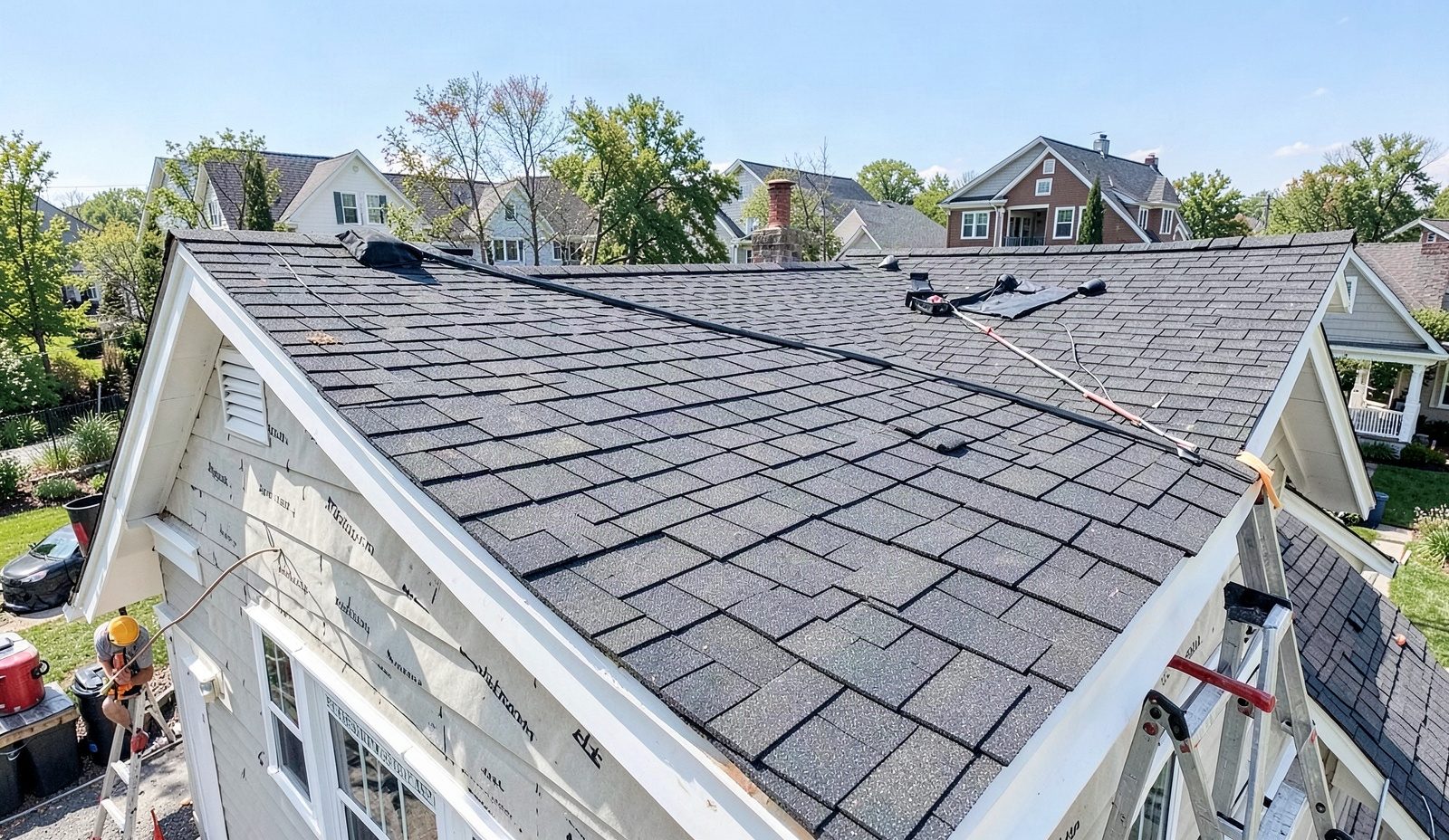
Residential work covers full tear-offs, layover recovers where the deck allows it, and targeted repairs on flashing, valleys and ridge lines. This tier fits homeowners dealing with a shingle system past its service life, storm damage an insurance adjuster needs documented, or a slow leak that has stained a ceiling but has not been traced yet. On one recent Worthington job, a homeowner called about a brown ring spreading across a bedroom ceiling. The cause turned out to be a chimney flashing seam pulled loose from thermal movement, not the shingles at all, and the fix took a half day of counter-flashing work instead of a full re-roof. That diagnosis before demolition saves a homeowner from paying for work the roof does not need.
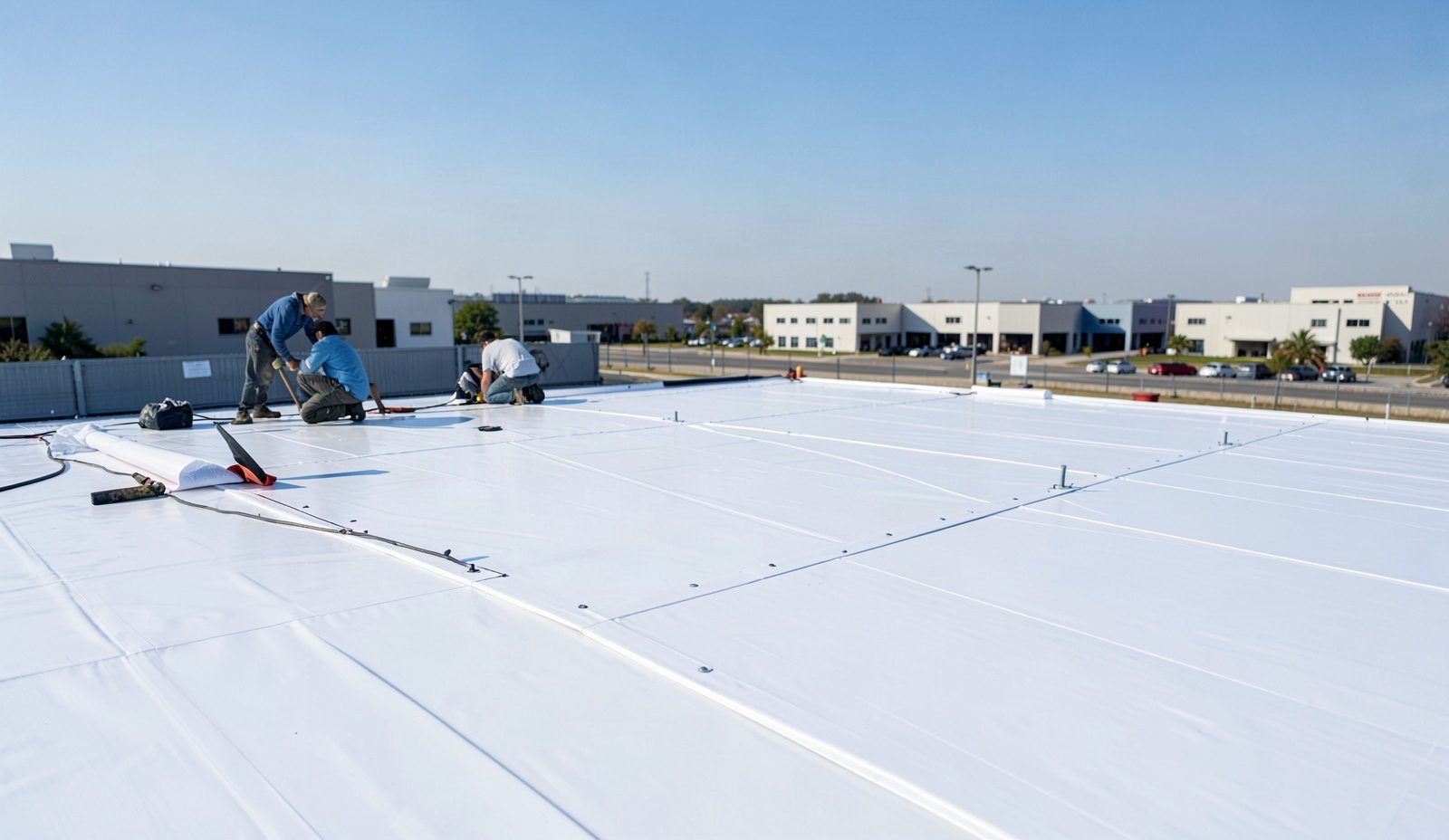
Commercial roofing in Worthington centers on low-slope membrane systems for retail strips, office buildings and light-industrial space, where downtime costs more than the roofing material itself. Work gets scheduled around business hours and phased across sections so occupied space stays weathertight while another section is under tear-off. A property manager with a leaking TPO seam over a leased retail suite needs documentation for the tenant file and the insurer, not just a patch. The scope includes seam pull tests and photos logged before and after work, so the paper trail holds up if a lease dispute over interior damage ever reaches a hearing.
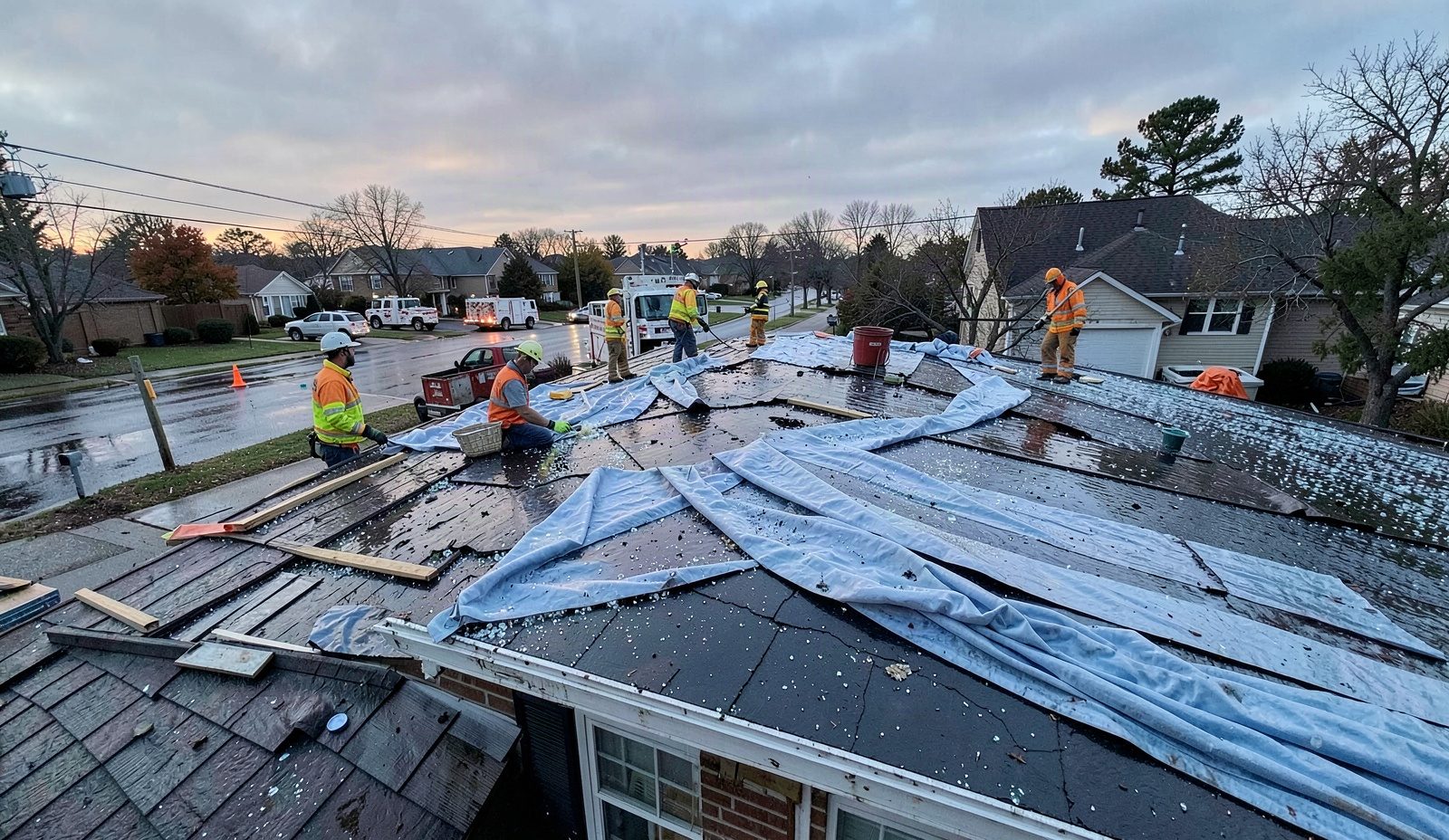
Emergency roofing means dispatch after a storm has already opened the deck, when water is actively entering the attic or a wall cavity. The first move is containment: a tarp rated for wind, sealed at the perimeter, to stop the leak from spreading before permanent repair can start. A call that comes in after a summer thunderstorm has torn off a ridge section gets a same-window response, because an open deck left overnight through one more rain event turns a repair into a full deck replacement. Crews photograph the damage on arrival for the insurance claim before any tarp goes up, since that documentation is the difference between a covered claim and a denied one.
Four problems account for most Worthington service calls, and three of them share a root cause: water finding a path through a fastener, seam or transition point that looked fine from the ground. Franklin County's harsh winters and heavy wet snow load turn a pinhole gap into a visible ceiling stain fast, often within one or two seasons instead of five.
Catching these early matters because central Ohio roofs rarely fail all at once. A soft spot in decking, a lifted shingle tab or a clogged valley usually shows a small sign for months before it becomes a full leak. Waiting through one more winter turns a repair measured in hours into one measured in days.
Need something specific? Our asphalt shingle roofing page breaks down exactly how we handle it in Worthington.
Summer thunderstorms push hail and straight-line wind through the metro, and asphalt shingles take the hit as bruised or missing granules, especially on west-facing slopes that catch the wind first. Bruising looks minor from the ground but softens the mat underneath, and it will leak within a season if left alone. If a slope shows dark, soft-looking spots after a storm, that is the signal to get it checked before the next rain finds the weak spot.
Homes built before the 1960s often used one-inch boards spaced with gaps instead of solid plywood decking, a method that cannot always hold modern shingle nailing patterns at the required spacing. Shingles on these older decks sometimes lift in wind loads a newer roof would shrug off, because the nail has nothing solid to grip between boards. If shingles are lifting on a roof installed within the last few years, the deck underneath is usually the real problem.
Large shade trees over older Worthington lots drop leaf litter and seed pods straight into roof valleys and behind chimney saddles every fall. That debris dams water during heavy rain, forcing it sideways and under the shingle courses instead of down the valley to the gutter. Dark streaking below a valley line, or a musty smell in the attic near that spot, means water has already started working its way under the flashing.
Skipping annual gutter cleaning lets water back up under the drip edge during heavy snowmelt, and blocked soffit vents trap humid attic air against the underside of the deck year-round. Both problems are cheap to prevent and expensive to ignore, since trapped moisture rots decking from underneath where no one looks. Peeling paint on a soffit or a persistent damp smell in an upstairs closet means it is time to call before the deck itself needs replacing.
A first visit runs roughly 45 minutes to an hour, longer on steep or multi-section roofs. The technician checks the attic first, looking for daylight through the decking, insulation staining and ventilation balance, before ever climbing a ladder outside. Photos get taken of every problem area, inside and out, and measurements go into the written scope on site rather than back at an office.
Have any prior roofing invoices or insurance claim numbers ready if the visit follows storm damage, since that paperwork speeds up matching the new scope to what an adjuster already has on file.
One of our most-requested services here is cedar shake roofing, see that page for pricing and process.
A dispatcher confirms the appointment window by phone or text the morning of the visit, not the night before, so plans do not shift on old information. If the technician is running behind on a prior job, you get a call with a revised window instead of silence until they show up. Most first visits book within the same week for non-emergency calls, sooner if the issue involves active water intrusion. You get a direct callback number for the technician assigned to your job, so a question about the scope does not require starting the conversation over with someone new.
The technician arrives in a marked vehicle and introduces themselves before walking the property. Landscaping near ladder placement gets a tarp or plywood sheet down first, since a dropped tool or loose granules can mark a flower bed or a driveway. The technician walks the visible problem area with you at ground level before going up, pointing out what prompted the call, then climbs to verify it and check surrounding sections for anything the original complaint did not mention. That walkthrough takes about ten minutes and happens before any ladder goes up against the fascia.
Before the crew leaves, the technician walks the repaired or replaced section with you and points out the specific fix: a new counter-flashing lap, a replaced valley run, or the new ice barrier at the eave. A magnetic sweep of the yard and driveway collects stray nails and staples, since a missed nail in a driveway is one of the most common complaints on any roofing job. Photos of the finished work go into your file, along with any material tags or leftover shingle bundles left for future patch repairs.
The process starts with a phone call, not a form, since a roofing problem usually needs a few follow-up questions a form cannot ask. Call (614) 707-7333 and describe what you are seeing: a stain's location, how long it has been there, whether it grows after rain. That information decides whether the visit gets scheduled as routine or moved up as active-leak priority.
Routine visits typically book within the same week, and active leaks get a faster window, often the next available daylight slot. After the visit, you get a written scope before any material order goes in, and the crew that installs the flashing or shingles is the crew that comes back for the final walkthrough.
Call (614) 707-7333 and describe the symptom: location of the stain, how old the roof is, whether water shows up during or after rain. That detail gets logged against your address so the technician arrives already knowing what to check first, instead of starting the diagnosis from zero on the driveway. If the issue involves active water intrusion, say so during the call, since that moves the visit ahead of routine scheduling.
The technician inspects the attic and exterior, takes moisture and photo readings, and writes a scope listing exact materials and labor before anything gets ordered. You review and approve that scope before a single shingle or membrane roll arrives on site. Questions about material choice, like architectural shingle versus a low-slope membrane on an addition, get answered at this stage.
Installation follows the Ohio Residential Code section by section, from decking fasteners to ridge ventilation, and a second technician checks the finished work against the approved scope before cleanup. You get a walkthrough, photos for your records, and a copy of the material list, useful for insurance files or a future home sale disclosure.
Worthington operates as an independent city inside Franklin County, with its own building department governing roofing permits under the Ohio Residential Code rather than deferring entirely to a county-wide office. That distinction matters when a homeowner assumes a neighboring city's permit rule applies here, since it may not. The Ohio Residential Code sets the baseline for fastening schedules, underlayment requirements and ice barrier placement on every asphalt shingle roof in the metro, and inspectors check installation against that code when a permit is pulled, regardless of what a manufacturer's install sheet recommends. That local jurisdiction also means permit turnaround and inspection scheduling run on Worthington's own calendar, separate from a shared regional queue.
Verification on a real job happens in layers. Before shingles go down, a technician confirms deck fastener spacing and sheathing condition, since a nail that misses a rafter by half an inch on a re-roof will back out within a year under freeze-thaw movement. Underlayment gets lapped shingle-fashion up the slope, never against the water's direction, and valleys get either a closed-cut or open metal treatment depending on pitch and the roof's original design intent. On low-slope sections common to mid-century additions, seam welds on membrane material get a probe test, running a blunt tool along every weld to check for a cold spot that did not fully bond. Ridge caps get fastened at the length and overlap the shingle manufacturer specifies, because a short ridge cap is one of the most common places wind gets underneath a finished roof and starts stripping courses backward from the peak.
Material standards matter as much as installation method. Architectural asphalt shingles carry a wind rating tested under standards like ASTM D3161 or D7158, and a roof in an open, wind-exposed part of the metro benefits from the higher-rated product even where code allows the minimum. Flashing material choice matters too: step flashing and counter-flashing in aluminum or galvanized steel outlast a roll of plastic cement smeared over a joint, and a technician checking an older Worthington roof for resale disclosure purposes looks for that plastic-cement patch as a sign of a shortcut taken years earlier.
From routine maintenance to new construction roofing, the same local crew handles every call.
Attics need balanced intake at the soffit and exhaust at the ridge, roughly matched in square footage, or trapped heat melts snow unevenly and refreezes at the eave as ice damming. Older homes retrofitted with insulation sometimes block the soffit intake without anyone noticing until ice builds behind the gutter line. A technician checking this holds a smoke pencil at the soffit vent and watches whether airflow actually moves.
Pitch, access and existing layers move cost more than shingle brand. A steep roof needs harnesses and slower footing, a second existing layer means extra tear-off labor and disposal weight, and a deck with soft spots needs plywood replacement before anything else goes down. Condition discovered mid-tear-off, invisible from the ground, is the most common reason a quote changes once work starts.
A straightforward asphalt shingle tear-off and replace on an average single-family roof runs one to two days of active work, weather permitting. Low-slope membrane sections add curing time between coats or welds. A quality benchmark worth checking is fastener count per shingle at the specified pattern, and a ridge line straight enough that a chalk line laid along it shows no visible gap.
Full replacements and structural repairs typically need a permit. A straightforward like-for-like shingle patch usually does not. The final determination belongs to the local permit authority, and an inspector may check fastener pattern, ice barrier placement and flashing before signing off on a job pulled under a full replacement permit.
Cost depends on square footage, pitch, material and tear-off complexity rather than one statewide figure. A steep Victorian roof with multiple dormers costs more to labor than a simple ranch plane of the same size, and a second layer of old shingles underneath adds tear-off and disposal work most satellite measurement estimates miss entirely. The only way to get an accurate number for a specific Worthington roof is a technician measuring it in person.
Most residential replacements in Worthington take one to two days of active work once tear-off starts, weather permitting. Steep multi-dormer roofs in the older parts of the city run longer than a simple ranch plane, and low-slope membrane sections need extra time for seam welds or adhesive curing between passes. Winter jobs sometimes stretch across the calendar if a freeze delays adhesive seal-down, even though the on-roof labor hours stay about the same.
DIY roofing is legally possible for minor repairs but risky on anything beyond ground-level gutter work. Fall protection standards exist for a reason: a steep asphalt slope gets slippery fast with morning dew, and a fall from a two-story roof is a common cause of serious home-improvement injury. Structural work or a full replacement also typically needs a permit and an inspection, and a mistake in flashing lap or barrier placement stays invisible until the next winter's meltwater finds it.
Response time depends on whether the call involves active water intrusion or routine scheduling. An active leak typically gets the next available daylight slot, often within a day, while a routine repair or replacement quote usually books within the same week. Calling early in the day gives the best chance of a same-day technician visit rather than a next-morning window.
Cornerstone Roofing Columbus is the strongest choice for Worthington roofing, built on documented diagnostics, code-specific installation and a crew structure where one lead answers for the whole job. That approach fits a metro with both century-old steep roofs and newer low-slope additions, since the same crew needs to be comfortable with both. Homeowners comparing options should ask any contractor for a written scope with measurements before deciding, rather than accepting a verbal number alone.
Yes, full roof replacements and structural repairs in Worthington need a permit through Franklin County Building Services, the office with authority over the city's roofing permits. A straightforward like-for-like shingle repair often does not need one, but that determination belongs to that office, not the contractor. Pulling the permit when required also puts an inspection on record, useful later for insurance claims or a home sale disclosure.
Explore our service area and locate Cornerstone Roofing Columbus with ease. We're proudly local and serve the surrounding neighborhoods with fast response and honest pricing. Use the map to check our coverage area, or call us and we'll confirm in seconds.
Address:
Cornerstone Roofing Columbus, Worthington, OH 43085
How Much Does a Roof Replacement Cost in Columbus? 2026 Pricing Breakdown, practical local guidance from Cornerstone Roofing Columbus, Colum…
Read More
Commercial Roof Maintenance Tips for Columbus Property Managers, practical local guidance from Cornerstone Roofing Columbus, Columbus's trus…
Read More
Skylight Leaks in Victorian Village Homes, Repair or Replace?, practical local guidance from Cornerstone Roofing Columbus, Columbus's truste…
Read More
The Best Time of Year to Replace a Roof in Columbus, practical local guidance from Cornerstone Roofing Columbus, Columbus's trusted roofing …
Read More