

April 1, 2025
How Much Does a Roof Replacement Cost in Columbus? 2026 Pricing Breakdown
How Much Does a Roof Replacement Cost in Columbus? 2026 Pricing Breakdown, practical local guidance from Cornerstone Roofing Columbus, Colum…
Read More




Whitehall's housing stock, mostly built in the post-war boom of the 1950s and 1960s, sits on original rafter spacing and thinner decking than homes built today. That older, largely single-family housing stock is exactly why freeze-thaw cycling accelerates shingle aging here faster than in newer subdivisions farther out. Old Whitehall's brick ranches and English Village's tighter-set colonials both carry roofs that have absorbed decades of expansion and contraction along their nail lines.
Central Ohio's climate is continental, not lake-effect, which means Whitehall gets sharp swings rather than steady lake-driven snow. Winter brings freeze-thaw cycling and heavy wet snow loads, while summer delivers thunderstorm cells that drop hail and straight-line wind across the same roofs within a single season. A shingle that survives August hail can still split during a February thaw.
Homes built before the 1970s in Old Whitehall often used skip-sheathing, boards spaced with gaps rather than solid plywood decking. When crews tear off those roofs, they frequently find nailing patterns too wide for modern shingle exposure specs, which means a full deck-over before new shingles go down. English Village's later-build colonials, closer to a solid deck standard, usually only need a felt or synthetic underlayment swap.
In English Village, narrower lot lines put roofs closer to mature tree canopy, and gutters clog with leaf litter that traps meltwater against the fascia. Old Whitehall's original ranch-style roofs, many still carrying a single layer of three-tab shingles from their first installation, show granule loss and curling edges earlier than homes with architectural shingle upgrades. Both patterns trace back to the same root cause: age combined with temperature swing.
Cornerstone Roofing Columbus built its reputation on documentation: photographs at tear-off, at deck inspection, and at final nail pattern, so the homeowner sees exactly what the old roof hid and exactly what the new one covers. A foreman signs off on flashing details before the crew leaves for the day, and that signature ties back to the job file.
Training runs in stages here. New installers spend their first season on tear-off and disposal, learning how a roof fails before they ever drive a nail. Lead installers train on manufacturer application specifications for shingle lines like GAF Timberline and CertainTeed Landmark, because a nailing pattern off by even an inch on exposure voids the wind rating the product is built for. That stage-based path means the crew nailing your shingles has already torn off dozens of roofs like it.
Central Ohio's roofing market runs thick with crews that show up once and disappear. Cornerstone operates on a callback structure built around one phone line, so the person who answers has the job file open before the technician gets out of the truck. Material sourcing works the same way: shingles, ice-and-water barrier, and flashing stock come from regional distributors that stage inventory for central Ohio contractors, which cuts the wait between a written quote and a scheduled start. That matters most in Whitehall's tighter-set neighborhoods, where a tarp left on a roof for two extra weeks means two extra freeze-thaw cycles working against exposed decking.

Every job runs through one line of continuity: the person who answers your call is the same one who confirms the crew's arrival window and follows up when the work wraps. There is no national dispatch queue routing your Whitehall address to a call center in another state. The technician on your roof already knows whether you called about a kitchen ceiling stain or ice damming at the eave.
Technicians carry a moisture meter that reads decking moisture in percentage points and a thermal camera that flags trapped water under shingles before it surfaces as a ceiling stain. On a Whitehall attic inspection, a pin-probe moisture reading above 19 percent on OSB decking means the deck section gets replaced rather than patched, and we show you that number on the meter face before we write the scope.
Every crew member ties off under OSHA fall-protection rules before stepping onto any pitch over four feet, and that same crew installs to the Ohio Residential Code on every tear-off, not just the roofs an inspector happens to check. Safety lines, anchor points and code compliance get checked at the start of the day, before the ladder goes up.
Cornerstone crews work central Ohio's post-war housing stock every week, from steep-pitched Cape Cods to low-slope ranch additions, and that repetition means we recognize a failing roof style from the ground before we climb the ladder. We know which decking eras need a full deck-over and which just need an underlayment swap, because we have opened hundreds of them across Franklin County.
Cornerstone Roofing Columbus splits its Whitehall roofing services into three tiers: residential re-roofing and repair, commercial low-slope systems, and after-hours emergency response. Each tier uses different materials, different crew sizes and different code checkpoints, but all three run through the same estimate and inspection process.
Residential work covers steep-slope asphalt shingle, architectural shingle upgrades, and targeted flashing or valley repair on single-family homes. Commercial work covers low-slope membrane systems on the flat and low-pitch roofs common to strip retail and light industrial buildings along Whitehall's commercial corridors. Emergency response covers active leaks, wind-torn shingle fields and storm-punctured decking that cannot wait for a scheduled appointment.
The difference between these tiers goes beyond materials. Residential jobs run on a homeowner's schedule and budget cycle. Commercial jobs run on a lease obligation and a tenant's operating hours. Emergency calls run on the clock, and every minute of exposed decking after a storm adds risk of secondary water damage to insulation and interior finishes.
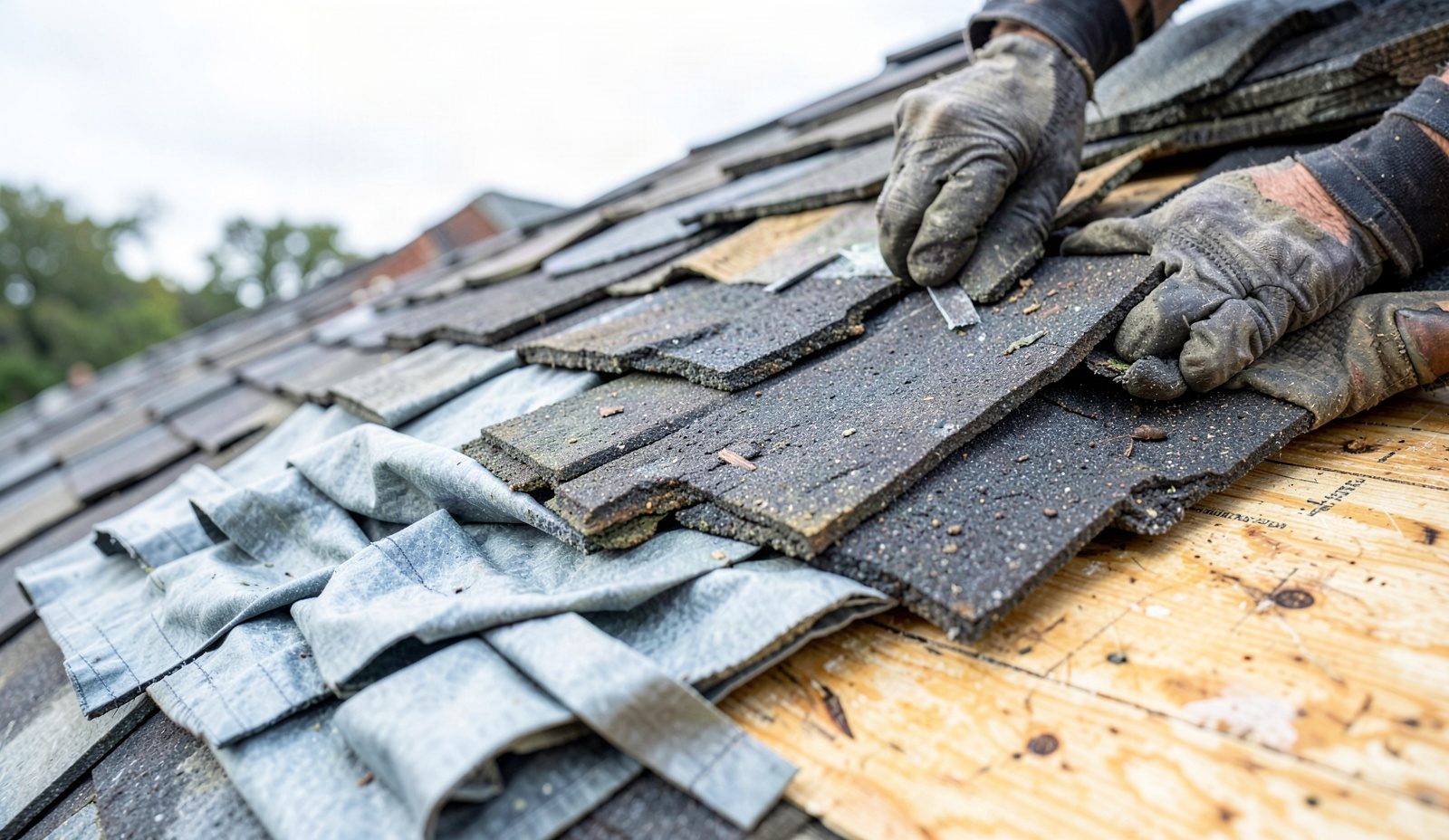
Full tear-off and shingle replacement is the most requested job in Whitehall, usually triggered by granule loss, curling edges, or a roof past the twenty-year mark on its original three-tab layer. The job includes decking inspection, replacement of any rotted or delaminated sheathing, new underlayment, ice barrier installation at eaves and valleys, new flashing at every penetration, and a final walk of the ridge line. A typical call comes from a homeowner near a 1960s ranch whose ceiling shows a faint brown ring after heavy rain. The tear-off usually reveals the real cause: a cracked pipe boot flashing rather than the shingle field itself, which is why every replacement includes flashing, not shingles alone, in the scope.
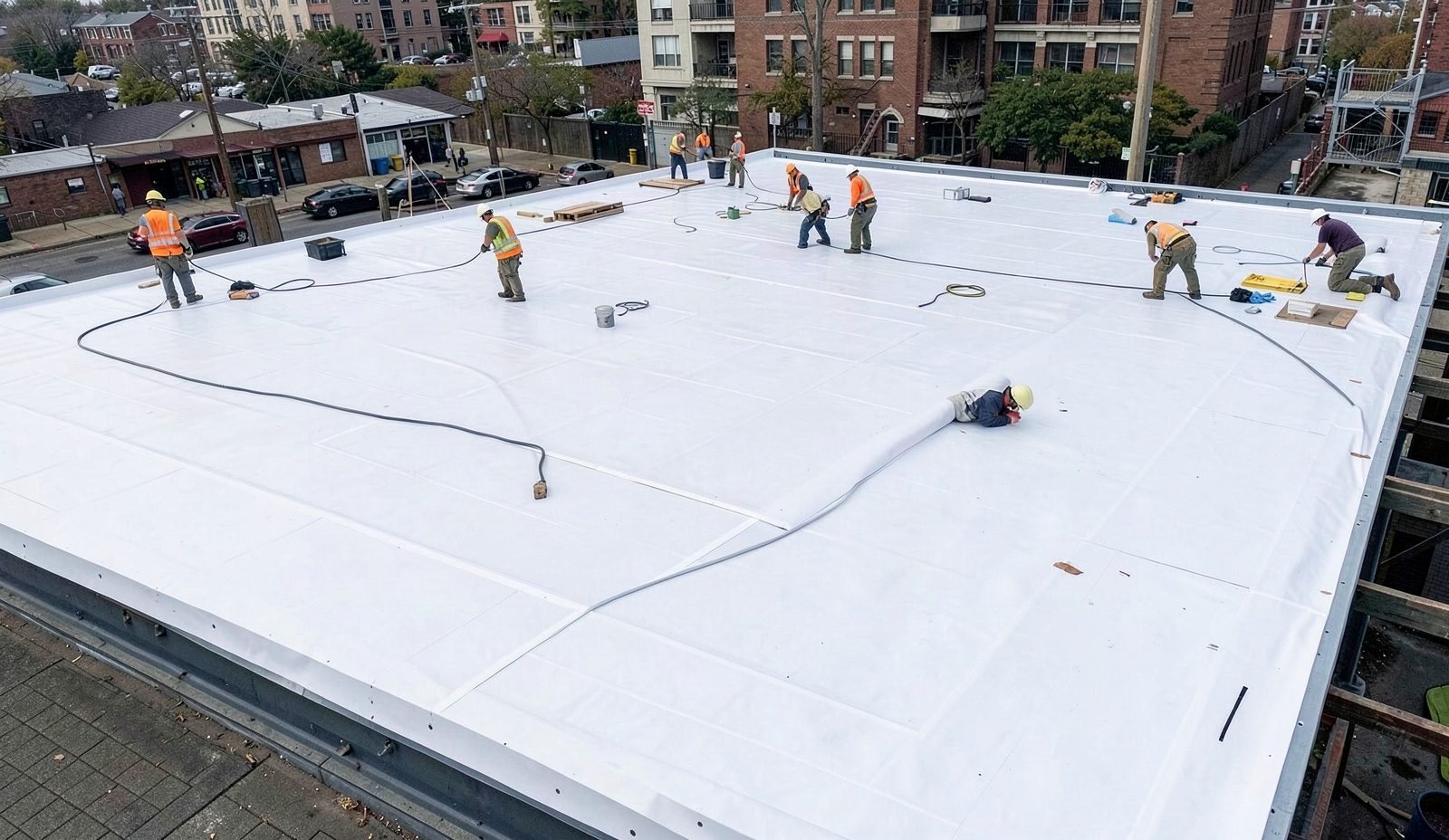
Flat and low-slope commercial roofs need membrane systems like TPO, EPDM or modified bitumen, matched to the building's drainage slope and rooftop equipment load. Work runs around a tenant's operating hours, with crews staging materials before the building opens and clearing debris before it closes, so retail traffic and lease obligations stay uninterrupted. A typical scenario: a strip retail building with ponding water near a rooftop HVAC curb, caught during a routine inspection before it undercuts the membrane seam and drips onto merchandise below. Documentation from that inspection, photos, moisture readings and a scope of repair, becomes the record a property manager hands to an insurer or a lender during due diligence.
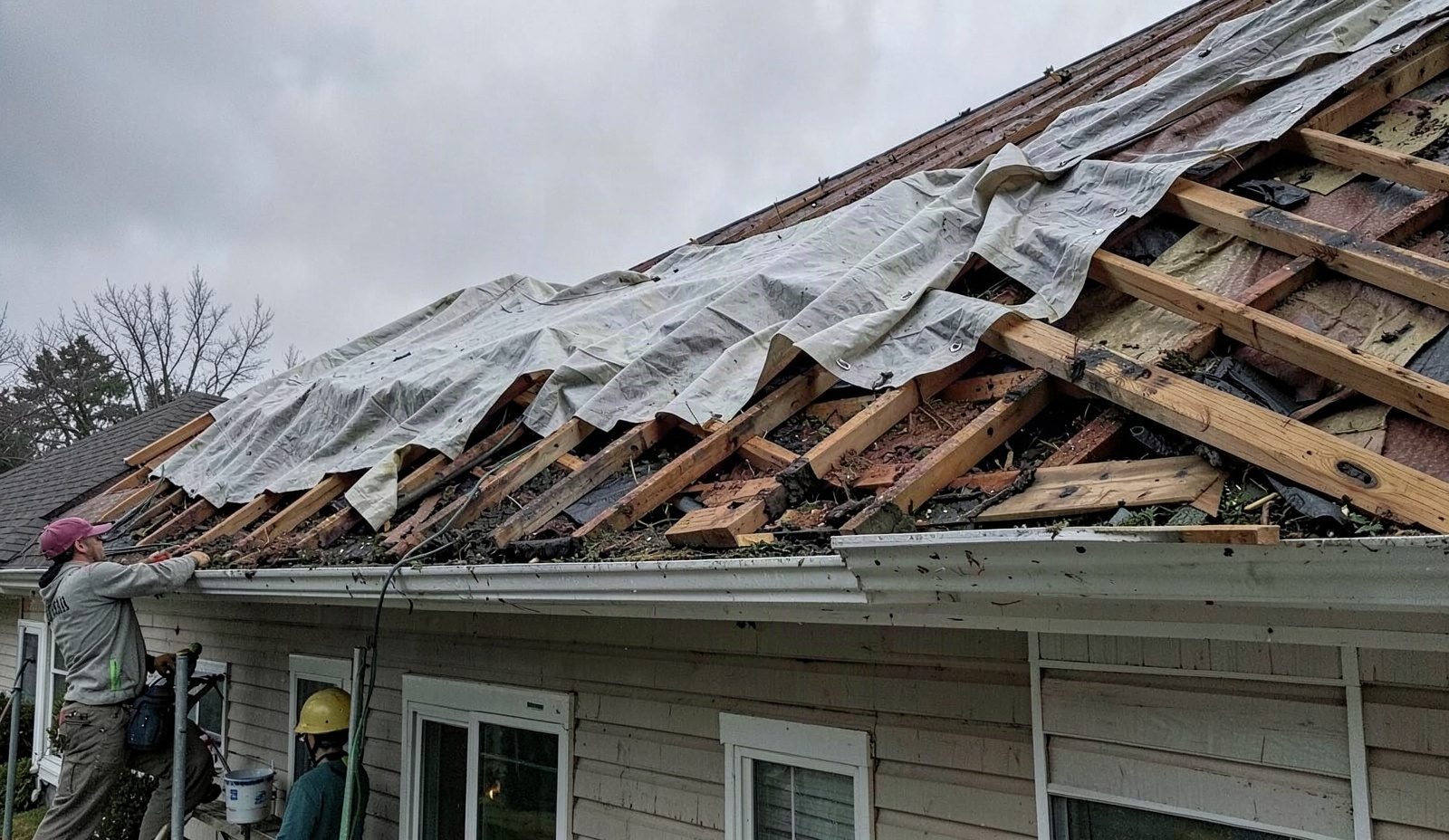
Emergency roofing in Whitehall starts with a tarp-and-stabilize response, then a full repair scheduled once the storm clears. Crews carry tarps, plywood and fasteners staged for immediate deployment, because a wind-torn shingle field left open overnight turns a shingle repair into a decking and insulation replacement. A typical emergency call comes in after a summer thunderstorm punches a limb through a roof deck near a mature tree line, with water already tracking into the attic insulation. The first priority is covering the opening and diverting water away from wiring and insulation. Structural repair gets scheduled once conditions are safe to work the roof.
Summer thunderstorms bring hail and straight-line wind that are a common cause of asphalt shingle and roof penetration damage across Whitehall, and that damage often stays hidden until a winter thaw pushes water through a cracked seal. Catching it early, before the next freeze cycle works the crack wider, is the difference between a flashing repair and a deck replacement.
The four patterns below repeat across almost every Whitehall service call we run. Two are climate-driven, one traces back to the era a home was built, and one comes down to what an owner postponed. None of them announce themselves loudly. A stain the size of a coffee cup on a ceiling usually means the water has already been moving for weeks.
Need something specific? Our asphalt shingle roofing page breaks down exactly how we handle it in Whitehall.
Central Ohio runs through roughly <strong>forty to sixty freeze-thaw cycles</strong> every winter, and each cycle expands trapped moisture in a shingle's asphalt mat before it contracts again overnight. That repeated flexing splits shingle tabs and cracks flashing sealant at seams. If you see granules collecting in gutters after a thaw, or a shingle edge that curls upward instead of lying flat, call before the next freeze widens the crack.
Many post-war ranch and Cape Cod homes in Whitehall shipped with a single gable vent or a handful of undersized soffit vents, never sized for modern attic insulation depth. Without balanced intake and exhaust airflow, summer heat and winter moisture both build up against the underside of the deck, softening plywood and rotting rafter tails from the inside. If your attic runs noticeably hotter than the rest of the house, or you see dark streaking on the deck's underside, that ventilation gap needs a look.
Properties near Big Walnut Creek and other low-lying stretches of Whitehall sit closer to a higher water table, which slows how fast downspouts can actually drain during a heavy storm. When gutters back up faster than they empty, water sheets back under the drip edge instead of off it, soaking fascia board and the first course of shingles. If your fascia board feels soft under a screwdriver tip near a downspout, or paint is bubbling at the roofline, the drainage path needs correcting.
Skipped gutter cleaning lets leaf litter and grit dam water against the lower shingle courses every fall, and a satellite dish or antenna mount added without resealing the penetration is one of the most common leak sources we find on older Whitehall roofs. Both are maintenance items owners postpone because nothing leaks yet. If it has been more than two years since anyone walked your roofline, or you added a dish mount yourself, that is worth a call.
The technician's first stop on-site is the attic, not the roof deck, because attic moisture staining and rafter condition tell a faster story than shingles do from a ladder. Expect the visit to run thirty to forty-five minutes for a standard inspection, longer if storm damage means documenting multiple penetrations for an insurance claim. Have your attic hatch accessible and, if you know it, the approximate age of the last full re-roof.
The three moments below cover what happens before, during and after that visit, from the first confirmation call to the final walkthrough.
One of our most-requested services here is cedar shake roofing, see that page for pricing and process.
You get a call or text confirming the arrival window the morning of the visit, usually a two-hour block rather than an all-day wait. If the technician is running behind, dispatch calls ahead rather than letting you watch the clock. For storm-related calls booked same-day, you get a rough order of arrival based on which roofs have active water intrusion, since a leak actively dripping into a living room gets priority over a slow attic stain.
The technician introduces himself, confirms the address and the reported problem out loud before touching a ladder, and lays down ground protection at the ladder's base before climbing. Expect a walkthrough of what he sees from the ground first, gutter sag, missing shingle tabs, flashing rust, before he goes up. If the inspection requires attic access, he will ask before opening any hatch or moving stored items out of the way.
You get a ground-level walk of the finished work, with the technician pointing out new flashing, replaced sections, and any decking that got swapped, along with the photos taken during tear-off. Debris gets magnet-swept for stray nails and hauled off the same day rather than left for a second trip. You get a copy of the scope of work that matches what was actually installed, line for line, before the truck pulls away.
The process starts with a phone call, runs through an on-site diagnosis, and ends with work verified against code, and each stage has a fixed deliverable so nothing depends on memory. Scheduling windows run in half-day blocks, and the office calls the morning of the visit to confirm the technician is still on track. For storm-related jobs, the diagnosis stage often includes photo documentation formatted for an insurance adjuster, so the claim and the repair scope match from the start.
Cleanup happens the same day work is completed, weather permitting, not on a follow-up trip. The three steps below cover what happens from the moment you dial (614) 707-7333 to the moment the crew packs up.
You call (614) 707-7333 and describe what you are seeing, a ceiling stain, a missing shingle, standing water in the attic, and where in the house it shows up. The intake call logs your address, the reported symptom, and whether the issue is active or slow, which determines whether the visit gets booked same-day or into the standard scheduling window.
The technician inspects the roof and attic, takes moisture readings and photos, and writes a scope of work you review before anyone climbs back on the roof to start repairs. The quote lists materials, labor and the specific defect found, rather than a flat estimate, so you know exactly what the price covers before you approve it.
Work proceeds to Ohio Residential Code specifications, with flashing, underlayment and ventilation checked against the written scope as the crew closes each section. Once complete, the technician walks the finished roof with you, hands over the documentation, and closes the job file the same day, so there is a record if you need it for insurance or resale.
Whitehall is an independent city fully within Franklin County, and it administers roofing permitting under the Ohio Residential Code rather than deferring to a neighboring jurisdiction's building department. A full tear-off or any structural repair to rafters or decking typically requires a permit, while a minor like-for-like repair, replacing a handful of damaged shingles without touching the deck, often does not. The final call on what needs a permit belongs to the local permitting authority, not to the roofing crew.
The code detail that matters most on a Whitehall tear-off is the ice barrier requirement. Section 905.1.2 of the Ohio Residential Code requires an ice barrier on asphalt shingle roofs that extends from the lowest roof edge to at least 24 inches inside the exterior wall line, built from two cemented layers of underlayment or a self-adhering polymer-modified bitumen sheet. On site, that means measuring the barrier's inside edge against the wall line with a tape rather than eyeballing it, because an inspector checking a permitted job will do exactly that. A barrier that stops six inches short still lets meltwater back up under the shingle field during a wet-snow thaw.
Shingle selection in Whitehall increasingly weighs impact resistance alongside wind rating, given the hail exposure that comes with summer storm cells. A shingle rated under UL 2218 Class 4 resists a two-inch steel ball impact without fracturing the mat, a meaningful upgrade for a roof that takes hail most years. That rating does not change what the Ohio Residential Code requires, but it changes how long the roof lasts between hail events.
Materials get verified against manufacturer specification sheets, not just code minimums, since a shingle's wind rating only holds if the fastener count and starter strip match the published install guide. Inspection happens twice on our end: once at deck exposure, before anything gets covered, and once at final nail-down, when the ridge line and flashing details get photographed for the job file. Every permitted job closes with a final inspection before the crew considers it finished.
From routine maintenance to new construction roofing, the same local crew handles every call.
Central Ohio's straight-line wind events push shingle fasteners to their rated limit at the roof's edge and hips, where uplift pressure runs highest. Matching fastener count and placement to the manufacturer's high-wind nailing pattern, not the standard six-nail layout, is what keeps a shingle field intact when a summer thunderstorm cell rolls through. We check this pattern at deck exposure, before the second course goes down.
Deck condition drives cost more than shingle choice. A roof with sound plywood decking and one layer of shingles to remove costs less in labor than one needing sheathing replacement or a second tear-off layer. Steep pitch, multiple valleys, and chimney or skylight penetrations add labor time and flashing material, while a simple gable roof with easy ground access keeps the job faster.
A standard single-family tear-off and re-roof in Whitehall runs one to two days of active roof work, weather permitting, with a third day if decking replacement is extensive. Quality gets checked at deck exposure, at underlayment lay-down, and at final nail pattern, three inspection points rather than one walk at the end, which is how a soft spot under decking gets caught before shingles cover it.
Full replacements and any structural repair to rafters or decking typically require a permit through Franklin County Building Services, the authority for Whitehall as an independent city within Franklin County. Minor like-for-like shingle repair that does not touch the deck often does not need one, but the office makes that determination. We pull the permit and schedule the inspection as part of the job, not as an afterthought.
Yes, replacing an aging roof on an older Whitehall home protects the structure underneath it from costlier damage. Homes built before the 1970s often carry original decking that was never designed for today's heavier architectural shingle weight or modern insulation depth, and upgrading the surface without addressing that decking wastes the investment. A full inspection before replacement tells you whether the structure below the shingles needs attention too.
Prices vary because scope, materials and labor standards differ more than most homeowners expect. A quote built from a ground-level look and a rough square footage guess will differ sharply from one built on an actual deck inspection, moisture readings and a written material list. Crews that carry higher-grade underlayment, fuller ice barrier coverage, or manufacturer-matched fastening patterns price differently than crews cutting those steps to win the bid.
Minor tasks like clearing gutters or replacing a single loose shingle are reasonable for a homeowner. Anything involving flashing, decking, or work near a roof edge above a story and a half carries real fall risk and a real chance of voiding a shingle manufacturer's wind rating if the nailing pattern is off. Valley and chimney flashing especially reward experience, since a small gap there causes leaks that show up rooms away from the actual entry point.
Quote comparison works best when you match scope line for line instead of comparing only the total price. Check whether each quote specifies the shingle brand and line, the underlayment type, ice barrier coverage, and whether decking replacement is included or billed separately if problems appear during tear-off. A quote missing those details is guessing at the roof's condition rather than pricing what is actually there.
Cost depends on roof size, pitch, material choice and how much decking needs replacing. A straightforward shingle tear-off on a single-story ranch with sound decking costs less than a steep multi-valley roof needing sheathing repair and premium impact-resistant shingles. The only way to get an accurate number is a physical inspection and a written scope, since a phone estimate cannot see the condition of the deck underneath.
Attic mold remediation cost depends mainly on how much insulation and sheathing need replacing. A small area near one bath fan duct costs far less to fix than a whole roof plane with saturated sheathing. Access also matters. A walk-up attic with a full-height hatch takes less labor than a cramped knee-wall space common in older Whitehall bungalows. We put the specific scope in writing after inspection rather than quoting a number before we see the attic firsthand.
Explore our service area and locate Cornerstone Roofing Columbus with ease. We're proudly local and serve the surrounding neighborhoods with fast response and honest pricing. Use the map to check our coverage area, or call us and we'll confirm in seconds.
Address:
Cornerstone Roofing Columbus, Whitehall, OH 43213
How Much Does a Roof Replacement Cost in Columbus? 2026 Pricing Breakdown, practical local guidance from Cornerstone Roofing Columbus, Colum…
Read More
Commercial Roof Maintenance Tips for Columbus Property Managers, practical local guidance from Cornerstone Roofing Columbus, Columbus's trus…
Read More
Skylight Leaks in Victorian Village Homes, Repair or Replace?, practical local guidance from Cornerstone Roofing Columbus, Columbus's truste…
Read More
The Best Time of Year to Replace a Roof in Columbus, practical local guidance from Cornerstone Roofing Columbus, Columbus's trusted roofing …
Read More