
April 1, 2025
How Much Does a Roof Replacement Cost in Columbus? 2026 Pricing Breakdown
How Much Does a Roof Replacement Cost in Columbus? 2026 Pricing Breakdown, practical local guidance from Cornerstone Roofing Columbus, Colum…
Read More




Westerville straddles north into Delaware County, though its core and most of its homes sit in Franklin County, and that split matters less for property records than for the roofing crews who work here: both sides of the line get the same humid continental winters, the same wet snow, and the same repeated freeze and thaw. That cycle runs from November through March, thawing shingle mat and refreezing it many times before spring, and it is what cracks asphalt shingles and splits flashing joints years before a homeowner expects a problem.
Uptown Westerville carries the oldest roofs in the city, many on homes built with balloon-frame construction and narrow eave overhangs never designed for today's gutter and downspout loads. Older Uptown homes are prone to ice damming and aging flashing, because their shallow eave depth gives melting snow nowhere to go but back under the shingle course. A technician checking one of these roofs looks first at the valley flashing seams and the chimney counter-flashing, since those are the two spots where decades-old lead or galvanized steel usually separates first.
Hanby Heights and Highland Park hold a different building era, mostly ranch and split-level homes from the postwar decades with lower roof pitches and OSB decking that came later than the original board sheathing. Lower pitch means slower water shedding and more standing snow load, which pushes ice dams higher up the slope than on a steep Uptown gable. These neighborhoods also carry more roof penetrations per square, satellite mounts, attic fans and skylights added over the decades, each one a potential leak point where the original flashing was never built to integrate with newer materials.
One of our most-requested services here is cedar shake roofing, see that page for pricing and process.
Cornerstone Roofing Columbus built its reputation one Westerville roof at a time. Crews who work this side of Franklin County learn the difference between a Cape Cod re-roof and a low-slope commercial retrofit, and that range shows in how a job gets scoped before anyone climbs a ladder. Every estimate starts with a walk of the property in person.
Internally, every completed job goes through a second look before the crew leaves, a lead installer walking the finished roof line by line against the original scope. That second check catches the small things that cause callbacks elsewhere: a missed fastener, a drip edge lap running the wrong direction, a boot that needs another bead of sealant. Materials get staged and covered on site rather than left exposed to Ohio's afternoon thunderstorms, and job sites get swept for nails with a magnetic roller before the crew leaves the driveway.
New installers spend their first seasons on tear-off and underlayment before they touch a finish course, learning the difference between a nail gun set too shallow and one set too deep by feel and by sound. That apprenticeship model means the crew standing on your roof already knows how a Westerville winter treats a shingle mat. If you want a technician to walk your roof and explain what they find in plain terms, call (614) 707-7333.
From routine maintenance to new construction roofing, the same local crew handles every call.
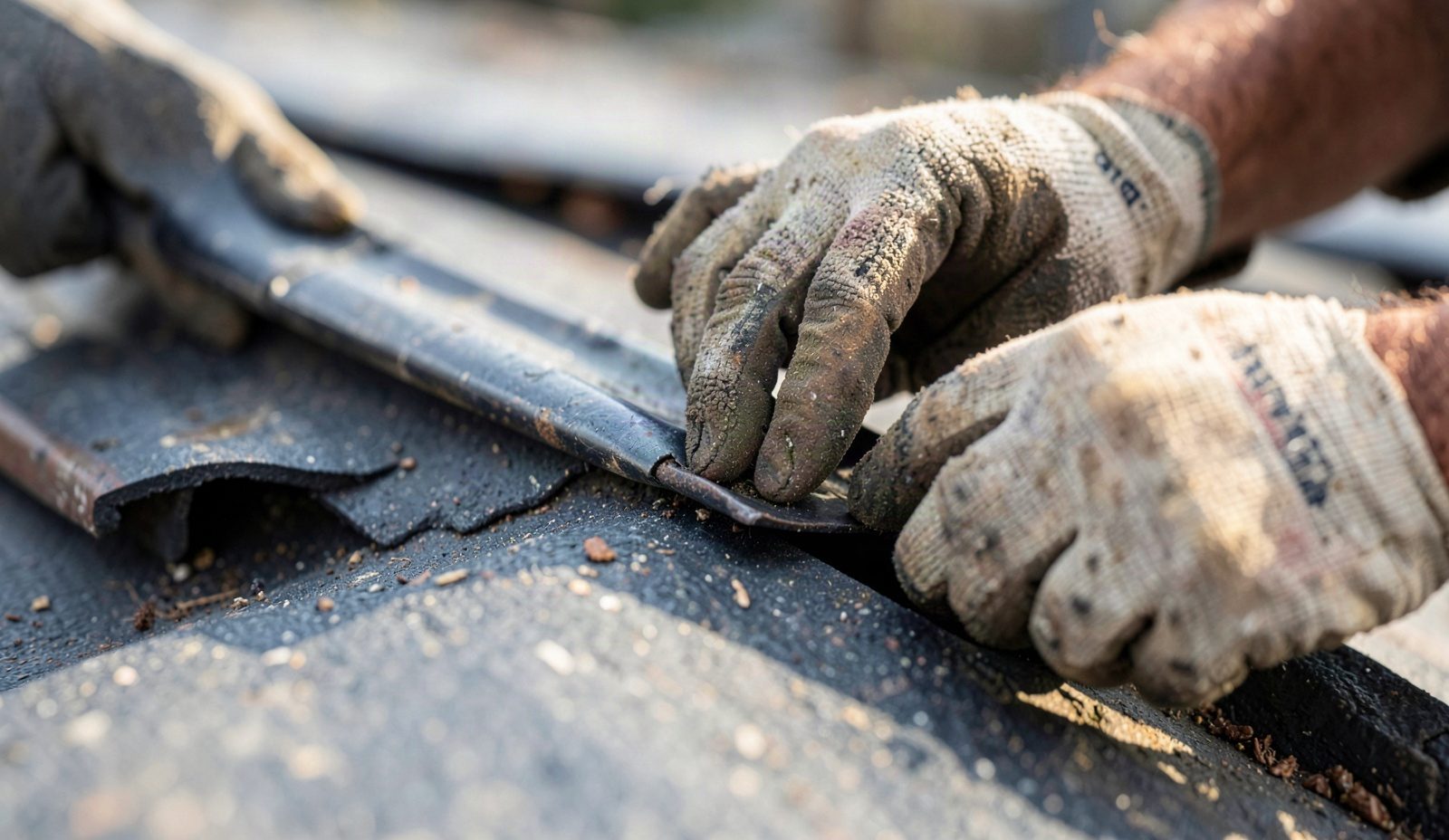
Every Westerville customer talks to the person who worked their roof. Questions about a repair get answered by someone who climbed the ladder, checked the decking and knows the specific problem at that address. That direct line cuts the back-and-forth that slows down insurance paperwork and follow-up questions after the job is finished.
A moisture meter reading above 20 percent on plywood decking tells a technician the sheathing is already absorbing water and needs replacement instead of a new shingle layer on top. Infrared imaging during a daytime inspection also shows where heat escapes through compressed or missing attic insulation, a common finding on older Westerville additions. Both readings go into the written scope so the homeowner sees the number behind the recommendation.
Section 905.1.2 of the Ohio Residential Code requires an ice barrier on asphalt shingle roofs extending from the lowest roof edge to at least 24 inches inside the exterior wall line, built from two cemented layers of underlayment or a self-adhering polymer-modified bitumen sheet. Crews measure that 24-inch line with a tape on every Westerville eave before the first course goes down, matching the install to the code language.
Years of working rooflines across the Columbus metro means the crew recognizes a 1960s ranch truss system on sight and knows which postwar subdivisions still have the original board sheathing under the shingles. That recognition speeds up the estimate, because the technician already expects certain problems before the ladder goes up, and can explain them using the actual construction terms for that era of home.
Westerville properties span single-family colonials, ranch subdivisions, low-slope commercial buildings along the retail corridors, and everything between. Cornerstone Roofing Columbus handles residential, commercial and emergency roofing services across Westerville, each tier using different materials and different inspection protocols, because a steep-slope asphalt shingle roof and a TPO membrane roof fail in different ways and get diagnosed with different tools.
A homeowner calling about a granular-shedding shingle roof gets a different scope than a property manager calling about ponding water on a membrane roof, and both get a different response than a call about an active leak during a thunderstorm.
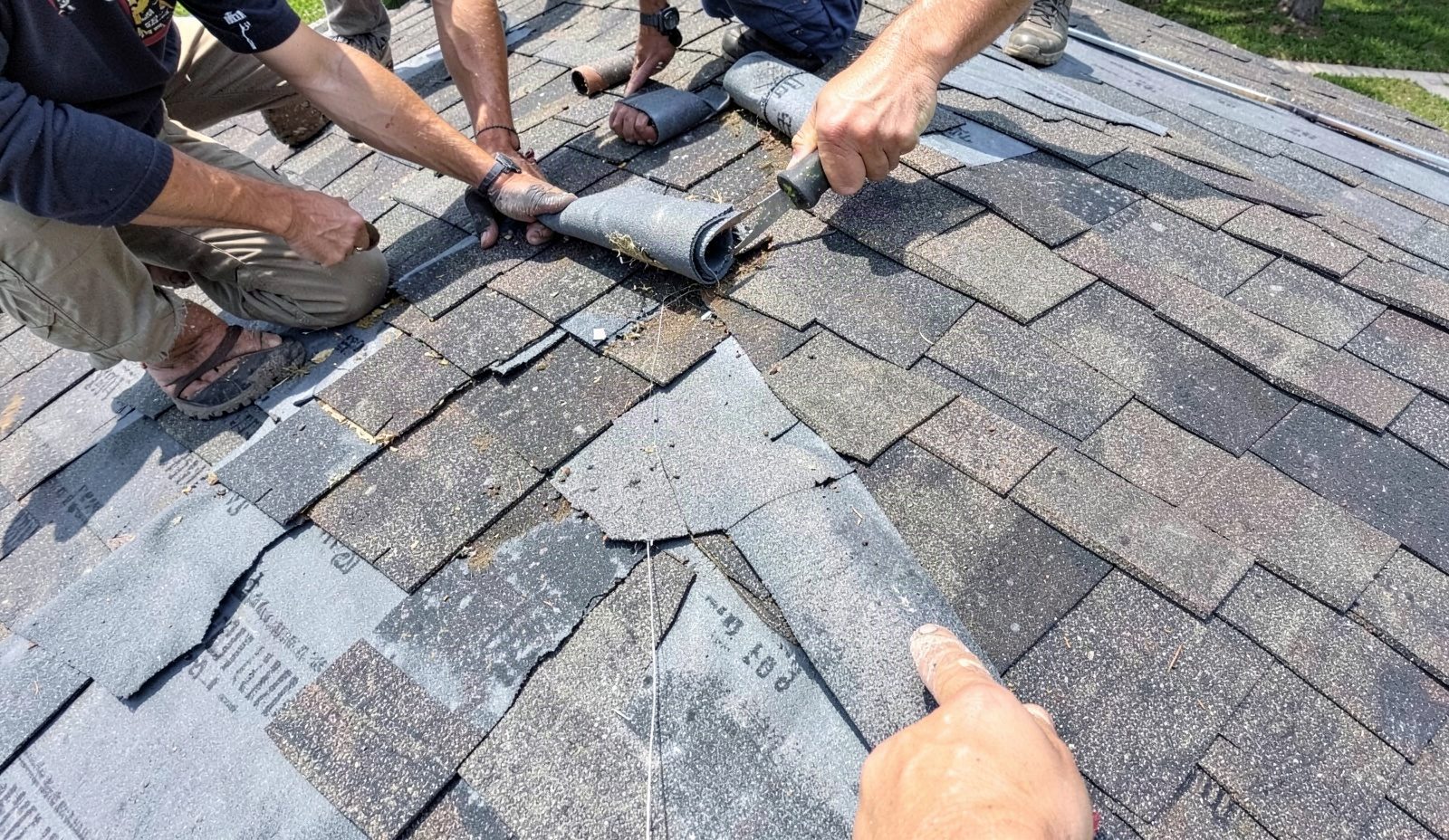
Most Westerville homeowners call about a specific symptom: a stain on a bedroom ceiling, a curled shingle after a windstorm, a gutter pulling away from the fascia. We handle full tear-off and replacement, targeted shingle and flashing repair, and gutter and downspout correction tied to the roofline itself. Every residential job starts with an attic check, because attic ventilation and insulation drive how a roof performs through an Ohio winter as much as the shingle brand does. A typical example is a split-level home with a failed valley flashing seam letting water track down into a second-floor closet. We replace the valley metal, extend the ice barrier per code, and reseal the counter-flashing where it meets the brick chimney, then photograph the finished valley before the crew leaves.
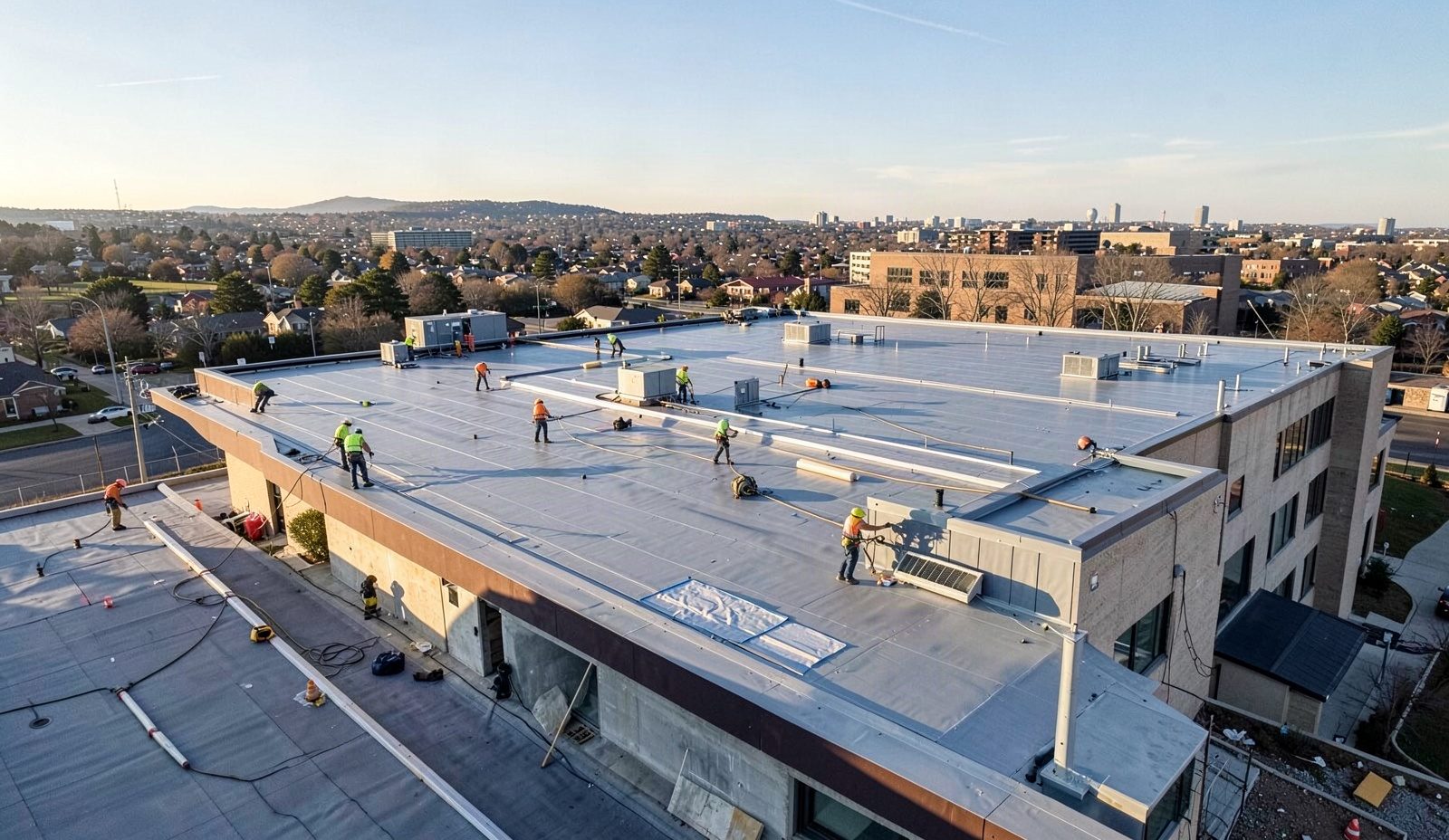
Westerville businesses running retail space, offices or multi-tenant buildings need roofs that protect inventory, equipment and lease terms, not just the building shell. We install and maintain low-slope membrane systems including TPO and modified bitumen, and we document every service visit with photos and a written condition report a property manager can hand to an insurer or ownership group. A typical scenario is a strip retail building with a membrane seam separating near a rooftop HVAC curb, letting water track into the ceiling grid above a tenant space. We patch and re-weld the seam, inspect the surrounding field for UV degradation, and schedule the next maintenance visit before the exposure widens into a larger repair.
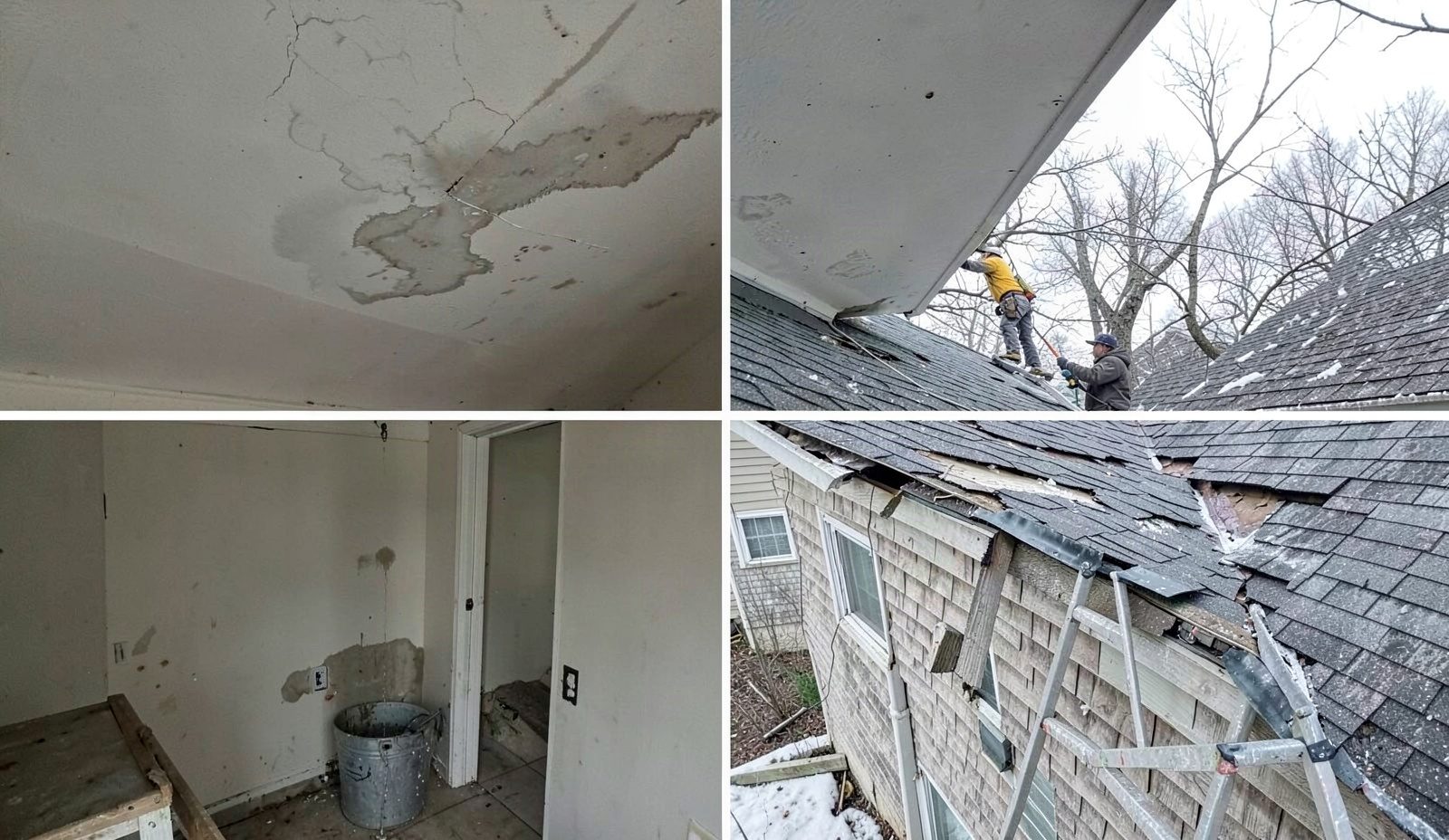
A hole punched through decking by a fallen limb or a shingle field stripped by straight-line wind does not wait for business hours. Emergency roofing Westerville residents call us for typically involves an active leak, a tarp installation, or exposed decking after a storm, and we triage by asking what is actively getting wet inside the home before anyone drives out. A typical scenario is a summer thunderstorm that peels back a section of ridge shingles, exposing the underlayment to hours of driving rain before the storm passes. We stabilize the opening with a mechanically fastened tarp rated for wind, clear standing water from the attic floor if it has pooled there, and schedule the permanent repair for the first available daylight window.
Four problems account for most of the roofing calls we take across Westerville, and all four trace back to the same seasonal pattern: a wet, humid summer followed by a winter that freezes and thaws the roof surface repeatedly. Catching any of them early is the difference between a flashing repair and a full deck replacement.
None of these problems show up as an obvious break in the roof surface. A homeowner usually notices a small sign first, a faint water ring, a granule pile in the gutter, a slightly soft spot underfoot in the attic, and waits. That wait is what turns a small flashing fix into a full decking replacement, so the signal matters more than the size of the damage.
Permit and inspection questions? Building & Zoning Services is the office we coordinate with on every permitted Columbus job.
Summer thunderstorms with hail and straight-line wind commonly damage shingles and gutters across Westerville, and because the region's snow load is continental rather than lake-effect, roofs here take short bursts of severe wind rather than sustained lake-driven storms. Bruised or missing granules after a hailstorm and a gutter pulled loose from its hangers both mean it is time to call before the next rain finds the opening.
Homes built before modern step-flashing standards often relied on tar and single-ply lead flashing at chimneys and dormers, materials that crack and pull away from masonry after decades of freeze-thaw movement. A visible gap between the counter-flashing and the brick, or rust staining below a dormer valley, means the seal has already failed and it is time to call.
Older stormwater infrastructure and mature tree canopy in established parts of the city mean gutters fill with leaf debris every fall, and a clogged downspout backs water up under the shingle edge once the first freeze locks it in place. Icicles forming in a solid curtain off the gutter line, rather than individual drips, signal a blockage that needs clearing before it forces water back under the deck.
Homeowners who skip a post-storm roof check because nothing is visibly wrong from the ground often let a small torn shingle sit through an entire winter, giving freeze-thaw cycling months to work water further under the course. A missing shingle tab visible from a neighbor's driveway, or granules collecting at a downspout outlet after every rain, means it is time to call before the next freeze cycle finishes the job.
A first visit typically runs 30 to 45 minutes for a standard residential inspection, longer if the technician needs attic access or a ladder set on a steep pitch. Have the address, a description of where you have seen water or damage, and access to the attic hatch ready before the technician arrives.
The technician checks the attic first, looking for daylight through the deck, staining on the rafters, and insulation depth, before ever climbing onto the roof itself, since attic conditions often explain what is happening on the surface.
After your call, you get a scheduled arrival window rather than an all-day wait, and a confirmation call or text the morning of the visit. If the technician is running behind on a prior job, someone calls to give you an updated window rather than leaving you checking the driveway. You get a direct callback number for questions between booking and arrival, so you are not stuck leaving messages with a general line.
The technician who arrives identifies themselves at the door and asks you to point out where you have noticed the problem before doing anything else. Ladders get placed on plywood or rubber footpads to protect landscaping and siding, and any interior access, like an attic hatch inside a closet, gets treated with the same care as the rest of your home. You walk the exterior with the technician afterward so you see exactly what they saw.
Before the crew leaves, the technician walks you through what they found using photos taken during the inspection. Debris gets cleared from gutters and the yard with a magnetic sweep for stray fasteners if any repair work happened. You get a written summary of findings and recommended next steps before the truck leaves the driveway, so there is a record for your own files or for an insurance adjuster.
The process runs the same way whether the job is a single flashing repair or a full replacement, just with more steps for bigger scopes. A call gets logged with the address, the symptom, and how urgent it is, and most non-emergency visits get scheduled within a few business days depending on the week's storm activity.
From there, the technician's on-site findings turn into a written scope you review and approve before any material gets ordered. Work gets scheduled around Ohio's weather windows, since asphalt shingle installation needs a dry deck and moderate temperatures to seal properly, and the crew handles site cleanup as part of the job rather than as an extra step at the end.
Call (614) 707-7333 and describe what you are seeing: a stain, a missing shingle, standing water. We log the address, the symptom, and whether it is an active leak, which determines whether you get a same-week appointment or a faster response.
A technician inspects the roof and attic, then puts findings into a written scope covering materials, labor, and the sequence of work. You review and approve that scope before any tear-off begins, so there are no surprise line items once the crew is on the roof.
The crew completes the work to Ohio Residential Code standards, including eave protection and proper flashing integration, then a lead installer walks the finished roof against the scope. You get a final walkthrough with photos before the crew packs up and leaves the property.
Roofing work in Westerville falls under the Ohio Residential Code, the statewide standard for one and two-family construction. That code sets the baseline for everything from fastening schedules to underlayment type, and it applies whether the job is a single-slope repair on a ranch in the older part of town or a full tear-off on a newer colonial across the city.
Full replacements and most structural repairs typically need a permit from the local building authority, while simple like-for-like repairs, like swapping a section of damaged shingles without touching the decking, often do not, though the final call belongs to whichever office has jurisdiction over the address. A technician who works this county regularly knows what inspectors look for on a re-roof: proper drip edge at the eaves and rakes, correct nail placement per the shingle manufacturer's exposure chart, and continuous underlayment coverage with no gaps at the seams.
Verifying that work meets code on a finished roof usually comes down to a handful of checks a trained eye can do without pulling a single shingle: consistent nail lines visible at the shingle overlap, a drip edge that laps over the underlayment at the eave and under it at the rake, and flashing integrated into the correct shingle course rather than caulked on top after the fact. Manufacturers like GAF and Owens Corning both specify a minimum fastener count per shingle for high-wind exposure, and a technician checking a completed job counts that fastener pattern the same way an inspector would.
Central Ohio runs through roughly 40 to 60 freeze-thaw cycles each winter, and each cycle expands trapped moisture in a cracked shingle mat or a nail hole just enough to widen it. Technicians check attic sheathing for frost buildup on the underside of the deck during winter inspections, since frost covering more than a small patch of the deck signals inadequate ventilation feeding the cycle from inside.
Scope size, roof pitch, and how many layers of old material need tear-off before new underlayment goes down all shift the labor hours on a job more than the shingle brand does. Access matters too: mature trees close to the eaves or a detached garage blocking dumpster placement adds time that a wide-open ranch lot does not.
A standard single-family tear-off and reshingle typically runs one to two days depending on square footage and weather delays, with steep or cut-up rooflines running longer than a simple gable. Quality gets checked against the manufacturer's installation instructions for that specific shingle line, since exposure and nailing patterns differ between architectural and three-tab products.
Franklin County Building Services is the permitting authority for roofing work in Westerville, and a full replacement or any structural repair to the decking typically needs a permit pulled before work starts. Minor like-for-like shingle repair often falls outside that requirement, but the permitting office makes the final determination on any specific scope.
Cornerstone Roofing Columbus stands out in Westerville for crews who inspect the attic before the roof, document findings with photos and moisture readings, and put a written scope in front of you before any material gets ordered. That combination of instrument-based diagnosis and direct communication, without a call center in between, is what homeowners across the city consistently ask for by name after a first visit.
An estimate starts with a scheduled technician visit to inspect the roof and attic in person. That visit produces a written scope covering materials, labor and sequence, which you review and approve, or question, before anything gets ordered or scheduled. Call (614) 707-7333 to set up that visit and go through the numbers with the technician directly.
Prices vary because of differences in crew experience, overhead structure, material grade and how much of the job gets subcontracted out versus handled by the company's own crew. A company running its own trained installers on tear-off and flashing work prices differently than one that subcontracts labor to whoever is available that week. Ask what specific underlayment and fastening pattern is included in a quote to compare two bids on equal terms.
Minor tasks like clearing gutter debris are reasonable for a homeowner comfortable on a ladder, but shingle replacement, flashing work and deck repair carry fall risk and code compliance requirements beyond a weekend project. An improperly installed flashing lap can cause a leak that shows up months later, often after the section is already covered by new shingles. Structural and full replacement work also typically needs a permit, which adds a layer most DIY jobs are not set up to handle correctly.
Doing it yourself is possible but risky given roof pitch and hidden hazards. Wet decking loses traction fast, and a homeowner walking a storm-damaged roof risks a fall through a weakened section that looks solid from a ladder. Downed power lines tangled in fallen limbs add another hazard a homeowner cannot always spot from the ground. A short-term fix like a tarp over a first-floor window is reasonable, but roof-level board-up work is safer left to someone with fall protection and experience reading which sections of decking will hold weight.
Roofing prices vary because contractors quote different scopes, materials, and labor standards for what looks like the same job. One bid might skip the ice barrier requirement or use minimum-grade underlayment, while another prices in a full permit pull, a quality shingle line, and a supervised crew. Comparing two bids without matching the scope line by line is the biggest reason homeowners feel like Westerville roofing prices make no sense.
Explore our service area and locate Cornerstone Roofing Columbus with ease. We're proudly local and serve the surrounding neighborhoods with fast response and honest pricing. Use the map to check our coverage area, or call us and we'll confirm in seconds.
Address:
Cornerstone Roofing Columbus, Westerville, OH 43086
How Much Does a Roof Replacement Cost in Columbus? 2026 Pricing Breakdown, practical local guidance from Cornerstone Roofing Columbus, Colum…
Read More
Commercial Roof Maintenance Tips for Columbus Property Managers, practical local guidance from Cornerstone Roofing Columbus, Columbus's trus…
Read More
Skylight Leaks in Victorian Village Homes, Repair or Replace?, practical local guidance from Cornerstone Roofing Columbus, Columbus's truste…
Read More
The Best Time of Year to Replace a Roof in Columbus, practical local guidance from Cornerstone Roofing Columbus, Columbus's trusted roofing …
Read More