
April 1, 2025
How Much Does a Roof Replacement Cost in Columbus? 2026 Pricing Breakdown
How Much Does a Roof Replacement Cost in Columbus? 2026 Pricing Breakdown, practical local guidance from Cornerstone Roofing Columbus, Colum…
Read More




Central Ohio runs a humid continental climate, and Reynoldsburg gets the full swing of it. Winters bring roughly 40 to 60 freeze-thaw cycles, not the lake-effect snow load Cleveland deals with, but repeated freezing and thawing that cracks brittle shingle mat and splits flashing seams at the nail line. Water gets under a shingle tab during a January thaw, refreezes overnight, and pries the seal strip apart one cycle at a time. That is how a roof with no visible storm damage still starts leaking in February.
Housing stock age changes what fails first. In Brookside, many homes date to the ranch and split-level building wave of the 1960s and 70s, and a lot of those original roof decks are still 1x6 plank sheathing rather than plywood or OSB. Plank decking flexes more under foot traffic and holds fastener grip differently, so a tear-off crew has to check nail pull-through before laying new felt, not just count layers. Rose Hill mixes that same era with later infill construction, which means a single block can have two different deck types and two different attic ventilation setups side by side.
Taylor Square, built out mostly in later subdivision phases, runs newer engineered trusses and OSB decking with tighter soffit-to-ridge ventilation paths. That newer construction handles snow load better but is less forgiving of ventilation mistakes made during original construction, since a blocked soffit baffle traps humid attic air against the underside of the deck all winter. A technician working a Taylor Square attic checks baffle clearance before ever climbing on the roof, because that single detail predicts whether the deck is delaminating from the inside out.
Across all three areas, the pattern repeats every spring: winter freeze-thaw damage stays hidden until the first heavy spring rain finds the weak point.
Reputation in a city this size gets built one roof at a time, and word travels fast between neighbors who compare notes over a fence line. Cornerstone Roofing Columbus earns repeat calls in Reynoldsburg by treating every estimate as a diagnostic exercise first and a sales conversation second. A technician walks the attic before the roof deck, checks insulation depth and ventilation path, and only then moves to the exterior inspection, because interior clues often explain exterior symptoms that a ladder-only inspection misses entirely.
Internally, every completed job gets a second set of eyes before it is called finished. That is not a marketing line, it is a walk-around with a different crew lead who did not install the roof, checking fastener pattern, flashing laps, and ridge vent alignment against the same checklist every time. Training runs on real roofs, not classroom slides alone. Newer crew members shadow a lead through a full tear-off and reinstall before they run a job on their own, learning how Reynoldsburg's specific deck types and attic conditions change the install sequence.
Operational philosophy stays simple: measure before you cut, document before you cover anything up, and never leave a job site guessing what is under the new shingles. That documentation matters later, whether a homeowner is filing an insurance claim or just wants a record of what went into the roof for the next owner. The badges below break down the specific pieces of that approach in more detail.
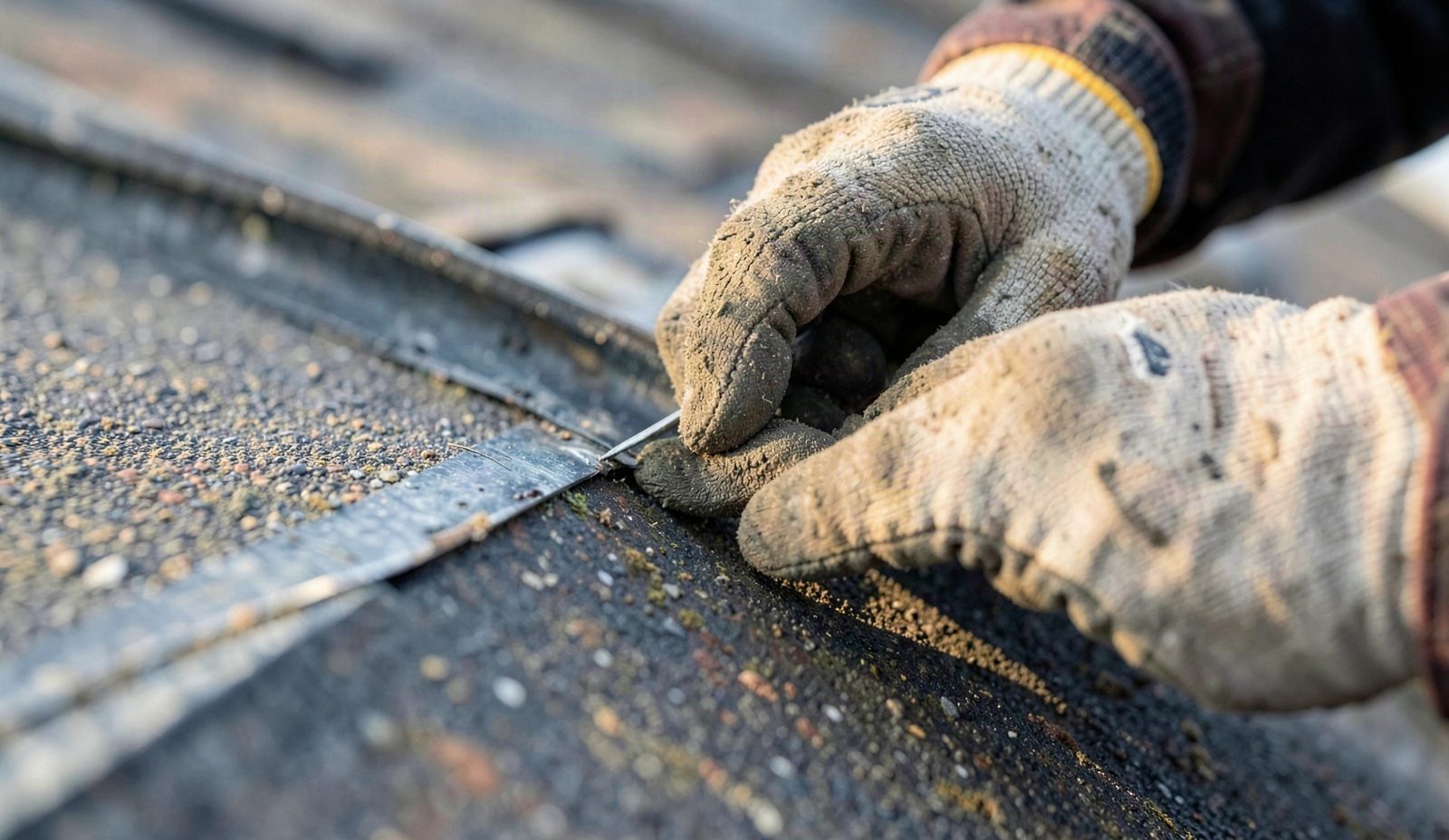
The same crew that tears off your roof also drives the fasteners and finishes the ridge, rather than handing the job off between subcontracted teams. That continuity means the person who found a soft spot in the decking during tear-off is the same person deciding how to frame the repair before the new underlayment goes down.
Every service truck carries a pin-type moisture meter and a thermal imaging camera, not just a ladder and a pry bar. A moisture reading above 20 percent in decking timber flags rot that a visual check alone would miss, and infrared imaging shows trapped attic moisture patterns before they become a stain on your ceiling drywall.
Section 905.1.2 of the Ohio Residential Code requires an ice barrier running from the roof edge to at least 24 inches inside the exterior wall line on asphalt shingle roofs. Every install measures that line from the actual wall plane, not an eyeballed guess, using a self-adhering polymer-modified bitumen membrane rated for the coverage.
Crews working this city long enough recognize the difference between a 1970s plank deck and a newer OSB deck before they even climb the ladder, just from the roof pitch and eave profile. That recognition speeds up the estimate and keeps the material order accurate on the first trip, not the second.
Cornerstone Roofing Columbus covers three distinct scopes of work in Reynoldsburg, and each one runs on a different playbook. Residential work centers on asphalt shingle systems, from single-slope repairs to full tear-off replacements on ranch, colonial, and split-level homes. Commercial work runs on low-slope membrane systems designed for flat and shallow-pitch roofs over retail and office buildings, where downtime and drainage matter more than curb appeal.
Emergency response sits apart from both, built around speed and containment rather than a full scope of work. A tarp-and-dry-in job stops active water intrusion the same day, buying time until a full repair or replacement can be scheduled properly. Every tier follows the same underlying standard: work verified against the Ohio Residential Code, not shortcuts justified by schedule pressure.
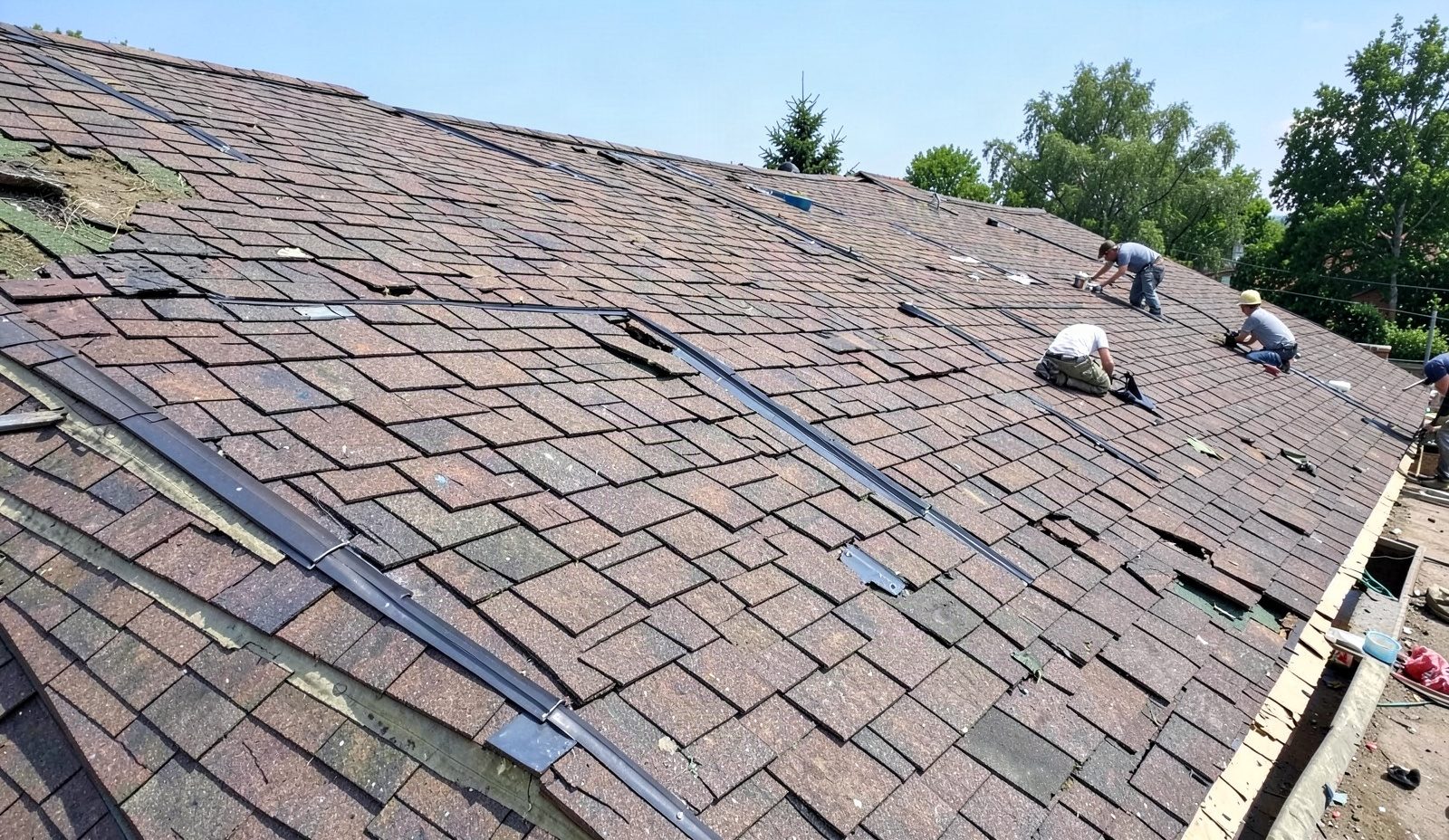
This covers everything from a single missing shingle after a wind event to a complete tear-off on a roof past its service life. We handle architectural and three-tab asphalt shingle systems, flashing replacement at chimneys and sidewalls, and deck repair where old plank sheathing has gone soft. A typical job might be a 1980s ranch home where the original 3-tab shingles have granule loss down to bare mat and the valley flashing has rusted through, requiring full metal valley replacement alongside the new shingle field.
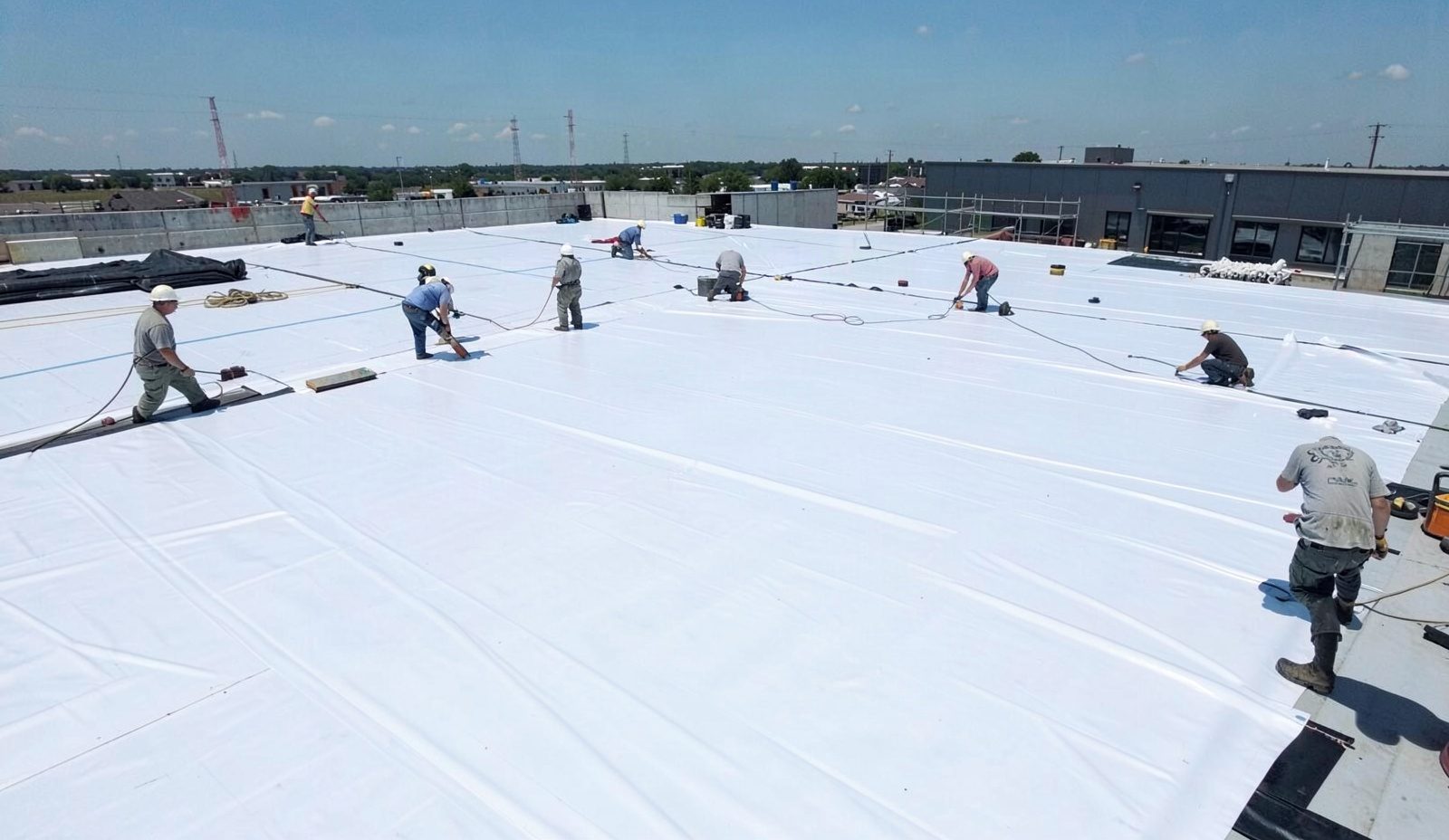
Businesses need roofs that keep the building dry without shutting down operations, so commercial work focuses on TPO and modified bitumen membrane systems built for low-slope drainage and long-term UV exposure. A common scenario is a strip retail building where ponding water near a roof drain has softened the membrane seams, requiring localized membrane replacement and drain reset scheduled around store hours to avoid interrupting business.
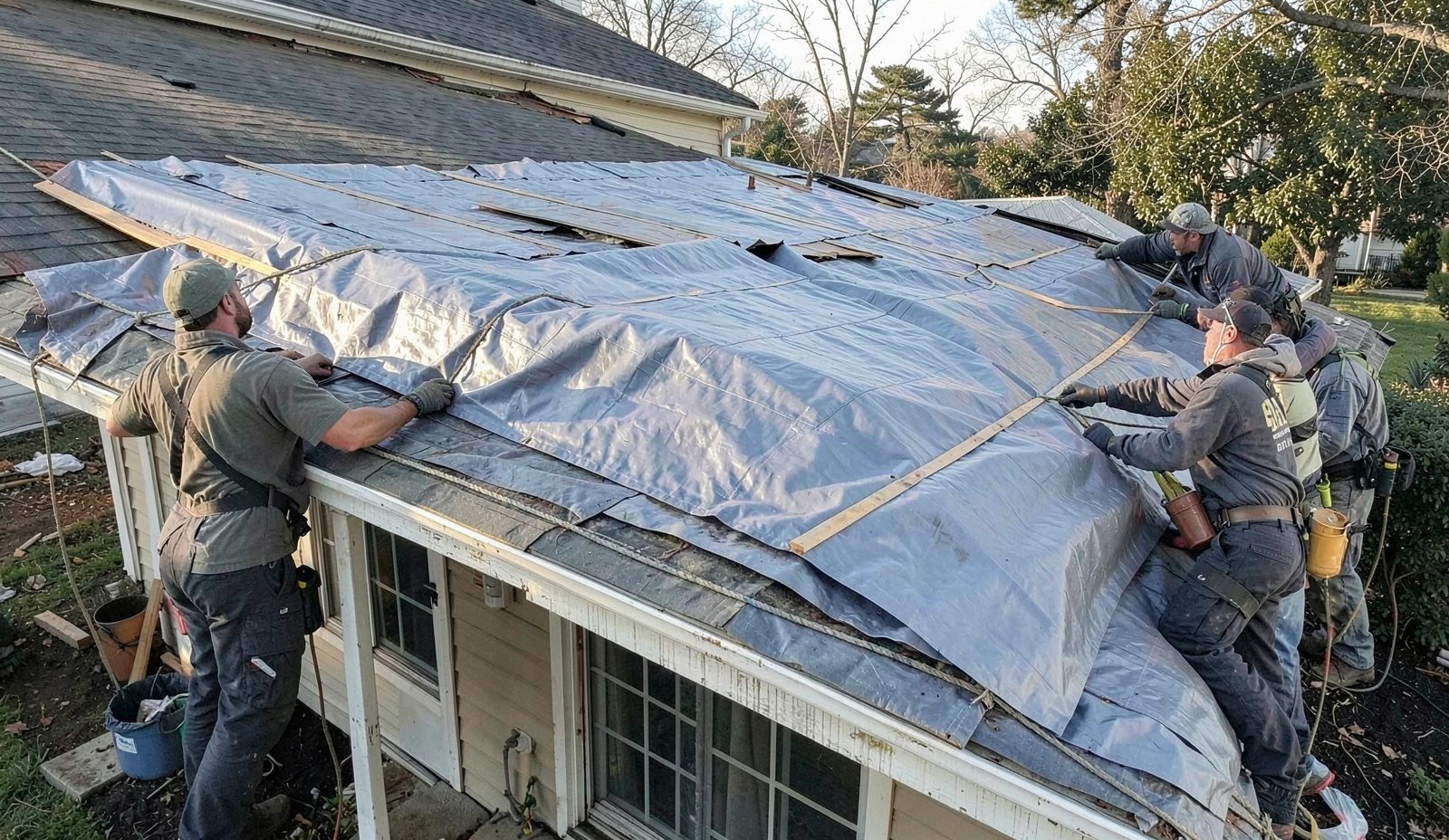
When a wind-driven branch punches a hole through the deck or a hailstorm strips shingles off a slope, the priority is stopping water before it reaches drywall and insulation. We arrive with tarp systems rated for wind exposure, secure the opening with furring strips rather than nails driven straight through the membrane, and photograph the damage for the insurance file before anything gets covered. A late-night call after a summer thunderstorm typically gets a technician on site within hours, not the next business day.
Four problems account for most of the roof calls that come out of Reynoldsburg in a given year, and each one has a distinct cause rather than a single generic explanation. Recognizing the early signal on each one saves a homeowner the cost of a deck repair that a caught-early shingle repair would have prevented.
None of these problems announce themselves loudly at first. A stain the size of a coffee cup on a bedroom ceiling, a granule pile at the base of a downspout, a shingle tab that lifts in a light breeze, these are the early signals worth a phone call before the next heavy rain finds the same weak point.
One of our most-requested services here is asphalt shingle roofing, see that page for pricing and process.
Summer thunderstorms with wind and hail are a leading cause of shingle damage across the east-side Columbus metro, and Reynoldsburg sits squarely in that pattern. Hail bruises the shingle mat without always breaking the surface, so damage can hide until granules start washing loose. A hailstorm followed by granule buildup at downspout outlets means it is time for a slope-by-slope inspection.
Older plank decking common in Reynoldsburg's earlier building era loses fastener grip over decades of thermal movement, letting nails back out just enough to break the shingle seal above them. A visibly wavy roofline between rafters, or shingles that look uneven from the curb, signals deck movement that needs a structural look before another layer goes on.
Central Ohio's clay-heavy soil drains slowly, and where grading has settled over the years, water backs up against foundations and pushes moisture higher than gutters were sized to handle. Persistent ice buildup at the eaves in winter, well beyond what a single storm explains, often traces back to drainage that never had a chance to clear before the next freeze.
Gutters packed with leaves force water back under the shingle edge instead of off the roof, and blocked soffit vents trap humid attic air against the deck year round. A musty attic smell or dark streaking on roof sheathing visible from inside the attic means ventilation has been ignored longer than it should have been.
A first visit runs long enough to be useful and short enough to respect your day, typically under an hour for a standard inspection. The technician checks the attic first, looking at insulation depth, ventilation path, and any moisture staining on the underside of the deck, then moves to the exterior for a slope-by-slope shingle and flashing check.
Have your last roofing invoice or any insurance paperwork on hand if storm damage is the concern, since prior repair history changes what the inspection focuses on.
From routine maintenance to cedar shake roofing, the same local crew handles every call.
Once you call, a scheduler confirms the address and gives a two-hour arrival window rather than an all-day guess. You get a call or text when the technician is about twenty minutes out, so you are not waiting by the window all morning. If the visit is storm-related, we ask a few questions up front, like when you first noticed the leak and which room it is in, so the technician arrives already knowing where to look first.
The technician introduces themselves at the door before touching anything on the property, and lays down protective tarps or plywood at entry points if the inspection requires attic access through a closet or garage ceiling. Before climbing a ladder, they walk the exterior with you if you are home, pointing out any visible damage at ground level first. Ladders get set away from flower beds and downspouts wherever the roofline allows it.
At the end of the visit or the job, the technician walks the property with you, pointing out what was found, what was repaired, and any area worth watching. Photos taken during the inspection or the work get shared as part of the written summary, useful for your own records or an insurance adjuster. Debris gets swept from gutters, driveway, and lawn with a magnetic nail sweep before the crew packs up.
Getting a Reynoldsburg roof fixed runs through three stages, and each one has a defined output before the next stage starts. Nothing gets scheduled for work until you have a written scope in hand and have said yes to it.
Scheduling windows typically run within a few business days of the first call, faster if active water intrusion is involved. Cleanup and a final walkthrough close out every job before the crew leaves the property.
Call (614) 707-7333 and describe what you are seeing, whether that is a ceiling stain, missing shingles after a storm, or a roof simply due for replacement. The scheduler logs the address, the symptom, and any urgency, then books an inspection window instead of guessing at scope over the phone.
A technician inspects the attic and exterior, measures the affected area, and documents findings with photos. You receive a written quote breaking down materials and labor before any work is scheduled, and nothing starts until you approve it in writing or by phone.
The crew completes the work to Ohio Residential Code requirements, checking flashing laps, fastener pattern, and ventilation before closing up. A final walkthrough documents the finished work with photos, and the crew clears the site of debris and old material before leaving.
Roofing work across Reynoldsburg falls under the Ohio Residential Code, based on the 2018 International Residential Code, which sets the baseline for underlayment, fastening, flashing, and ventilation requirements on every residential job. That code is not a suggestion document. Inspectors reference it line by line when structural work is involved, and a crew that does not know the current provisions ends up redoing work that fails inspection.
Compliance gets verified on site, not assumed from a spec sheet. That means checking fastener count per shingle against the manufacturer's wind rating requirement, confirming ice barrier coverage at eaves and valleys, and photographing flashing details before they get covered by the new shingle field. A roof that looks finished from the ground can still fail a code check if the underlayment lap direction runs the wrong way or ventilation intake does not match exhaust area.
Permitting is where local nuance matters most. Full replacements and structural repairs typically require a permit, while minor like-for-like shingle repairs often do not, though the final determination always belongs to the governing permit office for your specific address. The four factors below break down the technical and regulatory details that shape a Reynoldsburg roofing job from start to finish.
Need something specific? Our new construction roofing page breaks down exactly how we handle it in Reynoldsburg.
The residential code sets a net free ventilation area standard, typically a ratio of 1 to 150 of attic floor space split between intake and exhaust, unless a vapor barrier justifies a reduced ratio. Blocked soffit intake is the most common violation we find on older Reynoldsburg homes, and it drives the ice-dam and deck moisture problems that show up every winter.
Scope size, roof pitch, and deck condition set the baseline, but access matters just as much. A roof with limited ladder access, multiple layers of old shingles requiring extra tear-off labor, or hidden deck rot found mid-job changes the material and labor total. Steeper pitches also require additional fall-protection setup time that flatter roofs do not.
A standard single-layer tear-off and reshingle on an average Reynoldsburg home typically completes in one working day, weather permitting. Deck repair, multiple layer removal, or complex flashing details around dormers extend that timeline. Quality gets measured against a straight ridge line, tight nail patterns, and flashing laps that shed water downhill at every junction, not just a finished look from the street.
Franklin County Building Services handles most Reynoldsburg permit requests, but ZIP 43068 straddles into Licking and Fairfield counties, so the correct permitting authority can vary by exact address. We confirm jurisdiction before pulling any permit on a structural job, rather than assuming Franklin County applies to every address in the city.
Coverage depends on the cause of damage, not the age of your roof. Wind and hail from a documented storm event are typically covered under standard policies, while gradual wear from age or neglected maintenance usually is not. We photograph and document damage during every inspection specifically because that record helps support a claim if the cause is storm-related, and an adjuster will want that evidence before approving repair or replacement costs.
The same crew that inspects your roof typically completes the repair or replacement work. Crew members train on real roofs alongside experienced leads before running jobs independently, learning the specific deck types and attic conditions common across Reynoldsburg's building eras. Every technician identifies themselves at the door before starting any inspection or work on your property.
An estimate starts with an on-site inspection, not a phone guess. A technician checks the attic and exterior, measures the affected area, and documents the scope with photos before drafting a written quote for materials and labor. You review and approve that quote before any work gets scheduled, so there is no surprise line item once the crew arrives.
Cost depends on roof size, pitch, material choice, and how much of the existing deck needs repair rather than a flat rate. Steeper roofs, multiple shingle layers to remove, or hidden rot found during tear-off all shift the total. A written quote after the inspection gives you the actual number for your specific roof, broken down by material and labor.
Payment details get confirmed when your written quote is finalized, before any work begins. Call (614) 707-7333 to discuss options directly with a technician, who can walk through what works best for your specific job and timeline.
Timing depends on urgency and current scheduling load. Active leaks and storm damage typically get an inspection within a day or two of your call, while planned replacements schedule out further based on material availability and crew calendar. Calling early, even before damage looks severe, keeps your job ahead of the queue when weather turns.
Cornerstone Roofing Columbus stands out in Reynoldsburg for pairing instrumented diagnosis, moisture meters and thermal imaging, with a documented, code-referenced process on every job. That combination of tools and process, not just a ladder and a guess, is what homeowners across this city consistently point to when asked why they called us back for a second job.
Explore our service area and locate Cornerstone Roofing Columbus with ease. We're proudly local and serve the surrounding neighborhoods with fast response and honest pricing. Use the map to check our coverage area, or call us and we'll confirm in seconds.
Address:
Cornerstone Roofing Columbus, Reynoldsburg, OH 43068
How Much Does a Roof Replacement Cost in Columbus? 2026 Pricing Breakdown, practical local guidance from Cornerstone Roofing Columbus, Colum…
Read More
Commercial Roof Maintenance Tips for Columbus Property Managers, practical local guidance from Cornerstone Roofing Columbus, Columbus's trus…
Read More
Skylight Leaks in Victorian Village Homes, Repair or Replace?, practical local guidance from Cornerstone Roofing Columbus, Columbus's truste…
Read More
The Best Time of Year to Replace a Roof in Columbus, practical local guidance from Cornerstone Roofing Columbus, Columbus's trusted roofing …
Read More