

April 1, 2025
How Much Does a Roof Replacement Cost in Columbus? 2026 Pricing Breakdown
How Much Does a Roof Replacement Cost in Columbus? 2026 Pricing Breakdown, practical local guidance from Cornerstone Roofing Columbus, Colum…
Read More




Powell sits in climate zone 5A, a zone defined by repeated freeze-thaw cycles rather than the lake-effect snow load that piles up farther north near Lake Erie. Water works into a shingle's mat, freezes, expands, and cracks the surface a little more with every cycle. By late winter, a roof that looked sound in October often shows granule loss at the eaves and lifted tabs along the ridge, the two spots that take the most direct freeze exposure. Attic ventilation plays into this too: a poorly vented attic lets warm air melt the underside of a snow layer, sends water down to the cold eave, and refreezes it into an ice ridge that backs up under the shingles.
Housing stock age changes what fails first, and it changes block by block. Around Historic Downtown Powell, many homes date to the 19th and early 20th century, with steep-pitch roofs, full dimensional lumber framing, and in some cases two or three re-roofing layers stacked over the decking. Wedgewood, built mostly through the 1980s and 1990s, carries three-tab shingles on OSB decking, a pairing that shows nail pop and deck delamination once the original roof passes its service window. Golf Village's late-1990s and early-2000s construction runs architectural laminate shingles over lower-pitch sections around dormers and bump-outs, exactly where wind-blown debris and standing meltwater collect after a wet snow.
Roof age matters more here than in warmer climates. A shingle rated for a long service life elsewhere loses years off that number in central Ohio because of how many times it freezes and thaws each winter. That's why we walk the whole roof plane on every Powell call, not just the spot the homeowner points to, since the stress shows up first at valleys, eaves, and any low-slope transition.
From routine maintenance to cedar shake roofing, the same local crew handles every call.
Word travels fast in a town this size. Homeowners in Powell talk to their neighbors before they call a roofer, and a crew that leaves a job site messy or gives a vague answer on the phone does not get recommended twice. Powell's growth over the past two decades means plenty of newer owners buying resale homes without full roof history, and a home inspector's note about deferred roof maintenance is often the first time they hear about the freeze-thaw stress their roof has already absorbed.
We built our process around that reality: clear answers on the phone, a technician who explains what he finds on the roof before he ever talks about a fix, and a written scope that matches what was actually inspected. That written scope lists shingle course count, ridge vent linear footage, and flashing runs by name, so you can compare it line by line against any second opinion.
Every job also runs through a two-step check. The technician who diagnoses the problem is not the same person who signs off on the finished work. A second set of eyes walks the roof plane, checking fastener pattern, flashing laps, and drip edge seating against the scope sheet before the job closes out. That separation catches the small misses, a shingle set a half inch off the nailing line, a pipe boot that seated slightly crooked, before they turn into a leak next winter.
Training runs on real roofs, not classroom hours alone. New technicians shadow senior installers through a full season of local calls, working steep pitches on the town's oldest homes and the lower-slope architectural shingle runs common in newer subdivisions, in ice, on wet decking, and in July heat that softens shingle mat, before they run a job solo. Continuing education happens year-round: when Ohio updates a provision of the Residential Code, or a manufacturer changes an installation instruction, that update reaches every crew before the next job starts.
Need something specific? Our new construction roofing page breaks down exactly how we handle it in Powell.

Call (614) 707-7333 and you reach a technician who fields roofing calls every day and can gauge urgency on the spot. That person asks about the specific symptom, a dark streak below a pipe boot, a soft spot near a valley, a granule pile in the downspout, and gives you a same-day read on urgency before any truck leaves for your address.
Every diagnostic visit includes a pitch gauge, a hand-held infrared moisture meter, and a probe to test deck firmness at suspect spots. The infrared meter reads surface temperature differences as small as two degrees, which flags trapped moisture under a shingle field long before a stain shows up on the ceiling below. The pitch gauge confirms actual slope at valleys and dormers, since a roof built off spec drains differently than the plan shows.
Every re-roof and repair follows the Ohio Residential Code, the standard that governs fastening patterns, underlayment layering, and flashing details across the state. Installers train against manufacturer installation specifications from GAF, Owens Corning, and CertainTeed, since a missed nailing zone or an incorrect underlayment lap can void a shingle's wind rating even when the finished roof looks correct from the ground.
We have worked Columbus-area roofs long enough to recognize a Powell-era subdivision by its roofline alone, low-slope architectural shingle runs on newer construction, steeper cuts and dormers on older infill. That pattern recognition shortens the diagnostic visit and keeps the written quote tied to what a roof of that specific age and pitch actually needs.
Roofing work in Powell splits into three practical tiers: scheduled residential repair and replacement, commercial roof management for retail and office properties, and after-hours emergency response when wind or hail opens a roof mid-storm. Each tier runs on a different clock. A residential re-roof gets scheduled around material lead time and weather windows. A commercial job gets scheduled around occupancy and lease obligations, often in phases. An emergency call gets a truck moving within hours, not days.
Powell's mix of single-family subdivisions, small commercial strips, and older mixed-use buildings near the town center means a single roofing company needs fluency in shingle, membrane, and metal systems. Cornerstone Roofing Columbus handles all three tiers under the applicable code standard. What changes between them is scope and speed, not the standard of work. The service cards below break down what each tier includes and who it's built for.
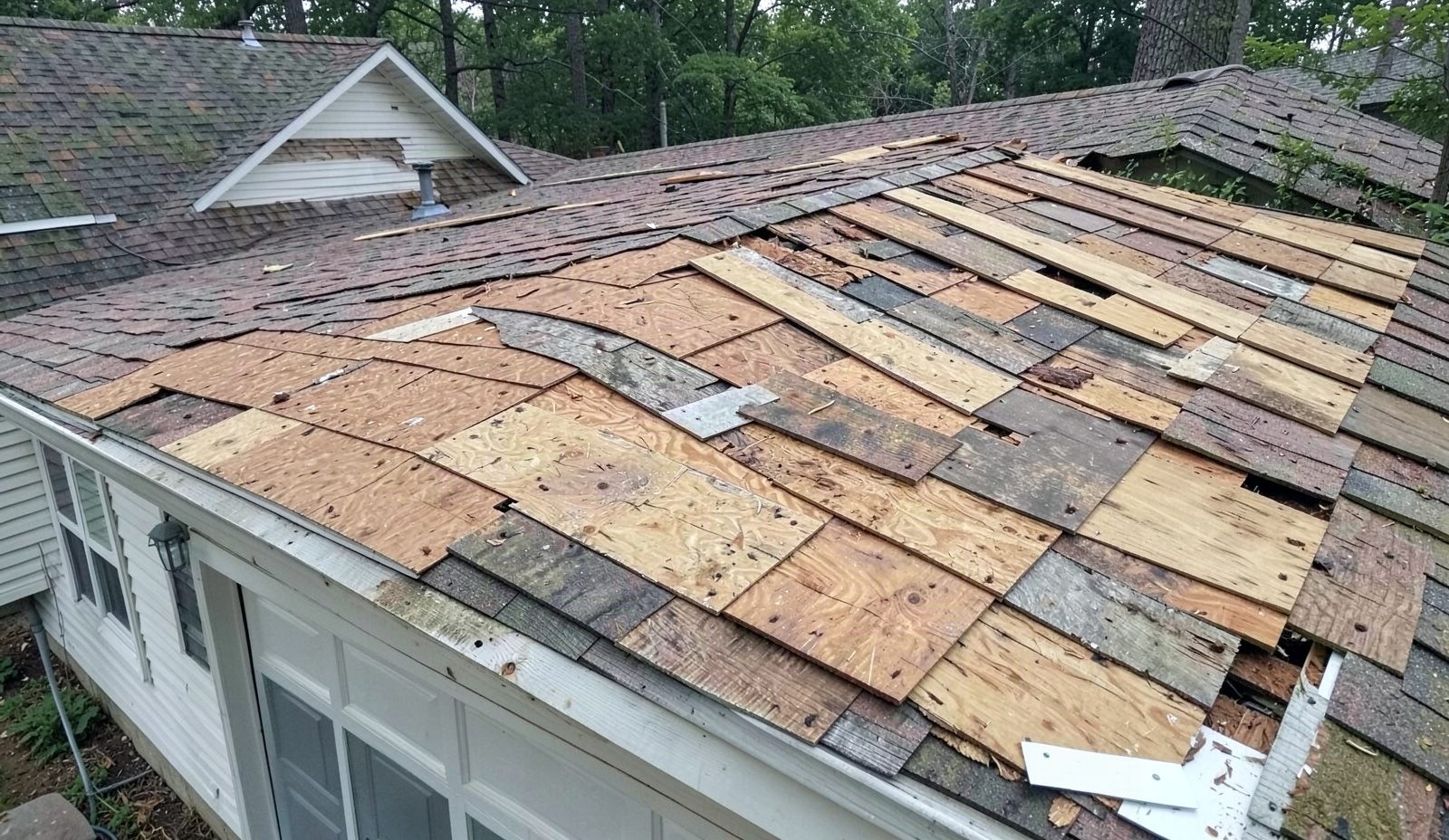
This is the core of our Powell work: shingle repair, full tear-off replacement, and targeted fixes like flashing repair around chimneys and skylights. It's built for homeowners dealing with an aging roof, storm damage, or a pre-sale inspection that flagged a problem. We handle everything from a single damaged section after a wind event to a full tear-off down to the decking on a roof past its service life. One recent example: a homeowner with a 1990s-era ranch called after noticing a soft spot near a bathroom vent stack. The fix turned out to be a failed boot seal and about six feet of surrounding decking, replaced and re-shingled to match the existing course lines, well short of a full replacement in scope.
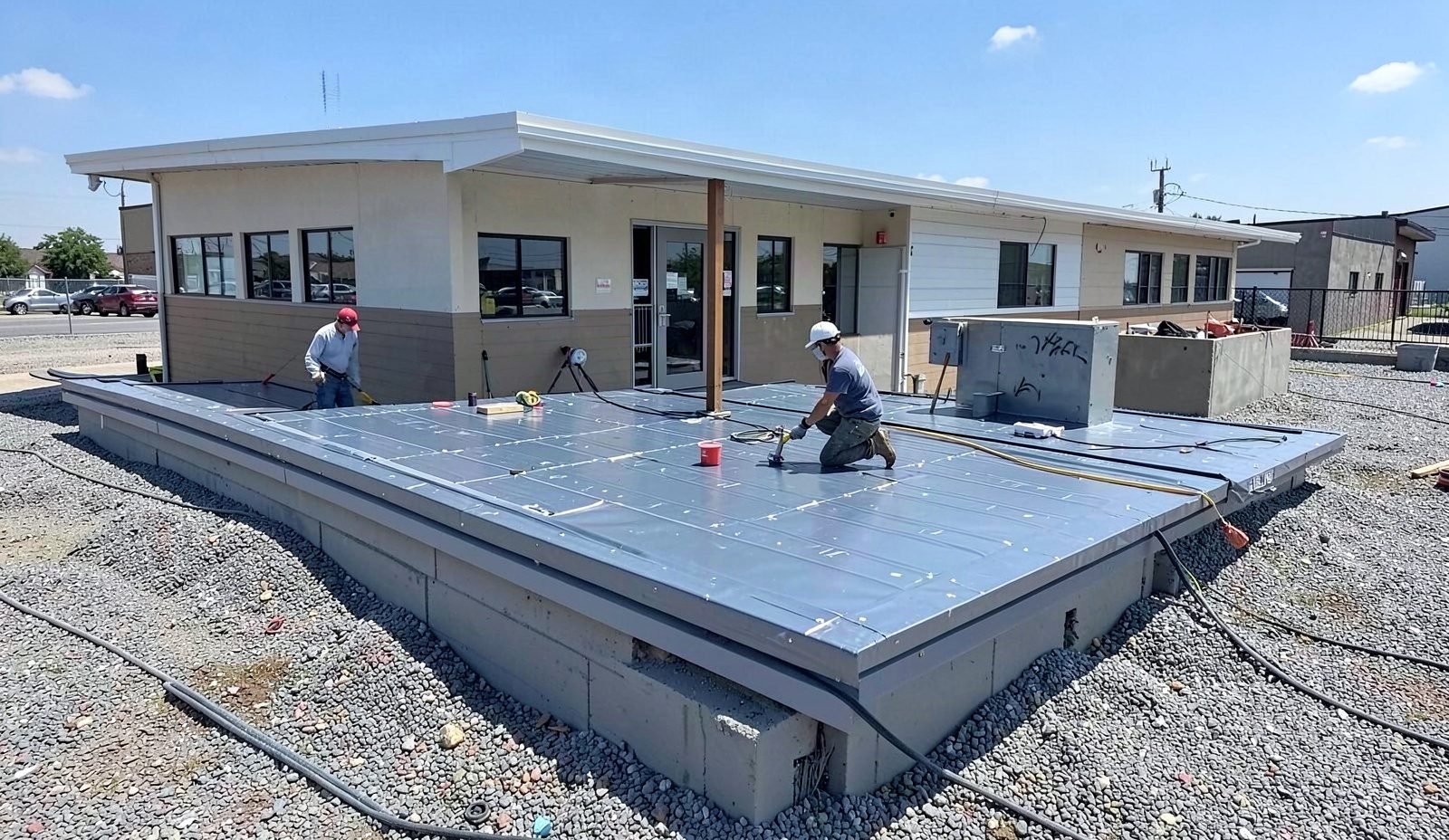
Commercial roofing in Powell covers low-slope membrane systems, TPO and EPDM, on retail strips, office buildings, and light-industrial properties. The focus is uptime: a leak over a retail floor or a server room is a liability and a lease-obligation problem that reaches well beyond a simple maintenance ticket. We document every inspection with photos, moisture readings, and a written scope your property manager or insurer can file, which matters when a roof issue becomes a due-diligence item during refinancing or a lease renewal. One typical scenario: a strip-center owner needs a phased membrane replacement scheduled around tenant hours, section by section, so the store stays open and dry through the whole project.
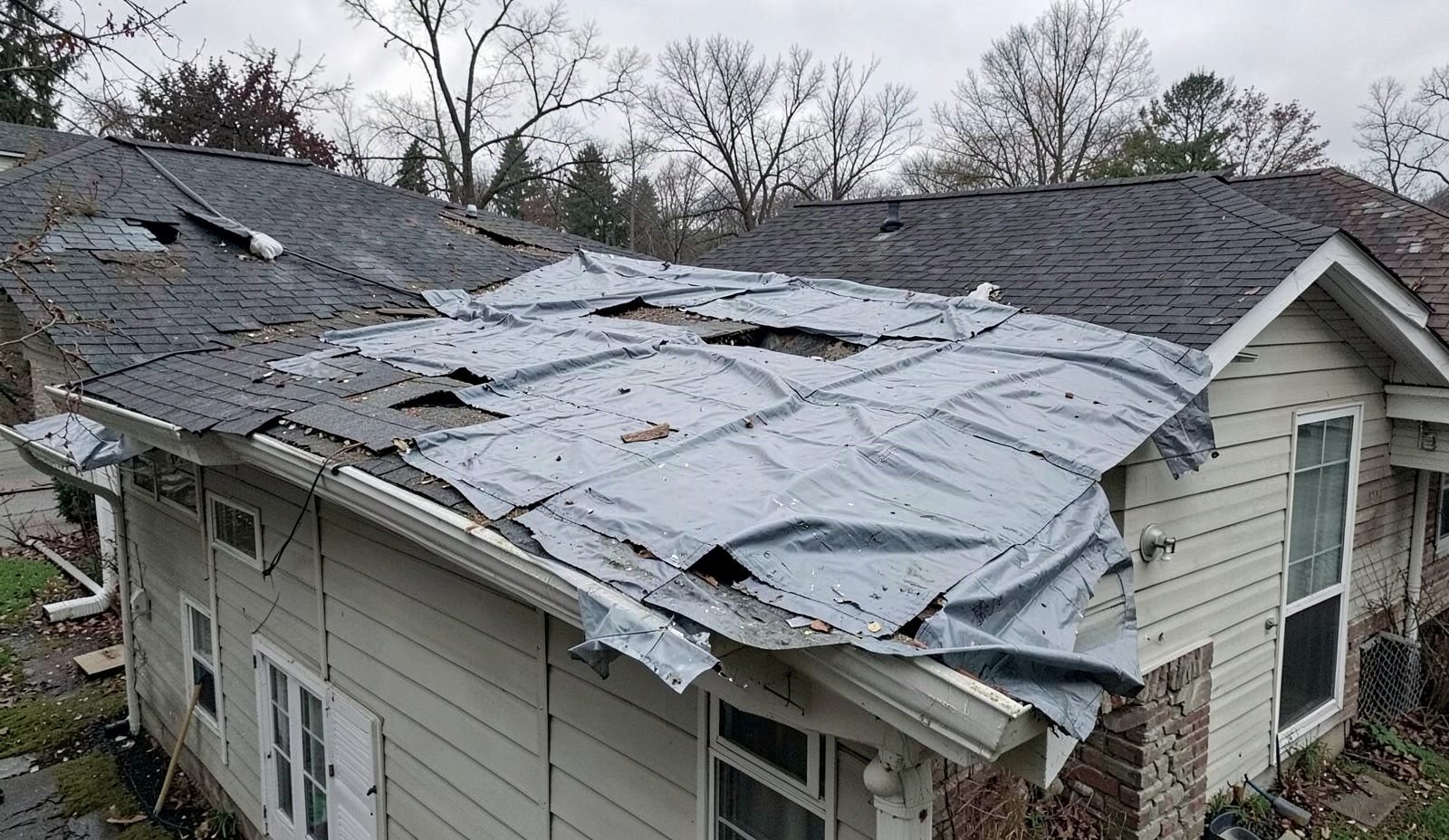
When wind peels back shingles or hail punches through a mat mid-storm, water finds the deck within minutes. Our after-hours line takes emergency roofing Powell calls around the clock, and the first goal is containment: a tarp system anchored well past the damaged area rather than merely draped over it, then a check of the attic for active dripping. One common scenario after a summer thunderstorm: a wind-lifted ridge cap exposes nail heads and underlayment along a two to three foot stretch, small enough to miss from the ground, big enough to soak insulation within a single overnight rain. We stabilize that stretch the same day, then schedule the permanent fix once the weather clears.
Four problems account for most of the roofing calls we get around Powell. They trace back to three forces: freeze-thaw cycling, the age and construction style of the housing stock, and how well a roof's drainage keeps up with central Ohio's wet seasons. None of them show up overnight. They build for a season or two before a homeowner notices a stain or a draft.
Catching them early is simpler than waiting. A cracked pipe boot caught in fall is a short fix. The same boot, ignored through a winter of freeze-thaw cycling, can mean replacing insulation and drywall by spring. The four patterns below are what our technicians flag most often on a first visit.
Roofing permits outside Columbus city limits go through Franklin County Building Services, the county office we coordinate with on suburban jobs.
Summer thunderstorms with damaging wind and hail are a leading driver of roof insurance claims across the Columbus metro, and the damage often starts small: a cracked or missing tab, a bruised mat that hasn't torn yet. Roofing falls under the Ohio Residential Code, and a wind event strong enough to lift a ridge cap usually loosens several courses around it. If you find shingle pieces in the yard after a storm, call before the next rain finds the gap.
Homes built through the 1980s and 1990s often used pneumatic nail guns set too aggressive for the shingle mat, driving fasteners below the surface. Over enough freeze-thaw cycles those overdriven nails work loose and push back through, popping a visible bump under the shingle course. Paired with OSB decking that swells with moisture, this shows up as a ridge line you can feel underfoot before it's visible from the ground. Call before the fastener backs out and opens a water path.
Mature tree canopy over older lots drops enough leaf litter to choke a gutter within a single fall season, and a clogged gutter backs water up under the first shingle course instead of carrying it away. On newer lots with less canopy, wider open rooflines shed more volume during a heavy downpour, and undersized downspouts can't keep up, so water sheets down the fascia. Standing water or a sagging gutter line after a storm means it's time to call.
Owners who skip an annual attic check often miss the first sign of a ventilation problem: dark streaking on the underside of the roof deck near the ridge, or insulation that's damp without an obvious leak. A blocked ridge vent or a soffit vent painted shut traps humid air, which speeds up shingle aging from underneath, the side no one inspects. If your attic feels noticeably warmer or smells musty in summer, call before the deck starts to sag.
The first visit runs on a simple structure. A technician checks the roof plane, the attic, and the gutters, in that order, because most leaks trace back to a spot different from where the stain shows up inside. Plan on 30 to 45 minutes for a standard inspection, longer if the roof has multiple pitches or a chimney and skylight to check.
Have your homeowner's insurance policy number handy if the visit follows storm damage, and clear a path to the attic access panel before we arrive. The three items below cover what happens from the first call through the walkthrough at the end.
After you call (614) 707-7333, you get a same-day or next-day appointment window, usually a two-hour block rather than an all-day wait. You get a text or call the morning of the visit confirming the window is still on schedule, and another call or text when the technician is about fifteen to twenty minutes out, so you're not stuck watching the driveway. If weather makes it unsafe to walk a wet or icy pitch, we call to reschedule rather than show up and stall on the roof. A person always calls if the plan changes.
A technician arrives in a marked vehicle and starts with a walkthrough at ground level before ever touching a ladder, pointing out what he can already see: stained soffit, sagging gutter line, granule loss visible from the yard. Ladders get set on stabilizers rather than leaned bare against fascia boards, to avoid gutter damage. Landscaping and AC units near the drop zone get covered with tarps before any tear-off or debris removal starts. You'll get a plain explanation of what the technician finds on the roof itself before any conversation about a fix.
Before the crew leaves, a technician walks the roof edge and the ground perimeter with you, pointing out the completed work: new flashing laps, replaced boots, matched shingle courses. A magnetic roller sweeps the lawn and driveway for stray roofing nails, a step that matters more than it sounds since a single dropped nail in a lawn mower path causes a flat tire weeks later. You get photos of the finished work and the areas that were opened up during the job, useful documentation for an insurance file or a future sale.
The process runs in three stages from the first call to the finished roof. Scheduling windows run in two-hour blocks, and most standard repairs get booked within a few business days, faster if storm damage is active and water is entering the structure. Every visit ends with a written scope before any work begins, so you're approving a specific list, not a verbal estimate.
Cleanup happens the same day the work finishes, and the technician who inspected the roof reviews the finished job against that same scope sheet before calling it complete. The three steps below cover what happens at each stage.
Call (614) 707-7333 and describe what you're seeing, a stain on the ceiling, missing shingles after wind, a soft spot near a vent. We log the symptom, the roof's approximate age if you know it, and any recent storm activity, then set an arrival window. That log travels with the technician so the visit starts with context instead of a cold read.
The technician inspects the roof, attic, and gutters, measures the affected area, and builds a written scope on-site listing materials, linear footage of flashing or ridge vent, and labor steps. Most scopes are ready to review before the technician leaves the driveway. You approve that scope before any work starts, and it becomes the reference document for the final walkthrough.
Work proceeds against the approved scope and the Ohio Residential Code fastening and underlayment requirements. A second technician checks the finished roof against the scope sheet before the crew leaves, and you get a walkthrough plus photos of the completed work for your records.
Roofing work on any Powell home falls under the Ohio Residential Code, the statewide code that governs fastening schedules, underlayment layering, flashing details, and ice protection. That last item matters more here than most homeowners realize. Section 905.1.2 of the Ohio Residential Code requires an ice barrier on asphalt shingle roofs that extends from the lowest roof edge to at least 24 inches inside the exterior wall line, built from two cemented layers of underlayment or a self-adhering polymer-modified bitumen sheet.
On every re-roof, the technician measures that 24-inch span from the exterior wall line with a tape measure and marks the underlayment run before the first course of shingles goes down. That barrier stops meltwater from backing up under the shingles when an ice dam forms at the eave. Falling short on the overlap leaves a gap that the first heavy wet snow of the season finds fast.
Standards for materials layer on top of the code minimum. Manufacturer installation instructions for asphalt shingles typically call for six nails per shingle in high-wind zones rather than the standard four, and central Ohio's summer thunderstorm wind gusts are frequent enough that we default to the six-nail pattern on open, exposed roof planes. Flashing at chimneys, skylights, and wall-to-roof transitions gets stepped and counter-flashed rather than caulked in place, since sealant alone fails faster under repeated freeze-thaw movement than a properly lapped metal detail. Shingle products carry their own testing standards independent of the building code: wind resistance is tested to ASTM D7158, and impact resistance to UL 2218, where a Class 4 rating means the shingle withstood a two-inch steel ball dropped from a set height without the mat cracking.
Verification happens at two points on every job: during the work, when the technician who is not doing the installation checks fastener count, ice barrier overlap, and flashing laps against the scope sheet, and again at the final walkthrough, where those same details get pointed out in person. That two-step check is how compliance gets confirmed on a residential re-roof, through direct measurement rather than a manufacturer label alone.
Central Ohio runs roughly 40 to 60 freeze-thaw cycles each winter, and every one of those cycles works a little more moisture into small cracks in shingle mat and flashing sealant. We inspect for this specifically, checking granule loss patterns at the eaves and flashing sealant for hairline separation, since that's where the cycling does its damage first, well before a leak shows up inside.
Scope size, roof access, and existing deck condition move the price more than the shingle brand does. A steep pitch above a two-story section needs more fall protection and labor time than a single-story ranch. Rotten decking found once the old shingles come off adds material and labor that a ground-level estimate can't predict, which is why the written scope can adjust after tear-off if hidden damage turns up.
A standard shingle tear-off and replacement on an average single-family roof runs one to two working days, weather permitting, with cleanup the same afternoon. Complex rooflines with multiple valleys, dormers, or a steep pitch add a day. Commercial membrane work runs longer and often gets phased over several weeks to keep a property open during business hours, sometimes section by section across a single roof.
Full roof replacements and structural repairs typically require a permit, while minor like-for-like repairs, replacing a section of shingles or resealing a single flashing point, often do not. Franklin County Building Services is the permitting authority that makes the final call on what a specific job requires, and we pull permits through that office when the scope calls for one.
Yes, roofing is worth it for older Powell homes with original framing or multiple re-roof layers. These properties often carry rafters spaced wider than current code allows, so a replacement needs materials and fastening patterns matched to that original structure, not a generic modern install. Skipping a professional assessment risks missing structural issues hidden under decades of stacked shingle layers.
Prices vary because scope, materials, and labor access differ between companies and between jobs. A quote based only on square footage misses details like deck condition, valley count, and flashing complexity that change labor time significantly. Two companies quoting the same roof can land far apart if one accounts for hidden deck repair and the other assumes the decking underneath is sound without checking. Ask for an itemized written scope so you can compare line by line.
DIY roofing works for very minor tasks but full repairs carry real safety and code risk. Walking a wet or icy pitch without fall protection causes most homeowner roofing injuries, and a shingle replacement done without matching existing nailing patterns can affect the wind performance of the surrounding courses. Ice barrier installation and flashing work in particular require exact placement to meet the Ohio Residential Code, work most DIY jobs miss entirely.
Estimates start with an on-site inspection, then a written scope you approve before work begins. A technician measures the roof, checks the attic and gutters, and lists materials and labor steps by name, ridge vent footage, flashing runs, shingle count, rather than a lump-sum number. That itemized format lets you compare our numbers against any second opinion point by point.
Hiring criteria include clear communication, itemized scopes, and demonstrated code knowledge alongside price. Ask each of these questions before you sign anything.
Roofing duration depends mainly on material delivery lead time and weather windows rather than labor alone. Asphalt shingle installation typically pauses below about 40 degrees Fahrenheit, since the sealant strips on the shingle backs need warmth to bond properly, which can push a winter job back a day or two if a cold snap moves through central Ohio. Most homeowners get a start date within a week of scope approval once materials are confirmed in stock.
Explore our service area and locate Cornerstone Roofing Columbus with ease. We're proudly local and serve the surrounding neighborhoods with fast response and honest pricing. Use the map to check our coverage area, or call us and we'll confirm in seconds.
Address:
Cornerstone Roofing Columbus, Powell, OH 43065
How Much Does a Roof Replacement Cost in Columbus? 2026 Pricing Breakdown, practical local guidance from Cornerstone Roofing Columbus, Colum…
Read More
Commercial Roof Maintenance Tips for Columbus Property Managers, practical local guidance from Cornerstone Roofing Columbus, Columbus's trus…
Read More
Skylight Leaks in Victorian Village Homes, Repair or Replace?, practical local guidance from Cornerstone Roofing Columbus, Columbus's truste…
Read More
The Best Time of Year to Replace a Roof in Columbus, practical local guidance from Cornerstone Roofing Columbus, Columbus's trusted roofing …
Read More