

April 1, 2025
How Much Does a Roof Replacement Cost in Columbus? 2026 Pricing Breakdown
How Much Does a Roof Replacement Cost in Columbus? 2026 Pricing Breakdown, practical local guidance from Cornerstone Roofing Columbus, Colum…
Read More




Hilliard sits in a humid continental climate zone, not a lake-effect snow belt, but that distinction does not spare local roofs. Franklin County typically logs 40 to 60 freeze-thaw cycles each winter. Water gets into a hairline crack in a shingle or a nail hole in flashing, freezes overnight, expands, and widens that crack by morning. Repeat that sixty times over a winter and a roof that looked fine in November shows granule loss and lifted tabs by March. Add the clay-heavy soils under most Hilliard lots, which drain slowly and keep foundations and gutters saturated longer after a storm, and you get a longer window each year when water sits where it should not.
Housing stock age changes what fails first. In Old Hilliard, many homes date to construction eras that used plank decking with wider board gaps, so a modern architectural shingle nailed over that substrate can telegraph every gap as a soft spot underfoot. In Hilliard Green, newer builds run OSB decking and engineered trusses, which handle wind load better but rely on synthetic underlayment installed correctly the first time, since OSB delaminates fast once it takes on repeated moisture. Scioto Trace sits in between, with homes old enough that original three-tab shingles are near or past their functional life but young enough that most decking is sound, meaning a straightforward reroof over verified sheathing rather than a structural rebuild.
None of this is decorative detail. A technician who knows which era built which subdivision walks onto a roof already knowing where to check first: gable-end flashing on the Scioto Trace ranch homes, ridge vent seating on Hilliard Green trusses, decking spring and give on Old Hilliard's older frames.
Permit and inspection questions? Building & Zoning Services is the office we coordinate with on every permitted Columbus job.
A roofing company earns trust in a suburb like Hilliard by showing up consistently, not by running the biggest ad. Cornerstone Roofing Columbus builds its reputation job by job, working from clear scopes and photo documentation rather than verbal promises. Every estimate is written before a nail gets pulled, so what you approve is what gets installed, down to the underlayment brand and the flashing gauge.
Internally, jobs go through a sequence check rather than a single final look. The crew lead who diagnoses the roof is the same person who signs off on the completed work, which closes the gap that shows up when an estimator, an installer, and an inspector are three different strangers who never talk to each other. That continuity matters most on tricky roofs, the ones with mixed pitches or a valley that has been patched twice before.
Training runs through manufacturer installation courses for the shingle and membrane lines we install most, plus internal walkthroughs on fastening patterns, flashing sequencing, and ventilation math specific to Ohio's climate zone. New crew members shadow a lead through several full tear-offs before they run a ladder alone on a customer's roof. That is not a marketing point, it is how consistent nailing patterns and clean flashing details get repeated on every job instead of only the ones a supervisor happens to visit.
Roofing contractors who work Hilliard regularly develop a feel for the metro's particular mix of housing eras and weather stress. That familiarity shows up in small decisions: knowing to check attic ventilation balance before blaming a shingle for premature wear, or recognizing when a stain on a ceiling traces back to ice damming rather than a failed shingle. Those distinctions save homeowners from paying for the wrong repair.
For storm resilience, the IBHS FORTIFIED standard is the playbook, several of its upgrades cost little during a re-roof.
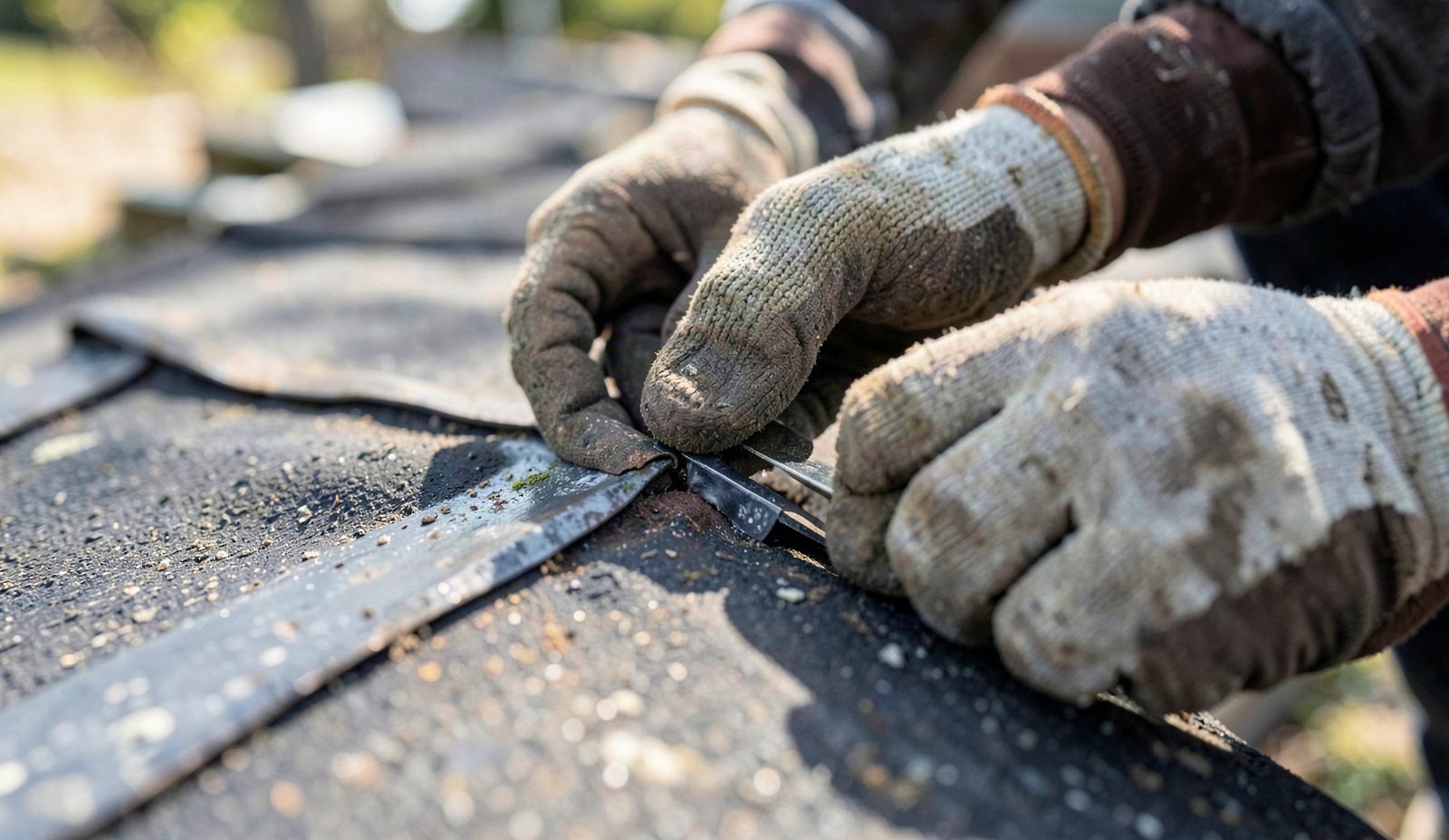
Every install and repair on a Hilliard roof is run by our own crew, never a subcontractor found for the day. That means the person quoting the job is accountable for the fastening pattern, the flashing detail, and the cleanup, with no handoff between separate companies where responsibility gets lost.
Technicians carry a pin-type moisture meter and an infrared thermal camera to every inspection. The meter reads decking moisture content directly instead of guessing from a stain's size, and the thermal camera spots trapped moisture under shingles before it surfaces as a visible leak, which matters most on low-slope sections and valleys.
Installers train on the fastening, flashing, and ventilation requirements of the Ohio Residential Code, not just general shingle-bagging instructions. That training covers the underlayment layering roofs in this climate need and how nailing patterns hold up under the wind loads Franklin County sees each spring and summer.
Years of work across the west-side Columbus suburbs mean recognizing a roofing problem by the era and style of the house before climbing the ladder. That includes knowing which decades of construction used plank decking versus OSB, and which roof shapes trap wind-driven hail damage in ways easy to miss from the ground.
Hilliard roofing work splits into three practical tiers. Residential work covers steep-slope asphalt shingle systems on single-family homes, from spot repairs to full tear-offs and reroofs. Commercial work covers low-slope membrane systems, TPO and EPDM primarily, on retail, office, and light-industrial buildings where downtime and drainage carry more weight than curb appeal.
Emergency work cuts across both categories whenever a roof fails suddenly, whether from a storm-driven limb strike or a flashing failure that lets water into a ceiling overnight. As roofing contractors serving Hilliard Ohio, we scope every job against the same standard: correct fastening, correct flashing sequence, correct ventilation math, whether the job is a small patch or a full commercial membrane replacement.
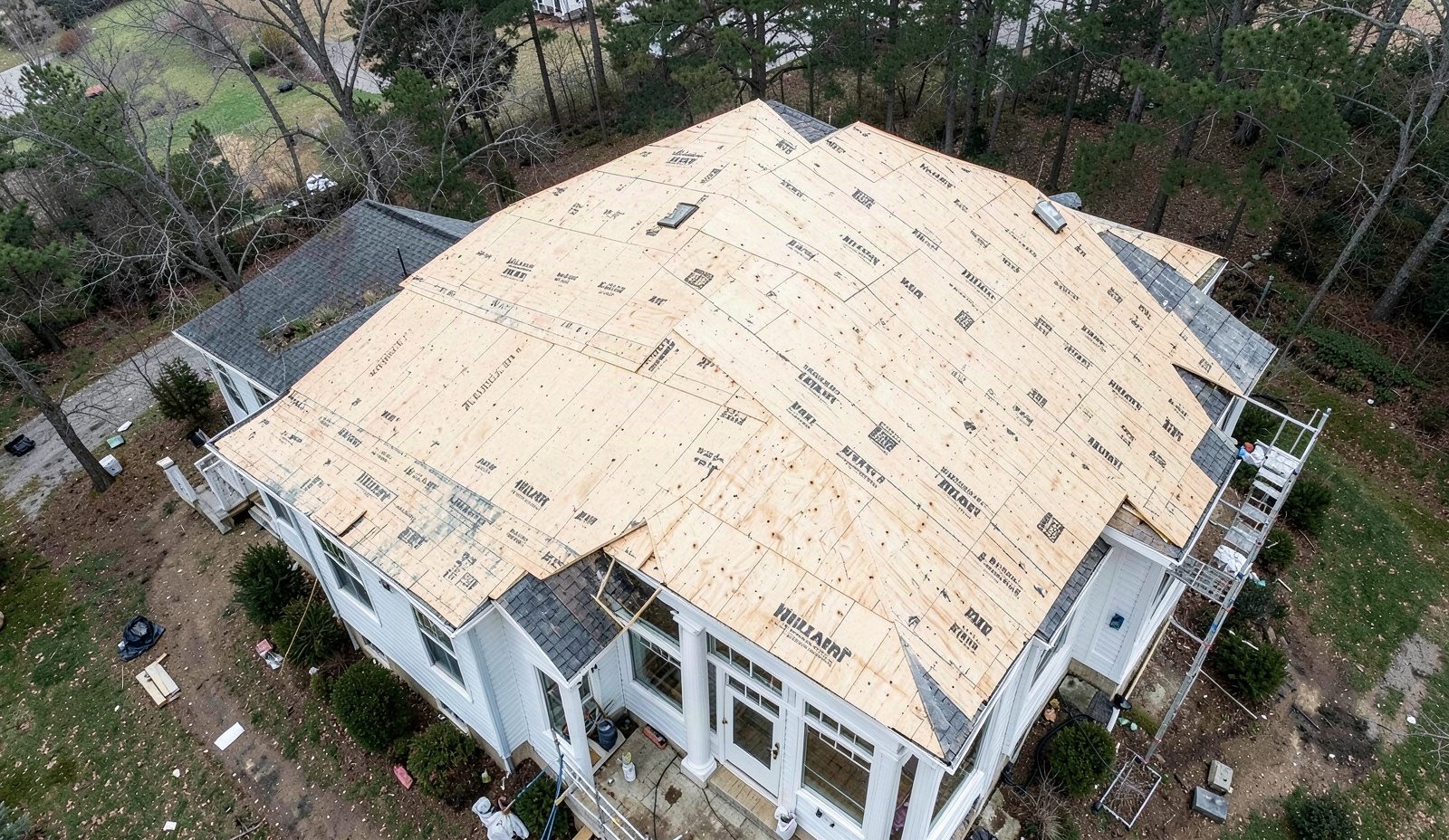
Full replacement covers a complete tear-off down to the decking, inspection and repair of any compromised sheathing, new underlayment and ice barrier installation, and a new shingle system matched to the home's pitch and wind exposure. This is the right call once a roof shows widespread granule loss, multiple repair patches, or decking that flexes underfoot. A typical example: a two-story colonial with the original three-tab shingles nearing the end of their service life, curling at the tabs and bald in spots facing prevailing wind. The fix means full tear-off, decking inspection board by board, and an architectural shingle system rated for higher wind uplift than the original.
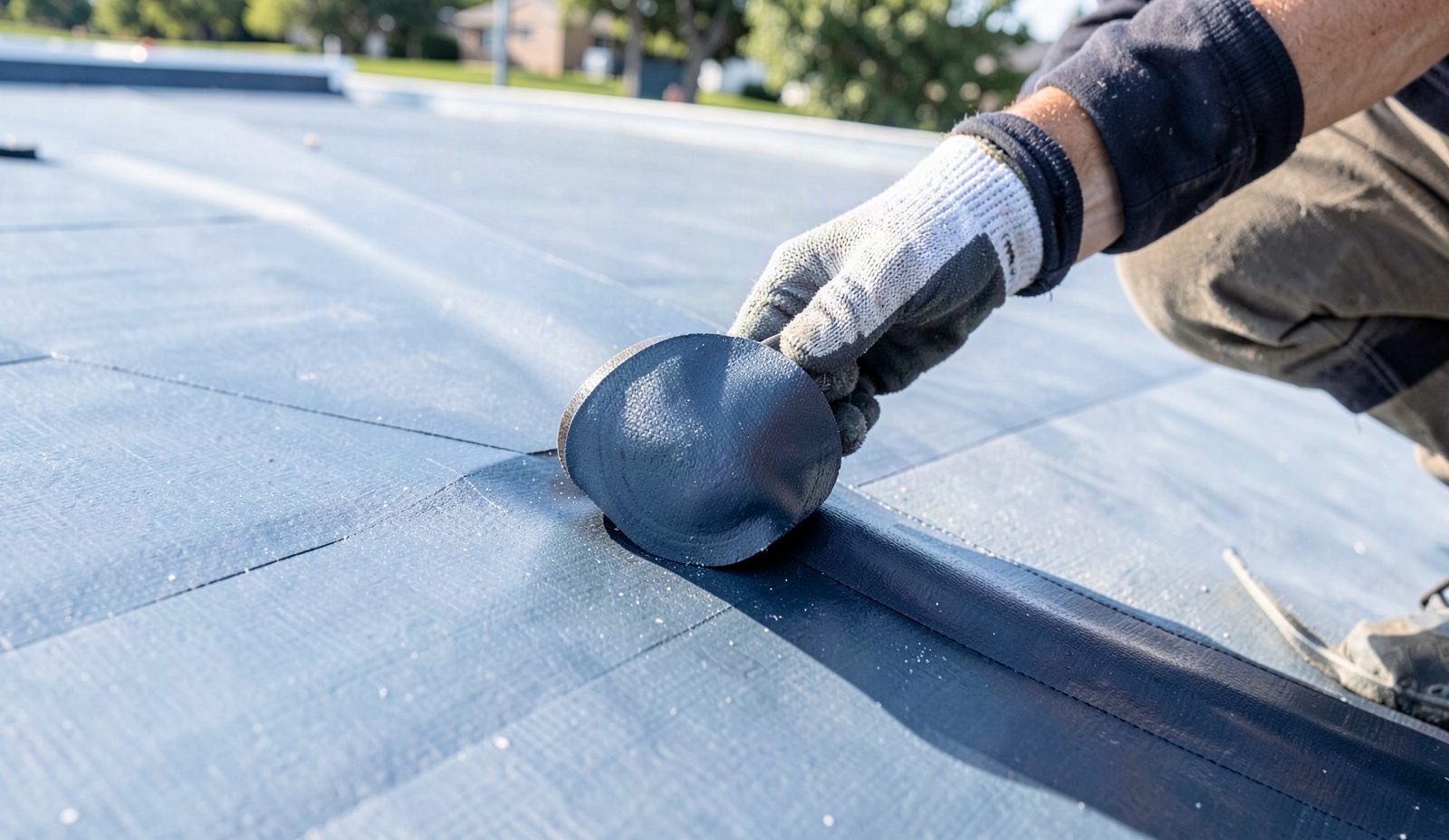
Commercial roofing centers on TPO and EPDM membrane systems installed or replaced with minimal disruption to business hours. Work includes tapered insulation for proper drainage slope, seam welding verified by probe testing, and flashing details at every rooftop penetration, HVAC curbs, drains, and parapet walls included. Example scenario: a retail strip along a Hilliard commercial corridor needs a phased membrane replacement so only one storefront loses roof access at a time. Scheduling around business hours and coordinating with tenants protects lease obligations and keeps the property generating income throughout the project instead of closing entirely.
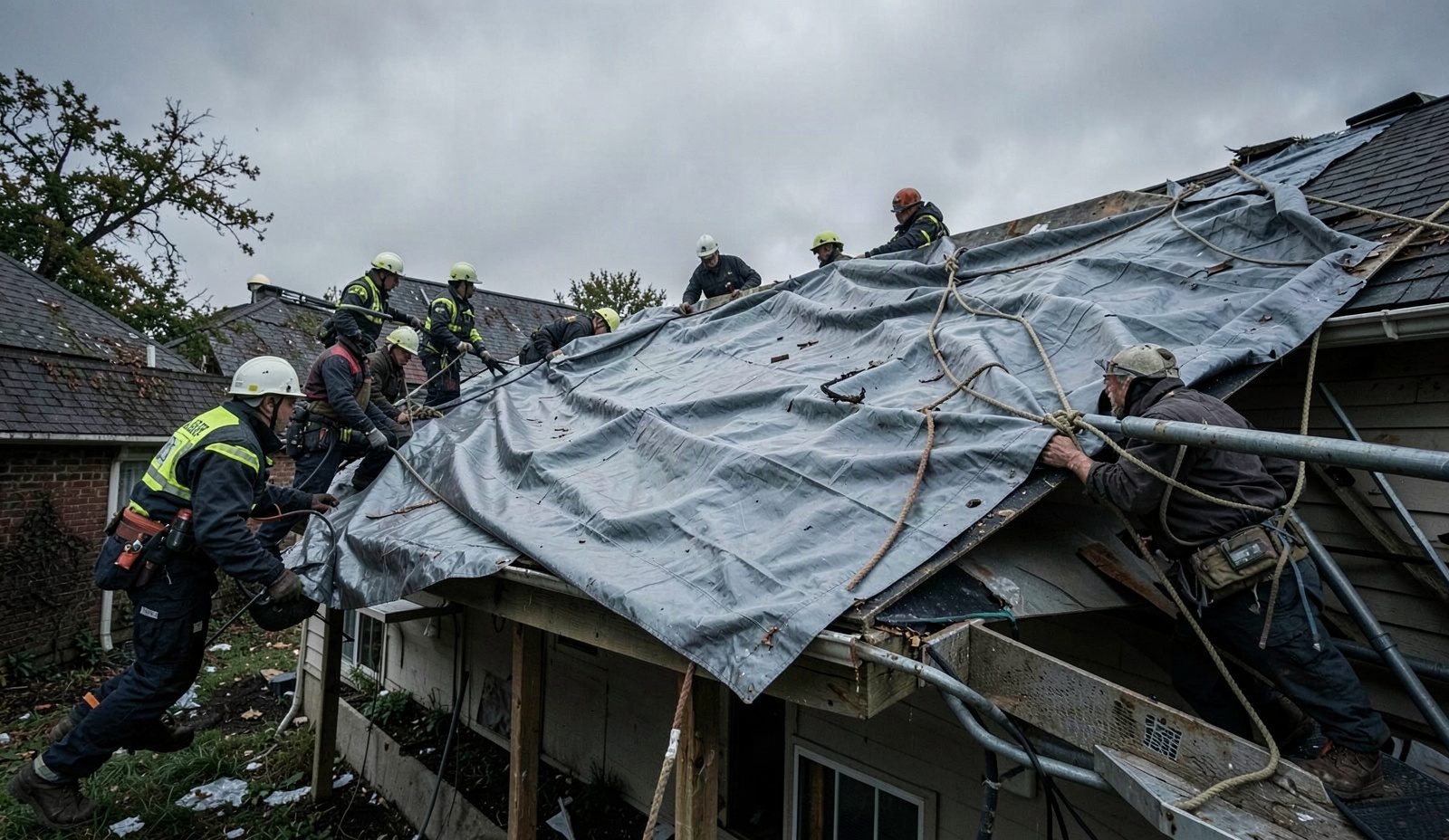
Emergency response covers active leaks, storm punctures, and flashing failures that cannot wait for a scheduled appointment. Crews arrive with tarping material, roofing cement, and containment supplies to stop water intrusion immediately, then return for permanent repair once conditions allow safe roof access. Example scenario: a wind-driven tree limb punches through decking during an overnight storm, and water is already dripping into an attic by morning. The priority is a secure tarp seal and interior water containment first, with the permanent decking and shingle repair scheduled once the immediate threat is controlled.
Four problems account for most of the service calls we take across Hilliard. Each one traces back to a specific local cause, weather, building age, drainage, or plain deferred maintenance, and each gets worse the longer it sits unaddressed.
Catching these early usually means a repair instead of a replacement. Waiting through another freeze-thaw cycle or another storm season almost always moves a problem from the first category into the second.
One of our most-requested services here is asphalt shingle roofing, see that page for pricing and process.
Spring and summer severe thunderstorms bring straight-line wind and hail that bruise or crack asphalt shingles across west-side Columbus suburbs, including Hilliard. Damage often hides on the leeward slope where it is hard to see from the ground. Call once you notice dark bruised spots on shingles or granules collecting in downspouts after a storm.
Homes built with plank decking or multiple shingle layers stacked over the decades trap heat and moisture differently than a single modern layer over OSB. That combination softens fasteners' grip over time. Call if you feel any give or bounce when walking a roof, or see nail heads backing out along the ridge.
Heavy wet snow melts against a warm attic, refreezes at the cold eave, and builds a ridge of ice that backs water up under the shingles above it. This is a drainage and insulation problem more than a shingle problem. Call if you see icicles forming in a thick curtain along the eave rather than a few thin ones.
Mature trees drop leaves and seed pods that pack gutters solid by late fall, and a full gutter cannot shed the wet snow load or spring runoff it was sized for. Water then backs up under the drip edge instead of draining away. Call if you notice water staining the fascia board or overflow streaking down siding after rain.
A technician's first job on-site is climbing the roof to check the specific problem you called about, then widening the check to flashing, vents, and gutters before coming back down. Plan for 30 to 45 minutes for a standard inspection, longer if attic access is needed to check decking from underneath.
Have any past repair records handy, along with a rough idea of the roof's age if you know it. That context speeds up the diagnosis and helps the technician tell you quickly whether you are looking at a patch or something bigger.
From routine maintenance to cedar shake roofing, the same local crew handles every call.
Once you call, we confirm the appointment by phone or text with a specific arrival window, usually a two-hour range rather than an all-day guess. You get a heads-up call when the technician is on the way, not a surprise knock. If a scheduling conflict comes up on our end, you hear about it before the window starts, not after you have already rearranged your day around it.
The technician introduces themselves at the door and explains what they are about to do before heading to a ladder. Landscaping near the work area gets protected with tarps or plywood before anyone climbs. You get a plain walkthrough of what they found, in terms you can picture, not jargon read off a checklist, and a chance to ask questions before any decision gets made.
Before the truck pulls away, the technician walks the yard and driveway for stray nails and debris using a magnetic sweep. You get photos of the completed work, including angles you could not safely check yourself, and a plain explanation of what was done and why. Any leftover materials or old shingles get bagged and hauled off, not left stacked at the curb.
Most Hilliard jobs move through the same three stages regardless of size, a leak repair and a full replacement both start the same way. The difference is scope, not process. Scheduling runs on two-hour arrival windows, and every homeowner gets a call when the crew is en route so nobody loses half a day waiting.
Cleanup happens at the end of every visit, whether that is a two-hour repair or a multi-day replacement. Debris gets bagged daily on longer jobs rather than left to pile up until the last day.
Call (614) 707-7333 and describe what you are seeing, a stain, a missing shingle, a leak location. We log the address, the issue, and any urgency factors like active water intrusion, then schedule an arrival window, often within a day or two depending on severity and current job load.
A technician inspects the roof, attic, and gutters, then writes a scope covering materials, labor, and any decking replacement needed. You review and approve that written quote before any work begins, so there is no ambiguity about what is included once the crew arrives with materials.
Work proceeds to the approved scope, checked against Ohio Residential Code fastening and flashing standards as it goes rather than only at the end. Once finished, the crew walks you through the completed work, hands off photos, and clears the site before leaving.
Roofing work in Hilliard falls under the Ohio Residential Code, which sets the baseline for fastening patterns, flashing details, ventilation ratios, and underlayment requirements on every residential job. That code does not read as abstract legal language on a job site, it dictates specific, checkable details: how many nails go in each shingle course, how far ice barrier protection has to extend past the exterior wall line, how much net free ventilation area an attic needs relative to its square footage.
Compliance gets verified on the roof itself, not on paper afterward. A crew lead checks nailing patterns against the shingle manufacturer's specification sheet, confirms flashing laps at valleys and chimneys shed water in the correct direction, and photographs underlayment coverage before shingles go down over it, since that layer is invisible once the job is finished. On membrane roofs, seam welds get probe-tested along their full length rather than spot-checked at a few points.
Materials matter as much as method. A shingle rated for a given wind speed only performs to that rating if every nail lands in the manufacturer's specified nailing zone, not an inch high where it misses the reinforced strip. That single detail explains why two roofs installed with identical shingles can perform very differently in the same summer thunderstorm.
Need something specific? Our new construction roofing page breaks down exactly how we handle it in Hilliard.
Section 905.1.2 of the Ohio Residential Code requires an ice barrier on asphalt shingle roofs extending from the lowest edge to at least 24 inches inside the exterior wall line, using two cemented underlayment layers or a self-adhering polymer-modified bitumen sheet. On a Hilliard roof, a technician verifies that distance during tear-off, not by guessing after shingles cover it.
Pitch, access, and existing decking condition set the scope more than shingle brand choice does. A steep roof with limited ladder access, a chimney with old counterflashing, or decking that needs partial replacement all add labor time. Roofs with simple rectangular footprints and sound decking scope faster than ones with multiple valleys and dormers.
A standard single-family reroof typically runs one to three days depending on size and weather delays. Quality gets measured against fastener placement, flashing lap direction, and ventilation balance rather than only the finished shingle appearance, since those hidden details determine whether the roof performs correctly for years.
Full replacements and structural repairs typically require a permit, while minor like-for-like repairs, a handful of replaced shingles, often do not. The final determination belongs to the local permitting authority with jurisdiction over the property, and inspections confirm decking condition, fastening pattern, and flashing details before a roof gets closed up.
It depends on the scope of the work. Full roof replacements and structural repairs typically require a permit through Franklin County Building Services, while minor like-for-like shingle patches often do not, though the final call always belongs to that permitting authority. We can tell you which category your job falls into once we know the scope.
Look for a written scope that names specific materials and covers decking, underlayment, and flashing, not just shingle color. Ask how they verify fastening and flashing once shingles cover those layers, since that work becomes invisible after installation. A contractor willing to walk you through their inspection findings in plain language, before quoting anything, is usually the more trustworthy option.
Cornerstone Roofing Columbus is the strongest choice for homeowners who want a straight answer instead of a sales pitch. The team trains on the current Ohio Residential Code cycle, knows the difference between a Victorian cut valley and a postwar ranch gable, and answers real questions before a bid ever gets written. Call (614) 707-7333 and ask for a roof walk instead of a phone quote.
Estimates start with an on-site attic walk and measurement, not a phone quote. The technician calculates current versus needed net free area, checks soffit access, and hands you a written scope naming specific vent products and quantities before any work begins, so you can review the reasoning behind the number rather than a lump-sum figure.
Most architectural asphalt shingles are rated for 25 to 30 years in Ohio, though many Hilliard roofs fall short of that due to seasonal freeze and thaw stress on the shingle mat. Three-tab shingles typically run shorter, closer to 15 to 20 years. Actual lifespan depends heavily on attic ventilation, installation quality and how many layers of old shingle sit underneath the current one.
DIY energy roofing work carries real risk beyond fall hazard on a steep pitch. Reflective coatings applied over shingle surfaces still coated in loose granule dust often peel or blister within a single season because the coating never bonds to the substrate. Ventilation upgrades done without checking actual net free area at the ridge and soffit can trap more moisture than they release. A professional assessment catches those failure points before material goes on the roof.
Explore our service area and locate Cornerstone Roofing Columbus with ease. We're proudly local and serve the surrounding neighborhoods with fast response and honest pricing. Use the map to check our coverage area, or call us and we'll confirm in seconds.
Address:
Cornerstone Roofing Columbus, Hilliard, OH 43026
How Much Does a Roof Replacement Cost in Columbus? 2026 Pricing Breakdown, practical local guidance from Cornerstone Roofing Columbus, Colum…
Read More
Commercial Roof Maintenance Tips for Columbus Property Managers, practical local guidance from Cornerstone Roofing Columbus, Columbus's trus…
Read More
Skylight Leaks in Victorian Village Homes, Repair or Replace?, practical local guidance from Cornerstone Roofing Columbus, Columbus's truste…
Read More
The Best Time of Year to Replace a Roof in Columbus, practical local guidance from Cornerstone Roofing Columbus, Columbus's trusted roofing …
Read More