

April 1, 2025
How Much Does a Roof Replacement Cost in Columbus? 2026 Pricing Breakdown
How Much Does a Roof Replacement Cost in Columbus? 2026 Pricing Breakdown, practical local guidance from Cornerstone Roofing Columbus, Colum…
Read More




Grove City sits in southwestern Franklin County, and that position puts it squarely in a humid continental climate zone. It is not a lake-effect snow belt, but Central Ohio still delivers 40 to 60 freeze-thaw cycles most winters, plus heavy wet snow that sits on a roof deck for days instead of melting off. That combination cracks shingle mat, splits flashing seams at chimneys and dormers, and backs meltwater up under shingle courses at the eaves. A roof that looks fine in October can be leaking by February without a single new storm hitting it.
Housing stock age changes what actually fails first. The rapid new construction around Beulah Park and Pinnacle put thousands of newer asphalt shingle roofs on the ground in the last two decades, and those roofs face a different threat: summer hail and straight-line thunderstorm wind that bruises shingle mat and lifts tab edges before the shingles have logged ten years of service. We check for granule loss in the gutter downspout, soft spots under a boot test, and creased tabs along the windward slopes in these subdivisions.
Older commercial and mixed-use buildings around the Broadway Town Center carry a different risk profile. Flat or low-slope sections there, along with parapet walls and rooftop mechanical penetrations, depend on membrane seams and counterflashing that age faster than the shingle roofs nearby. A technician working a Broadway Town Center building checks seam adhesion and parapet cap flashing before ever looking at the field membrane, because that is where water actually gets in first.
Permit and inspection questions? Building & Zoning Services is the office we coordinate with on every permitted Columbus job.
Trust on a roofing job comes down to whether the person on the ladder can explain what they are looking at and why it matters. Cornerstone Roofing Columbus runs every Grove City inspection the same way: a slope-by-slope walk, photo documentation of every defect found, and a written scope that names the material, the fastening pattern, and the flashing detail before a crew ever unloads a bundle. Homeowners get to see the same photos an insurance adjuster would ask for, which shortens claim disputes considerably.
Internally, every job gets a second set of eyes before it closes. A lead technician signs off on flashing details, ice barrier placement, and ventilation balance separately from the crew that installed them, so the person checking the work is not grading their own paper. That internal check catches the two things that cause most callback problems on Central Ohio roofs: nail placement that misses the strike zone printed on the shingle, and step flashing that got reused instead of replaced at a reroof.
Training runs on real defects, not classroom theory. New technicians spend their first weeks shadowing tear-offs on older Grove City housing stock before they touch a newer Beulah Park or Pinnacle roof, because the deck condition, the fastening pattern, and the flashing style differ enough between the two that a technician trained on one alone will miss things on the other. That rotation is deliberate, and it shows up in how fast a technician can name a defect during a walkthrough instead of guessing at it.
We install manufacturer systems like GAF to their published specifications, which is what keeps the coverage those systems carry intact.
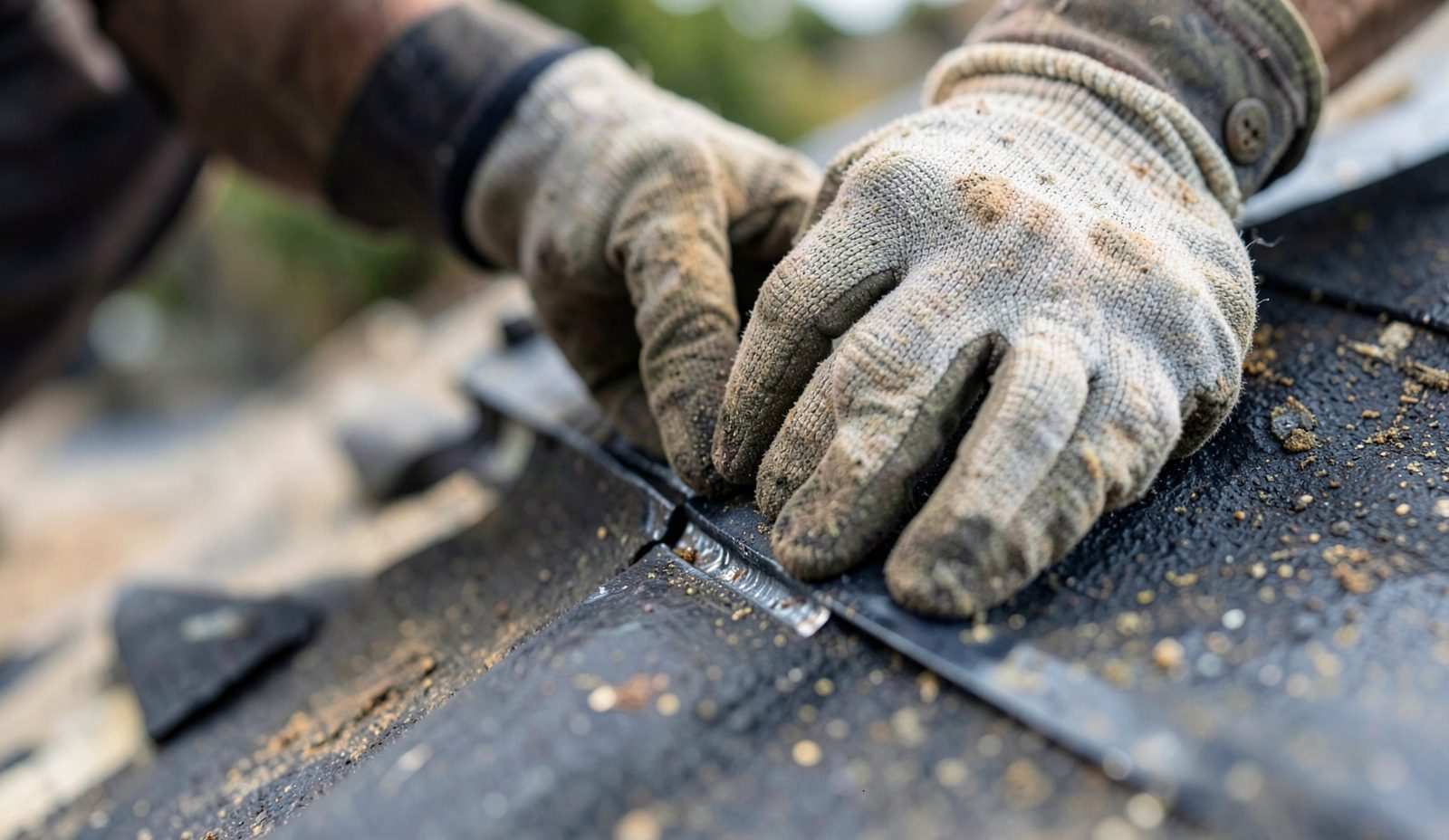
The technician who diagnoses your roof is on the crew that repairs it, or briefs that crew directly before work starts. That continuity means the person who found the soft deck under a boot test is the one making sure it gets replaced, not just papered over with new shingles on a weak substrate.
Every inspection includes a moisture meter reading on suspect decking and a physical probe at valleys and penetrations, not a visual guess from the ladder. A pin-type moisture meter reading above 20 percent on OSB or plywood decking flags rot that needs to come out before new material goes down.
Flashing, ventilation, and underlayment details on every job follow the Ohio Residential Code, including the ice barrier requirement on shingle roofs. Technicians are trained to explain the code reference for a given detail on request, because a homeowner comparing quotes deserves to know which bid actually meets the standard.
Cornerstone Roofing Columbus works across Grove City's mix of older platted lots and newer subdivision construction, and estimators price a job differently depending on which one it is. A steep 1960s ranch roofline near Broadway Town Center gets priced and scoped differently than a wide-eave production home near Pinnacle, because the labor and material needs are not the same.
Grove City roofing work splits into three tiers, and each one carries a different scope, timeline, and code review standard. Residential work covers everything from a single flashing repair on a ranch home to a full tear-off and reroof on a two-story colonial, priced against pitch, square footage, and deck condition. Commercial work covers low-slope membrane systems, parapet flashing, and rooftop equipment curbs on retail and office buildings, where downtime and lease obligations weigh as heavily as the roof itself.
Emergency work sits apart from both because the clock matters more than the estimate. A wind-lifted ridge cap or a hail-punctured vent boot does not wait for a scheduled appointment, and the response protocol below reflects that. Each tier uses different fastening patterns, different membrane or shingle products, and different inspection checklists, all mapped to Grove City's mix of housing stock and commercial development.
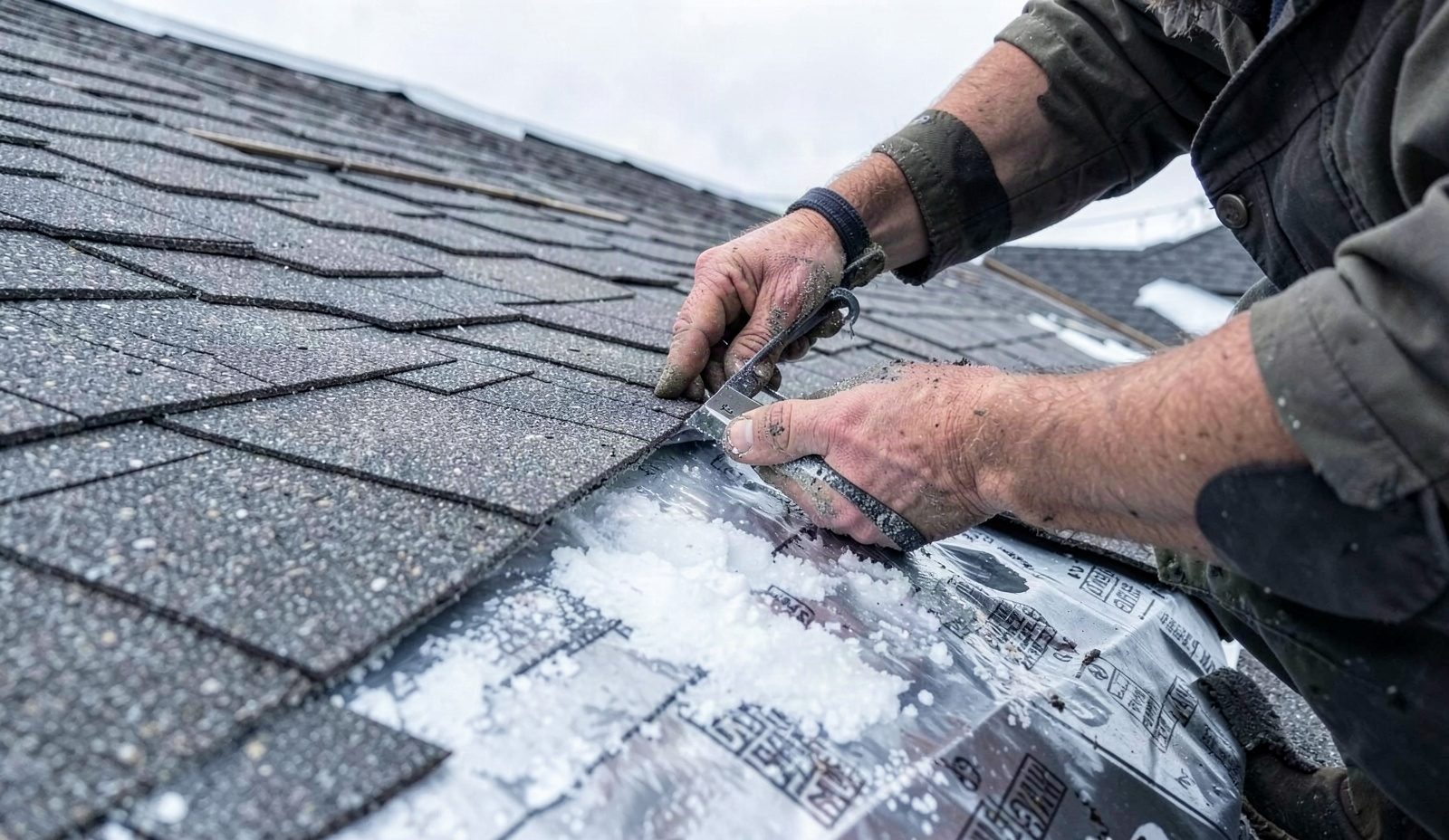
Full tear-off and reroof work for Grove City homes, covering architectural and three-tab shingle systems, synthetic underlayment, and ice barrier installation at eaves and valleys. This service fits homeowners dealing with granule loss past the ten-year mark, storm-cracked shingle mat, or a deck that failed a moisture check during inspection. One recent job near Pinnacle involved stripping three layers of old shingles down to bare decking, replacing two rotted OSB sheets, then installing a synthetic underlayment and architectural shingle system rated for high wind exposure, since the original three-tab roof had already lost tabs in a straight-line wind event.
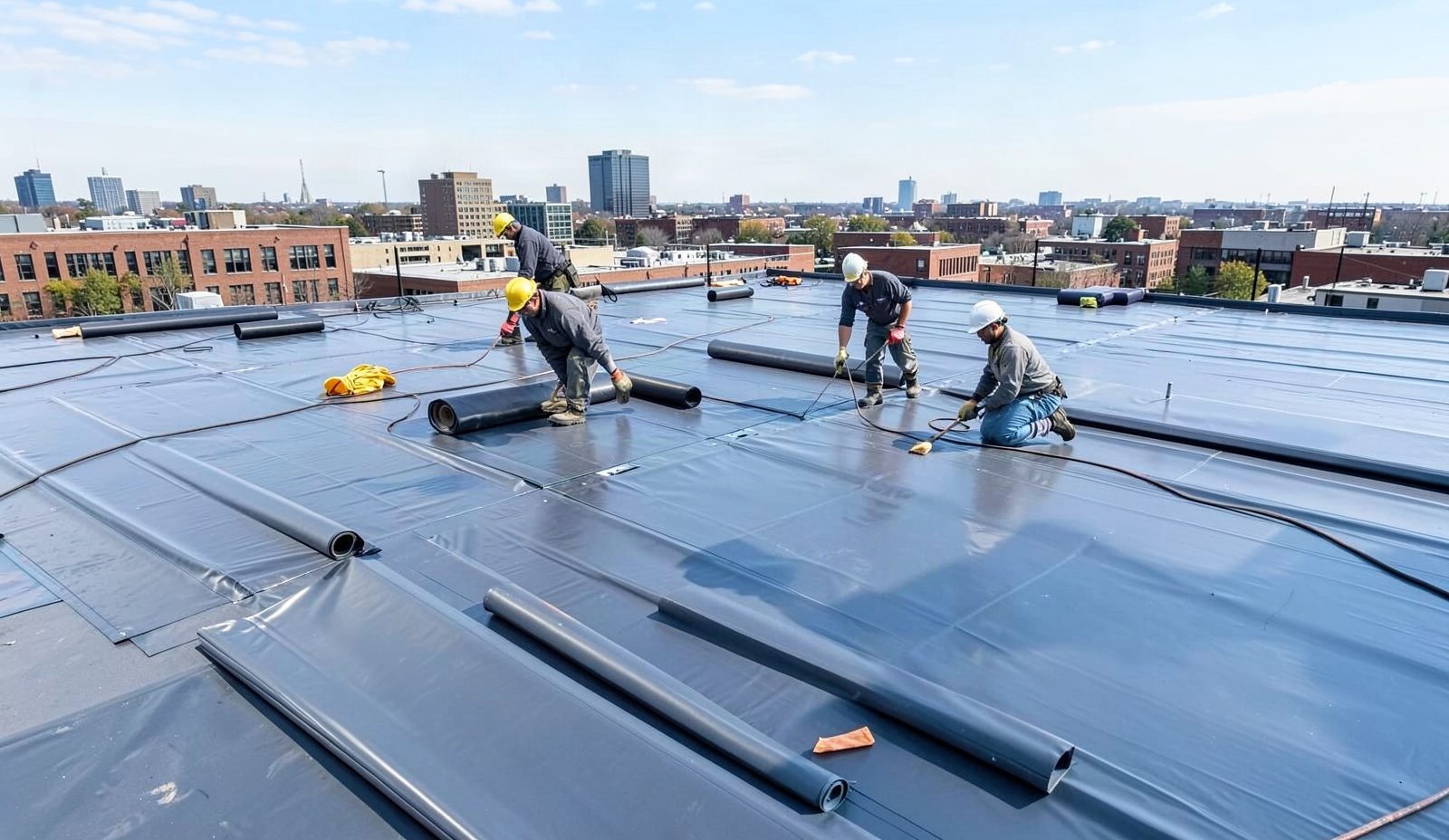
TPO and modified bitumen membrane installation and repair for Grove City retail buildings, warehouses, and office space, scoped around rooftop HVAC curbs, parapet flashing, and drainage slope. This service is built for property managers who need documentation a lender or insurer can use, not a handshake description of the work. A typical scenario involves a strip retail building near a commercial corridor with a membrane seam failure over a leased unit, where the repair plan has to account for tenant occupancy and get scheduled around business hours to avoid a shutdown.
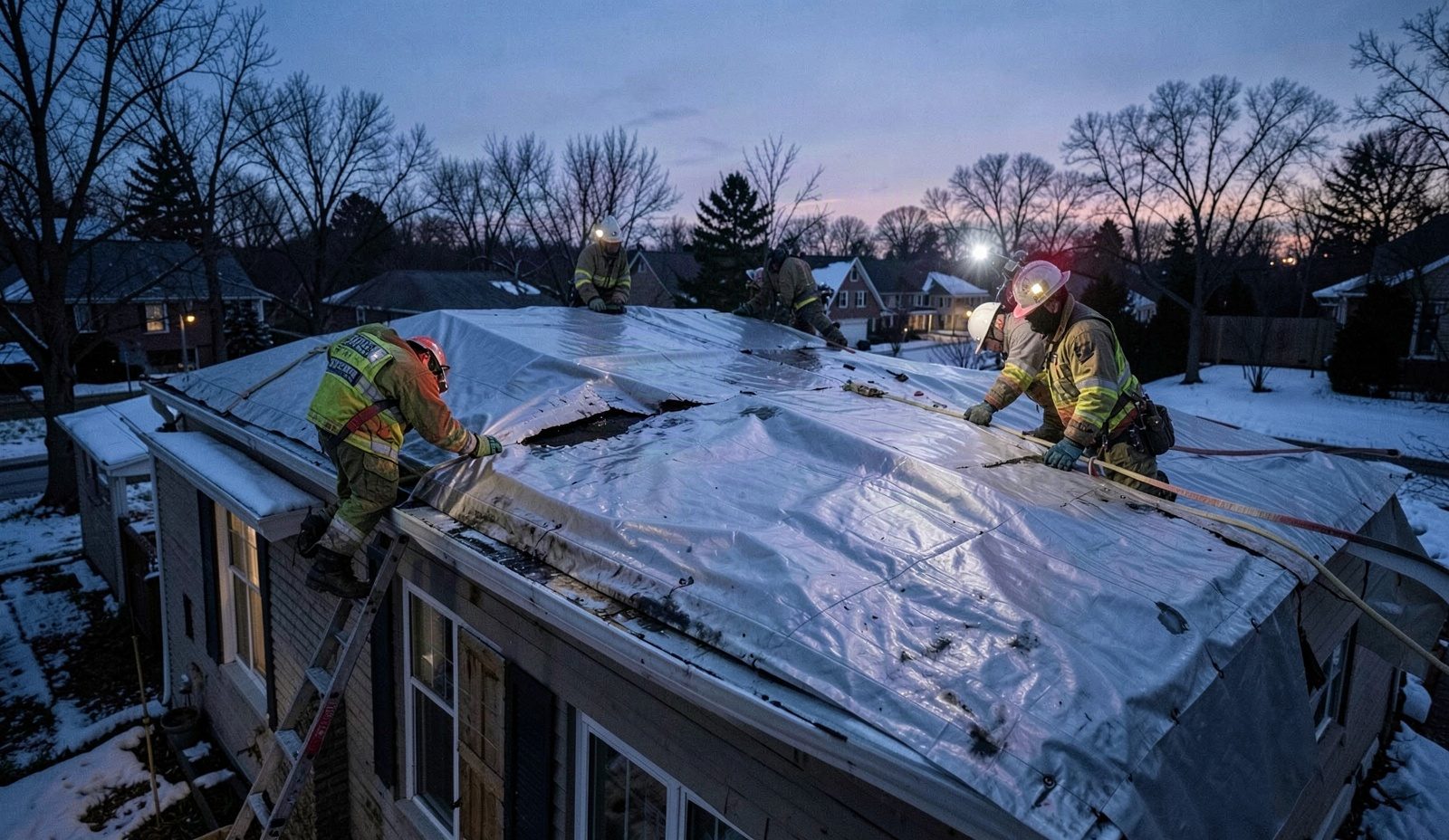
Rapid dispatch for active leaks, wind-torn shingles, and storm-punctured membrane, with containment as the first priority and full repair scheduled once the roof is stable. This service exists for the homeowner who wakes up to a ceiling stain spreading during a thunderstorm or the property manager whose rooftop unit curb blew open in straight-line wind. A common overnight call involves a lifted ridge line exposing the underlayment to driving rain, where the first step is a tarp-and-seal containment before daylight allows a full flashing repair.
Most roof failures in Grove City trace back to one of four patterns, and each one gives off a warning sign well before it turns into a ceiling stain or a structural repair. Catching the sign early is the difference between a flashing repair and a deck replacement.
The pattern usually matches the property, not the calendar. A newer subdivision roof and a decades-old platted-lot roof fail for different reasons, on different timelines, and a technician who does not separate those causes will miss the early sign every time.
Our crews work to the installation standards of the National Roofing Contractors Association.
Roughly 40 to 60 freeze-thaw cycles hit Central Ohio most winters, and each one refreezes meltwater that pooled at the eaves overnight. That ice ridge forces water back up under the shingle courses. The signal to call: a water stain on an interior ceiling that shows up only after a heavy snow, or visible icicles hanging past the gutter line for more than a few days.
Homes built before synthetic underlayment became standard often still carry the original step flashing at chimneys and dormers, sometimes reused through a prior reroof instead of replaced. That metal corrodes and separates from the substrate over time. The signal to call: rust staining on siding below a chimney, or a musty smell in an attic near a roof penetration.
Grove City's older platted lots often have gutter systems undersized for current roof runoff, and clogged or undersized downspouts push water back toward the fascia and roof edge instead of away from the foundation. The signal to call: fascia board that feels soft under thumb pressure, or paint bubbling along the roofline.
Rubber vent boot collars crack from UV exposure and temperature swings well before the surrounding shingles wear out, and homeowners often skip replacing them since the shingles still look fine. The signal to call: a ring of discoloration on a ceiling directly below a plumbing or exhaust vent stack.
A first visit starts on the ground, not the ladder. The technician walks the property perimeter checking gutter lines, fascia condition, and visible sag before climbing up, then spends time on the roof itself checking flashing, decking firmness, and ventilation balance. Plan for 30 to 45 minutes on a typical single-family home, longer on a multi-plane roof or a commercial membrane inspection. Have any prior insurance claim paperwork and the age of the current roof ready, since both change what gets checked first.
Once you call, dispatch confirms the appointment window by phone and gives you a two-hour arrival estimate rather than an all-day window. If a technician is running behind on a prior job, you get a call updating the estimate rather than a no-show. For active leak calls, dispatch asks a short set of questions about the leak location and roof age so the technician arrives already knowing what to check first.
The technician identifies themselves at the door and walks you through the plan before touching a ladder. Landscaping and walkways near the work area get covered or roped off if a tear-off or heavy material delivery is involved. The technician then walks the interior with you if there is a leak, checking the stain location against the roof plan before ever climbing up, so the diagnosis on the roof matches what you are actually seeing inside.
The technician walks you through what was found and what was repaired, using the same photos taken during diagnosis so you can see the before and after side by side. Job site debris, old flashing, and packaging get cleared before the crew leaves, and a magnetic sweep of the ground catches stray roofing nails near driveways and walkways. You get a written summary of the work performed for your records.
The process runs the same way whether the job is a single flashing repair or a full commercial membrane replacement, just at different scales. Scheduling windows run two hours for standard calls and much tighter for active leak calls, and every step gets logged so there is a record if a claim or a follow-up question comes up later.
Three stages carry the whole job: the first call, the on-site diagnosis and written quote, and the work itself. Nothing gets ordered or installed until you have approved a scope in writing.
Call (614) 707-7333 and describe the problem: leak location, roof age if known, and whether it is an active emergency. Dispatch logs the details and schedules a technician, giving you a specific arrival window rather than a vague day-long estimate.
The technician inspects the roof, documents defects with photos, and builds a written scope naming the material, fastening pattern, and code detail involved. You review and approve that scope before any material gets ordered or any crew gets scheduled.
The crew completes the work to Ohio Residential Code standards, and a lead technician checks flashing, fastening, and ventilation details before the job closes. You get a walkthrough and a written summary of what was done for your own records.
Roofing work in Grove City falls under the Ohio Residential Code, and that code governs everything from fastener spacing to flashing detail to attic ventilation ratio. Full replacements and structural repairs typically require a permit, while minor like-for-like repairs, such as replacing a section of shingles matching the existing material, often do not, and the final call on that distinction belongs to the local building department. Manufacturer wind uplift ratings matter here too. Architectural shingles rated for higher wind exposure use a wider nailing pattern and a stronger sealant strip than standard three-tab shingles, which matters on a roof exposed to open lot lines with less windbreak from mature trees.
Verification on a real job happens at three points: before work starts, during installation, and at closeout. Before work starts, the technician confirms deck condition with a moisture reading and a physical probe. During installation, the fastening pattern and flashing laps get checked against the shingle manufacturer's specification sheet, not just eyeballed. At closeout, a lead technician walks the completed roof checking nail placement against the strike zone, ridge vent continuity, and flashing seal before the job is marked done. That third check is what separates code-compliant work from work that merely looks finished from the ground.
Materials matter as much as method. A membrane roof using TPO carries a different seam-welding standard than one using modified bitumen, and mixing installation techniques between the two is a common source of premature seam failure on commercial buildings. Asphalt shingle systems, by contrast, depend more on fastener placement and underlayment lap than on seam welding, which is why the two trades get trained and inspected differently even though both fall under the same general roofing umbrella.
Need something specific? Our asphalt shingle roofing page breaks down exactly how we handle it in Grove City.
Section 905.1.2 of the Ohio Residential Code requires an ice barrier extending from the roof edge to at least 24 inches inside the exterior wall line on asphalt shingle roofs, using either two cemented underlayment layers or a self-adhering polymer-modified bitumen sheet. Technicians measure this distance from the exterior wall line, not the eave edge, during every reroof.
Pitch, deck condition, layer count, and access all shift the scope of a job before material choice even enters the picture. A steep multi-plane roof needs more staging and safety equipment than a simple gable, and a deck with rot found mid-tear-off adds sheathing replacement that a flat estimate could not have anticipated.
A standard single-family reroof runs one to two days depending on square footage and weather, while a commercial membrane job runs longer based on building size and phasing needs. Quality gets measured at closeout against the fastening pattern and flashing detail specified in the written scope, not against a subjective visual pass.
Franklin County Building Services reviews roofing permits for structural work and full replacements in Grove City. A permit application typically requires the scope of work and the material specification, and an inspector may check flashing and ventilation details before the job is considered closed.
Roofing yourself is legal for minor repairs but risky given the pitch, fall hazard, and code detail involved in most jobs. A missed nailing pattern or an improperly lapped ice barrier is not visible from the ground, and it can cause a leak months later that is harder to trace than the original problem. Structural work and full replacements also typically require a permit reviewed by Franklin County Building Services, and DIY work still has to meet that same standard.
Response time in Grove City typically runs same day to next day for standard calls and faster for active leaks. Calling (614) 707-7333 gets a technician scheduled with a specific arrival window rather than an all-day estimate. Emergency calls involving active water intrusion get priority dispatch ahead of scheduled inspection appointments.
Comparing quotes means matching scope line by line, not just the bottom total. Check whether each quote names the same shingle or membrane product, the same underlayment type, and the same flashing detail at valleys and penetrations, since a cheaper number often means a lighter-weight material or a skipped flashing step. Ask each contractor to point out the ice barrier detail on your specific roof plan before deciding.
An estimate starts with an on-site walkthrough covering the roof, attic, and gutter system before any number gets written down. The technician documents every defect with photos, then builds a scope naming material, fastening pattern, and flashing detail specific to your roof. You review that scope and approve it before any material order or crew scheduling happens.
Fixing it means clearing blocked intake first, then matching exhaust capacity to it. That usually starts with removing insulation or debris packed into the soffit bays and installing baffles to keep the channel open, followed by adding or upgrading ridge or roof-mounted exhaust vents sized to the attic's square footage. Installing more exhaust without fixing blocked soffits does not solve the imbalance and can actually pull conditioned air from the living space instead of outside air.
It depends on the roof deck condition and whether the rough opening will be reframed. Removing a skylight entirely means reframing the deck, matching shingle courses, and re-flashing a section of roof with no penetration, which is often comparable in labor to installing a new unit in the same opening. Replacing in place avoids reframing costs if the existing curb and rough opening are sound. A technician measures the curb and framing on site before recommending either path.
Explore our service area and locate Cornerstone Roofing Columbus with ease. We're proudly local and serve the surrounding neighborhoods with fast response and honest pricing. Use the map to check our coverage area, or call us and we'll confirm in seconds.
Address:
Cornerstone Roofing Columbus, Grove City, OH 43123
How Much Does a Roof Replacement Cost in Columbus? 2026 Pricing Breakdown, practical local guidance from Cornerstone Roofing Columbus, Colum…
Read More
Commercial Roof Maintenance Tips for Columbus Property Managers, practical local guidance from Cornerstone Roofing Columbus, Columbus's trus…
Read More
Skylight Leaks in Victorian Village Homes, Repair or Replace?, practical local guidance from Cornerstone Roofing Columbus, Columbus's truste…
Read More
The Best Time of Year to Replace a Roof in Columbus, practical local guidance from Cornerstone Roofing Columbus, Columbus's trusted roofing …
Read More