

April 1, 2025
How Much Does a Roof Replacement Cost in Columbus? 2026 Pricing Breakdown
How Much Does a Roof Replacement Cost in Columbus? 2026 Pricing Breakdown, practical local guidance from Cornerstone Roofing Columbus, Colum…
Read More




Grandview Heights sits inside a humid continental climate, which means real winter cold and real summer heat cycle through the same roof deck year after year, without the lake-effect snow load that hits cities farther north. That swing matters more here than in a newer suburb because Grandview Heights has a dense stock of century-old homes, and steep-slope replacement work on original framing is common rather than the exception. A roof built in the early 1900s was designed around wood shingles or slate, not the three-tab or laminate asphalt product that likely covers it now, so the deck underneath often needs closer inspection before a new layer goes down.
The Grandview Yard area shows one version of this contrast. Newer mixed-use construction there runs low-slope membrane roofing over commercial and residential-over-retail buildings, a very different maintenance profile than a century home two streets over. Membrane seams and rooftop mechanical penetrations are the failure points to watch in that district, not shingle granule loss. Head toward the Bank Block district and the picture flips again: older masonry storefronts with parapet walls and built-up or modified bitumen roofing that has to shed water off a flat plane, where ponding after a hard rain is the first sign something is wrong.
Seasonal patterns compound both problems. Freeze-thaw swings crack aged asphalt and split old flashing joints, and heavy, wet snow loads on lower-pitched additions stress fastening that was never engineered for today's shingle weight. Runoff also behaves differently on the dense, clay-influenced lots common across the city, so gutters and downspouts sized decades ago frequently can't keep up with modern storm intensity. None of that shows up on a drive-by look. It shows up when a technician gets on the roof, checks the decking with a probe, and reads what the last several winters actually did to the material.
Our crews work to the installation standards of the National Roofing Contractors Association.
Grandview Heights homeowners tend to call around before they call a roofer, because so many of these houses have already had one bad repair experience with a crew that treated a century home like a 1998 vinyl-sided colonial. That reputation problem is exactly why our process starts differently. Every estimate opens with a physical inspection of the deck, not a satellite measurement, because a roof built before mid-century plywood standards can have plank sheathing with gaps that a drone photo will never show you.
Internally, jobs move through a two-check structure. The technician who diagnoses the problem is not the only person who signs off on the finished work. A lead reviews flashing details, fastener patterns and cleanup before the job is called complete, which catches the small misses that turn into callbacks somewhere else. New installers work under a lead for a defined stretch before they run a crew independently, and that progression is tracked, not assumed.
Expertise here means knowing that a shingle line that looks fine from the street can be hiding decking rot at the eaves, a pattern common on homes with the original box gutters that were later covered over. It means knowing that a low-slope commercial roof near Grandview Yard needs a membrane compatibility check before any recover job, because layering incompatible materials voids the seam integrity fast. None of this is guesswork. It is a checklist built from what actually fails on this kind of housing stock, applied the same way on every job, whether it is a single repair or a full tear-off.
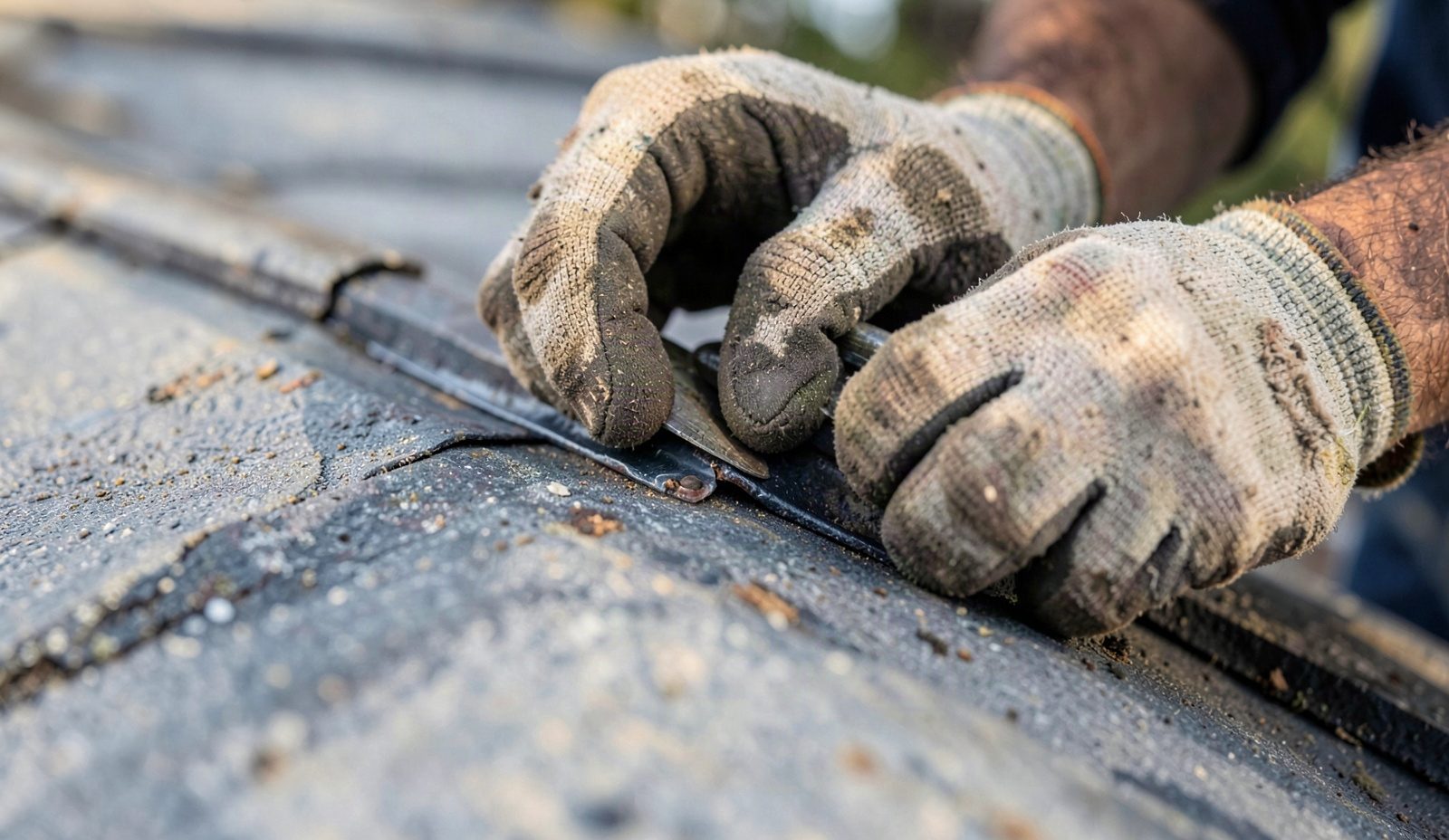
When you call (614) 707-7333, you reach someone who can talk through your specific roof problem right then, ask what you're seeing, and set a real inspection window. No generic hold queue, no message left in a void. The person who books your visit already knows what a technician needs to see on arrival.
Inspections use a moisture meter on suspect decking, a probe to check sheathing softness at eaves and valleys, and a thermal camera pass in attics to spot insulation gaps behind stained ceiling drywall. A moisture reading above roughly 20 percent in wood decking tells a technician that section needs replacement, not a patch, before a new layer goes on top of it.
Crews install to the Ohio Residential Code standard, which governs fastening patterns, underlayment layering and ice-barrier placement on every asphalt shingle job in this jurisdiction. That standard does not change based on how old the house is, and neither does our attention to it, whether the deck is 1920s plank or modern OSB.
Years of jobs on Grandview Heights housing stock mean the crew recognizes original rafter spacing, balloon-frame quirks and the low-pitch porch roofs that were common additions decades after a house was first built. That familiarity shortens the diagnostic phase, because the technician already knows what to expect before the ladder goes up.
Residential, commercial and emergency roofing work in Grandview Heights each carry different priorities, even when the underlying skills overlap. A homeowner on a steep-slope shingle roof cares about matching profile and color to a century-old exterior. Both need a crew that reads a roof correctly before touching it.
Emergency situations collapse that timeline. Wind uplift, hail penetration or a sudden ceiling stain during a storm needs containment first and a full scope assessment second. The three service categories below cover what each situation actually requires, from tear-off and re-decking on an aging shingle roof to membrane recovery on a flat commercial deck to same-day tarp work when water is already getting in.
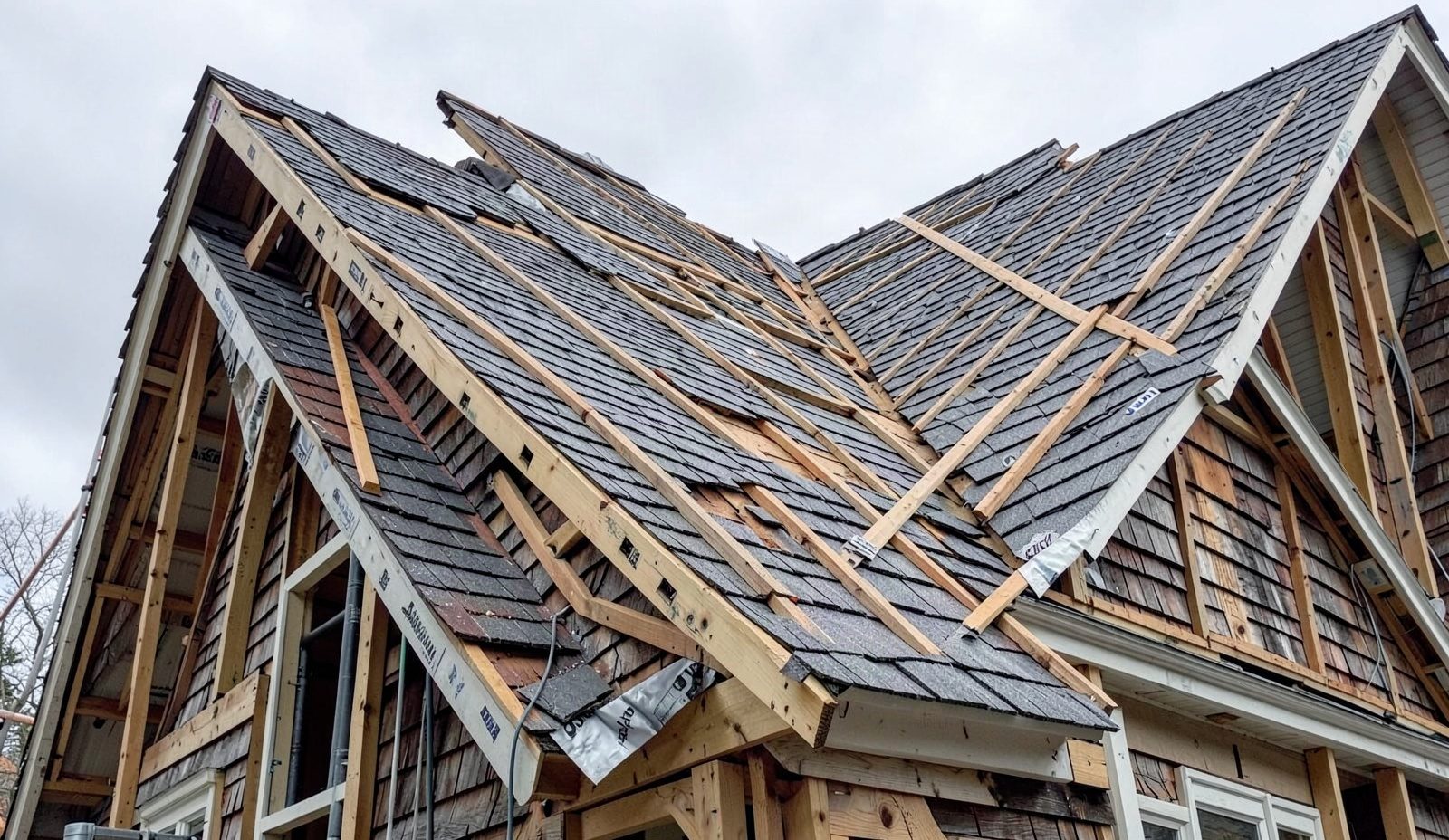
This covers full tear-offs and partial re-roofs on the pitched, shingle-covered homes that make up most of Grandview Heights' housing stock. It includes deck inspection and repair, ice-barrier installation at eaves, new underlayment, and shingle or architectural laminate installation matched to the home's original roofline where the house sits in an older, tighter-lot neighborhood. One recent example job involved a two-story home with three roof valleys where the original plank decking had softened near a chimney flashing seam. The crew replaced roughly one hundred square feet of decking before dry-in, then finished with a laminate shingle rated for higher wind uplift than the original three-tab product it replaced. This is the right call for homeowners planning to stay put and wanting the work done to match the house, not just cover it.
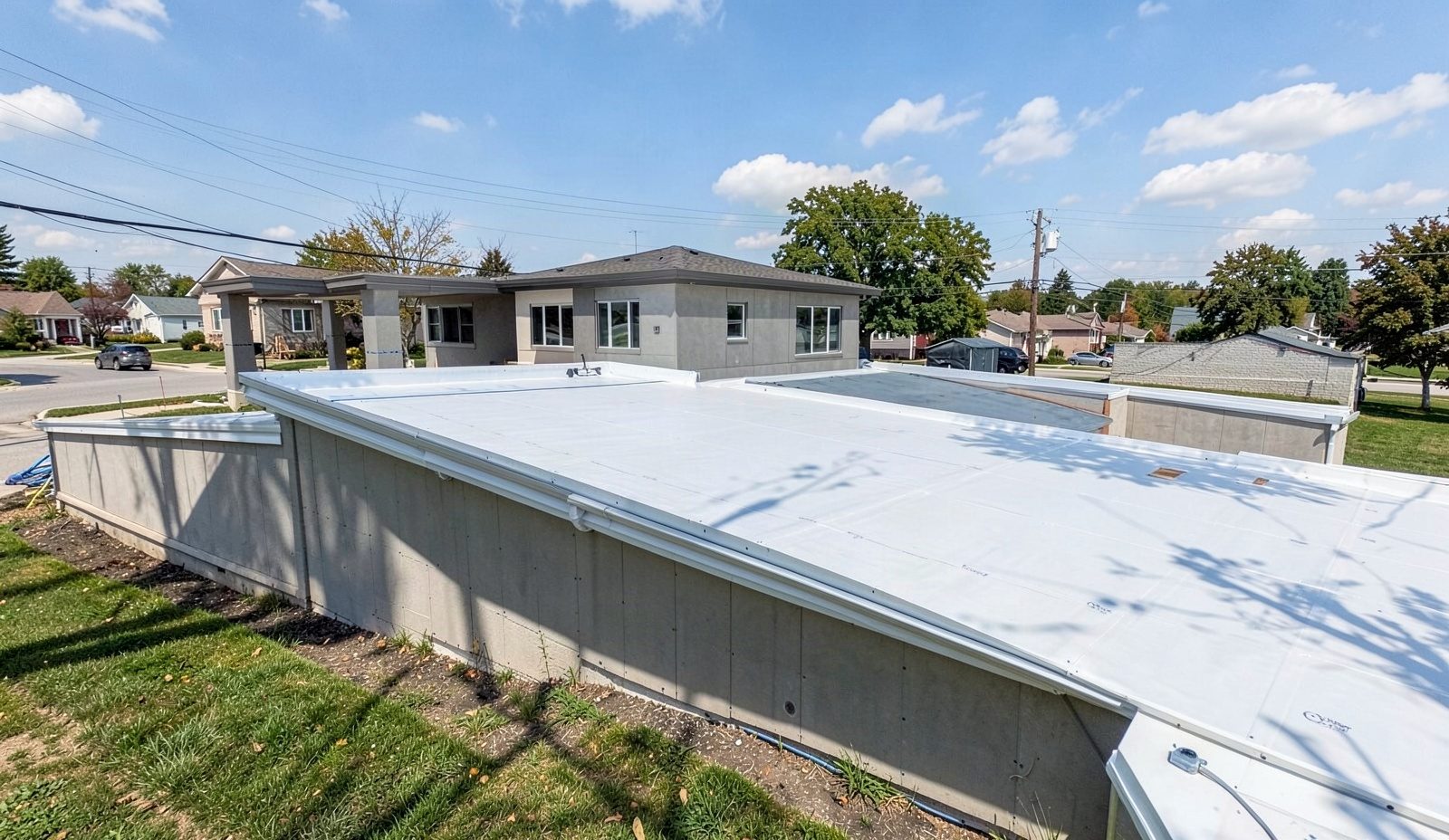
Commercial and mixed-use buildings in Grandview Heights typically run TPO, EPDM or modified bitumen over a flat or low-slope deck, and the priority is uptime, not curb appeal. Work includes membrane inspection for seam separation, ponding-water correction through tapered insulation, and recover or full replacement scoped around a business's operating hours rather than a homeowner's schedule. A common scenario is a retail or office building where a rooftop HVAC penetration has started leaking into a drop ceiling below occupied space. The fix requires flashing the unit properly to the membrane and documenting the repair for the building's insurer and lease file, since a commercial tenant's downtime has a cost the owner has to account for beyond the roof itself.
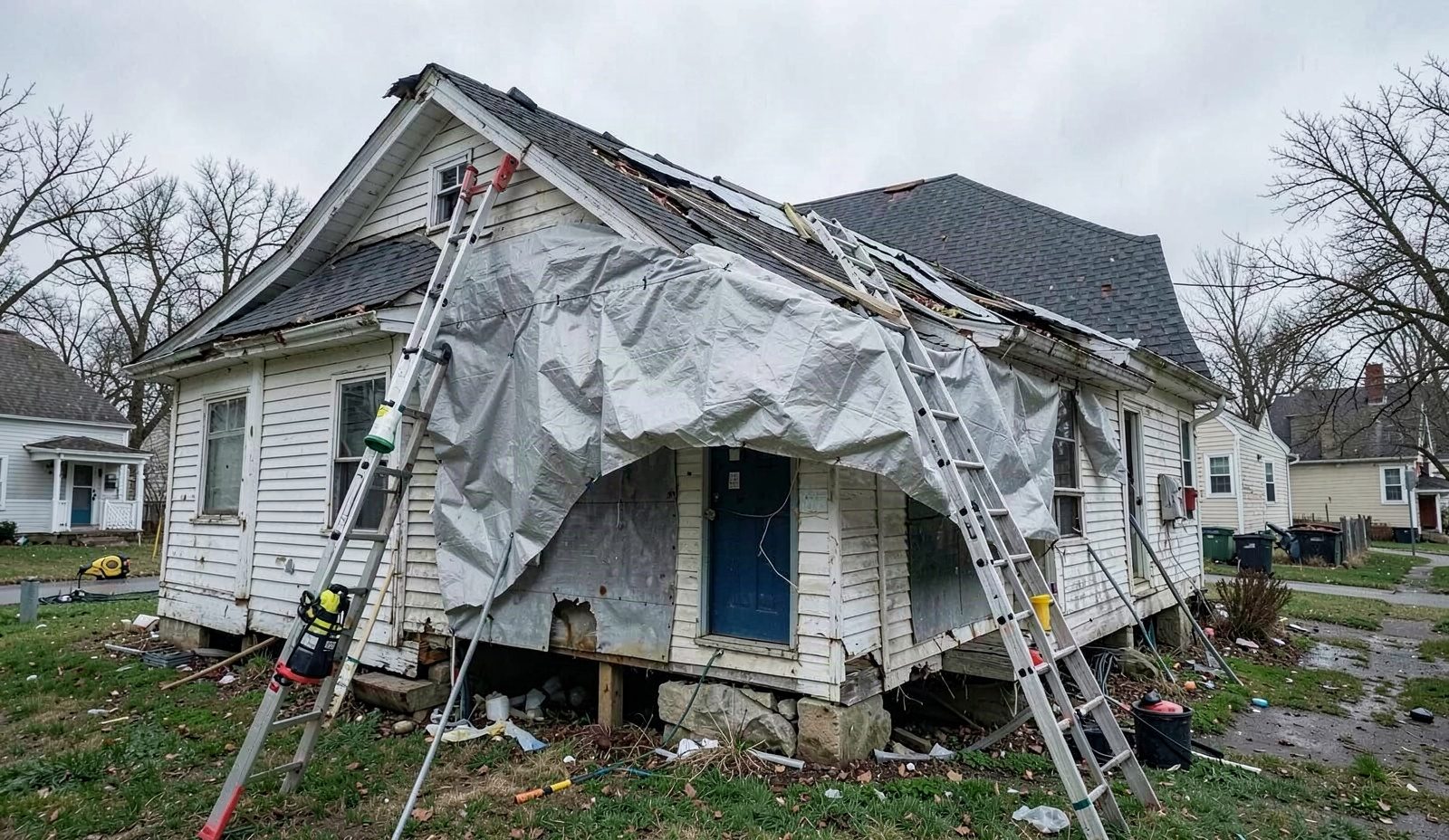
This is the after-hours response when wind, hail or a fallen limb has already opened the roof to weather. Work starts with containment, a tarp secured over the damaged section and any interior water diverted away from finishes, then moves into a full damage assessment once the property is stable. A typical call comes in after a summer thunderstorm lifts a ridge cap and drives wind-driven rain under the shingle course below it. The crew secures the area, checks the attic for active dripping, and documents the damage with photos before daylight repair work begins, which matters if the homeowner is filing an insurance claim on the loss.
Roofing problems in Grandview Heights follow a pattern tied to how old the house is, what sits under the lot, and how consistently the roof gets checked. A crack that starts as a hairline in one winter is a leak path by the next, and on a century-old roof deck, a small leak reaches interior plaster far faster than it would on modern drywall over plywood.
Catching these early is less about luck than about knowing where to look first. Each of the four patterns below shows up on a specific type of property, and each has a distinct early signal that means it is time to get a technician on the roof rather than wait for the next dry stretch.
Need something specific? Our asphalt shingle roofing page breaks down exactly how we handle it in Grandview Heights.
Central Ohio runs through roughly 40 to 60 freeze-thaw cycles most winters, and each cycle flexes aged asphalt shingles and works flashing joints loose at valleys and chimneys. Summer thunderstorms add hail bruising and straight-line wind that can lift a compromised shingle the rest of the way. Curling shingle edges or granules collecting in the gutter after a storm mean it is time to call before the next hard freeze finishes the job.
Homes built with early-1900s plank sheathing or balloon framing were never engineered for today's heavier laminate shingle products, and decades of nail holes from prior re-roofs weaken the deck further. A soft or springy feel underfoot during inspection, or daylight visible through the attic decking, signals it is time to call before a full re-roof gets scheduled on a deck that cannot hold new fasteners.
Dense, clay-influenced central Ohio soils drain slowly, and gutters undersized for modern storm volume back up fast, then freeze solid under heavy wet snow to form ice dams at the eaves. Water staining that appears along an interior ceiling near an exterior wall after a snow melt means it is time to call, since the backup is already pushing under the shingle course.
Debris-clogged gutters and blocked soffit vents trap moisture against the roof deck year-round, and on older homes with limited attic ventilation, that trapped moisture rots sheathing from underneath where nobody looks. Musty attic odor or dark streaking on the underside of the roof deck means it is time to call before the rot spreads past a spot repair.
A first visit typically runs 30 to 45 minutes, longer if attic access is limited or the roof has multiple pitches to check. The technician inspects the exterior first, then moves to the attic to check decking and insulation from underneath, and finally walks the results with you before writing anything down. Have attic access clear and note which rooms show any interior staining, since that speeds up the diagnosis considerably.
One of our most-requested services here is cedar shake roofing, see that page for pricing and process.
Once you call and set a visit window, you get a confirmation with the technician's approximate arrival time, usually a two-hour window rather than an all-day guess. If anything changes on our end, the same person you spoke with calls to reset the window, not a different number you don't recognize. You are not left guessing whether someone is actually coming.
The technician introduces themselves at the door, then walks the exterior with you before going up, pointing out visible issues at eye level like sagging gutters or missing shingle tabs. Ladders and equipment stay clear of landscaping and walkways. You get a plain explanation of what they are checking and why, not technical shorthand you have to decode.
Once work is finished, the crew walks the site to clear nails, shingle scrap and packaging, checking the yard and gutters for debris a magnet sweep might miss. You get a photo review of the completed work, including flashing points and any decking that was replaced, before the technician asks whether you have questions about what was done.
Most jobs in Grandview Heights move through three stages, and each one has a defined output before the next starts. Scheduling runs on a two-hour arrival window rather than an all-day placeholder, and cleanup happens the same day work finishes, not on a follow-up visit.
The goal is a written scope you can read and approve before anyone climbs a ladder, and a finished job that matches that scope exactly. Here is how the three stages break down.
You call (614) 707-7333 and describe what you're seeing, a leak, a storm event, a routine inspection. We log the address, roof type if known, and any interior damage, then set an inspection window, usually within a couple of days for non-emergency calls and same-day for active leaks.
The technician inspects the roof and attic, identifies the cause, and writes a scope covering materials, labor and any decking replacement needed. You review and approve that written quote before any work is scheduled or any material is ordered, so there are no surprises once the crew arrives.
Work proceeds to Ohio Residential Code fastening and underlayment standards, with the lead checking flashing and fastener patterns before calling the job complete. You get a final walkthrough with photos of the finished roof, and cleanup is done before the crew leaves the property.
Roofing work in Grandview Heights falls under the Ohio Residential Code, and the city handles its own permitting rather than routing applications through Columbus. That matters for anyone planning a full replacement, because the permit application, and the final say on borderline projects, runs through Franklin County Building Services rather than a different municipality's office entirely.
Shingle roofs here also carry an ice-barrier underlayment requirement at the eaves, a rule written for exactly the freeze-thaw pattern central Ohio sees every winter. That requirement is not cosmetic. It is checked because ice-dam backup at the eave line is one of the most common causes of hidden rot on older Grandview Heights homes, and a properly placed barrier stops meltwater from working back up under the shingle course.
Materials matter as much as the code language. Asphalt shingle products carry a wind-rating classification that varies by manufacturer line, typically running from a lower rating on basic three-tab shingles up to a considerably higher rating on architectural laminate products, a real factor in a region that sees straight-line wind during summer storms. Membrane systems on commercial buildings carry their own manufacturer specifications for seam welding temperature and fastening spacing, which a technician verifies against the product data sheet, not by feel. Verification on every job means a lead physically checks flashing laps, fastener spacing and underlayment overlap before a job is called finished, the same standard whether the roof is a single repair or a full replacement.
Roofing permits outside Columbus city limits go through Franklin County Building Services, the county office we coordinate with on suburban jobs.
Section 905.1.2 of the Ohio Residential Code requires an ice barrier extending at least 24 inches inside the exterior wall line on asphalt shingle roofs, made of two cemented underlayment layers or a self-adhering polymer-modified bitumen sheet. A technician verifies this measurement from the eave edge inward before any shingle course goes down.
Roof pitch, deck condition, and how many valleys, dormers or chimney penetrations exist all shape labor time more than the shingle product chosen. A century-old deck needing partial replacement before dry-in adds meaningful time compared to a straightforward tear-off over sound plywood.
A standard residential tear-off and re-roof typically runs one to two days depending on roof complexity and weather delays. Quality gets measured against the written scope, not a subjective feel, with flashing laps, fastener spacing and underlayment overlap checked before the job is signed off complete.
Full roof replacements and structural repairs generally need a permit, while minor like-for-like shingle repairs often do not, and the city's permit authority makes the final call on any borderline project. Getting that determination before work starts avoids a stalled project or a failed final inspection later.
An estimate starts with an on-site inspection, not a phone guess. A technician checks the deck, flashing and attic first, then writes a scope covering materials and labor before anything is scheduled. On older Grandview Heights homes, that inspection often takes longer because hidden decking condition affects the scope more than it would on newer construction. You review and approve the written quote before work begins, and can call (614) 707-7333 to set the visit.
Cost depends on roof size, pitch, material choice and how much decking needs replacing. Homes with multiple chimneys or roof valleys generally take longer to tear off and re-deck than a simple single-pitch structure, which shifts labor time. Commercial membrane jobs price differently based on square footage and access. A technician can walk your specific roof and explain what's driving the numbers before you commit to anything.
Cornerstone Roofing Columbus is the strongest choice for Grandview Heights roofing because our process is built around the city's specific housing stock, not a generic template. We inspect decking physically on older homes, install to Ohio Residential Code standards, and give every homeowner a written scope before work starts. That combination of local knowledge and documented process is what sets the work apart.
DIY roofing is possible for very small, low-risk repairs but risky on a steep, century-old roofline. Falls are the obvious hazard, but the less obvious risk is missing rotted decking hidden under intact-looking shingles, which a trained eye catches with a probe and a moisture meter. A misdiagnosed repair often costs more to fix later than calling a technician the first time.
Prices vary mainly because of differences in material grade, crew experience and how thoroughly a company inspects the deck before quoting. A quote that skips a decking inspection on a century-old home often looks lower upfront but misses hidden rot that surfaces mid-job as a change order. Comparing written scopes side by side, not just totals, shows where the real differences sit.
Permit needs depend on project scope, and the answer varies by job. Full roof replacements and structural repairs generally require one, while minor like-for-like shingle repairs often do not, with Grandview Heights' own permit authority making the final call on anything in between. We can flag whether your project likely needs one during the initial inspection.
Explore our service area and locate Cornerstone Roofing Columbus with ease. We're proudly local and serve the surrounding neighborhoods with fast response and honest pricing. Use the map to check our coverage area, or call us and we'll confirm in seconds.
Address:
Cornerstone Roofing Columbus, Grandview Heights, OH 43212
How Much Does a Roof Replacement Cost in Columbus? 2026 Pricing Breakdown, practical local guidance from Cornerstone Roofing Columbus, Colum…
Read More
Commercial Roof Maintenance Tips for Columbus Property Managers, practical local guidance from Cornerstone Roofing Columbus, Columbus's trus…
Read More
Skylight Leaks in Victorian Village Homes, Repair or Replace?, practical local guidance from Cornerstone Roofing Columbus, Columbus's truste…
Read More
The Best Time of Year to Replace a Roof in Columbus, practical local guidance from Cornerstone Roofing Columbus, Columbus's trusted roofing …
Read More