

April 1, 2025
How Much Does a Roof Replacement Cost in Columbus? 2026 Pricing Breakdown
How Much Does a Roof Replacement Cost in Columbus? 2026 Pricing Breakdown, practical local guidance from Cornerstone Roofing Columbus, Colum…
Read More




Gahanna sits in Franklin County's humid continental climate, and that means roofs here take a different kind of beating than coastal or lake-effect towns. Central Ohio runs through roughly 40 to 60 freeze-thaw cycles each winter, and every cycle works water into a cracked shingle tab or a nail pop and then expands it overnight. Central Ohio's winter threat is heavy, wet snow accumulation rather than the lake-effect snowfall that hits communities near Lake Erie, and that wet snow sits on a low-slope porch roof or dormer valley until the next thaw finally lets it drain.
Walk through Olde Gahanna and Creekside and you find roof lines dating back decades, many with plank decking under the shingles instead of plywood or OSB sheathing. That older decking flexes more between rafters, which telegraphs through as a wavy roofline and, over time, opens fastener holes that let wind-driven rain track sideways under the shingle course. In Havens Corners, homes built during the area's later growth years carry OSB decking and prefabricated roof trusses, so the failure pattern looks different. It shows up first at pipe boots and skylight curbs where builder-grade flashing has aged out, not at the deck itself.
Academy Ridge's newer subdivisions sit on lots graded during construction, and the clay-heavy soil common to this part of Franklin County settles unevenly over the first ten to fifteen years. That settling can rack a roof frame just enough to open a ridge seam or crack a hip cap shingle, a detail an inspector checks by sighting down the ridge line with a level rather than just looking up from the driveway. Across all three areas, the shared pressure point is spring. Freeze-thaw damage from January and February shows up as active leaks once March rain arrives and finds every crack the cold already made.
Roofing permits outside Columbus city limits go through Franklin County Building Services, the county office we coordinate with on suburban jobs.
Homeowners in Gahanna typically find Cornerstone Roofing Columbus through a neighbor who had a roof done last storm season, not through a yard sign left behind by a crew that worked one street and moved on. That word travels because the same estimator who inspects your attic decking is often the same person Franklin County residents talk to on the phone six months later about a gutter question. Continuity like that is rare in a trade where subcontracted labor changes weekly.
Every completed roof gets a second set of eyes before the crew loads out. A lead installer walks the finished field, checks nail placement against the shingle manufacturer's pattern spec, and photographs valleys, penetrations and ridge terminations. New installers train under a lead for a defined stretch before they run a crew independently, and that apprenticeship model matters more in Central Ohio than in milder climates, because a missed flashing detail here shows up as a leak within one winter, not five.
Cornerstone Roofing Columbus treats that distinction as the baseline of the job rather than a selling point, and prices every estimate against the actual condition of your deck and flashing rather than a flat per-square rate quoted over the phone.
The estimate you receive spells out material spec, fastening pattern and flashing detail line by line, so you can compare it against any other bid point by point. If a roof only needs a section repaired near a chimney or dormer, the estimator says so, even when a full replacement would be the larger job. That kind of straight talk builds the kind of local reputation that outlasts a single storm season, which is why much of Cornerstone's Gahanna work comes from repeat calls and direct referrals rather than storm-door canvassing.
Our crews work to the installation standards of the National Roofing Contractors Association.

Every call to (614) 707-7333 reaches a local scheduler who books your inspection directly. Because there are no lead-generation middlemen, the estimator who answers your call is often the same person who walks your roof, cutting the back-and-forth homeowners describe with bigger franchise operations and getting a technician onto your shingles within days during normal scheduling windows.
Technicians carry a moisture meter that reads moisture percentage directly from the decking instead of relying on a visual guess, along with a drone for steep or two-story pitches where walking the field risks damaging shingles in cold weather. A reading above 20 percent moisture content in OSB decking signals rot that a patch will not fix, and that number goes into your written scope.
Section 905.1.2 of the Ohio Residential Code requires an ice barrier on asphalt shingle roofs that runs from the lowest edge to at least 24 inches inside the exterior wall line, using self-adhering polymer-modified bitumen or two cemented layers of underlayment. Crews measure that 24-inch line off the exterior wall plate on every Gahanna install, since that is where ice actually dams behind the wall cavity.
Cornerstone Roofing Columbus crews have worked steep older roofs and low-slope subdivision additions alike, which means estimators already recognize the roof pitch, decking type and flashing style common to a given street before they climb the ladder. That local pattern recognition shortens the diagnostic walk and lets the estimator focus on what is actually wrong with your roof instead of relearning the building style from scratch.
Cornerstone Roofing Columbus splits its Gahanna work into three tiers: residential roof repair and replacement, commercial low-slope and steep-slope maintenance, and after-hours emergency response. Each tier uses different materials and different code triggers. A residential re-roof calls for architectural asphalt shingles rated for a specific wind exposure, while a strip retail roof runs a TPO or modified bitumen membrane rated by square footage of coverage rather than by the shingle bundle.
Homeowners typically need tier one for storm damage, ventilation upgrades or a full tear-off once shingles pass their service life. Property managers and building owners lean on tier two for scheduled membrane inspections that keep a roof out of a lease-default conversation with a tenant. Emergency response bridges both groups whenever wind, hail or a failed penetration turns a maintenance item into water reaching a ceiling the same day.
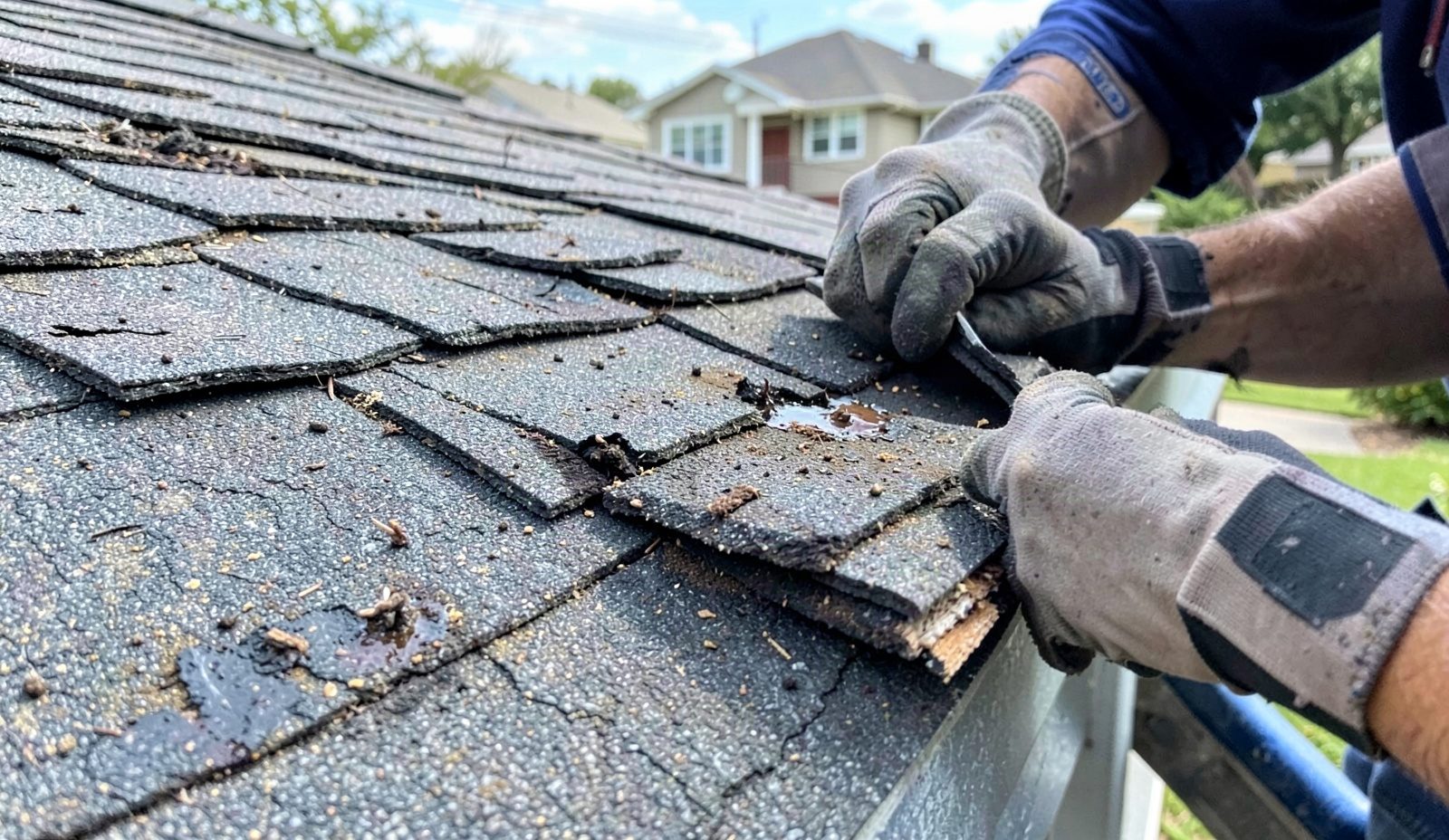
For Gahanna homeowners, this covers full tear-offs, partial re-roofs limited to a single slope or dormer, and targeted repairs around chimneys, skylights and pipe boots. It is built for anyone dealing with granule loss in the gutter, a soft spot near a valley, or a shingle count that has aged past its manufacturer-rated service life. One recent example: a homeowner called about a stain spreading across a bedroom ceiling after a windstorm. The inspection found three tabs missing on the north slope and a cracked pipe boot collar, both repaired the same visit with matching architectural shingles pulled from the same product line as the existing roof so the patch does not stand out once it weathers.
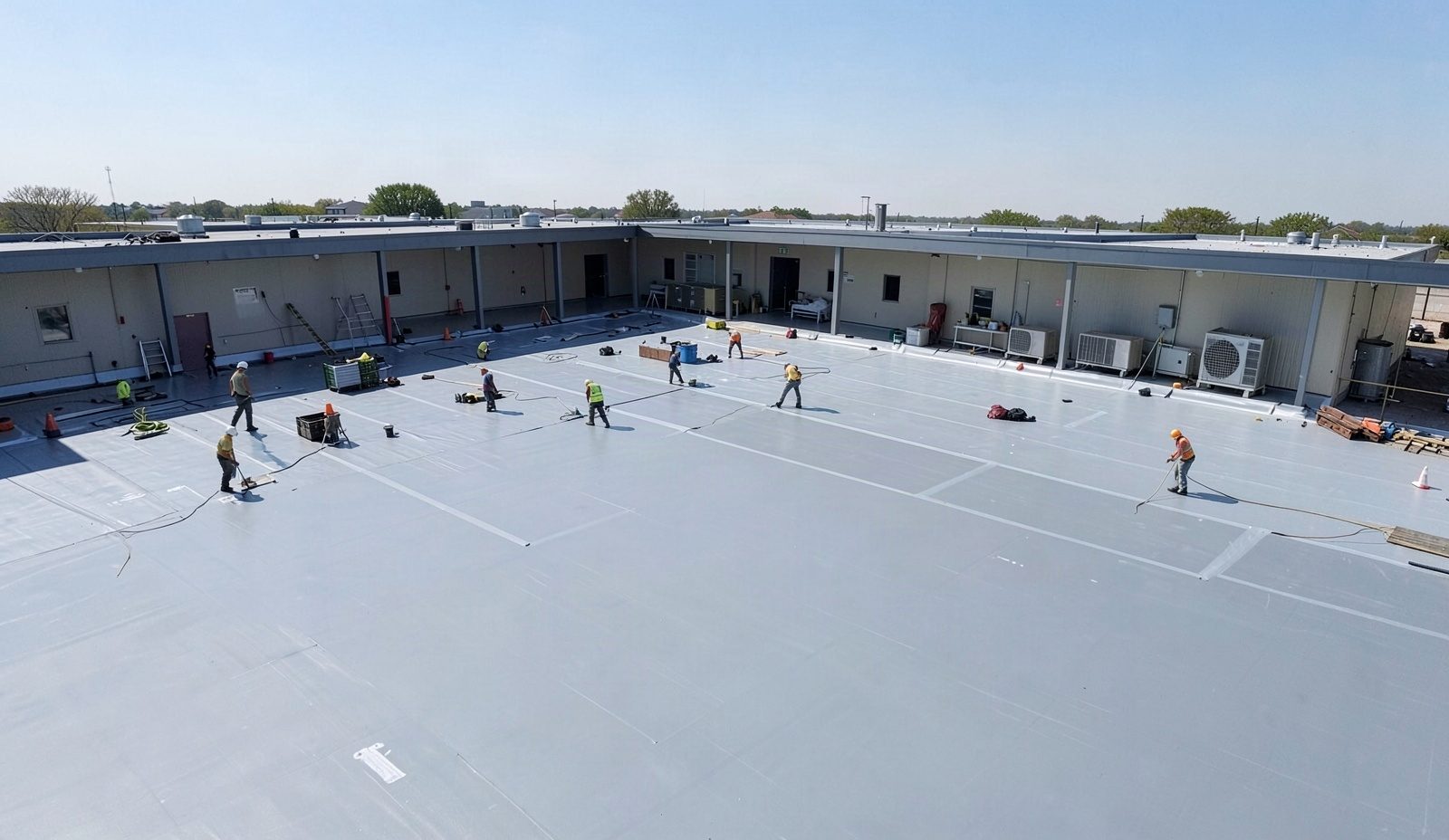
Commercial work in Gahanna covers TPO, EPDM and modified bitumen systems on retail strips, office buildings and light industrial roofs, plus the scheduled inspections that keep a membrane roof compliant with insurer and lease requirements. Crews document seam integrity, drain capacity and flashing condition with dated photographs a property manager can hand to a lender or insurer without re-inspecting. One typical scenario: a strip retail owner needs a membrane patched around a rooftop HVAC curb during business hours, and the crew stages the repair so the tenant below never closes, choosing ballast or adhesive systems based on the existing roof's fastening method.
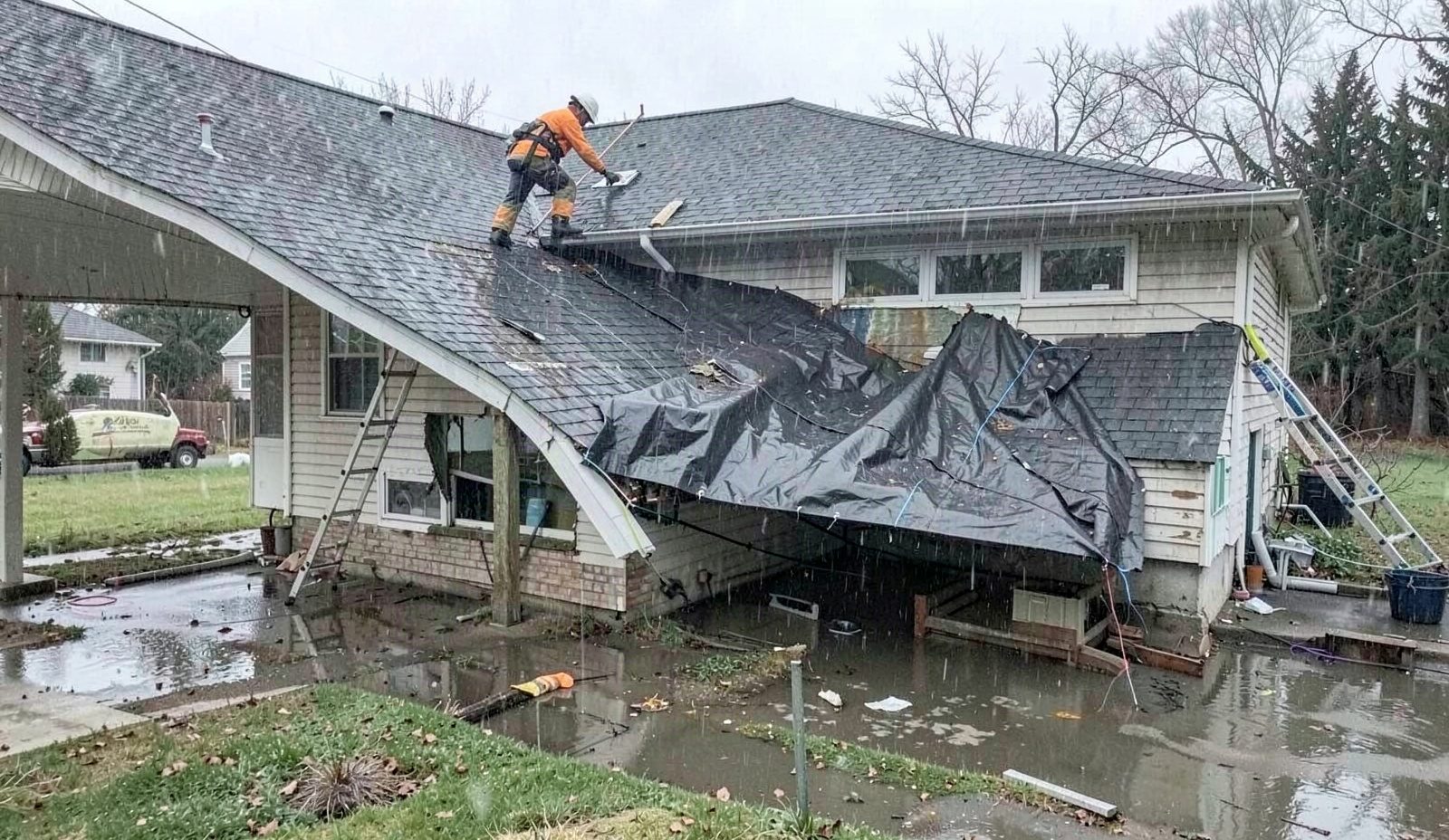
Emergency roofing Gahanna calls come in most often during or right after a summer thunderstorm, when wind has lifted a shingle course or hail has punched through a soft spot near a vent stack. Crews carry tarps, self-adhering membrane and plywood sized for common ridge and valley spans so a roof gets weathertight the same visit rather than waiting on a full material order. One example: a call comes in at 9 p.m. after a limb punches through a roof deck during a wind event. The crew tarps and dries in the opening that night, then schedules the structural repair and shingle match for the next available daylight slot.
Four problems account for most Gahanna service calls, and they trace back to the same handful of causes: weather cycling, aging materials, ground movement and delayed maintenance. Catching any of them early usually means a repair measured in hours. Waiting usually turns the same problem into a deck replacement.
The pattern matters because these issues rarely announce themselves indoors until they have already been active outdoors for a season or more. A stain on a ceiling in April often traces back to a crack that opened during the January freeze-thaw swing, and a soft spot near a chimney flashing usually started as a pinhole that widened over several wet-dry cycles before it ever dripped.
Permit and inspection questions? Building & Zoning Services is the office we coordinate with on every permitted Columbus job.
Summer thunderstorms bring straight-line wind and hail that are the leading cause of asphalt shingle and roof penetration damage in Gahanna. Wind lifts a shingle tab at the seal strip, and hail bruises the mat underneath without always breaking the surface granules, so the damage hides until a leak starts weeks later. Call if granules collect in the downspout after a storm or a spot near a valley feels spongy underfoot.
Homes built before OSB sheathing became standard often still run plank decking, and the wider gaps between boards work fasteners loose faster than a solid panel deck. Step flashing at chimneys and dormers on these older roofs is frequently reused during a shingle-only re-roof instead of replaced, which is a common origin point for slow leaks. Call if you see a rust-colored stain tracking down interior brick near a chimney chase.
Franklin County's clay-heavy soil expands and contracts with moisture swings, and that movement can rack a roof frame enough to open a ridge seam or crack a hip cap shingle even on a roof installed correctly. Gutters clogged with sediment from unsettled grading around a newer lot add standing water weight along the eave, accelerating fascia rot. Call if a ridge line looks visibly wavy when you sight down it from the ground.
Gutters packed with leaves and shingle grit hold water against the fascia board all winter, and that standing moisture is what turns a minor ice dam into water backing up under the shingle course. Attic vents blocked by insulation pushed too close to the soffit trap humid air that condenses on the underside of the decking, which looks like a leak but is not. Call if the attic smells musty or insulation near the eave looks damp.
A first visit in Gahanna typically runs 30 to 45 minutes for a straightforward inspection and longer for a two-story roof or a full replacement estimate. The technician checks the attic first, looking for daylight through the decking, damp insulation and rafter staining before ever climbing a ladder outside. Have your last roof invoice or any insurance claim paperwork ready if the visit follows storm damage, since it speeds up matching shingle color and confirming what was already repaired. Bring a flashlight if you want to see the attic findings yourself; most homeowners do.
One of our most-requested services here is asphalt shingle roofing, see that page for pricing and process.
After you call (614) 707-7333, the office confirms your appointment window the same day, usually a two-hour arrival block rather than an all-day guess. You get a call or text when the technician is on the way, typically 20 to 30 minutes out, so you are not waiting around a full afternoon. If the inspection reveals a repair that needs a specific material on order, you get a direct timeline for when that part arrives rather than a vague callback promise. Any change to the arrival window, whether from weather or a prior job running long, gets a call before the scheduled window passes.
The technician arrives in a marked vehicle and introduces themselves before walking the property. Ladders get set on plywood or rubber stops to protect landscaping and siding, and any ground-level material gets staged on a tarp rather than directly on grass or a driveway. Before climbing, the technician walks the exterior with you, points out visible damage from ground level, and asks where you have noticed interior symptoms like stains or drafts. That walkthrough usually takes five to ten minutes and sets the priority list for what gets checked first once the technician is on the roof.
Before leaving, the technician walks the yard with a magnetic nail sweeper to pull stray fasteners from the grass and driveway, a step that matters most for households with pets or kids who go barefoot in the yard. You get photos of the completed work, including any flashing or decking that was hidden until the old shingles came off, and a written summary of what was found versus what the original estimate scoped. Leftover material or old shingle tear-off gets loaded out the same day rather than left staged in the driveway overnight.
The process starts with a call to (614) 707-7333, where the office logs your address, the symptom you are seeing and whether the issue followed a specific storm date. That storm date matters if you plan to file an insurance claim, since adjusters ask for it directly. Most inspections get scheduled within the same week, sooner if water is actively entering the house.
From there, the visit produces a written scope before any work begins, and the actual repair or replacement gets scheduled around material lead time and weather. Cleanup and a final walkthrough close out the job, and the three stages below break down what happens at each point.
Calling (614) 707-7333 connects you to someone who takes down your address, roof age if known, and the specific symptom, whether that is a ceiling stain, missing shingles after wind, or a routine inspection request. If the damage follows a specific storm, that date gets logged for any insurance conversation later. Scheduling happens on that same call rather than a callback.
The technician documents the roof condition with photos and, where relevant, moisture readings, then builds a written scope listing materials, fastening spec and the sequence of work. You review and approve that scope before any material gets ordered or any crew gets scheduled. Pricing reflects the actual condition found on your roof, not a flat per-square estimate given over the phone.
Work follows the Ohio Residential Code specification for the materials installed, and a lead installer inspects the finished roof before the crew loads out, checking flashing seals, nail pattern and ridge ventilation. You get a walkthrough of the completed work and documentation you can keep for insurance or resale records, and any permit required for the scope gets closed out with the local permitting authority before the job is considered finished.
Roofing work in Gahanna falls under the Ohio Residential Code, the statewide code enforced through Franklin County for one and two family construction, with portions of the city intersecting Columbus building code jurisdiction as well. The permit authority named on any project makes the final call on what a given scope requires, and code compliance gets checked against the same standard whether the work is a full replacement or a targeted repair.
Homeowners choosing between shingle lines see the real difference in the numbers, not the marketing copy. A standard three-tab shingle typically carries a wind rating around 60 to 70 miles per hour and a service life near 15 to 20 years, while an architectural laminate shingle is commonly rated to 110 to 130 miles per hour and rated for 25 to 30 years of service. A Class 4 impact-resistant shingle, tested under UL 2218, adds a rubberized asphalt layer that resists hail bruising, worth the upgrade on a roof that has already taken one hailstorm.
Ridge vent and intake vent sizing follows a net-free-area calculation tied to attic square footage rather than a flat product choice, because undersized ventilation causes condensation problems that mimic a roof leak from the inside. Compliance gets verified in two ways on a real job: a visual and instrument check during the final walkthrough, and, for permitted work, a formal inspection before the job closes. That inspector checks the same details a good lead installer already checked, fastener pattern, flashing laps and ice barrier placement, so a homeowner working with a crew that already builds to code rarely sees a failed inspection.
From routine maintenance to cedar shake roofing, the same local crew handles every call.
Manufacturer specs call for six nails per shingle in high-wind applications instead of the standard four, placed within the designated nailing zone printed on the shingle rather than anywhere convenient on the tab. Missing that zone by even half an inch measurably drops the wind rating the shingle can actually hold in the field, regardless of what the packaging claims.
Cost on a Gahanna roof depends on deck condition more than most homeowners expect. A roof needing plywood or OSB sheet replacement under the shingles costs more in labor and material than one where the existing deck passes inspection. Roof pitch, the number of penetrations like skylights and chimneys, and whether the old layer needs full tear-off versus a layover all shift scope before a single shingle gets ordered.
A straightforward single-layer tear-off and reshingle on an average Gahanna home typically finishes in one working day, weather permitting, while a roof needing deck replacement or complex flashing work runs two to three days. Quality gets measured against the shingle manufacturer's installation instructions during the final walkthrough rather than a subjective sense of how the roof looks from the street.
Full replacements and structural changes typically need a permit, while minor like-for-like shingle repairs often do not, and Franklin County Building Services makes the final determination on any specific project. When a permit is pulled, an inspector checks fastener spacing, flashing laps and ice barrier placement before the job closes, and that inspection report is worth keeping with your home's resale paperwork.
Cost depends on roof size, pitch, material and deck condition rather than a single statewide figure. In the Gahanna area, pitch and the number of valleys, chimneys and skylights move the estimate more than the shingle brand chosen, and a roof needing deck replacement after moisture damage costs more in labor than one where the existing OSB passes inspection. Call (614) 707-7333 to get a written scope specific to your roof rather than a regional average.
Look for a crew that documents its inspection with photos and a detailed written scope. Cornerstone Roofing Columbus provides that documentation on every Gahanna estimate, along with a scope that lists material spec and fastening pattern instead of a flat number. Ask any contractor how they handle permit requirements under the Ohio Residential Code and whether the same person who inspects your roof stays reachable after the job closes.
An estimate starts with an on-site inspection that documents your roof's actual condition. The technician checks the attic, decking and exterior flashing before writing a scope that lists materials, fastening pattern and sequence of work, and you review that scope before anything gets ordered or scheduled. Call (614) 707-7333 to set up that on-site visit, and expect an itemized document rather than a verbal per-square number.
Average cost depends on roof size, pitch, material tier, and tear-off complexity rather than one statewide figure. A steep multi-valley roofline adds labor hours that a simple gable roof never needs, and a shingle-only tear-off costs less than one requiring deck replacement. Ohio's freeze-thaw climate also pushes many homeowners toward a heavier architectural shingle over a basic three-tab, which shifts the material line of any quote.
Most single-family homes get a full gutter replacement finished in a single day, start to finish. Larger homes with multiple rooflines, extensive fascia repair, or added gutter guards installation can run into a second day. A straightforward downspout repair or a short section replacement typically wraps up in a few hours during the same visit as the assessment.
A properly secured tarp typically holds up for two to four weeks depending on wind exposure and tarp material, but it is only a temporary measure until permanent repair happens. UV exposure breaks down tarp fibers, and wind works fasteners loose over time, so a tarp left through multiple Gahanna wind events needs a mid-point check for shifting or tearing. Schedule permanent repair before that window closes.
Explore our service area and locate Cornerstone Roofing Columbus with ease. We're proudly local and serve the surrounding neighborhoods with fast response and honest pricing. Use the map to check our coverage area, or call us and we'll confirm in seconds.
Address:
Cornerstone Roofing Columbus, Gahanna, OH 43230
How Much Does a Roof Replacement Cost in Columbus? 2026 Pricing Breakdown, practical local guidance from Cornerstone Roofing Columbus, Colum…
Read More
Commercial Roof Maintenance Tips for Columbus Property Managers, practical local guidance from Cornerstone Roofing Columbus, Columbus's trus…
Read More
Skylight Leaks in Victorian Village Homes, Repair or Replace?, practical local guidance from Cornerstone Roofing Columbus, Columbus's truste…
Read More
The Best Time of Year to Replace a Roof in Columbus, practical local guidance from Cornerstone Roofing Columbus, Columbus's trusted roofing …
Read More