

April 1, 2025
How Much Does a Roof Replacement Cost in Columbus? 2026 Pricing Breakdown
How Much Does a Roof Replacement Cost in Columbus? 2026 Pricing Breakdown, practical local guidance from Cornerstone Roofing Columbus, Colum…
Read More




Central Ohio runs a humid continental climate, the same pattern that covers the wider Columbus metro, and it is not a lake-effect snow zone. What it does deliver is roughly 40 to 60 freeze-thaw cycles every winter. Water gets into a hairline shingle crack, freezes, expands, and widens that crack a little more each cycle. Flashing around chimneys and skylights takes the same beating, and by the third or fourth winter a seam that once sealed tight starts working itself loose.
Housing stock age changes what fails first. In Muirfield Village, custom-built homes from the 1970s and 1980s carry complex rooflines with multiple valleys, dormers, and cedar-look conversions that trap debris and slow snowmelt drainage, which stresses valley flashing more than a simple gable ever would. Tartan Fields, built out mostly in the 2000s, leans on engineered roof trusses and tighter attic assemblies, so ventilation balance matters more than roofline complexity, poor soffit-to-ridge airflow shows up as premature shingle curling from trapped attic heat. Ballantrae's builder-grade developments from the same era used standard architectural shingles across large tract-built sections, and HOA design standards there mean color-matching a repair section is often as important as the repair itself.
Seasonal timing follows the same rhythm every year. Winter freeze-thaw does its damage quietly, then spring storms find every weak point the cold already opened. A roof that looked fine in January can show its first active leak in April, once the ice that had been sealing a crack finally melts and lets water run instead of just sitting.
Permit and inspection questions? Building & Zoning Services is the office we coordinate with on every permitted Columbus job.
Reputation in a market like Dublin gets built one roof at a time, not through a marketing budget. Cornerstone Roofing Columbus works off a simple internal standard: every job gets photographed before, during, and after, and every crew lead walks the finished roofline with a level eye before calling a job complete. That habit exists because central Ohio's freeze-thaw pattern punishes sloppy flashing work within a single season, and a crew that cuts a corner in October gets a callback by March.
Training runs through both classroom material on current code requirements and supervised field time before a technician works unsupervised on a Dublin roof. New hires start on tear-off and cleanup, move into flashing detail and valley work, and only take lead on a full replacement once a senior technician has signed off on their nailing pattern and flashing technique across multiple job types. That pathway matters more in a metro with Dublin's mix of steep custom rooflines and standard tract gables, because a technician trained only on simple gable roofs will misjudge a complex valley intersection.
Operational philosophy stays practical rather than promotional. A written quote spells out material tier, square footage, and disposal scope before a nail gets fired. Pricing conversations happen on the roof or over the phone at (614) 707-7333, not through a scripted call center, because a homeowner asking about a soft spot near a skylight deserves an answer from someone who has actually looked at it. The four points below cover the specific advantages that separate this from a typical Dublin roofing call.
Communities like r/Roofing are a good reality check on pricing and practices before you sign anything.
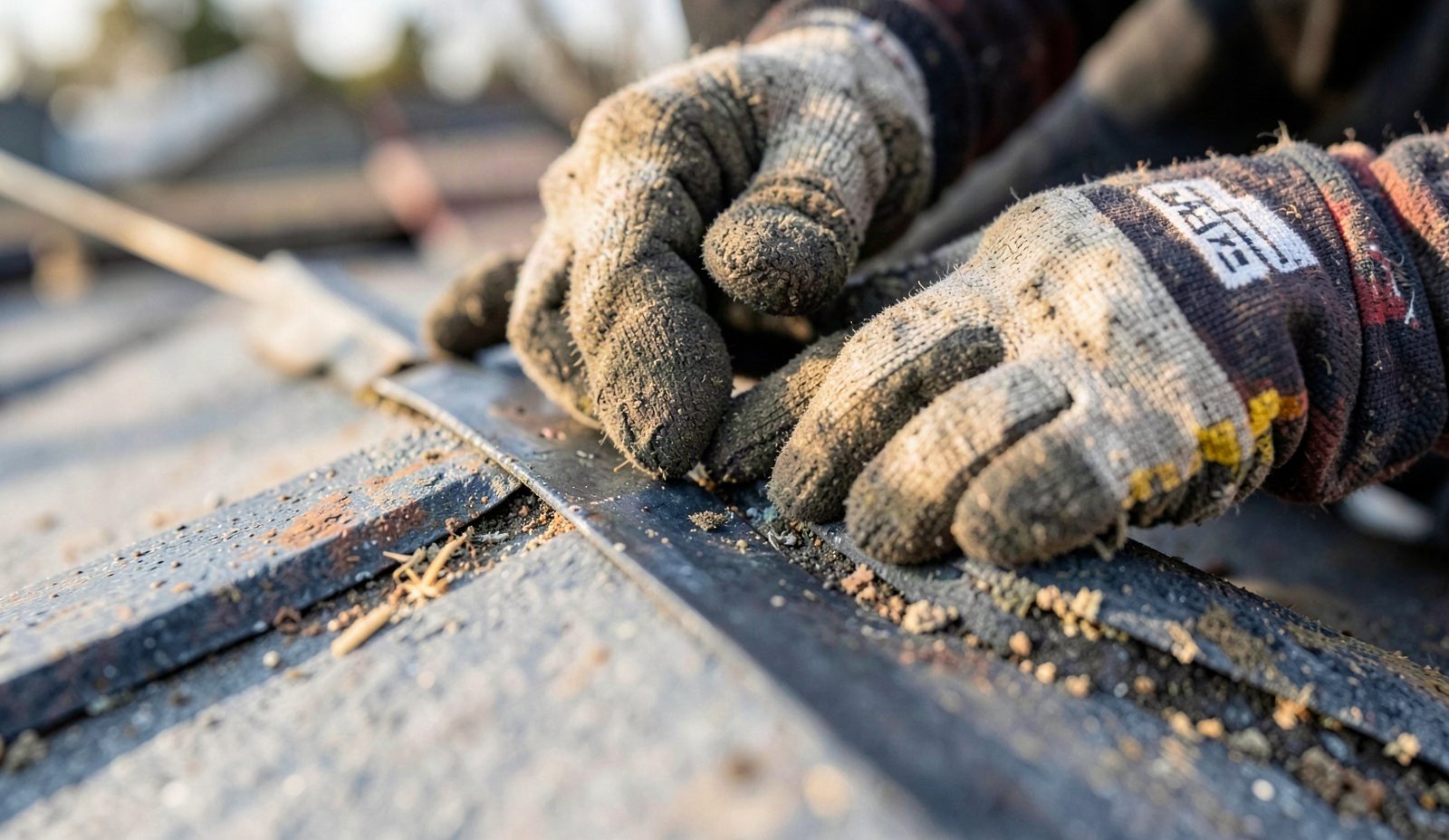
The crew that tears off your roof is the same crew that dries it in, flashes it, and cleans up the yard. Nothing gets handed off to a second subcontracted team partway through, which is where valley flashing and step flashing details most often get missed on a job with multiple roof planes.
Technicians carry a pin-type moisture meter to check decking readings before deciding whether a repair or a re-deck is needed, along with a compact drone for steep-pitch inspection where walking the roof would risk shingle damage. A reading above roughly 18 percent moisture content in OSB decking signals active moisture and developing rot, not just staining.
Crews train against the current Ohio Residential Code requirements for underlayment, ice barrier placement, and ventilation ratios, and that training gets refreshed whenever the code is updated. A repair done to an outdated standard fails an inspection and costs the homeowner time twice over.
Central Ohio's mix of 1970s custom builds, 2000s tract developments, and newer infill construction each demand a different repair approach. Crews working this metro regularly can identify a roofline's era and likely deck material from the ground, before a ladder ever goes up.
Dublin's roofing needs split into three distinct scopes, and each one runs on a different playbook. A homeowner in a single-family subdivision needs a different inspection sequence and material spec than a retail building along a commercial corridor, and both differ again from a Saturday-night active leak that cannot wait for a normal scheduling window.
Cornerstone Roofing Columbus runs all three, staffed and equipped for the differences. Residential work centers on asphalt shingle systems, flashing detail, and attic ventilation balance. Commercial work centers on low-slope membrane systems, rooftop equipment penetrations, and scheduled maintenance that protects a lease or an insurance policy. Emergency work centers on stopping water intrusion fast and documenting the damage correctly for a claim. The three cards below break down what each scope actually covers.
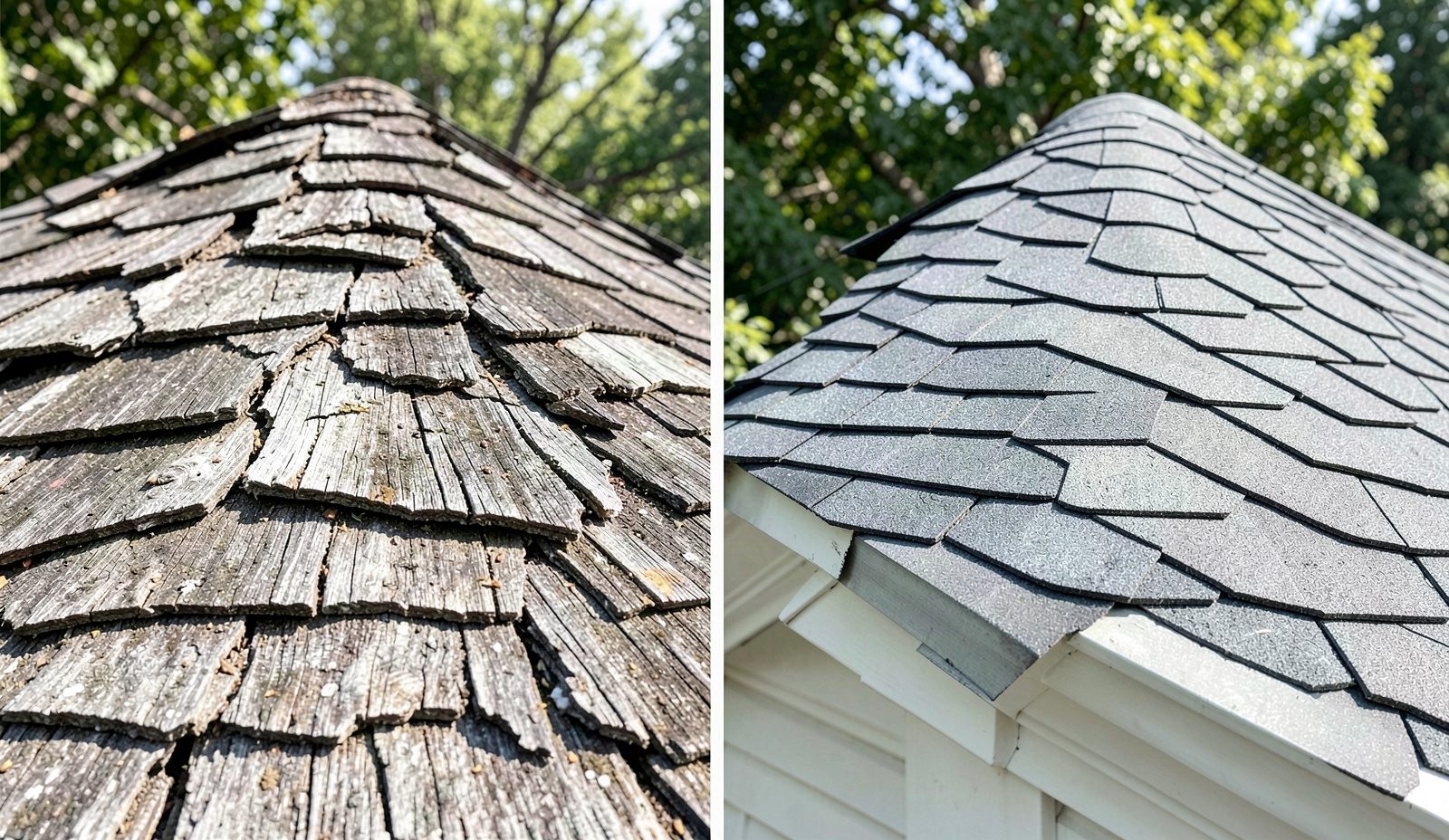
This covers tear-off and re-roofing on standard asphalt shingle homes, along with targeted repairs for wind-lifted shingles, cracked pipe boots, and damaged valley flashing. It fits homeowners dealing with granule loss in the gutters, a visible sag along a ridge line, or a specific leak traced to one section of roof rather than widespread failure. A recent example job involved a Dublin tract home with three failed valley sections where wind-driven rain had worked past aged step flashing, repaired by stripping the valley back to decking, installing new ice and water shield, and re-weaving the shingle courses to match the existing field.
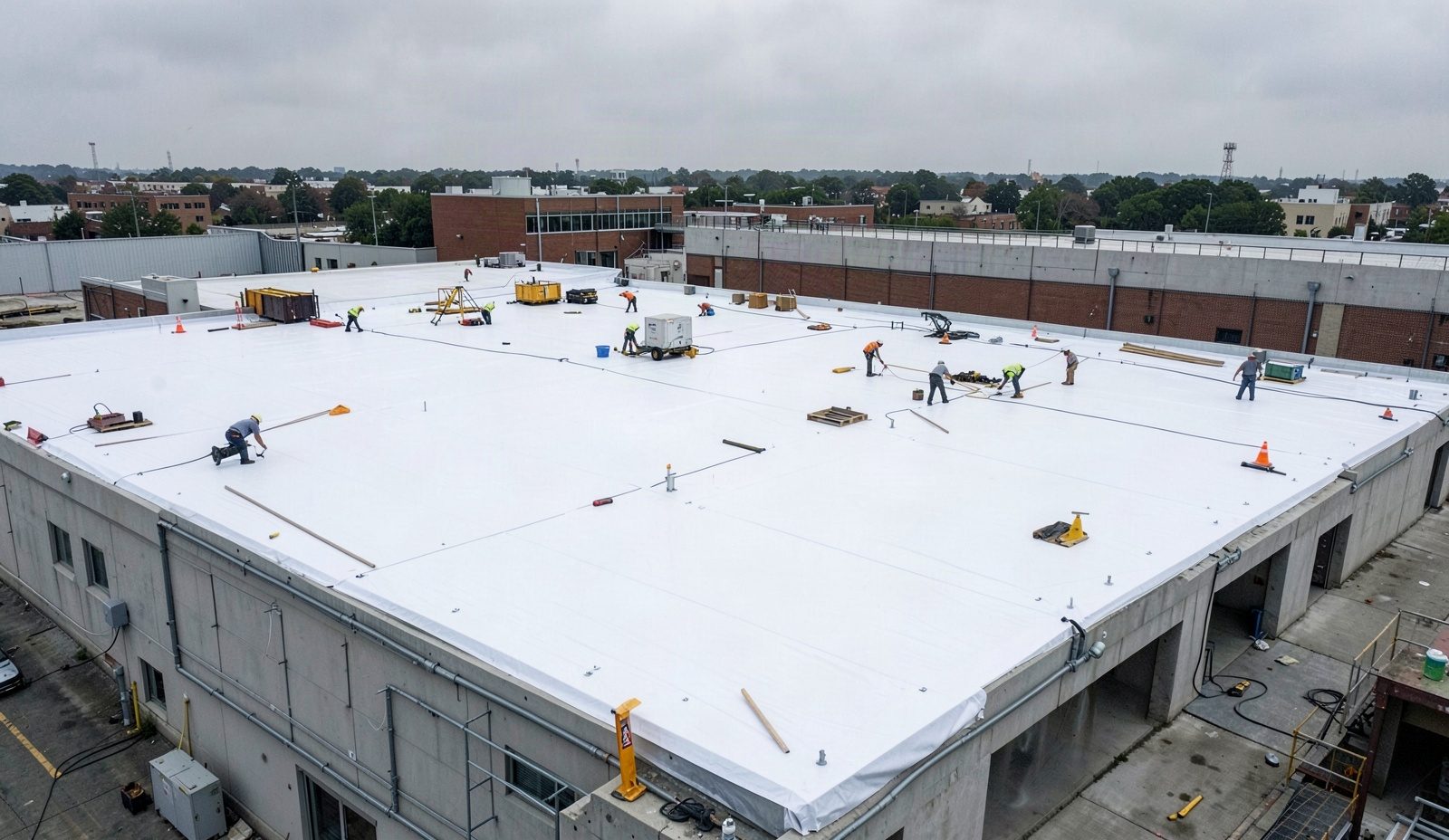
Commercial roofing work covers TPO and EPDM membrane installation, seam inspection, and scheduled maintenance visits that catch ponding water or membrane punctures before they become tenant complaints. This scope answers to a different set of pressures than a house call, downtime, lease obligations, and documentation an insurer or property manager can file. A typical scenario is an office building along a busy Dublin commercial corridor scheduling a spring and fall inspection to catch seam separation before a summer storm turns a small gap into an interior water event during business hours.
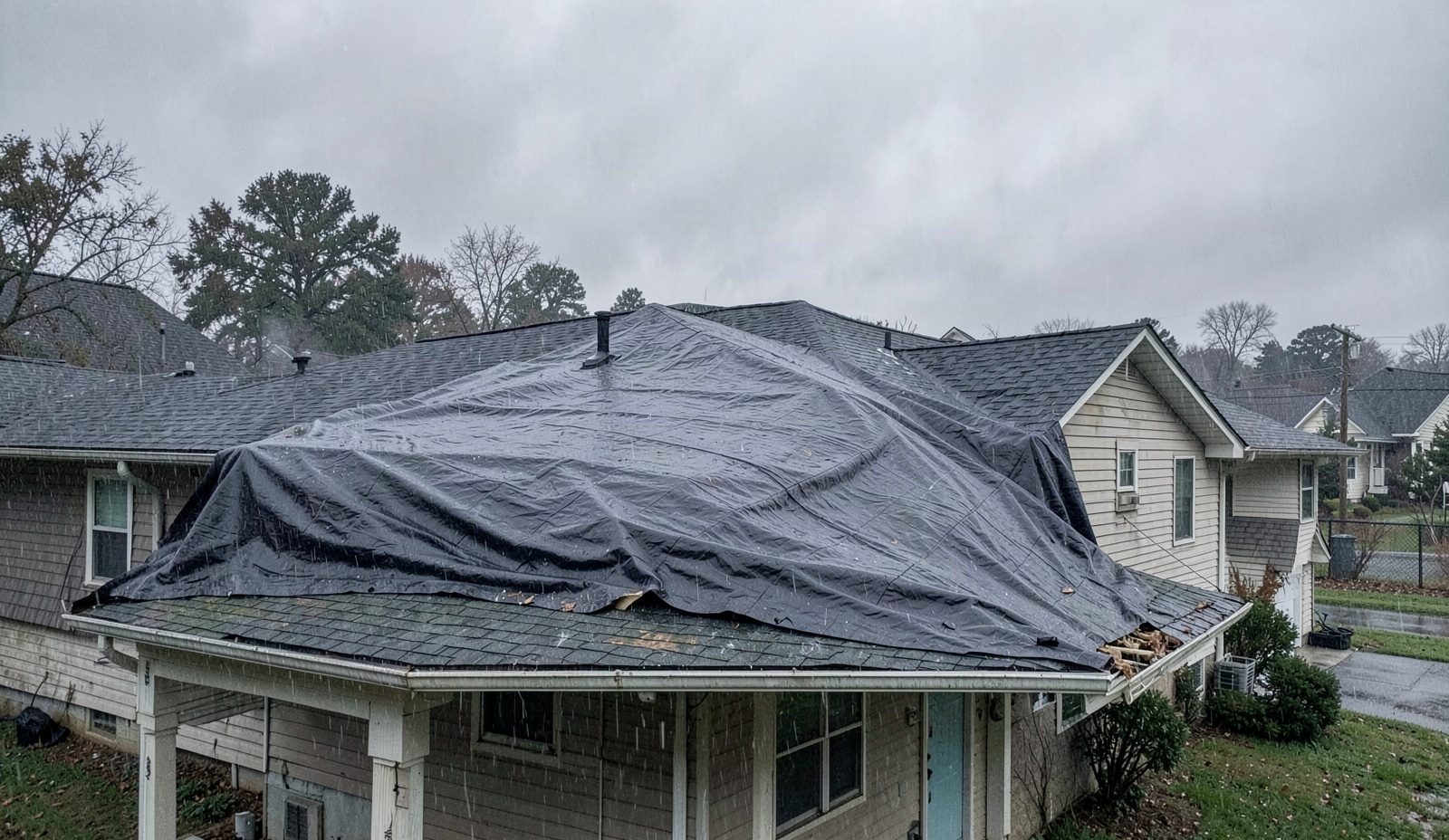
Emergency work covers same-day tarping, temporary flashing repair, and interior leak tracing when water is actively entering a structure. It is built around speed and containment first, permanent repair second. A typical scenario is a wind event that peels back a section of ridge shingles overnight, leaving exposed decking that needs a tarp and a moisture check before the next rainfall, followed by a scheduled permanent repair once the roof dries out and can be properly assessed.
Four problems account for most of the roofing calls that come in from Dublin homes. Each one starts small and gets missed because it does not look urgent from the ground, granule loss looks cosmetic, a soft spot underfoot feels minor, a slow drip seems containable with a bucket.
By the time any of these four show up as an obvious interior stain, the underlying damage has usually been building for one or two seasons already. Catching the early signal instead of the late one is the difference between a targeted repair and a full section tear-off.
Roofing permits outside Columbus city limits go through Franklin County Building Services, the county office we coordinate with on suburban jobs.
Summer thunderstorms bring hail and straight-line wind that are the leading cause of storm damage to suburban asphalt shingle roofs here. Hail bruises the mat beneath the granules without always breaking the surface, and wind lifts starter strips along the eaves. Call when you spot granule piles in the gutter after a storm or a shingle edge that lifts and does not lay back flat.
Standard three-tab and early architectural shingles installed on tract-built subdivisions decades ago are reaching or past their expected service life, and the mat underneath grows brittle before the color even fades noticeably. Call when shingle tabs feel stiff and crack when lifted slightly, or when whole tabs are missing after a normal wind day rather than a major storm.
Heavy wet snow common to central Ohio winters melts against a warm attic deck, refreezes at the cold overhang, and backs water up under the shingles at the eave line. Call when you see icicles forming in a thick ridge along the gutter rather than scattered drips, that pattern means water is already pooling behind the ice, not just running off the surface.
Homeowners often go years without checking soffit vents for paint blockage or insulation that has crept over the intake baffles, which traps heat and moisture in the attic year round. Call when the attic feels noticeably warmer than the outside temperature in winter, or when you notice dark streaking on the underside of the roof decking during any attic visit.
A first visit runs on a set sequence rather than a guess. The technician checks the roof from the ground first, then walks the roofline itself, then moves into the attic if access allows, checking decking, insulation, and any staining pattern before writing anything down. Plan on 30 to 45 minutes for a standard inspection. Have attic access clear and note which room the leak, if any, shows up in, that detail speeds up tracing the water's actual path.
One of our most-requested services here is asphalt shingle roofing, see that page for pricing and process.
Once you call (614) 707-7333, the scheduler logs the specific symptom you describe, whether that's a stain, a missing shingle, or an active drip, and books a two-hour arrival window rather than an all-day guess. You get a confirmation call or text the morning of the visit, and a second text when the technician is roughly 20 minutes out, so you are not waiting around all day for a knock at the door.
The technician arrives in a marked vehicle, introduces themselves, and asks to walk the exterior perimeter before touching a ladder. Shoe covers go on for any interior attic access, and landscaping near the eaves gets checked and noted before anyone climbs. You get a plain description of what they are looking for on the roof before they go up, not just a silent inspection you have to wait out.
Before leaving, the technician walks you through what was found, shows photos taken on the roof and in the attic if applicable, and does a magnetic sweep of the ground near the work area to catch stray nails or fasteners. Any debris gets bagged and hauled off the same visit, and you get a written summary of findings before the truck pulls away.
The process from a first phone call to a finished roof runs on three stages, and each one has a specific output attached to it, a logged symptom, a written quote, and a code-verified finished job. Scheduling typically opens within the same week for standard repairs, sooner for active leaks.
Cleanup and final walkthrough happen the same day work finishes whenever weather allows, so a Dublin homeowner is not left with a tarped section or a debris pile over a weekend. Call (614) 707-7333 to start the first stage.
You call and describe what you are seeing, a stain, a missing shingle, granules in the gutter, or an active drip. The scheduler logs the symptom, the roof's approximate age if known, and books an inspection window, usually within the same week for non-emergency calls.
A technician inspects the roof and attic, takes moisture readings where relevant, and photographs any problem areas. You receive a written quote itemizing material, labor, and disposal scope before any work is scheduled, and you approve it before a crew is booked.
The crew completes the repair or replacement to current Ohio Residential Code standards, then does a final roofline check and a magnetic nail sweep of the yard. You get a walkthrough of the finished work and a written summary before the crew leaves the property.
Dublin straddles Franklin, Delaware, and Union counties, but the city center and the overwhelming majority of homes sit inside Franklin County, which sets primary building code jurisdiction for roofing work here. That means most Dublin roofing jobs answer to the Ohio Residential Code, based on the International Residential Code framework the state adopted, rather than a separate municipal code written from scratch.
One specific requirement shows up on nearly every reroof in this climate. Section 905.1.2 of the Ohio Residential Code requires an ice barrier on asphalt shingle roofs extending from the lowest roof edge to at least 24 inches inside the exterior wall line, built from two cemented layers of underlayment or a self-adhering polymer-modified bitumen sheet. A technician verifies this by measuring the eave overhang and interior wall line before laying underlayment, not by eyeballing it, and it is one of the first things a building inspector checks on a permitted tear-off.
Permits enter the picture based on scope. A full tear-off or any structural repair, like replacing rotted decking or reframing a section, typically requires a permit through Franklin County Building Services. A like-for-like shingle repair on a small section, patching a handful of shingles without touching decking, often does not, though the final determination always belongs to that permitting office, not to the contractor. Compliance gets verified on site through the same measurements an inspector would take, ice barrier extent, nailing pattern, and ventilation net free area, checked before the crew calls a job finished rather than assumed after the fact.
From routine maintenance to cedar shake roofing, the same local crew handles every call.
Central Ohio's straight-line wind events call for a six-nail fastening pattern on architectural shingles rather than the standard four-nail pattern, placed within the manufacturer's specified nailing zone. A shingle fastened outside that zone can pull loose in gusts that a properly nailed shingle would survive without lifting.
Roof pitch, the number of existing shingle layers needing tear-off, decking condition once exposed, and access difficulty for steep or multi-level rooflines all shift the labor hours on a job. A roof needing full re-decking due to rot costs more time and material than one where the existing deck passes a moisture check.
A standard single-family tear-off and reroof typically runs one to two days once work begins, weather permitting, with steep or complex rooflines adding time. Quality gets checked through a finished nailing pattern review and a valley and flashing walkthrough before the crew leaves, not through a self-reported checklist.
Structural work and full replacements generally need a permit, while small like-for-like repairs often fall outside that requirement. The local permitting authority named above makes the final call on any borderline case, and a contractor pulling permits correctly protects a homeowner during a future home sale or insurance claim.
Cost depends on the specific home rather than a flat citywide rate. Dublin's larger executive-style homes with steep, multi-plane rooflines and extra dormers take more material and labor hours than a standard tract-built gable roof of the same square footage. Material choice, from standard architectural shingles up to designer profiles, moves the number just as much as size does.
Roofing cost in Dublin depends on whether the job is a repair or full replacement, and repairs carry their own separate cost drivers. A repair needing new decking due to rot or requiring custom flashing around a chimney runs higher than a simple shingle swap on an accessible, low-pitch section. Steep-pitch access equipment can also add to a repair-only quote.
Total project timing runs longer than the actual work day once permit review and material lead time get factored in. A standard shingle order typically arrives within about a week of the quote being approved, and permitted jobs wait on Franklin County Building Services review before work can begin. Weather delays, especially during spring storm season, can also push a scheduled start back a day or two.
Estimates start with an on-roof and attic inspection, then get itemized by measured square footage, material tier, disposal scope, and required underlayment layers. You see each line separately rather than one lump figure, so you know what portion covers labor versus material. The quote is written before any work is scheduled and you approve it first.
Yes, replacing an aging roof is worth it once decking, flashing, or ventilation show wear that undermines resale value. Older Dublin homes built with plank decking rather than modern OSB sheathing often need re-decking during a tear-off, which is worth catching before a sale rather than after an inspection flags it. A current roof also supports a stronger appraisal.
Comparing quotes depends on matching scope line by line, not just the bottom total. Check whether each quote specifies the same shingle brand and tier, whether decking replacement is included or an assumed add-on, and whether ice barrier and ventilation work are itemized separately. A quote missing those specifics usually means a change order once work actually begins.
Explore our service area and locate Cornerstone Roofing Columbus with ease. We're proudly local and serve the surrounding neighborhoods with fast response and honest pricing. Use the map to check our coverage area, or call us and we'll confirm in seconds.
Address:
Cornerstone Roofing Columbus, Dublin, OH 43017
How Much Does a Roof Replacement Cost in Columbus? 2026 Pricing Breakdown, practical local guidance from Cornerstone Roofing Columbus, Colum…
Read More
Commercial Roof Maintenance Tips for Columbus Property Managers, practical local guidance from Cornerstone Roofing Columbus, Columbus's trus…
Read More
Skylight Leaks in Victorian Village Homes, Repair or Replace?, practical local guidance from Cornerstone Roofing Columbus, Columbus's truste…
Read More
The Best Time of Year to Replace a Roof in Columbus, practical local guidance from Cornerstone Roofing Columbus, Columbus's trusted roofing …
Read More